
Zen Garden Ideas for Tranquil Small Spaces and Minimalist Yards
You can create a calm, low-maintenance Zen garden that fits any space and budget by using simple elements like rocks, gravel, a few plants, and a water feature or bowl. Use clean lines and empty space to make the area feel larger and more peaceful, and pick one focal point to ground the design.
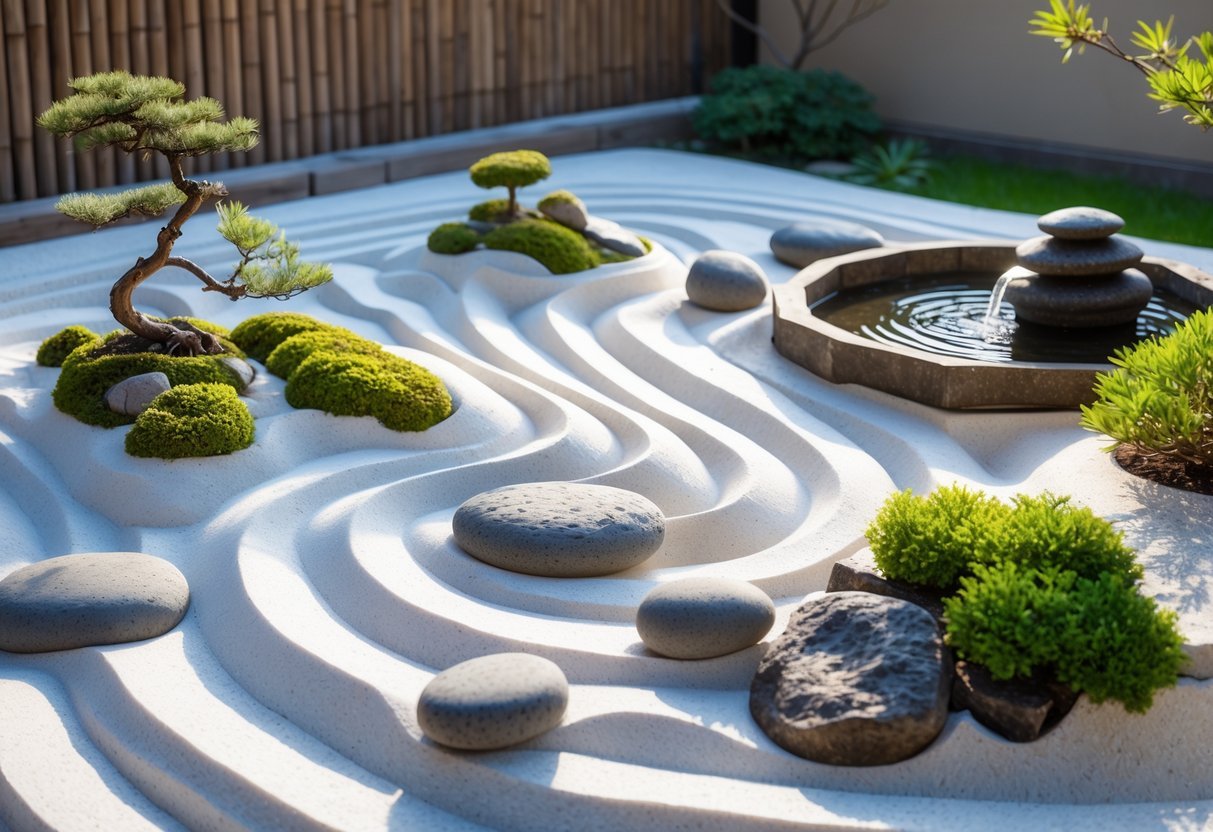
Start small or go big—choose ideas that match how much time and money you want to spend, from tiny tabletop sand gardens to full backyard rock landscapes with paths and bamboo accents. A few well-placed stones, raked gravel, and a quiet water or plant feature give you a meditative space you can build and care for easily.
Key Takeaways
- Keep designs simple and choose one clear focal point.
- Use classic elements like rocks, gravel, and minimal planting for calm.
- Match scale and upkeep to your budget and available time.
Essential Elements of a Zen Garden
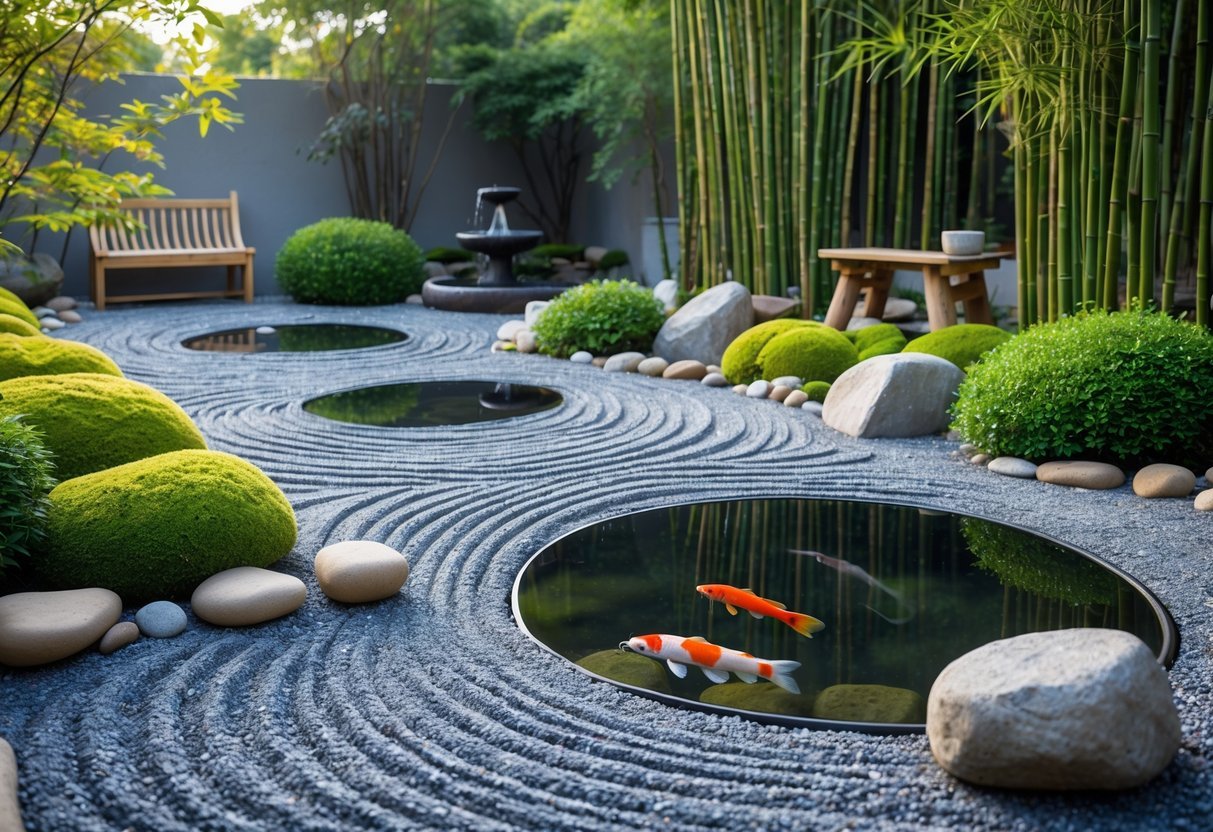
You will focus on three main components that shape form, movement, and sound: stone placement, raked surfaces, and any water you add. Each part guides how you move through or sit beside the space.
Rock Arrangements
Place rocks to create balance and focal points. Use groups of three for a natural look: one tall, one medium, and one low. Position them on soil or gravel so they appear rooted, not just placed. Angle the stones slightly instead of lining them up. That creates a sense of natural formation.
Choose local stone with varied texture and color to match your yard. Bury each rock about one-third of its height to anchor it. Leave some open space around rock groups so your eye can rest. Use a flat stepping stone or a single prominent boulder to mark a path or meditation spot.
Sand and Gravel Patterns
Rake sand or fine gravel to show water flow and calm the mind. Use a wide-toothed rake for broad waves and a fine-toothed rake for tight lines. Create parallel lines to suggest calm water, or circular rings around stones to imply ripples.
Keep the surface smooth by removing debris and re-raking after wind or foot traffic. Use contrasting gravel colors for borders or to mark paths. A shallow layer (about 2–3 inches) works well; deeper layers can hide the base and make raking harder. Rake regularly to keep patterns crisp.
Water Features
Add water for sound and reflection if space and budget allow. A small pond, shallow basin (tsukubai), or a simple fountain fits most gardens. Keep edges low and plant marginal species like dwarf iris or moss to soften the boundary.
Ensure good circulation and filtration to prevent algae and mosquitoes. Use natural materials—stone basins, bamboo spouts, or slate—for a quiet look. Position water where you can hear it from seating areas, but avoid strong splashes; subtle trickle sounds suit meditation best.
Design Principles for Zen Gardens
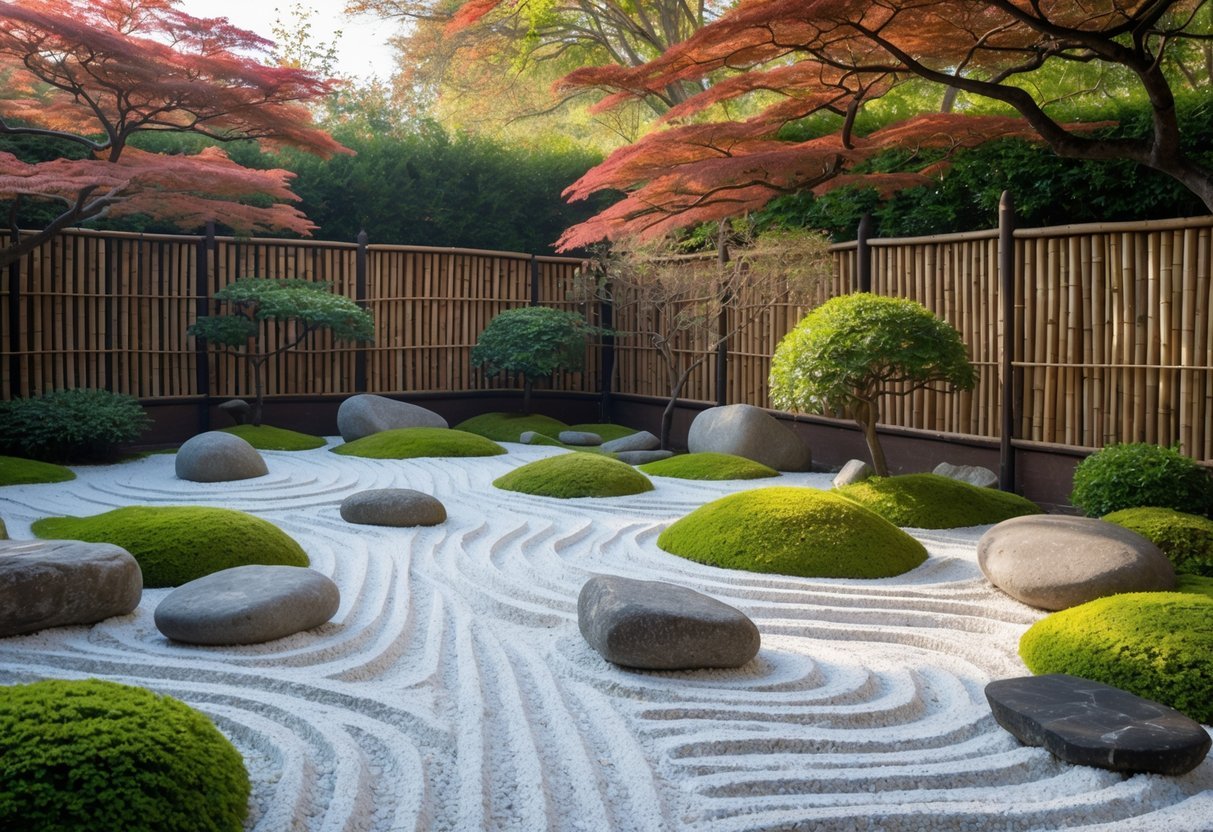
Focus on simple layouts, careful placement, and natural materials. These choices help create calm, guide attention, and make maintenance easy.
Minimalism in Layout
Keep your layout simple. Choose one or two focal elements—like a large stone or a shallow basin—and arrange everything around them. Leave open space so your eye can rest.
Use clear paths made of stepping stones or compacted gravel to guide movement without clutter. Limit plant varieties to two or three species with different textures, such as a small evergreen, a low groundcover, and one ornamental grass.
Control scale. Match the size of stones and plants to your yard so nothing looks overpowering. Remove unnecessary ornaments and tools; store them out of sight. A minimalist layout makes the garden feel larger and keeps upkeep low.
Balance and Harmony
Aim for visual balance, not perfect symmetry. Place objects so they feel stable—group three stones in a triangle instead of lining them up. That arrangement reads as natural and balanced.
Combine contrasting shapes and textures: rough boulders, smooth gravel, and soft moss. Contrast adds interest while preserving harmony. Keep color muted—greens, grays, and earth tones work best—to avoid visual tension.
Think about sight lines from key viewing points like a patio or window. Position elements so each view reveals a composed scene. Regularly step back and adjust placements until the view feels calm and complete.
Use of Natural Materials
Choose stone, gravel, sand, wood, and native plants. Use larger boulders as anchors and smaller rocks for accents. Rake gravel or sand into gentle patterns to suggest water or flow.
Pick wood that weathers gracefully for fences, benches, or lanterns. Avoid bright paints or metal finishes that shine. Select plants adapted to your climate—pines, dwarf maples, bamboo, ferns, and mosses are common choices.
Work with textures: combine the rough of rock with the softness of moss and the linear blades of grass. Natural materials age and change, which adds depth to the garden over time.
Creative Zen Garden Ideas
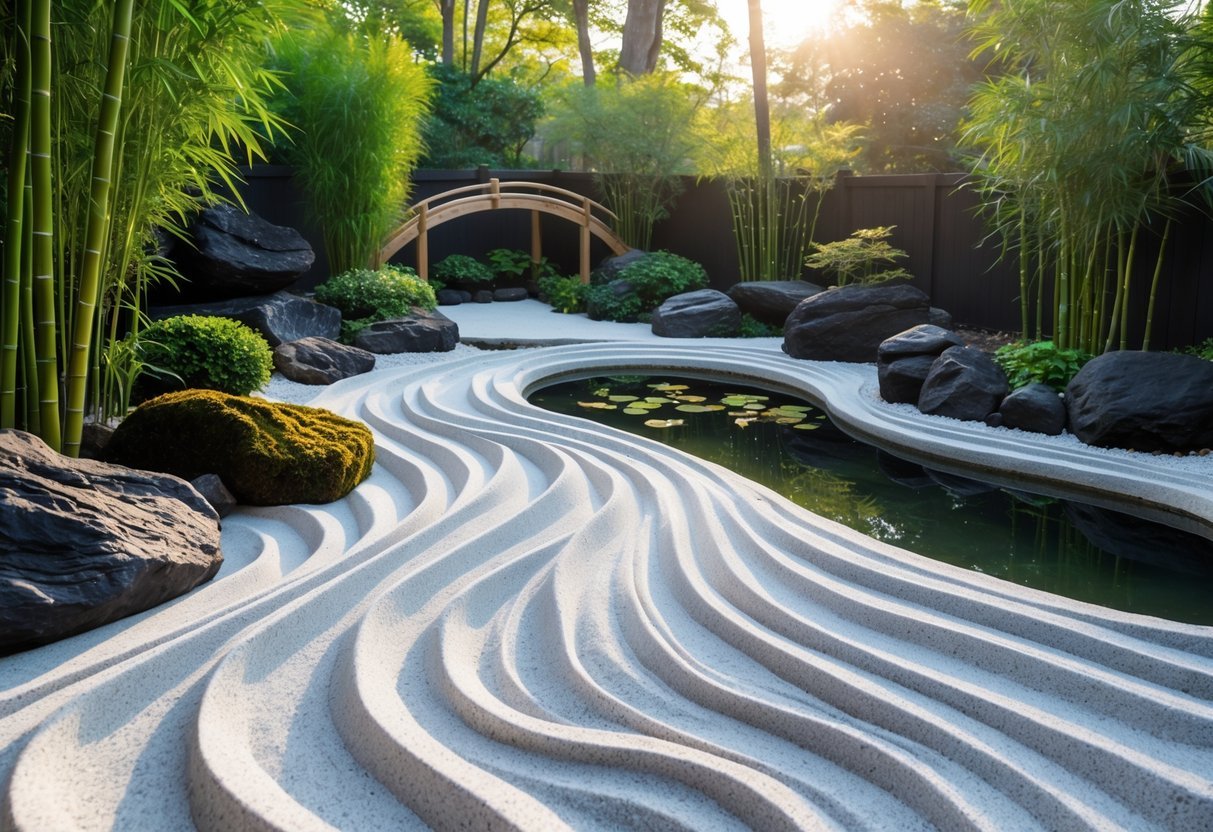
You can create calm with simple elements: stones, sand, a few plants, and water or paths. Focus on scale, materials, and placement so each piece feels intentional.
Small Space Zen Gardens
Use a shallow tray, balcony corner, or narrow strip beside a walkway for a small Zen garden. Choose coarse sand or fine gravel in a single neutral color to form a clean base. Add one to three focal stones—vary their height and texture for contrast.
Include low-maintenance plants like dwarf bamboo, moss, or sedum in small clusters to soften edges without clutter. Keep plantings sparse; too many types will make the space feel busy.
For containers, drill drainage holes and use a layer of gravel under soil to prevent rot. Rake the sand or gravel daily or weekly to create simple patterns that encourage short moments of calm.
Use a small water bowl or a recirculating fountain if you want sound. Make sure any water feature has easy access for refills and cleaning.
Modern Zen Garden Concepts
Blend traditional Zen elements with clean, contemporary materials to get a modern look. Use large, flat concrete pavers or corten steel planters alongside natural gravel for a minimalist contrast. Choose a limited palette—two or three colors max—for stone, plant foliage, and hardscape.
Introduce geometric layouts: square gravel beds with a single irregular boulder, or linear raked channels that draw the eye. Incorporate furniture with simple lines—teak benches or a low concrete seat—so you can sit without disrupting the design.
Add lighting for evenings: soft LED strips under edges or low spotlights on feature stones. Keep lighting warm and subtle to preserve the tranquil mood.
Incorporating Pathways
Design pathways to guide movement and frame views. Use stepping stones spaced for a natural stride; vary shapes slightly to feel organic rather than rigid. Gravel or decomposed granite between stones reduces maintenance and keeps edges clean.
Consider a meandering path to slow walking and encourage reflection. For tight spaces, use a straight central path with narrow planting bands to create depth.
Edge paths with low greenery like mondo grass or low boxwood to define route without blocking sightlines. Make sure surfaces are level and slip-resistant; compact the base and add a fine sand layer under stones for stability.
Maintenance and Enhancement Tips
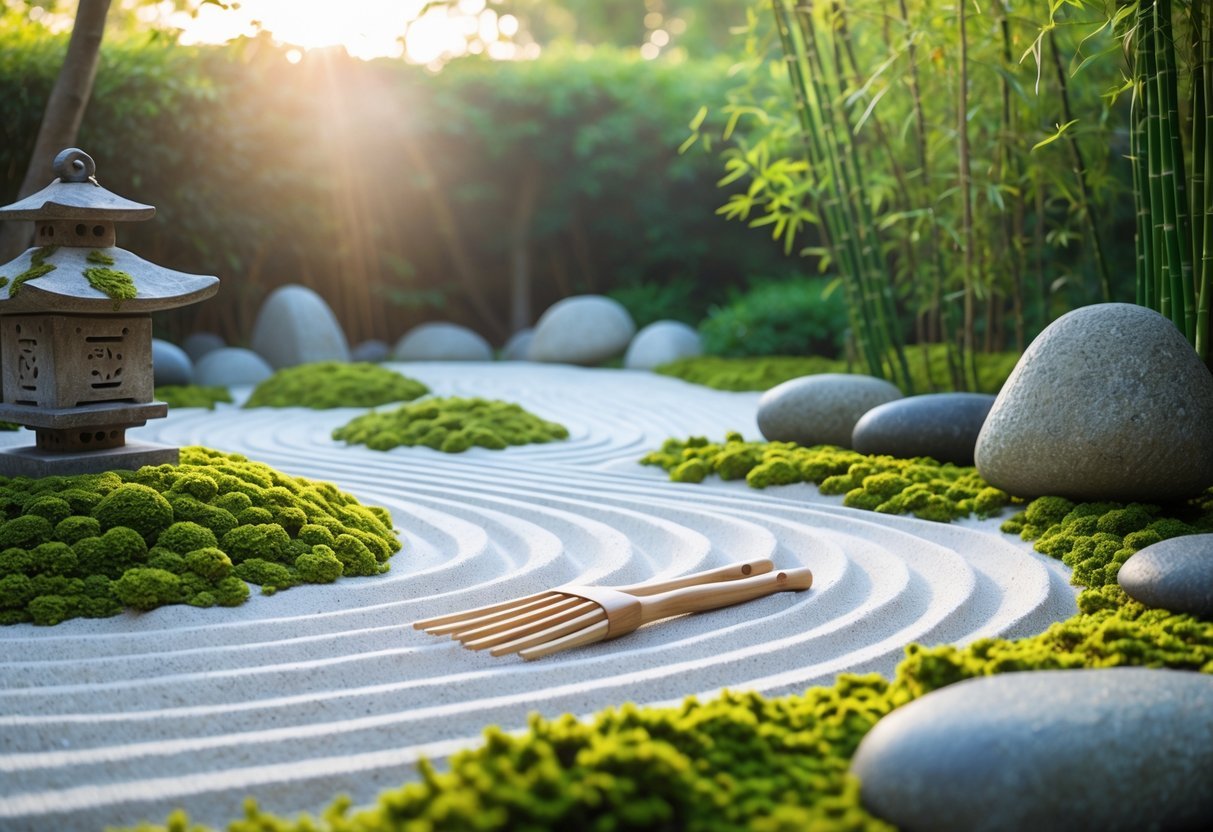
Keep your Zen garden tidy, balanced, and responsive to changing weather. Focus on regular pruning, debris removal, and small seasonal tweaks to preserve the design and plant health.
Pruning and Upkeep
Prune shrubs and small trees to keep shapes simple and lines clean. Trim evergreen hedges once or twice a year; prune maples and deciduous shrubs in late winter before new growth starts. Remove dead wood and crossing branches to improve air flow and light.
Rake gravel or sand patterns weekly in high-use areas, or after storms. Replace displaced stones and refill low spots with matching gravel. Sweep pathways and clear moss from pavers to prevent slips.
Control weeds by hand-pulling or using a pre-emergent in early spring. Mulch around plant bases with a thin layer of gravel or coarse sand to discourage growth. Check irrigation lines and drip emitters monthly to avoid overwatering.
Seasonal Adjustments
Protect tender plants in winter with burlap wraps or temporary cloches. Move potted plants to a sheltered spot or bring them indoors when temperatures fall below their hardiness range. Cut back perennials to clean, manageable crowns after the first hard freeze.
Adjust water and raking routines by season. Reduce watering in cool months; increase it during hot, dry spells. Rake heavy leaf fall daily during autumn to prevent mold and keep patterns visible.
Do a spring check: top up gravel, sharpen tool blades, and replace any split bamboo or rotted wood. Note plant performance and swap varieties that struggle; favor low-maintenance, hardy species that fit your microclimate.
Frequently Asked Questions
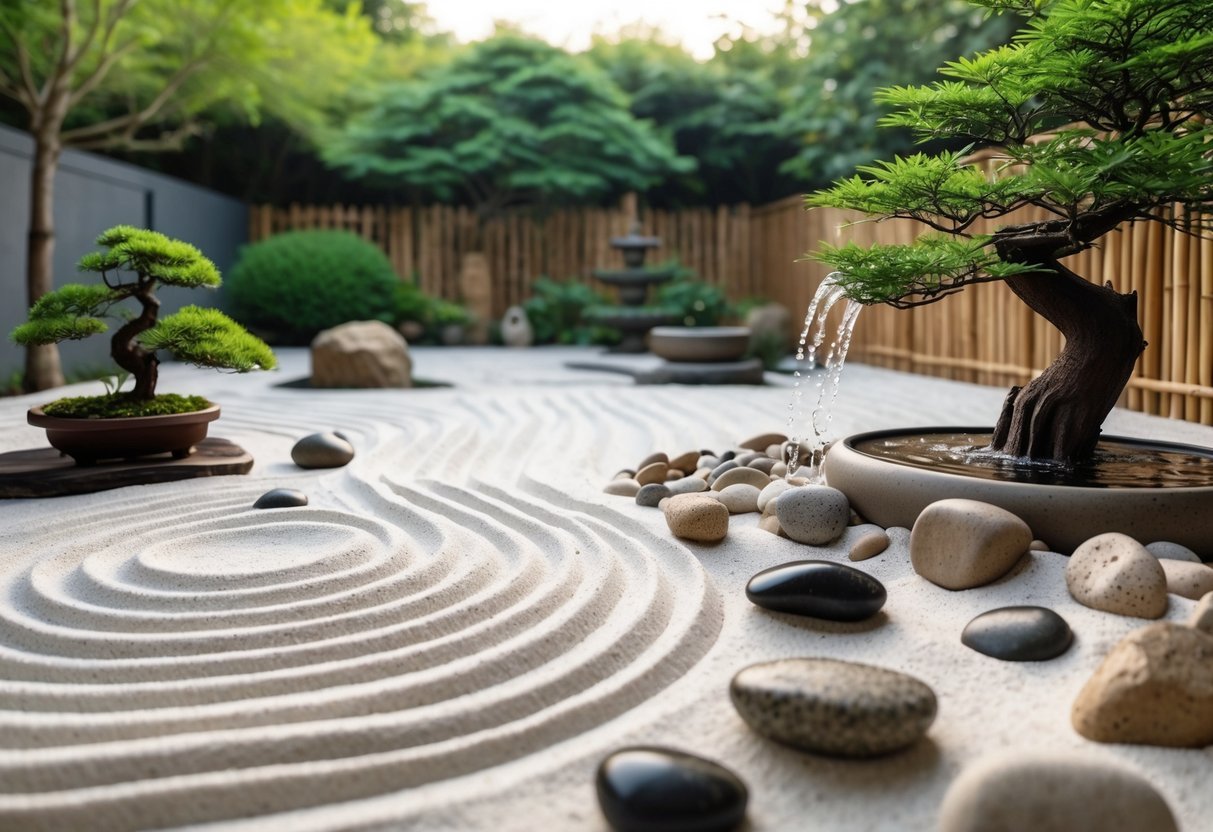
You can make a Zen garden that fits tight spaces, low budgets, indoor rooms, or even your desk by choosing small-scale elements, simple materials, and clear layouts. Focus on a few key items: rocks, gravel or sand, a plant or two, and a clean surface or border.
How can you create a Zen garden in a limited space?
Choose a shallow container, patio corner, or balcony box to keep size small. Use fine gravel or sand, one or two focal stones, and a single low-growing plant like moss or a dwarf juniper.
Limit tools to a small rake and tweezers so you can maintain patterns and clean around features. Arrange elements with negative space—leave empty areas to emphasize the stones and sand.
What are some cost-effective tips for designing a Zen garden?
Use local stones and reclaimed wood for borders to cut costs. Buy inexpensive play sand or pea gravel and add a few larger rocks for focal points.
Plant low-maintenance, slow-growing species like moss or mondo grass to avoid high plant costs. Do small sections over time so you spread expenses.
What elements are essential for an indoor Zen garden?
Pick a shallow tray or wooden box, a fine sand or gravel base, a few stones, and one small plant such as moss or a succulent. Choose a compact rake and a small brush for upkeep.
Keep lighting in mind—place the garden near a window or add a grow light if the plant needs more light. Use materials that won’t spill and that suit indoor humidity.
How do you incorporate Zen garden principles into a front yard landscape?
Simplify your plant palette and use clear lines for pathways and borders. Place a few large stones or a single boulder as a focal point, and use gravel or crushed stone to define open areas.
Include evergreen shrubs or small maples for year-round structure. Keep edges neat and avoid clutter to maintain calm sightlines from the street.
What features should you consider when making a Zen garden on your desk?
Pick a tray no larger than your keyboard area, low-profile sand or gravel, and one or two small stones. Add a tiny plant like air plant or moss for a living touch.
Choose a small wooden or metal rake for short, calming raking sessions. Keep the design minimal so it doesn’t distract from work.
What are some simple steps for DIY Zen garden construction?
Start by choosing the site and container size that fits your space. Lay a weed barrier if outdoors, add sand or gravel, and place stones before adding plants.
Arrange elements with space between them, then create simple rake patterns in the sand. Maintain by trimming plants, sweeping edges, and re-raking patterns as needed.