Zen Garden Backyard Design Ideas: Serene Layouts, Planting Plans, and Minimalist Features
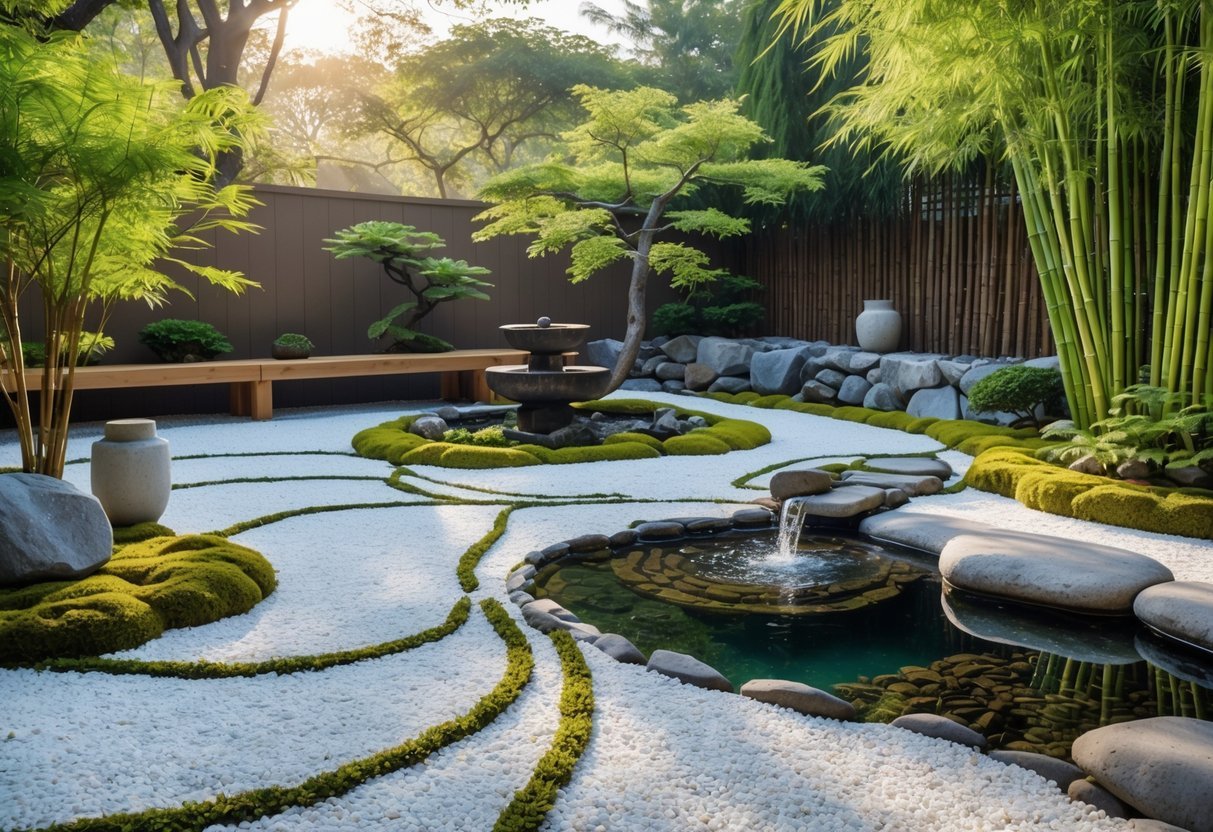
You can turn your backyard into a calm, low-maintenance retreat by using simple elements like rocks, gravel, a few plants, and clear lines to guide the eye and quiet the mind.
A small Zen garden layout, placed where you relax most, gives you a peaceful space for meditation, reflection, or quiet time without a lot of upkeep.
This post shows core design ideas, the essential elements to include, creative layout options for any yard size, and easy maintenance tips so you can build a backyard Zen garden that fits your life and stays serene.
Core Principles of Zen Garden Design
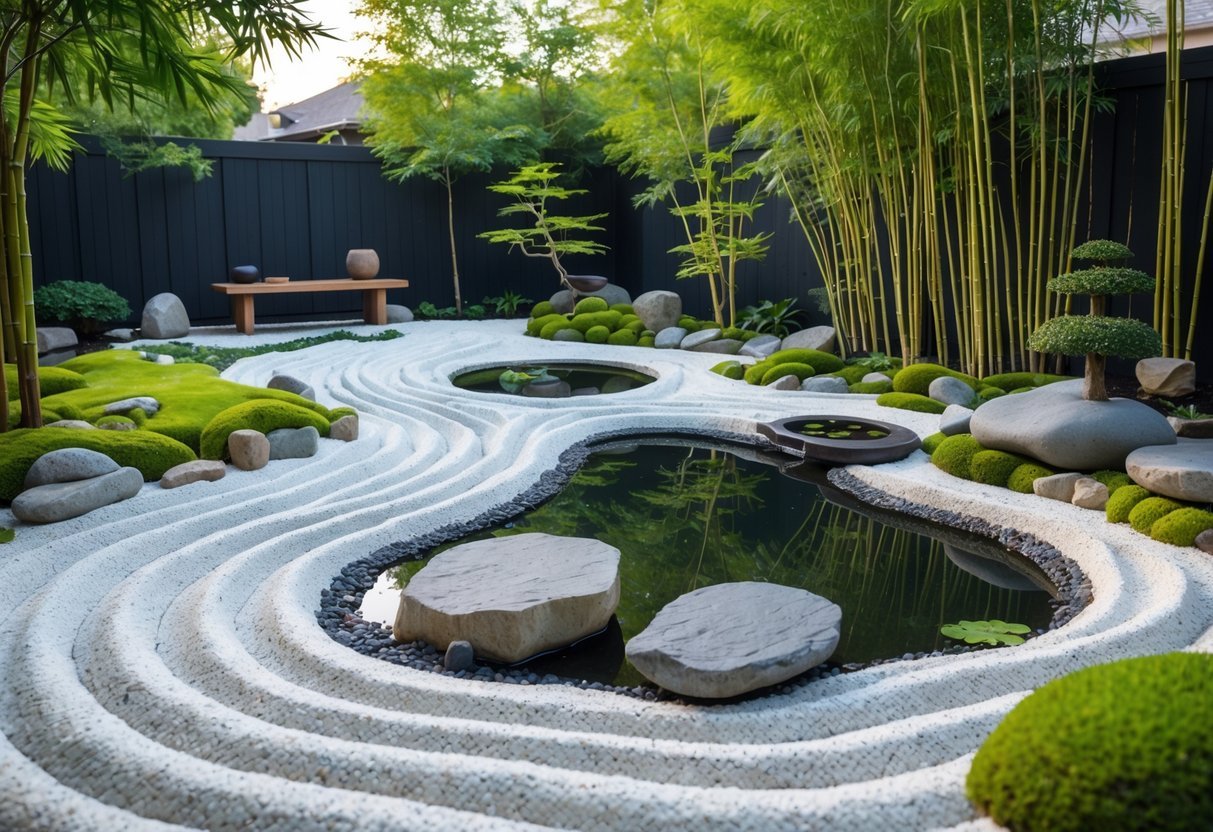
You’ll focus on simple layouts, careful material choices, and meaningful symbols that guide how the space feels and how you use it. These choices shape sightlines, movement, and the calm atmosphere you want in your backyard.
Balance and Minimalism
Balance in a Zen garden means arranging elements so no single part overwhelms the rest. Use odd-numbered groupings of rocks (3 or 5) and leave open gravel or sand areas to give the eye space to rest. Place larger items near the back or side to anchor the view and smaller items toward the front to create depth.
Minimalism removes clutter. Limit plant types to a few textures—moss, evergreen shrubs, and a single flowering accent work well. Keep paths simple and direct. Avoid busy patterns or too many colors. Your goal is a calm scene that invites pause, not constant visual scanning.
Natural Materials Selection
Choose materials that age well and match your climate. Use local stone for rock groups and stepping stones to reduce maintenance and create a natural look. Pick coarse gravel or crushed granite for raked areas; it holds patterns and drains well. Cedar or teak works for benches and fences because they resist rot and blend with the landscape.
For plants, select low-maintenance species: dwarf pines, boxwood, ferns, and moss. These give year-round texture and require little pruning. Use natural sand or fine gravel for raking; artificial colors or plastics will break the aesthetic and resist weathering poorly.
Symbolism in Zen Aesthetics
Every object can carry meaning, and you should place items with intent. Rocks often represent islands or mountains; arrange them so one dominant stone leads the eye. Sand patterns suggest water flow—curved raking lines imply rivers, straight lines suggest calm water. Plan these patterns based on where you’ll view the garden most often.
Plants and ornaments also carry symbolism. Evergreens stand for endurance; moss suggests age and quiet. A single lantern or basin can mark a focal point and guide movement. Keep symbols simple and few so each one reads clearly and adds to the quiet mood.
Essential Elements for a Backyard Zen Garden
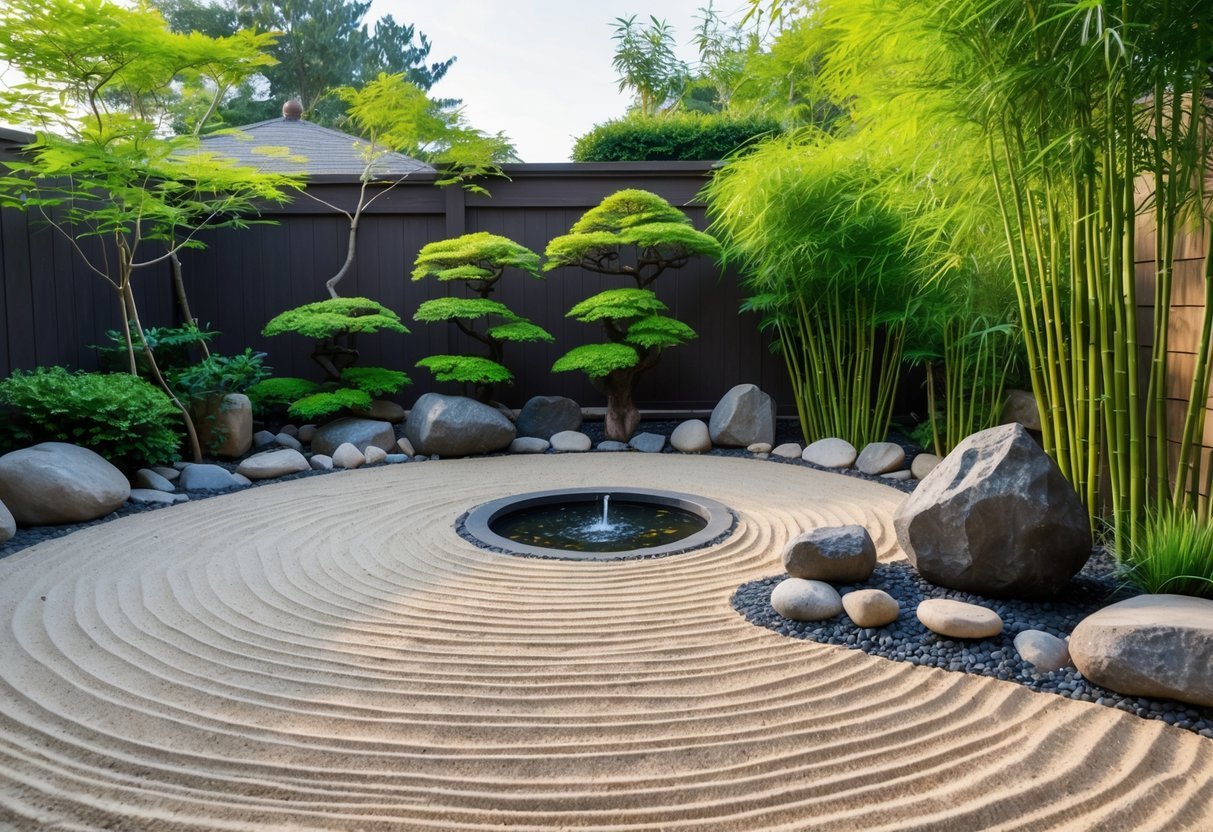
You need simple, natural pieces placed with intent. Focus on texture, balance, and low maintenance to create calm.
Gravel and Sand Patterns
Use crushed granite, pea gravel, or fine sand for the ground plane. Choose a color that matches your home—light gray or beige works well—and lay a weed barrier beneath to keep maintenance low.
Rake patterns to suggest water flow or ripples. Straight lines feel formal; concentric circles around a stone feel meditative. Keep tools nearby and rake regularly; fresh patterns reset the space and invite short daily rituals.
Edge the gravel with timber, stone, or low metal to keep clean lines. Depth should be 2–4 inches to prevent patchy spots and to hold raked texture. For small yards, use a compact gravel area or a shallow sand tray instead of a full bed.
Stone and Rock Arrangements
Select 1–3 focal stones of varying height and texture. Place the largest stone slightly off-center to avoid symmetry, and angle secondary stones toward it to create a visual flow.
Use flat stepping stones to guide movement and encourage slow walking. Keep gaps even and wide enough for easy stepping. Anchor small rocks with sand or gravel so they won’t shift during rain.
Avoid clutter. Let empty space around stones act as part of the design. If you use pebbles to surround a boulder, keep their color contrast subtle to maintain a calm look.
Water Features Integration
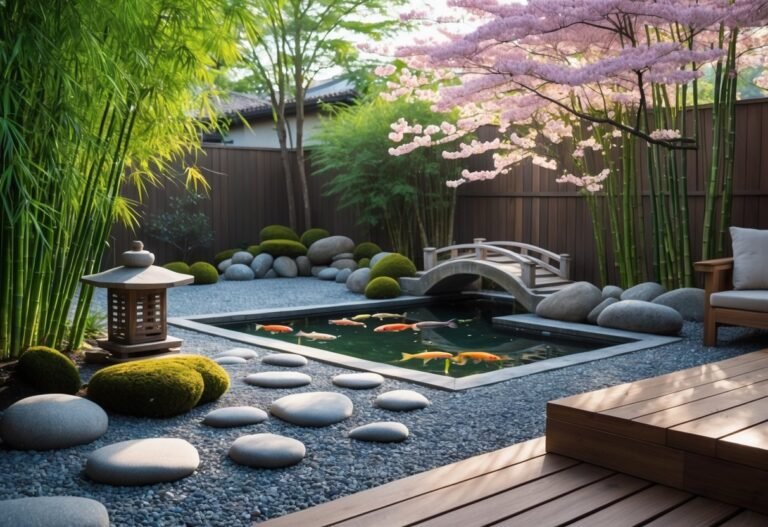
Choose a quiet water element like a small pond, a bamboo spout (shishi-odoshi), or a recirculating basin. Size the feature to fit your scale—small bowl fountains suit tight corners, while a shallow pond fits larger yards.
Place water where you can hear it from your main seating area. Use an electric pump with a simple filter to keep water clear and reduce upkeep. Add a discrete overflow and winterize equipment in cold climates.
Blend water with stone and plants. Keep edges natural—rocks or gravel rather than concrete—to preserve a seamless, calm aesthetic. Avoid large fountains with loud spray that disrupts quiet.
Plants for Serenity
Choose slow-growing, low-maintenance plants: moss, dwarf conifers, bamboo (clumping type), Japanese maple, and hostas. Pick species suited to your light and hardiness zone to reduce work and replacement.
Use plants sparingly and as accents. Place taller plants at the back or border and low groundcovers near pathways and stones. Trim for clean lines and remove dead material promptly.
Favor evergreen structure and seasonal interest. Moss adds a soft carpet next to stones; a small maple adds fall color without heavy flowering. Avoid overplanting—each plant should serve a clear visual or textural role.
Creative Backyard Zen Garden Design Ideas
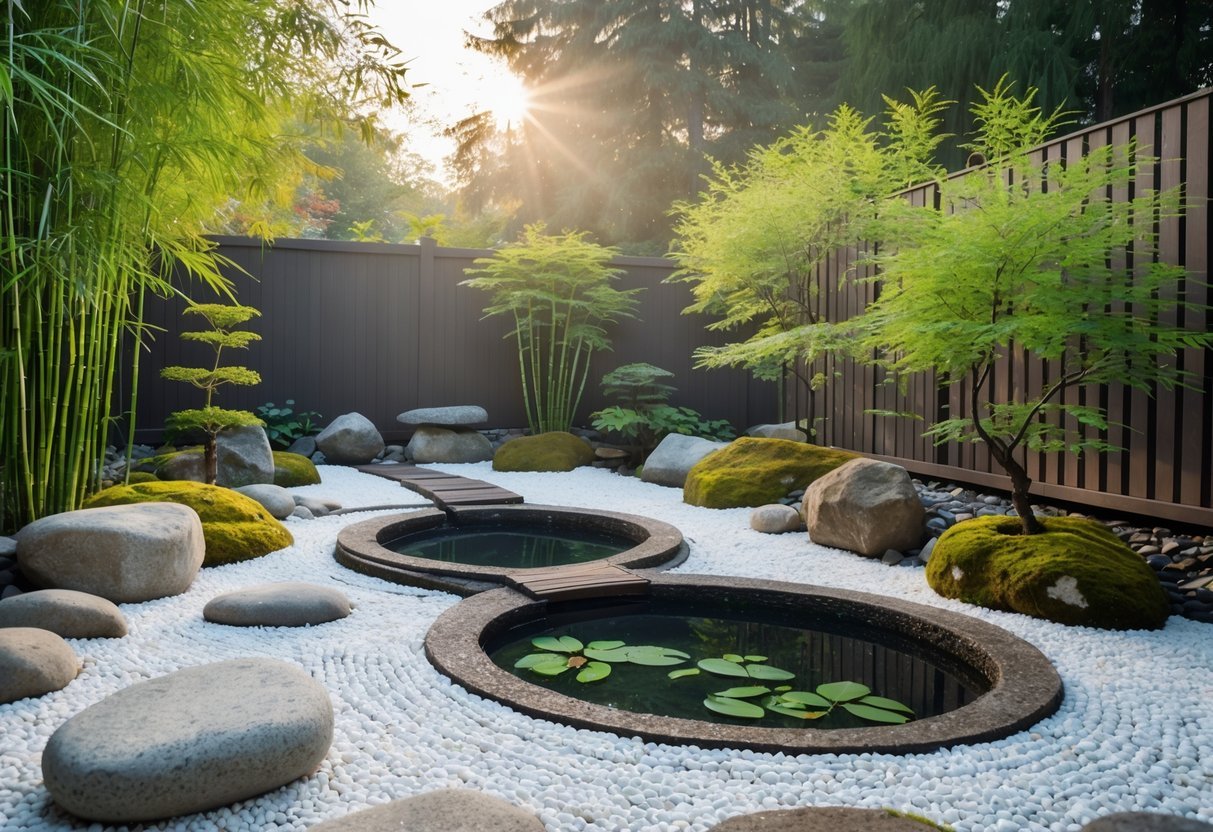
Focus on clear choices: fit the layout to your space, guide movement with paths, and place seating for quiet use. Pick plants, materials, and focal points that match your yard’s size and sunlight.
Small Space Solutions
Use vertical elements to save ground space. Install a narrow bamboo screen, wall-mounted planters, or a trellis with climbing ivy. These add green without taking up the floor area.
Choose small-scale features: a compact rock arrangement, a tabletop sand garden, or a petite water basin. Place them where you can see and reach them from your patio or a single chair.
Limit plant variety to three or fewer species for a calm look. Use dwarf bamboo, moss, and a small evergreen like boxwood. Keep hardscape colors neutral — gray gravel, dark slate, and light river stones.
Create zones with containers. Group pots of different heights to form a mini-corner for meditation or tea. Make sure a clear 2–3 foot path remains for easy access and maintenance.
Pathways and Stepping Stones
Decide on a main route and avoid extra branches. A single curved path feels natural and guides you to the focal point, like a lantern or water bowl.
Use materials that match your style: smooth slate for a modern look, weathered flagstone for a rustic feel, or compacted gravel for low cost. Set stones with 1–2 inch gaps and fill gaps with moss or low groundcover.
Keep stepping stones stable and level. Sink them into sand or soil so they sit flush or slightly raised to prevent tripping. Test each stone at different seasons to avoid shifts from frost or wet ground.
Add subtle edging to define the walkway. Low borders of river rock or a line of trimmed grass keep gravel from spreading and emphasize the path’s shape.
Seating and Meditative Zones
Pick seating that invites stillness. A low bench, a stone stool, or a simple tatami mat work well. Place seating facing your focal point so you don’t have to turn to see it.
Create a clear area of at least 4×4 feet for one person and 6×6 feet for two. Leave room for a small table or cushion and a teapot or journal.
Use natural materials for comfort and durability. Teak, cedar, or stone resist weather and match the Zen aesthetic. Add one soft textile like a weatherproof cushion for longer sessions.
Place seating in partial shade if you plan to meditate midday. For evening use, add a soft solar lantern or low-voltage light to keep the mood calm and safe.
Finishing Touches and Maintenance Tips
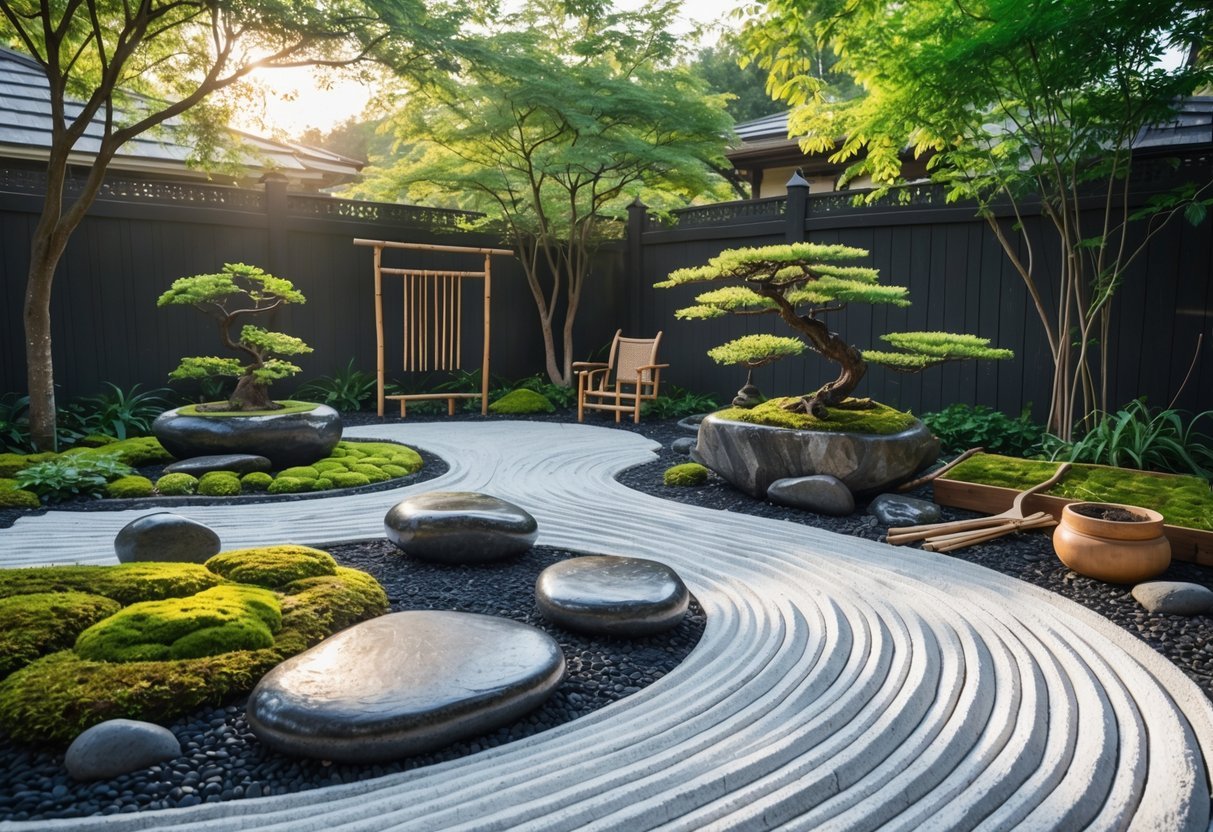
Build soft lighting, pick a few meaningful accents, and set simple weekly tasks to keep the garden tidy and calm. These steps make the space usable at night, give it character, and keep plants and gravel looking neat.
Lighting for Ambiance
Use low-voltage LED path lights to mark walkways and the edges of raked gravel. Place lights 6–8 feet apart for even glow; aim the beam slightly downward to avoid glare. Solar stake lights work if you lack wiring, but choose high-efficiency panels for cloudy seasons.
Add a few accent lights for focal points: a small spotlight for a sculptural stone, and a warm-hued lantern near a bench. String lights can work over a seating area but keep them simple and dimmable. Use warm color temperatures (2700–3000K) to preserve calm.
Mount fixtures on short posts or hide wiring under gravel or mulch to keep lines clean. Test setups at dusk before finalizing positions. Label any low-voltage transformers so you can troubleshoot quickly.
Decorative Accents
Choose accents that match the garden’s simple style. One or two larger stones, a bamboo water spout, or a wooden bench create focal points without clutter. Avoid too many small ornaments; they break the calm.
Pick materials that withstand weather: sealed hardwood, stainless steel, or stone. Use natural colors—grey, tan, dark brown—to blend with gravel and plants. Place accents on stable bases to stop sinking or tilting.
Group items in odd numbers (three is classic) to look balanced. Add a shallow basin for a water sound feature, but size it so it doesn’t overwhelm the layout. Keep seasonal ornaments stored away to keep the space consistent year-round.
Easy Care Routines
Rake patterns weekly to maintain the gravel’s neat look and to prevent weeds from taking hold. Use a short-handled rake and sweep toward focal stones; this refreshes the design and reveals any debris.
Trim slow-growing plants once a month and remove dead leaves as you spot them. Prune bonsai-style shrubs lightly to keep form. Mulch around plant bases to reduce watering and slow weed growth.
Check lighting and water features monthly. Clean lantern lenses and clear filters on pumps. Keep a small kit (pruner, rake, hand trowel, torch) in a weatherproof box near the garden for quick touch-ups.
Frequently Asked Questions
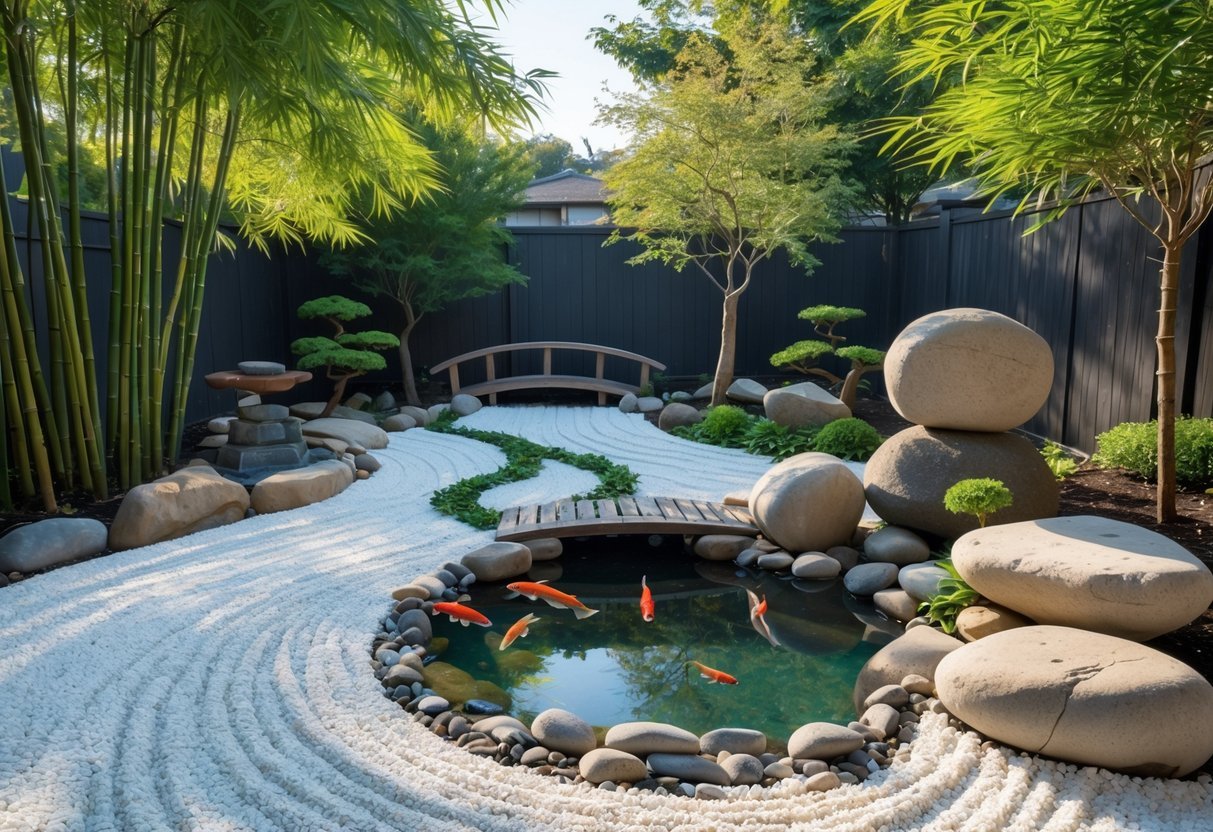
These answers give practical steps, materials, and layout tips you can use right away. Each response focuses on clear actions and specific examples for designing your backyard Zen garden.
How can I integrate the seven principles of a Zen garden into my backyard design?
Identify each principle and add one clear feature for it. For simplicity, use:
- Simplicity: remove clutter; keep plant and material choices minimal.
- Asymmetry: place stones and features off-center rather than in straight lines.
- Balance: pair a large rock with two smaller ones to keep visual weight steady.
- Naturalness: use native stones, weathered wood, and plants that match your climate.
- Subtlety: pick muted colors and avoid bright, flashy decor.
- Tranquility: include a quiet seating spot or low water feature for soft sound.
- Space: leave open gravel or sand areas to breathe.
Place features deliberately. Sketch a plan with one focal rock, a path, and one seating area before you buy materials.
What are cost-effective methods to create a Zen garden in a small backyard?
Use affordable materials and scale down components. Gravel or decomposed granite works as a cheap base instead of poured concrete. Reuse large rocks from local sources or look for reclaimed stone.
Pick compact elements. A single moss patch, a few bamboo stakes, and a small raked gravel area give the Zen feel without large expense. DIY simple seating from pallets or a bench made from a slab of wood and block supports.
What are some low maintenance features to include in a Zen garden for the backyard?
Choose elements that need little care. Gravel, large stones, and hardscape like stepping stones need almost no upkeep. Evergreen shrubs, ornamental grasses, and moss require minimal pruning and watering.
Add a simple drip irrigation for any planted areas to cut routine work. Use weed barrier fabric under gravel to reduce weeding and keep raking limited to a few times a year.
How can the 70/30 rule be applied to designing a Zen garden?
Use the 70/30 rule to set area proportions. Allocate roughly 70% of the space to open areas like gravel, sand, or lawn and 30% to features such as rocks, plants, and seating.
This creates calm visual space and prevents overcrowding. Apply the ratio to smaller zones too: for example, 70% raked gravel and 30% stone arrangement in a tabletop or corner garden.
What elements are essential for a modern Zen garden in the backyard?
Combine traditional items with simple modern lines. Essential elements include gravel or sand for texture, one to three sculptural stones as focal points, sparse planting (moss, bamboo, or small conifers), and a clear path or stepping stones.
Add one modern touch like a geometric bench, a linear water channel, or minimal lighting to make the space feel current while keeping the layout restrained.
How can I transform my front yard into a Zen garden space?
Start by simplifying sightlines from the street. Remove excess ornamentation and replace busy flower beds with gravel or low groundcover. Place one or two large rocks and a clear path from the sidewalk to your entrance.
Use low, well-trimmed shrubs to frame the walkway and add a single accent light near the focal stone for evening calm. Keep plant choices hardy and low so curb appeal stays neat with little work.