White Flowers Garden Design Ideas for Timeless, Low-Maintenance Landscapes
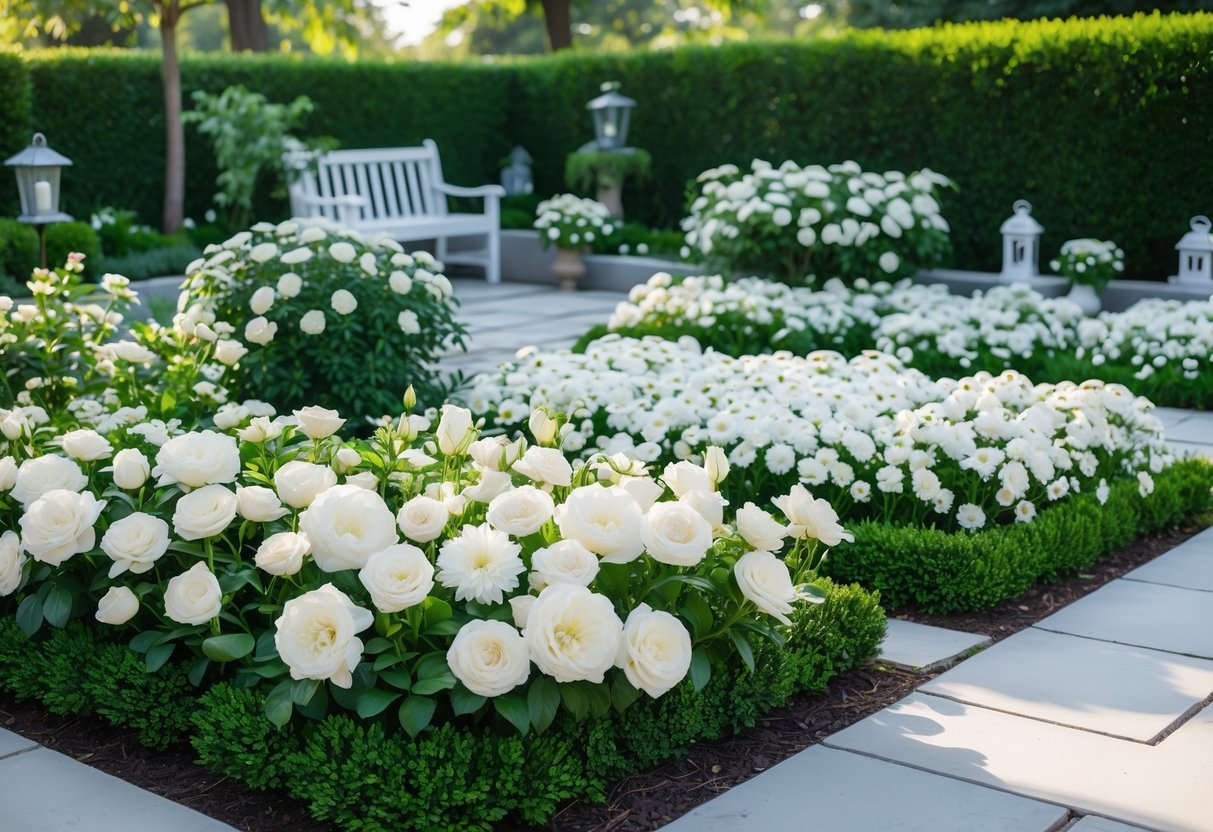
White flowers bring calm and polish to any garden, and you can use them to create looks from wild and cottagey to sleek and modern. Start with a simple plan: pick mixes that bloom at different times, add varied leaf shapes and heights, and place a few focal plants like hydrangeas or roses for steady impact.
A well-planned white garden gives you color that glows day and night while staying easy to care for and mixing well with any style.
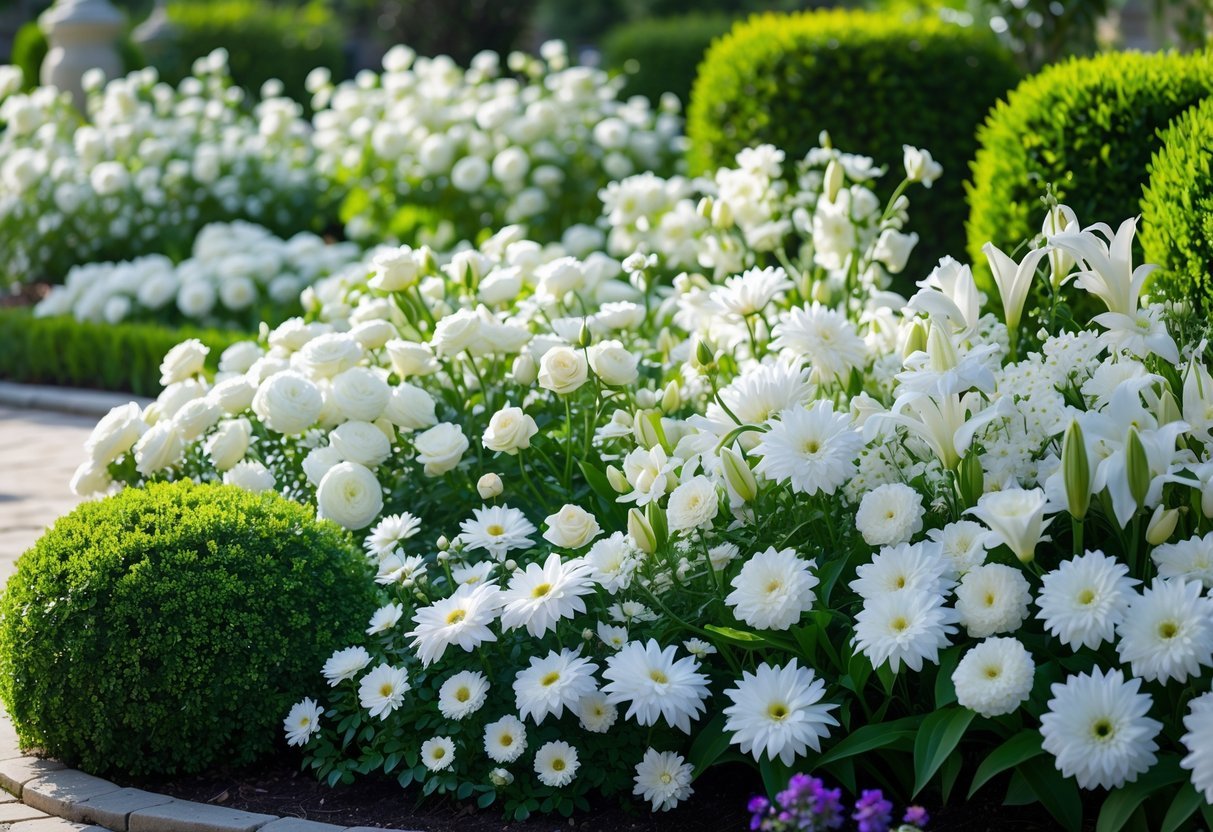
Think about texture, layers, and lighting to keep the space lively through the seasons. Small touches—mulch, edging, and night lights—make the whites pop and keep your beds tidy without extra work.
Key Takeaways
- Plan planting times and heights so white blooms last across seasons.
- Use varied foliage and a few focal plants to add depth and interest.
- Simple maintenance and lighting keep the garden looking its best year-round.
Planning a White Flowers Garden
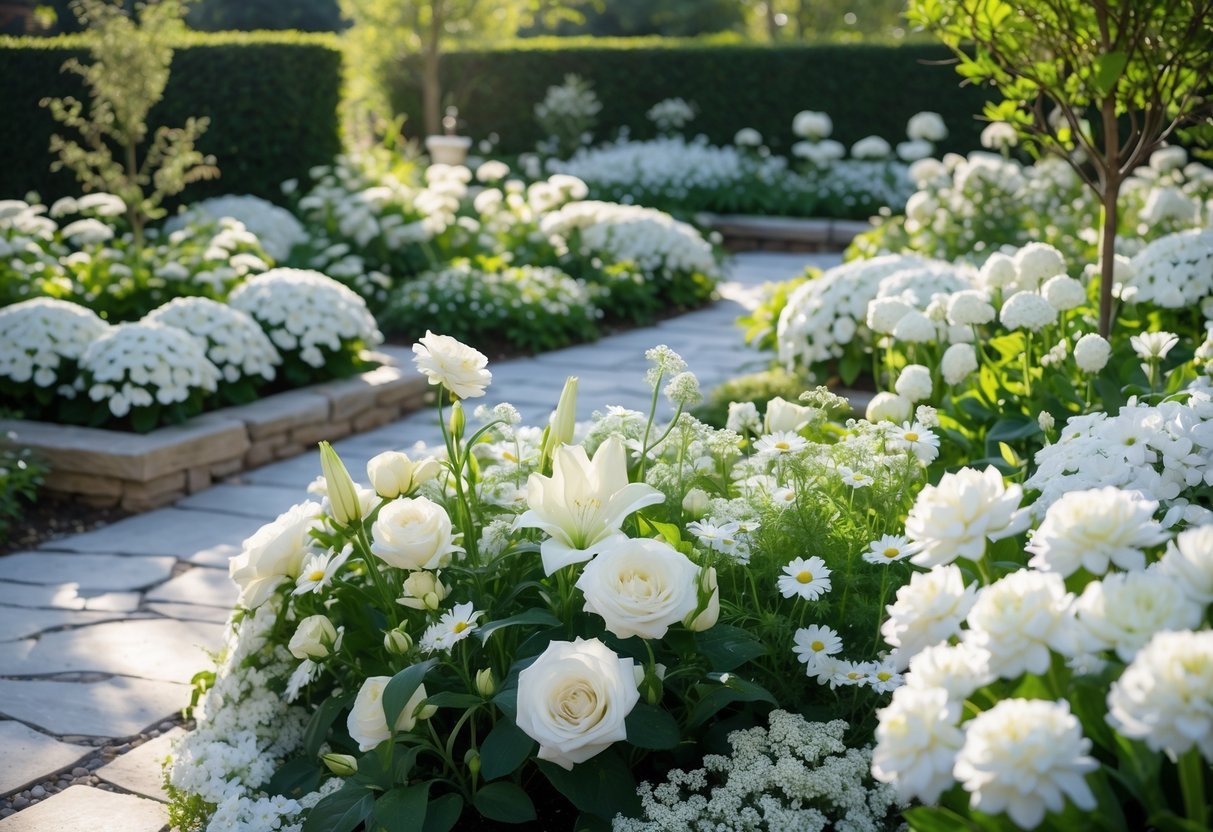
Plan plant choices, sun and soil needs, and a layout that balances height and texture. Think about bloom times, evergreen structure, and where you want focal points or soft background fillers.
Choosing the Right White Bloom Varieties
Pick plants that match your climate and soil. For full sun areas, choose white roses, tulips, and Shasta daisies. For part shade, pick white astilbe, hellebores, or impatiens. Use evergreen shrubs like boxwood or viburnum for year-round structure.
Mix bloom shapes and sizes to avoid a flat look. Combine big blooms (peonies, hydrangeas) with airy flowers (cosmos, Queen Anne’s lace) and low groundcovers (sweet alyssum). Stagger bloom times: spring bulbs, summer roses, fall asters. This keeps white visible most of the year.
Consider disease resistance and maintenance. Choose varieties known to resist local pests or that need little deadheading if you prefer low care. Label plants so you remember pruning and fertilizing needs.
Selecting Ideal Garden Locations
Assess sun exposure first. Map sunny spots (6+ hours), part-shade spots (3–6 hours), and deep shade. Plant sun-loving whites in the sunny map areas and shade-tolerant whites under trees or near north-facing walls.
Check soil drainage and pH. Dig test holes: soil that crumbles lightly and drains within a day is good. Amend heavy clay with compost and coarse sand. Add lime for very acidic soil only if your plant choices need it.
Place focal white plants where you want attention: near entrances, along paths, or beside a seating area. Use white as a background for colorful accents or as the main theme in a monochrome bed. Keep watering access and sightlines in mind.
Designing Layouts for Visual Harmony
Create layers: tall plants at the back or center, medium plants in the middle, low plants at the edge. Repeat three to five plant groups to create rhythm. Use odd-numbered groupings for a natural look.
Balance textures and leaf color. Pair glossy, dark green foliage with silver or variegated leaves to make white blooms stand out. Add structural evergreens to keep the bed interesting between blooms.
Use hardscape elements to frame the white garden. Paths, gravel, or dark mulch increase contrast. Place lighting to make white blooms visible at night. Sketch a simple plan with plant names and spacing before you dig.
Styling Ideas for White Flower Beds
White beds work well with clear structure, varied textures, and blooms that peak at different times. Choose a strong edge, mix foliage types, and plan for blooms from spring through fall.
Monochrome Borders and Edges
Use a single white bloom type or several white varieties with similar height to create a calm, unified border. Plant dwarf white roses or alyssum for low edging. For a higher border, use white hydrangeas or phlox placed 18–36 inches behind the edge plants.
Mix leaf textures to avoid a flat look. Pair glossy evergreen boxwood or yew as a clipped backdrop with fine-textured grasses or lamb’s ear in front. This contrast keeps your border interesting even when flowers fade.
Keep planting lines neat. Use a narrow gravel or brick path to define the edge. Maintain consistent spacing—about 8–12 inches for small plants, 18–36 inches for shrubs—to give each plant room to show its shape.
Cottage-Style Planting Schemes
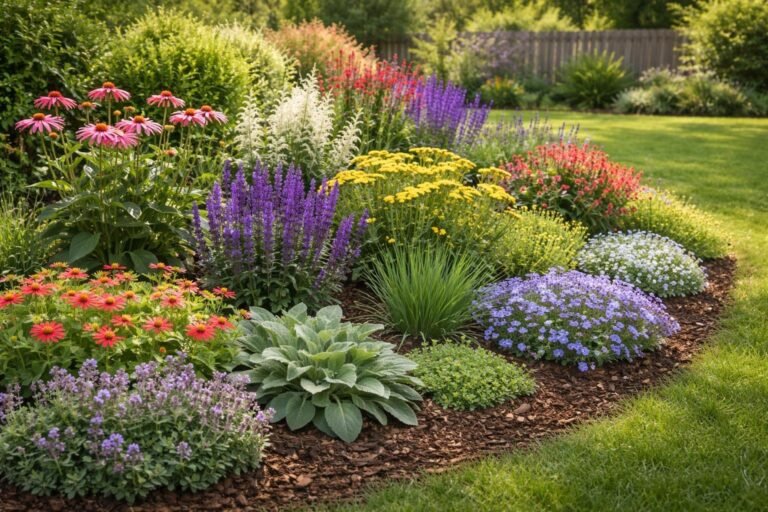
Aim for a relaxed, layered mix of white flowers with varied heights and repeat patterns. Combine foxgloves, white roses, and white cosmos. Plant taller spires at the back and scatter lower drifts of white alyssum or sweet peas in front.
Let some plants self-seed for a soft, informal look. Include textured foliage—like hosta or geranium leaves—to add color depth. Use curved beds rather than straight lines to enhance the cottage feel.
Keep maintenance simple. Deadhead spent blooms to encourage reblooming. Replace any aggressive self-seeders if they crowd slower growers. A light layer of compost in spring helps sustain long flowering seasons.
Formal Garden Arrangements
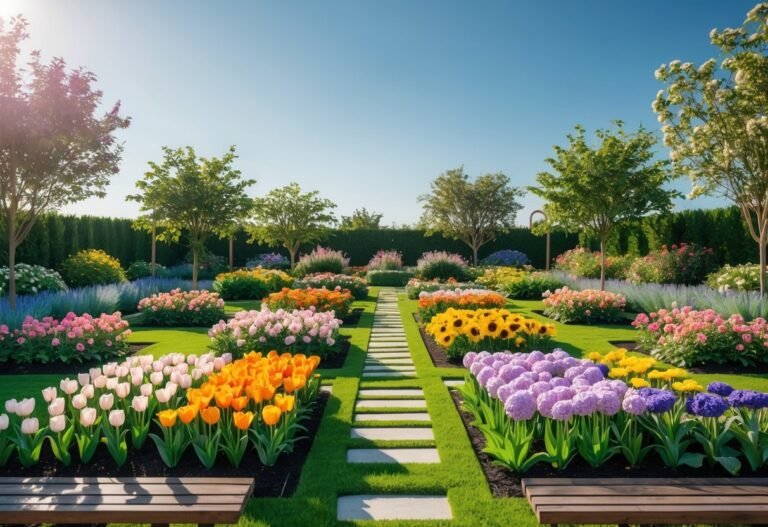
Focus on symmetry, repetition, and clear geometry. Set white blooms in paired beds, clipped parterres, or along a central walkway. Use repeat plant groups—three or five plants per block—to create rhythm.
Choose sculptural plants that hold shape: white peonies, standard roses, or neat white box-flowered shrubs. Use evergreen hedges or low clipped borders to frame each planting bed and keep lines crisp.
Use a limited palette of two or three white varieties to maintain formality. Mulch cleanly and prune to maintain shape. For night interest, add white-flowering plants with strong scent near paths so you and guests notice them after dusk.
Enhancing Ambiance With White Blooms
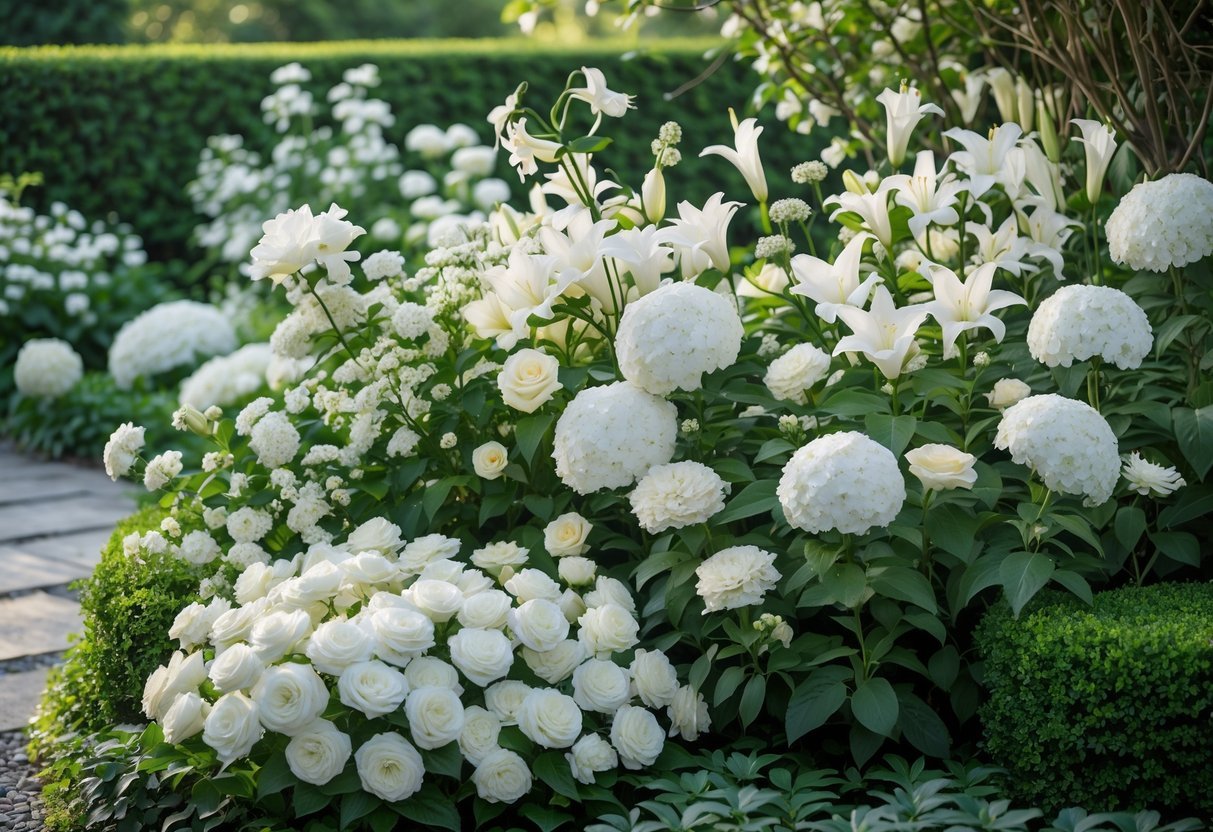
White flowers change how your garden feels at different times and draw the eye to chosen spots. Use blooms to add evening light, contrast with leaves, and mark key areas like paths or seating.
Nighttime Glow and Moon Gardens
Plant white blooms that reflect moonlight and make your yard readable after dark. Choose flowers with larger, flat faces—like white cosmos, moonflower, or night-blooming jasmine—near walkways and seating so light from lamps or the moon bounces off petals. Place low-growing alyssum or white candytuft along path edges to guide footsteps without harsh lighting.
Add a few soft lighting fixtures—warm LED uplights or low-voltage path lights—to enhance the glow without washing out the flowers’ subtle tones. Avoid blue or very bright white bulbs; they reduce the warm effect. Consider scent too: night-blooming species such as evening stock or nicotiana give fragrance when you sit outside.
Combining White Blooms With Foliage
Use leaf color and texture to keep a white garden from feeling flat. Pair white flowers with silver-gray plants like lamb’s ear or artemisia for a cool, cohesive palette. Dark green shrubs such as boxwood or yew create strong contrast that makes white blooms pop during the day.
Vary heights and textures. Mix tall white delphiniums or foxgloves at the back of a bed with mid-height hydrangeas and low bulbs or groundcovers in front. Use dense, glossy leaves as a backdrop and feathery or lacy foliage (like fennel or Queen Anne’s lace) in front to add depth. Repeat the same foliage groupings in several spots to lead the eye through the garden.
Accents and Focal Points
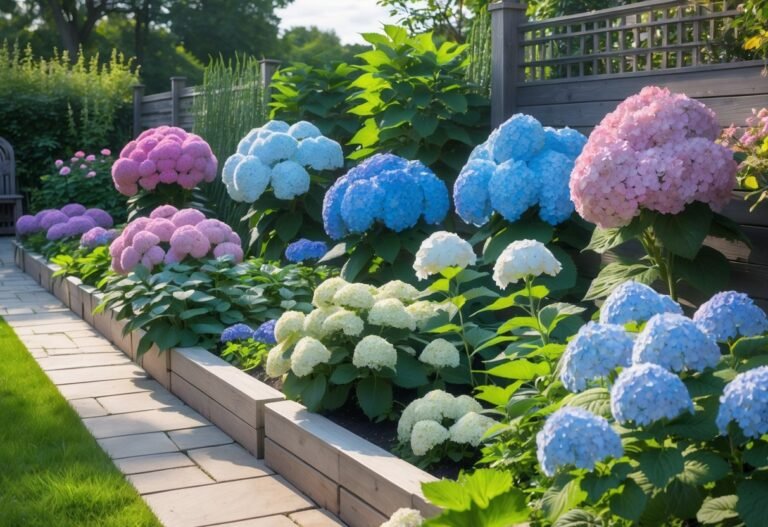
Place white blooms where you want attention. Use a large white-flowering shrub, such as hydrangea or mock orange, near a patio as a centerpiece. Frame an entrance with white climbing roses or clematis to create a clear focal point.
Create small accent clusters—three to five plants of the same white species—to anchor corners or bench areas. Add containers with white tulips or narcissus for seasonal highlights and easy repositioning. Use contrast: surround a white focal plant with dark mulch or low evergreen edging to make it stand out day and night.
Year-Round Maintenance and Care for White Flower Gardens
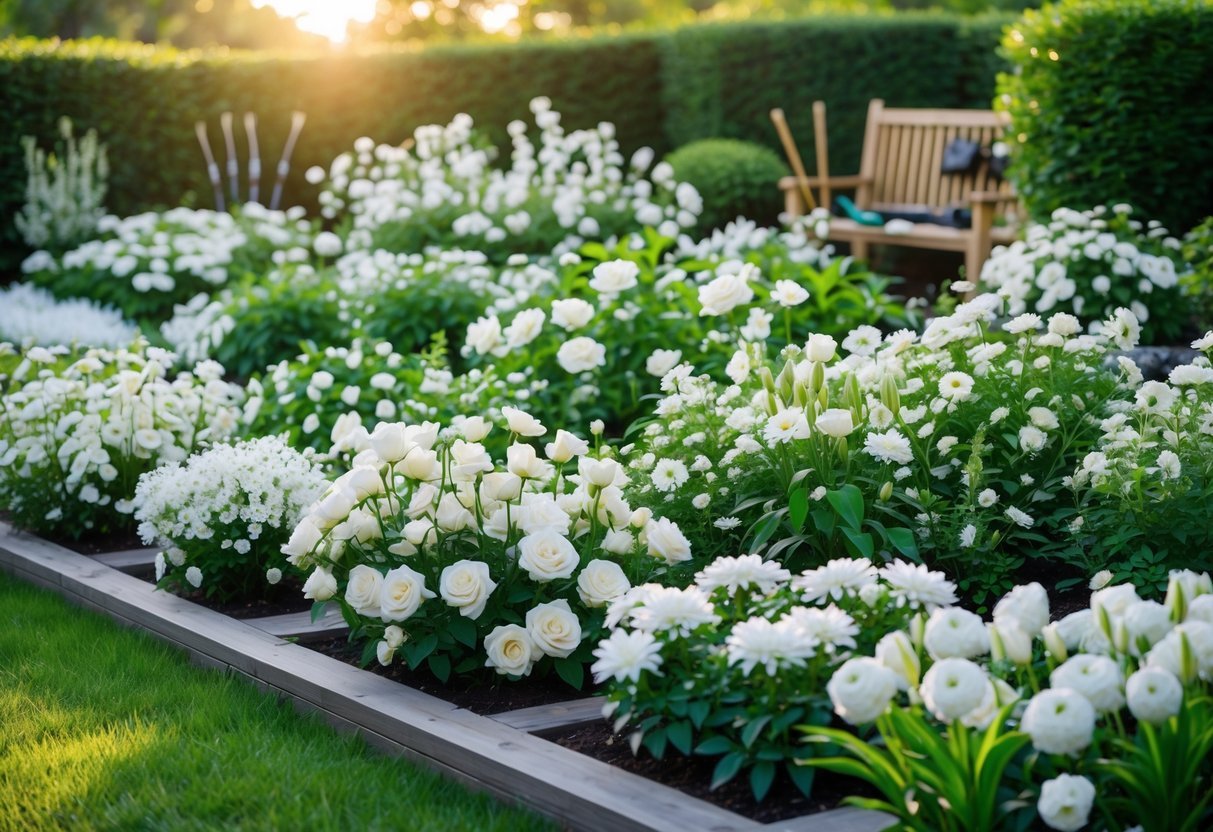
Keep soil evenly moist, check plants weekly for pests, and plan pruning by bloom time. A simple routine—watering, feeding, and quick inspections—keeps white blooms bright and healthy.
Protecting Blooms From Pests and Diseases
Inspect plants at least once a week for chewed leaves, sticky residue, or white powder. Early spotting helps you treat problems before flowers suffer.
Use these steps for common issues:
- Remove affected leaves with clean shears to stop spread.
- Spray with insecticidal soap or neem oil for aphids and whiteflies; repeat every 7–10 days until control.
- For fungal problems like powdery mildew, improve air flow by spacing plants and avoid wetting foliage when you water.
- Apply a copper or sulfur fungicide only when needed and follow label rates.
Choose resistant varieties when possible. Keep mulch 1–2 inches from stems to prevent rot. Rotate annuals and move perennials every few years if soil-borne disease recurs.
Seasonal Pruning and Deadheading
Deadhead spent blooms to extend flowering on roses, petunias, and geraniums. Pinch or snip just above the next set of healthy leaves or a leaf node.
Follow a seasonal pruning plan:
- Spring: Remove winter-damaged wood and shape shrubs before new growth starts.
- After first bloom: Cut back repeat-flowering perennials by one-third to promote more blooms.
- Summer into fall: Continue light deadheading; avoid hard pruning late in season.
- Late fall or early winter: Cut back tender annuals and mulch hardy perennials; leave seed heads on some plants for winter interest and bird food.
Use sharp, clean tools and make angled cuts to minimize water sitting on wounds. Sterilize tools with rubbing alcohol between plants when disease is present.
Frequently Asked Questions
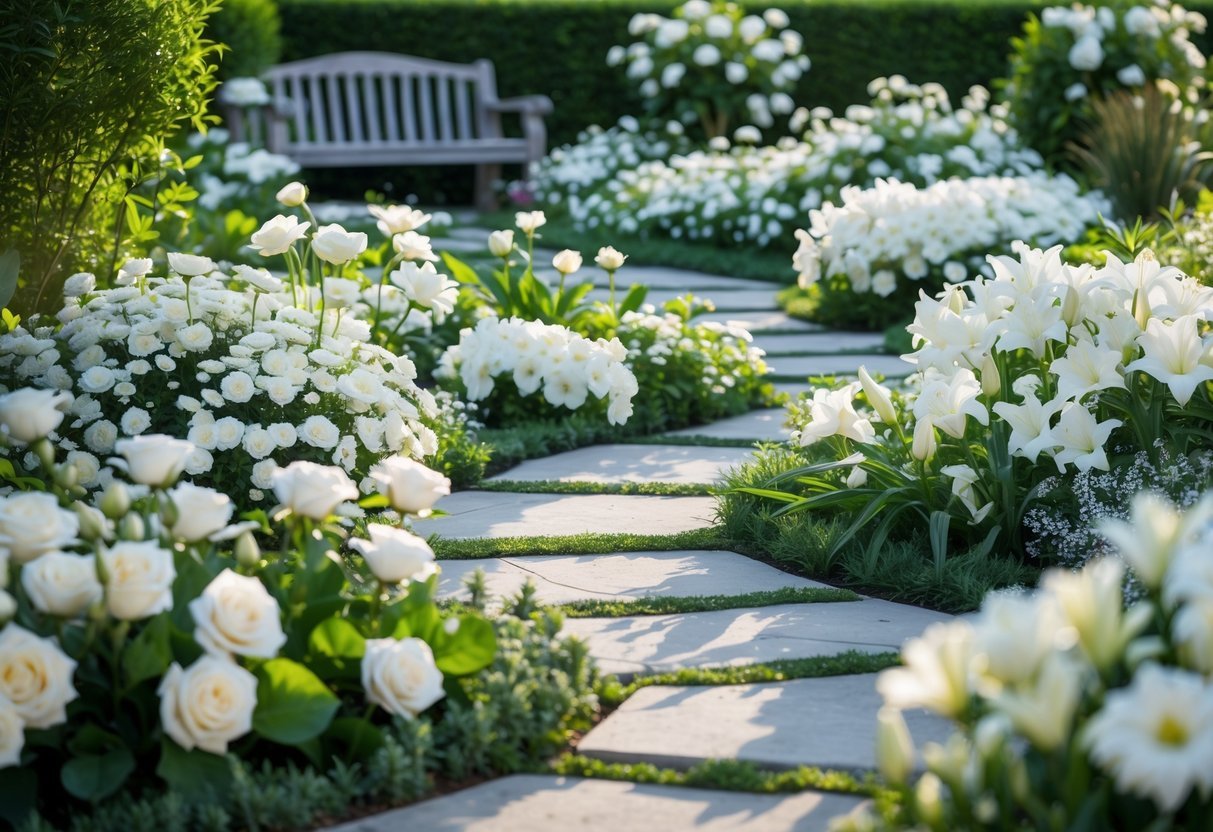
This section gives clear, practical answers about plant choices, layout tips, and size options. You will find specific flower names, simple planting steps, and design moves that work in front yards and small spaces.
What are the best low maintenance white flowers for a garden design?
Choose perennials and self-seeding annuals that need little pruning or fuss. Good picks include Shasta daisy, dwarf hydrangea, daylilies with white varieties, and sedum.
Also consider groundcovers and herbs that bloom white, such as creeping thyme and chamomile. These reduce weeds and need minimal watering once established.
How can I create a simple white flower garden?
Start with three to five plant types for repeat planting and easy care. Use a dominant mid-height plant, a low groundcover, and one or two accents for texture.
Space plants to allow airflow and reduce disease risk. Mulch, set a simple drip irrigation line, and choose varieties with staggered bloom times.
What design elements should be considered for a white flower garden in a front yard space?
Prioritize curb appeal with clear sightlines from the street and a neat edge along the sidewalk. Plant in layers: low edging plants, medium shrubs, and taller accents near the house.
Use evergreen foliage or silvery-leaved plants to keep structure year-round. Add a focal point like a white-flowering shrub or a small ornamental tree.
Which tall white flowers are ideal for adding height and structure to a garden design?
Look for hydrangea paniculata, white phlox, and some roses that grow into tall shrubs. Delphiniums and foxgloves also supply vertical spikes in the summer.
Space tall plants toward the back of beds or near the center of island beds. Stake delphiniums and foxgloves if your site is windy.
How can white gardens be effectively incorporated into small spaces?
Use containers, vertical planters, or narrow beds along walkways to maximize limited square footage. Plant compact varieties like dwarf roses, alyssum, and white violas.
Keep the palette tight and repeat a single white bloom or foliage type to make the space feel larger. Small mirrors or light-colored hardscape enhance brightness.
What companion plants complement white flowers in a garden setting?
Pair white flowers with silver or blue foliage to boost contrast and calm the palette. Good companions include lamb’s ear, Russian sage, and blue salvia.
You can also add subtle color accents—pale pink or soft lavender—to avoid a monochrome look. Choose plants with matching soil and water needs to simplify care.