7 Whimsical Garden Ideas to Transform Small Yards Into Playful, Low-Maintenance Retreats
You can turn your yard into a playful, cozy space that sparks joy and invites small moments of wonder. This article shows seven simple, creative ways to add whimsy to your garden so you can make a unique outdoor spot that fits your style and routine.
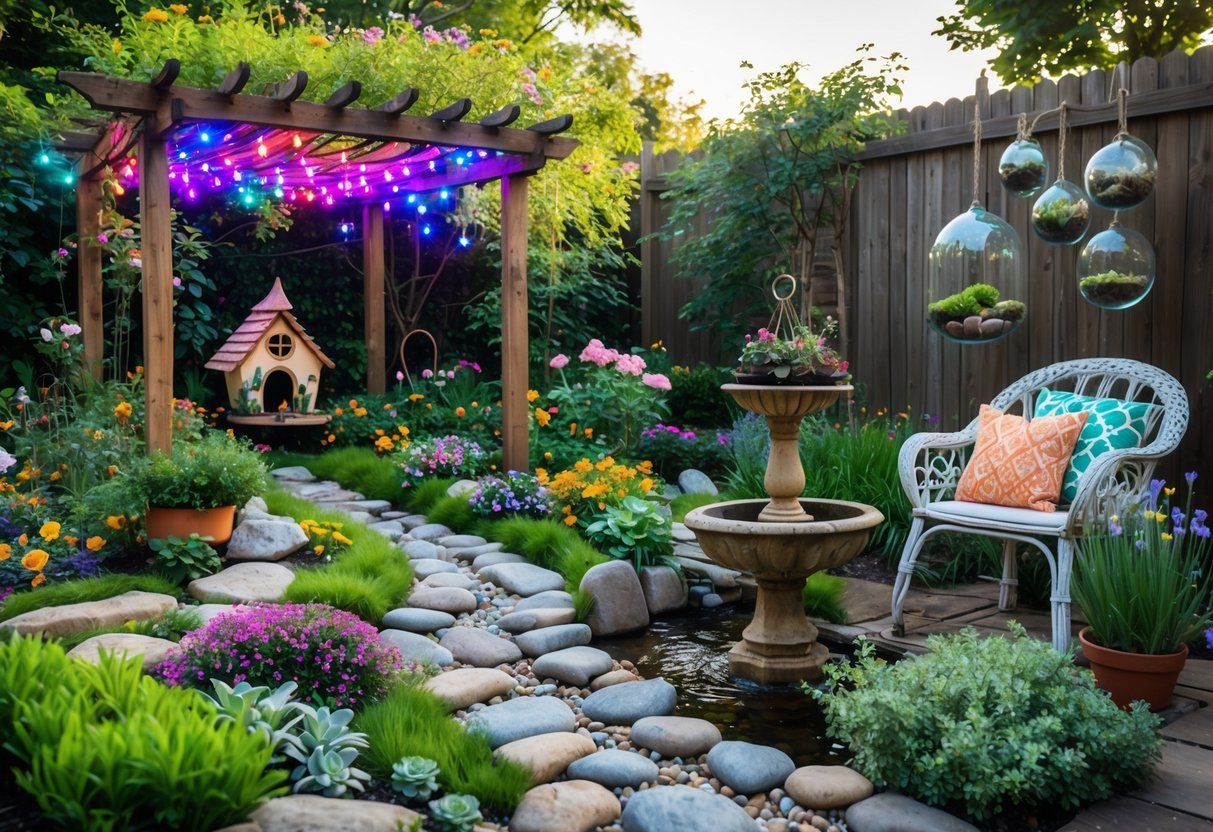
You’ll find ideas that work for any size garden and tips to keep them looking good over time. Expect practical steps for fairy gardens, quirky planters, secret nooks, lighting, and easy upkeep that help you bring storybook charm to your outdoor space.
1) Create a fairy garden with miniature furniture and tiny plants
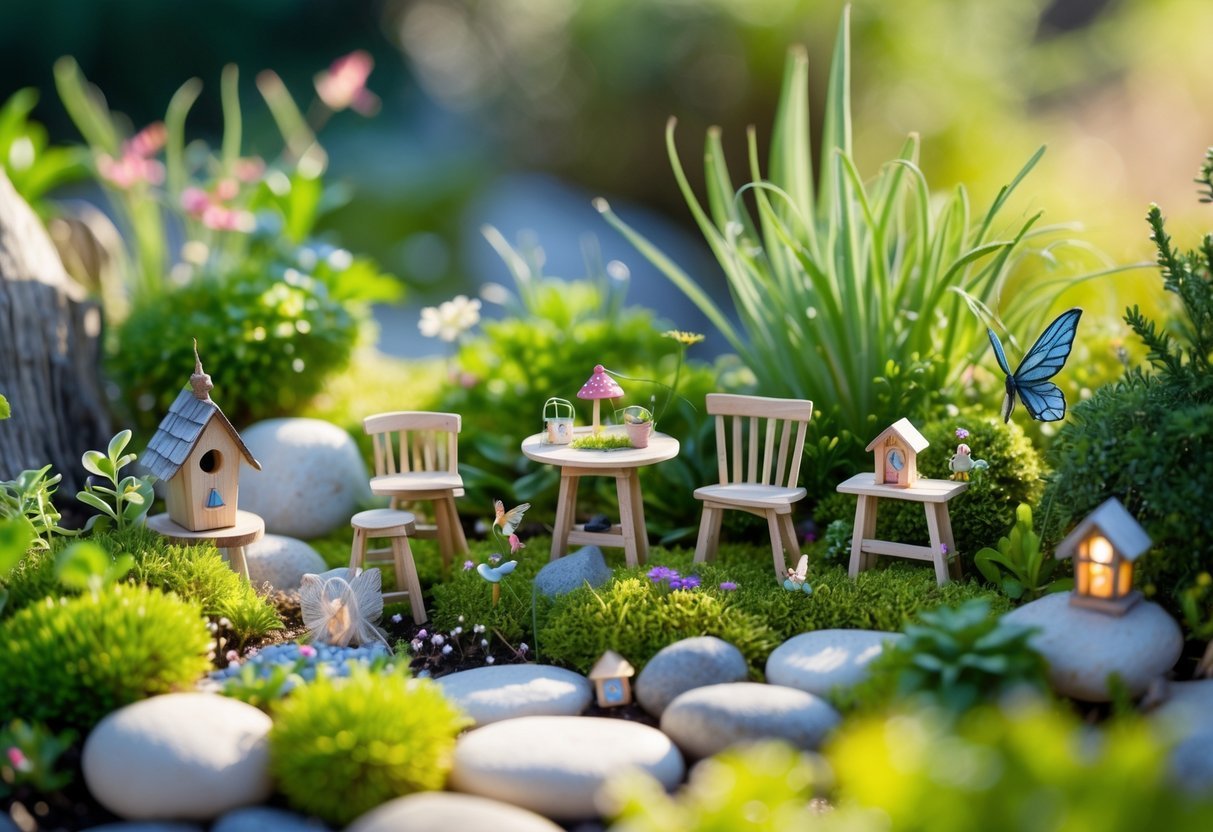
You can build a fairy garden in a pot, trough, or small patch of soil. Choose low-growing plants like moss, succulents, or small groundcovers to keep scale and reduce maintenance.
Add tiny furniture, paths, and a small house to suggest a lived-in space. Use pebbles, twigs, and reclaimed bits for charm and to keep costs low.
Place the scene where you can see it often, such as a windowsill or patio table. Water lightly and trim as needed to keep the miniature look.
2) Hang vintage teacups and lanterns from tree branches
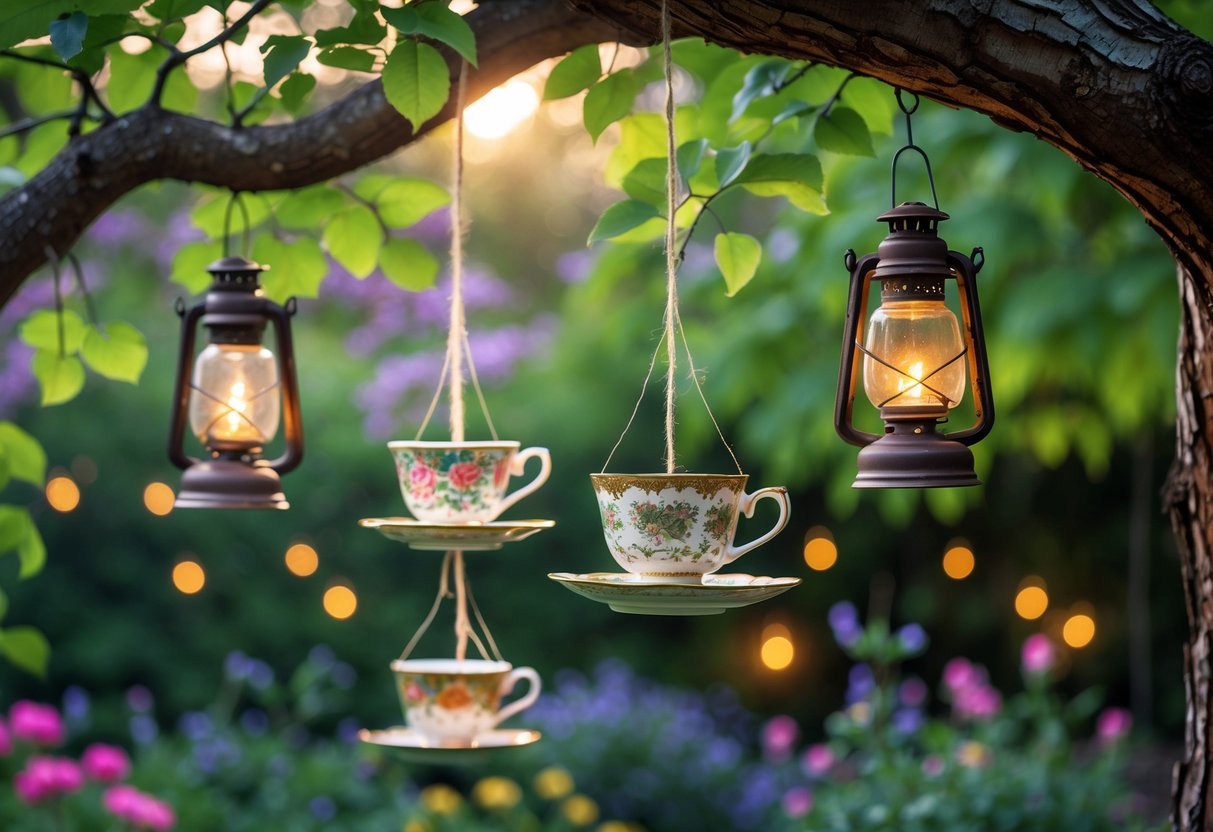
You can turn branches into eye-catching displays with old teacups and simple lanterns. Tie cups with twine or thin wire and secure lanterns with S-hooks so they hang safely.
Use battery or solar fairy lights in lanterns for soft evening glow without wiring. Space items at different heights to add depth and keep heavier pieces close to the trunk for stability.
3) Use mismatched colorful pots for a storybook look
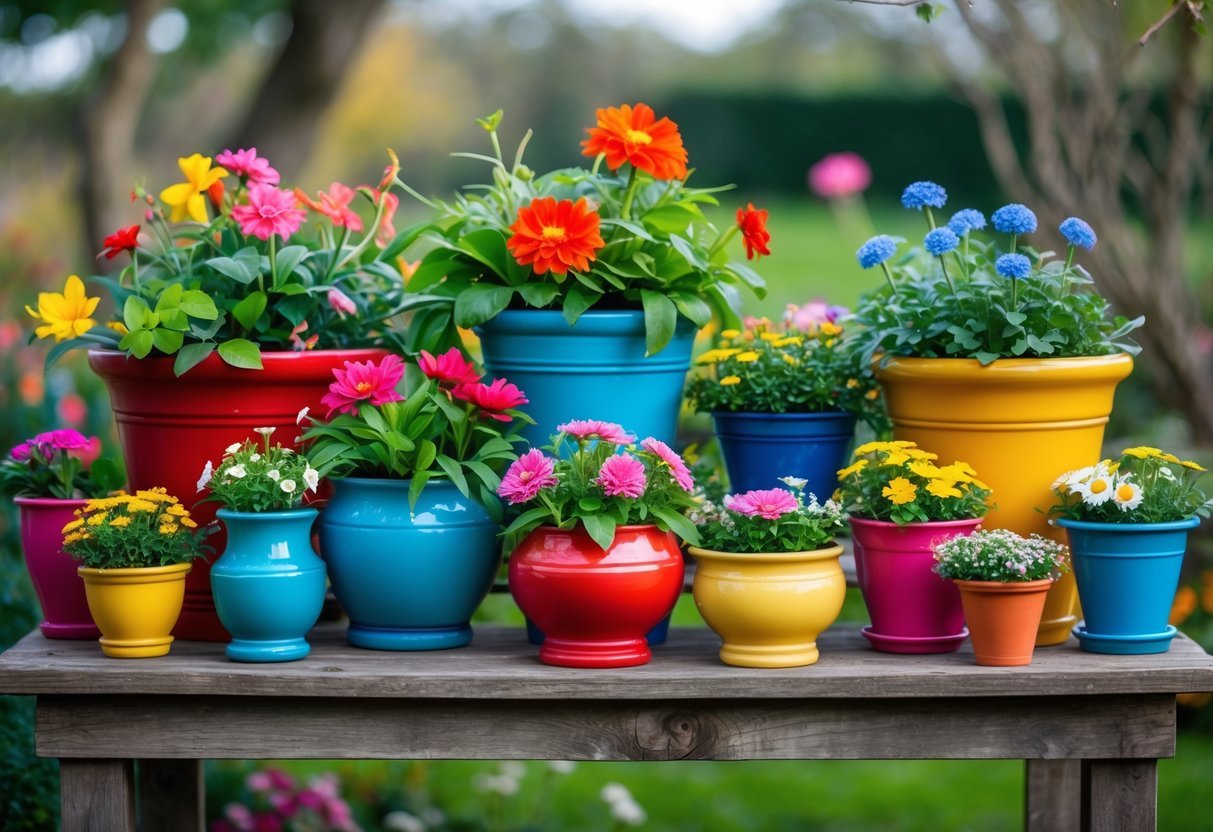
Choose pots of different sizes, shapes, and bright colors to make your garden feel playful and lived-in. Mix terracotta, painted metal, and patterned ceramic for contrast.
Group pots on steps, shelves, or a low wall to create layers and eye-catching clusters. Let some plants spill over the edges for a relaxed, natural look.
Reuse old teapots, boots, or buckets as containers to add charm without buying new items. The result feels whimsical but deliberate.
4) Install a whimsical birdhouse shaped like a cottage
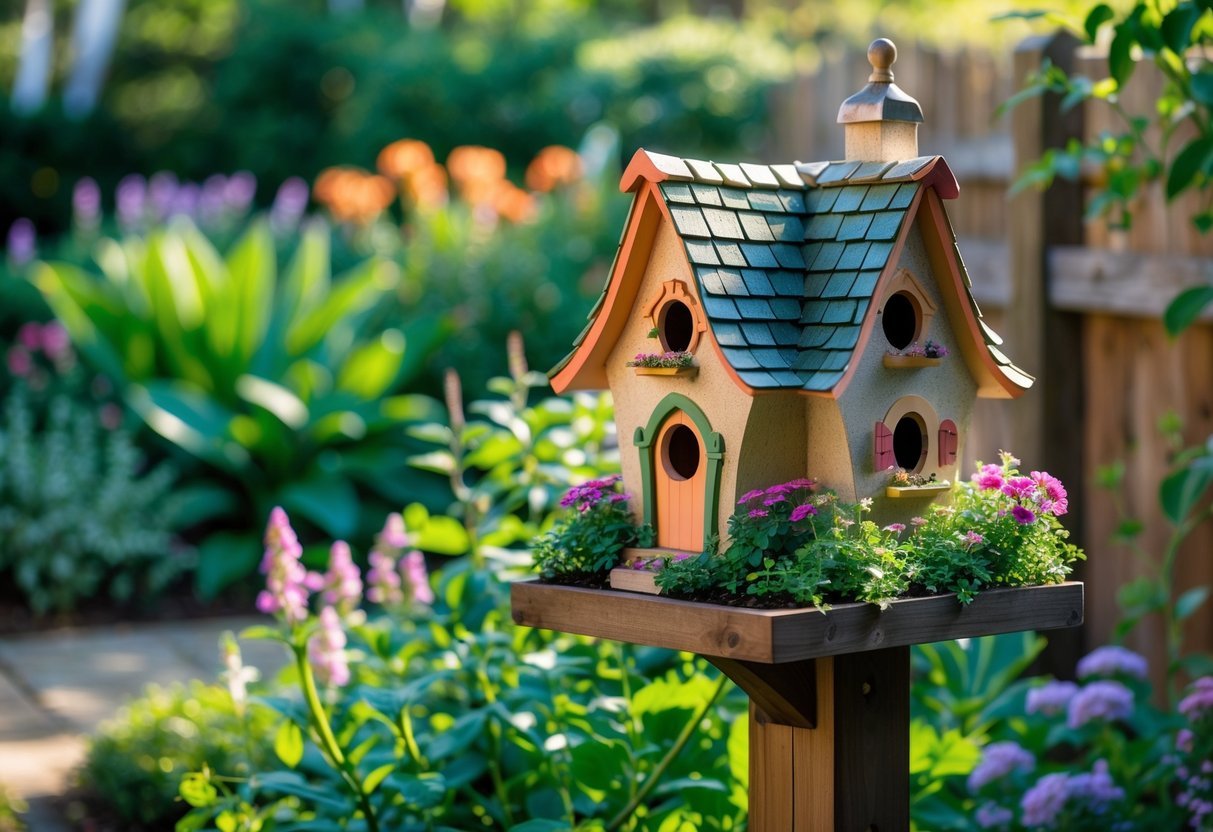
Choose a cottage-style birdhouse with a sloped roof and small porch to add charm without overwhelming your garden. Place it where you can see it from a window or a seating area so you enjoy visits without disturbing the birds.
Use durable, weather-resistant materials and paint with non-toxic finishes. Mount it 5–10 feet high on a post or tree, away from predators and strong winds.
5) Place an old boot filled with flowers as a planter

You can turn a worn boot into a charming planter with minimal effort. Clean the boot, add drainage holes, then fill it with potting mix and your favorite flowers.
Choose sturdy boots like rain boots or leather for outdoor display. Hang them on a fence or place them on a step to add a playful touch to your garden.
Refresh the soil each season and check moisture often. This keeps plants healthy and the boot looking inviting.
6) Set up a secret reading nook with a bistro set surrounded by tall grasses
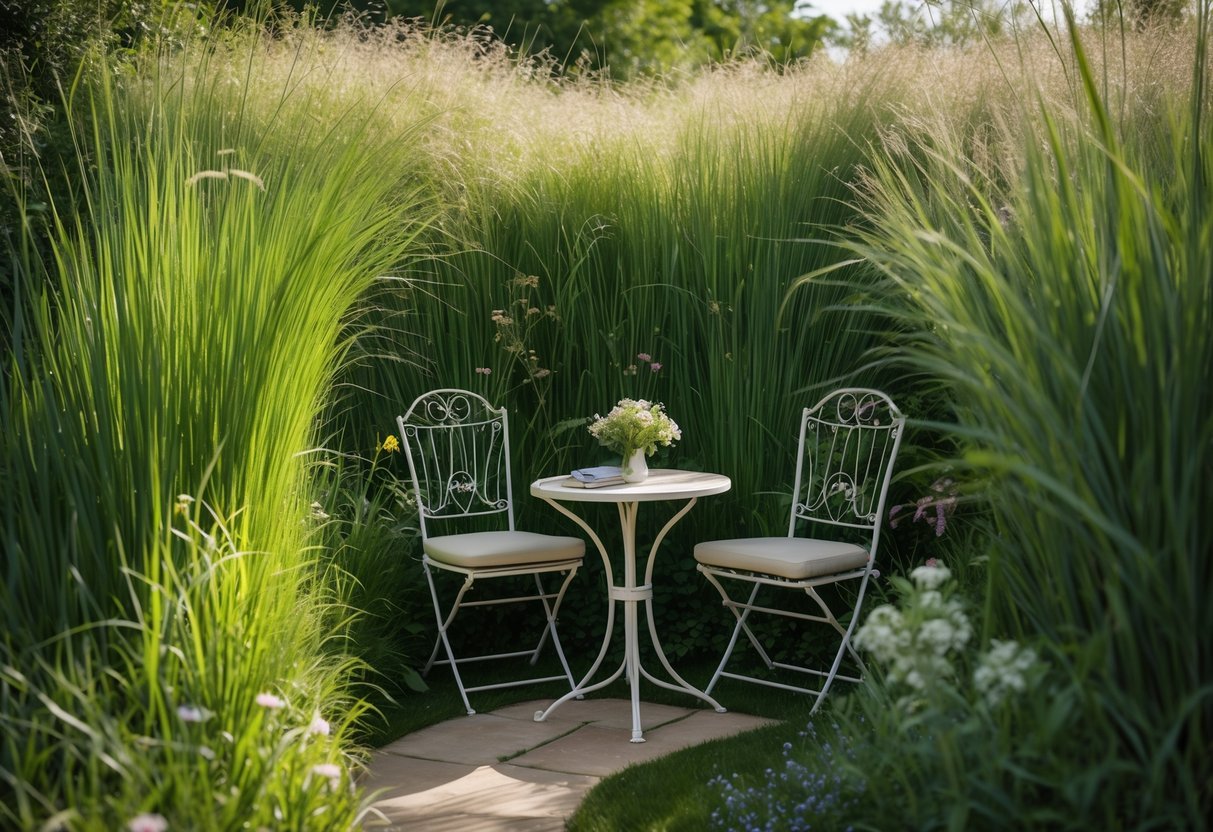
Place a small bistro table and two chairs where sunlight filters through the leaves. Keep the furniture light and weatherproof so it stays inviting year-round.
Plant tall ornamental grasses around the spot to create a soft, moving screen. Choose clumping varieties so they won’t spread into the rest of your garden.
Add a throw pillow and a small side tray for books and a drink. This makes the nook cozy and practical without crowding the space.
7) Incorporate glowing pebbles or solar lights along pathways
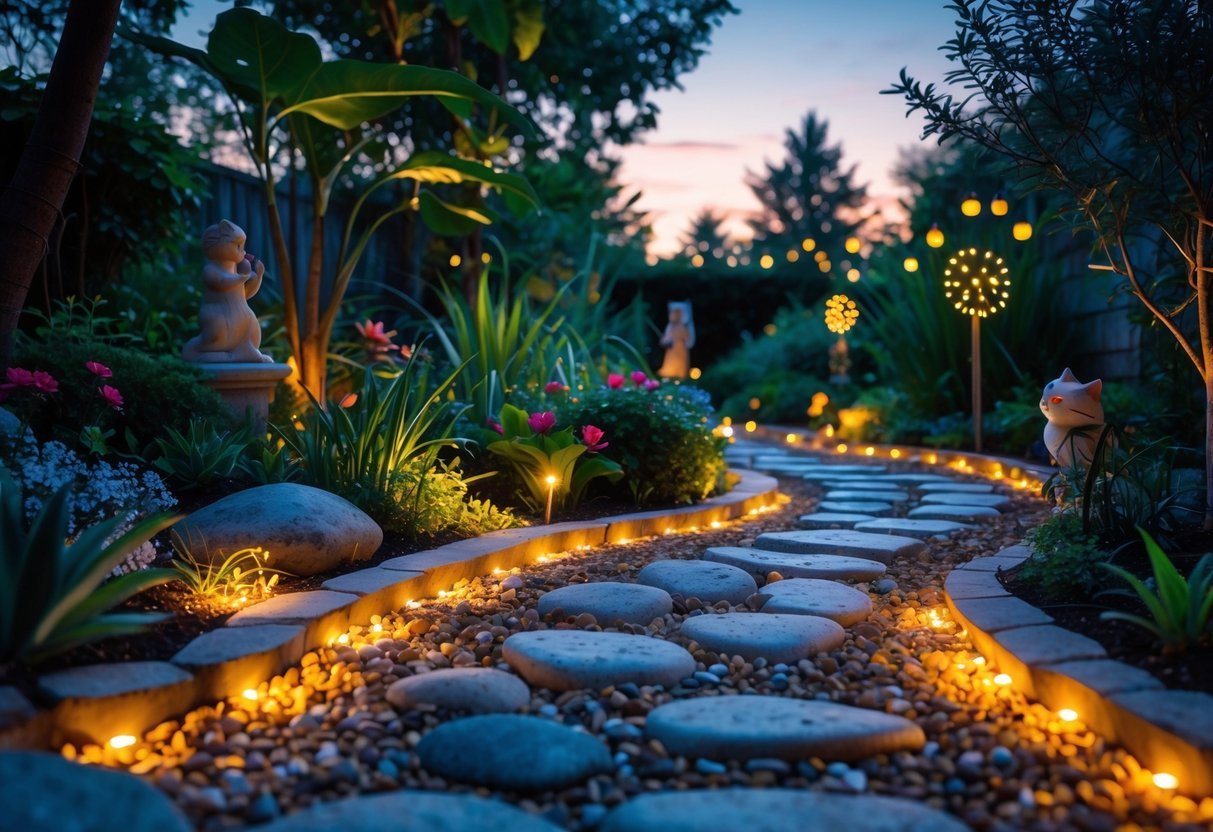
Place glow-in-the-dark pebbles or solar pathway lights to guide steps and add soft light at night. Mix colors and sizes for a natural look and tuck lights among plants to hide wiring.
Choose solar lights for easy, low-maintenance illumination that charges by day. Space them evenly for safety and replace batteries or pebbles as needed to keep the path bright.
Understanding Whimsical Garden Design
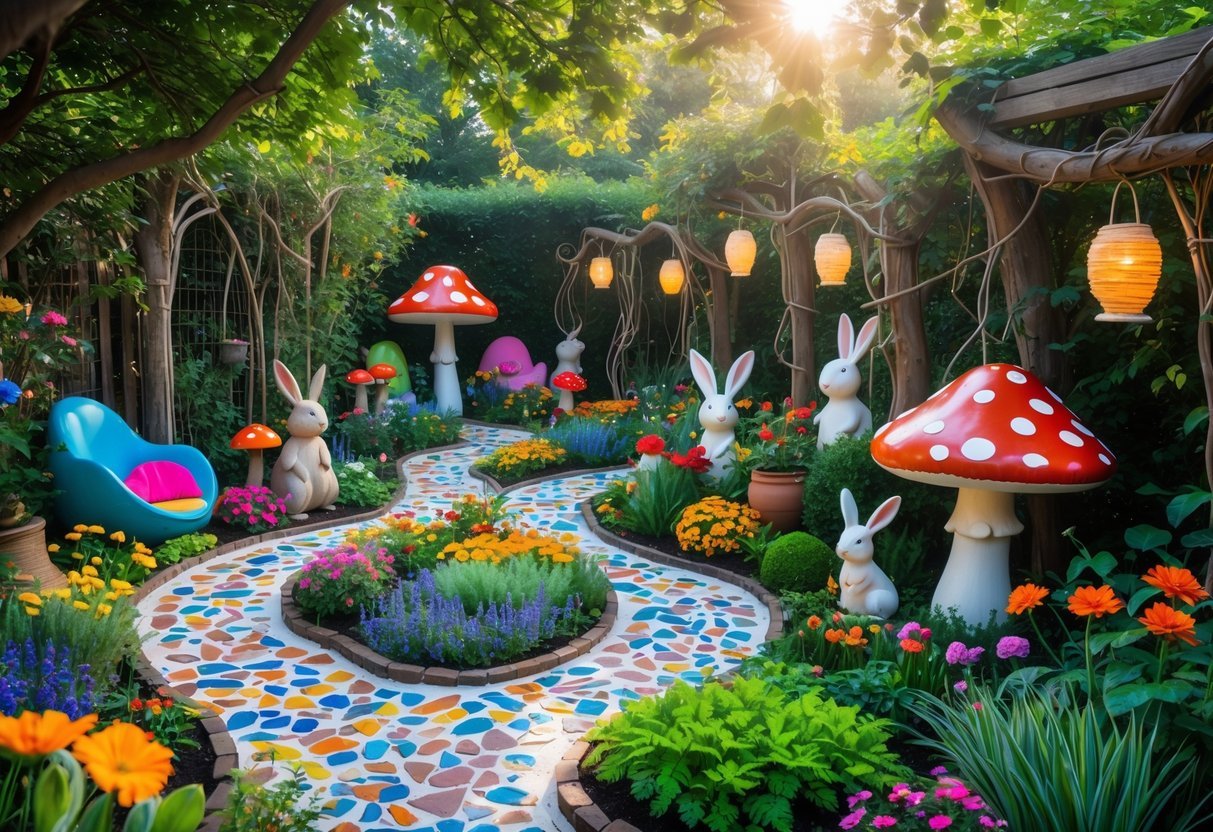
Whimsy mixes playful features and deliberate plant choices to create surprise, movement, and cozy nooks. Think about scale, texture, and how people will move through the space.
Key Elements of Whimsy in the Garden
Start with a focal idea: a small path that curves, a tiny door in a hedge, or a cluster of mismatched planters. These anchors give the eye somewhere to rest. Add unexpected materials — painted stones, vintage teacups, or a swing hung from a low branch — to create moments that make visitors pause and smile.
Use contrast to keep interest. Pair fine-textured grasses with big, bold leaves. Mix formal shapes like clipped spheres with informal drifts of wildflowers. Vary height: groundcovers, mid-height perennials, and a few taller accent plants guide sightlines. Also plan for sensory detail: fragrant herbs near seating, rustling grasses along paths, and solar lights for evening sparkle.
Choosing the Right Color Palette
Pick 2–4 main colors and one accent color to avoid a chaotic look. For calm whimsy, use soft pastels (pale pink, mint, lavender) with a bright accent like coral. For bold whimsy, choose two saturated colors (turquoise + yellow) and use white or soft gray to rest the eye.
Place color strategically. Repeat a bloom color every few feet to lead the viewer through the garden. Use foliage color as a unifying thread — silver leaves or deep purple foliage can tie different beds together. Consider seasonality: plant spring bulbs, summer bloomers, and late-season asters so color returns across months.
Maintaining a Whimsical Garden
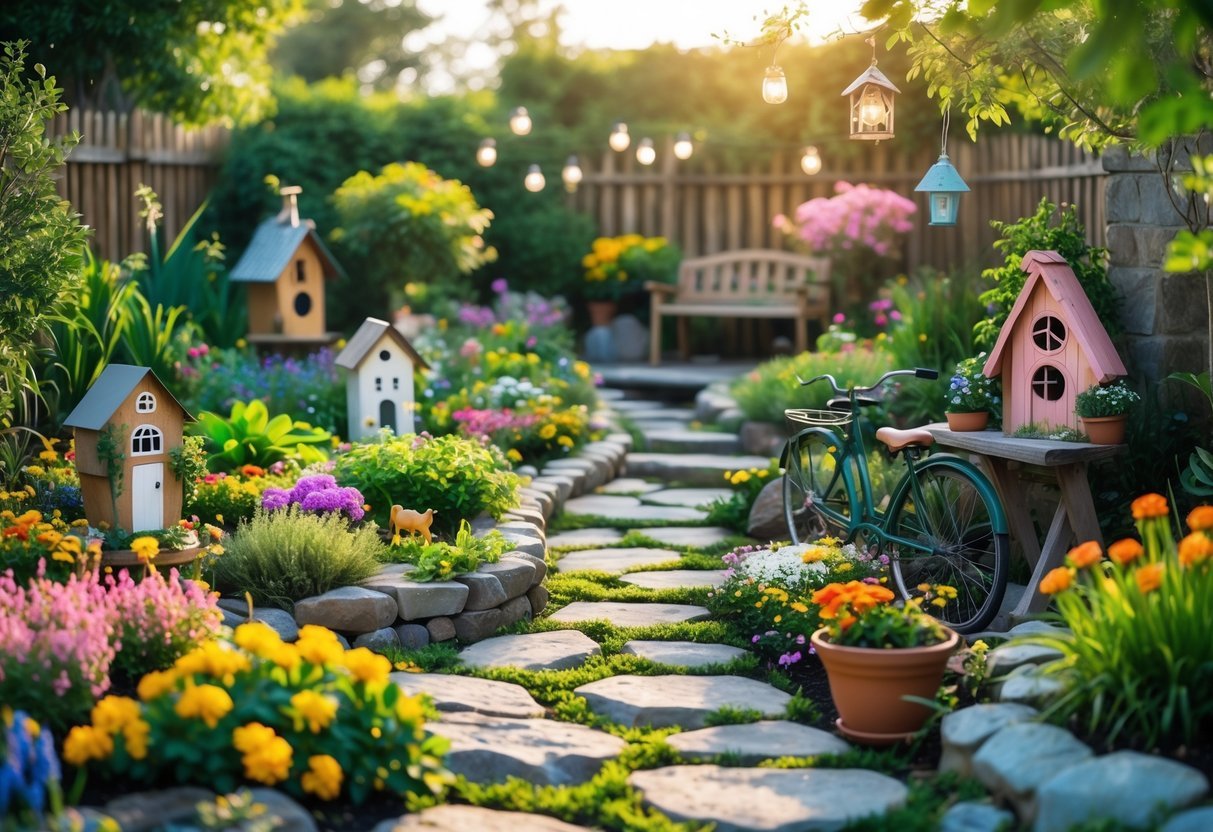
You will focus on timing, simple tasks, and eco-friendly choices to keep your garden looking playful and healthy year-round. Regular checks, tidy edges, and seasonal swaps matter more than major overhauls.
Seasonal Care Tips
Start each season with a quick walk-through. In spring, cut back dead stems, divide crowded perennials, and add 2–3 inches of compost around beds to feed new growth. Plant bulbs and early annuals before the ground warms.
In summer, water deeply 1–2 times a week where soil dries quickly. Group thirsty pots together and use a soaker hose under mulch to reduce evaporation. Deadhead spent flowers every 7–10 days to encourage more blooms.
In fall, collect seeds you want to save and rake leaves into a compost pile or use them as light mulch. Plant bulbs for spring color and move tender container plants into sheltered spots before hard frost. In winter, protect delicate shrubs with burlap and check decorative elements for winter damage.
Use a simple checklist to stay on track:
- Weekly: quick weed pull, deadheading, water check
- Monthly: inspect supports, repair decorations
- Seasonal: soil amendment, major pruning, bulb planting
Incorporating Sustainable Practices
Choose native and drought-tolerant plants to cut water needs and support local pollinators. Replace one high-water plant with a native alternative each year to reduce irrigation slowly.
Compost kitchen scraps and yard waste to create nutrient-rich soil. Aim for a 2:1 ratio of browns (dry leaves) to greens (vegetable scraps) and turn the pile every 2–3 weeks for faster breakdown.
Use rain barrels to collect roof runoff and connect them to drip lines or soaker hoses. This saves water and prevents nutrient loss from overwatering.
Repair and repurpose items for garden decor. Old teapots, pallets, and broken tools make planters or supports. This reduces waste and keeps your garden whimsical without buying new plastic or treated materials.
Frequently Asked Questions
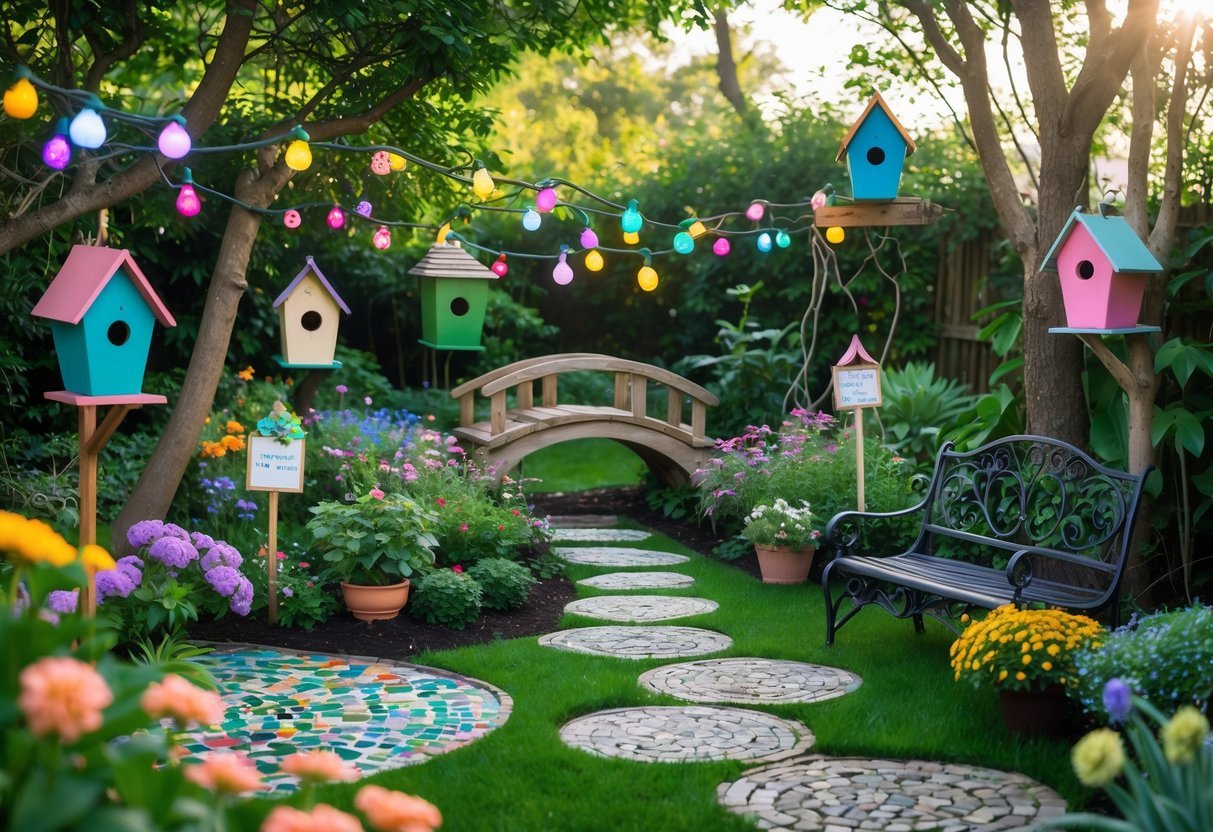
This section gives clear, practical answers about adding playful details, small DIY projects, and space-saving ideas. You’ll find steps for low-cost choices, fairy elements, and ways to make a tiny yard feel magical.
How can I incorporate whimsical elements into my garden on a budget?
Use items you already own, like old boots, mismatched pots, or broken teacups, and turn them into planters or decor. Paint thrift-store finds in bright colors and hang inexpensive fairy lights from branches.
Make small DIY projects that look intentional. Build a miniature fairy house from scrap wood or use pebbles and shells to create a tiny path.
What features make a garden whimsical?
Unexpected shapes and stories create whimsy: a birdhouse that looks like a cottage, a hanging teacup display, or a tiny tea set tucked into plants. Mix bold colors, varied pot styles, and playful accessories for a storybook feel.
Also include interactive details like small paths, tiny doors at the base of trees, and low seating nooks that invite exploration.
Can you suggest some quirky ideas for a small garden space?
Use vertical space: hang teacups, lanterns, or small planters from branches and walls. Place mismatched colorful pots on shelves or stack them as a tower to save ground area.
Create a miniature fairy garden in a single planter with tiny furniture and small succulents. Add a small whimsical birdhouse on a stake to draw attention upward.
How do I turn my backyard into a fairy-tale-inspired garden?
Start by choosing a focal spot for a fairy scene, such as under a tree or in a quiet corner. Arrange miniature furniture, tiny plants, and a little pathway of pebbles to form a clear setting.
Add soft lighting like string lights or lanterns and use mismatched pots and an old boot planter for character. Place a cottage-style birdhouse nearby to complete the theme.
What are the essential components of a fairy garden?
A fairy garden needs small-scale plants, miniature furniture, and a clear boundary like a small fence or ring of stones. Include a tiny path and a few ornamental details such as a miniature door or a tiny lantern.
Choose plants that stay small or use dwarf varieties so the scale stays believable. Add a small water feature or shallow dish for a realistic touch if space allows.
How can I personalize my garden with unique whimsical touches?
Pick a consistent theme or color palette, then add one-of-a-kind items like a painted teacup mobile or a hand-decorated birdhouse. Reuse sentimental or found objects—an old boot planted with flowers tells a story only you own.
Label areas with handwritten signs, place a favorite small sculpture among plants, or craft tiny scenes that reflect personal memories or hobbies.