7 Victorian Front Garden Design Ideas to Enhance Curb Appeal and Period Charm
You can bring Victorian charm to your front garden without overwhelming your home. This article shows seven clear ideas to help you shape a formal, inviting space that fits your house and lifestyle.
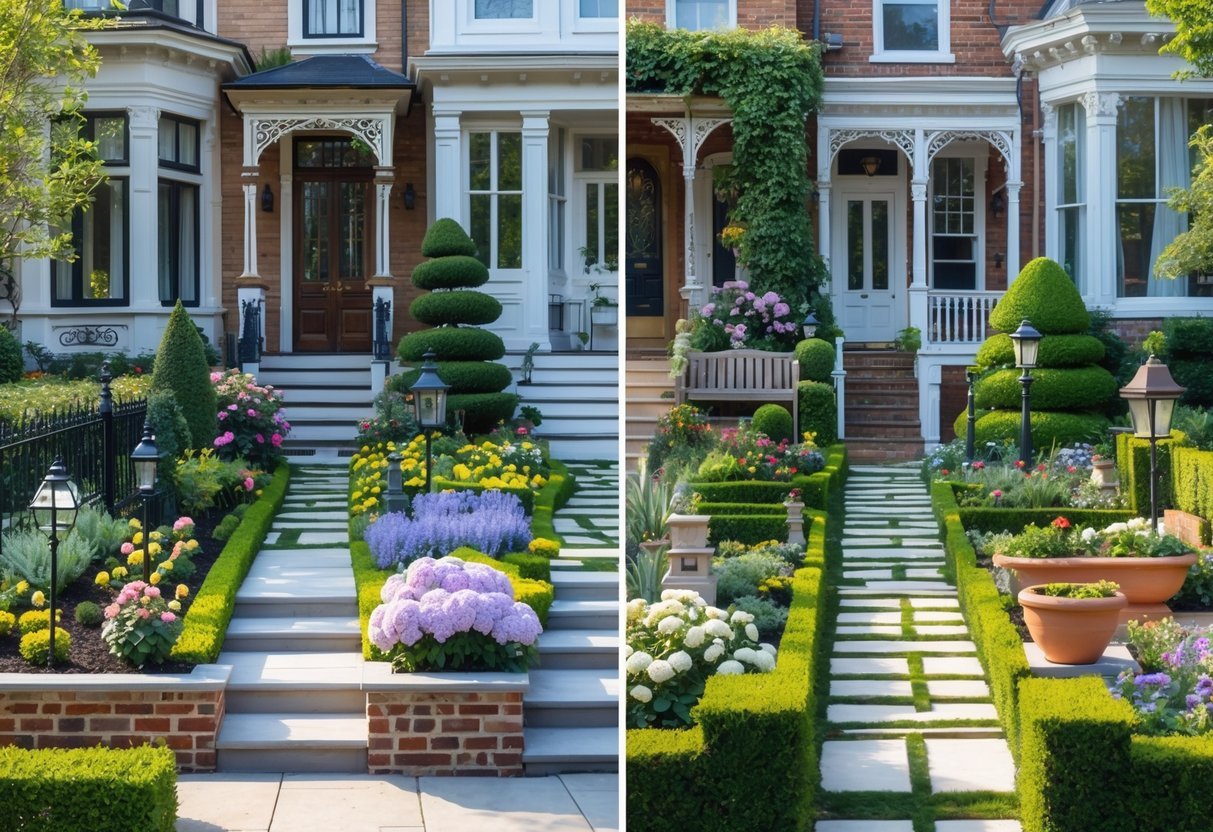
You will learn simple ways to create the classic symmetry, plant choices, and period details that make a Victorian front garden feel authentic and well cared for. Expect practical tips on layout, plant pairings, and upkeep so you can plan a garden that looks timeless and works for you.
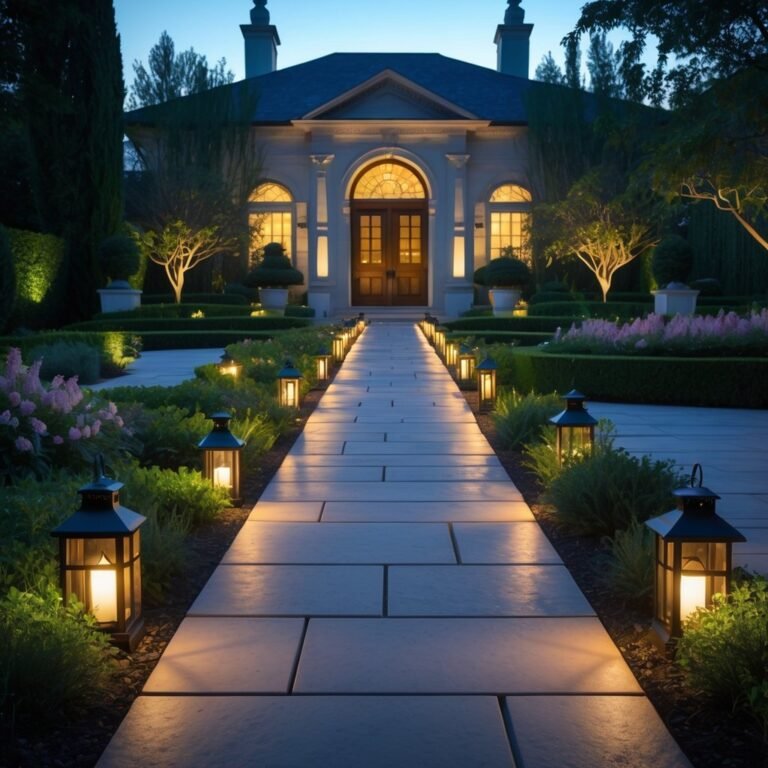
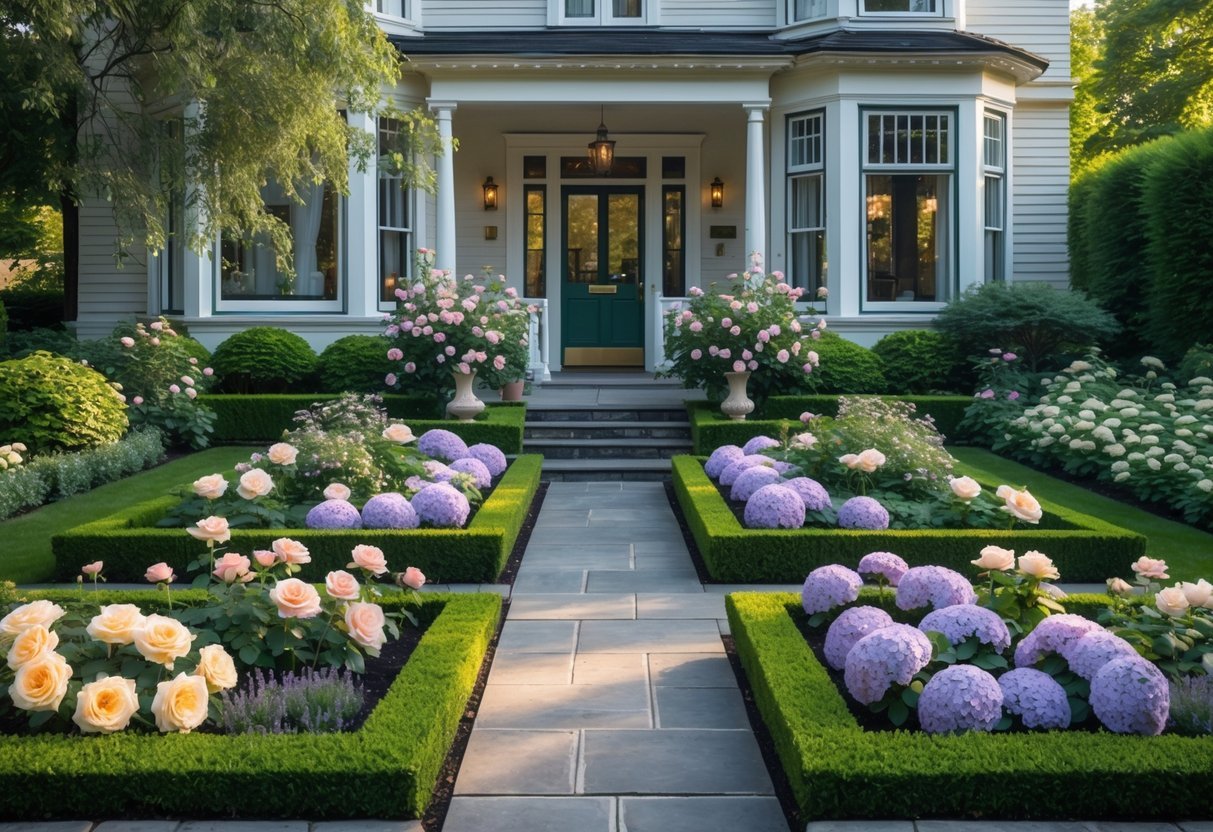
1) Create symmetrical flower beds using roses, lavender, and hydrangeas to evoke traditional Victorian elegance.
Place matching beds on either side of your path or door to frame the entrance. Symmetry gives a formal, balanced look common in Victorian homes.
Plant roses for height and focal points. Use lavender as a low, fragrant border and hydrangeas for soft, rounded massing.
Keep spacing and pruning consistent so both sides mirror each other. Choose colors that repeat across beds to reinforce the unified, elegant effect.
Understanding Victorian Front Garden Design
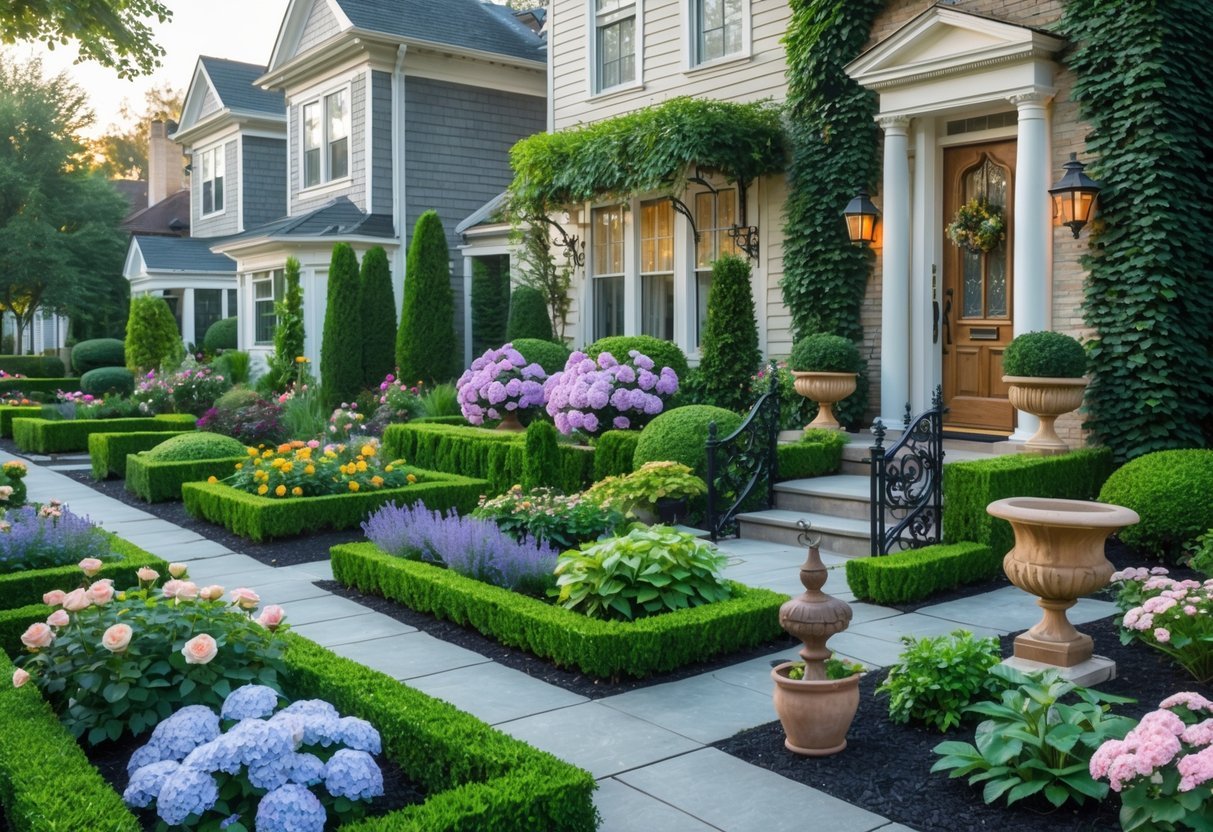
Victorian front gardens favor order, color, and detail. You’ll see balanced layouts, layered planting, and decorative hardscape that all aim to welcome visitors and frame the house.
Key Principles of Victorian Aesthetics
Victorian gardens rely on symmetry and clear structure. You often find a central path or axis that leads to the front door, flanked by matching beds or clipped hedges. This creates a formal, balanced look that makes the house feel anchored.
Planting layers matter. Use low edging plants, medium-height flowering beds, and taller shrubs or small trees at the back. Repeat colors and plant groups to create rhythm and avoid a random mix.
Ornament and texture add interest. Include a focal point like a birdbath, iron bench, or small statue. Use curved beds or geometric shapes—Victorians mixed geometry with softness to keep the design tidy yet lush.
Common Materials and Plant Choices
Choose materials that match period houses. Wrought iron gates, cast-iron railings, and tile paths suit Victorian style. Brick or stone edging works well for formal beds. Use gravel or narrow tiled walkways for the main path.
Pick plants that give long seasons of interest. Roses (especially old garden and shrub roses), lavender, foxgloves, and peonies provide classic color and scent. Boxwood and yew make neat hedging and topiary. Plant perennials in repeated groupings for consistent color.
Mix textures and bloom times. Pair leafy shrubs with spiky or airy plants—e.g., boxwood with asters or delphiniums—to keep the bed full from spring to fall. Keep maintenance in mind: regular pruning, deadheading roses, and seasonal mulching will preserve the Victorian look.
Maintaining the Authenticity of Victorian Gardens
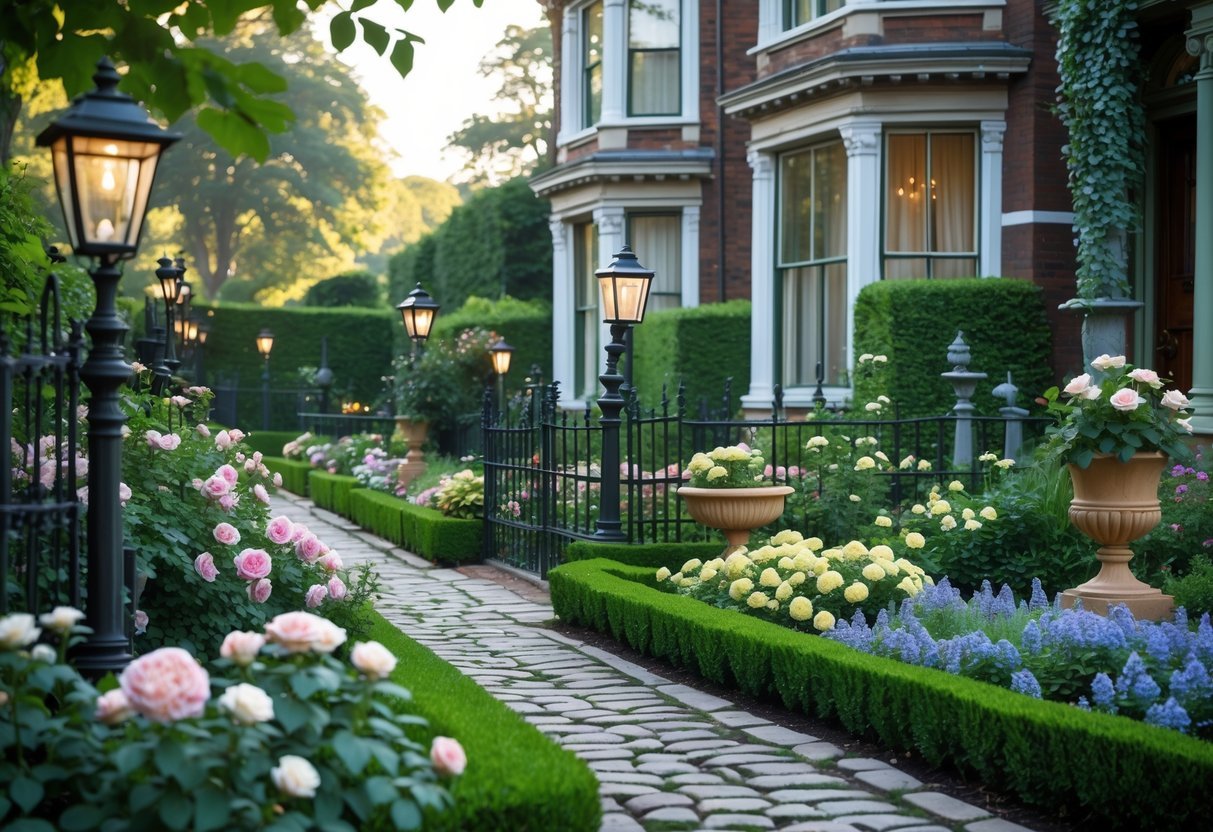
Keep original paths, fences, planting beds, and decorative details where possible. Use period-appropriate materials and plants to keep the look true to the era while making small, practical updates for safety and longevity.
Preserving Period Features
Identify one or two original features to preserve first—tiled path, cast-iron gate, or stone kerb. Repair rather than replace when you can. For brickwork and tiles, match mortar color and tile pattern; for ironwork, remove rust with a wire brush, then use rust-inhibiting primer and period-appropriate paint colors like black or deep green.
Keep planting beds in their original shapes. Recreate Victorian parterres or border layouts using traditional plants: roses, lavender, hollyhocks, and foxgloves. Use low box hedges for edging where historic evidence shows they existed.
Document any changes you make with photos and notes. This helps future work stay faithful. If a feature must be replaced, source reclaimed materials or accurate reproductions.
Modern Updates with Historical Charm
Make functional changes that don’t shout modernity. Run drip irrigation under mulch or behind hedges to save water without visible pipes. Replace old wiring with modern, grounded fixtures but choose lantern-style or period-look lights to match the era.
Improve accessibility subtly. Widen a narrow path to a minimum 900 mm where needed, and use level, non-slip tile that matches the original pattern. Install discreet drainage behind borders to prevent water pooling that damages foundations and period paving.
Choose modern plant care methods that don’t alter the look. Use organic fertilizers and targeted pest controls rather than broad-spectrum chemicals to preserve soil health and historic plant varieties. When adding seating, pick wrought-iron or painted timber styles in simple Victorian lines.
Frequently Asked Questions
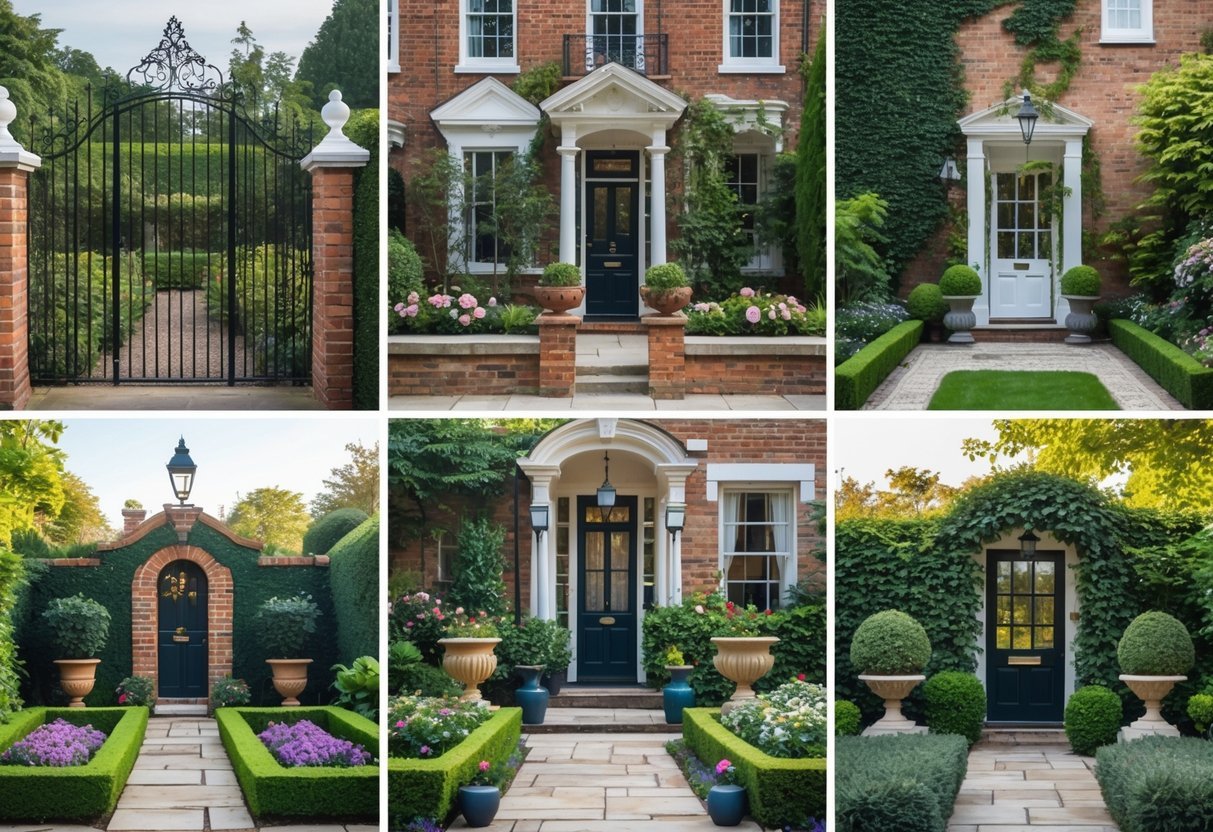
This section covers plant choices, key architectural features, mixing modern elements, classic color palettes, path design, and low-cost options. You will find practical steps and clear examples to help you build or refresh a Victorian front garden.
What are quintessential plant varieties for a Victorian garden?
Plant roses for structure and classic scent; choose hybrid teas, floribundas, or old garden roses. Add lavender for scent and form, and hydrangeas for big, rounded blooms and season-long interest.
Include low box hedges or clipped yew to frame beds and create symmetry. Use small flowering perennials like foxglove, primrose, and geraniums to fill gaps and add color variety.
Which architectural elements define Victorian garden style?
Wrought-iron gates, fences, and railings give a strong Victorian look and can mark boundaries or frame entrances. Tiled or mosaic path borders and decorative urns add period detail without taking up much space.
High, clipped hedges, a small formal lawn, and a central focal point such as a bench, sundial, or fountain complete the classic layout. Symmetry and defined beds keep the design orderly.
How can one blend modern landscaping with Victorian garden aesthetics?
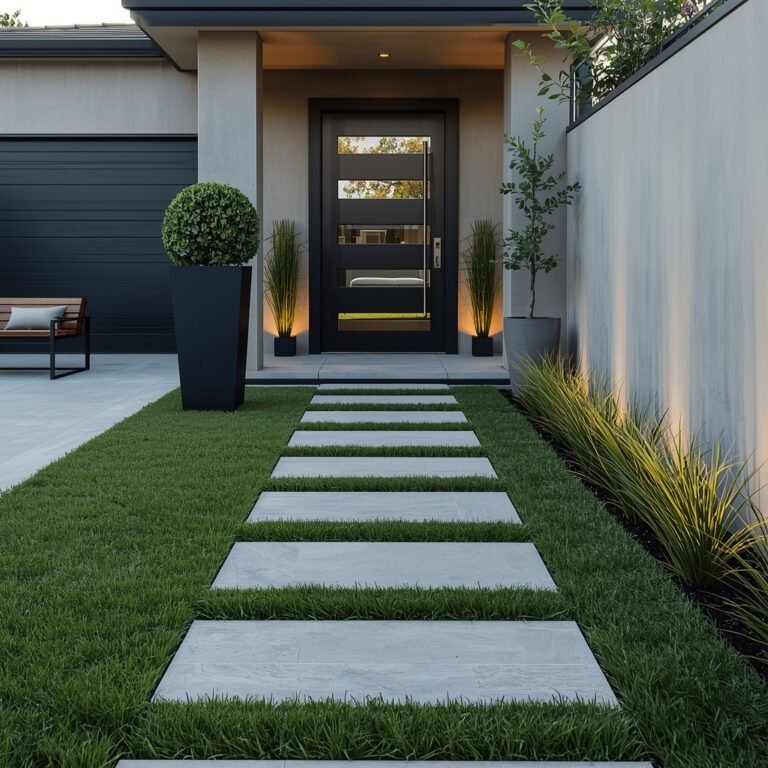
Keep formal bed shapes and classic plants, then add modern materials like concrete pavers or sleek steel edging for contrast. Use contemporary lighting—low-profile LED strips or spotlights—to highlight roses and architectural features at night.
Mix native pollinator-friendly plants with traditional species to reduce maintenance and support wildlife. Place a simple, modern bench or sculpture as a focal point while retaining symmetrical planting around it.
What color schemes are traditional in Victorian garden design?
Stick to soft, romantic palettes like pinks, whites, lavender, and pale blues for a traditional feel. Use darker accents—deep reds or burgundy—from select roses to add depth and period authenticity.
Balance colors across beds to maintain symmetry; repeat key hues in opposite beds to reinforce the formal layout. Limit bright, clashing colors to small accent spots to keep the scheme cohesive.
How does one integrate walkways and paths into a Victorian garden layout?
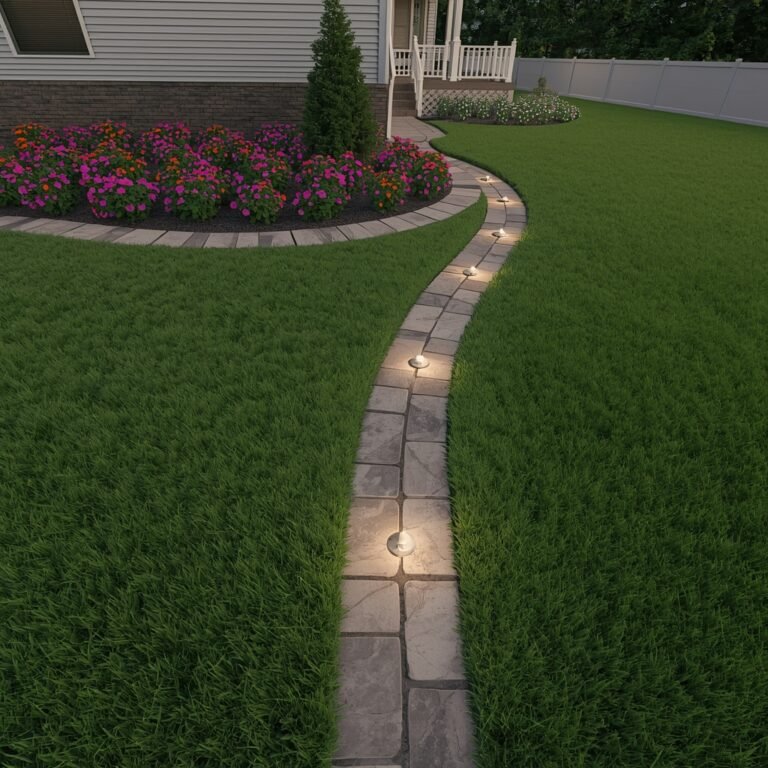
Run paths symmetrically from the entrance to a focal point or porch to reinforce formality. Use narrow, tiled paths, brick, or cobbles for an authentic texture; line them with low box hedging or lavender for neat edges.
Add a central cross path or circular turning point in larger gardens to create movement and viewing angles. Keep path widths consistent so the layout feels balanced.
What are budget-friendly options for creating a Victorian-inspired garden?
Reuse salvaged ironwork, secondhand urns, or reclaimed bricks to get period character at low cost. Plant smaller shrubs and perennials now and let them mature rather than buying large specimens.
Focus on a few strong elements—symmetrical beds, roses, and clipped hedging—rather than many ornamentals. Mulch beds well and choose long-blooming, low-maintenance plants to reduce ongoing costs.