
Vertical Garden Design Ideas for Small Balconies and Urban Spaces
You can turn any wall, fence, balcony, or tiny patio into productive green space without huge cost or skill. Choose a sturdy support, the right plants for light and climate, and simple irrigation to build a vertical garden that fits your space and goals.
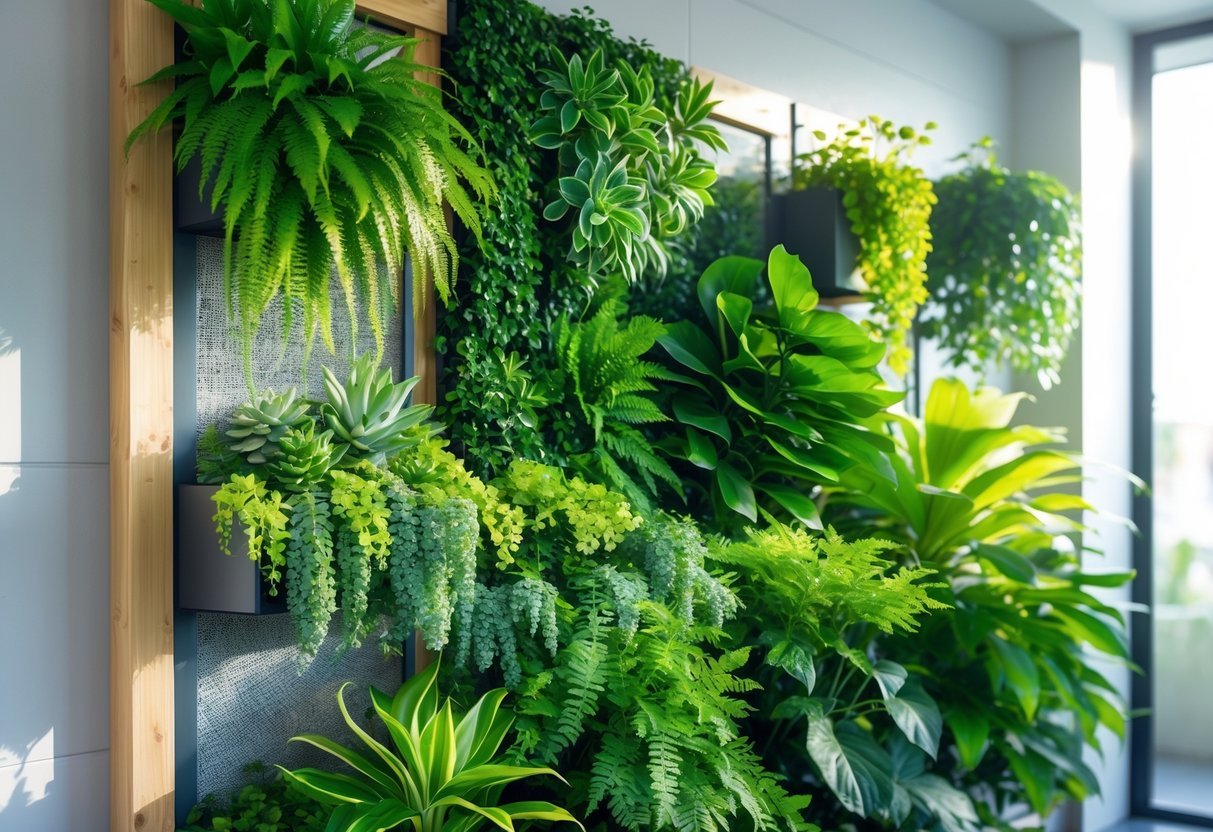
Picture herbs, flowers, or leafy greens climbing up a narrow wall or spilling from stacked planters. You will find easy DIY options, ready-made systems, and styling tips that match modern or rustic spaces, plus simple care steps to keep your garden thriving.
Key Takeaways
- Pick strong supports, suitable plants, and basic watering for success.
- Use creative layouts and containers to fit style and space.
- Keep plants healthy with regular light checks and straightforward maintenance.
Vertical Garden Design Essentials
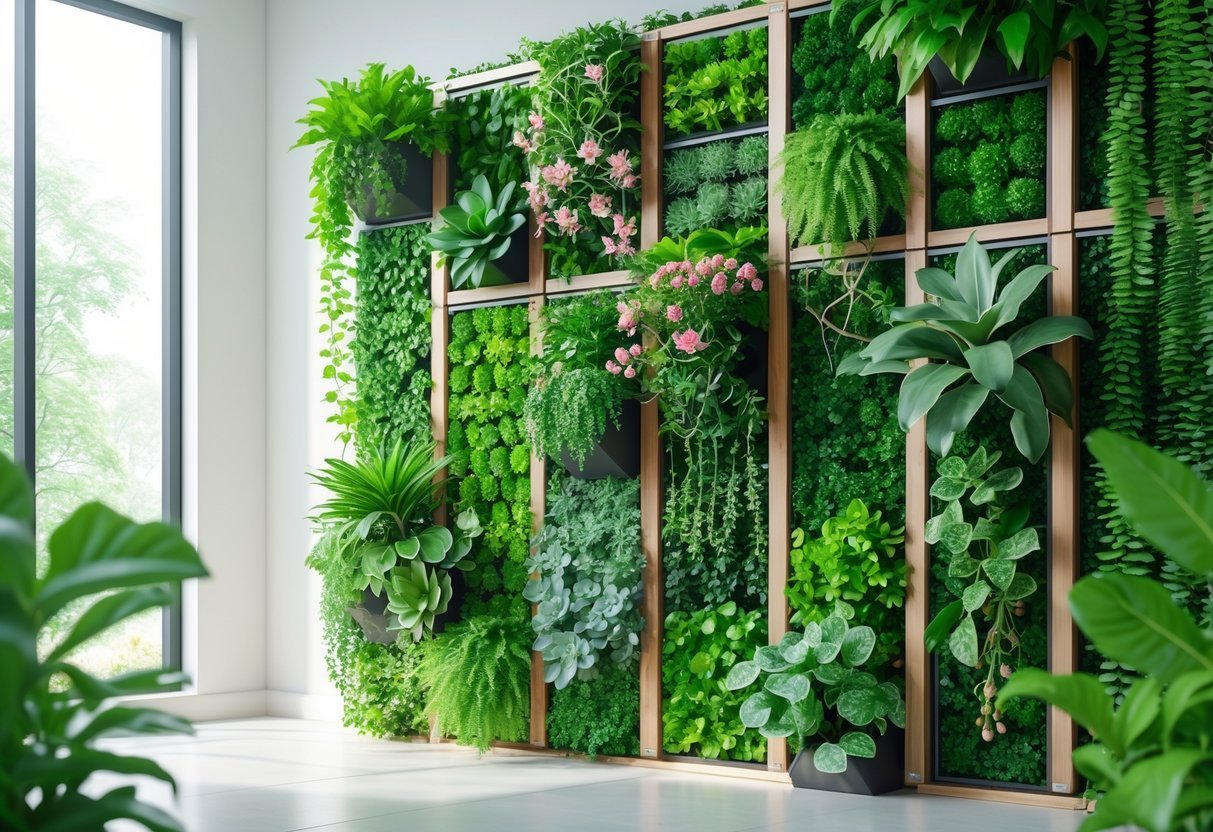
You need a sturdy surface, plants suited to light and climate, a water plan that prevents rot, and enough light for growth. Each choice affects weight, maintenance, and plant health.
Choosing the Right Wall or Surface
Pick a wall that can hold weight and resist moisture. Brick, concrete, and treated wood work best. If the wall is shared with living space, add a vapor barrier to protect interiors.
Measure the area and calculate planter weight when wet. Use lightweight panels or modular systems to lower load. Secure anchors into studs or masonry with appropriate fasteners.
Consider access for planting and maintenance. Choose a freestanding frame if the wall is fragile or hard to reach. Ensure the surface has some sun or choose shade plants if it does not.
Selecting Suitable Plants
Match plants to the light, temperature, and humidity of the wall. Use sun-loving herbs and succulents on bright south-facing walls. Pick ferns, begonias, and ivies for shady north-facing spots.
Group plants by water needs. Place drought-tolerant species together and moisture-loving species in separate modules. This helps avoid overwatering or underwatering problems.
Prefer shallow-rooted plants or use deep pockets if you want larger shrubs. Consider seasonal interest by mixing evergreen with flowering or edible varieties.
Irrigation and Drainage Solutions
Install a drip irrigation system with low-flow emitters for even watering. Set a timer to water early morning or late evening to reduce evaporation.
Provide proper drainage to avoid root rot. Add a sloped backing or drain tray and use open-bottom planters when possible. Ensure excess water can exit without pooling against the wall.
Monitor moisture with a simple soil moisture meter for each zone. Adjust emitter flow or timer based on season and plant response.
Lighting Considerations
Assess natural light first. Measure hours of direct sun and classify zones as full sun (6+ hours), partial (3–6 hours), or shade (less than 3 hours).
Use full-spectrum LED grow lights where natural light is insufficient. Mount lights above the plants and keep them 12–24 inches away, adjusting height as plants grow.
Account for heat from lights. LED fixtures run cooler than HID bulbs and reduce stress on plants and the wall. Use timers to simulate day/night cycles for consistent growth.
Creative Vertical Garden Ideas
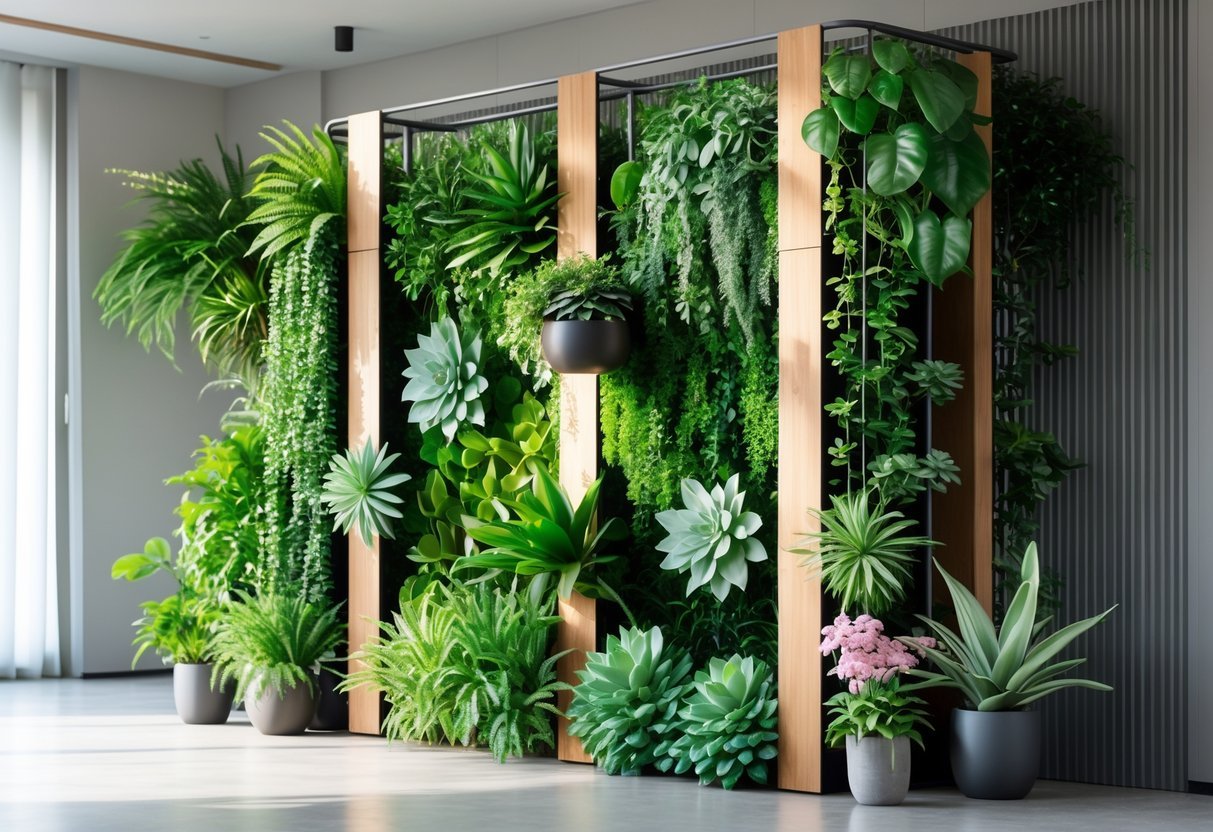
Use small walls, fences, or balcony rails to add plants without taking floor space. Pick a style that fits your light level, budget, and how much time you want to spend on watering and maintenance.
Living Wall Panels
Living wall panels give you a neat, planted surface you can mount on a wall. Choose felt or modular pocket systems for easy planting and replacement, or choose rigid frame panels with built-in irrigation if you want low maintenance.
Match plant types to light: succulents and air plants for bright, dry spots; ferns and ivies for shade. Mount panels on a waterproof backing and leave an air gap to protect the wall. Install a drip line or reservoir for automatic watering, or plan for hand watering by choosing removable panels.
Think about weight and access. Keep panel size manageable so you can lift it into place and reach plants for pruning. Use lightweight potting mix and consider a professional install for large systems.
Hanging Planter Arrangements
Hanging planters free up surfaces and add layers to balconies and porches. Use single hooks, a hanging rail, or a cluster of varying heights to create vertical depth.
Select containers with drainage and saucers, or use self-watering pots to reduce chores. Hang hardy trailing plants like pothos, string-of-pearls, or trailing herbs where they can spill naturally. Mix textures and pot sizes for visual contrast.
Anchor hooks into studs or use rated anchors for masonry. For balconies, use rail-mounted brackets or S-hooks designed for outdoor use. Rotate plants occasionally so all sides get light.
Recycled and Upcycled Structures
Turn pallets, gutters, bottles, or shoe organizers into vertical planters to save money and reduce waste. Clean and treat wood pallets to avoid pests, and seal gutters or bottles to prevent soil loss.
Use vertical stacks of tin cans or plastic bottles for herbs and small annuals. Mount an old ladder horizontally against a wall and set pots on the rungs for a layered look. Secure all items with screws, zip ties, or metal brackets for safety.
Choose plants by container depth: shallow boxes for herbs and succulents, deeper containers for small vegetables. Line containers with landscape fabric and add drainage holes. Label plants to keep track of watering needs.
Modular Vertical Gardens
Modular systems use interlocking pots or panels you can rearrange as plants grow or light changes. Pick snap-together modules for balconies and walls, or cube systems that clip into a frame for a tidy grid.
Use modules with built-in reservoirs if you travel or want less frequent watering. Plan plant placement by root depth and light needs—place taller modules at the top so they don’t shade lower plants. Mix edible modules for herbs with ornamental modules for color.
Evaluate anchors and wind exposure for outdoor modules. Choose UV-resistant plastics for long life, or powder-coated metal if you need extra strength.
Styling and Decorating Vertical Gardens
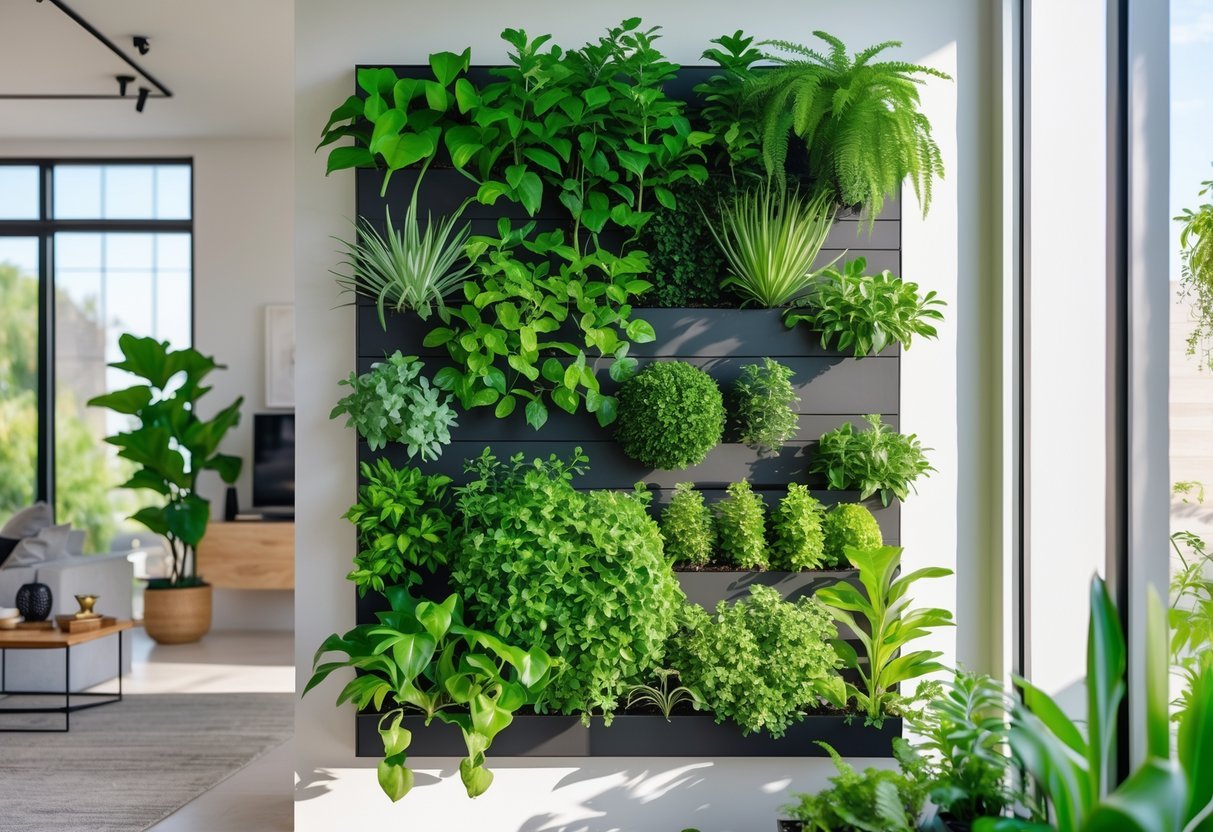
Pick a clear visual direction before you add plants, art, or lights. Choose a limited palette, pick durable materials, and plan placement so each element supports plant health and easy care.
Color and Texture Combinations
Select 3–5 main colors to keep the wall cohesive. Use one dominant foliage tone (like deep green), one accent foliage (silver or burgundy), and one bloom color for seasonality. Place high-contrast plants—such as bright yellow sedum next to dark-leaved heuchera—near eye level so the contrast reads clearly.
Mix leaf textures: fine ferns, broad hosta-type leaves, and succulent rosettes create depth. Arrange rough-textured plants near smooth ones to highlight differences. Use repeated shapes or colors in a grid or diagonal band to guide the eye.
Consider container finishes: matte black or natural wood frames make colors pop. For indoor walls, include trailing plants at the top to soften edges. For outdoor walls, choose tougher textures that tolerate wind and sun.
Themed Vertical Gardens
Pick a single, practical theme to guide plant choice and accessories. Examples: herb kitchen wall (basil, thyme, chives), pollinator mix (salvias, lavender, milkweed), or succulent mosaic (echeveria, sedum, crassula).
Match containers and labels to the theme. Use simple cedar boxes for herbs, reclaimed metal trays for rustic pollinator beds, or geometric planters for a modern succulent display.
Think about care routines when you pick a theme. Herbs need frequent harvesting and quick-draining soil. Pollinator plants require larger rooting volume and bloom time variety. Succulents need sparse watering and lots of light. Plan irrigation, soil depth, and access accordingly.
Incorporating Outdoor Art
Add art that won’t damage plants or trap moisture. Use weatherproof pieces such as metal sculptures, glazed ceramic tiles, or treated wood panels mounted behind or between planters.
Place art where it won’t block light or airflow. Small metal accents work well as focal points between planter pockets. Larger panels make a backdrop if you keep planting pockets offset to allow root space.
Combine art with function: narrow shelves can hold small pots and decorative objects. Use removable hooks or rails so you can change displays seasonally without disturbing roots. Secure all pieces to withstand wind and rain.
Integrating Lighting Designs
Choose lighting for both aesthetics and plant needs. Use full-spectrum LED strip lights for indoor walls to support photosynthesis. For outdoor walls, select low-heat, waterproof fixtures.
Position lights to reduce shadowing: uplights at the base, downlights above, or linear strips behind planter rows. Aim for even coverage—avoid hot spots that scorch leaves or dark pockets that stunt growth.
Use timers and dimmers to match plant light cycles and human use. Highlight texture with angled spotlights and emphasize color with warmer or cooler tones. Keep wiring concealed and protected from moisture.
Maintenance and Sustainability
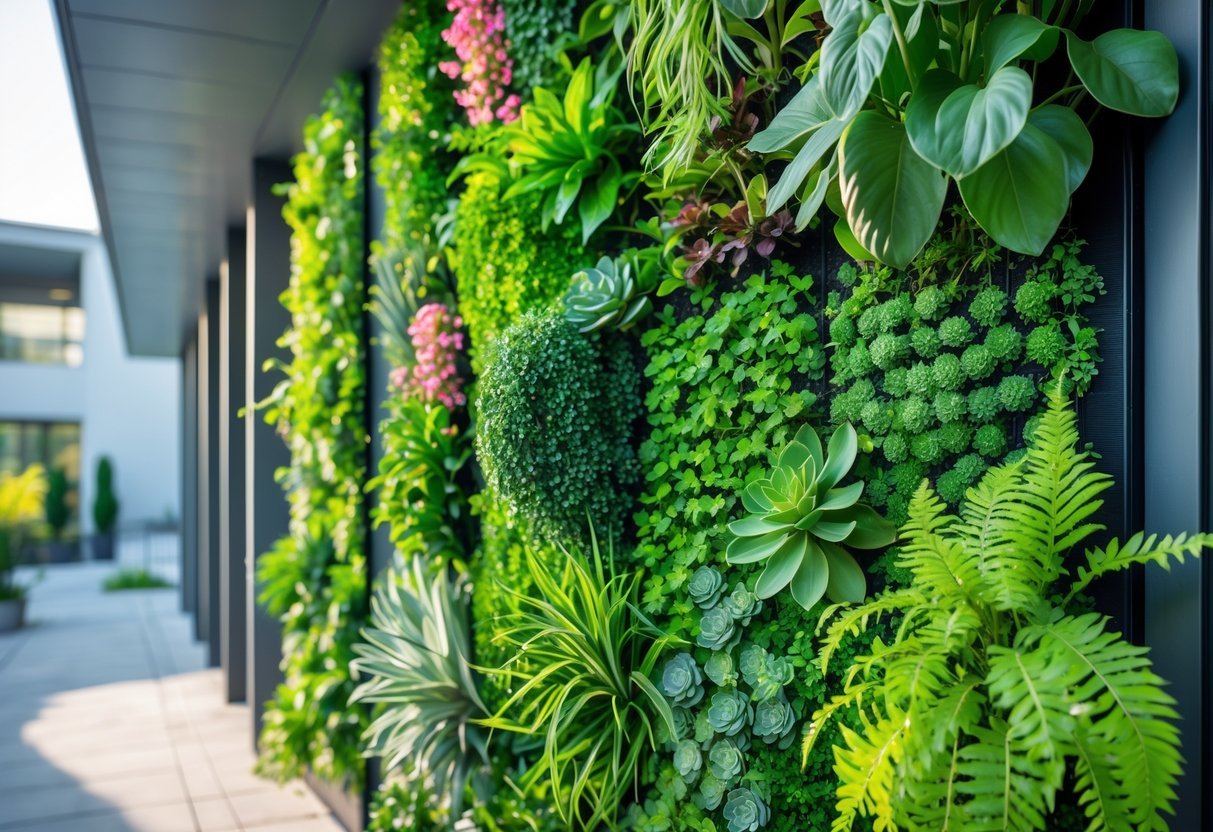
You will focus on keeping plants healthy, choosing low-impact materials, and updating the garden through the seasons. Practical care, recycled or long-lasting supplies, and timely changes will keep your vertical garden thriving and low-waste.
Plant Care Tips
Watering is the biggest daily task. Check soil moisture with your finger; water when the top inch feels dry. Use a drip system or a bottle irrigation setup for even moisture and to avoid overwatering lower plants.
Feed plants with a balanced liquid fertilizer every 4–6 weeks during the growing season. For herbs and leafy greens, use a nitrogen-forward formula; for flowering plants, use one with more phosphorus. Flush the system with plain water once a month to prevent salt buildup.
Trim dead leaves and spent blooms weekly. Pinch back leggy growth to keep plants compact and to encourage branching. Inspect for pests regularly; treat small aphid or mite outbreaks with insecticidal soap or neem oil applied to the undersides of leaves.
Rotate portable modules every few weeks if sunlight is uneven. Replace any failing plants promptly — swap with juveniles of the same species to maintain root balance and prevent gaps.
Eco-Friendly Materials
Choose recycled plastic planters, reclaimed wood frames, or aluminum that resists corrosion. These materials last longer than untreated wood and reduce replacement frequency.
Use coco coir, compost-rich potting mix, or a blend with perlite for good drainage and water retention. Avoid peat moss because harvesting it harms carbon stores. Line pockets with breathable landscape fabric rather than single-use plastic to allow airflow and reduce root rot.
Select a slow-release organic fertilizer to cut down on liquid fertilizer use. For mounting and supports, use stainless steel screws and brackets — they cost more but prevent frequent rework. Collect rainwater in a small barrel and connect it to your irrigation to reduce mains-water use.
Seasonal Updates
Adjust watering frequency with temperature changes. Increase watering in hot, dry months and cut back in cool, wet months. Monitor soil moisture more often during heat waves.
Swap seasonal plants to match light and temps. Replace summer herbs with cool-season greens in fall. Move frost-tender modules indoors or cover them if a hard freeze is expected.
Prune and clean the structure in late winter. Remove dead material, check anchors and irrigation lines, and top up potting mix with compost. These steps reduce disease carryover and prepare the wall for vigorous spring growth.
Frequently Asked Questions
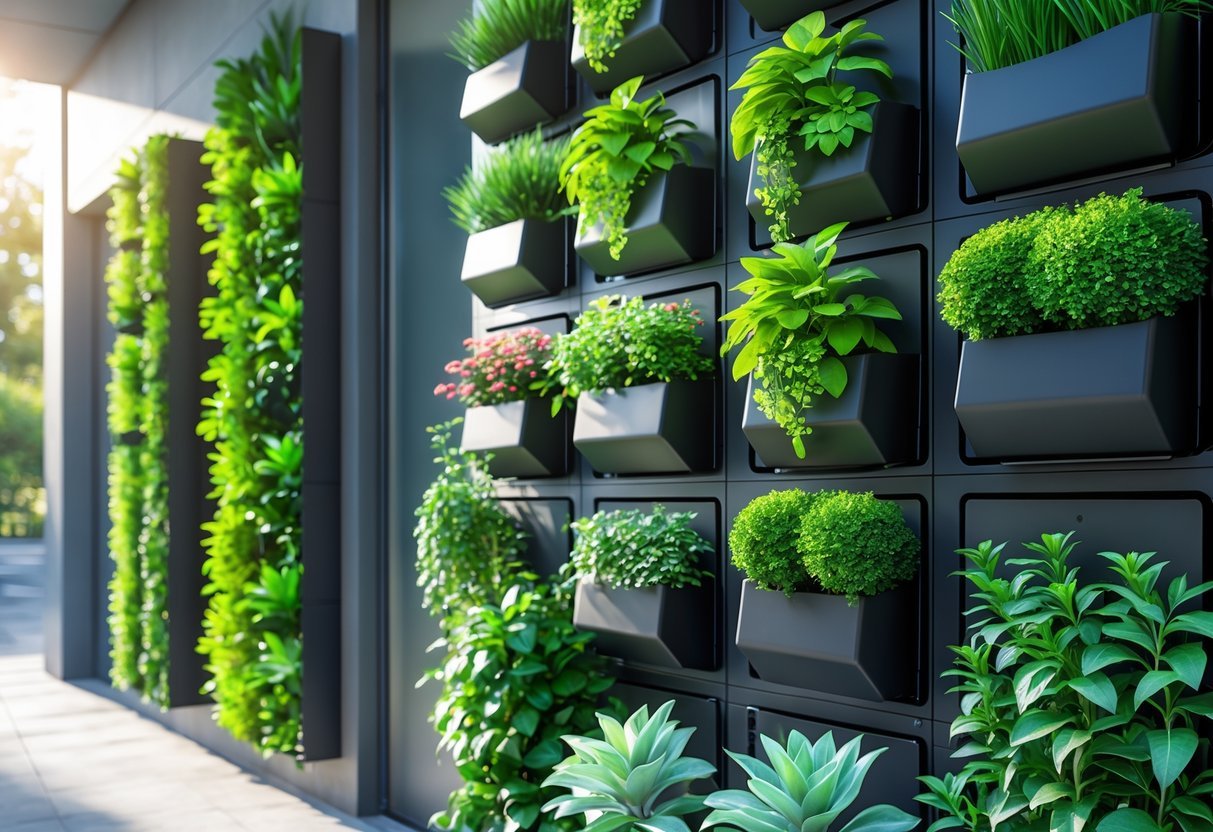
This section gives concrete steps, plant choices, and setup tips you can use right away. Each answer focuses on practical actions and specific items for small spaces, budgets, and indoor or balcony settings.
How can you maximize space in small area vertical gardens?
Use tiered planters, stacked pockets, or a ladder shelf to layer plants vertically. Place taller, sun-loving plants at the top and trailing or shade-tolerant plants lower to make the most of light and height.
Mount slim planters or pocket systems on walls or railings to free floor space. Clip-on railing planters or narrow hanging troughs work well on balconies and small patios.
Train vining plants on trellises or wires attached to walls. This creates a green screen without wide containers and keeps pathways clear.
What are some affordable vertical garden solutions for beginners?
Repurpose wooden pallets into pocket planters or shallow troughs. Pallets are cheap, widely available, and easy to mount or lean against a wall.
Use shoe organizers or felt pocket panels for small herbs and succulents indoors. They cost little, hold soil well, and are simple to hang.
Buy plastic gutters or PVC pipes and mount them horizontally as planters. They are low-cost, lightweight, and good for shallow-rooted herbs and lettuces.
What low-maintenance plants are recommended for vertical gardens?
Succulents like sedum and echeveria need little water and suit sunny vertical walls. They also tolerate shallow soil pockets.
Herbs such as thyme, oregano, and mint grow well in vertical systems and recover quickly from pruning. Choose mint containers with root barriers to prevent spreading.
Use ferns, pothos, and philodendron for low-light indoor vertical gardens. These plants tolerate irregular watering and adapt to pocket systems.
How can I create a simple yet effective vertical garden at home?
Start with a single wall or balcony railing and choose plants that match the light level there. Measure the space first and pick containers that fit without blocking walkways.
Install a watering system suited to your setup, such as a drip line for deeper pockets or a watering can for small pocket panels. Mulch or coconut coir helps retain moisture in shallow planters.
Group plants by water needs to avoid overwatering or underwatering. Use lightweight potting mix to reduce load on walls and railings.
What are innovative indoor vertical garden ideas?
Build a modular panel system with removable pots so you can rearrange plants and clean easily. This makes care and replacement faster.
Use hydroponic vertical towers for compact, soil-free growing of herbs and leafy greens. They save space and reduce mess from soil.
Combine plants with wall-mounted grow lights that match the length and intensity your plants need. Slim LED strips work well in narrow spaces and under cabinets.
Which design features are essential for a balcony vertical garden?
Secure mounting points and lightweight containers reduce risk and strain on railings and walls. Check balcony weight limits before adding soil-heavy planters.
Include drainage that directs water away from the balcony floor. Use saucers, drip trays, or a catchment system to protect surfaces and neighbors below.
Plan for wind and sun exposure with windbreaks, tie-downs for tall plants, and shade cloth if afternoons get hot. Choose sturdy, wind-tolerant species for exposed spots.