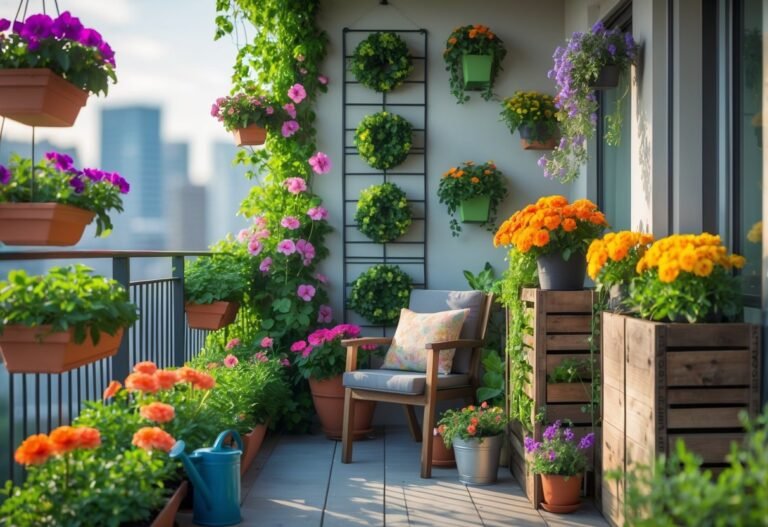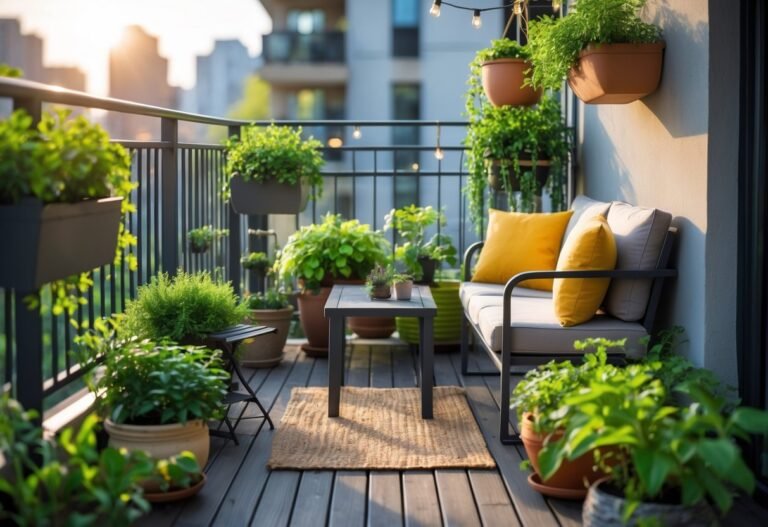
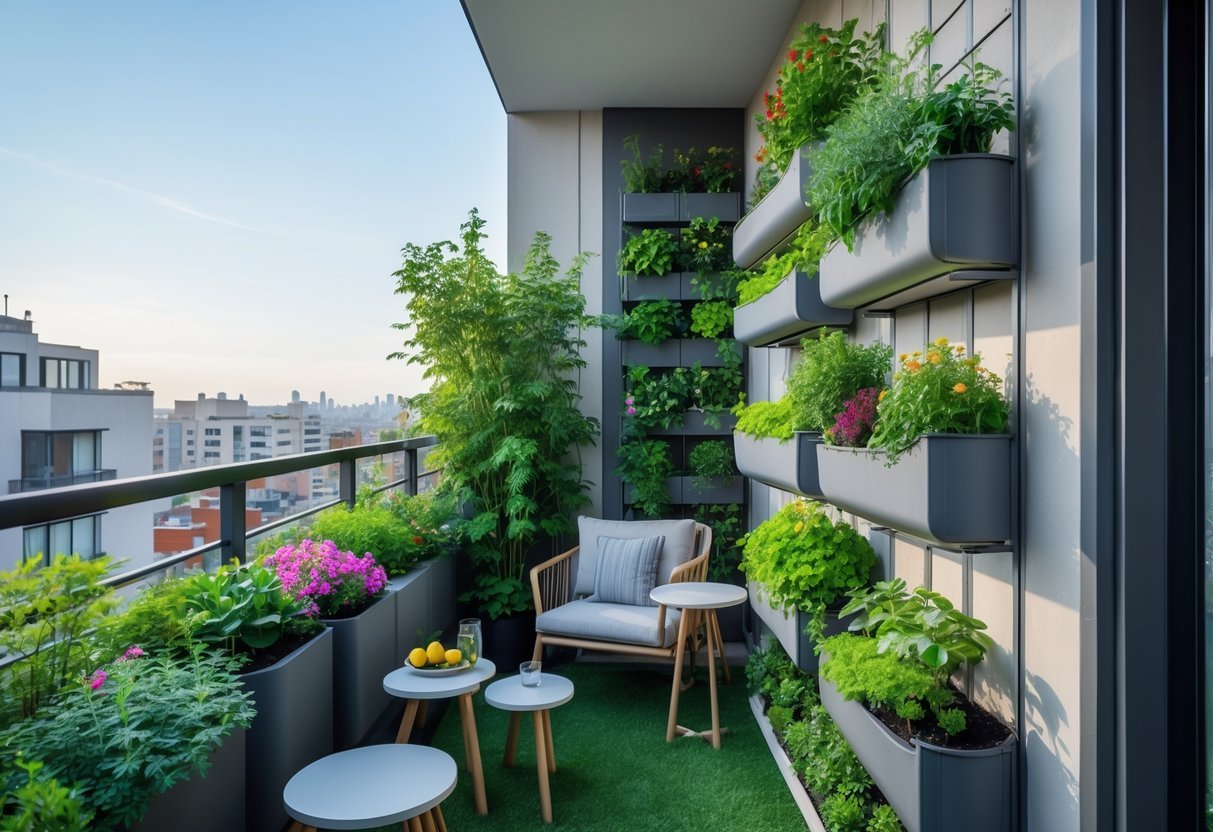
Vertical Balcony Garden Design Ideas: Clever Small-Space Solutions for Lush Vertical Planting
You can turn even the smallest balcony into a green retreat by using vertical space, smart plant choices, and simple structures like wall planters or trellises. Start with a clear plan that fits your light, weight limits, and how much time you want to spend on care.
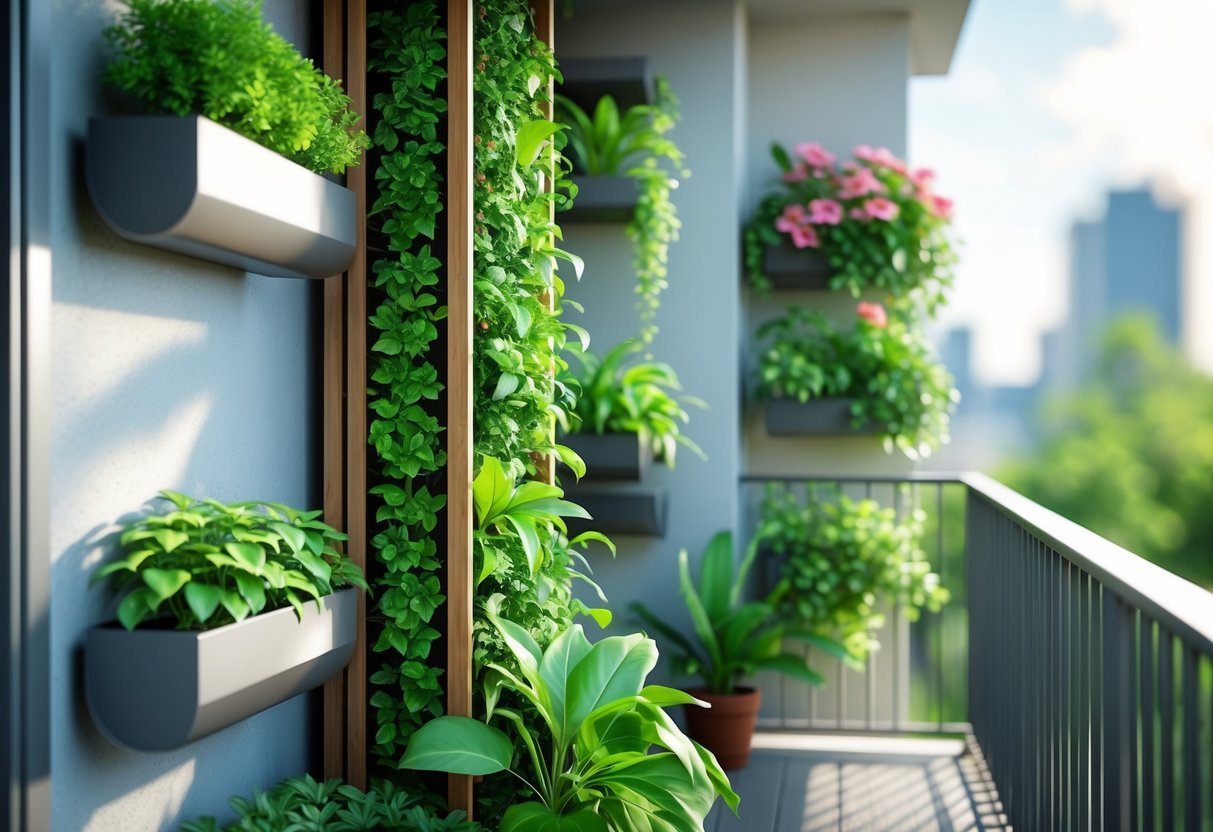
Use vertical racks, hanging pots, and climbing supports to grow more plants without crowding your floor space, and pick resilient herbs, succulents, or trailing flowers that match your balcony’s light. Small changes like tiered shelving or a living wall panel can add privacy, color, and fresh herbs for cooking while staying low-maintenance.
You’ll find design ideas that match tiny urban balconies and tips to arrange plants for best growth and visual impact, plus practical upkeep advice so your garden stays healthy and neat.
Key Takeaways
- Plan around light, space, and care time before you start.
- Use vertical systems and suitable plants to maximize space and impact.
- Choose low-maintenance setups to keep the garden thriving with less effort.
Essentials of Vertical Balcony Garden Design
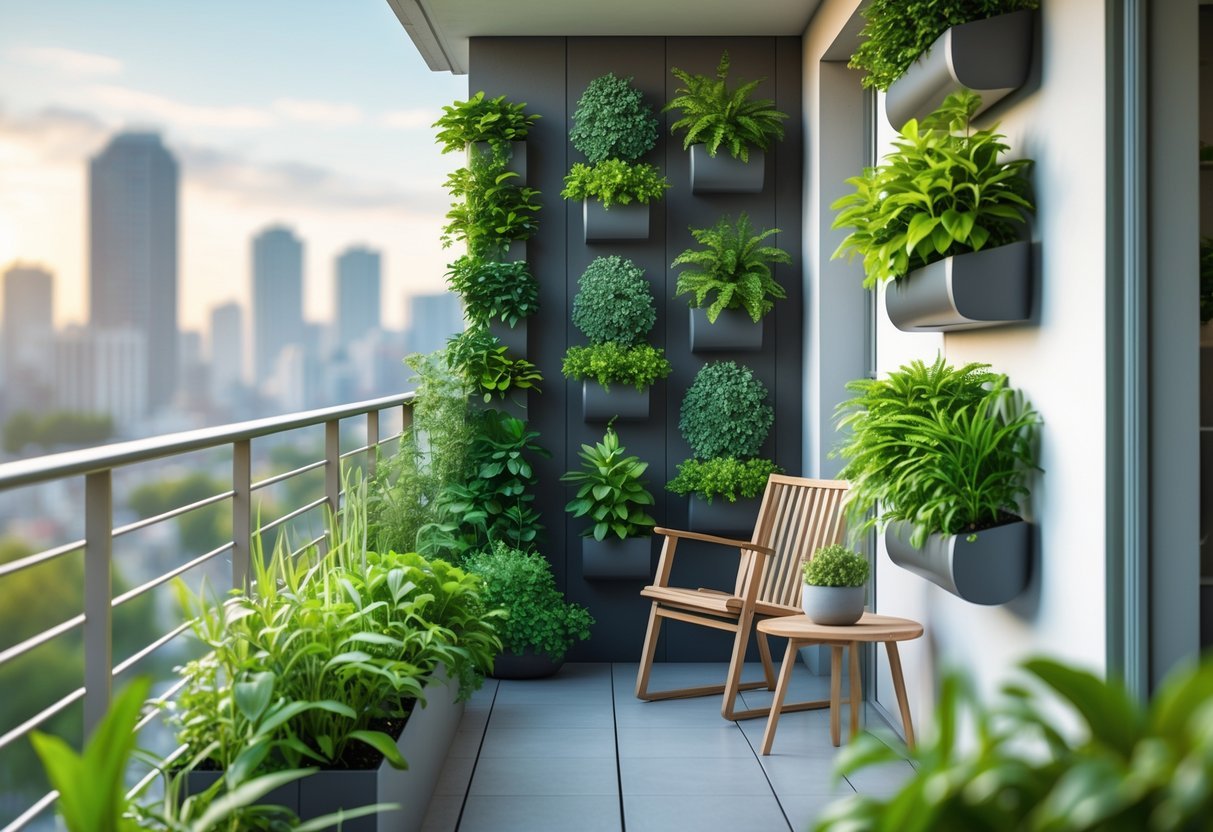
Plan for weight limits, sun and wind exposure, and plant access. Pick a strong support, measure your space, and use materials that resist moisture and rust.
Choosing the Right Vertical Structure
You must match the structure to your balcony’s load capacity and the plants you want. Freestanding shelving works well for lightweight pots and herbs. If you grow heavier soil-filled planters or a vertical green wall, choose a frame rated for extra weight or attach to a load-bearing wall.
Think about attachment points. Use brackets into studs or concrete anchors; avoid relying only on railings unless they are rated for hanging loads. For renters, consider tension poles or modular systems that don’t require drilling.
Factor in plant access and irrigation. Choose a design that lets you water, prune, and harvest without moving heavy units. Look for integrated drip lines or removable planters to make maintenance easy.
Balcony Space Assessment
Measure floor area, railing height, and available wall width before buying anything. Note the maximum weight your balcony can hold; check building rules or ask management for load limits to prevent structural issues.
Map sunlight across the day. Mark areas that get full sun (6+ hours), partial sun (3–6 hours), or shade, and select plants accordingly. Also note wind patterns—exposed balconies need sturdier pots and wind-tolerant plants.
Account for access paths and furniture. Leave at least 24 inches of clear walk space where you need to pass. Plan vertical elements so they don’t block doors, vents, or drainage outlets.
Material Selection for Durability
Choose rot-resistant woods like cedar or treated composite for planters and frames. Use stainless steel, powder-coated aluminum, or galvanized hardware to avoid rust on brackets and hooks.
Pick waterproof liners and UV-resistant fabrics for pockets or felt systems. For pot materials, use high-density polyethylene (HDPE) or glazed ceramic for long life; avoid thin plastic that cracks in sun.
Use corrosion-resistant fasteners and marine-grade rope or webbing for hanging systems. Seal wood with exterior-grade sealant and check finishes yearly. Good materials reduce maintenance and help your garden last through seasons.
Creative Vertical Garden Layout Ideas
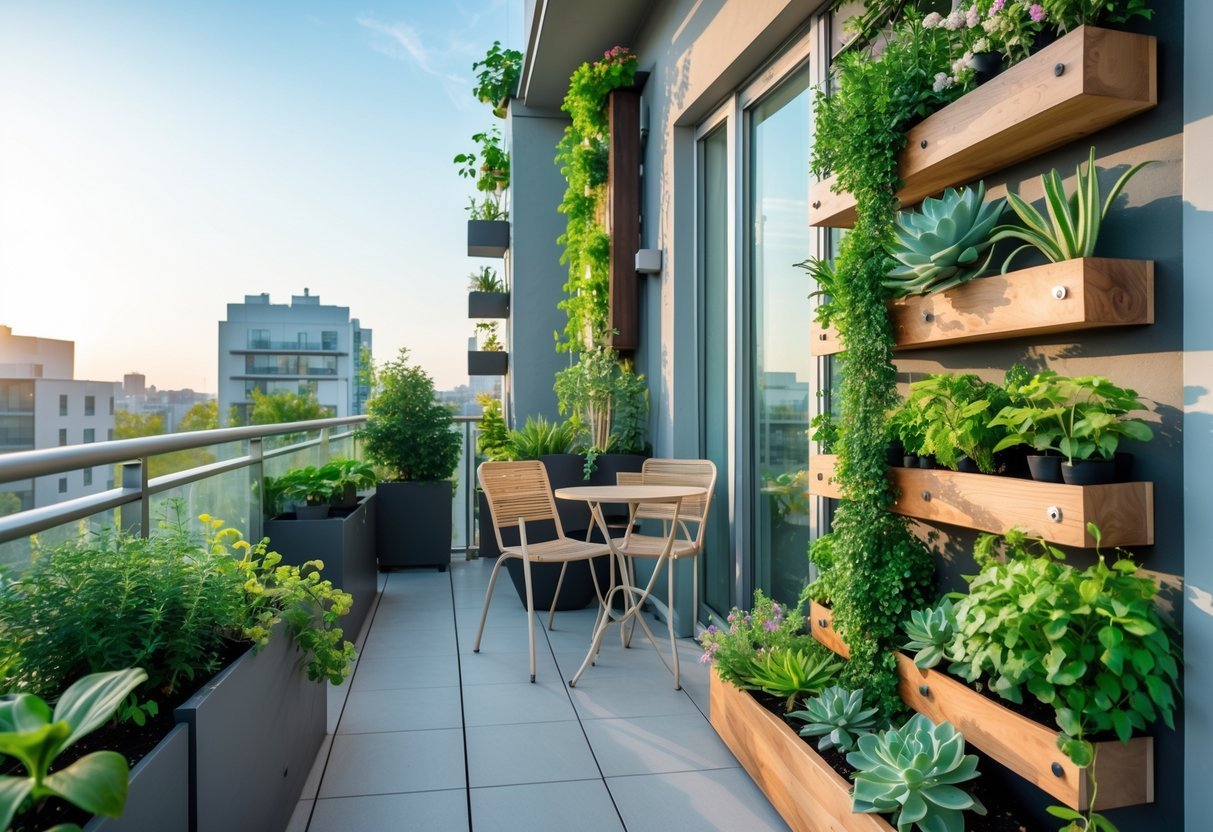
Use vertical space to grow more plants, add privacy, and create a living backdrop. Pick solutions that match your balcony weight limits, sun exposure, and how much time you want to spend on care.
Living Walls and Green Panels
Living walls mount directly to a sturdy wall or a freestanding frame. Choose modular panels or pocket systems made of felt, plastic, or metal that attach with anchors or brackets rated for your wall type.
Select plants by light: low-light ferns and pothos for shady balconies; herbs, sedums, and trailing petunias for sunny spots. Install a simple drip irrigation or a self-watering reservoir if you want lower maintenance.
Plan for weight and drainage. Add a waterproof barrier between the wall and the planting system and route runoff to a drain or collection tray. Space plants for airflow to reduce mildew and make replacement easy by using removable modules.
Hanging Planters and Pots
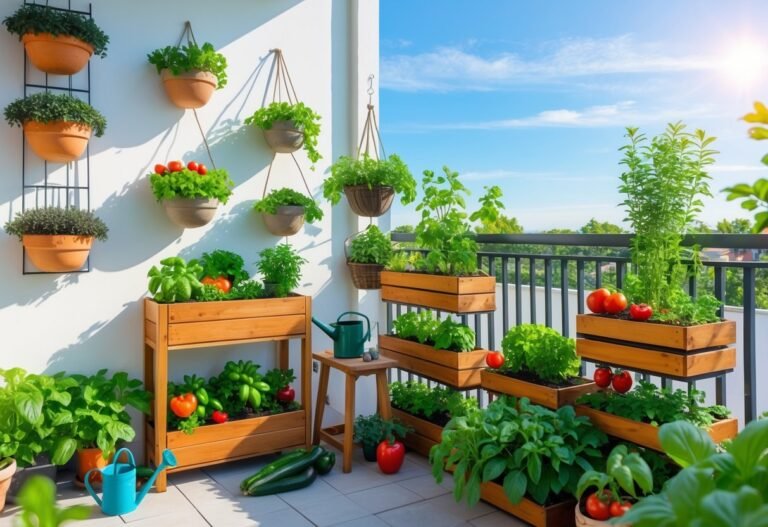
Hanging planters free up floor space and add layers at different heights. Use strong hooks rated for the balcony ceiling or railings; test with a heavy sandbag first. Mix types: macramé or rope for casual looks, metal or ceramic for a modern feel.
Group plants by water needs: trailing ivies and string-of-pearls in drier spots, herbs and salad greens where you can water often. Hang at eye level for herbs you use often and higher up for decorative vines. Consider wind exposure—use heavier pots or secure ties on windy balconies.
Tiered Shelf Arrangements
Tiered shelves give you organized layers for pots, seed trays, and tools. Choose metal or rot-resistant wood shelving that fits your rail height and leaves room to walk. Place deep-rooted vegetables on lower shelves and shallow pots or seedlings on top.
Arrange by light and use: taller, sun-loving plants on the top tiers; shade-tolerant plants and storage below. Add casters for mobility or fix shelves to the railing for safety. Use trays under pots to catch water and protect decking from stains.
Recycled and Upcycled Designs
Recycled designs save money and add character. Turn pallets into vertical planters, stack old gutters for linear herb beds, or repurpose shoe organizers for seedling pockets. Ensure materials are clean and safe—avoid treated wood that may leach chemicals into edible plants.
Secure and seal your builds. Line wooden containers with heavy-duty landscape fabric and add drainage holes. Fasten items to the balcony structure to prevent tipping. Paint or stain visible pieces with outdoor-safe products to extend life and match your balcony’s style.
Selecting and Arranging Plants for Maximum Impact
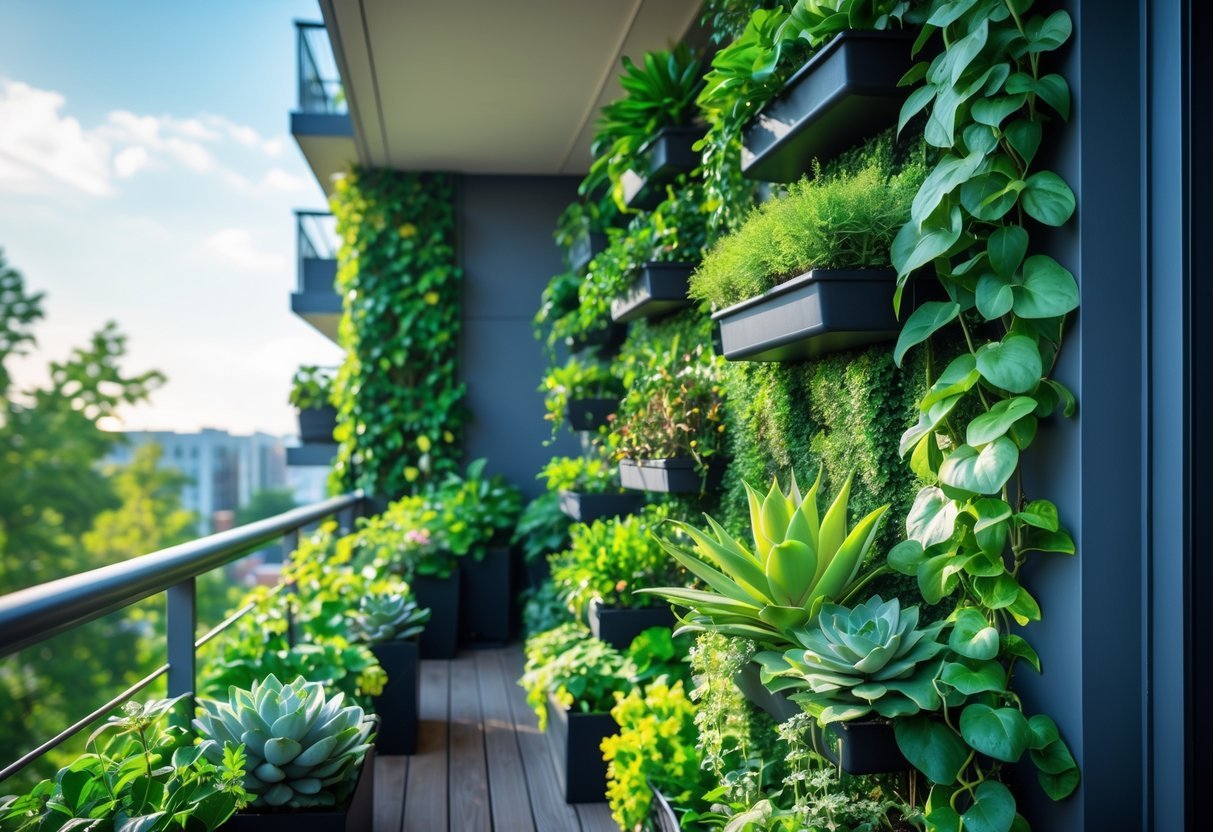
Pick plants that fit your light, weight, and watering limits. Arrange taller or trailing plants where they get the most light and place herbs or compact flowers within easy reach for harvesting and care.
Best Plant Types for Vertical Gardens
Choose plants based on how much sun your balcony gets and how much weight your structure holds. For full sun (6+ hours), pick herbs like rosemary, thyme, and sage, and sun-loving flowers like geraniums and marigolds. For part sun (3–6 hours), use lettuce, spinach, nasturtiums, and violas. For shade (under 3 hours), pick ferns, begonias, and impatiens.
Use a mix of root depths. Shallow-pocket plants (lettuce, herbs) go in thin pockets or trays. Deeper pots are for vegetables or larger perennials. Add trailing plants (sweet potato vine, petunia) near edges to soften shelves and hide containers. Check weight: soil plus water can be heavy—limit large ceramic pots on walls and use lightweight plastic or fabric planters instead.
Color and Texture Coordination
Decide a simple palette before planting. Pick two main colors and one accent to avoid a busy look. For example, pair purple salvia with white alyssum and a bright yellow marigold as an accent.
Mix leaf shapes and sizes for texture. Combine broad-leafed plants (hosta, coleus) with fine-textured ones (ornamental grasses, thyme). Place bold-leaf plants at eye level to anchor the display and use delicate fillers above or below. Repeat plant types in groups of three to create visual rhythm. Use consistent container styles or matching pot colors to tie the design together.
Seasonal Plant Rotation
Plan three seasonal palettes: spring, summer, and fall/winter. Rotate plants based on cold tolerance and bloom times. Start spring with bulbs, pansies, and salad greens. Swap to heat-tolerant herbs, peppers, and begonias for summer. Move to hardy kale, cyclamen, or evergreen herbs in fall and winter.
Use modular containers so you can swap pots without disturbing the whole wall. Keep a small stock of seedlings or potted replacements ready to fill gaps quickly. Monitor soil health and refresh potting mix between seasons to prevent nutrient decline and to avoid pests that build up in old soil.
Maintenance and Practical Considerations
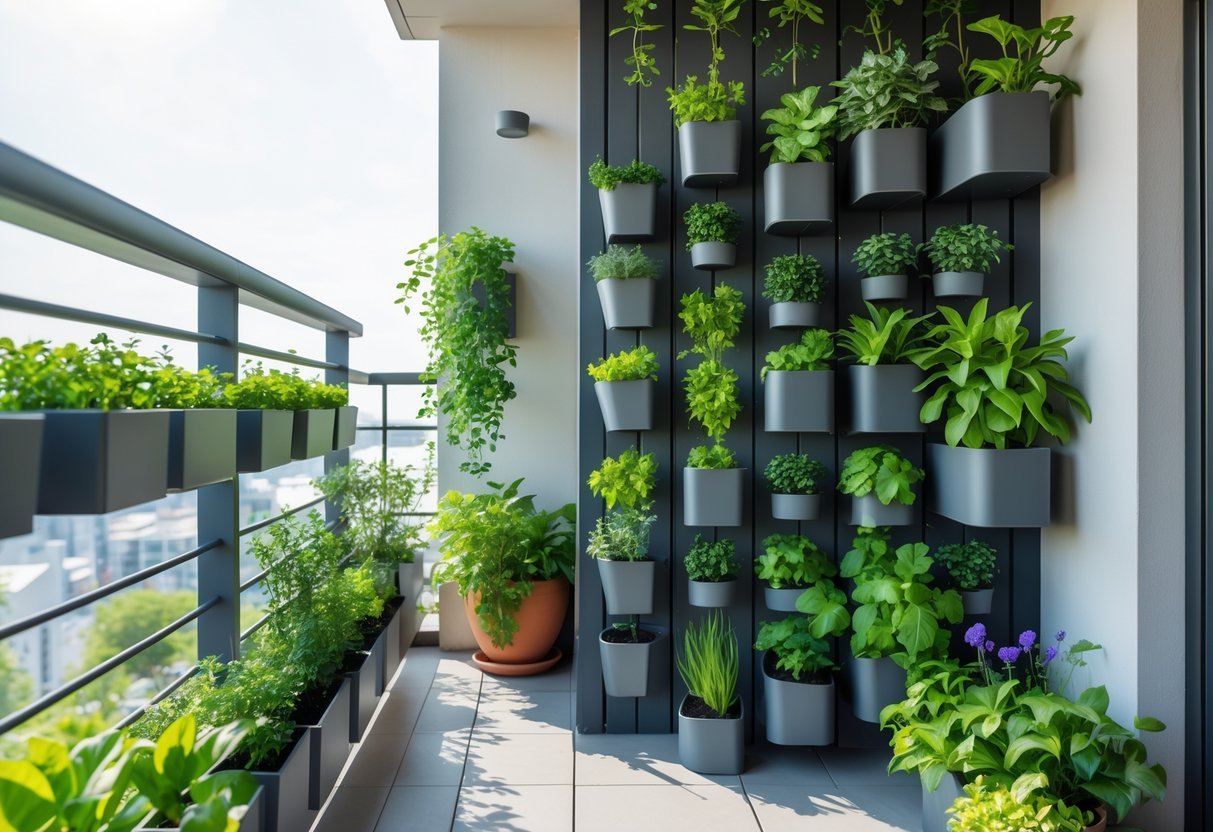
Plan for regular watering, sun exposure, and the weight your balcony can safely hold. Use drip systems, rotate plants for light, and check railings and floor load limits before adding heavy planters.
Irrigation and Watering Solutions
Choose a watering method that fits the plants you grow and the time you have. Install a drip irrigation line with pressure compensating emitters for rows of planters; set a timer to run 10–20 minutes early morning, adjusting duration by season. For mixed pots, use a small reservoir system or self-watering inserts to keep consistent moisture for herbs and vegetables.
Hand watering works if you only have a few pots; use a watering can with a narrow spout to target the soil and avoid wetting leaves. Add saucers or trays under pots to catch runoff and prevent dripping to neighbors. Check soil moisture twice a week; mulch with 1–2 inches of compost or bark to slow evaporation.
Sunlight Optimization
Measure how many hours of direct sun your balcony gets at different times of day. Place sun-loving plants (tomatoes, basil, lavender) where they receive 6–8 hours of direct sun. Put partial-shade plants (lettuce, mint, ferns) in areas with 3–5 hours or where they get morning sun only.
Rotate pots every 1–2 weeks so all plants get even light and avoid legginess. Use reflective surfaces like light-colored walls or mirrors to boost light in shady corners. Consider a simple movable shelving unit to shift plants into better light as seasons change.
Balcony Safety and Load Support
Know your balcony’s load limit—check landlord documents or building plans, or ask a structural engineer if unsure. Typical residential balconies support about 40–60 pounds per square foot, but older structures vary. Distribute weight by using lightweight materials: plastic planters, fabric pockets, or tapered pots with drainage holes.
Avoid placing heavy soil blocks or large water-filled containers directly along one edge. Use wall-mounted planters or rail planters to free floor space, but confirm anchors are rated for dynamic loads and outdoor conditions. Inspect railings, fasteners, and decking monthly for rust, rot, or loosening, and fix issues before adding more weight.
Frequently Asked Questions
You can save floor space by going vertical, choose plants that tolerate wind and limited sun, and use simple structures like pallets, pocket planters, or stacked pots to keep costs low. Focus on drainage, lightweight materials, and easy-access watering to keep maintenance simple.
How can I maximize space with a vertical garden in a small balcony?
Use wall-mounted planters, pocket systems, or a tiered shelving unit to free up floor area. Place taller plants at the back and trailing or low plants at the front for full use of depth.
Hang planters on railings and use hanging baskets to add planting area without blocking walkways. Rotate seasonal plants into the best light spots to get more productivity from the same space.
What are some low maintenance plants suitable for vertical balcony gardens?
Choose succulents, sedums, and hens-and-chicks for very low water needs. Herbs like thyme, mint, and chives grow well and require little fuss.
For greener, forgiving foliage, pick pothos, spider plants, or ferns that tolerate variable light. If you want edibles, try cherry tomatoes or lettuce varieties that respond well to regular, simple care.
Are there any simple DIY vertical garden designs for beginners?
Yes. A pallet planter needs only a pallet, landscape fabric, soil, and plants to create a basic vertical bed. Fabric pocket planters or shoe-organizer pockets mounted on a wall also work with minimal tools.
Use stacked planters or a ladder shelf for an easy, modular option that you can rearrange. Start small to learn watering and sunlight patterns before expanding.
How do I ensure proper water drainage in a vertical balcony garden?
Choose containers with drainage holes and use a well-draining potting mix to avoid waterlogging. Add a drip tray or plant saucers to catch excess water and protect balcony surfaces.
Install a simple drip irrigation or watering tube system to deliver water evenly and reduce overwatering. Check drainage regularly and remove any blocked holes or compacted soil.
What are cost-effective materials to use for a low-budget balcony garden?
Use reclaimed pallets, secondhand shelving, cinder blocks, or plastic crates for structure. Reuse old gutters, buckets, or shoe organizers as planters.
Opt for inexpensive potting mix blended with compost and buy seeds instead of seedlings to cut plant costs. Lightweight materials like plastic or fabric keep installation easy and lower railing stress.
What are some creative vertical garden structures that can enhance a balcony’s aesthetic?
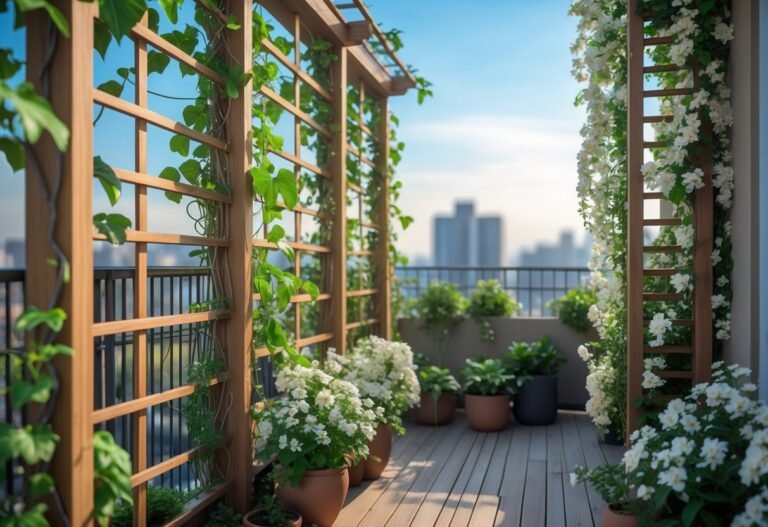
Try a living wall panel system with modular pockets for a uniform, modern look. Build a trellis or vertical frame for climbers like beans or peas to add height and texture.
Combine mixed-height shelves, hanging planters, and a few statement pots to create layered visual interest. Add small LED lights or a simple wooden frame to make the display more decorative and cozy.