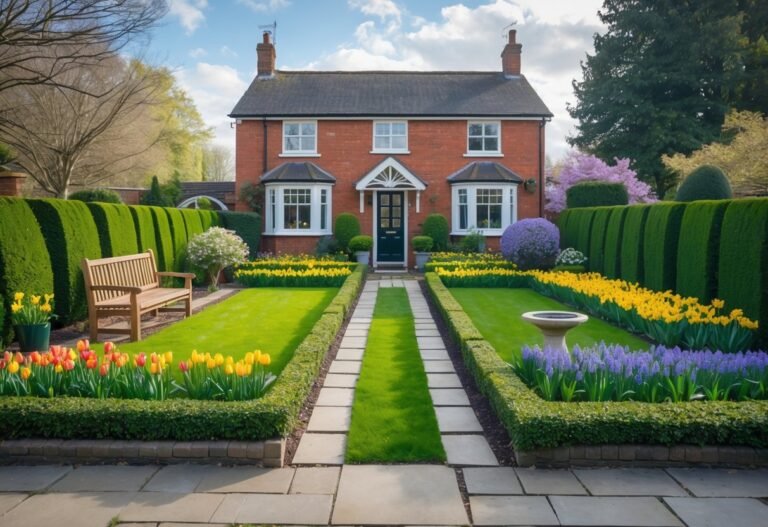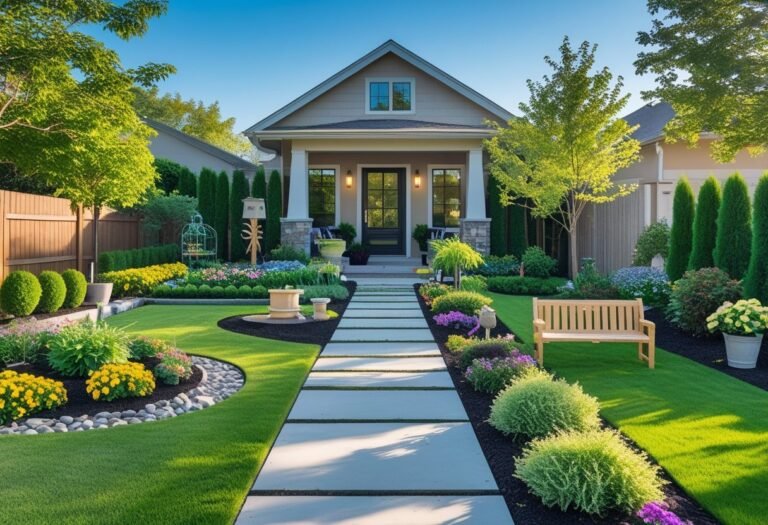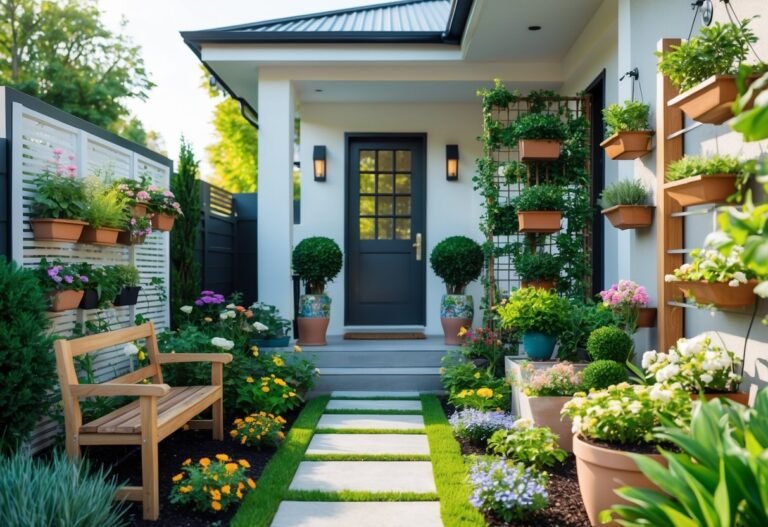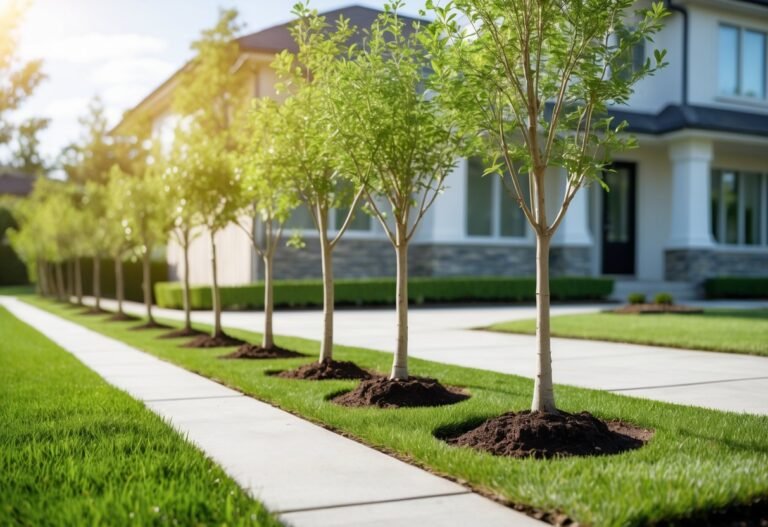

Terraced House Front Garden Ideas for Small Spaces and Maximum Curb Appeal
You can make a small front garden feel bigger, neater, and more welcoming with simple changes like layered planting, clear paths, and a few smart features. Focus on clean lines, compact plants, and practical details to boost curb appeal and use every inch well.
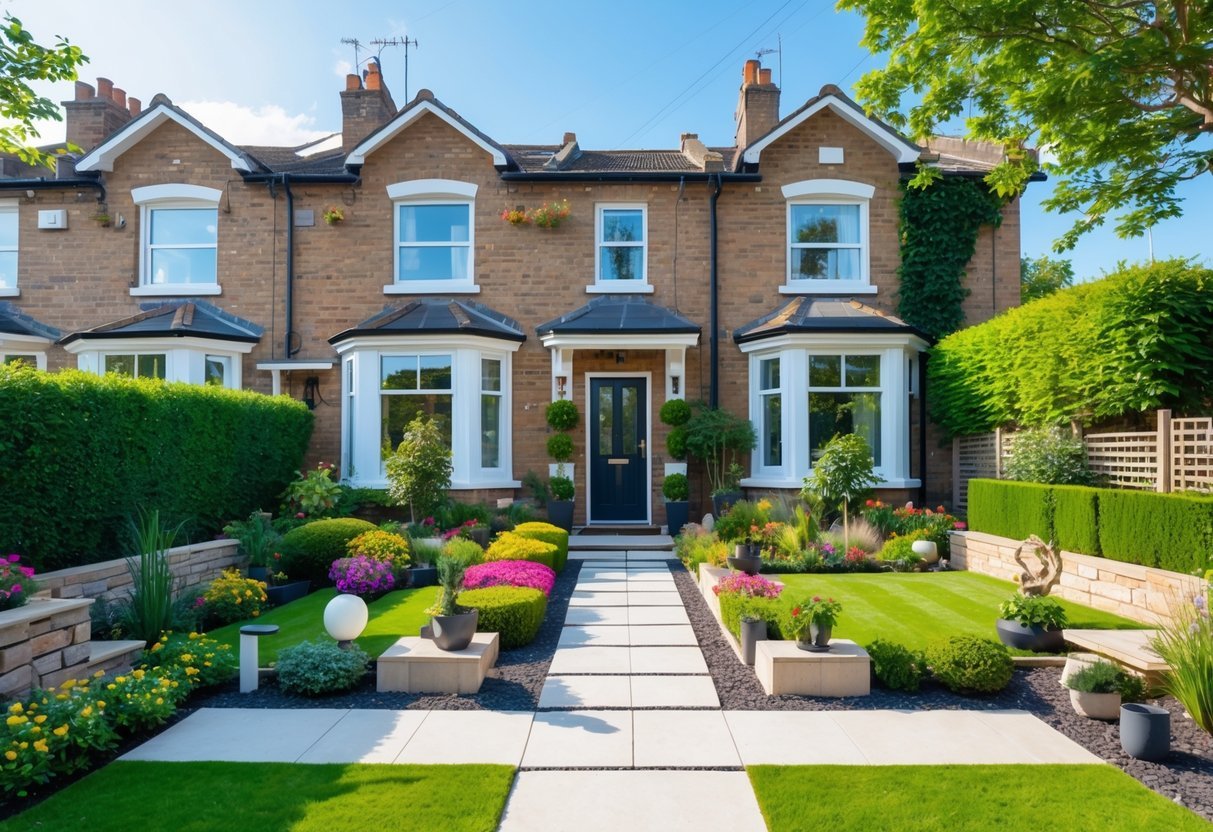
Whether you want a low-maintenance look, more colour, or extra seating, this post shows easy ideas that suit narrow terraces, sloping plots, and Victorian fronts. Use these tips to plan a front garden that suits your home and your routine.
Key Takeaways
- Start with a clear layout and choose plants that fit the space.
- Add features like pathways, raised beds, or seating for function and style.
- Pick low-maintenance options to keep your garden tidy and inviting.
Design Principles for Terraced House Front Gardens

Good design makes your small front space look bigger, work better, and stay tidy. Focus on clear paths, a strong focal point, the right plants, and easy upkeep.
Maximizing Kerb Appeal
Use a clear focal point near the door or gate to draw the eye. This can be a pair of matching pots, a low hedge, or a simple sculpture. Keep the driveway or path materials neat and consistent—two narrow paved tracks for a parking strip look tidy without covering the whole front.
Limit colours to two or three plant tones to avoid clutter. Use symmetry for a formal look or staggered planting for a relaxed feel. Add an attractive, well-lit house number and tidy borders to boost that first impression.
Short, neat planting mixed with one taller element near the entrance improves scale. Use edging or a low wall to define beds and stop grass or gravel spilling onto the path.
Balancing Privacy and Openness
Decide how much passers-by you want to filter without blocking light. Use low hedges or railings if you want a visual barrier that still feels open. Taller, narrow plants like bamboo or pleached trees work well in tight spaces for vertical screening without taking much ground area.
Place screening plants at least 30–45 cm from the path to avoid a cramped feel. Use lattice with climbers if you need seasonal screening that can be trimmed back. Keep sightlines to the door and windows for safety and street connection.
Mix solid and see-through elements—short wall plus railings, or a hedge with gaps—to keep the garden friendly and secure. Maintain plant height with annual trims to avoid sudden overgrowth.
Optimal Plant Selection
Choose plants suited to your amount of sun and soil type. For shaded terraces pick hostas, ferns, and hellebores; for sunny spots choose lavender, rosemary, and sedum. Use evergreen structure—small yew, box, or dwarf holly—for winter interest and year-round shape.
Include a few seasonal bloomers for colour peaks: tulips or crocuses in spring, roses or salvias in summer, and late asters in autumn. Prefer compact varieties labelled “dwarf,” “compact,” or with a height under 1m when space is tight.
Group plants in odd numbers (3 or 5) and repeat species to create cohesion. Use container plants on steps or by the door to add colour without reducing bed space.
Low Maintenance Strategies
Choose hardy, drought-tolerant species and improve soil with compost to cut watering needs. Lay a 5–8 cm layer of mulch in beds to suppress weeds and keep soil moist. Use permeable paving for paths to reduce run-off and maintenance.
Keep lawn areas tiny or replace them with gravel, planting strips, or low groundcover like thyme. Install a simple drip irrigation or a soaker hose on a timer to save time and water.
Plan for annual pruning windows: light trims in spring and more shaping in autumn. Label plants and keep a simple tool kit—hand trowel, pruning shears, and gloves—nearby so small tasks get done quickly.
Creative Layouts and Features

Plan paths that guide visitors, pick fences that frame views and give privacy, choose color schemes that suit your home, and add lighting that highlights features and keeps the space safe.
Defined Pathways
Create a clear route from the pavement to your door using materials that match your house. Use paving slabs, brick, or gravel laid in a straight or gently curving line to prevent walkers from trampling beds. Keep the path at least 80–90 cm wide for one person to walk comfortably; widen to 120 cm near a gate or porch for turning space.
Edge the path with low plants like lavender or boxwood to hold soil and add scent. For steep front gardens, add shallow steps (12–15 cm rise) with contrasting treads to improve footing. Consider a narrow central strip of grass between hard surfaces for a softer look and better drainage.
Smart Use of Fencing and Boundaries
Choose fencing that balances privacy, light, and curb appeal. For short front gardens, a low picket or metal rail up to 90 cm keeps the façade visible while defining the plot. Taller timber panels (150–180 cm) work if you need strong screening from a busy street.
Combine materials: use a low brick wall with timber panels above to add height without feeling bulky. Add a trellis to a fence for climbing plants like clematis or jasmine to soften the structure. Use gate placement to create a focal point; align it with the main path and add a small porch light for clear arrival sightlines.
Colour Coordination
Pick a palette that complements your house’s brick, render, or paint. Use three main colors: a dominant foliage green, one bright accent (roses, salvias, or container plants), and a neutral for hardscape (grey, sand, or terracotta). Match pot colors or paint the front door to the accent color for cohesion.
Group plants by season and height: taller shrubs or ornamental grasses at the back, mid-height perennials in the middle, and low groundcover or gravel at the edge. Repeat the accent color in three or more spots to create rhythm. For small terraces, limit patterns and choose two contrasting textures—smooth leaves and feathery grasses—for visual interest without clutter.
Lighting Solutions
Use layered lighting: path lights for safety, uplights for specimen plants or trees, and a warm porch light for welcome. Place low bollard lights every 1.2–1.5 meters along a path to avoid dark gaps. Use LED warm white (2700–3000K) to make brickwork and plants look natural after dusk.
Aim lights so they don’t shine into neighbors’ windows. Install motion sensors at the entrance for security but pair them with low-level ambient lighting to avoid startling guests. For wet or exposed sites, choose IP65-rated fixtures and place transformers in ventilated, dry boxes.
Functional Additions for Small Front Gardens
Add practical elements that make the space usable, tidy, and welcoming. Focus on seating that fits tight footprints, storage that hides bins and tools, and small features that support local wildlife without taking up much room.
Incorporating Seating
Pick seating that matches the width of your path or porch. A slim bench against a wall or a narrow folding chair near the door gives you a place to sit without blocking movement. Choose materials for low maintenance: treated wood, metal with rust-proof finish, or weatherproof plastic.
Use built-in options when possible. A recessed bench in a raised bed or a windowsill seat saves floor space and adds storage below. Add cushions in durable, water-resistant fabric for comfort.
Think about scale and placement. Keep backrests low so sightlines from the street stay open. Leave at least 80–90 cm (31–35 in) of clear walking space in front of seating to avoid crowding the entrance.
Space-Saving Storage Ideas
Store tools, bins, and cushions in compact units that blend with the front garden design. A slim vertical cabinet or a narrow bench with hinged lid gives storage without widening the footprint. Choose units no deeper than 30–40 cm (12–16 in) for very tight areas.
Hide wheelie bins behind a trellis or screen made of timber slats or slotted metal. Use locks or clips if needed for security. Mount hooks on the fence for hand tools and a fold-down table you can use for potting.
Label containers and use stackable plastic boxes for seasonal items. Place heavier items at the bottom and cover cushions in a weatherproof bag to extend their life.
Small Wildlife-Friendly Features
Add features that support birds, bees, and hedgehogs in tiny spaces. Install a small bird box on a wall or under an eave, facing away from prevailing wind. Hang a shallow bird bath or place a low saucer for water on a stable surface.
Choose a few pollinator-friendly plants in pots or narrow beds: lavender, rosemary, and native wildflowers work well. Leave some leaf litter or a small log pile in a discreet corner to give insects and hedgehogs shelter.
Avoid pesticides and use native plants where possible. Provide a shallow ramp across any paved edges so small animals can move safely between planted areas.
Frequently Asked Questions
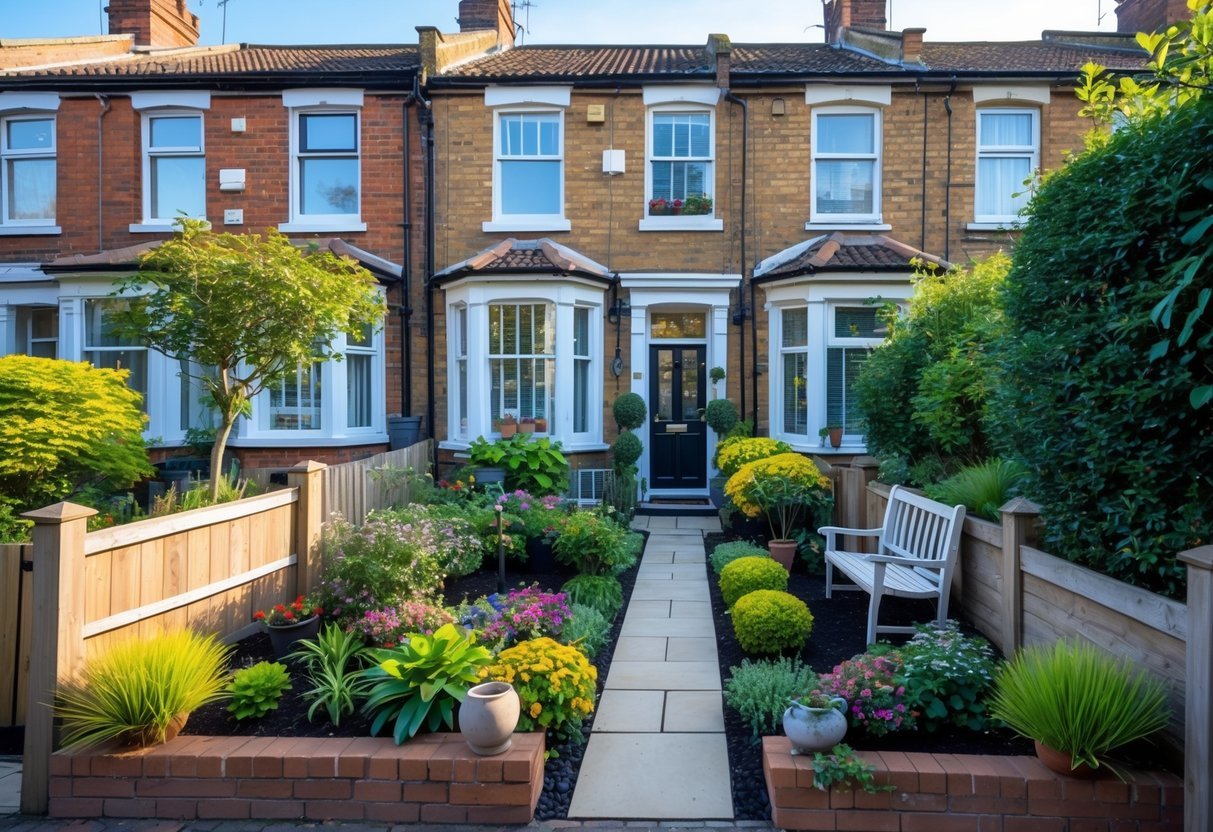
Find practical steps for low-cost layouts, space-saving ideas for small terraces, plant lists that suit UK climates, and current style tips like hard landscaping and muted palettes.
How can I design a budget-friendly front garden for my terraced house?
Start with a clear plan and a simple layout. Choose low-cost paving, reclaimed or local stone, and concrete sleepers for raised beds.
Reuse items you already have. Turn old bricks into a border, pallets into a planter, or a single bench into a focal point.
Pick hard-wearing, low-maintenance plants. Lavender, rosemary, and hardy grasses give long-term value with little care.
What are some simple yet effective front garden design ideas for terraced houses?
Create defined zones: a path, a planted bed, and a small seating space if room allows. This stops the area from feeling cluttered.
Use vertical space with wall-mounted troughs or trellises for clematis or ivy. This adds greenery without losing ground space.
Keep planting groups simple and repeated for harmony. Use two or three plant types and repeat them along the frontage.
What are the modern design trends for terraced house front gardens?
Minimalist layouts with crisp edges and neutral paving dominate. You’ll see rectangular beds, smooth block paving, and slim borders.
Mixed hardscape and softscape is popular. Combine gravel or tiles with structured evergreen planting for year-round clean lines.
Sustainable choices matter. Permeable paving, native plants, and drought-tolerant species reduce maintenance and runoff.
How can I maximize a small Victorian terrace’s front garden space?
Prioritise a clear path to the door to meet council and neighbour expectations. Narrow beds along the path make the space feel larger.
Choose compact shrubs and multi-season plants. Box, dwarf conifers, and pansies give structure and colour without crowding.
Use mirrors or light-coloured surfaces to reflect light. Slim planters and vertical gardens increase planting area without taking floor space.
What are the best practices for landscaping a front garden in the UK?
Check local council rules and any conservation area limits before you change the frontage. Some terraces sit in protected zones with strict rules.
Use materials that suit the local character. Traditional stone or brick works well, but contemporary materials can fit if chosen carefully.
Plan for drainage and winter wet. Slope hard surfaces away from the house and consider permeable paving to reduce surface water.
Which plants are recommended for enhancing the curb appeal of a terraced house?
Evergreen shrubs like box, euonymus, and small holly keep a tidy look all year. They frame paths and doorways well.
Flowering shrubs such as hebes, lavender, and camellias add scent and seasonal colour. Pair them with hardy perennials like catmint and geraniums.
Climbers like clematis, jasmine, and trained roses soften brickwork. Use them on low trellises or against gate posts for vertical interest.