Terrace Vegetable Garden Design Ideas: Practical Layouts, Plant Choices, and Space-Saving Tips
You can grow a productive vegetable garden on a terrace, no matter the size, by choosing space-saving containers, vertical supports, and sun-smart plant choices. These basics let you fit tomatoes, greens, herbs, and peppers into tight spots while keeping care simple and yields steady.
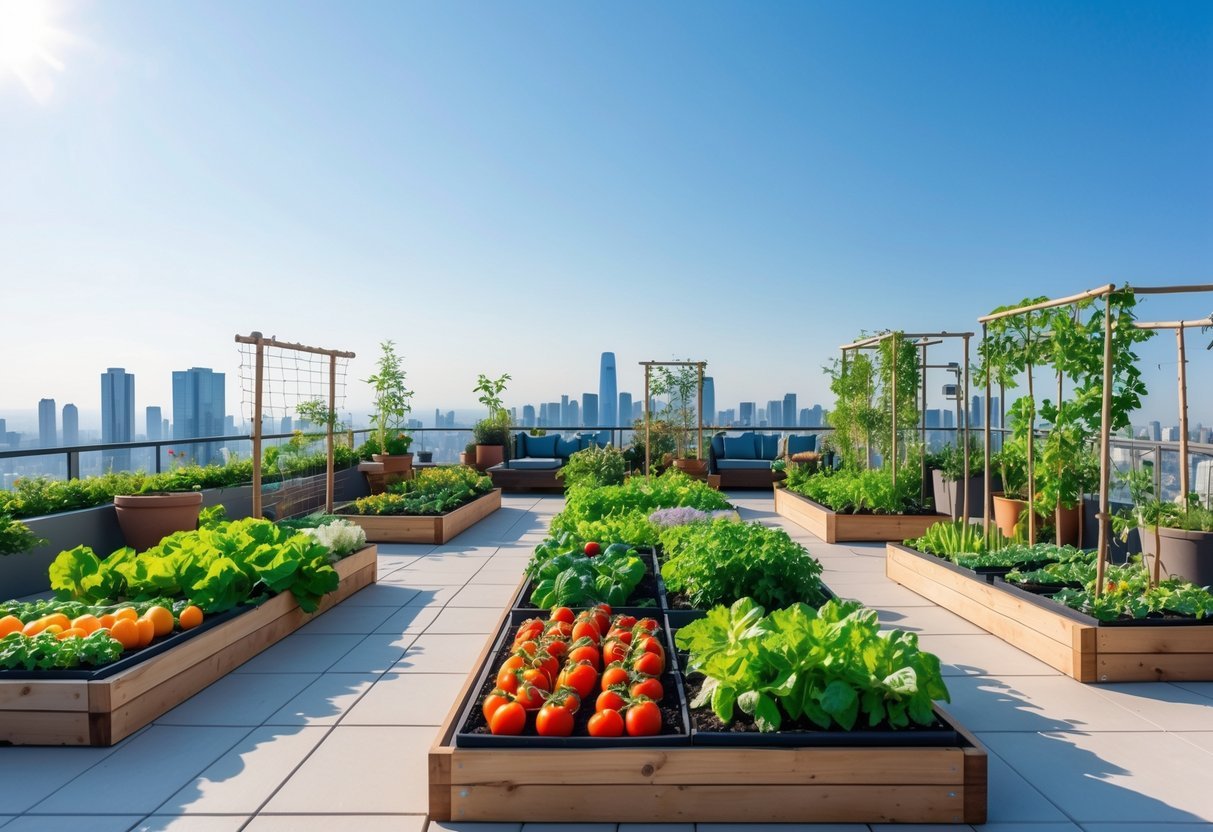
Imagine using tiered planters, wall-mounted pockets, and lightweight raised beds to turn unused space into a mini farm. With a little planning—matching plants to light, arranging for easy watering, and building sturdy supports—you get more food and less fuss from your terrace.
Key Takeaways
- Plan layout and plant types to match your terrace light and space.
- Use vertical and compact designs to boost growing area.
- Favor low-maintenance, water-wise methods for steady harvests.
Planning Your Terrace Vegetable Garden

Decide where plants will get light, how much room each crop needs, and which plants will share containers or beds. Good planning saves time and gives you higher yields with less maintenance.
Assessing Sunlight and Space
Track sunlight across your terrace for three clear days. Note hours of direct sun in the morning, midday, and afternoon on a simple chart or photo. Most vegetables need 6–8 hours of direct sun; leafy greens can do well with 4–6 hours.
Measure usable floor area and railing or wall space for vertical supports. Record planter sizes and depths; many vegetables need at least 30 cm (12 in) of soil. Mark heavy-load zones near structural supports if you plan to use large planters or raised beds.
Map wind patterns and heat sources like vents or reflective walls. Use windbreaks or place tall plants upwind to protect fragile crops. Keep a clear path for watering and harvest access.
Choosing Suitable Vegetables
Match vegetables to the sunlight and depth you recorded. Full-sun spots suit tomatoes, peppers, cucumbers, and eggplant. Partial shade areas work for lettuce, spinach, kale, and herbs like mint and parsley.
Pick compact, patio, or dwarf varieties for small spaces. Look for terms like “bush,” “patio,” or “compact” on seed packets. Use container-friendly crops such as radishes, baby carrots, bush beans, and spinach that finish quickly.
Plan succession planting: sow quick crops (radish, lettuce) in early spring, then follow with longer-season crops (tomato, pepper). Keep a list of planting dates and expected harvest windows to avoid empty containers.
Zoning for Efficient Layout
Create zones based on sun, water needs, and plant height. Group sun-loving, high-water crops (tomatoes, cucumbers) together near a water source. Put drought-tolerant herbs and Mediterranean plants (rosemary, thyme) in drier zones.
Use a simple table to assign zones:
- Zone A: Full sun, frequent watering — tomatoes, cucumbers, basil
- Zone B: Partial sun, moderate watering — lettuce, kale, chard
- Zone C: Sunny, low water — rosemary, sage, lavender
Place tall supports or trellises on the north or west side so they don’t shade shorter plants. Label each container with plant name and sowing date to keep the zones organized and reduce mistakes.
Innovative Garden Design Ideas
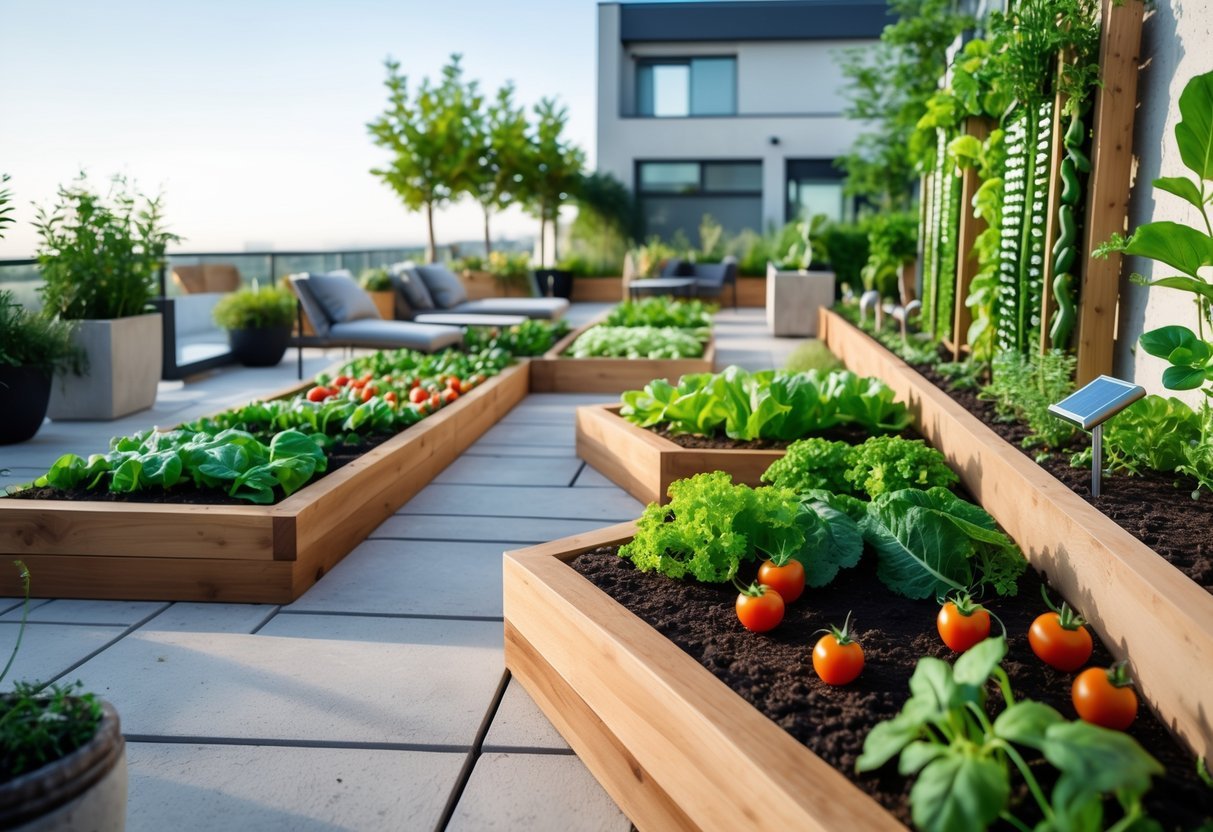
You can increase yield, save space, and cut maintenance time by choosing the right layout and containers. Focus on vertical space, flexible modules, and layered planting to fit your terrace and daily routine.
Vertical Gardening Solutions
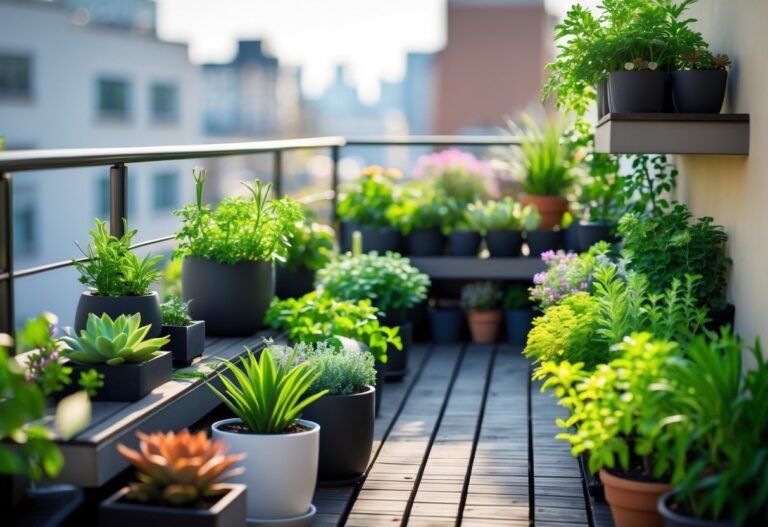
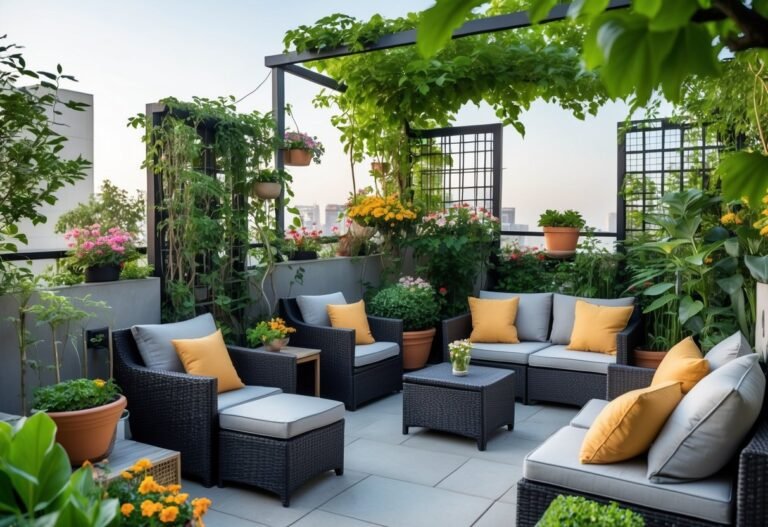
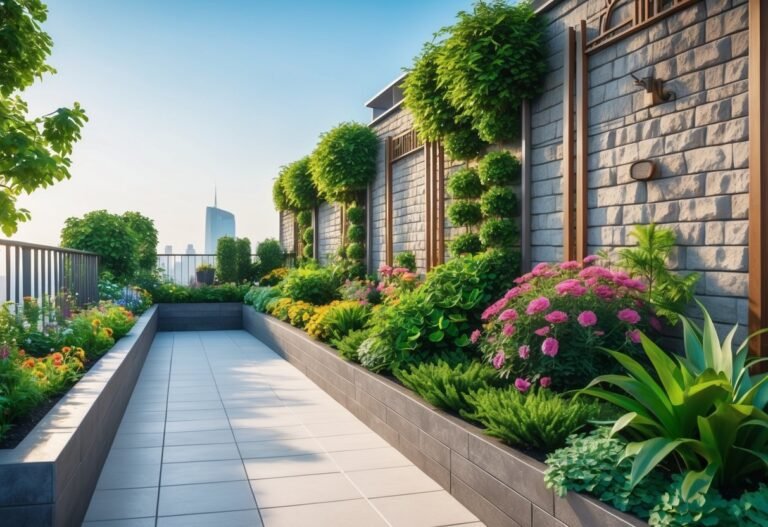
Use sturdy vertical supports like metal trellises, wall-mounted planters, and pocket systems to grow climbers, greens, and herbs. Train peas, pole beans, cucumbers, and indeterminate tomatoes up trellises to free ground space. Mount shallow wall pockets or felt planters for lettuce, mint, and small herbs where sunlight is 4–6 hours.
Choose containers with built-in drainage or add holes and saucers to prevent root rot. Attach supports securely to walls or railings and check wind load so plants don’t topple. Watering is key: use a drip line or a small soaker tube along the vertical structure to keep moisture even and reduce runoff.
Plan for access: place herbs and quick-harvest greens at waist height. Reserve higher tiers for vining crops. Label plants and space them 6–12 inches apart depending on mature size so airflow reduces disease risk.
Modular Container Arrangements
Pick stackable pots, wheeled planters, or pallet boxes that let you rearrange plants as seasons change. Group warm-season vegetables (tomatoes, peppers) in full-sun modules and shade-tolerant crops (spinach, radish) in partial-sun units. Use identical containers for easy irrigation: a single drip manifold can serve several pots.
Combine deep containers (12–18 inches) for root crops and shallow trays for herbs. Use a mix of lightweight materials—fiberglass or resin—for easy movement. Put heavier, larger modules near walls or corners for stability and lighter ones near railings to catch sun.
Label modules with planting dates and rotate crops by moving containers to different microclimates on the terrace. This improves yield and helps you manage pests and soil fertility without digging up permanent beds.
Tiered Planter Designs
Build tiered planters using staggered shelves, step-style boxes, or pyramid planters to create layers of growing space. Place heat-loving, taller plants on the top tiers where they get maximum sun. Put root crops and moisture-loving plants on lower levels where runoff and shade help retain water.
Use a mix of troughs and pots on each tier to match root depth. Ensure each tier has independent drainage to avoid waterlogging lower levels. If you water from the top, install a catch basin and reuse overflow for lower tiers to save water.
Design tiers with access in mind: leave 18–24 inches between levels for harvesting and pruning. Use rot-resistant wood or metal frames and line wooden boxes with landscape fabric to extend life and protect soil.
Sustainable Practices and Maintenance
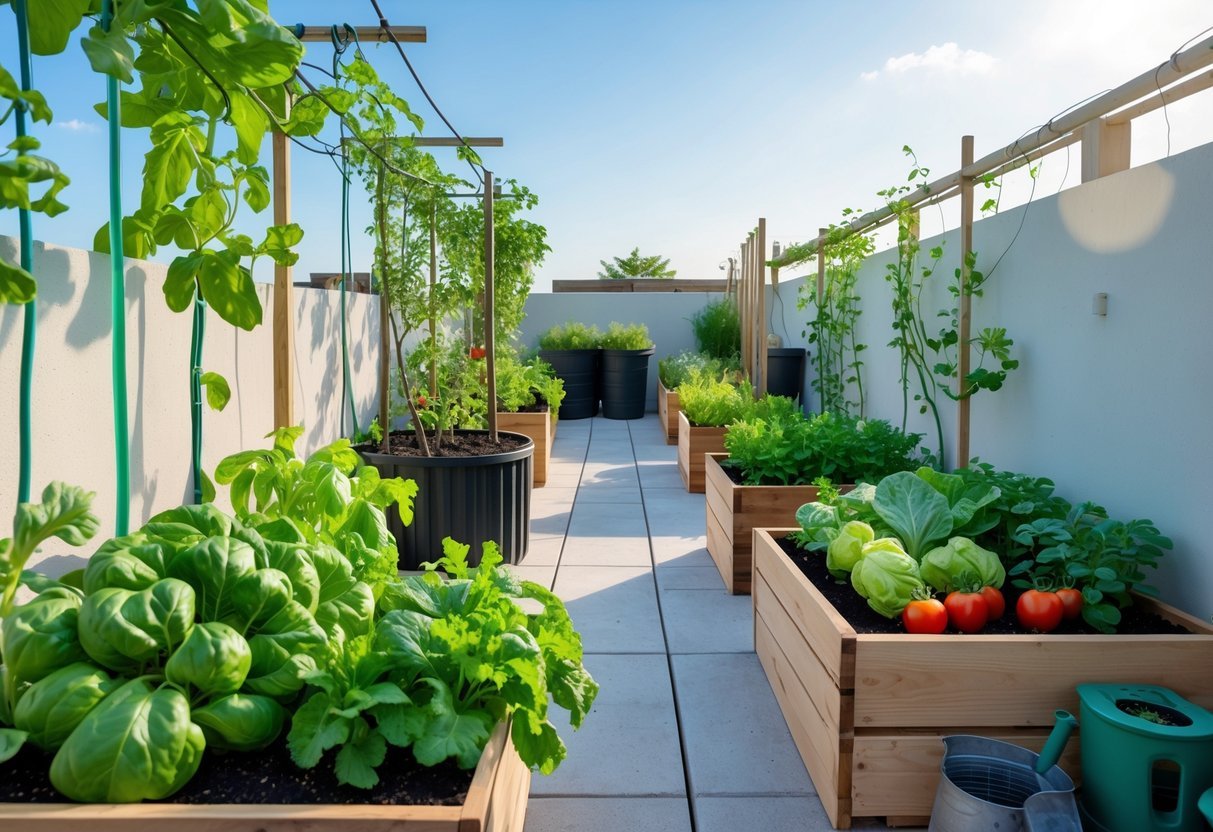
Focus on saving water, building soil with food scraps, and preventing pests with safe, low-tox methods. These steps cut costs and keep plants healthy.
Watering Strategies for Terraces
Use drip irrigation or soaker hoses to deliver water directly to the root zone. Place timers or a simple automatic controller to water early morning for 10–30 minutes depending on pot size and plant needs.
Collect and store rainwater in barrels with a tight lid and screen. Use a gravity-fed hose or a small pump to connect barrels to your drip lines. Check that containers have good drainage and use saucers only for catching excess—never let pots sit in standing water.
Group plants by water need: drought-tolerant herbs together, thirsty vegetables in larger containers. Mulch (2–3 inches) with straw or shredded leaves to cut evaporation. Test soil moisture with your finger or a moisture meter before watering.
Composting and Organic Fertilizers
Start a small compost bin or worm bin to turn kitchen scraps into rich soil. Use vegetable peels, coffee grounds, crushed eggshells, and shredded paper; avoid meat, dairy, and oily foods to prevent pests.
Apply finished compost as a top dressing or mix 10–20% compost into potting mix before planting. For nutrient boosts, use organic options: fish emulsion, seaweed extract, or well-aged manure tea. Follow package dilution rates to avoid burning roots.
Top-dress with compost every 4–8 weeks during the growing season. Rotate crops and refresh potting mix yearly by replacing the top 2–4 inches with new mix plus 10% compost to maintain structure and fertility.
Pest Management Techniques
Inspect plants weekly for early signs: holes, sticky residue, yellowing, or wilting. Remove affected leaves and handpick larger pests like caterpillars or beetles.
Encourage beneficial insects: plant marigolds, nasturtiums, and dill to attract ladybugs and parasitic wasps. Use floating row covers to protect seedlings from moths and aphids without chemicals.
Apply organic sprays only when needed: insecticidal soap for soft-bodied pests, neem oil for mixed infestations, and Bacillus thuringiensis (BT) for caterpillars. Spot-treat and follow label instructions. Keep containers clean and remove plant debris to reduce egg-laying sites.
Frequently Asked Questions
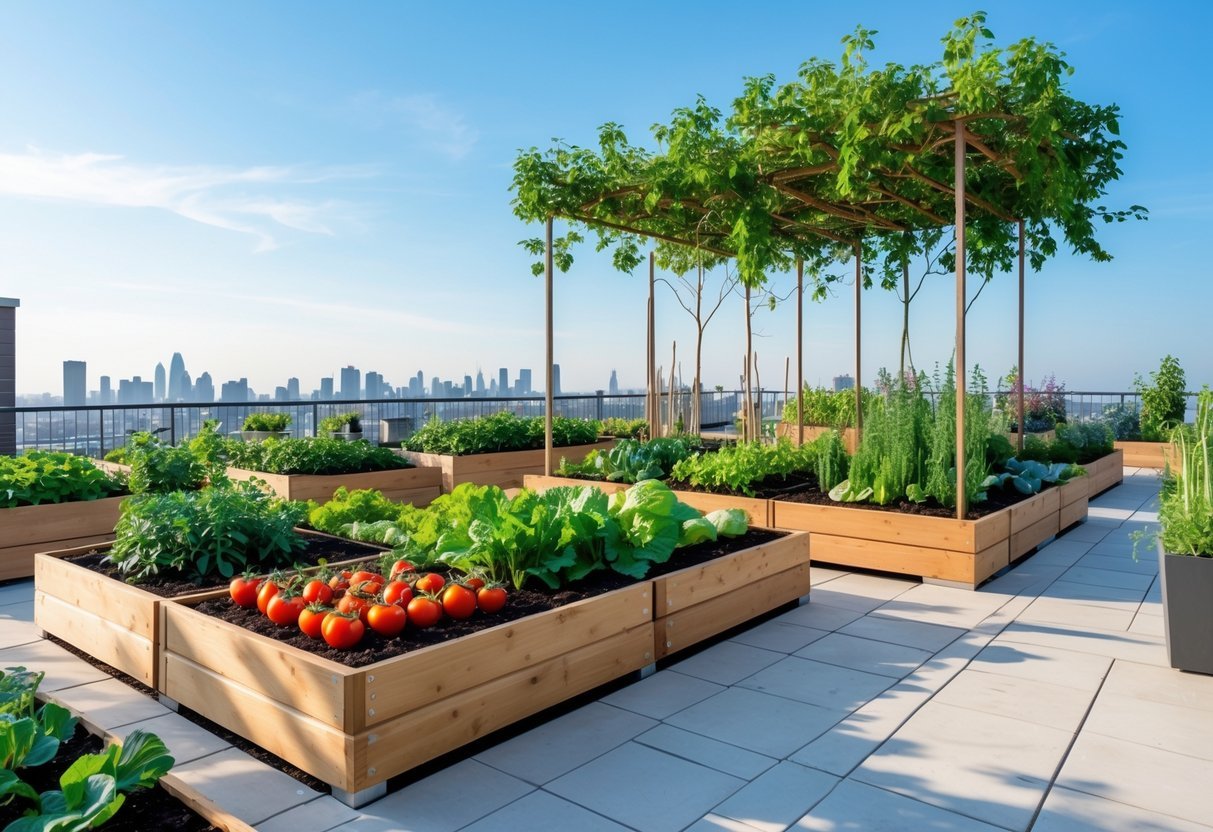
This section gives clear, practical answers you can use right away. It covers space-saving layouts, drainage fixes, best container crops, planter styling, pest and weather protection, plus the tools you’ll need.
What are the best practices for maximizing space in a terrace vegetable garden?
Use vertical space with trellises, wall-mounted planters, and hanging baskets to grow vining crops like peas, beans, and cucumbers. Stackable or tiered planters let you fit more pots into a small footprint.
Choose compact or dwarf varieties labeled “bush,” “patio,” or “compact.” Planting in blocks instead of rows improves yield per square foot and makes watering and harvesting easier.
Rotate crops and use succession planting to keep beds productive. Put fast-growing greens between slower crops to harvest more often.
How can I ensure proper drainage in my terrace vegetable garden?
Pick containers with drainage holes and place a layer of coarse material, like broken clay or gravel, at the bottom to prevent soil compaction. Use a well-draining potting mix that includes perlite or coarse sand.
Elevate containers on feet or blocks so water can flow out freely. Check pots after heavy rain and, if needed, drill extra holes or add a drainage tray to avoid root rot.
Which vegetables are best suited for growing in containers or small spaces?
Leafy greens (lettuce, spinach, arugula), herbs (basil, parsley, chives), and compact root crops (radishes, baby carrots) do well in shallow containers. Tomatoes (dwarf or patio types), peppers, bush beans, and bush cucumbers work in medium to large pots.
Choose varieties labeled “container” or “dwarf.” Read seed or plant tags for mature size and pot recommendations.
What are some creative ways to arrange planters in a terrace garden for aesthetic appeal?
Group containers by height and color: tall plants at the back, medium in the middle, and low at the front for layered sightlines. Use matching pots or a limited color palette for a cohesive look.
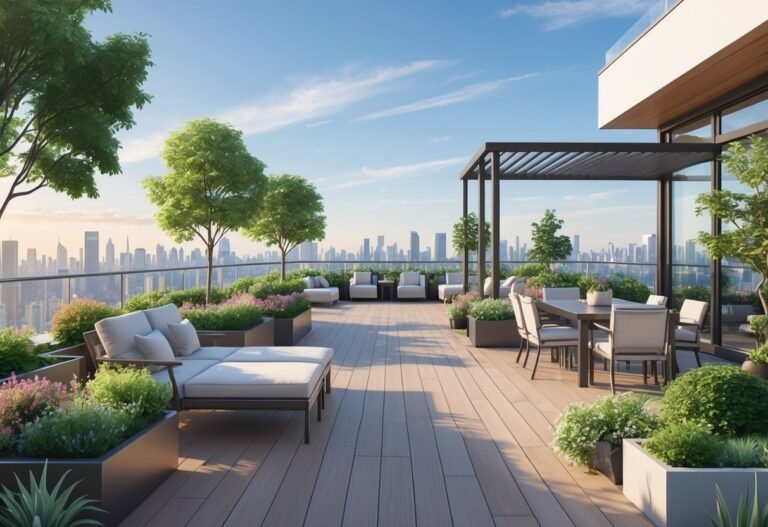
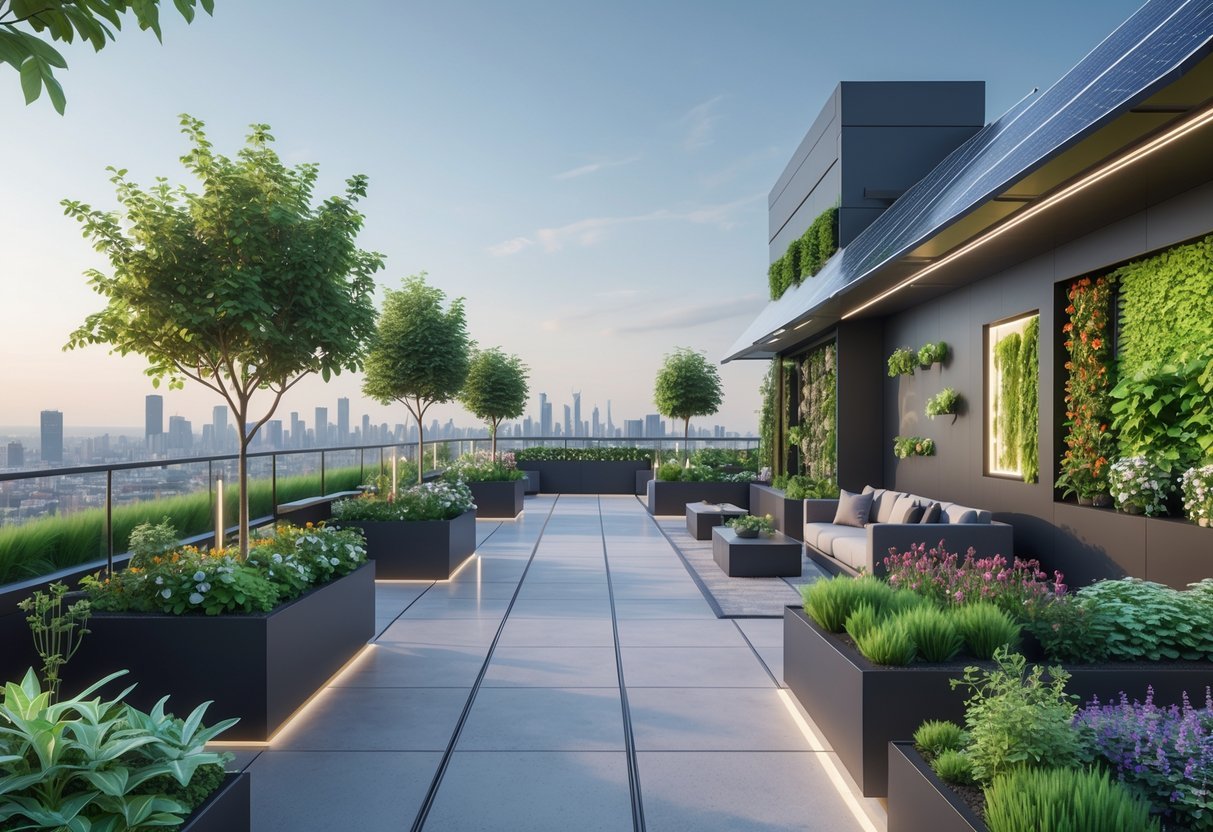
Create zones for dining, growing, and relaxing. Place a few statement planters or a vertical garden as a focal point to draw the eye.
How do I protect my terrace vegetable garden from pests and harsh weather conditions?
Use physical barriers like insect mesh, row covers, and sticky traps to keep pests off plants. Hand-pick larger pests and apply organic sprays (neem oil, insecticidal soap) when infestations appear.
Provide shade cloth for hot afternoons and windbreaks like lattice or screens during storms. Move small or delicate pots into sheltered spots or indoors during extreme weather.
What are the essential tools and supplies needed to maintain a healthy terrace vegetable garden?
Basic tools: a hand trowel, pruning shears, a small fork, and a watering can with a fine rose. Add gloves, plant ties, and a pH tester for soil checks.
Supplies: quality potting mix, slow-release fertilizer or balanced liquid feed, mulch, and stakes or trellises for support. Keep a small pest kit with soap, neem oil, and row cover fabric on hand.