Terrace Garden Wall Design: Practical Ideas for Stylish, Space-Saving Vertical Greenery
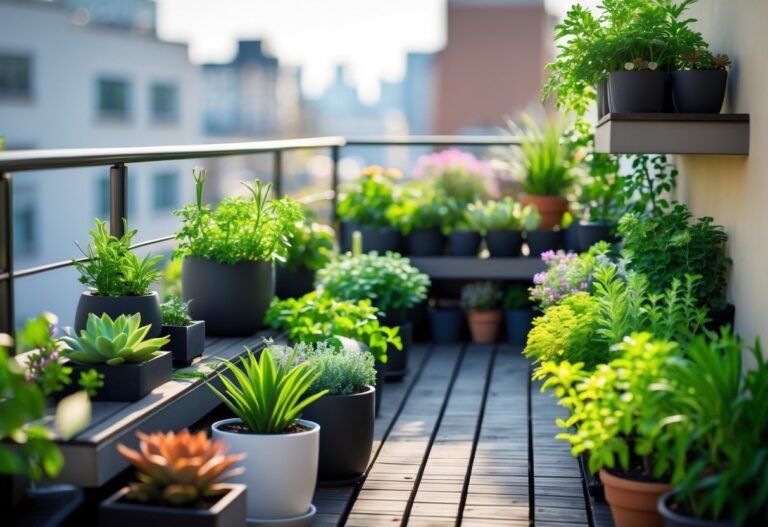
You can turn a blank terrace wall into a living, useful part of your outdoor space by choosing a design that fits your budget, weight limits, and sunlight. A vertical garden, trellis, or modular planter system gives you immediate greenery, privacy, and easy maintenance while keeping costs and structural needs manageable.
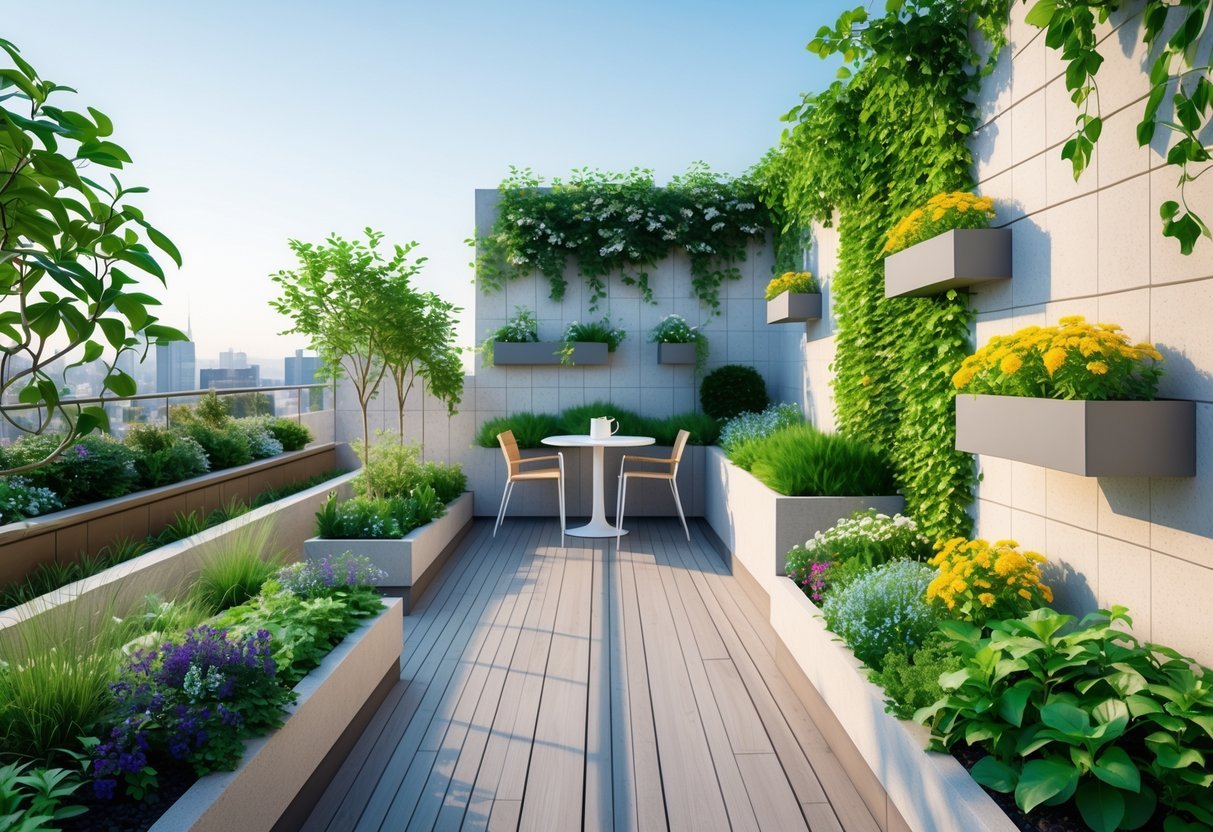
This post shows practical choices for materials, plant types, and simple construction tips so you can match a style—modern, rustic, or lush—to your space. Expect clear options for planting, drainage, lighting, and low-cost decor that make the wall both beautiful and functional.
Fundamentals of Terrace Garden Wall Design
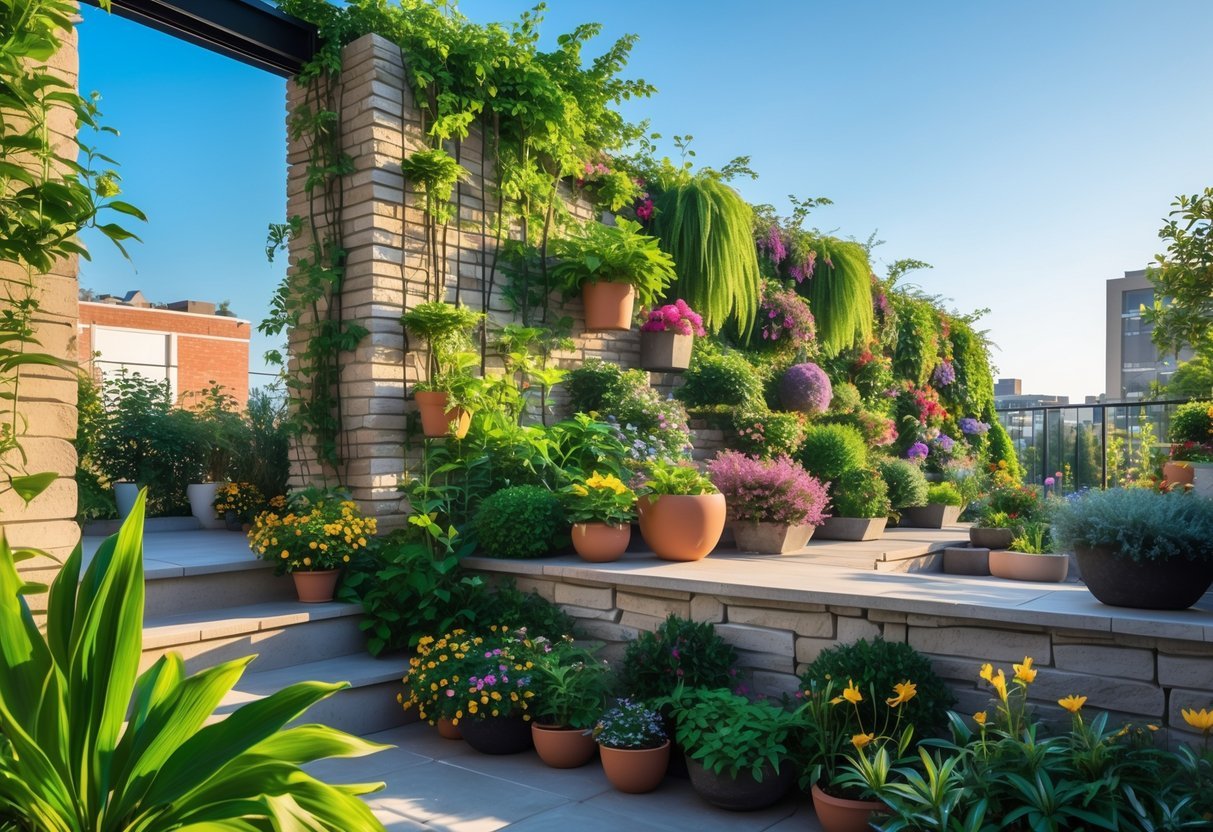
You need walls that control soil, shed water, and support plant beds while fitting your yard. Focus on slope angle, drainage, and material to keep the terraces stable and low maintenance.
Key Principles and Considerations
Start by measuring the slope and noting soil type. Steeper slopes need more frequent, shorter terraces; gentle slopes allow wider planting beds. Mark level lines with a string and use a transit or long spirit level to keep each terrace flat.
Plan drainage before planting. Include gravel backfill and a perforated drain pipe behind each wall to move water away. Poor drainage causes pressure that can push walls outward.
Think about access and planting depth. Make terraces at least 18–24 inches deep for shrubs and 12–18 inches for annuals. Leave a 2–3 foot path where you need to reach plants or move tools.
Match wall height to local codes. Short stacked-stone walls under 3 feet often need no permit; taller walls usually require engineered plans and footings.
Material Selection for Terrace Walls
Choose materials by strength, look, and cost. Common options: concrete blocks, natural stone, brick, and timber. Concrete blocks give uniform size and easy stacking. Natural stone looks best but costs more and needs skilled placement.
Use treated timber only for low, short terraces; it will rot over time in wet soil. For long-lasting walls, choose stone or concrete with good drainage behind them.
Match material texture and color to your home and garden style. For a modern yard use smooth concrete or straight-edge blocks. For a cottage look pick fieldstone or rough-cut rock.
Also plan for capstones and coping to protect the top edge. Use mortar or interlocking systems per manufacturer instructions to prevent water infiltration.
Understanding Structural Requirements
Foundations matter. Excavate to firm soil and create a compacted gravel base for each wall. For gravity walls under 3 feet, a 4–6 inch crushed stone footing often suffices. Taller walls need poured concrete footings sized by an engineer.
Reinforcement depends on wall type. Segmental concrete blocks often use geogrid reinforcement in the backfill for stability. Mortared stone or brick walls rely on deeper footings and sometimes rebar ties.
Account for lateral earth pressure and surcharge loads. Keep heavy plants, driveways, and structures away from the terrace edge, or design the wall to withstand those loads.
Inspect local building codes. Many jurisdictions require engineered designs and permits for walls over a set height or supporting structures.
Design Styles and Creative Concepts
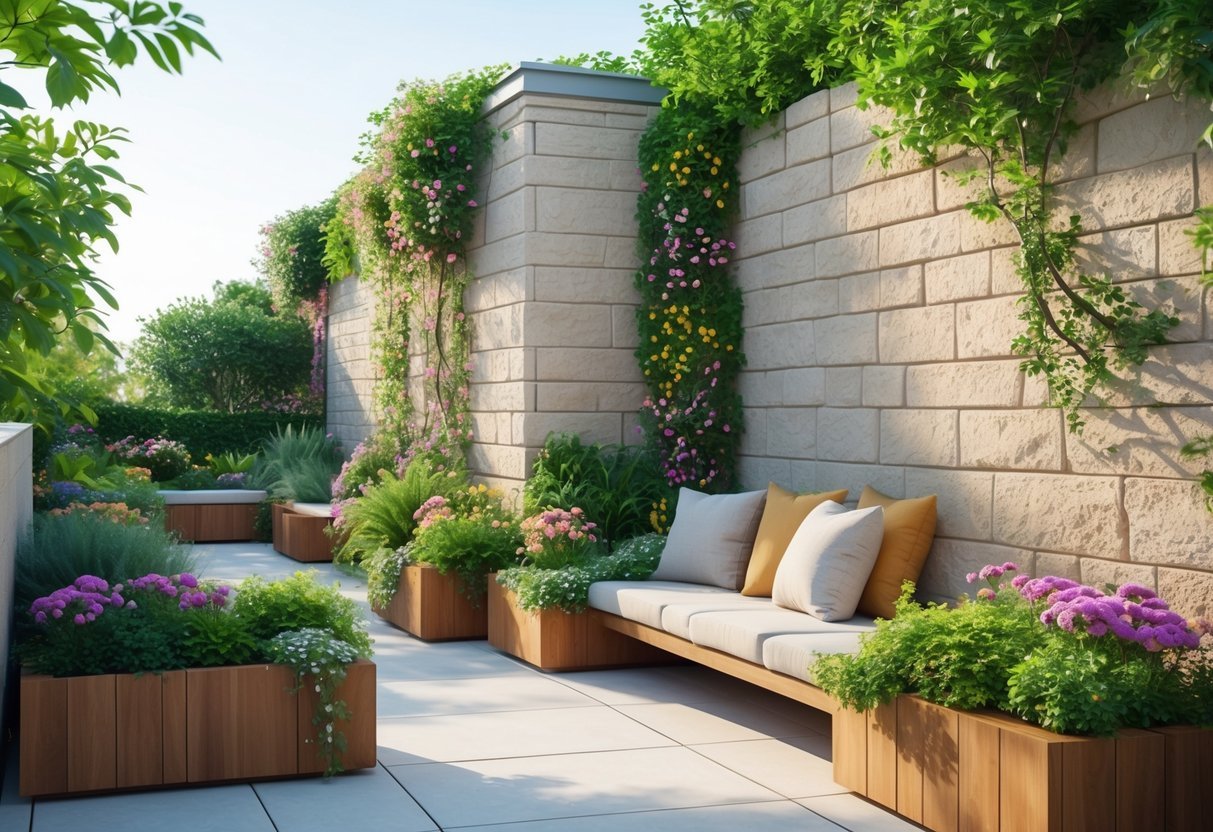
Choose materials, finishes, and plant types that match your space, sun exposure, and maintenance ability. Think about color, texture, and practical needs like drainage and wind protection when planning.
Modern Terrace Wall Inspiration
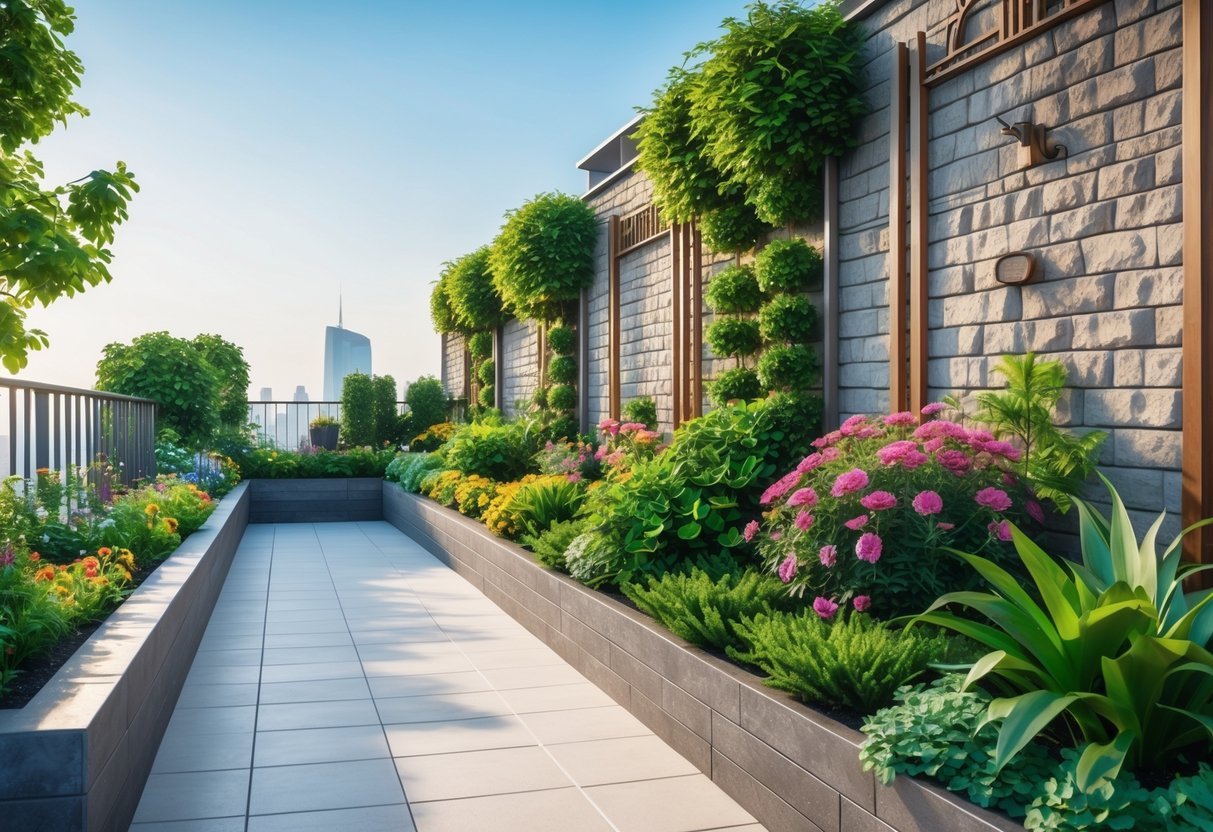
Use clean lines and simple forms for a modern look. Smooth concrete panels, powder-coated steel trellises, and narrow horizontal wood slats work well. Pick a neutral palette—grays, blacks, and warm wood tones—to keep the wall calm and cohesive.
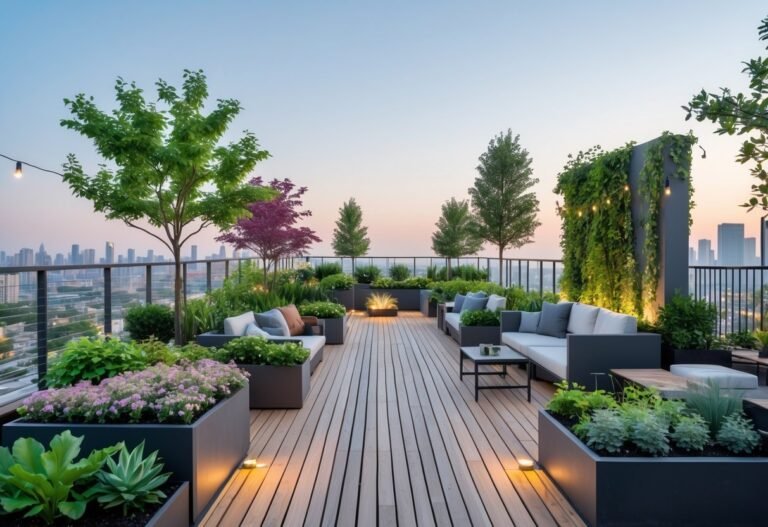
Add built-in planters or recessed containers to keep the profile sleek. Use grasses, succulents, and compact shrubs that fit tight planter depths. For lighting, install slim LED strips along grooves or up-lights behind planters to highlight texture at night.
Think about modular systems. They let you change plants seasonally without rebuilding the wall. Also plan for hidden irrigation and removable planting modules to make maintenance simple.
Traditional and Rustic Wall Design Ideas
Choose natural materials like rough-hewn stone, reclaimed brick, or timber beams to create warmth and character. Masonry walls with creeping vines, like jasmine or climbing roses, soften hard surfaces and add scent.
Use varied textures—irregular stones, worn wood, and terracotta pots—to give depth and a handcrafted feel. Mount wrought-iron hooks or vintage planters for a layered, lived-in look. If you want seating, add a built-in wooden bench with storage below to match the rustic tone.
Prioritize weatherproof finishes and mortar suitable for your climate. Old materials look authentic but inspect them for stability and proper drainage before you plant against them.
Vertical Garden Integration
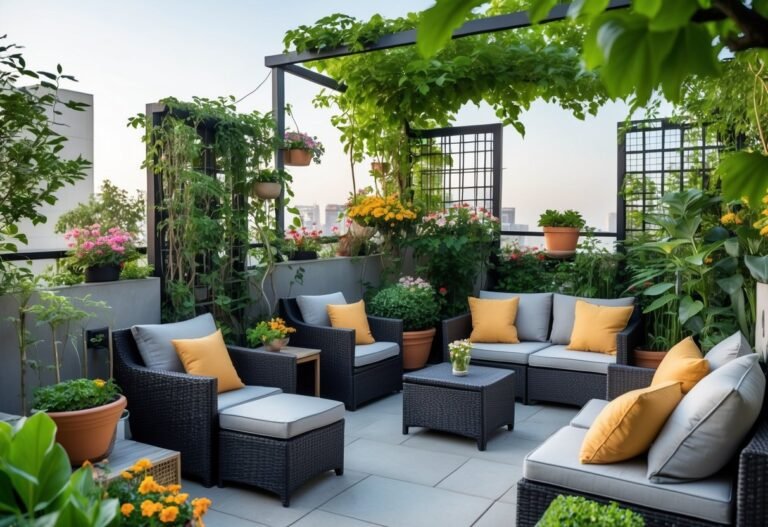
Decide between pockets, modular trays, and living-wall panels based on your weight limits and maintenance time. Pocket systems are low-cost and flexible, while rigid panels give cleaner lines and easier irrigation control.
Match plant choice to light and water access. Use shade-tolerant ferns and ivies for low light. Choose herbs, salad greens, or sun-loving succulents where sunlight is strong. Group plants with similar water needs to avoid over- or under-watering.
Install a drip irrigation line with an automatic timer and a simple runoff catchment. Reinforce the wall structure for heavier systems and plan access for pruning and replacement. Regular checks for pests and root crowding will keep the vertical garden healthy.
Construction Techniques and Practical Tips

You will need solid footing, measured drainage, and material choices that match your soil and slope. Plan each terrace level, set proper drainage, and choose whether you build it yourself or hire a pro.
Waterproofing and Drainage Methods
Keep water away from the wall face and move it down the slope safely. Install a perforated drain pipe (4-inch PVC or corrugated) behind the base of the wall, sloped at least 1% (1/8 inch per foot) toward an outlet. Surround the pipe with ¾-inch crushed stone and wrap the stone in landscape fabric to stop soil clogging.
Use a minimum 6–12 inch layer of free‑draining backfill (gravel or crushed rock) directly behind the wall. Add a waterproof membrane on the wall face if you use concrete blocks or poured concrete. For higher terraces, include weep holes every 4–6 feet to relieve hydrostatic pressure. Finish with a layer of topsoil set back from the wall to avoid direct wetting.
DIY vs. Professional Installation
You can build small, low terraced walls (up to 3 feet tall) if you have good tools and a clear slope plan. DIY works for modular block walls, timber sleepers, and simple stone stacking. You’ll need a plate compactor, level, masonry saw or chisel, and gravel delivery.
Hire a professional for walls over 3–4 feet, poor soils, or if the wall will hold a driveway or heavy load. Pros handle soil tests, engineered footings, and permits. They also install proper geogrid reinforcement, compact in lifts, and guarantee drainage details. Compare bids, check references, and ask for engineered drawings when safety or height is a concern.
Maintenance and Longevity Solutions
Inspect walls twice a year and after heavy rain. Look for bulging, cracks, leaning, or wet spots at the base. Address small cracks with masonry sealant or replace a shifted block before problems spread.
Keep vegetation trimmed and roots away from the base. Replenish gravel behind the wall if you see clogged drains. Reseal waterproof membranes every 5–10 years depending on material. For mortar joints, repoint with compatible mortar to prevent water entry. Regular, small fixes prevent costly rebuilding later.
Enhancing Aesthetics and Functionality

You can make your terrace wall both beautiful and useful by adding lighting, seating, and planter features that fit your space. Pick durable materials and simple layouts so each element works well together.
Incorporating Lighting Features
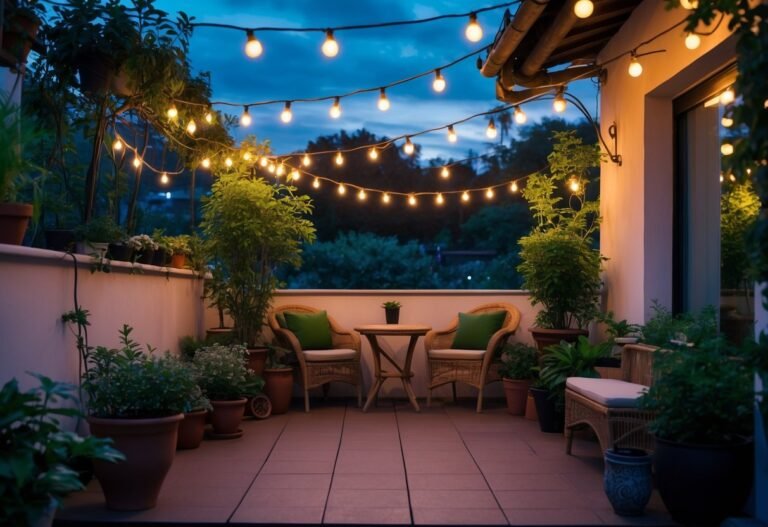
Use layered lighting to highlight textures and plants while making the space usable at night. Install warm LED strip lights under wall planters or along ledges to wash stone or wood with soft light. Place small, weatherproof spotlights to accent climbing vines or a focal pot. Solar-powered wall sconces save wiring and work well on south- or west-facing terraces. For safety, add low-step lights near changes in level and choose IP65-rated fixtures for wet conditions.
Think about control and power. Use a timer or smart switch so lights turn on automatically at dusk. Aim lights downward or behind plants to avoid glare. Keep wiring hidden in channels or behind cladding for a clean look.
Adding Seating and Planter Elements
Combine seating and planters to save space and boost function. Build a low bench into the base of the wall and add narrow planter boxes on top. Use rot-resistant timber, poured concrete, or weatherproof steel for long life. Cushion the bench with outdoor foam wrapped in waterproof fabric rated for UV exposure.
Choose plants by purpose and size. Use shallow troughs for herbs and succulents, and deep planters for small shrubs or dwarf trees that give year-round structure. Include a mix of trailing plants to soften edges and upright plants to add height. Leave at least 30–45 cm (12–18 in) depth for roots where you want bigger plants. Add drip irrigation with a pressure regulator to keep soil moist without frequent watering.
Frequently Asked Questions
This section gives clear, practical answers about fitting a terrace garden wall into tight spaces, choosing low-maintenance plants and materials, and handling structure, drainage, and cost. You’ll find options that work for small balconies, modern styles, and budget builds.
How can I optimize a small space for a terrace garden wall?
Use vertical planting to add green without losing floor area. Wall-mounted planters, pocket planters, or trellises let you grow herbs, succulents, or trailing flowers on a slim footprint.
Choose shallow-rooting plants and lightweight soil mixes to avoid heavy loads. Spread planter boxes across levels to create terraces that increase planting area and visual depth.
Keep circulation and access in mind. Leave enough space for watering, pruning, and replacing pots so maintenance stays easy.
What are some low maintenance options for terrace garden walls?
Pick drought-tolerant plants like sedum, lavender, rosemary, and ornamental grasses. These need less watering and resist pests.
Use self-watering planters or drip irrigation on a timer. They reduce daily work and keep soil moisture steady.
Select rot-resistant containers and composite or metal planters to avoid yearly repainting or sealing. Mulch and slow-release fertilizer cut back on frequent feeding.
Which materials are best suited for modern terrace garden wall designs?
Lightweight concrete blocks and hollow concrete units give a clean, modern look and provide stability. They also work well for integrated planter cavities.
Corten steel, powder-coated aluminum, and weather-resistant wood (like cedar) suit modern aesthetics while standing up to weather. Metals give crisp lines; wood softens the design.
Composite decking boards and engineered stone veneers offer low maintenance and consistent finishes. Choose nonporous or sealed materials near planting zones to limit staining.
What are practical considerations when designing a terrace garden wall?
Check weight load limits of the terrace or roof before adding soil, planters, or stone. Consult a structural engineer for heavy builds.
Plan drainage paths and install a waterproof membrane where soil touches the structure. Prevent standing water and protect the building envelope.
Factor in local wind, sun exposure, and frost. Position plants and wall elements to match light needs and to shelter fragile species.
How can I incorporate a retaining wall into my terrace garden design?
Match the retaining wall height to the slope and required soil depth for your plants. Short terraces work for herbs and ornamentals; taller walls need proper footings.
Provide drainage behind the wall with gravel and a perforated drain pipe to avoid pressure build-up. Proper backfill and compaction extend wall life.
Use stepped or tiered retaining walls to create flat planting levels. This approach increases usable planting area and makes irrigation easier.
What are affordable techniques for constructing a garden wall?
Consider gabion baskets filled with locally sourced stone for a low-skill, low-cost option. They offer good drainage and can be built in sections.
Use hollow concrete blocks or interlocking block systems that don’t require mortar for faster, cheaper installation. These systems often include planter-cap options.
Reuse reclaimed bricks or timber for short, decorative walls and raised beds. Combine DIY labor with a simple drainage layer to keep costs down.