Smart Hot Tub Layout Ideas for Small Backyards — Space-Savvy Designs and Placement Tips
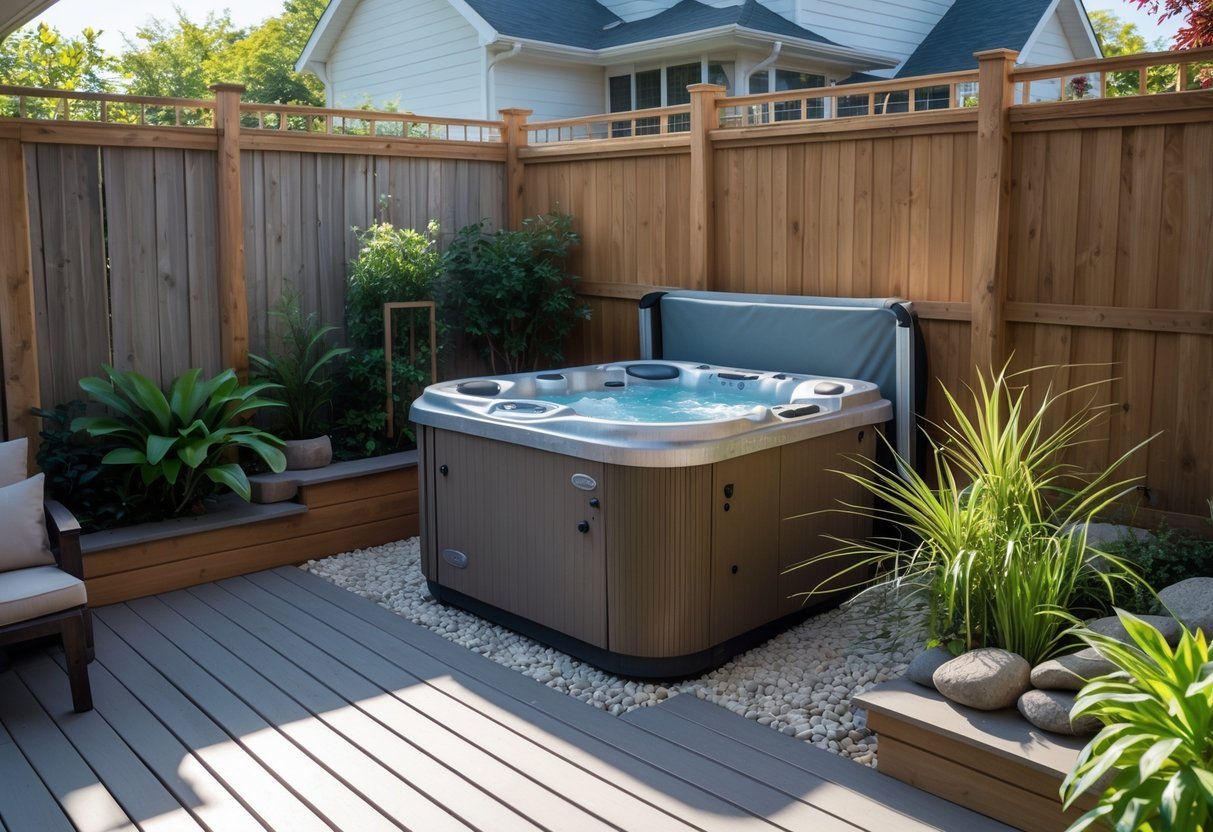
You can fit a hot tub into a small backyard without losing flow, safety, or style by choosing the right spot, layout, and finishes. Place the tub where it gets power and drainage access, keeps good privacy, and leaves clear paths so the yard still feels open. A smart layout makes the tub feel built-in, saves space, and makes maintenance easier.
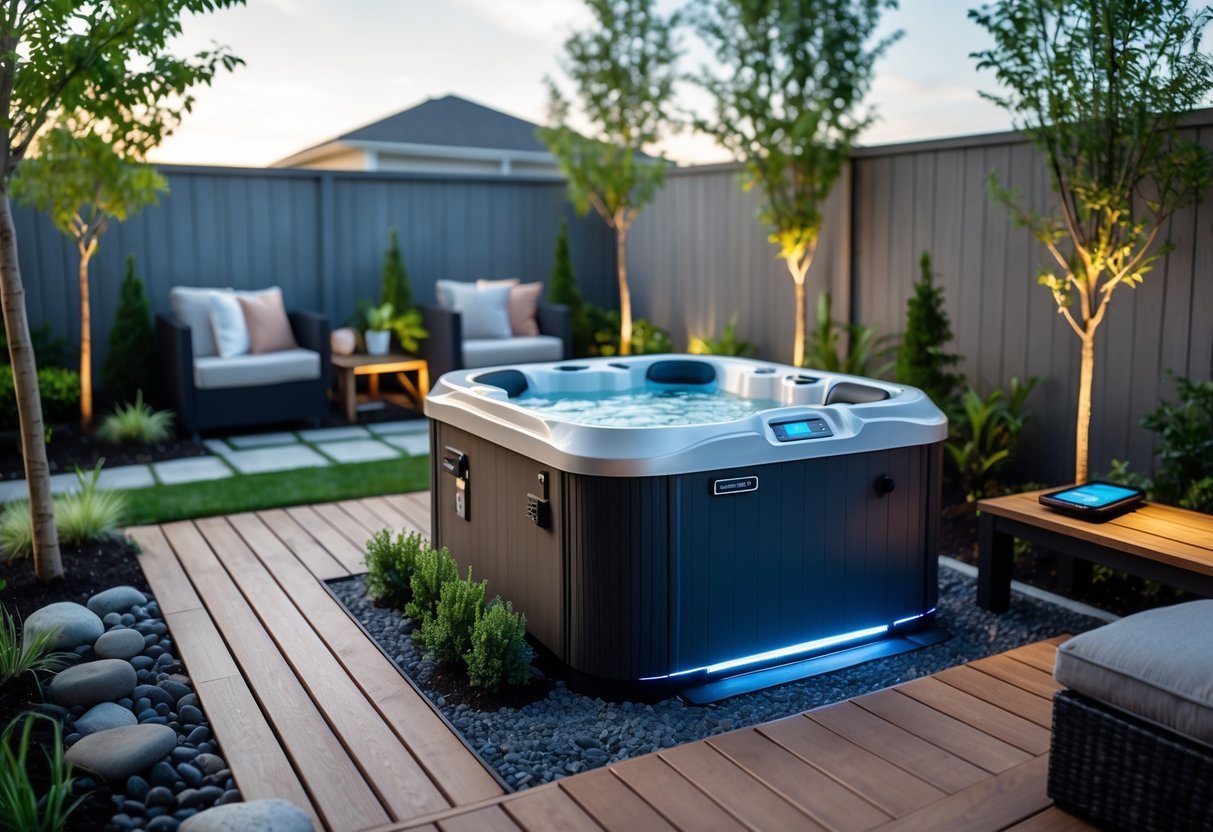
Think about corner or sunken placements, multi-use decking, or compact tubs that tuck into existing patios to make the most of tight yards. Use screens, low walls, and plantings to add privacy and block debris while keeping sightlines and service access clear.
Key Takeaways
- Choose placement that balances power, drainage, and privacy.
- Use built-in, corner, or multi-use designs to save space.
- Add screening and simple landscaping for low-maintenance privacy.
Maximizing Space With Smart Hot Tub Placement
Place the tub where it gets easy access to power, a level base, and privacy. Think about traffic flow, service clearance for equipment, and keeping plants that shed leaves away from the water.
Corner Installations
Corner installs squeeze a hot tub into unused yard space and free up the rest of your patio. Position the tub with one side against each fence or wall so you need only two clear sides for entry and service access. Leave at least 24–36 inches on a service side for the heater and pump panel.
Use a reinforced concrete pad or compacted crushed stone for a firm, level base that supports the weight. Run power lines before you set the tub; a dedicated GFCI circuit within code distance is crucial. Choose a compact model (5–6 feet) or a diagonal layout if your corner is tight.
Add a removable privacy screen or hinged bench along the open side so you can reach controls and clean the shell. Keep trees and high-maintenance shrubs at least 6–8 feet away to reduce debris and filter work.
Integrated Deck Designs
Build the deck to fit the tub, not the other way around. Recess the tub into the deck so the rim sits flush or slightly above the decking for easier entry and a cleaner look. Framing should account for the full filled weight; use joist spacing and lumber rated for the load, and confirm with a contractor if you’re unsure.
Plan deck access panels for the pump and electrical components. These panels mean you can service equipment without dismantling the deck. Add built-in seating or planters around the tub to use every square foot, and choose composite decking where moisture resistance matters.
For small yards, make the deck multi-use: storage under bench seats, a fold-down table, or bench seating that converts to a dry lounging area when the tub is not in use.
Vertical Elements for Privacy
Use vertical features to create privacy without taking floor space. Tall lattice panels, cedar slats, or tensioned cable screens block sightlines while keeping the area airy. Mount planters or hanging pots on the screens to soften the look and reduce wind—choose non-dropping plants like boxwood or bamboo in restrained pots.
Consider a retractable awning or pergola with a roll-down screen for a seasonal layer of cover. Vertical HVAC clearance matters too: keep the tub’s air intake and exhaust unobstructed from any screen by following the manufacturer’s service clearance specs.
Install lights or slim LED strips on vertical posts to extend usable hours. Position switches where you can reach them from the tub but protected from splashes.
Creative Hot Tub Layouts for Limited Backyards
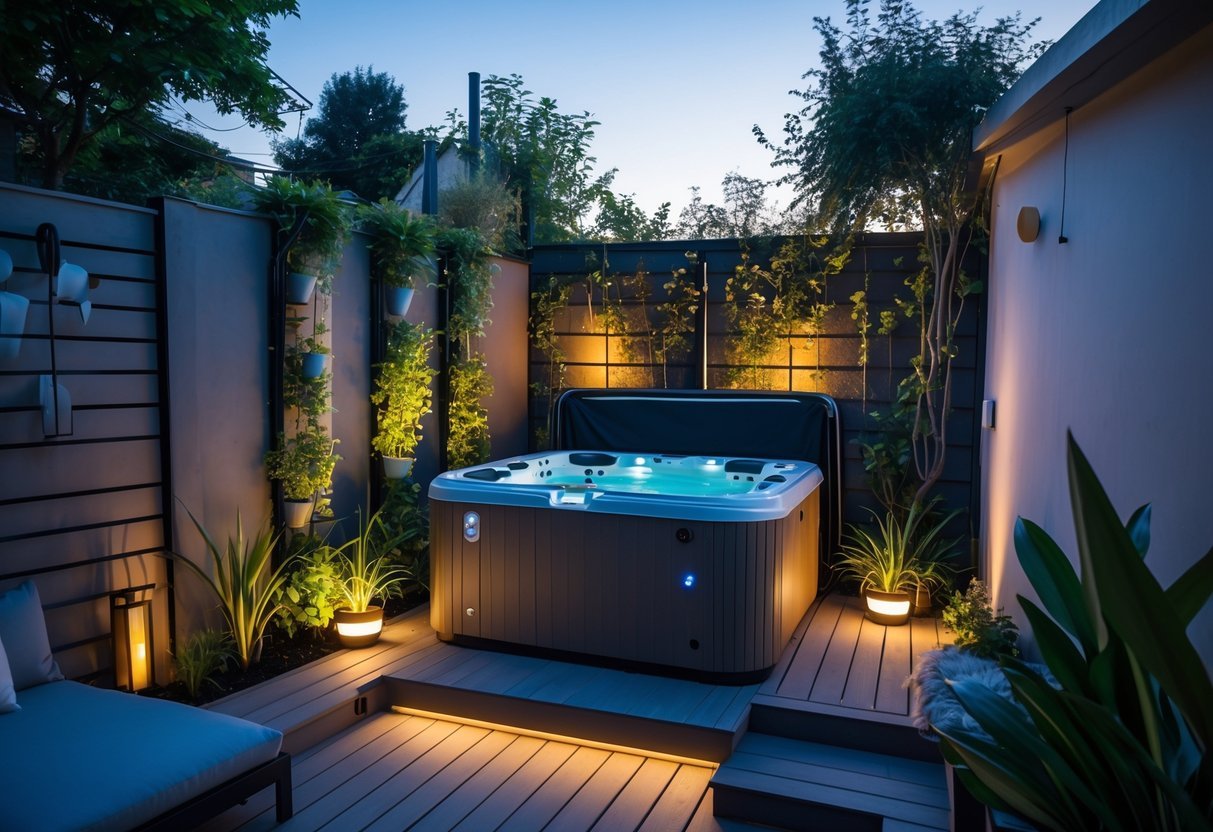
Place the tub where it fits into daily use, save space with built-ins, and plan access so maintenance and guest movement stay easy.
Multi-Functional Seating Solutions
Use seating that doubles as storage and safety. Build a bench around one or two sides of the hot tub with hinged tops for towels, chemicals, and cover tools. Choose treated wood or composite for damp conditions.
Add corner benches to use triangular gaps; they free up floor space and create a social arc. Keep seating height 16–18 inches for easy step-up and step-down. Include one removable section to allow a stair or lift later if needed.
For flexible layouts, use stackable or folding chairs that tuck under a narrow counter when not in use. Add non-slip cushions rated for outdoor use and quick-drain gaps to avoid mold. Label storage boxes so you can find test strips and floaters fast.
Compact Pathways and Access Planning
Design a 24–36 inch clear path from the house or gate to the hot tub for safe carrying of water tests and filters. Narrower paths add charm but make bulky maintenance awkward. Use stepping stones set in mulch or low grass to reduce hard-surface run-off and keep costs down.
Place the equipment pad within 3–6 feet of the tub to shorten plumbing runs and reduce pump noise. Screen the pad with a lattice panel that hinges open for service access. Mark a 3-foot service clearance on at least one side so you won’t block access with planters or furniture.
Use contrasting pavers or a different material to show the path edge. That helps guests navigate at night and keeps feet out of planting beds.
Enhancing Small Spaces With Stylish Features
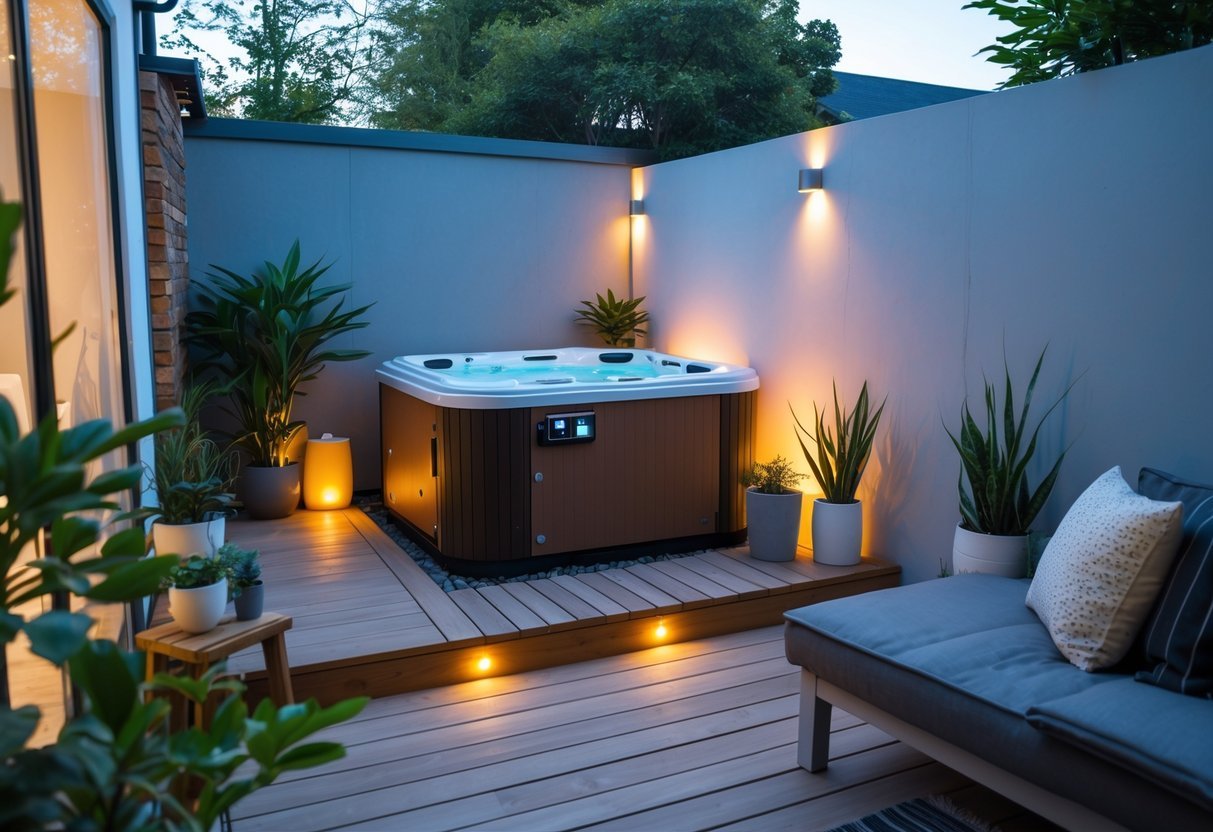
Keep your layout focused on space-saving elements that add comfort and style. Choose low-maintenance plants, smart lighting, and compact furniture so the area feels larger and works well year-round.
Minimalist Landscaping Around the Hot Tub
Plant low, layered greenery like dwarf evergreens, ornamental grasses, and boxwood to create depth without crowding the tub. Place taller plants at the back and shorter ones near the edge to open sightlines and make the area feel larger.
Use narrow planter beds or raised planters along one or two sides to contain roots and reduce lawn work. Gravel or decomposed granite paths are thin but sturdy and cut down on irrigation needs. Add a simple privacy screen—bamboo slats or a 1.8 m (6 ft) trellis—with climbing vines for vertical greenery that saves ground space.
Keep materials consistent: match planter faces to decking or hot tub cladding for a cohesive look. Limit color and texture to two or three elements to avoid visual clutter in a small yard.
Strategic Lighting Solutions
Place warm LED strip lights under the hot tub lip and along step edges for safe night access and a soft glow. Use dimmable fixtures so you control brightness for parties or a quiet soak.
Install low-voltage path lights at 1.2–1.5 m (4–5 ft) spacing to mark routes without glare. Mount adjustable spotlights to highlight a feature plant or a textured wall. Choose fixtures rated for outdoor and wet locations.
Consider solar-powered accent lights for borders and stake lights for temporary seating areas. Use timers or smart bulbs you can control from your phone to save energy and keep the scene ready when you want to use it.
Frequently Asked Questions
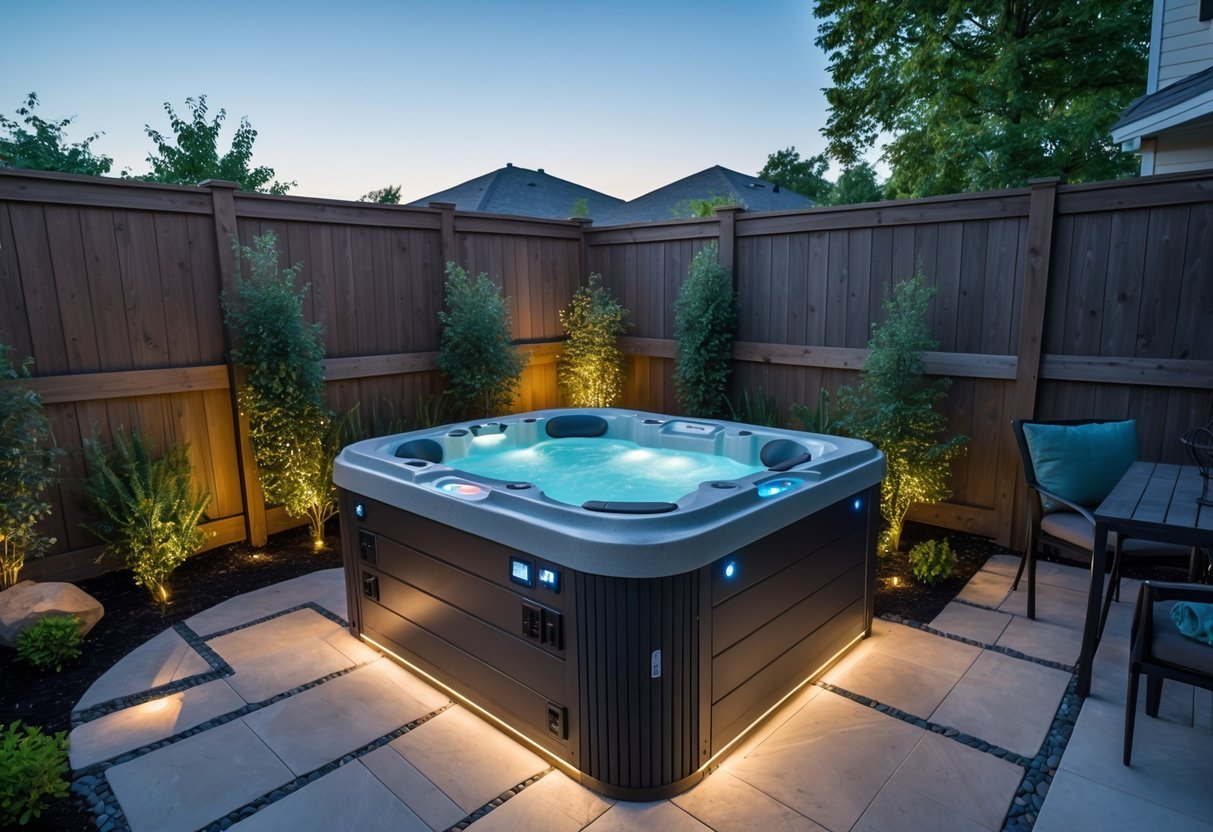
These answers focus on real, practical steps: low-cost materials, space-saving tubs, privacy screens, compact landscaping, and placement rules that keep your tub safe and easy to use.
How can I incorporate a hot tub into a small backyard on a budget?
Choose a portable or inflatable hot tub to avoid high installation costs and concrete pads. Look for sales in late fall or winter when dealers discount models.
Use simple decking or pea gravel instead of poured concrete. Reuse lumber or pallets for a basic surround and add off-the-shelf steps to save money.
Plan for electricity early to avoid costly retrofits. Compare quotes from licensed electricians and consider a GFCI-ready plug kit for portable tubs where code allows.
What are some creative hot tub layout ideas for compact spaces?
Place the tub in a corner to free up central yard space and create a natural seating area next to it. Build the tub into a raised deck to add storage below and a tidy look above.
Sunken tubs work well if you can dig a shallow pit; they keep sightlines low and make the area feel bigger. Use multi-use furniture like built-in benches that double as planter edges.
How can I achieve privacy while installing a hot tub in a small backyard?
Install a lattice screen with climbing plants for a quick, low-cost privacy barrier that still lets air flow. Use tall potted plants or bamboo in troughs for a movable living screen.
Add a retractable privacy shade or a simple pergola with curtains for night use. Keep sightlines in mind: position the tub where neighboring windows don’t directly overlook it.
What are the best hot tub landscaping ideas suitable for small areas?
Use narrow planting beds along fences to soften edges without taking much space. Choose low-maintenance shrubs and evergreen grasses that shed little debris into the water.
Incorporate hardscape pavers or decking paths to create a clean route to the tub and prevent mud. Place subtle LED step lights or path lights for safety and a cozy night ambiance.
Which hot tub designs are both space-efficient and aesthetically pleasing for tiny backyards?
Square or corner-shaped tubs fit tighter spaces better than large circular designs. Compact two- to four-person models give full comfort while keeping a small footprint.
Skirting or cabinet-style exteriors hide equipment and match your siding or deck for a built-in look. Neutral colors and natural materials like wood or stone blends keep the tub from dominating the yard.
What should be considered when positioning a hot tub in a limited outdoor space?
Check for a level, firm base and adequate clearance for service panels and wiring access. Make sure the location meets local electrical and building codes and allows safe entry and exit.
Think about wind, sun, and drainage: put the tub where wind won’t blow leaves into it, where sunlight can warm the area, and where water will drain away from the foundation.