7 Small Vegetable Garden Ideas to Maximize Yield in Compact Spaces
You can grow a lot of fresh food in a small space by choosing smart layouts and simple techniques that fit your spot and schedule. This article shows seven practical small garden ideas that help you save space, cut work, and get more harvests from patios, balconies, or tiny yards.

You’ll find clear options like vertical trellises, containers, raised beds, and layered planters, plus tips on timing and plant pairings to keep your garden productive. Use these ideas to match your space, skill level, and goals so your small garden works harder for you.
1) Vertical trellis planting for cucumbers and beans
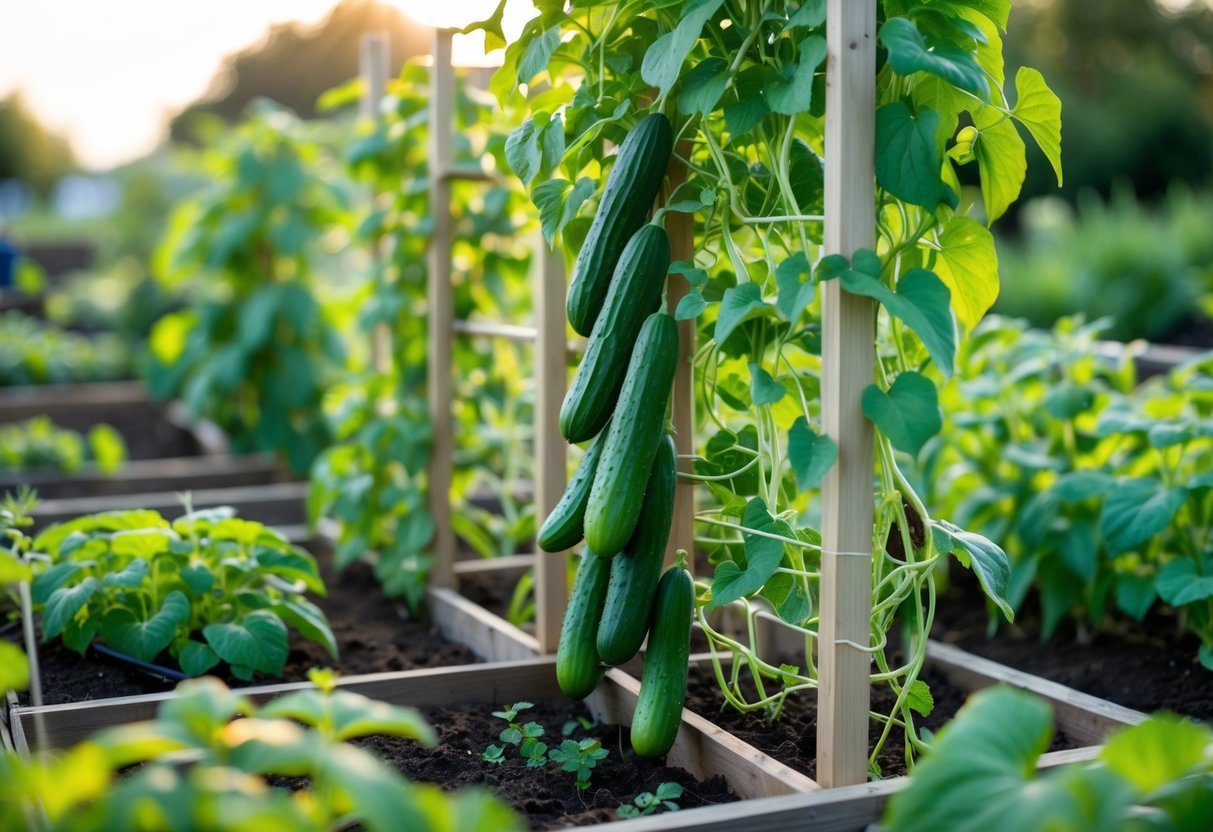
You can save space and improve airflow by training cucumbers and pole beans up a trellis. Vertical growth keeps fruit off the soil, making harvesting easier and reducing rot.
Use simple materials like wood, bamboo, or wire mesh for a sturdy frame. Place the trellis where plants get full sun and water at the base to avoid wet foliage.
Tie young vines loosely to guides until they grab hold. Prune only if growth becomes crowded to keep plants productive.
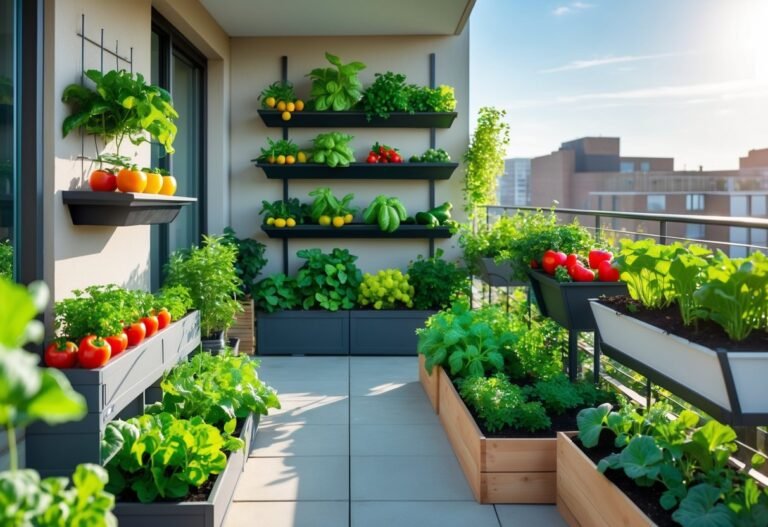
2) Container gardening using self-watering pots
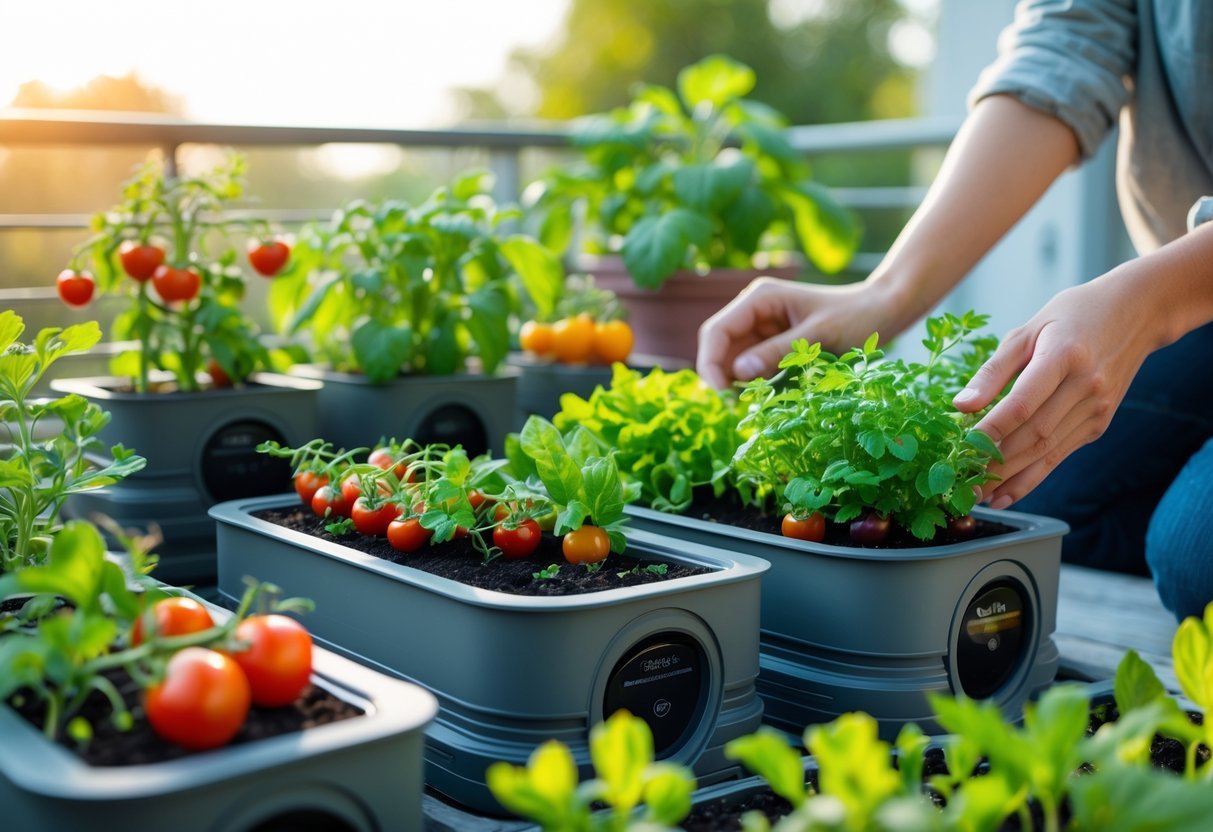
You can grow many vegetables in self-watering pots on a balcony or patio. These pots keep soil moist longer, so you water less often and plants suffer fewer stress cycles.
Choose pots with a reservoir and good drainage to prevent root rot. Use a lightweight potting mix and fill the reservoir as directed to make watering simple and consistent.
Self-watering systems work well for tomatoes, peppers, herbs, and leafy greens. They help you maintain steady moisture for better, more reliable growth.
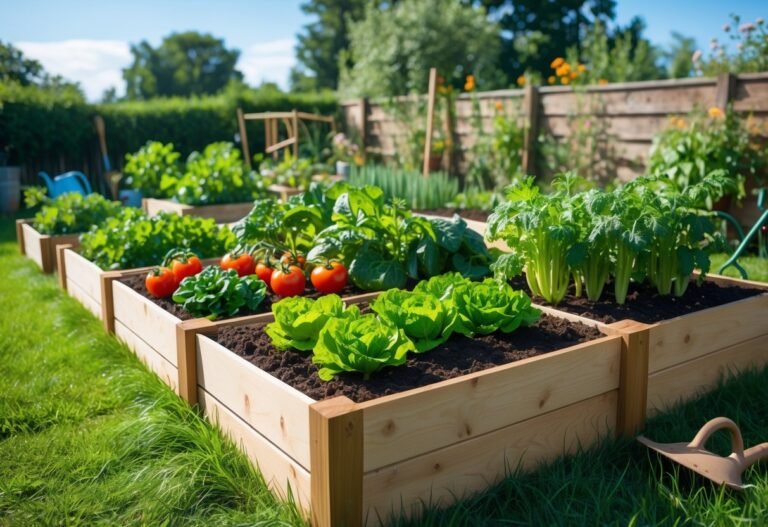
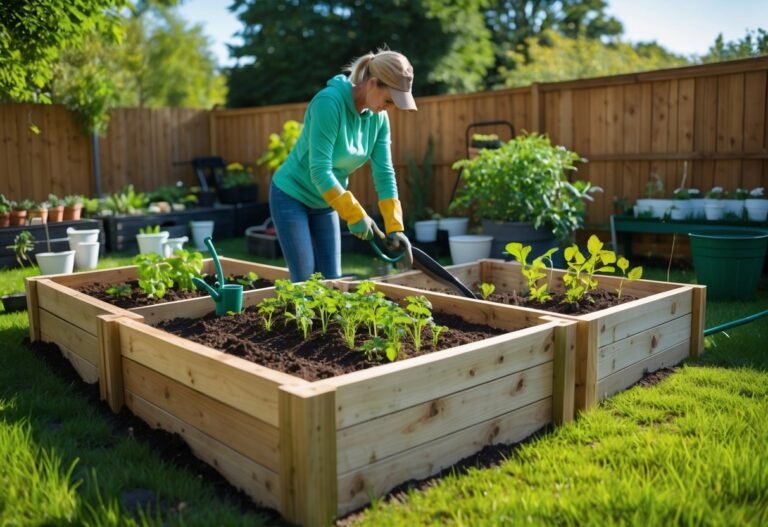
3) Raised beds with square-foot gardening layout
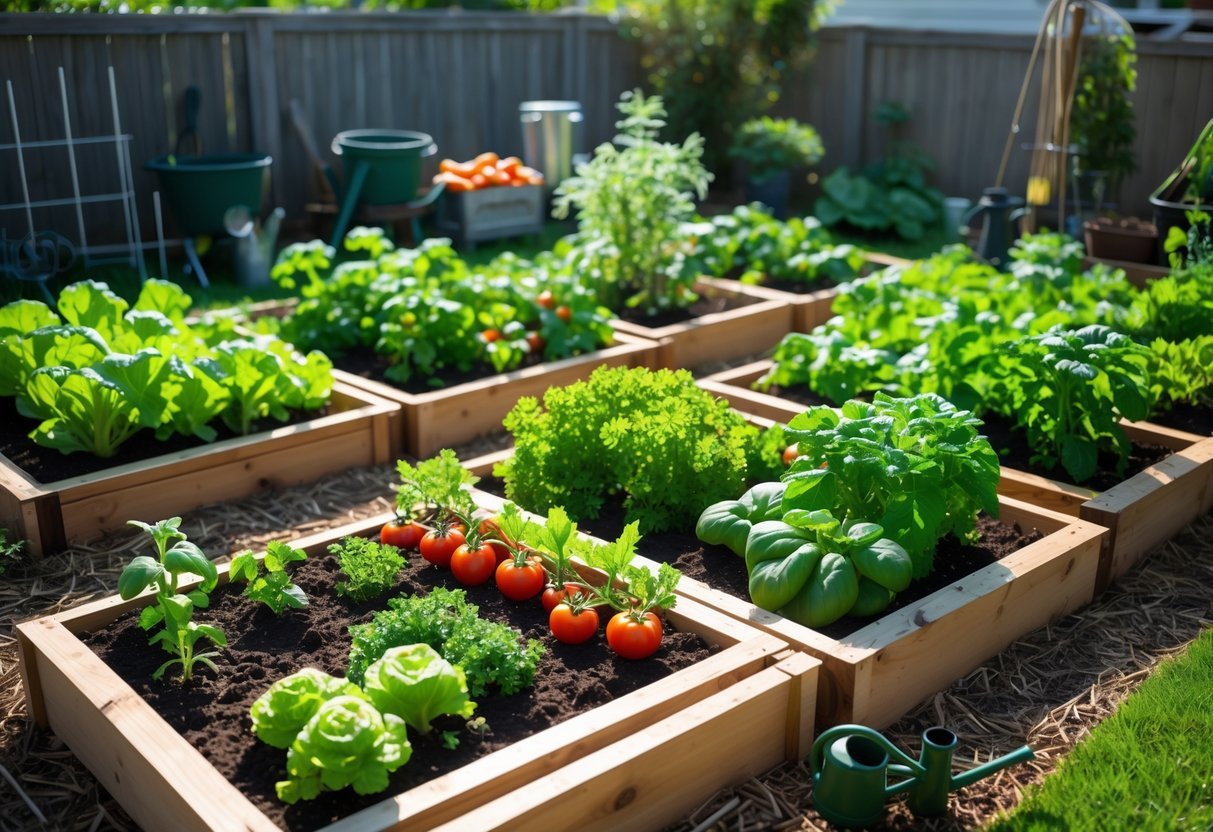
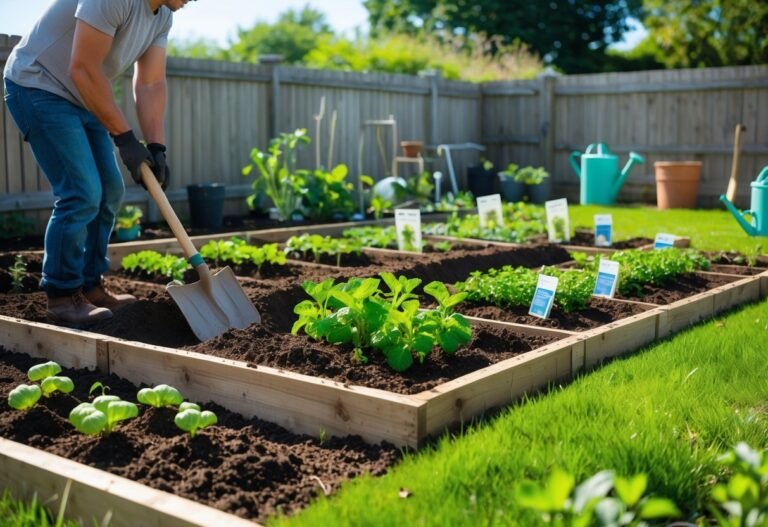
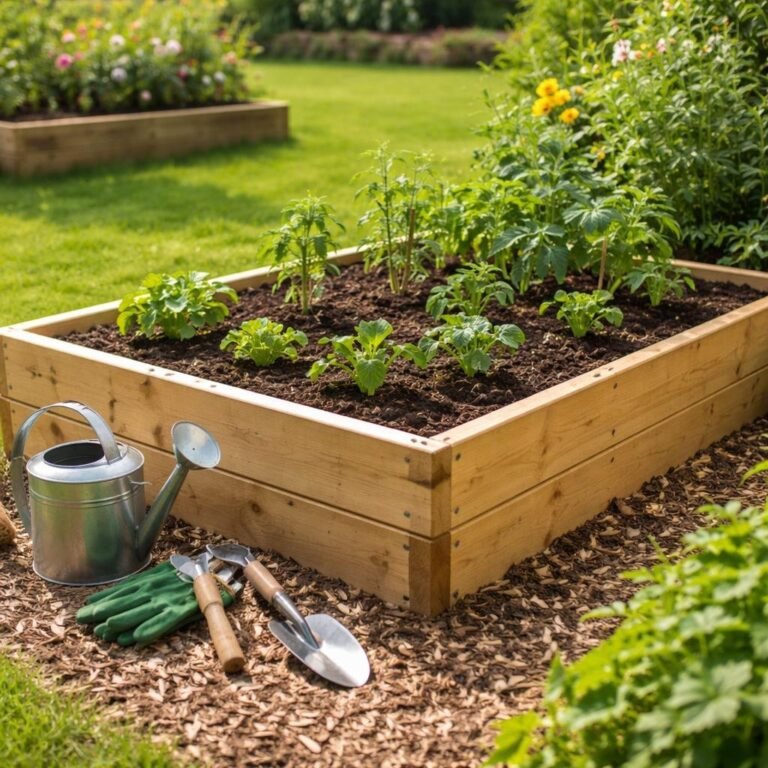
Raised beds make soil work and watering easier, and a square-foot grid helps you plan each plant.
You place a 1×1-foot grid over the bed and assign crops per square, so spacing stays correct.
This method fits many vegetables in small spaces and keeps paths clear for harvesting.
You can mix fast-growing greens with slower crops to get steady yields and use flowers for pest control.
4) Companion planting with tomatoes and basil
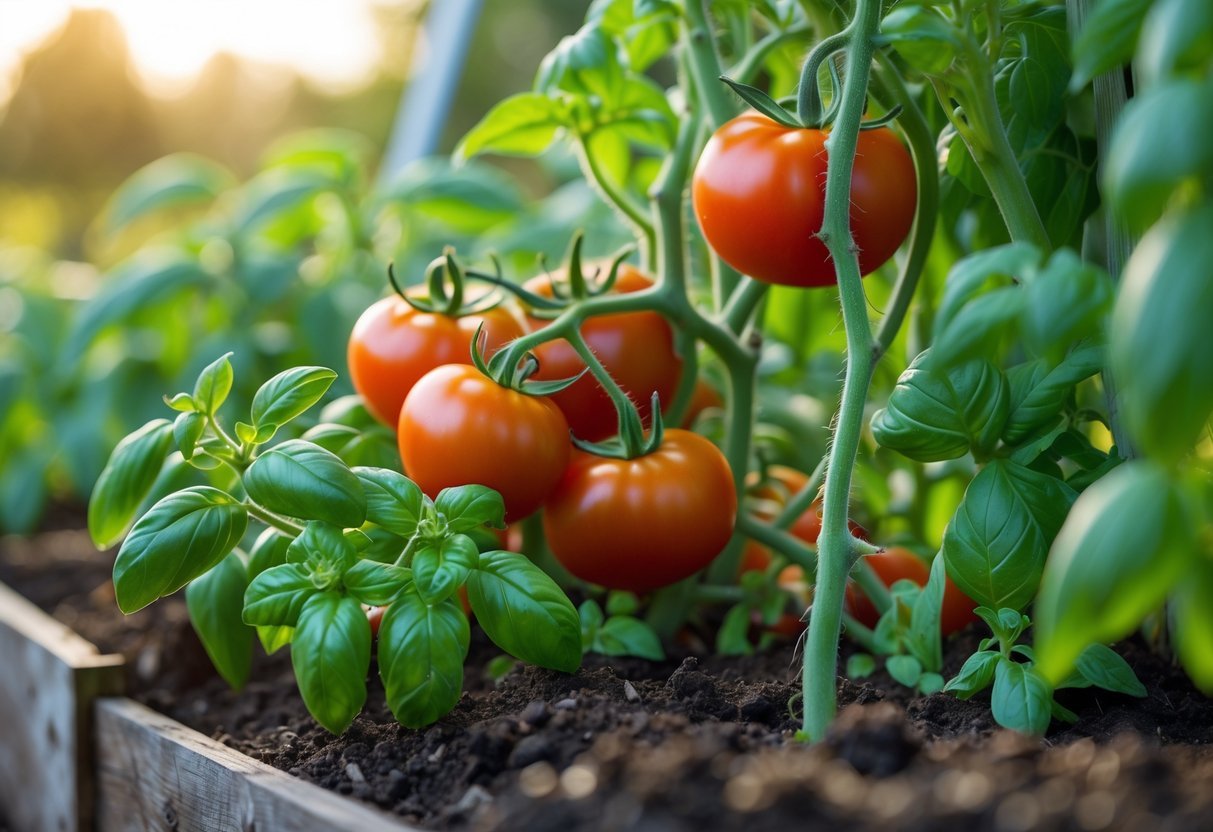
Plant basil next to your tomatoes to save space and make care easier. Basil fits in gaps and won’t crowd the tomato roots.
Basil can help reduce some pests and may improve tomato flavor, though results vary. Put basil at the base or in nearby pots for best access.
Harvest basil regularly to keep it bushy and prevent shading. Water tomatoes at the soil, not the leaves, to avoid disease while both plants grow.
5) Herb spirals for efficient use of corner space
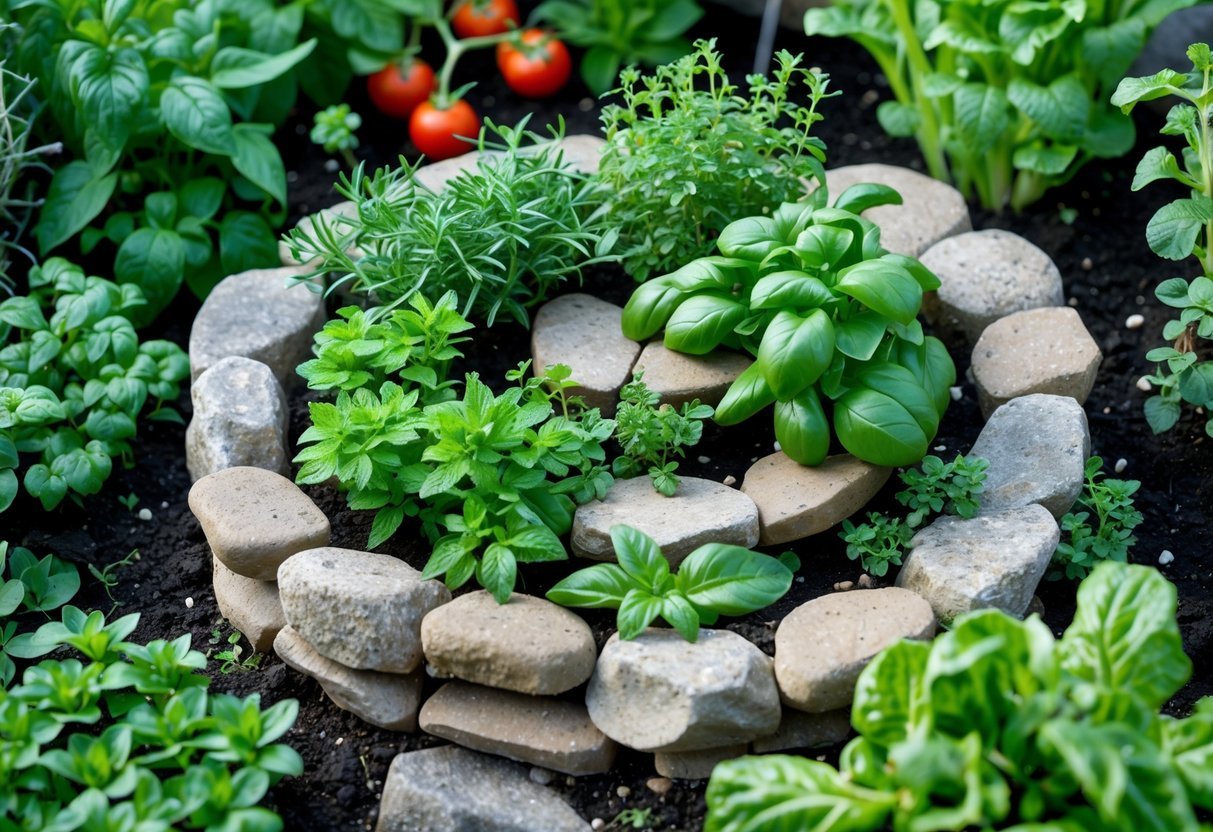
Place an herb spiral in a corner to turn unused space into a productive bed. The spiral rises from ground level to a central peak, creating varied moisture and sun zones.
You can plant thirsty herbs like basil near the bottom and drought-tolerant ones like thyme at the top. Stones or bricks hold soil and make simple drainage, so maintenance stays low.
6) Succession planting to extend harvest periods
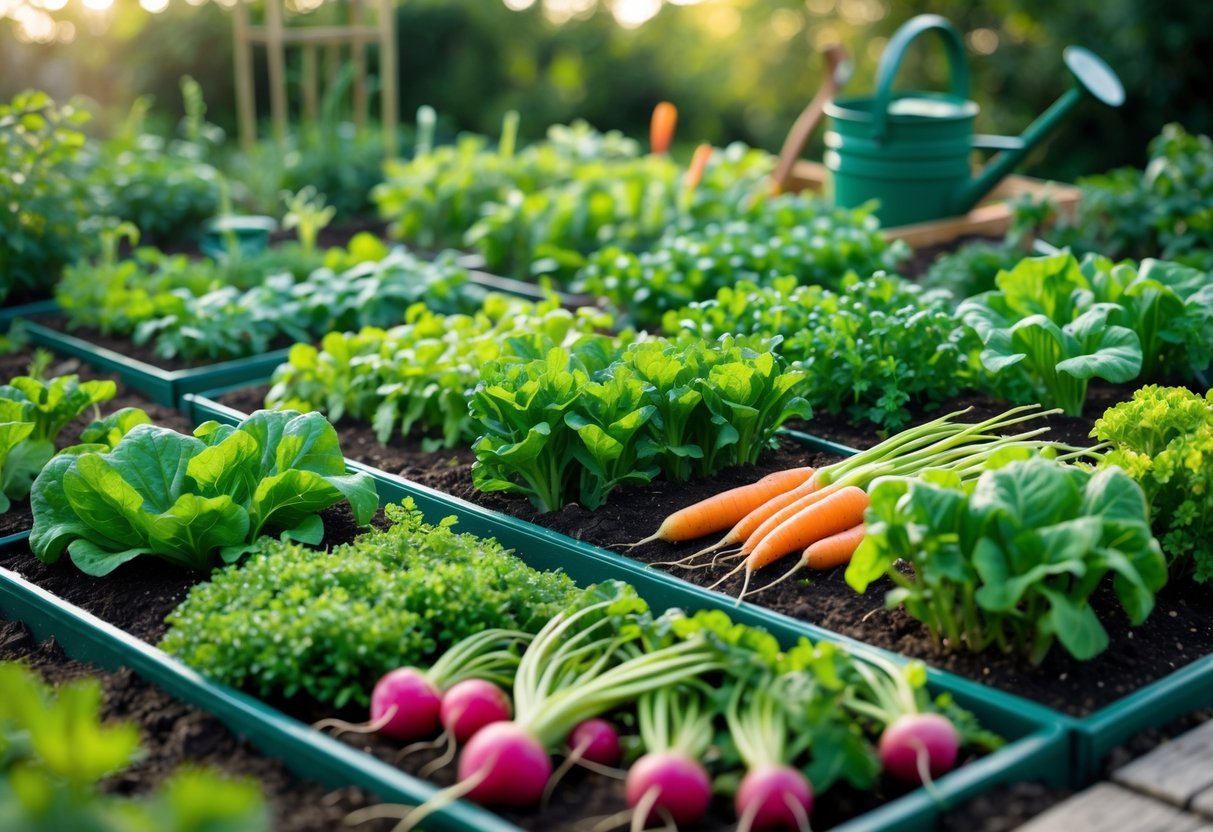
Plant crops in stages so you harvest a little at a time instead of all at once. Sow fast growers like radishes or salad greens every 2–3 weeks to keep fresh food coming.
After you harvest, replace that space quickly with another crop or seedlings. This uses your soil and space more efficiently and reduces gaps in production.
Choose varieties with different maturity times and rotate families to limit pests. Track dates on a simple calendar to know when to sow next.
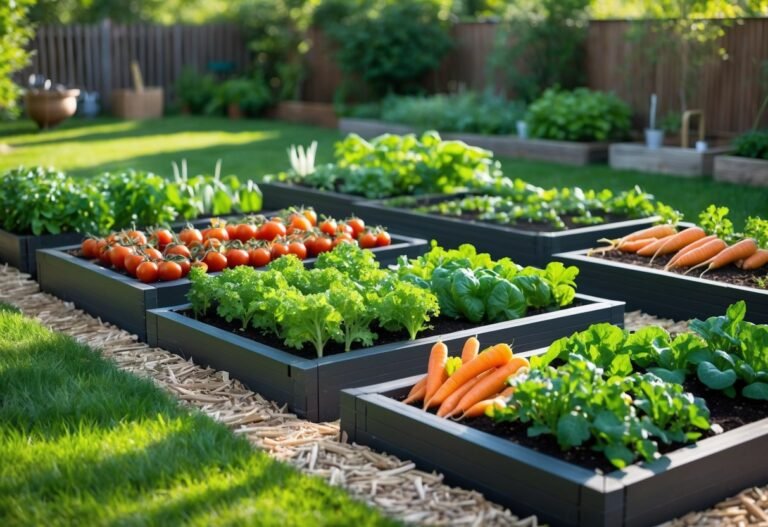
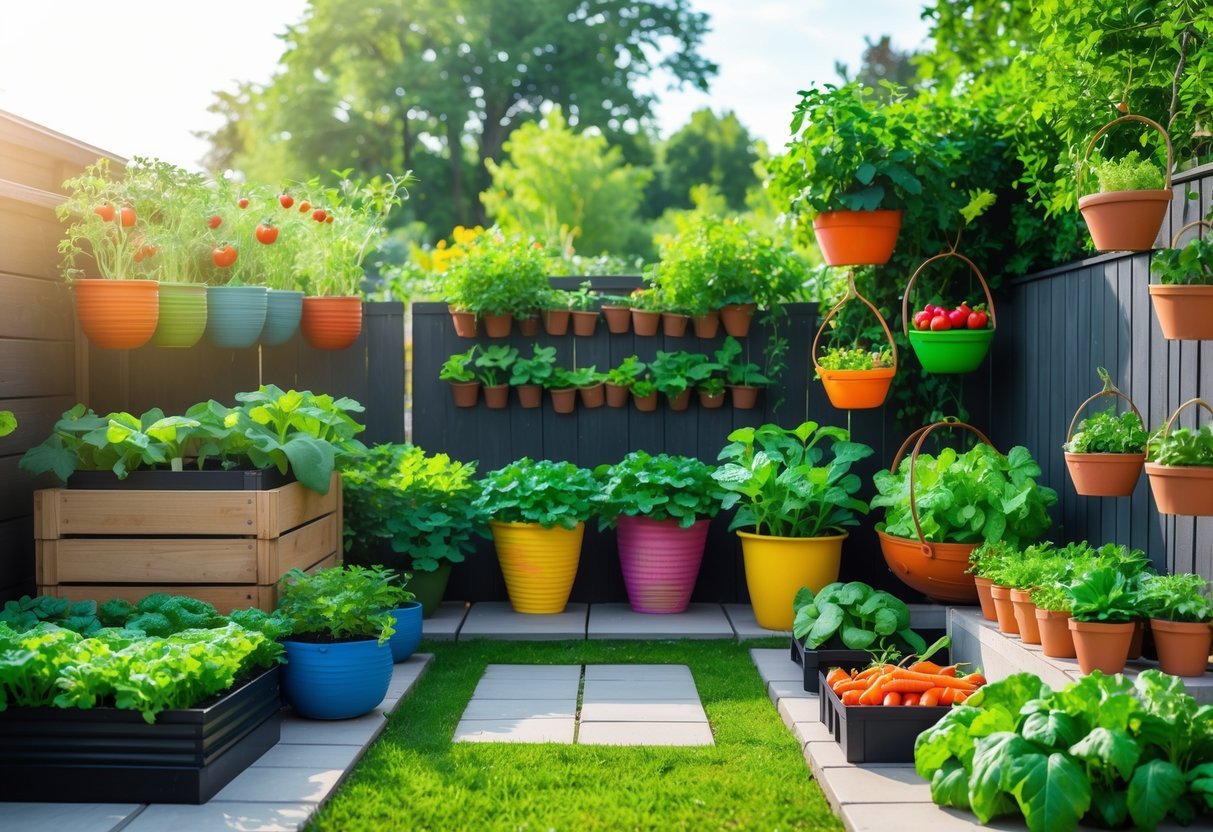
7) Tiered planter boxes for layering crops
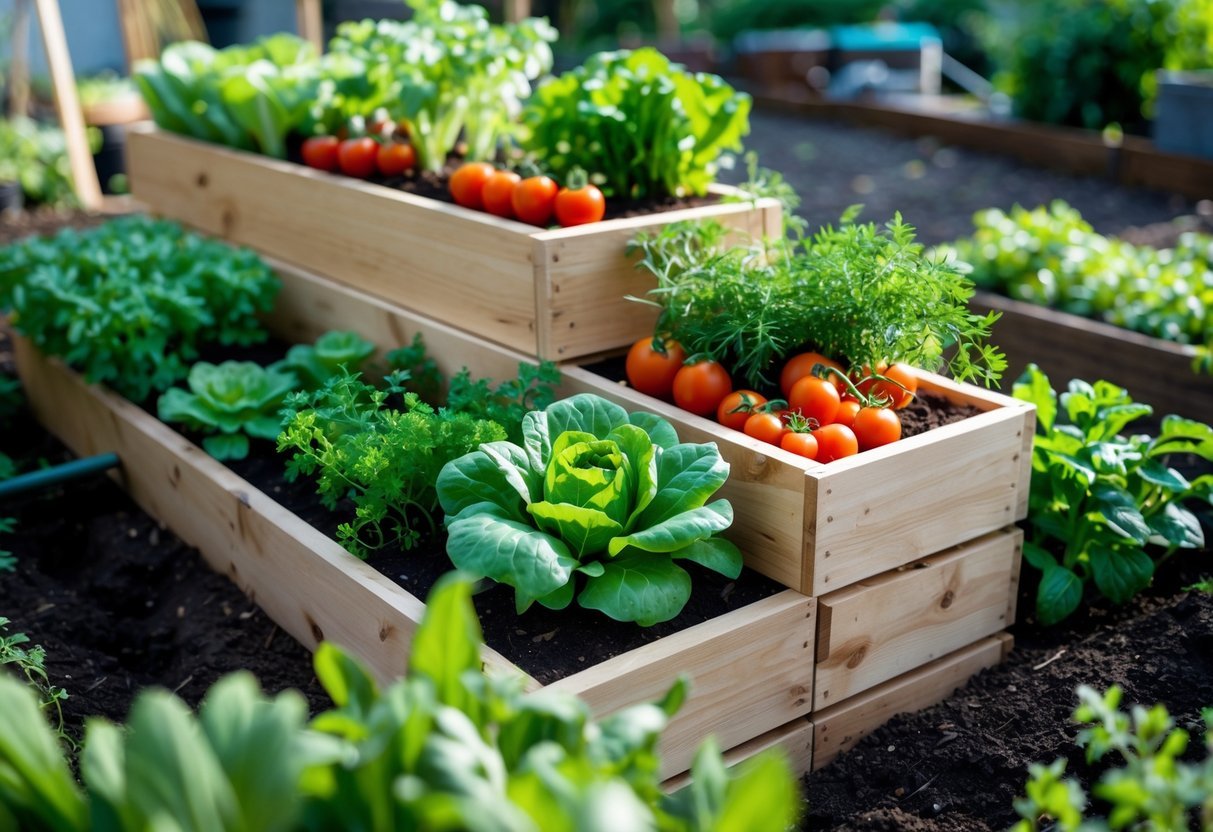
Use tiered planter boxes to fit more vegetables into a small space. You can grow shallow-rooted herbs and lettuce on upper tiers and deeper-rooted tomatoes or carrots below.
Tiered boxes make watering and harvesting easier because plants sit at varied heights. Choose sturdy materials and ensure good drainage to keep roots healthy.
Place the planter where it gets enough sun. Rotate crops each season to reduce pests and keep soil fertile.
Key Considerations for Small Vegetable Gardens
Plan for efficient use of space, ensure at least 6 hours of direct sun, and choose soil and containers that drain well. Focus on plant choices, spacing, and watering methods that match your available light and area.
Maximizing Limited Space
Use vertical structures like trellises, arbors, and wall-mounted planters to grow vining crops (peas, beans, cucumbers) upward instead of outward. Place taller plants on the north side of beds or containers so they don’t shade shorter crops.
Choose narrow, deep containers for root vegetables and shallow wide ones for lettuces and herbs. Try square-foot planting or staggered containers to reduce wasted gaps. Group plants by water needs to simplify irrigation and avoid overwatering smaller pots.
Rotate crops between container groups each season to reduce pests and disease. Keep a small tool caddy and a folding step stool nearby so you can reach high spots and maintain compact areas easily.
Light and Soil Essentials
Check sun exposure across the day. Most vegetables need 6–8 hours of direct sun; leafy greens tolerate 4–6 hours but yield less. Use a simple sunlight map: note full sun, partial sun, and shade spots at morning, noon, and late afternoon.
Use a light, well-draining soil mix: equal parts compost, peat or coir, and coarse builder’s sand or perlite for containers. Test pH with a cheap kit; aim for 6.0–7.0 for most vegetables. Add slow-release granular fertilizer or liquid feed every 3–4 weeks during the season.
Ensure good drainage by using pots with holes and elevating raised beds slightly. Mulch surface soil to retain moisture and keep roots cool in summer heat.
How to Maintain a Productive Small Garden
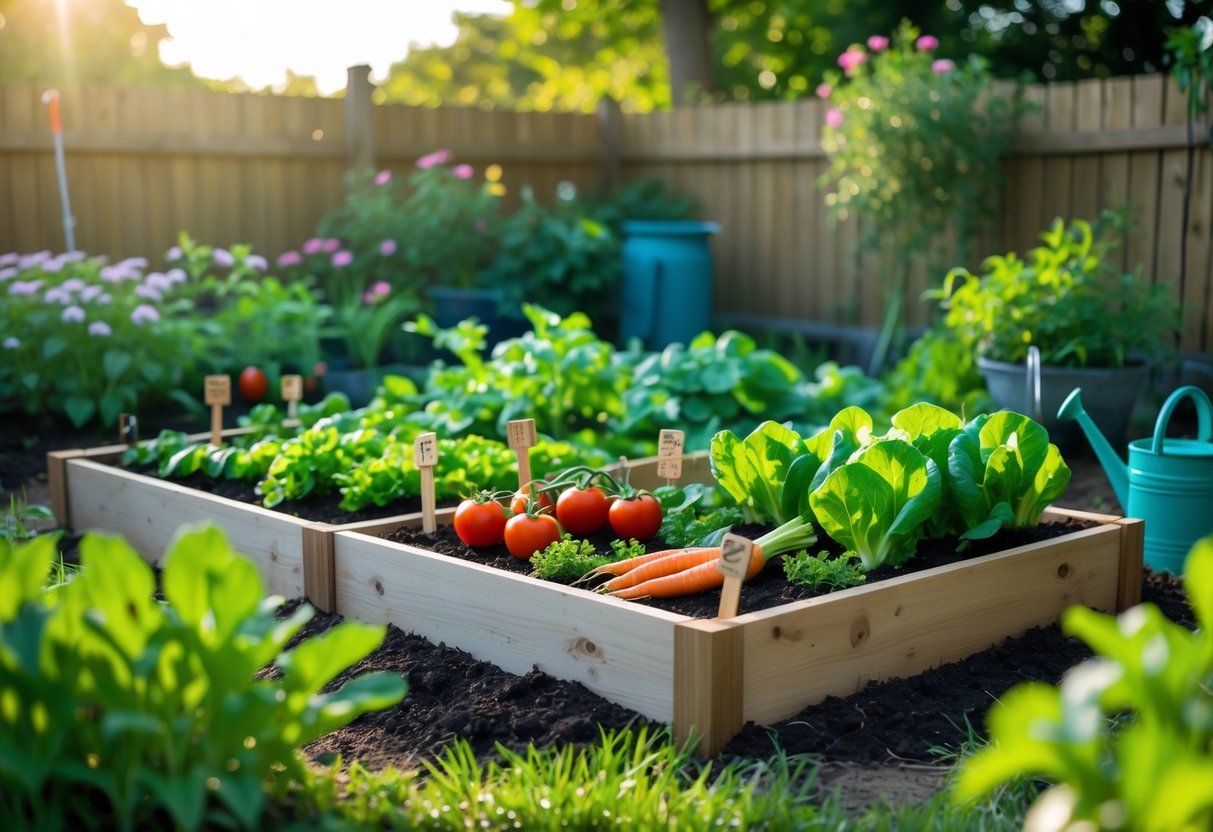
Keep plants healthy with steady water, good soil, and regular checks for pests. Use space-saving tools and routines that fit your garden size.
Efficient Watering Strategies
Water deeply but less often to encourage strong roots. For containers, water until it runs out the drainage hole, then wait until the top inch of soil is dry before watering again. In raised beds, soak the soil for 20–30 minutes using a slow hose or soaker so water reaches the root zone.
Use mulch—2–3 inches of straw, shredded leaves, or compost—to cut evaporation and keep soil temperatures steady. Add a simple drip line or soaker hose on a timer to deliver 1–2 gallons per hour per line, reducing waste and watering time.
Group plants with similar needs together (tomatoes with peppers, leafy greens in cooler spots). That keeps you from overwatering or underwatering specific beds. Check soil moisture with a finger or a cheap moisture meter twice a week during hot weather.
Pest Management for Compact Spaces
Start with good sanitation: remove dead leaves, pull weeds, and clear fallen fruit to cut insect and disease hiding spots. Inspect plants every 3–4 days; catch problems early by looking under leaves and at new growth.
Use physical controls first: sticky traps for flying pests, row covers to block beetles, and hand-pick slugs and caterpillars. Plant pest-repellent companions—marigolds near tomatoes or basil with peppers—to reduce some pests naturally.
If you need products, choose targeted solutions: insecticidal soap for soft-bodied insects and Bacillus thuringiensis (Bt) for caterpillars. Follow label directions and apply in the evening to protect pollinators. Rotate crops yearly to break pest cycles and note trouble spots in a garden log so you can act sooner next season.
Frequently Asked Questions
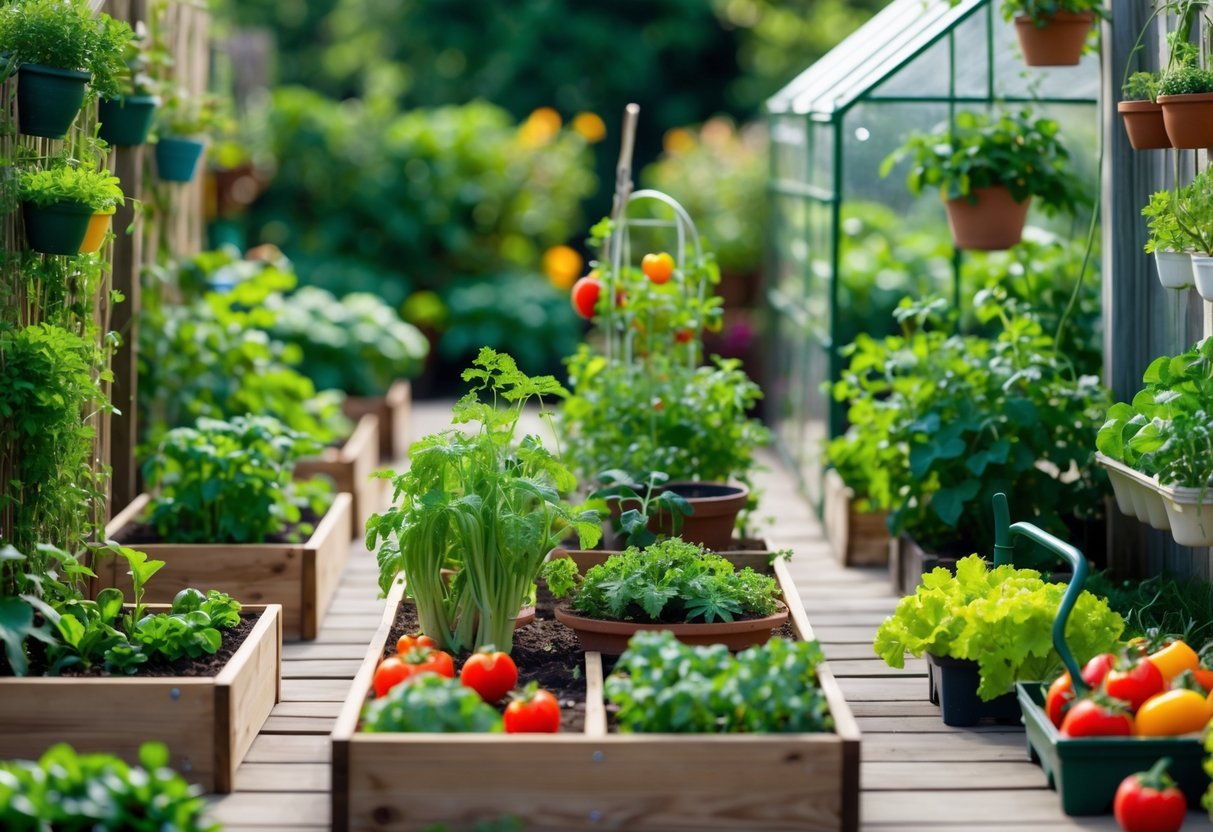
These answers focus on plants and techniques that give big results in tight spaces, like trellised cucumbers, self-watering containers, square-foot raised beds, tomato-and-basil companion planting, and herb spirals for corners.
What are the most productive vegetables to grow in small spaces?
Choose compact, high-yield crops. Cherry tomatoes, bush beans, radishes, leaf lettuce, spinach, and baby carrots fit small beds and containers well.
Pick vining crops to grow up trellises. Cucumbers and pole beans save ground space by growing vertically.
How can I maximize my harvest in a small garden area?
Use square-foot planting in raised beds to avoid wasted space. Plant densely but follow spacing for each crop to reduce competition.
Practice succession planting. Replace finished crops with fast growers like radishes or lettuce to get more harvests per season.
Can you suggest any space-saving techniques for a small vegetable garden?
Grow vertical. Install trellises for cucumbers and beans to free soil space.
Use companion planting to pair tomatoes with basil and other herbs. That can boost pollination and pest control while saving room.
What are some creative container gardening ideas for growing vegetables?
Try self-watering pots for steady moisture and less frequent watering. They work well for peppers, tomatoes, and herbs.
Use mixed containers that combine shallow-rooted and deep-rooted plants. For example, plant lettuce around a pepper in a larger pot.
How do I organize a small vegetable garden to make it both beautiful and functional?
Place taller plants and trellises at the back or center so shorter crops get sun. This keeps the space tidy and productive.
Build an herb spiral in a corner to display herbs and save room. It creates microclimates so you can grow both sun- and shade-loving herbs.
What budget-friendly materials can I use to create a small, efficient vegetable garden?
Repurpose wooden pallets or reclaimed lumber to make raised beds cheaply. Line them with landscape fabric to protect wood and soil.
Use inexpensive plastic tubs or buckets for containers and convert old gutters into narrow planters. Buy basic twine and stakes for DIY trellises.