7 Small Trees With Non-Invasive Roots For Front Yard
You want a front yard that looks great without the worry of roots breaking sidewalks or pipes. This article shows seven small trees that give color and shade while keeping roots calm and predictable, so your yard and home stay safe.
You’ll find simple care tips, benefits of choosing non-invasive roots, and answers to common questions to help you pick the right tree for your space. The list focuses on attractive, compact trees that work well near foundations, walkways, and small lawns.
1) Dogwood (Cornus florida)
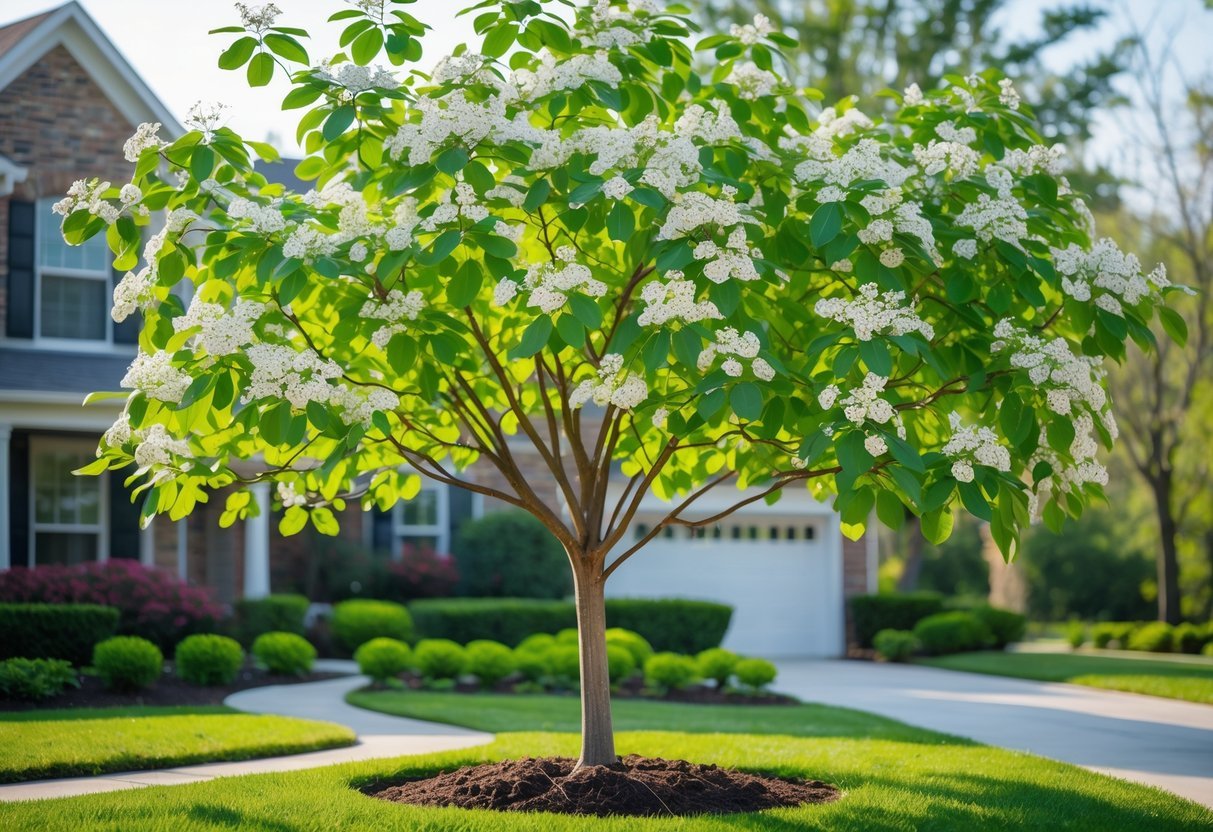
You’ll like dogwood for its spring flowers and neat, rounded form that fits small yards.
Its roots stay relatively shallow and spread wide, so they rarely damage foundations when planted a safe distance from structures.
Dogwood grows about 20–30 feet tall and tolerates partial shade, making it good near walkways or under taller trees.
Water regularly as it establishes, and mulch to keep roots cool and soil moist.
2) Japanese Maple (Acer palmatum)

You’ll find Japanese maple fits small yards with its compact size and fine, colorful leaves. It usually grows slowly and stays manageable, making it a strong choice for front yards.
Its roots tend to be non-aggressive and shallow, so they rarely crack foundations or pipes when placed a sensible distance from structures. Plant it in well-drained soil and give it some afternoon shade for best leaf color and health.
3) Crabapple (Malus spp.)
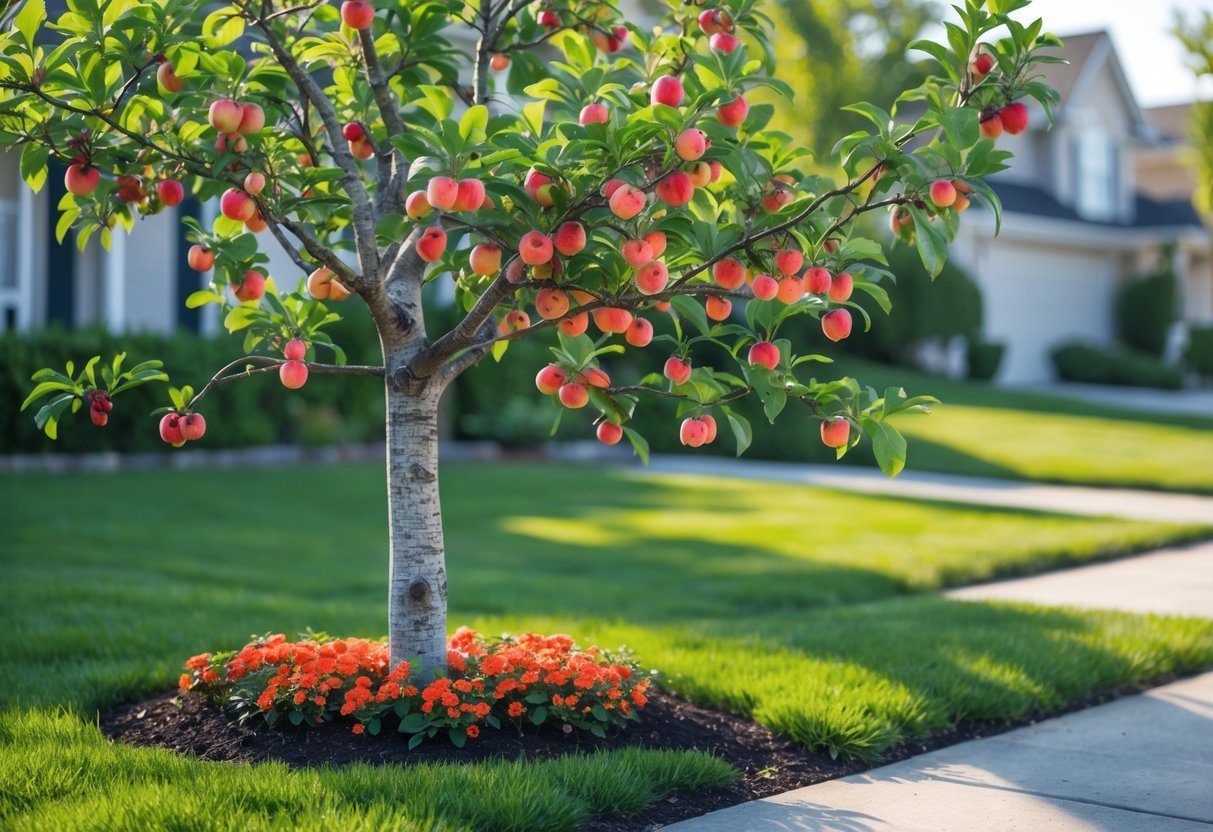
Crabapples offer showy spring blooms that boost your curb appeal without aggressive roots. They stay relatively small, so they fit well near walkways or front yards.
You can choose dwarf varieties for tight spaces and container planting. Fruit attracts birds and adds fall interest, but you can pick low-fruiting cultivars if you prefer less litter.
Plant in full sun and well-drained soil for best flowering and disease resistance. Prune lightly to keep shape and avoid heavy root disturbance nearby.
4) Crape Myrtle (Lagerstroemia)
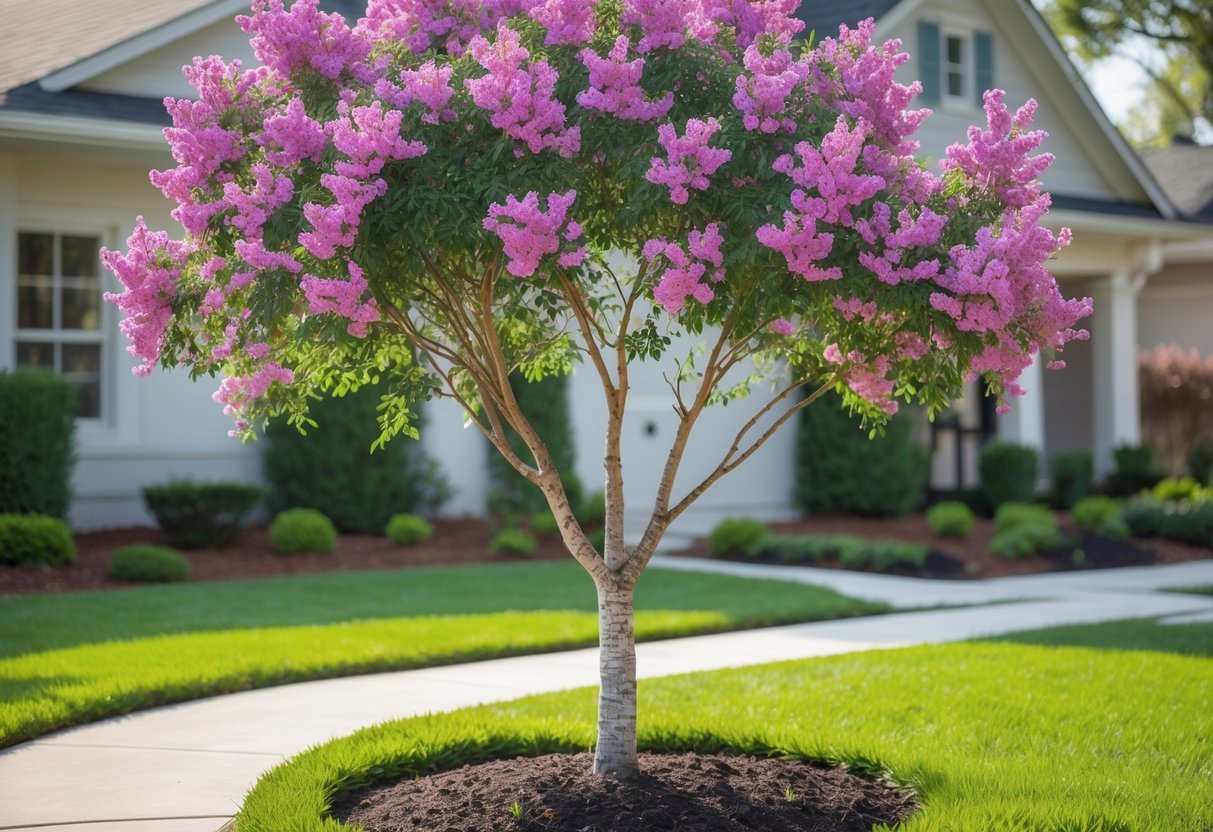
You can plant crape myrtle for bright summer blooms and attractive bark without worrying about aggressive roots.
They stay compact in many cultivars, making them good for small front yards and near walkways.
Choose a dwarf or cultivar suited to your USDA zone to keep size and root spread manageable.
Give them full sun and well-drained soil for best flowering and low maintenance.
5) Redbud (Cercis canadensis)
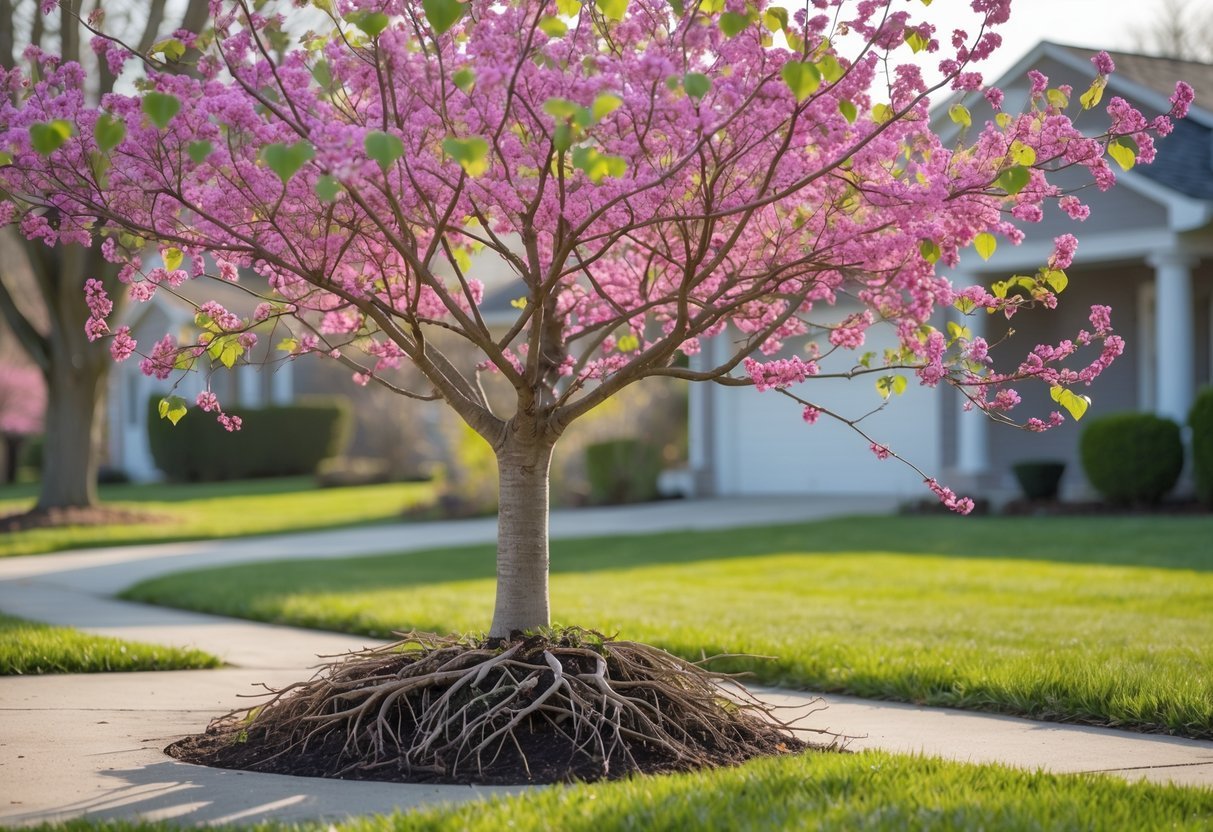
You’ll find redbuds are small, ornamental trees that fit well in front yards. They reach about 20–30 feet and offer bright pink to purple spring flowers before the leaves appear.
Their root systems are generally non-invasive, so you can plant them near sidewalks or foundations with less worry. Redbuds tolerate drought and need well-drained soil to stay healthy.
6) Pacific Sunset Maple (Acer truncatum)
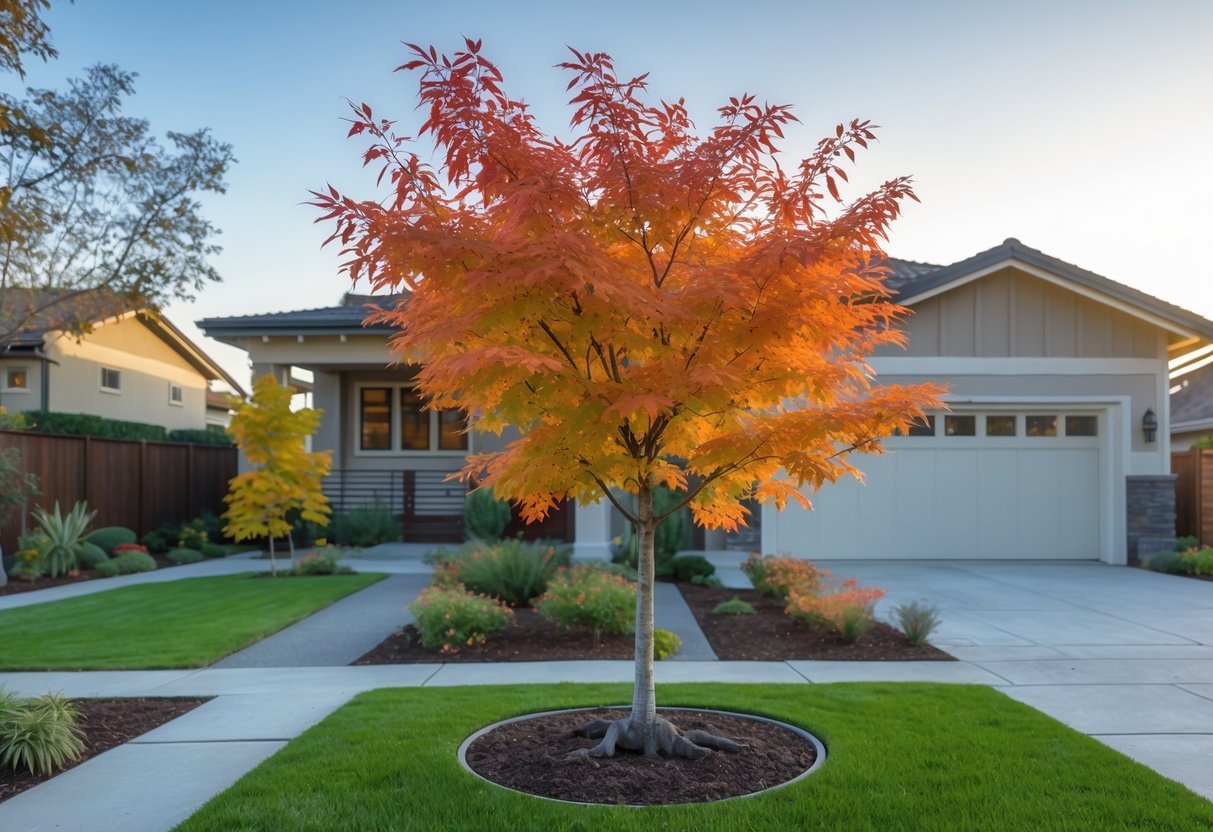
You’ll get a small to medium tree with glossy leaves that turn orange, red, and yellow in fall. It reaches about 15–30 feet tall and fits well in front yards.
This hybrid handles heat and drought better than many maples. Roots tend to be less invasive, so it works near sidewalks and foundations when planted properly.
Plant it in full sun to part shade and water until established. Prune lightly to keep a clear trunk and balanced canopy.
7) Serviceberry (Amelanchier)
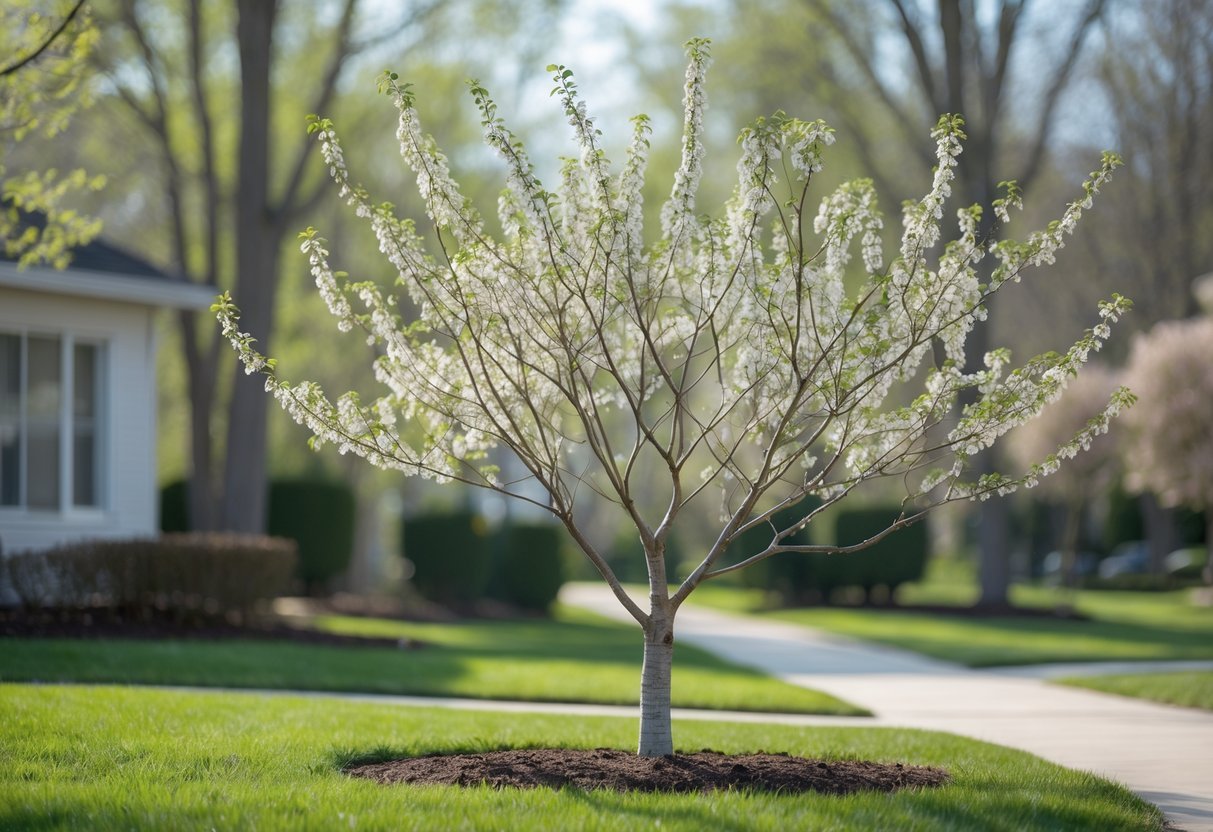
You’ll like serviceberry for its small size and gentle roots that rarely invade foundations.
It gives white spring flowers, edible purple berries in summer, and bright fall color.
Plant it near walkways or a small lawn where you can enjoy blooms and wildlife.
Prune lightly to keep shape and remove crossing branches so it stays tidy and healthy.
Benefits of Choosing Small Trees With Non-Invasive Roots
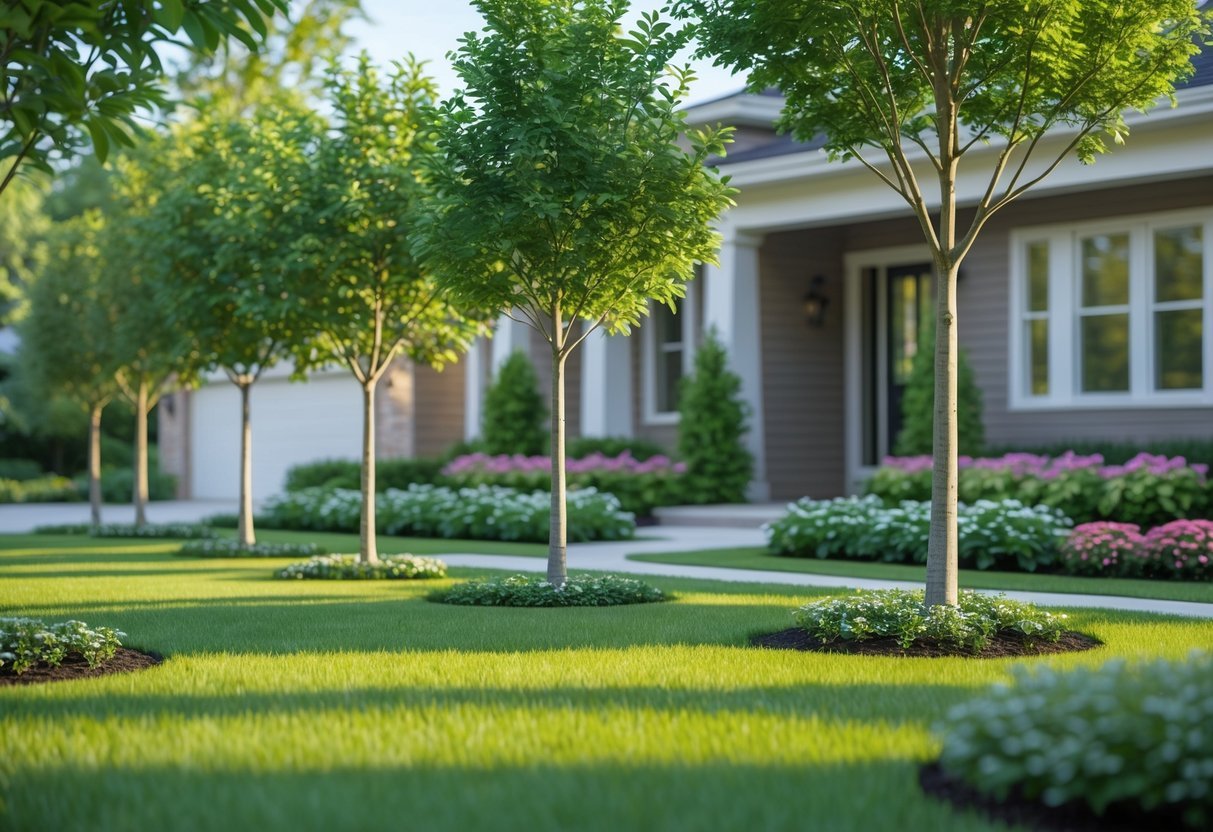
You get attractive shade, flowers, or fruit without risking expensive repairs or constant pruning. These trees fit small front yards and reduce long-term time and money spent on landscape fixes.
Protecting Foundations and Utilities
Trees with non-invasive roots are less likely to crack foundations, lift sidewalks, or clog sewer lines. When roots grow mainly downward or stay close to the trunk, they avoid the pipes and slabs that run near your home.
Plant non-invasive species at least as far from the house as the tree’s mature canopy radius. This placement gives roots room without approaching foundations or utility trenches. For example, a small ornamental tree with a 12–15 foot spread should sit 12–15 feet from the foundation.
If you already have pipes or a narrow strip between sidewalk and home, choose trees known for compact root habits. That choice lowers the chance of root-related insurance claims or costly repairs later.
Low Maintenance Landscaping
Small trees with gentle root systems need less root control and fewer emergency fixes. You’ll spend less time cutting invasive roots or calling a contractor to fix sidewalk heave or root-blocked drains.
These trees also ease lawn care. Shallow, aggressive roots can steal water and nutrients, forcing extra watering and fertilizing. Non-invasive roots let grass and garden plants thrive nearby without constant feeding.
Prune less often because these trees grow in predictable, compact shapes. That saves you time and keeps maintenance costs low over the tree’s life.
Planting and Care Tips for Front Yard Trees
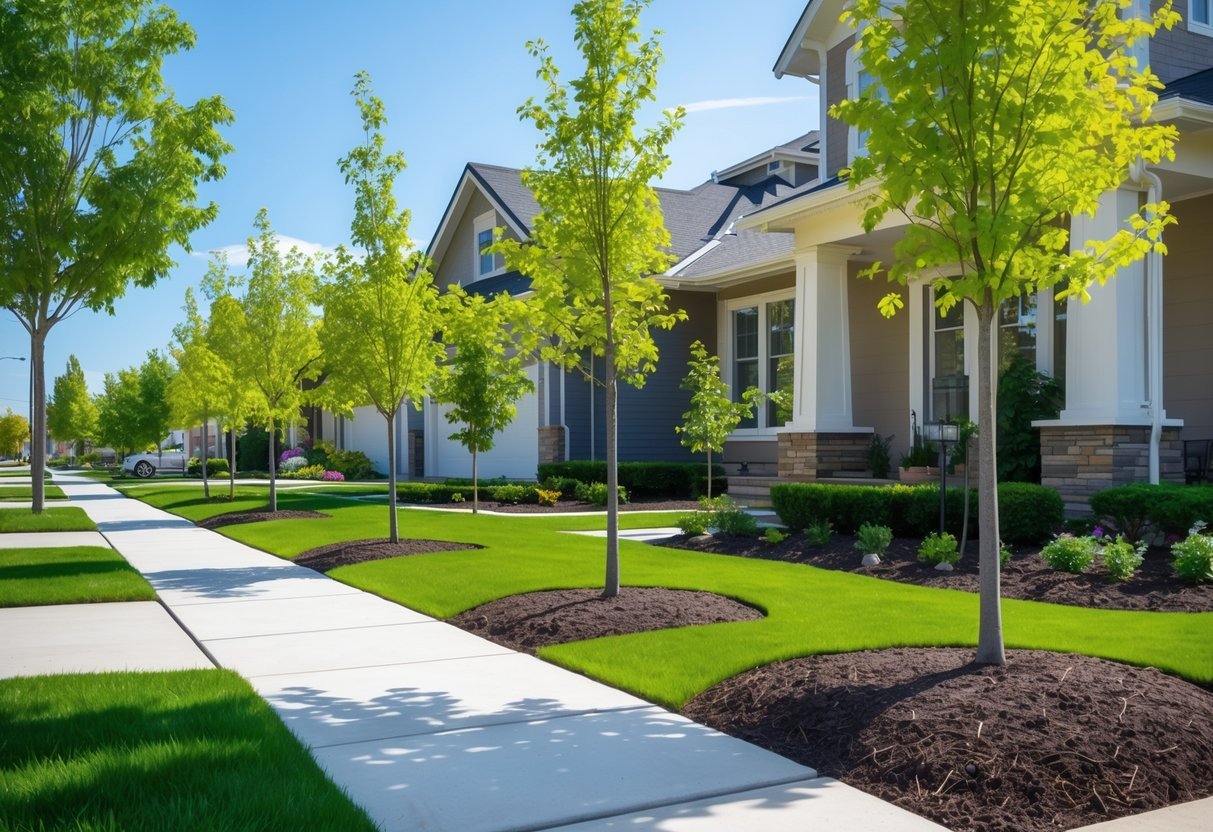
Choose the right soil, give trees room to grow, water deeply but not daily, and prune only when needed. These steps reduce root problems and keep trees healthy for years.
Selecting Appropriate Soil and Spacing
Test soil pH and texture before planting. Use a simple home kit or send a sample to your county extension. Most small trees do well in loamy, well-draining soil with pH near 6.5; amend heavy clay with compost and coarse sand.
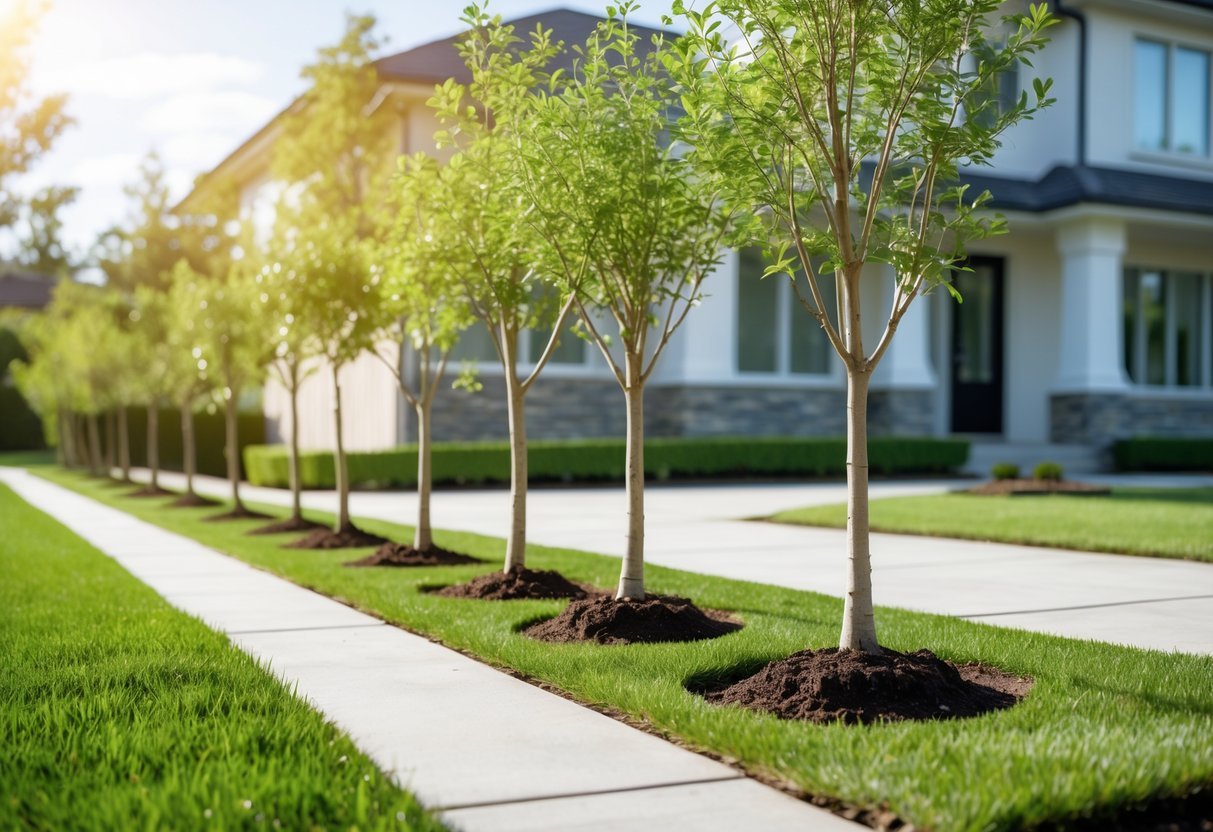
Dig a hole 1.5 times the root ball diameter and set the root flare at or slightly above ground level. Space trees at least 15–25 feet from foundations, sidewalks, and utility lines depending on the mature canopy. For narrow front yards, choose trees with a mature spread under 20 feet and space them so branches won’t touch structures.
Mulch 2–4 inches around the base, keeping mulch 2–3 inches from the trunk. Mulch conserves moisture and cools roots, but thick mulch against bark can cause rot.
Essential Watering and Pruning Practices
Water new trees deeply once or twice a week for the first two growing seasons, depending on rainfall. Aim for 10–15 gallons per watering for small trees; use a slow-soak hose or root feeder to wet the root zone 12–18 inches deep. After two years, reduce frequency and water during dry spells.
Prune in late winter or early spring while trees are dormant. Remove dead, crossing, or rubbing branches and keep one central leader for upright species. Make clean cuts just outside the branch collar and avoid topping. For small front-yard trees, limit structural pruning to the first 3–5 years to set a good shape.
Frequently Asked Questions
These answers list specific small trees, growth habits, and planting tips so you can pick species that won’t harm sidewalks, driveways, or foundations. Each answer names trees and gives clear placement or care guidance.
What are some recommended small trees for a front yard that have non-invasive root systems?
Dogwood (Cornus florida) and Japanese maple (Acer palmatum) are top picks for small yards.
Crabapple (Malus spp.), crape myrtle (Lagerstroemia), and redbud (Cercis canadensis) also have compact root systems and fit well near walkways.
Plant those trees at least 6–10 feet from structures and hardscape.
Use mulch and proper staking while they establish to encourage a deeper, less spreading root system.
Which fast-growing trees can I plant in my front yard that won’t interfere with sidewalks or foundations?
Crape myrtle grows relatively quickly but stays small to medium and keeps roots mostly near the trunk.
Certain crabapple varieties also grow fast without aggressive roots.
Choose cultivars labeled “street tree” or “small yard” and place them 8–15 feet from sidewalks and foundations.
Avoid planting any fast grower right next to paved areas unless you use root barriers.
Can you suggest small evergreen trees suitable for front yards with non-invasive roots?
Small evergreen choices include dwarf spruce and compact yews, which typically keep roots close to the trunk.
Select dwarf or compact cultivars to keep scale and root spread manageable.
Plant evergreens on the side of the house where you want year-round screening.
Keep them 6–12 feet from foundations depending on mature size.
What are the best options for fast-growing shade trees that have minimal root spread?
Redbud can provide quick shade and has a non-aggressive root habit for a small tree.
Some crape myrtle varieties also cast decent shade while staying compact.
To speed shade development, give trees regular watering the first 2–3 years.
Use root barriers if you must plant closer than recommended to hardscape.
How can I identify trees with least invasive root systems for residential landscaping?
Look for species described as “non-invasive” or “compact root system” on plant tags or nursery info.
Choose small-stature trees and dwarf cultivars; these often have less aggressive roots.
Ask your local nursery or extension service which regional cultivars perform well near homes.
Avoid species known for surface roots, like silver maple or willow.
Which trees are suitable for planting close to houses without risking structural damage?
Japanese maple and dogwood are safe near houses when planted 6–10 feet away.
Crabapple and certain redbud varieties also work well within that distance.
Measure the tree’s expected mature canopy and keep that space from foundations and utilities.
If space is tight, pick dwarf forms and use root barriers to protect structures.