Small Rock Garden Ideas: 7 Compact Designs for Low‑Maintenance Curb Appeal
You can turn a small patch of ground, a balcony corner, or a container into a striking rock garden that fits your space and style. A well-planned small rock garden gives you low-maintenance beauty, visual depth, and a chance to use interesting plants, stones, and simple water or terraced features to make a compact space feel intentional and calm.
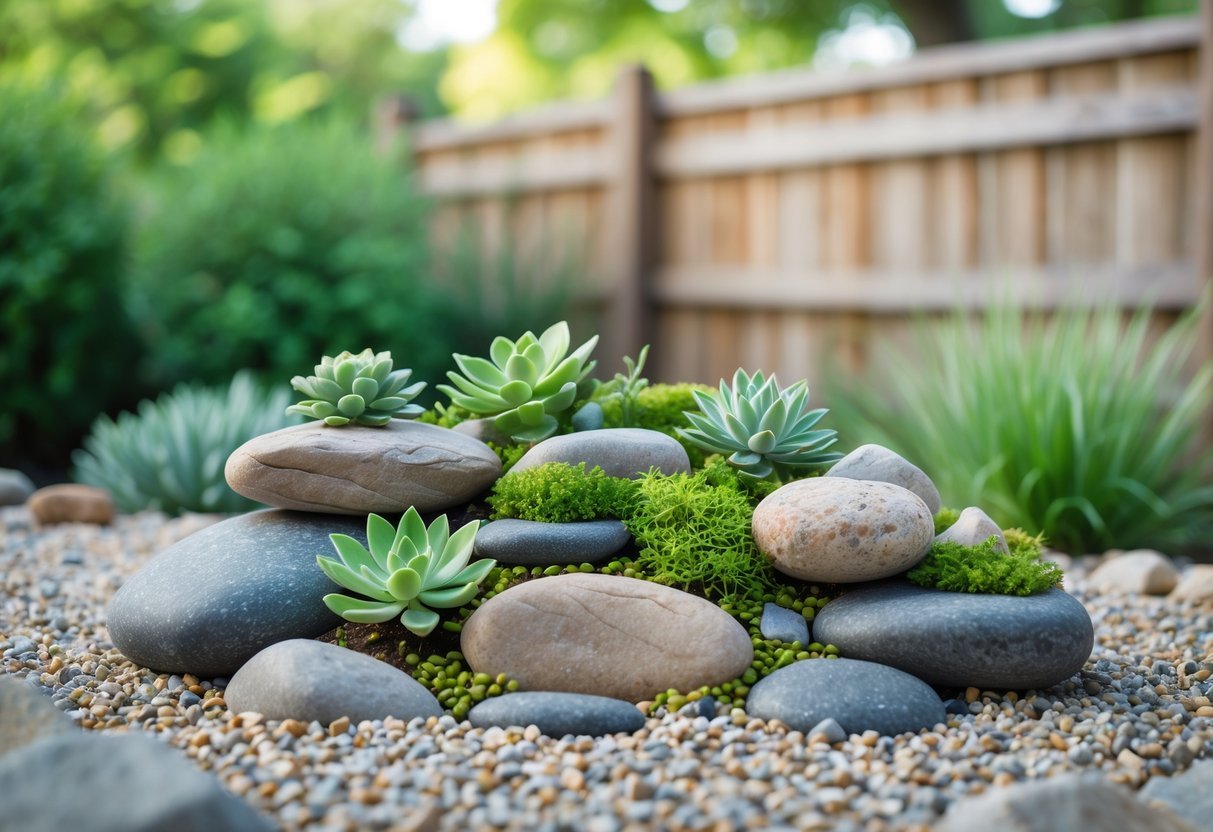
This article shows practical ideas and clear design choices to help you pick plants, arrange stones, add texture, and keep your garden looking good with minimal effort. You’ll find options for alpine and succulent plantings, zen-style layouts, water elements, container builds, and easy maintenance tips to match your skill level and available space.
1) Use alpine plants like sedum and saxifrage for hardy, low-maintenance greenery
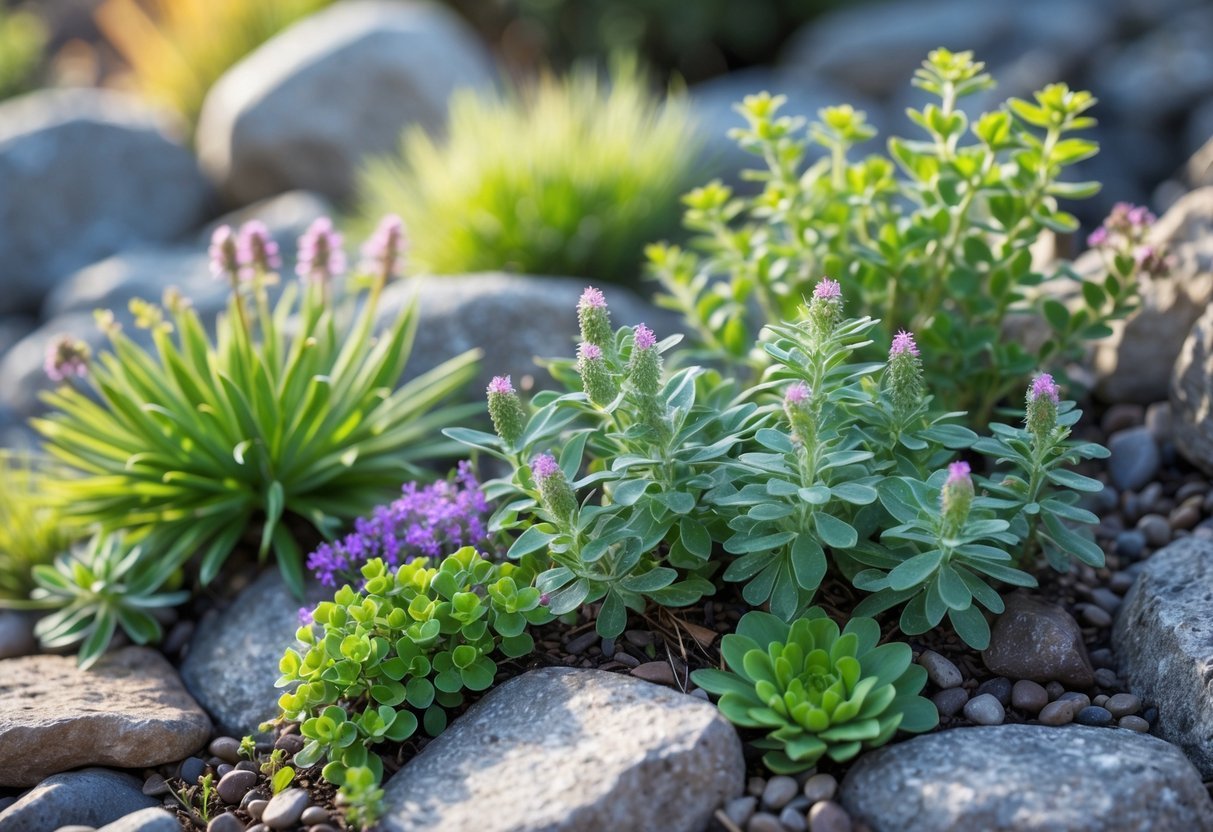
Choose sedum and saxifrage for tough, low-care ground cover that suits rocky soil and thin compost.
These plants need good drainage and little water once established, so they fit small rock gardens well.
Plant them in pockets between stones to soften edges and add year-round texture.
They also attract pollinators during bloom without demanding much work from you.
2) Incorporate a small cascading rock waterfall for movement and sound
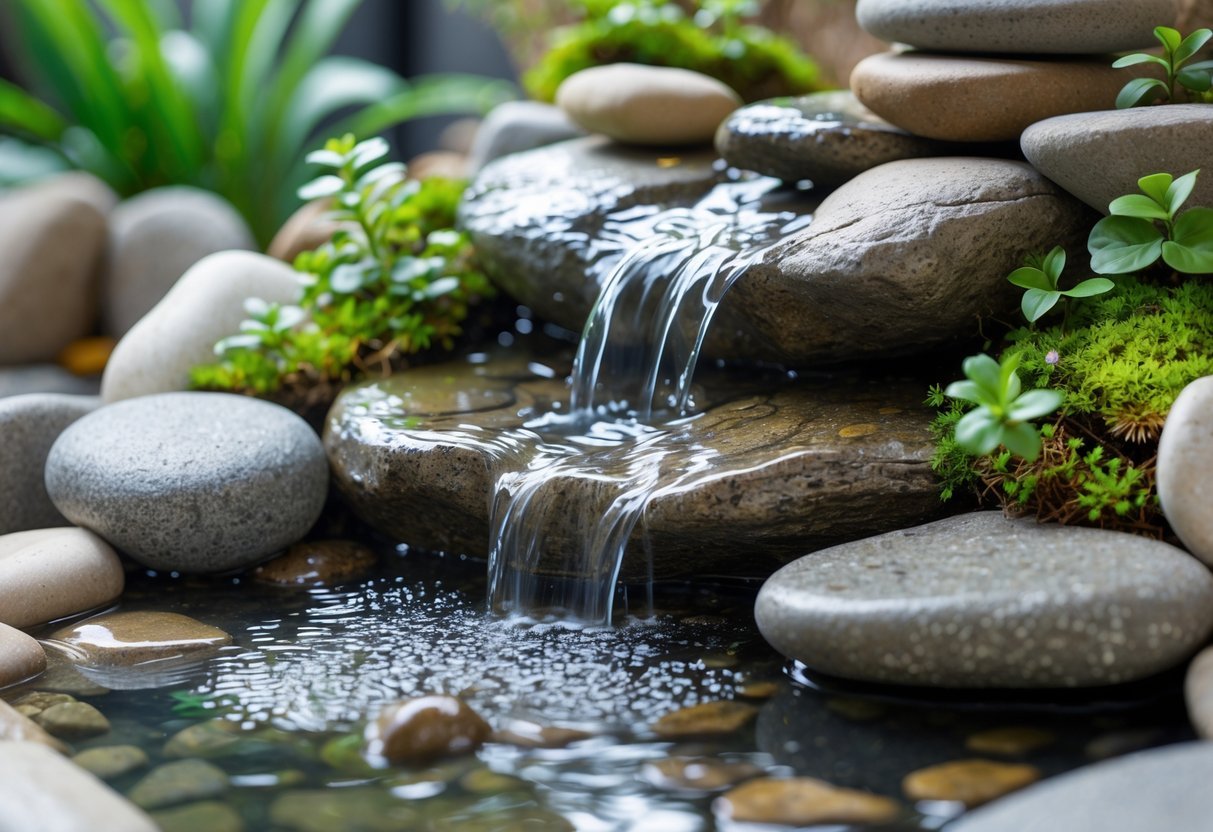
Add a compact rock waterfall to bring gentle motion and a soft water sound to your garden. A simple tiered stack or spillway rock works well for small spaces.
Place the waterfall where you can see and hear it from a seating spot. Use a reliable submersible pump and hidden tubing for steady flow and low maintenance.
Surround the base with moss, ferns, or small grasses to blend the feature into your rock garden. Keep the scale proportional so it feels natural, not overpowering.
3) Design with terraced layers to maximize depth in compact spaces
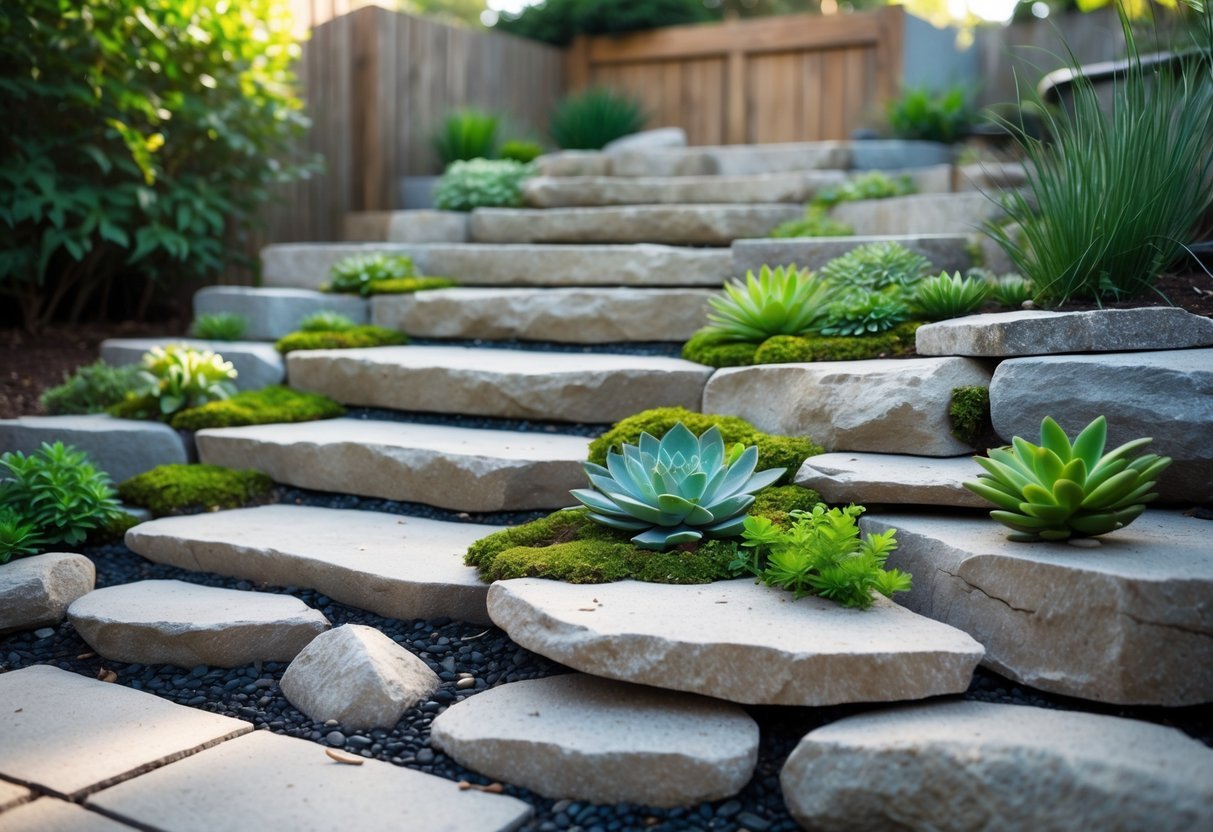
Use low stone or timber walls to create steps that hold soil and plants. Terraces add visual depth and stop erosion on slopes.
Plant a mix of alpine succulents, dwarf grasses, and groundcovers on each level for texture and easy care. Change plant height and color between tiers to make the space feel larger.
Keep paths narrow and curved to guide the eye. Small water features or a few larger rocks on upper tiers draw attention upward.
4) Include succulents to add texture and drought resistance

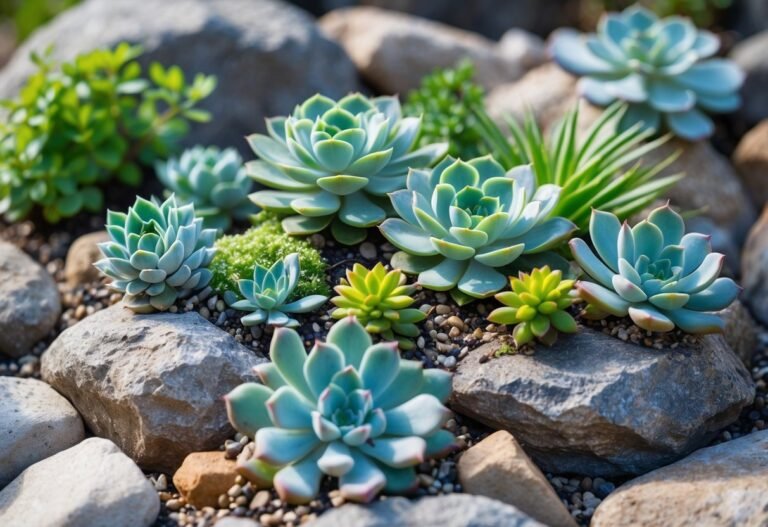
Add succulents to bring varied shapes and textures to your rock garden. Their thick leaves and compact forms contrast well with stones and gravel.
Succulents need little water, so they keep your garden low-maintenance. Choose mixes like echeveria, sedum, and agave for different sizes and colors.
Plant in pockets between rocks or small raised mounds to highlight each specimen. Give them fast-draining soil and bright light for the best growth.
5) Create a Japanese Zen-inspired layout with minimalist stone arrangements
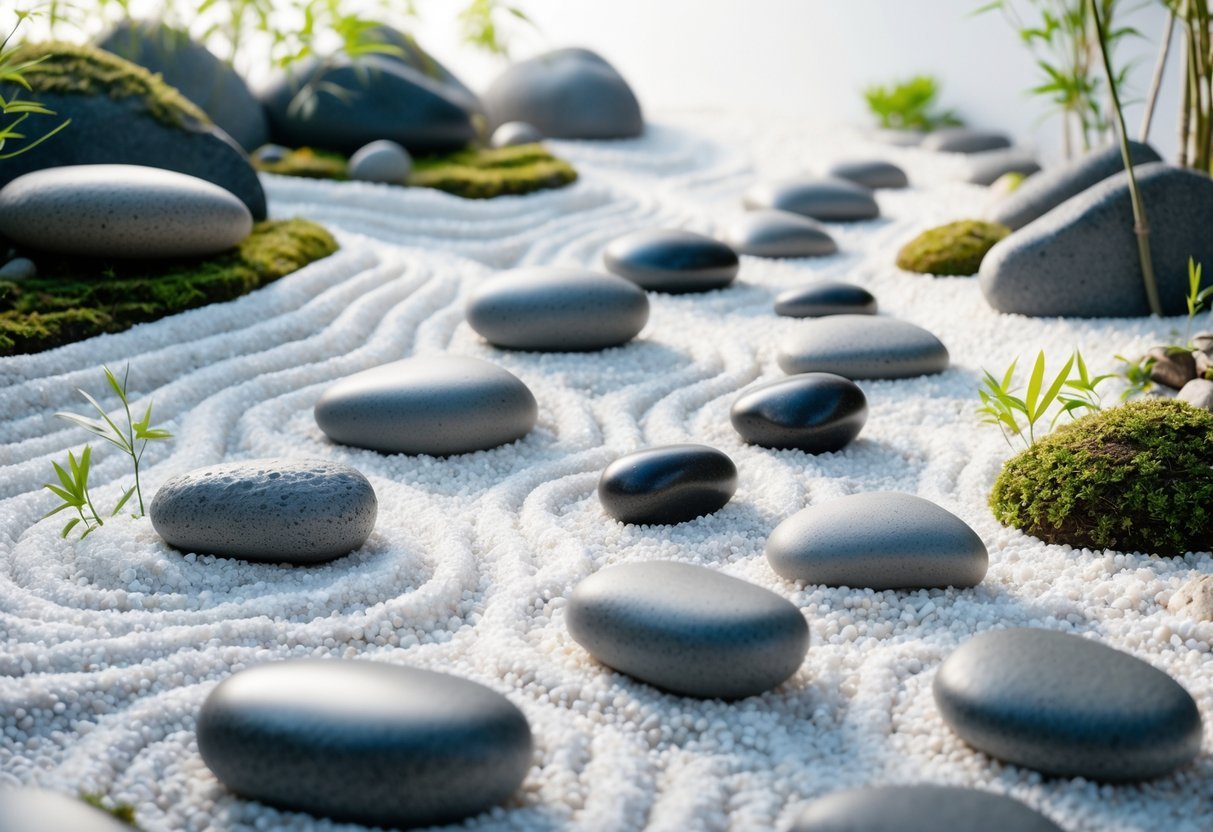
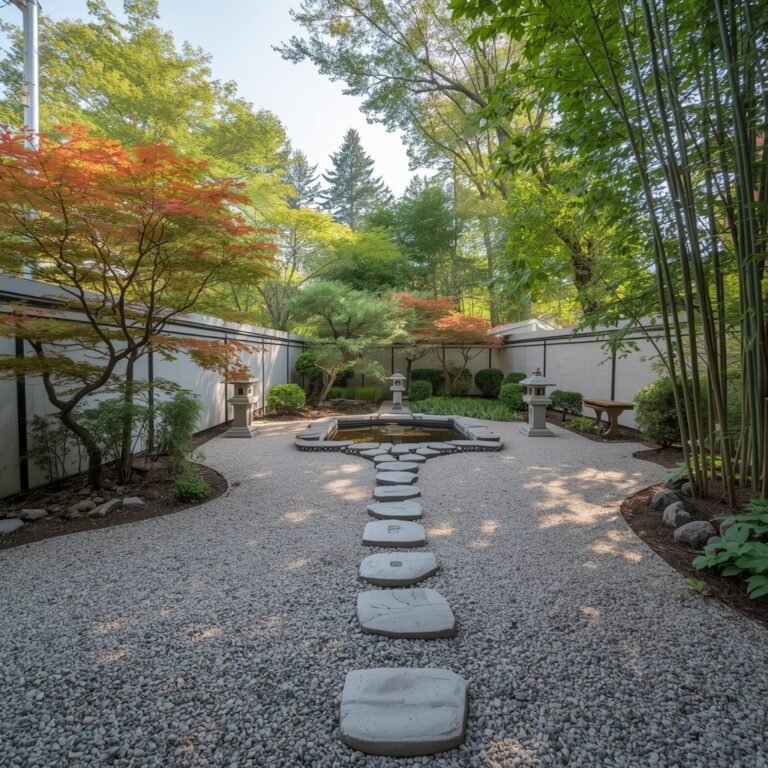
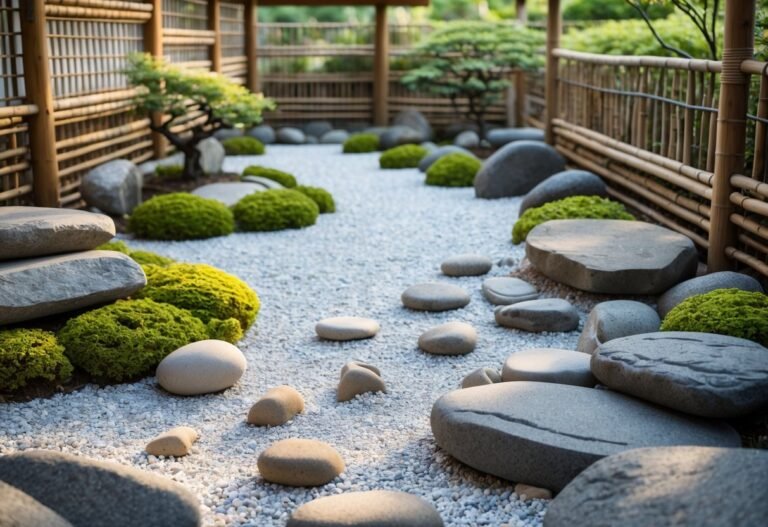
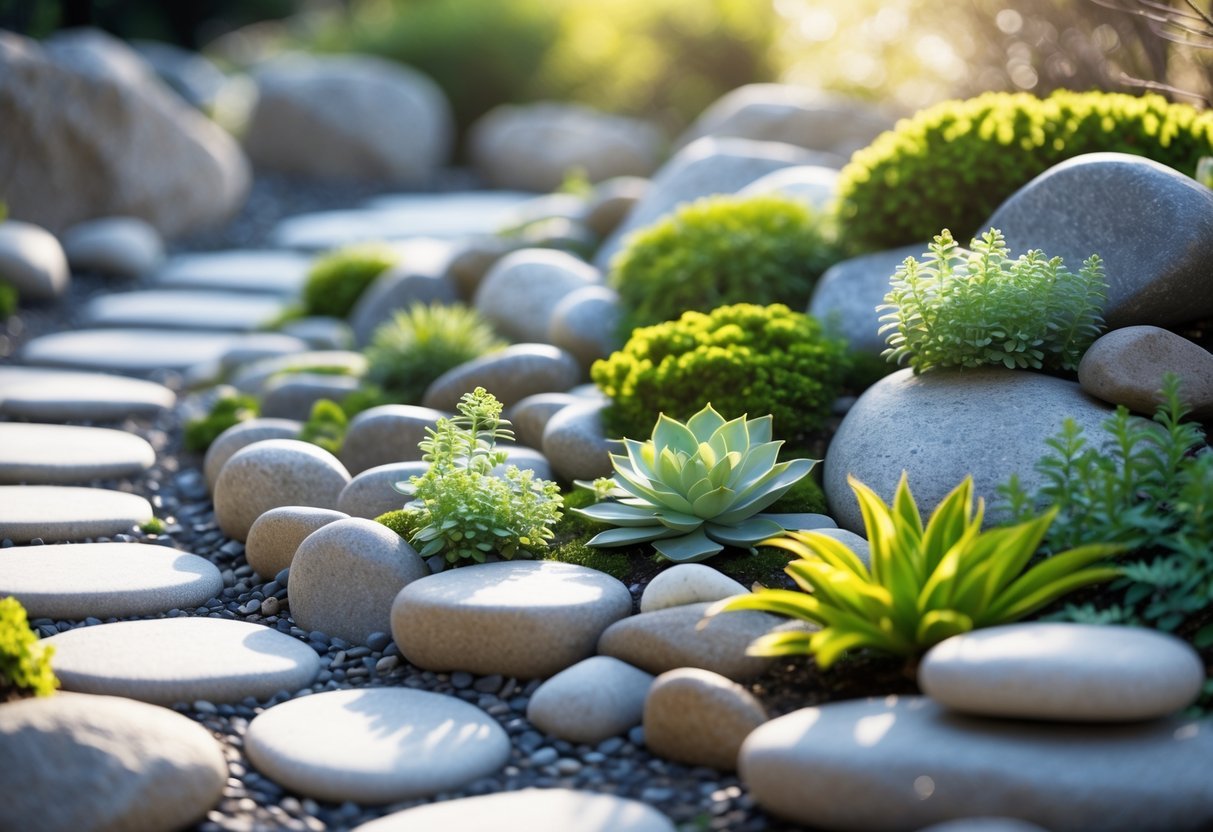
Place a few carefully chosen stones as focal points and leave open space around them. This gives your garden a calm, balanced look and keeps maintenance low.
Use raked gravel or sand to suggest water flow. Simple patterns guide the eye and add a meditative feel without clutter.
Add small patches of moss or a single bamboo accent for texture. Keep plant choices restrained so the stones remain the main feature.
6) Add container rock gardens to patios or balconies for small spaces
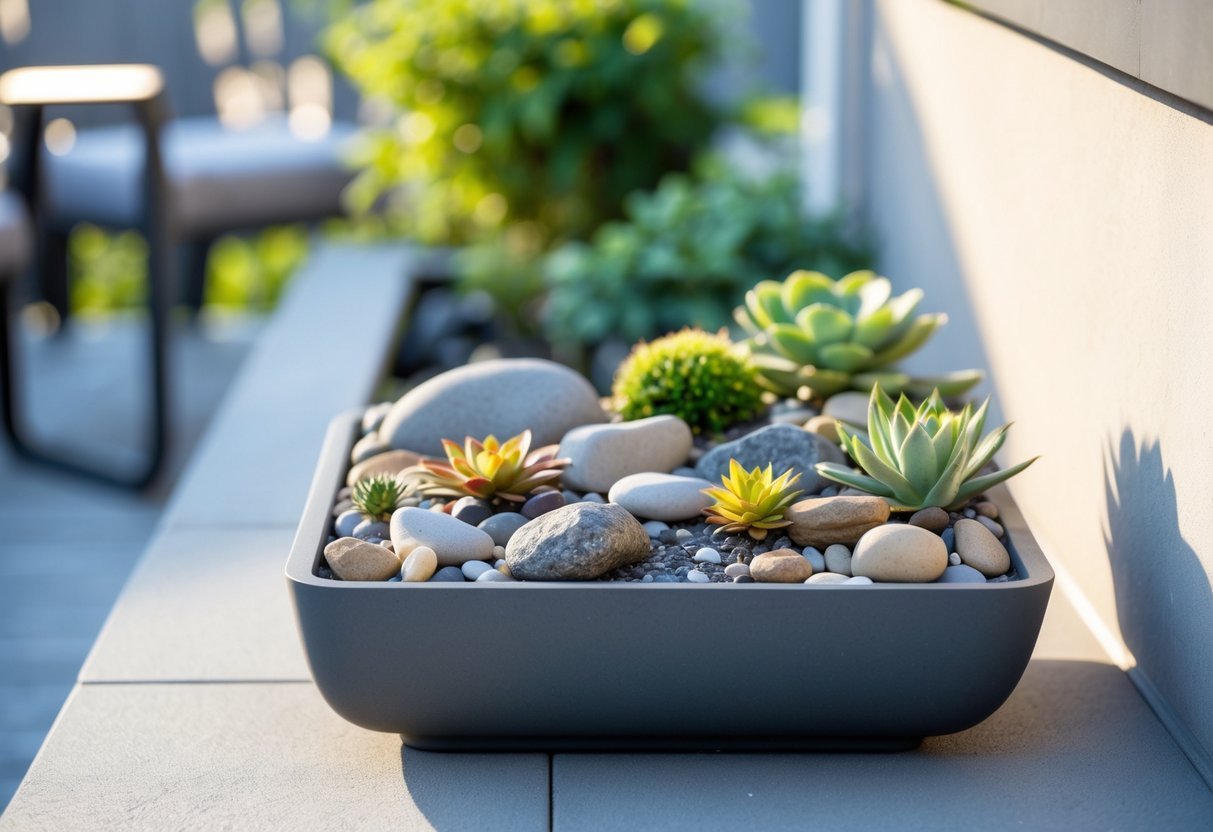
You can build a rock garden in a shallow pot or trough to fit a balcony or narrow patio.
Choose small stones, gravel, and compact plants like sedums, sempervivum, or dwarf succulents for proper scale.
Place taller elements at the back and group plants in odd numbers for a natural look.
Water sparingly and use a well-draining mix so plants stay healthy in containers.
7) Combine moss and lichens for natural color between rocks

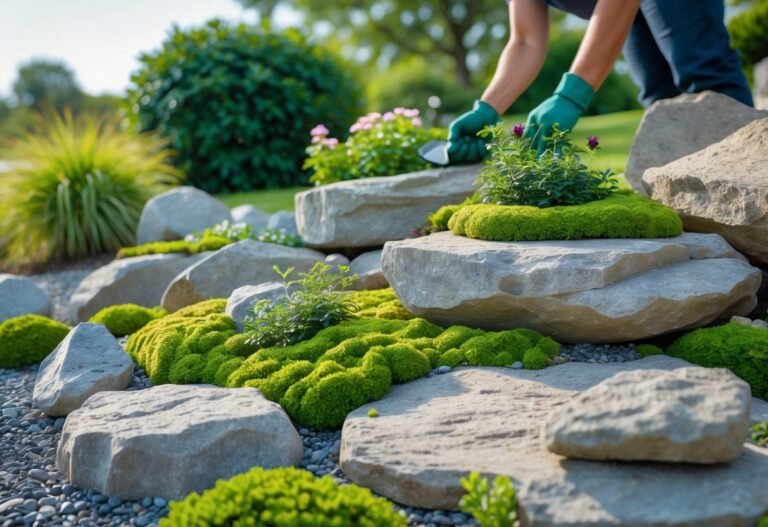
You can plant moss and encourage lichens to grow in the nooks between stones to add soft green and gray tones.
Both need little soil and stay low, so they fit small rock gardens and require minimal care.
Pick shady, moist spots for moss and leave sun-exposed patches for lichens when possible.
Avoid harsh cleaning or chemicals; gentle watering and patient placement help them establish.
Design Principles for Small Rock Gardens
Focus on using space, color, and scale so your garden looks intentional and stays easy to care for. Choose a clear focal point, pick plants that match your light and soil, and use stones to guide the eye and control movement.
Maximizing Limited Space
Place a single focal stone or planter to anchor the layout. That gives the eye somewhere to rest and prevents a cluttered look. Use vertical elements like stacked stones, a small cairn, or a tall, narrow planter to add height without using much ground area.
Use pathways or stepping stones to create the sense of more space. Keep gravel or mulch between plants to reduce weeds and make small pockets of soil look tidy. If you have a balcony or patio, use shallow containers and group three to five plants per container for a natural cluster.
Scale down plant size and prune regularly. Choose low-growing succulents, alpine plants, or dwarf grasses that won’t crowd each other. Place larger stones at the back or center and smaller stones toward the edges to create depth.
Color and Texture Combinations
Start with a limited color palette: two dominant foliage tones and one accent bloom color. That keeps your small area from feeling chaotic. For instance, mix silvery sage, dark green thyme, and a few bright sedums for color pops.
Mix textures to add interest: smooth pebbles, rough flagstone, and fine gravel work well together. Combine soft, feathery plants with spiky succulents to create contrast. Place textures deliberately—rough stones near strong plants, finer gravel around low mats—to lead the eye.
Use repetition to tie the palette together. Repeat a stone type or a plant species in two or three spots to create rhythm. Limit shiny or brightly colored pots to one area so they act as accents, not focal points.
Balance and Scale Considerations
Balance formally or informally depending on your style. For a calm, structured look, mirror plant groupings on either side of a path. For a natural look, cluster stones and plants unevenly—three stones of varied sizes often reads well.
Scale stones and plants to the viewing distance. If people see the garden from a window, choose medium stones and medium-height plants. If viewers walk through it, include smaller details like tiny groundcovers and mini pebbles.
Keep negative space as part of the design. Bare gravel or a swath of mulch gives each plant room to show shape and makes maintenance easier. Adjust proportions as plants grow, moving or thinning items to maintain the original balance.
Maintenance Tips for Lasting Beauty
You will keep the rock garden tidy by stopping weeds, picking plants that suit your site, and using simple seasonal checks. Small tasks done monthly will prevent big repairs later.
Weed Prevention Strategies
Pull weeds when they are small to stop roots from spreading. Hand-pull after rain or water; the soil loosens and weeds come out with their roots. Use a long weeder tool for tight gaps so you don’t disturb rocks or plant roots.
Apply a 2–3 inch layer of coarse gravel or crushed rock over the soil to block light and reduce seed germination. Put landscape fabric only under gravel where you need it; avoid covering the whole bed under plants that need good root airflow.
Spot-treat persistent weeds with a targeted, plant-safe method: boiling water on moss, or vinegar solutions on cracks (avoid spraying desirable plants). Inspect edges and pathways monthly and remove seedlings before they reach 2 inches tall.
Choosing Low-Maintenance Plants
Select plants that match your sun exposure and drainage. For sunny, dry sites choose sedum, thyme, and ice plant. For part-shade pick saxifraga, ferns, or woodland phlox. Check mature size to avoid overplanting.
Group plants by water needs to avoid unnecessary watering. Use drought-tolerant species together and place thirsty plants near drip lines. Mulch around non-spreading plants with a thin layer of inorganic mulch like gravel to keep stems dry and reduce rot.
Choose slow-growing varieties and groundcovers that creep between rocks to reduce bare soil. Replace only dead specimens each season instead of replanting large areas; this saves time and keeps the garden balanced.
Frequently Asked Questions
These answers focus on practical steps you can take, materials to use, and layout ideas that match small gardens. You’ll get budget options, low-care plant choices, front-yard tips, plant-free designs, common mistakes to avoid, and simple layout examples.
How can I create a small rock garden in a limited budget?
Use local stones or reclaimed pavers instead of buying new decorative rocks. Look for free fill or gravel from municipal programs or landscapers clearing sites.
Start with a simple base: weed barrier fabric, a few bags of sand or gravel, and inexpensive alpine plants like sedum. Plant in clumps to fill space quickly and avoid buying many small pots.
Build terraced levels from leftover bricks or concrete blocks to add depth without heavy excavation. Add one small feature, such as a DIY miniature waterfall using a pump and lined basin, to make the garden feel complete.
What are some low maintenance options for a small rock garden?
Choose hardy alpine plants like sedum, saxifrage, and low-growing thyme for long-term coverage. These plants need little water and survive poor soils.
Use succulents for dry, textured accents that require almost no care. Mulch with gravel and install drip irrigation on a timer to cut down on watering and weeding.
Group plants with similar light and water needs. That makes care predictable and reduces mistakes.
What are creative ways to set up a rock garden in the front yard?
Place a clear focal point near the entry, such as a large weathered boulder or a small cascading rock waterfall. It draws the eye and hides transition edges between grass and rock.
Create terraced layers along a slope to add depth and hold soil. Plant alpine groundcovers on terraces to soften edges and reduce mowing.
Use a Japanese Zen-inspired minimalist stone arrangement near the walkway for a tidy, modern look. Keep plantings sparse and choose a small palette of shapes and colors.
How can one design a rock garden without including plants?
Build interest with varied stone sizes, textures, and colors. Group stones in odd-numbered clusters and tilt a few vertically to mimic natural outcrops.
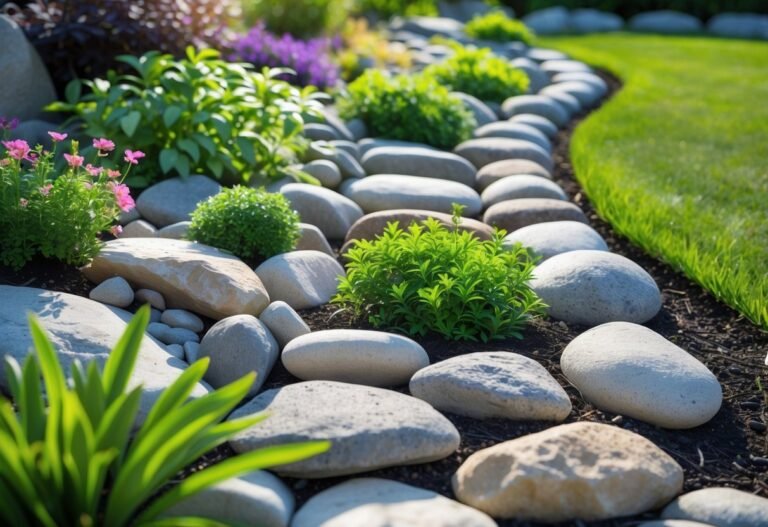
Add hardscape elements like a shallow dry creek bed, stepping stones, or a pebble mosaic. Include a small water feature or sand patterns to introduce movement and contrast.
Light the garden with low-voltage path lights or uplights to create shadow and depth at night. This keeps the space lively without any plants.
What are the common pitfalls when designing a rock garden?
Avoid overcrowding plants or stones. Too many pieces looks busy and hides individual forms.
Don’t ignore drainage. Poor drainage leads to plant rot and shifts in stone placement. Grade soil away from foundations and use gravel layers under planting pockets.
Steer clear of mismatched scales. Large boulders need room to look natural; tiny stones get lost next to them. Match stone size to the space and to each other.
Can you provide examples of small rock garden layouts?
Layout 1: Corner alpine bed — place a large focal rock at the back corner, terrace two low retaining walls, and plant sedum and saxifrage on stepped levels. Add gravel mulch and a narrow drip line.
Layout 2: Front-yard Zen strip — create a 3-foot-wide stone bed along the walkway. Arrange flat stones in a repeating pattern, leave open sand areas, and add a single low pine or dwarf juniper.
Layout 3: Container cascade — stack three sized containers on a slope, fill with a mix of succulents and gravel, and set small flat stones between pots to link them visually.
Layout 4: Dry creek slope — form a shallow channel with mixed river stones running downhill, place clusters of succulents and alpine grasses at intervals, and use terracing to prevent erosion.