7 Small Front Garden Ideas to Maximize Curb Appeal and Space
You can make a small front garden look welcoming, neat, and full of personality without a big budget or a lot of work. Choose a few smart elements—like vertical planting, compact shrubs, and a clear path—and you’ll get huge curb appeal from a tiny space.
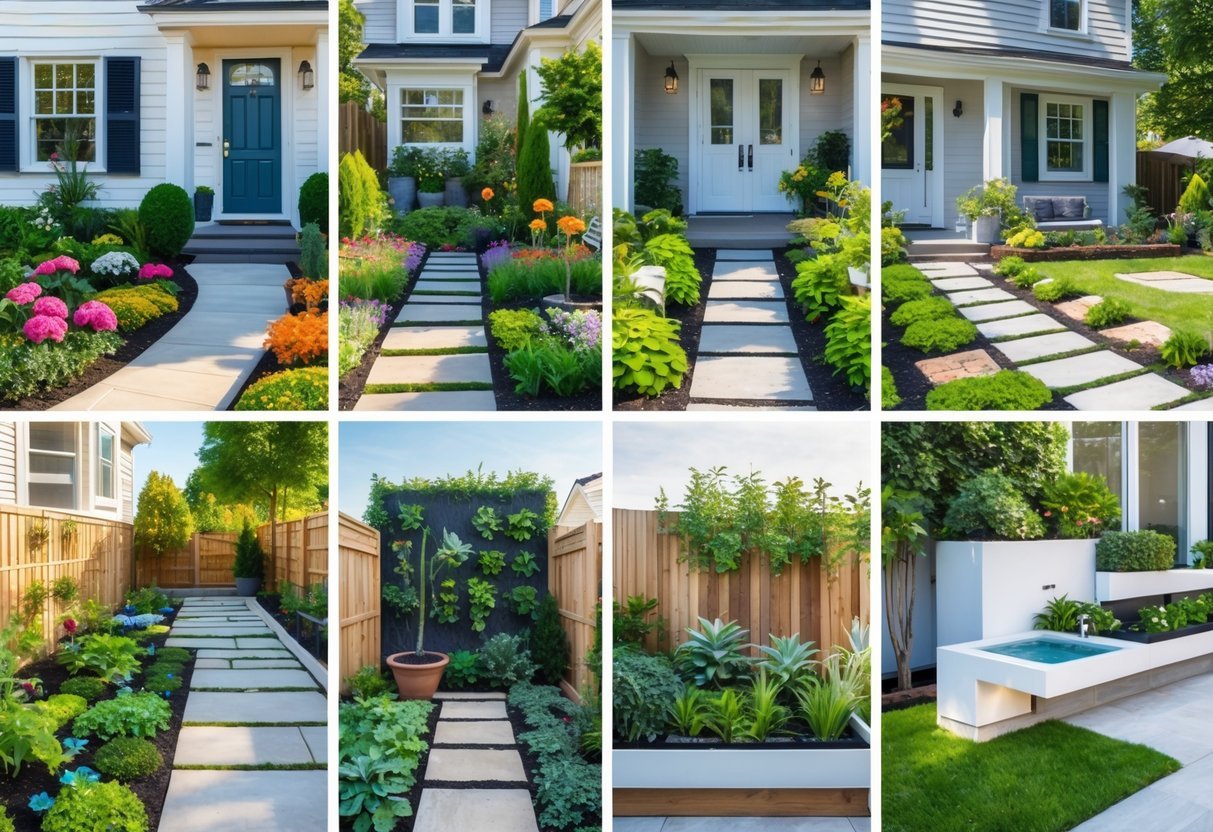
These seven ideas show simple, low-maintenance ways to maximize space, add color, and create a clear focal point so your home feels inviting at once. Use the tips that fit your style and upkeep limits, and you’ll transform your entry without clutter or fuss.
Key Takeaways
- Use space-saving layouts and vertical elements to make small areas feel larger.
- Pick low-maintenance plants and simple hardscape for lasting curb appeal.
- Focus on one or two strong design features to keep the look tidy and effective.
Maximizing Small Spaces
Use height, smart plant choices, and simple layout zones to make your front garden feel larger, neater, and easier to maintain. Focus on vertical elements, compact or multi-use plants, and clear pathways to improve flow and curb appeal.
Vertical Gardening Techniques
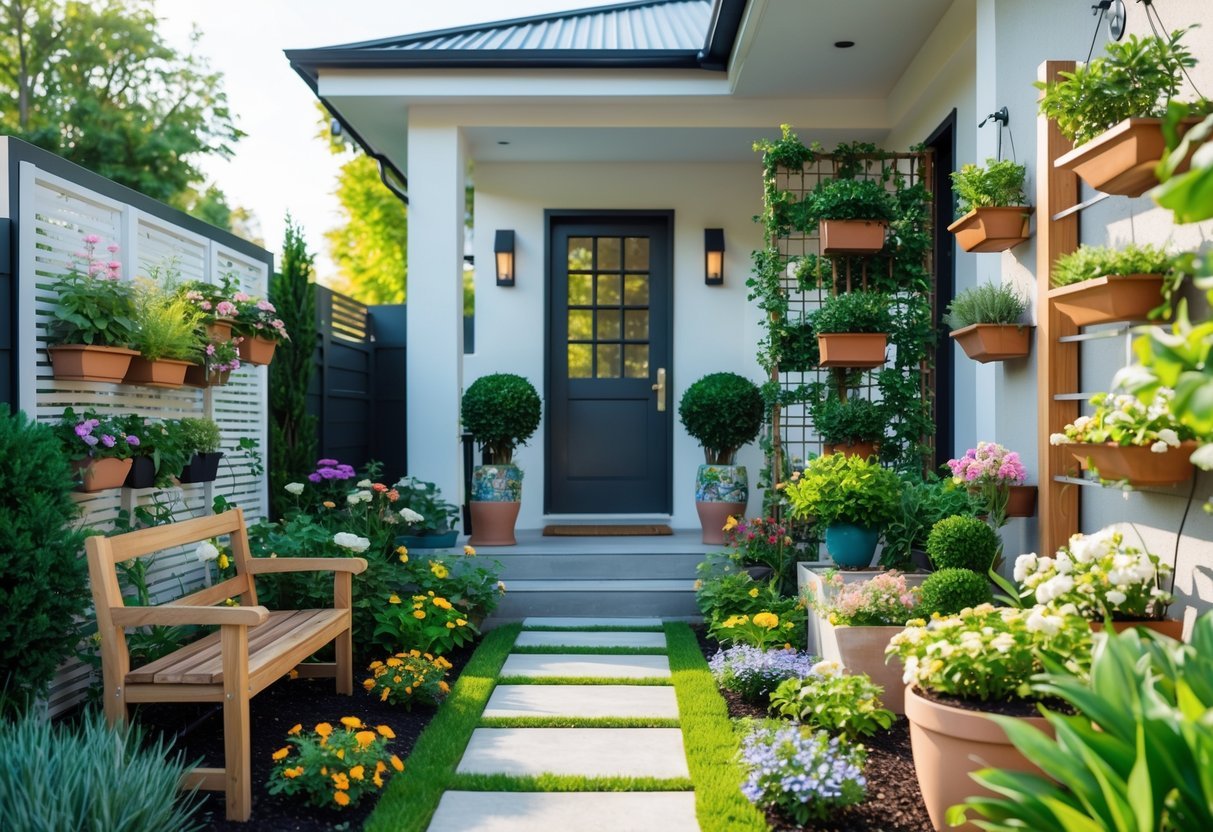
Think up when ground space is tight. Install a trellis, wall planter, or narrow shelving against a fence or house wall to grow climbers like clematis, honeysuckle, or espaliered fruit trees. Use lightweight materials such as cedar or powder-coated metal to avoid overloading structures.
Mix container sizes on the vertical plane: hang small pots for herbs, attach pocket planters for succulents, and reserve larger wall-mounted boxes for seasonal annuals. Mount drip irrigation or a simple soaker line to save time and water.
Place vertical elements where they won’t block windows or the main path. Use them to frame entrances or corners so they add height without crowding the central sight lines.
Choosing the Right Plants
Pick plants that match your light, soil, and climate. For full sun, choose drought-tolerant perennials like lavender, salvia, and ornamental grasses. In shade, select hostas, ferns, and hellebores that stay tidy and low.
Favor plants with narrow habits or defined shapes — boxwood, dwarf conifers, and clipped hedges — to keep walkways clear. Include at least one evergreen for winter structure and one seasonal bloomer for color.
Group plants by water needs in the same bed or container. This reduces waste and prevents overwatering. Label containers or make a simple watering map to keep maintenance simple.
Layering and Zoning
Create depth by arranging plants in three layers: low (groundcover and small perennials), mid (shrubs and ornamental grasses), and tall (small trees, climbers). Place taller items toward the back or near the house so shorter plants stay visible.
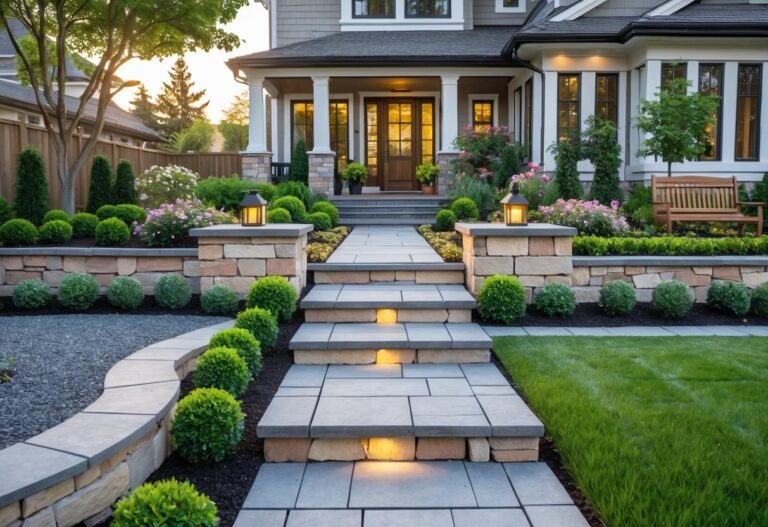
Define zones with hardscape: a 3-foot pathway, a 2-foot planting strip, and a 1-foot mulched bed make maintenance predictable. Use edging or low borders to separate turf or gravel from planting areas.
Reserve one small focal zone for seasonal interest — a container cluster, a bench nook, or a striking specimen plant. Keep circulation clear so visitors can approach the focal point without stepping into beds.
Creative Design Elements
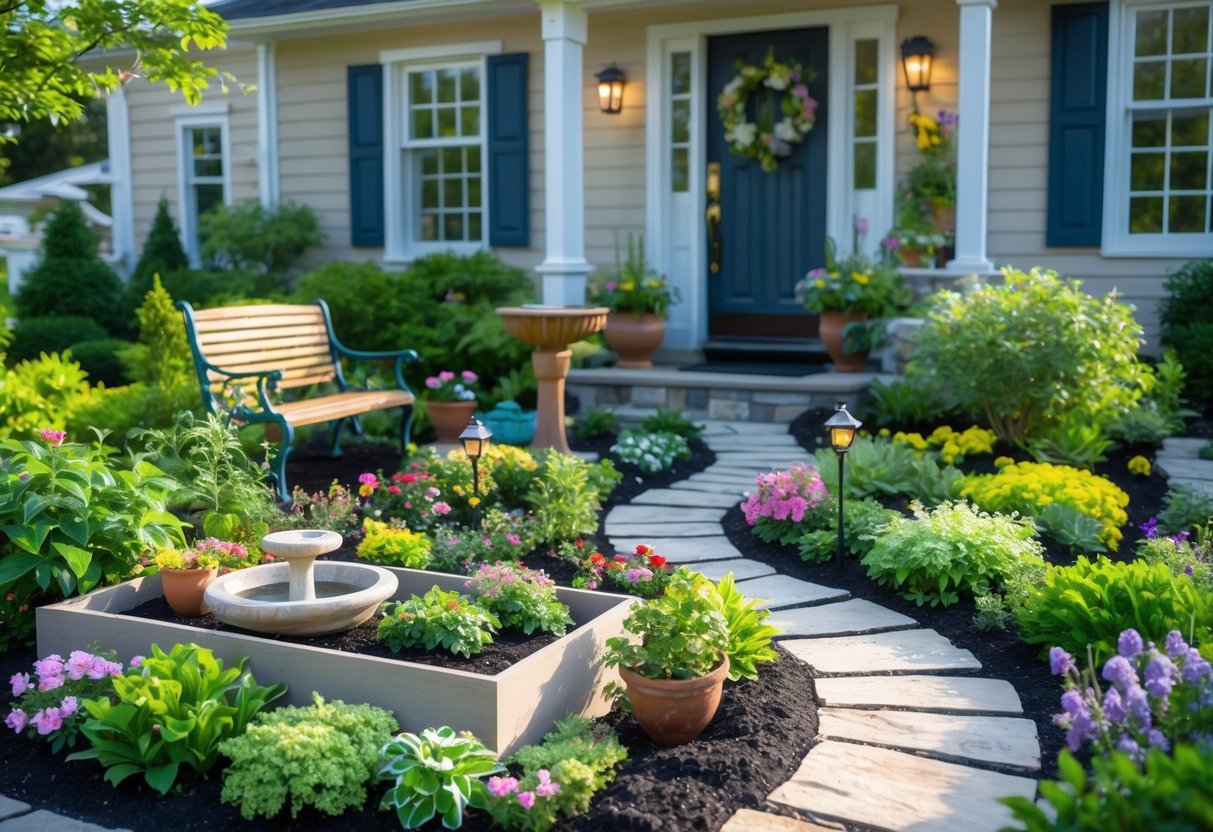
These ideas show how simple choices in layout, containers, and color make a small front garden look larger and more inviting. Use one clear path, pick container styles that fit your home, and choose a focused color palette.
Pathways and Stepping Stones
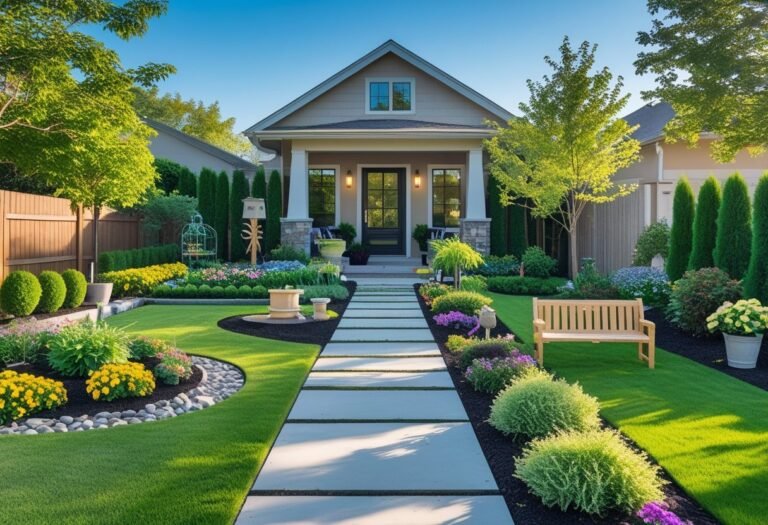
Lay a single, clear path from the sidewalk to your door to guide the eye and reduce visual clutter. Choose materials that match your house — bluestone for modern homes, warm brick for cottages. Keep the path no wider than 3–4 feet in very small yards to save space.
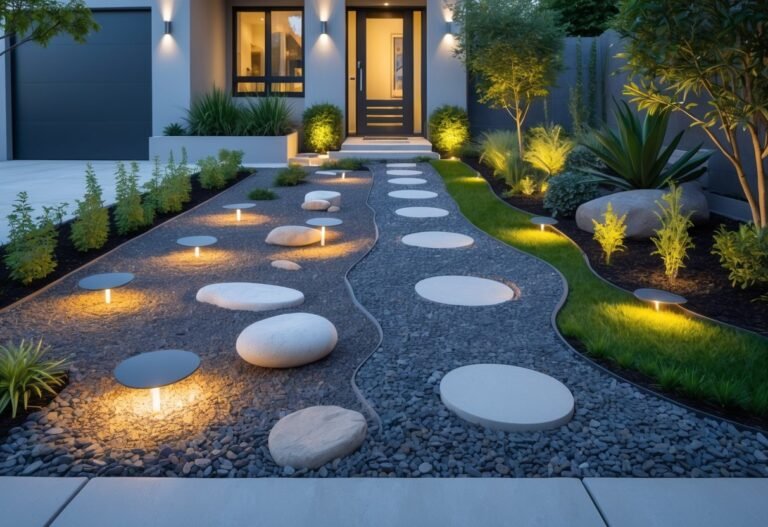
Use stepping stones set in gravel or groundcover to create movement without a continuous paved surface. Space stones about 18–24 inches apart for comfortable walking. Add low edging like metal or shallow brick to define the path and keep plantings tidy.
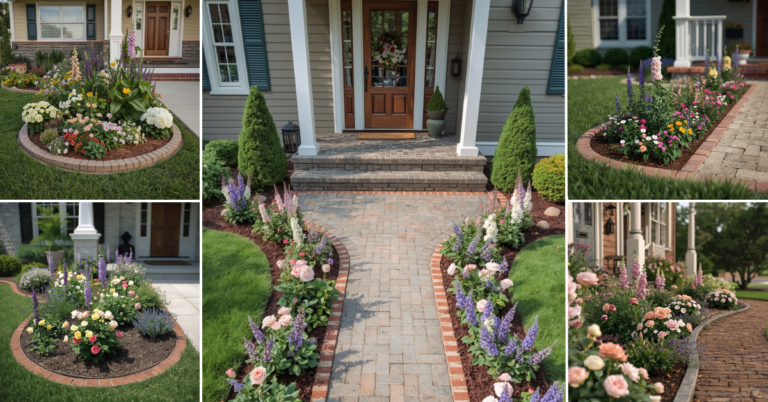
Consider a slight curve to the route if you want more planting beds or small focal points beside the path. Place a small bench or a single sculptural pot at a bend to create a pause and focal point.
Container and Raised Bed Ideas
Choose containers in groups of odd numbers (3 or 5) for a balanced look that fits small spaces. Use two larger pots near the entrance and smaller ones along the path to create depth. Keep container styles consistent — terracotta, matte ceramic, or weathered metal — to avoid visual noise.
Raise beds no more than 12–18 inches high to keep sight lines open. Use narrow beds (12–24 inches deep) against fences or the house to maximize planting area without crowding the walkway. Build beds from wood or corten steel for a clean edge.
Mix plant heights in containers: a tall structural plant, mid-height flowering plants, and a trailing plant over the rim. This “spike, fill, spill” combo gives instant richness without many pots. Use self-watering liners or reserve one larger pot as a water source for nearby containers.
Color Coordination Strategies
Pick a primary color and one or two accent colors to keep the palette simple and bold. For example, use white flowers and silver foliage as a base, with coral and deep blue as accents. Repeat those colors in cushions, pots, and entry trim for cohesion.
Limit contrasting colors to small touches, like a bright pot or a single flowering shrub. Use foliage color (variegated, dark green, gray) to give interest even when flowers fade. Group same-color plants together to create larger visual blocks that read bigger from the street.
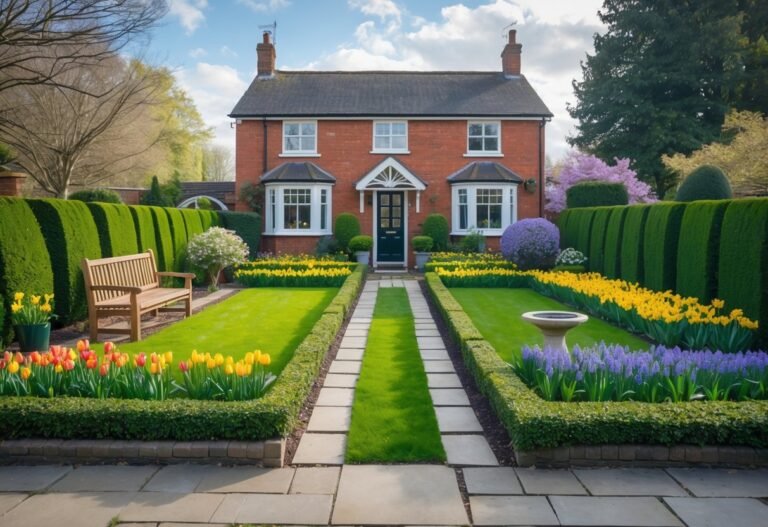
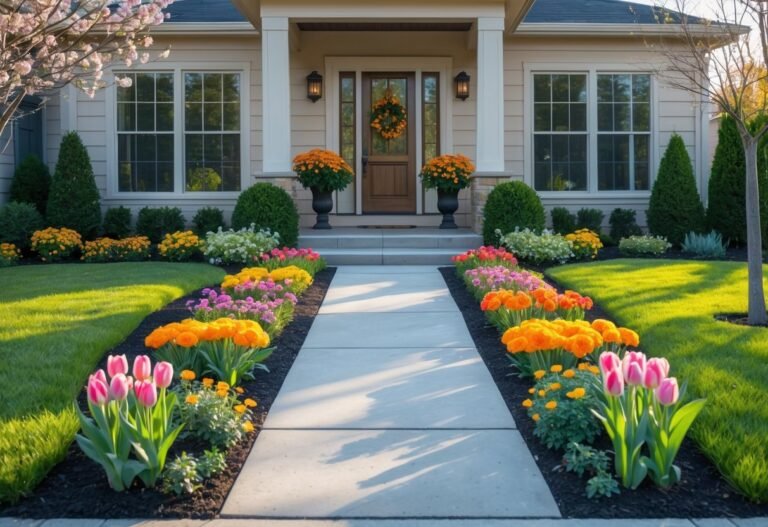
Create season-long interest by mixing spring bulbs, summer perennials, and evergreen shrubs. This staggers color and keeps the front garden appealing across months without heavy replanting.
Low-Maintenance Front Garden Solutions
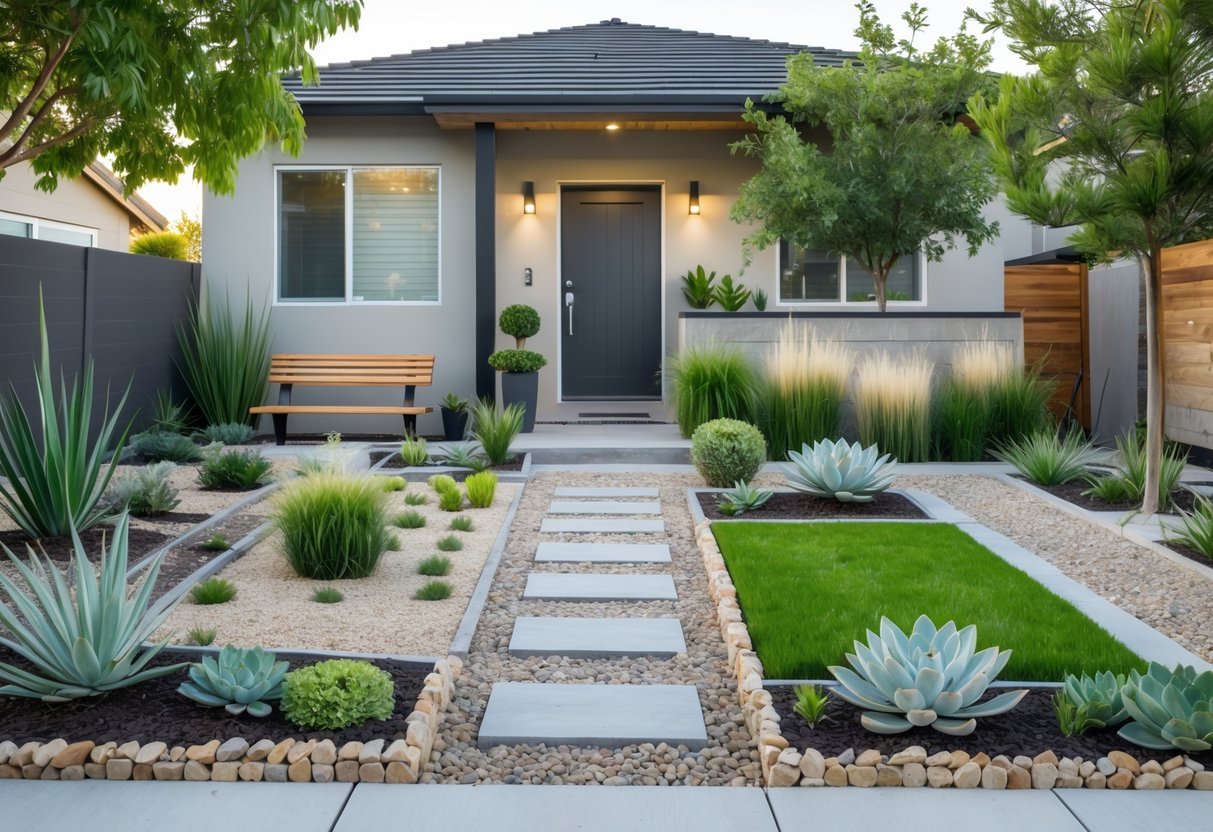
Choose plants and materials that cut watering, pruning, and mowing. Focus on hardy species, simple ground covers, and easy-care shrubs to keep your garden tidy with little effort.
Drought-Tolerant Landscaping
Pick plants that survive on natural rainfall once established. Use native grasses, succulents, lavender, rosemary, and ornamental grasses; these need minimal water and resist pests.
Group plants by water needs and place drought-tolerant species in the sunniest spots. Add 2–3 inches of mulch to reduce evaporation and suppress weeds. Consider a drip irrigation line with a timer for the first year to help establishment, then reduce watering gradually.
Place larger rocks or a narrow gravel path to cut planted area and add structure. Rocks and gravel reflect heat, so leave a small mulch ring near plant crowns to prevent overheating.
Artificial Turf and Ground Cover Options
Artificial turf saves mowing and stays green year-round. Choose UV-stable turf with good drainage and infill for stability. Install over compacted base with a weed membrane to prevent growth through the turf.
For living ground covers, use creeping thyme, sedum, or dwarf mondo grass. These cover soil quickly and need little trimming. Plant in small stepping-stone gaps or between pavers to soften hard surfaces.
Compare costs: turf has higher upfront cost but low maintenance later. Living covers cost less initially and add habitat value, but you may need to trim or replace patches over time.
Easy Care Shrubs and Perennials
Select shrubs that hold shape without heavy pruning. Boxwood, dwarf holly, and euonymus keep neat forms; choose dwarf varieties for small spaces. Plant them 3–4 feet apart to avoid constant shaping.
Pick perennials that rebloom or self-seed sparingly, like salvia, gaura, and heuchera. These provide seasonal color with a single yearly tidy-up. Use a slow-release fertilizer in spring to boost health without frequent feeding.
Prune once a year after flowering and remove dead wood only. This light routine keeps your garden neat and lets you enjoy curb appeal with minimal work.
Frequently Asked Questions
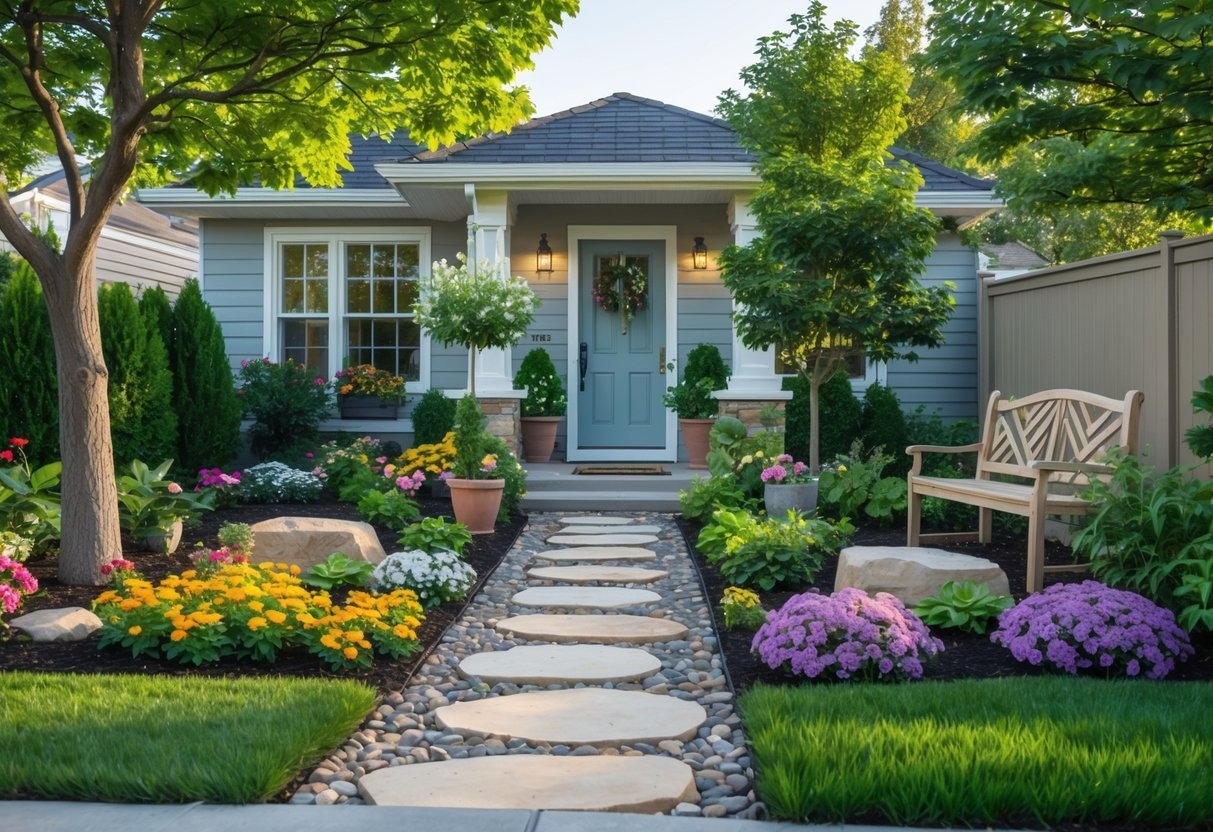
These answers give clear, practical steps you can use right away. They cover cheap materials, simple plant choices, layout rules, and grass-free options that fit small spaces.
How can I design my small front garden on a budget?
Use mulch, gravel, and large pavers instead of costly patios. These materials cut costs and reduce maintenance.
Choose container plants and small shrubs from local nurseries or plant swaps. Containers let you buy fewer plants and still get layered height and color.
Reuse items like bricks, reclaimed wood, or old pots for borders and planters. Do simple DIY projects over time to spread costs.
What are some low maintenance landscaping ideas for small front yards?
Pick drought-tolerant plants and native species that need less water and fertilizer. Group plants with similar needs to simplify care.
Use drip irrigation and a timer to water efficiently. Add 2–3 inches of mulch to retain moisture and reduce weeds.
Limit the number of plant varieties to two or three main types. Fewer species mean easier trimming, feeding, and pest control.
Which plants are best suited for compact front garden spaces?
Choose compact shrubs like boxwood, dwarf varieties of Japanese maple, and small conifers. These give structure without crowding.
Use perennials such as lavender, sedum, and catmint for long season color. Add spring bulbs like crocus or tulips for short bursts of color.
Add climbers on a trellis or wall to add height without using ground space. Clematis and climbing roses work well in small front gardens.
What design principles should be considered for very small front gardens?
Create a clear focal point, such as a single specimen plant, sculpture, or pot. One focal point makes a small area feel purposeful.
Keep paths narrow but functional and place them on a direct line to the door. Avoid winding routes that waste usable space.
Use repetition of one or two plants to create rhythm. Repeating shapes and colors makes the design feel larger and more organized.
How do you incorporate the 70/30 rule into a small front garden layout?
Allocate about 70% of the space to low plants, groundcover, or hardscape. Use the remaining 30% for taller accents like a small tree or taller shrubs.
Place the taller elements toward the back or side near the house. This keeps sightlines open and makes the area feel larger.
Use hardscape—paths, gravel, and stepping stones—in the 70% area to reduce planting needs. Then add clustered height in the 30% zone for balance.
Can you suggest any creative front garden ideas without grass?
Create a gravel or decomposed granite courtyard with potted trees and succulents. It looks neat and needs almost no watering.
Install a flagstone path with low groundcover like thyme between stones. Add a bench or a focal pot to make the space welcoming.
Use raised beds, wooden planters, or a vertical garden on a wall or fence. These add green without a lawn and make maintenance easier.