Small Cottage Garden Ideas for Charming Low-Maintenance Yards
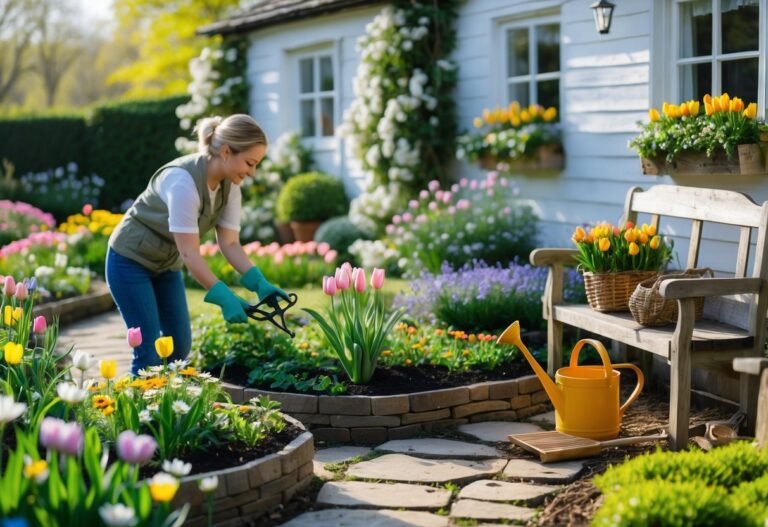
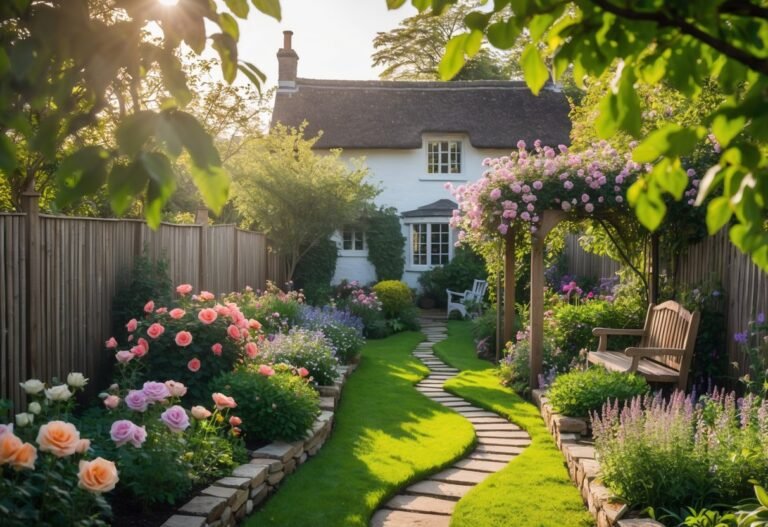
You can make a tiny yard feel like a cozy cottage with a few smart moves. Use narrow paths, layered plants, and small-scale blooms to add color and texture without crowding the space. Pick compact plants, add one or two cottage-style features like a trellis or a small bench, and focus on repeated colors and textures to create charm in a small area.
You don’t need acres to get that informal, lush look. Choose plants that suit your sun and soil, tuck herbs and flowers into edges and containers, and use vertical space to keep the ground open. Little details — a worn pot, a climbing clematis, or a pebble path — turn small plots into inviting spots you’ll want to use.
Key Takeaways
- Use compact layouts and repeat colors to make small spaces feel cohesive.
- Add vertical elements and containers to maximize planting room.
- Include one or two cottage-style features for instant charm.
Design Principles for Small Cottage Gardens
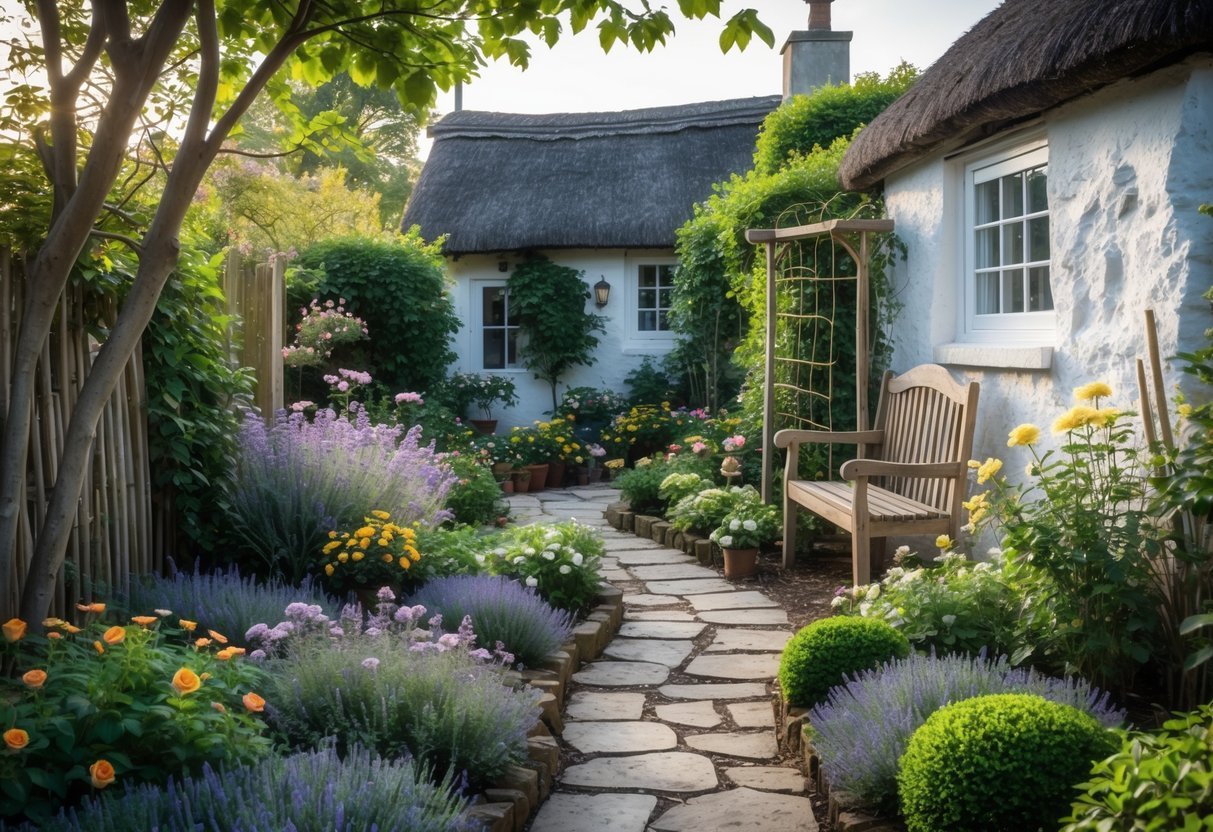
Plan around three core ideas: use every inch wisely, choose colors and plants that work well together, and guide movement with simple paths and entry points. Apply these principles to shape a cozy, lush space that feels larger than it is.
Maximizing Space and Layout
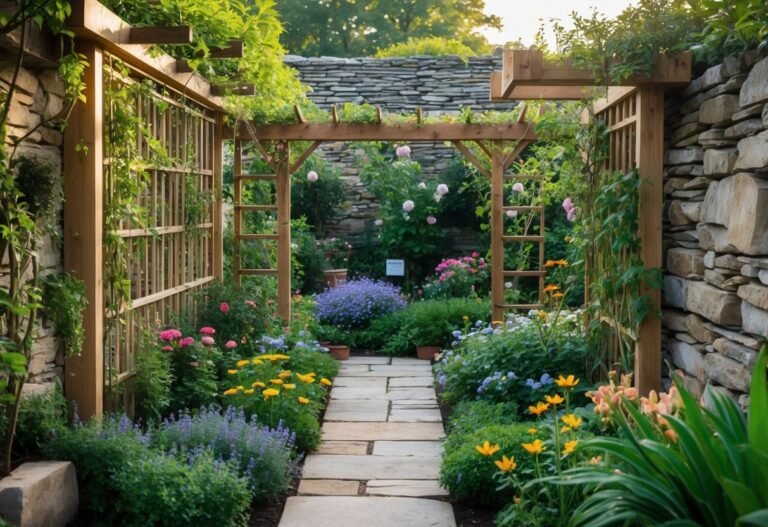
Use vertical space first. Add trellises, obelisks, and wall planters for clematis, climbing roses, and trailing annuals to free up ground area. Train vines up fences and arches to create height without crowding beds.
Divide your garden into small, functional zones—seating, a herb patch, and a flower bed. Make each zone about 3–6 feet wide so you can reach plants easily. Use raised beds or half-barrels to define areas and improve soil drainage.
Reuse narrow strips and corners for narrow herb rows, dwarf shrubs, or container groupings. Choose multi-use features like a bench with built-in planters to save room. Keep main walk areas at least 2 feet wide for comfortable movement.
Color Schemes and Plant Pairings
Pick a limited palette of three to four colors to avoid visual clutter. Soft pastels—pinks, lavender, cream—with a few bright accents like deep purple or coral work well in small cottage gardens. Repeat those colors across beds to tie the space together.
Pair plants by bloom time and texture. Combine early bulbs (tulips, daffodils) with longer-blooming perennials (salvia, geraniums) and late-season asters to ensure continuous color. Mix fine-textured foliage (lavender, thyme) with bold leaves (hosta, bergenia) for contrast.
Group plants in odd-numbered clusters (3–7) to look natural. Use low edging plants such as sweet alyssum or dwarf thyme to frame beds. Keep invasive spreaders under control; select clumping varieties to avoid overtaking neighbors.
Creating a Flow with Pathways
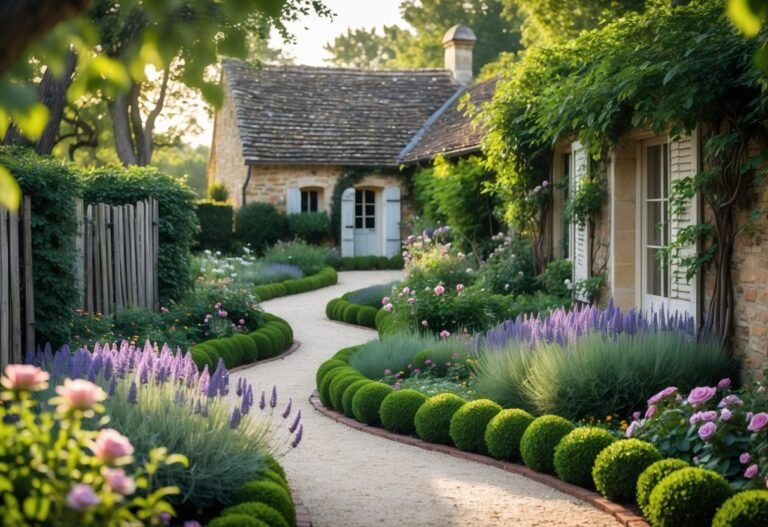
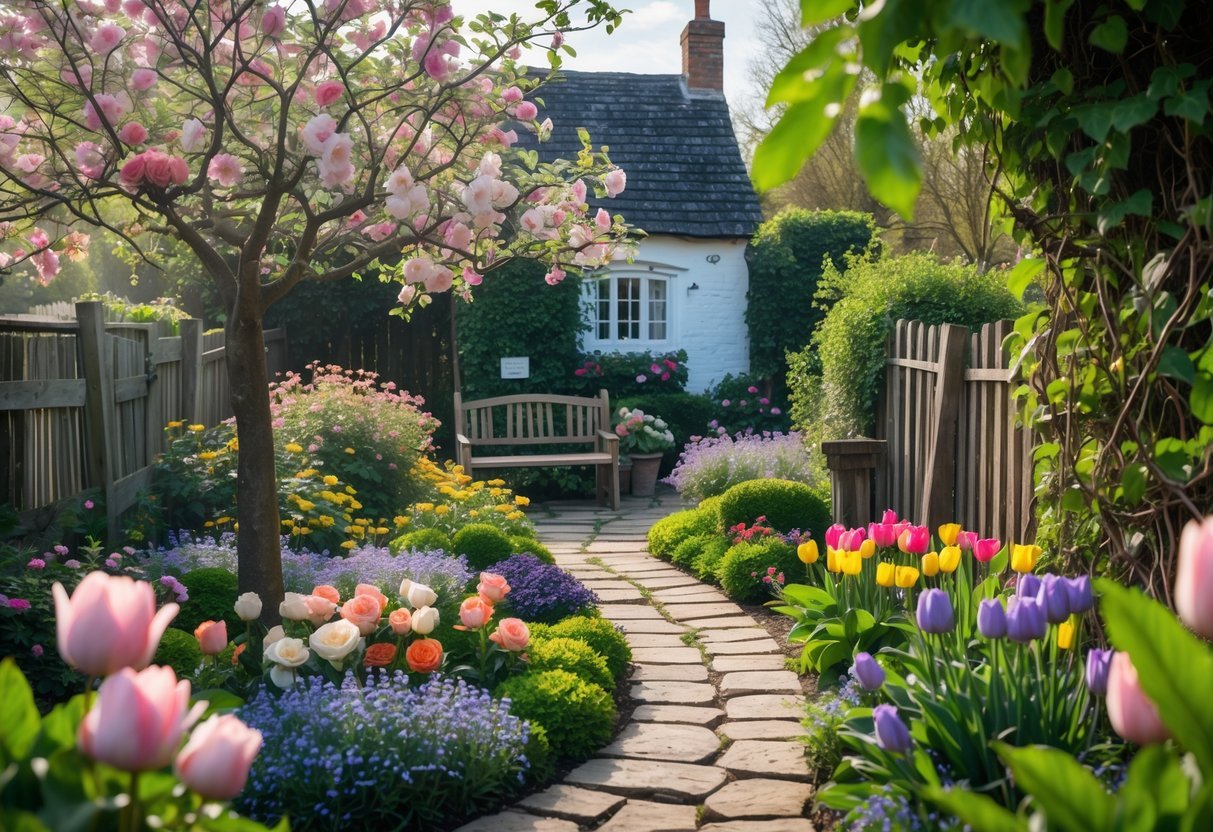
Design paths that draw people in. Curved paths feel more inviting than straight lines, but keep turns gentle to save space. A main path 2–3 feet wide works on most small plots; side paths can be narrower.
Use materials that match the cottage look: reclaimed brick, pea gravel, or simple stepping stones. Lay stones with small gaps for groundcover like thyme or chamomile to soften edges and add scent underfoot.
Place focal points at path ends or intersections—a small arbor, a statue, or a pot of roses. This gives the eye a destination and makes compact areas feel purposeful. Ensure paths connect seating, water source, and planting zones for easy access.
Charming Plant Choices for Limited Spaces
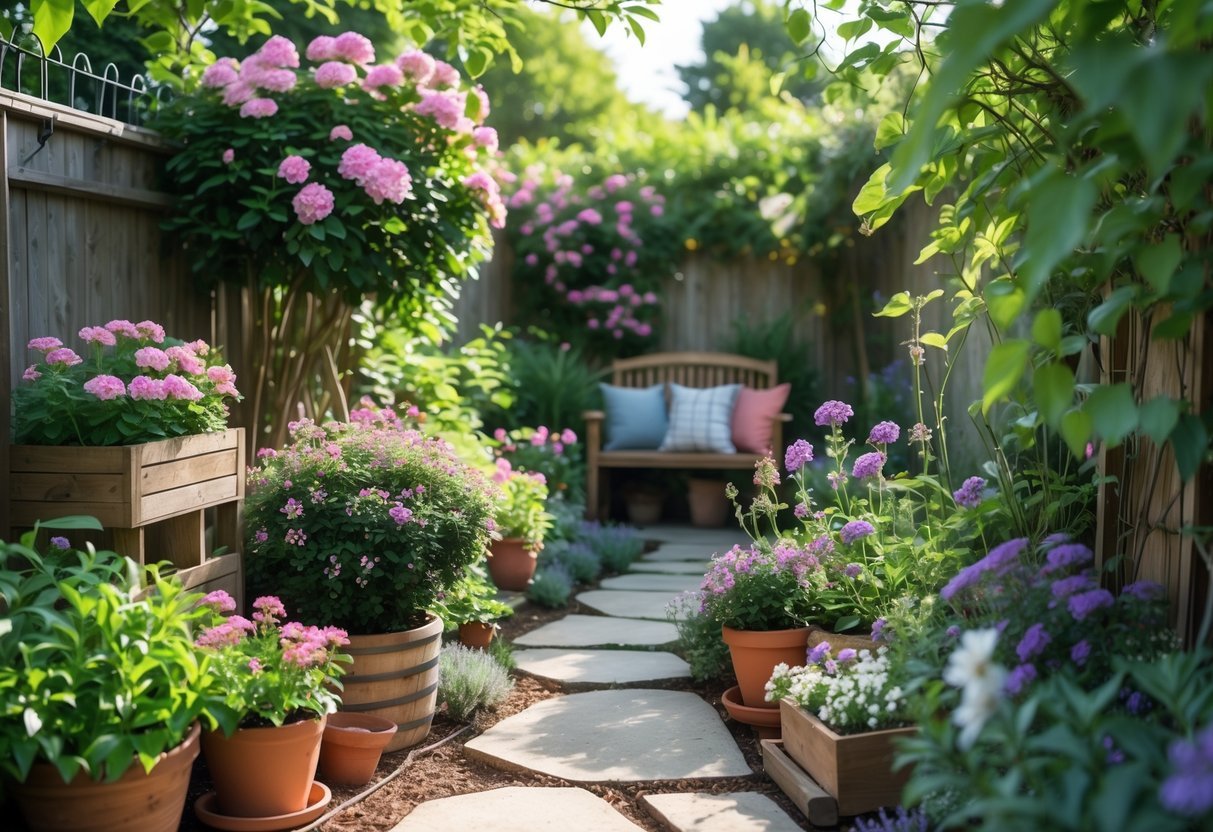
Pick plants that stay small, climb up, or bloom at different times. Focus on variety: low-growing perennials, a few flowering climbers, and seasonal picks that keep color through the year.
Compact Perennials and Annuals
Choose perennials that form tidy clumps so they don’t spread into every bed. Good options: dwarf lavender, campanula, heuchera (for foliage), and dwarf salvia. These give lasting structure and return each year with minimal pruning.
Add a few annuals for instant color and gap-filling. Try nasturtiums, cosmos, and pansies in containers or narrow borders. Plant annuals in 6–8 inch pots or at 12–18 inch spacing to keep paths clear.
Use a simple table for spacing and sun needs:
- Lavender: full sun, 12–18 in spacing
- Heuchera: partial shade, 12 in spacing
- Dwarf salvia: full sun, 12–18 in spacing
- Pansy: partial sun, 6–8 in pot
Rotate annuals each season and deadhead perennials to encourage more blooms without letting plants sprawl.
Climbing Plants and Vertical Gardening
Use vertical space to add blooms without crowding ground beds. Train climbers on a trellis, fence, or obelisk. Choose varieties suited to small gardens: clematis (small-flowered types), climbing roses on a narrow support, and sweet peas for fragrant seasonal color.
Mix lightweight containers and wall-mounted planters to lift plants. Use a 6–8 foot trellis for clematis and a 4–6 foot obelisk for climbing roses in pots. Tie main stems loosely and prune yearly to keep the size controlled.
Add fast-growing annual climbers for quick cover. Morning glories and scarlet runner beans fill vertical frames in one season and can be removed if you need the space back.
Seasonal Blooms for Year-Round Interest
Plan for succession so something blooms in every season. Early spring bulbs like crocus and dwarf tulips give quick color before deciduous perennials leaf out. Plant bulbs in clumps of 10–20 for visible impact in small beds.
Summer needs mid-height perennials such as coreopsis and penstemon combined with summer annuals like zinnias. Put taller summer plants at the back or in a corner so they don’t shade shorter neighbors.
For fall and winter interest, use sedums, asters, and evergreen herbs like rosemary. Place winter-flowering hellebores in sheltered spots for late-season blooms. Stagger planting times and deadheading to keep color and texture moving through the year.
Cottage-Style Features and Accessories
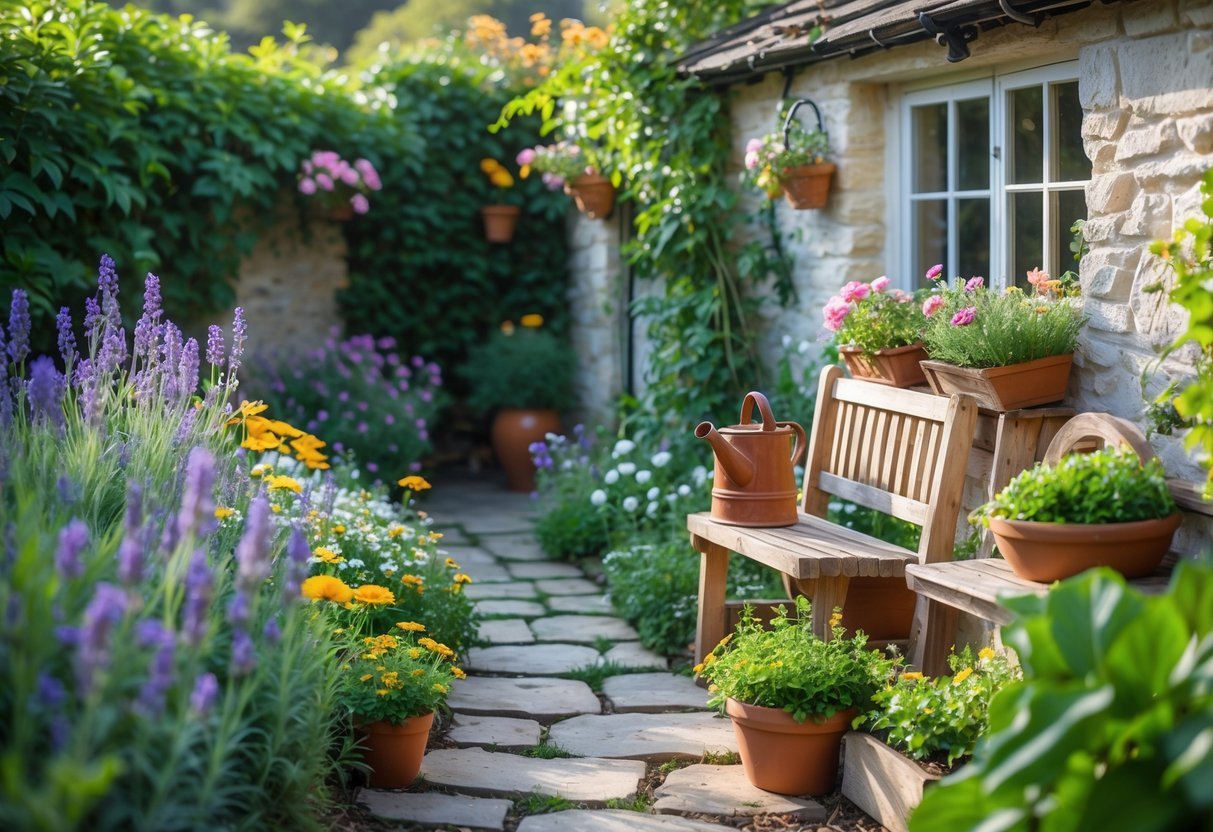
You can use simple, well-chosen features to make a small cottage garden feel cozy and lived-in. Focus on edging, seating, and containers that match the scale and style of your space.
Garden Borders and Edging
Define paths and beds with low, tactile borders that suit a cottage look. Try reclaimed brick, small cobbles, or scalloped metal edging to keep soil and mulch tidy while giving a soft, old-fashioned line between lawn and planting. Plant low hedges like dwarf boxwood or lavender directly behind the edging to blend structure with scent and color.
Use edging to create narrow, meandering paths no wider than 2–3 feet. That width fits small spaces and still allows two people to pass. For a relaxed feel, let self-seeding plants—poppies, cosmos, or forget-me-nots—spill over the edge.
Install edging on a slight slope or raised bed to improve drainage and reduce soil wash. Anchor materials firmly so they resist frost heave and mowing. Regularly trim, tuck, and renew mulch to keep borders crisp without losing that cottage softness.
Seating Areas and Focal Points
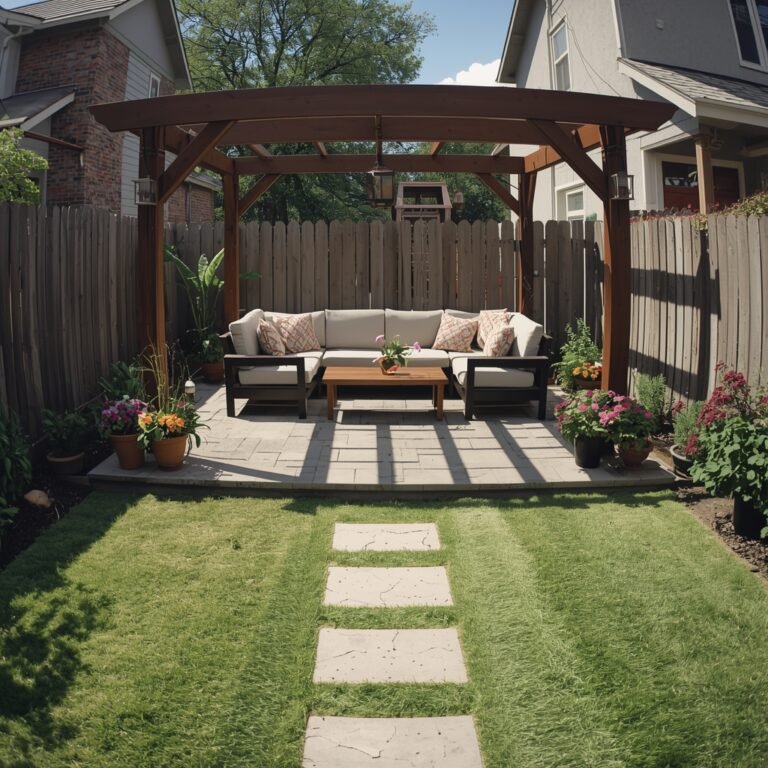
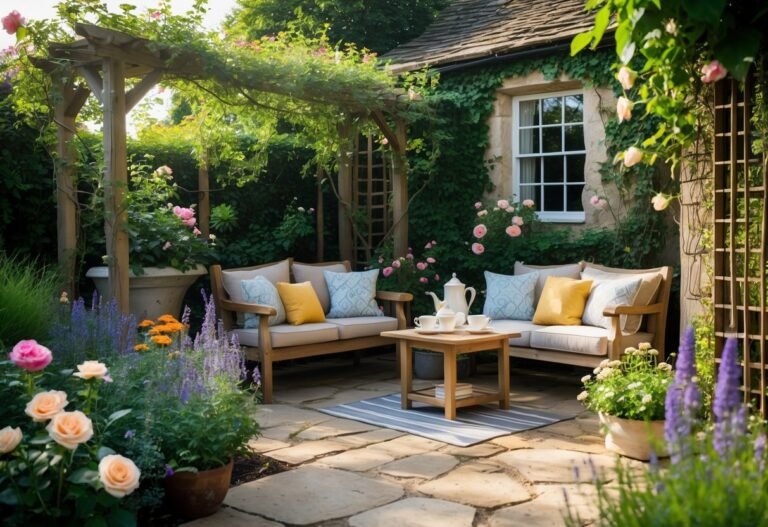
Place one main seating spot no more than a few steps from the house or gate. A small bench, two chairs, or a pair of folding bistro seats work well. Choose materials that age nicely, like weathered wood or wrought iron, and add a waterproof cushion for comfort.
Position seating near a focal point: a trellis with climbing roses, a small birdbath, or a sculptural urn. Make the focal point visible from the house and the path so the space feels intentional and inviting. Keep the circulation area around seating at least 3 feet so you can move comfortably.
Add layered lighting for evening use: a single solar lantern, string lights over the seating, or a low-wattage path light. These small touches extend use into dusk without overpowering the garden’s gentle mood.
Decorative Containers and Window Boxes
Choose containers in mixed materials: terra cotta, glazed ceramic, and weathered wood look right together. Match container size to plant size—use deep pots for perennials and shallow troughs for herbs and annuals. Group three containers of varying heights for a stronger visual impact.
Use window boxes under kitchen or bedroom windows to bring scent and color up close. Plant a mix of trailing ivy or lobelia at the front, mid-height geraniums or calibrachoa in the middle, and a single upright rosemary or dwarf holly at the back for structure.
Keep containers well-drained with a layer of grit or broken clay at the base and use quality potting mix. Water more often than beds, and feed monthly during the growing season to maintain continuous blooms and healthy foliage.
Frequently Asked Questions
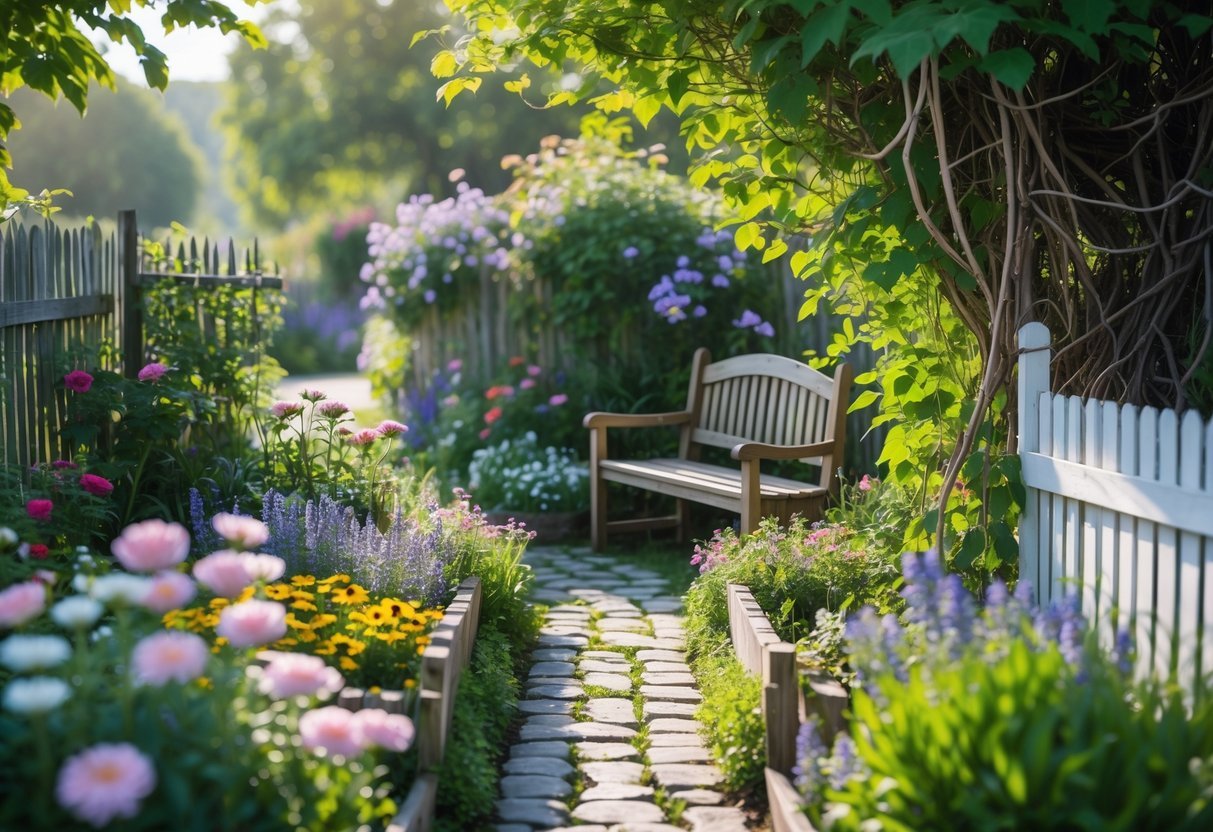
These answers give clear, practical steps you can use right away. They cover plant choices, layout tips, space-saving tricks, budget ideas, and where to look for design examples.
How can I design a low-maintenance small cottage garden?
Choose mostly perennial plants like lavender, catmint, and salvia so you don’t replant every year. Group plants with similar water and light needs to simplify watering and care.
Use mulch and a drip irrigation line to cut weeds and save time. Limit high-maintenance features such as lots of annuals or intricate hedges.
What are the best space-saving techniques for creating a small cottage garden?
Use vertical space with trellises, obelisks, or wall-mounted planters for clematis, sweet peas, or climbing roses. Plant in layers: low groundcover, mid-height perennials, and taller blooms at the back or center.
Choose narrow or stacked containers for patios and place narrow paths or stepping stones instead of wide walkways. Repeat a few plant types to create a fuller look without overcrowding.
Which plants should I select for an authentic cottage garden?
Pick classic cottage plants like roses, foxgloves, hollyhocks, lavender, delphiniums, and daisies. Add herbs such as thyme, sage, and chives for scent and utility.
Include a mix of heights and bloom times to keep color through the season. Use hardy perennials as the backbone and add a few annuals for bright spots.
How can I achieve a cottage garden look on a budget?
Start with small plants or cuttings instead of full-size specimens. Divide existing perennials or swap plants with friends and local gardening groups.
Use reclaimed materials for paths, borders, and trellises. Choose easy-care perennials over expensive, high-maintenance varieties to cut long-term costs.
What are the essential elements of a cottage garden border layout?
Create a layered border: low edging plants (like thyme or lobelia), medium perennials (like geraniums or phlox), then taller spires (like delphinium or foxglove) at the back. Stagger heights and repeat plant groups for a natural flow.
Add a narrow path or stepping stones to break the border and give access for maintenance. Mix foliage textures and bloom shapes to keep the border visually interesting.
Where can I find inspiration for my small cottage garden?
Look at local public gardens, community nurseries, and garden club displays to see what thrives in your climate. Browse seed catalogs and garden books that focus on cottage or cottage-style planting.
Search online for photos and planting plans, but focus on examples from climates similar to yours for realistic plant choices.