Small Balcony Garden Design: Smart Space-Saving Ideas for Urban Homes
You can turn a cramped balcony into a productive, beautiful garden by choosing space-saving containers, prioritizing light‑loving plants, and arranging vertical and hanging elements to maximize every inch. With the right layout and plant choices, your small balcony can deliver fresh herbs, seasonal flowers, and a restful outdoor nook without overwhelming maintenance.
Start by assessing sunlight, weight limits, and how you want to use the space—dining, growing edibles, or creating a lush retreat—then pick compact varieties, multi-use containers, and modular furniture that doubles as planting space. Small changes like a railing planter, a slim raised bed, or a trellis for climbers create big visual and functional impact while keeping upkeep manageable.
Key Takeaways
- Assess light and load capacity to shape your design approach.
- Favor compact, multi-purpose plants and containers for maximum yield.
- Use vertical solutions and modular elements to expand usable space.
Planning Your Small Balcony Garden
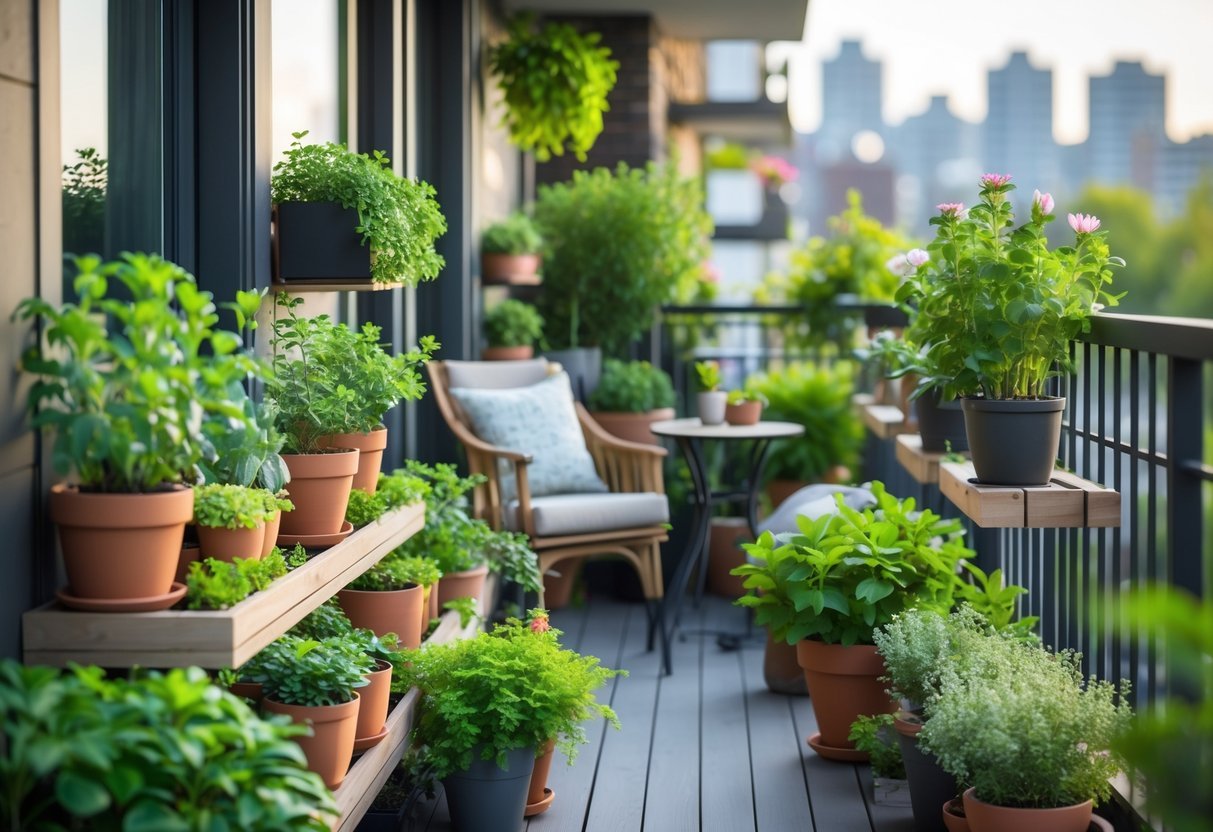
Decide what you want to grow, measure available floor and railing space, and note how sunlight moves across the balcony through the day. Plan for weight limits, watering access, and how much time you can commit to maintenance.
Assessing Space and Sunlight
Measure the balcony floor area in square feet and the depth from the railing to the wall. Note obstructions like AC units or storage that reduce usable space.
Track sunlight for three days: record hours of direct sun, strong afternoon sun, and full shade. Use simple notes such as “east-facing: 4 hours morning sun, shaded after 11am” to match plants to conditions.
Check weight limits—calculate approximate pot weight when saturated (e.g., 10–15 lb per gallon of pot volume). Prefer lightweight containers and vertical systems if your balcony load-bearing capacity is uncertain.
Finally, verify water access and drainage rules from your building. Plan placement so drip runoff doesn’t bother neighbors and you can reach containers for watering and harvest.
Setting a Garden Style
Choose one clear purpose to guide plant and furniture choices: edible (herbs/vegetables), pollinator-friendly, or decorative foliage. Limiting focus prevents clutter and simplifies maintenance.
Pick a visual motif—modern minimal, cottage, or Mediterranean—and select a color palette of 2–3 plant and accessory colors. This makes small spaces feel cohesive rather than chaotic.
Decide on furniture scale: foldable pieces for flexible space, or built-in benches with hidden planters for integrated planting. Prioritize multifunctional elements such as a bench that doubles as a storage box for soil and tools.
Set a maintenance plan that matches your schedule. If you travel often, choose lower-maintenance plants and an automated drip or self-watering system.
Choosing Containers and Layout
Match container size to plant root needs: small herbs need 6–8 inch pots; tomatoes and peppers require 12–18 inch or larger. Use saucers or trays to protect the floor and comply with building rules.
Opt for lightweight materials—fiberglass, resin, or fabric grow bags—to reduce load. Ensure containers have drainage holes; add saucers or a drip-catch system if runoff is an issue.
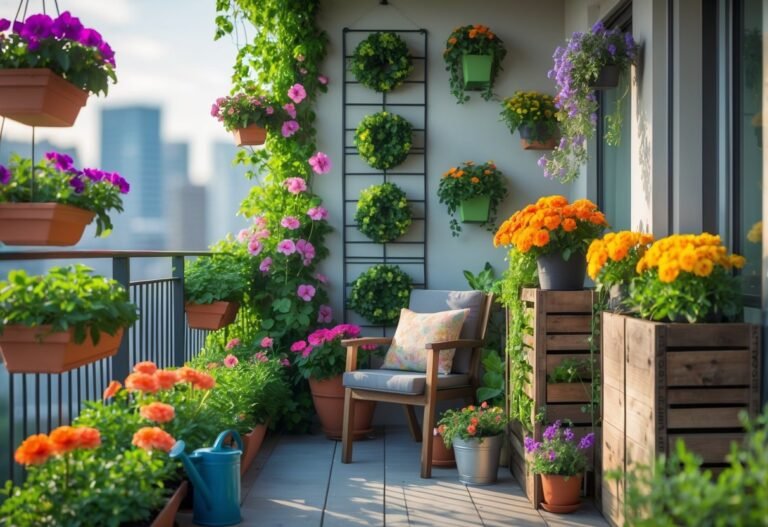
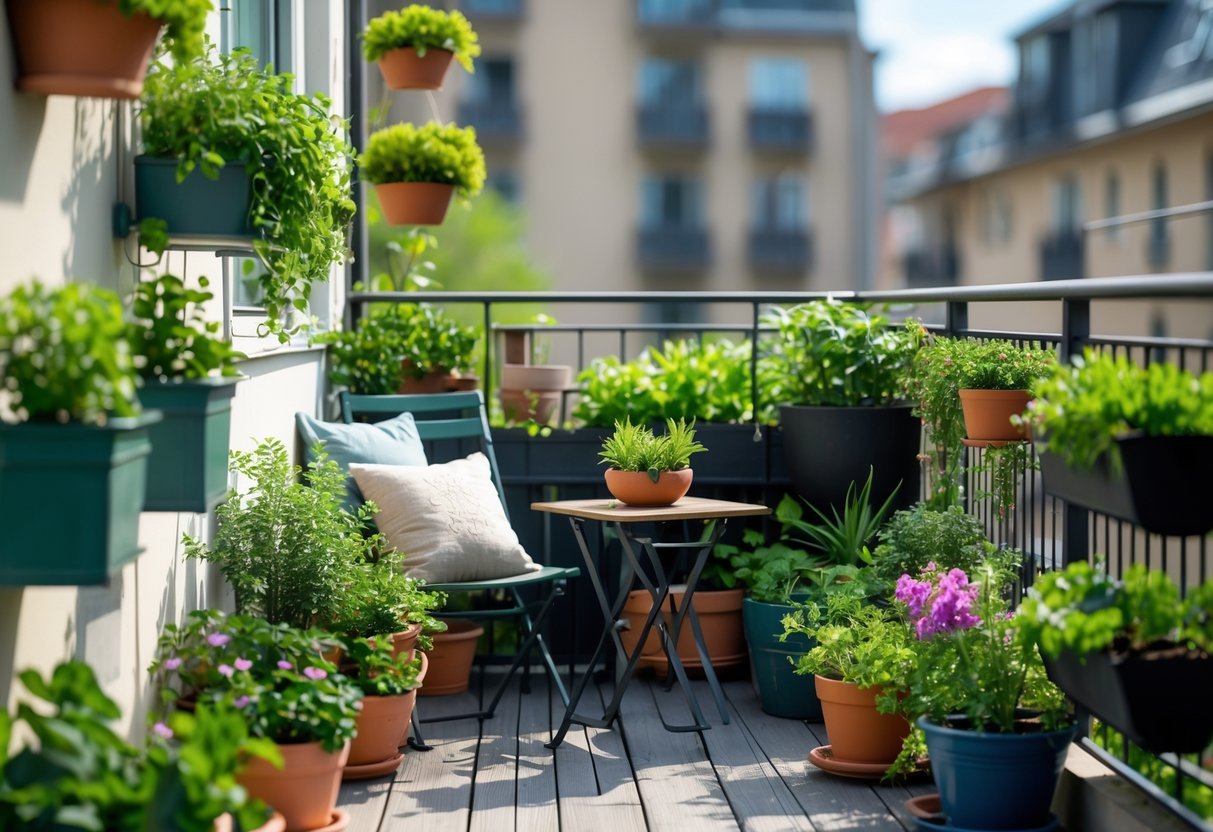
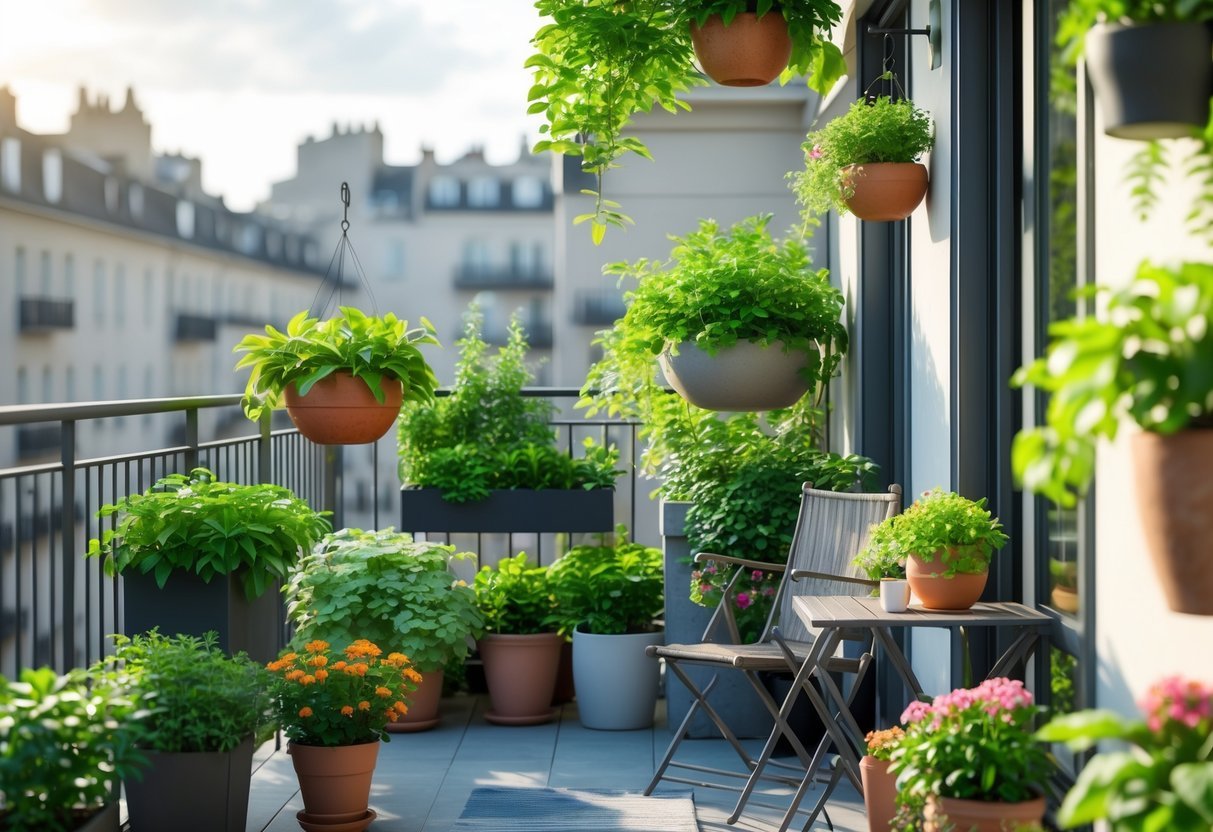
Plan a layered layout: rail planters for light, vertical trellises at the back, medium pots on the floor, and hanging baskets for trailing plants. Use a simple diagram or list to position sun-loving plants on the sunniest edge and shade-tolerant ones nearer the wall.
Consider mobility: place commonly-tended pots on casters or use plant caddies so you can rearrange for sun, cleaning, or seasonal change.
Selecting Plants for Limited Spaces
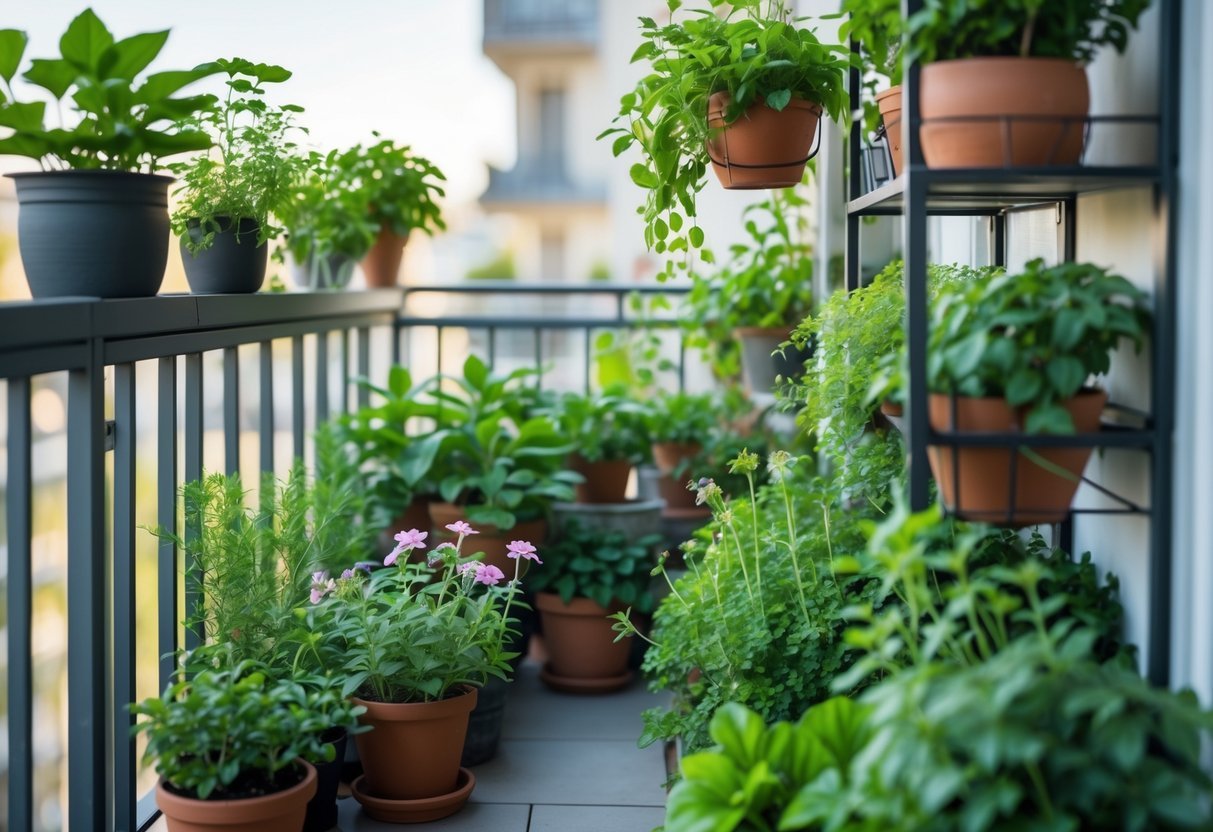
Choose plants that match your balcony’s light, wind exposure, and container size. Focus on compact varieties, vertical growers, and multi-use plants that deliver food, flowers, or fragrance without crowding your space.
Best Edible Plants for Small Balconies
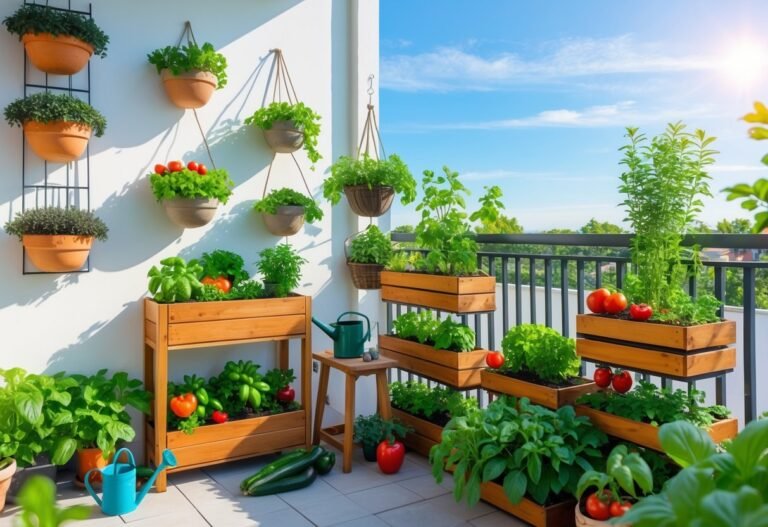
Select edibles that produce well in containers and mature at modest sizes. Tomatoes: pick determinate or patio varieties like ‘Tiny Tim’ or ‘Patio Princess’ and use 5–10 gallon pots with deep soil. Herbs: grow basil, parsley, chives, and mint in 6–8 inch pots; keep mint contained to avoid spreading. Leafy greens: arugula, lettuce, and spinach perform in shallow troughs and yield quickly for frequent harvests. Peppers: compact hot and sweet varieties need 3–7 gallon containers and full sun. Strawberries: choose alpine or everbearing types in hanging planters to save floor space. Match pot size to root depth and rotate crops to maintain productivity.
Top Ornamental Choices
Choose ornamentals for vertical interest and seasonal color without large root zones. Geraniums and petunias thrive in railing boxes and bloom prolifically in 6–10 inch planters. Compact grasses such as Pennisetum or Festuca add texture and tolerate some wind. Climbing plants: clematis, morning glory, and compact sweet peas use trellises and free up floor area. Succulent mixes and sempervivums suit shallow dishes and bright, sheltered corners. For fragrance, try dwarf lavender or scented pelargoniums in sun-exposed containers. Group plants by water needs to simplify care and keep color focal points near seating.
Low-Maintenance Plant Recommendations
Pick plants that tolerate irregular watering and urban wind to reduce maintenance. Succulents (sedum, echeveria) need gritty mix and bright light; water sparingly. Hardy herbs like rosemary and thyme handle drought and give culinary use. Native perennial grasses and sedges often resist pests and require only seasonal trimming. Annuals such as nasturtium and zinnias offer reliable blooms with minimal feeding in good light. Use self-watering containers or capillary mats to stabilize moisture for mixed balconies. Mulch containers and choose slow-release fertilizer to cut your care time.
Essential Design Tips for Small Balcony Gardens
Focus on practical layouts, smart plant choices, and coordinated finishes to make the most of limited space. Prioritize vertical solutions, multi-use furniture, and a concise color/texture scheme for a tidy, inviting balcony.
Vertical Gardening Solutions
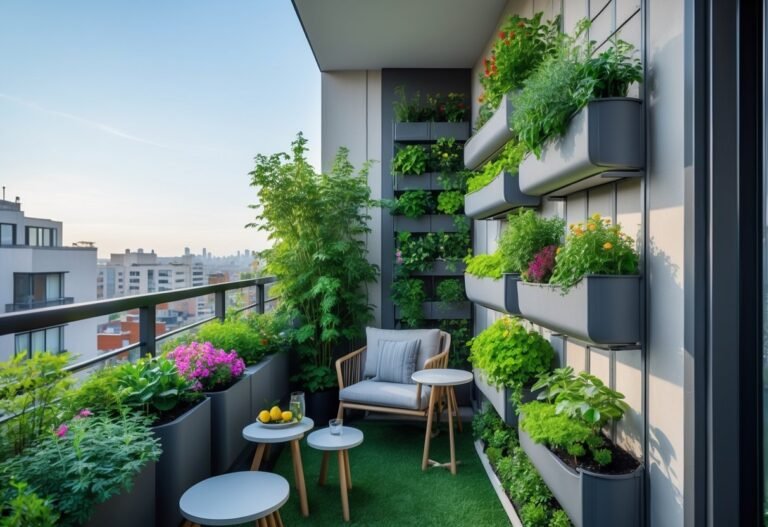
Use vertical planters to free floor space and increase planting area. Install a sturdy wall-mounted trellis or stainless-steel cable system for climbers like jasmine or clematis.
Try modular pocket planters or stacked planter boxes for herbs and salad greens; they allow easy rotation and staggered watering.
For renters, use leaning ladder shelves or freestanding vertical racks that weigh plants on each tier rather than drilling into walls.
Include a lightweight irrigation option, such as a drip tape or a self-watering reservoir in each pot, to keep upper tiers hydrated without constant top-down watering.
Anchor taller structures to the balcony rail or floor with straps or brackets to resist wind.
Maximizing Every Inch
Measure your balcony and map a scaled layout before buying containers or furniture. Mark walking clearance (at least 60–75 cm) and leave a 30–40 cm service zone for watering and plant access.
Choose narrow or long troughs along the railing and hang rail planters to keep the floor clear. Use foldable furniture and storage benches with integrated planter boxes for dual function.
Select lightweight containers (fiberglass, resin, or thin metal) to avoid overloading the balcony; calculate total soil weight when wet.
Group plants by watering needs and light exposure to simplify care. Place heavier, less-moved items at the back or near the building wall for stability.
Creative Use of Color and Texture
Pick a limited palette of two to three dominant colors to create cohesion—examples: lavender + soft yellow, or white + deep green. Repeat those colors across pots, cushions, and blooms for visual continuity.
Mix leaf textures: broad-leaf plants (hosta relatives or colocasia alternatives in containers) with fine-textured grasses or ferns to add depth.
Use pot finishes strategically: matte dark pots recede visually while glazed or metallic pots become focal points.
Add one or two accent materials—woven rattan cushions, weatherproof wood slats, or a metal planter—to tie the scheme together without cluttering the space.
Maintenance and Care Strategies
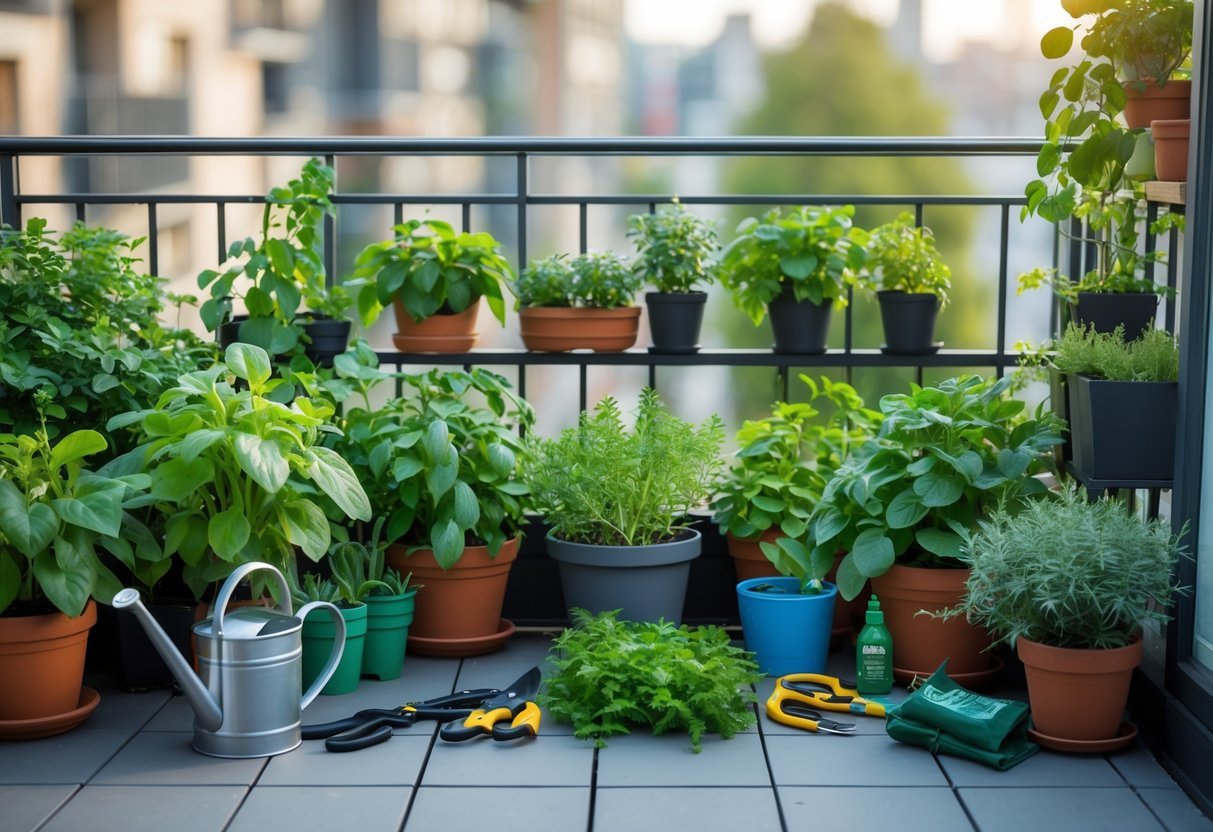
Focus on consistent moisture control, good drainage, and a seasonal checklist that keeps plants healthy and containers intact. Prioritize routine inspections and simple adjustments so problems stay small and manageable.
Watering and Drainage Solutions
Water containers at soil level to reduce evaporation and fungal risk. Use a watering wand or drip line targeted to the root zone rather than overhead sprays.
Choose containers with clear drainage holes; if using decorative pots without holes, place plants in inner liners or add a layer of coarse gravel under the soil. Elevate pots on pot feet or lightweight risers to keep holes clear and improve airflow beneath containers.
Match pot size and soil mix to the plant’s water needs. Use a free-draining potting mix (peat-free mixes with perlite or grit) for most edibles and ornamentals. Mulch with 1–2 cm of bark or coconut coir to slow surface evaporation.
Consider simple irrigation: a small battery/timer drip system for frequent watering, or self-watering pots for herbs and thirsty vegetables. Check moisture with a finger or a probe; water when the top 2–3 cm of the mix feels dry for most container plants.
Seasonal Upkeep for Balcony Gardens
Spring: refresh potting mix and divide crowded perennials. Inspect supports, replace spent soil, and transplant seedlings into larger pots as needed.
Summer: monitor for heat stress and increase watering frequency. Move heat-sensitive plants to afternoon shade, and pinch back fast-growing herbs to encourage bushier growth.
Autumn: prune back tender plants, clean debris from trays to reduce pests, and reduce watering as growth slows. Start hardening off any overwintered tender specimens before bringing them indoors.
Winter: protect roots with insulation (bubble wrap or frost blankets around pots) and cluster containers against a sheltered wall. Reduce watering to prevent soggy roots and bring frost-tender plants inside or to an unheated porch.
Frequently Asked Questions
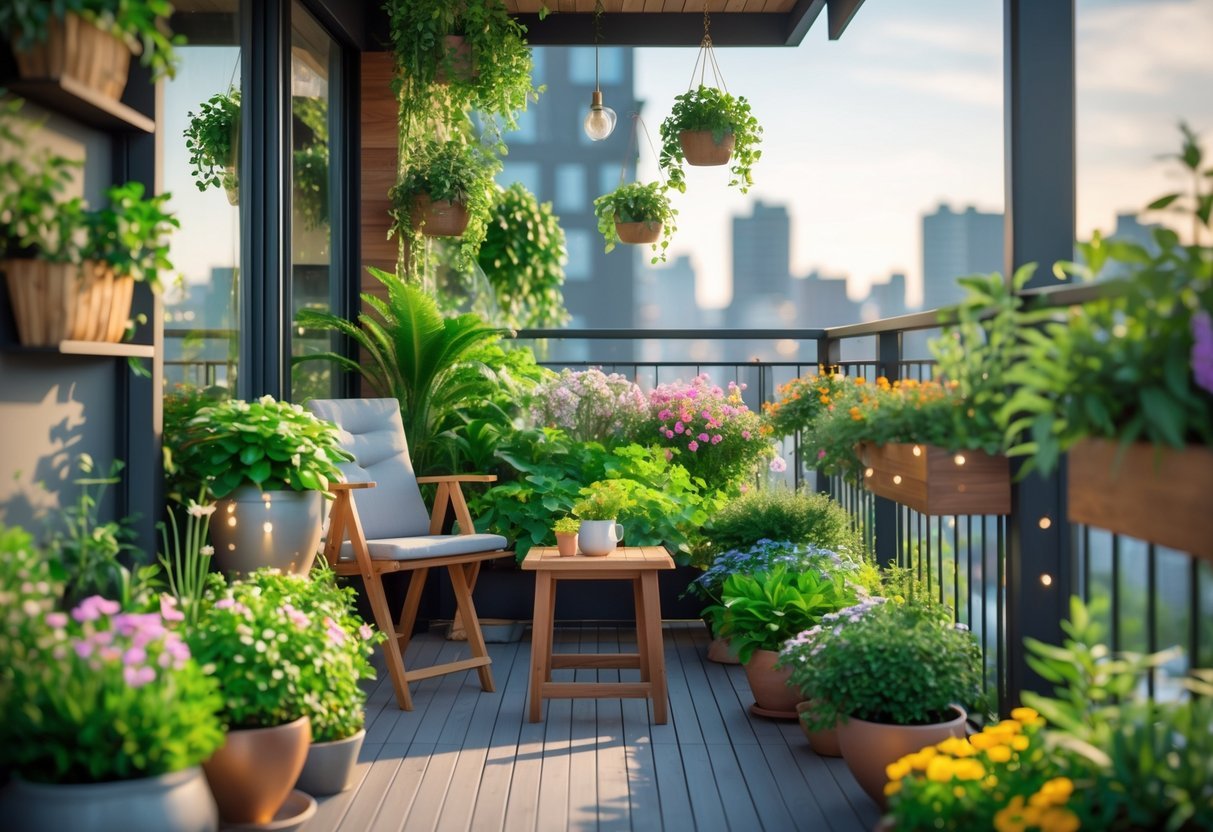
This section gives practical, specific answers about plant choices, layout tricks, budget DIYs, and where to start. Expect clear steps for small pots, vertical systems, low-maintenance species, and inexpensive materials you can buy or repurpose.
How can I create a beautiful balcony garden in a small space on a low budget?
Prioritize plants with multiple uses — herbs like basil and chives, salad greens, and a dwarf tomato or pepper — so each pot delivers flavor and visual interest. Use inexpensive plastic pots, recycled containers, and bulk potting mix rather than specialty soils to cut costs.
Maximize impact with a simple focal point: a vertical trellis, a row of matching planters, or a hanging basket cluster. Paint or stain one or two containers the same color for cohesion without spending much.
What are the best low maintenance plants for a small balcony garden?
Choose drought-tolerant, pest-resistant varieties that fit your light: succulents and sedums for full sun, snake plant and pothos for low light. Mediterranean herbs (rosemary, thyme, oregano) handle heat and dry spells well.
For quick harvests, grow lettuces and radishes in shallow trays; they need little space and mature fast. Use self-watering containers or thick-mulch the surface to reduce watering frequency.
What design strategies can maximize the space in a tiny balcony for gardening?
Use vertical space: wall-mounted planters, tiered shelving, and hanging baskets free floor space. Position rails and corners for narrow troughs to keep walking area clear.
Choose narrow, tall containers instead of wide ones when depth allows, and combine plants with different heights and textures to create visual depth. Keep paths and seating minimal to maintain functionality.
How can one start a balcony garden in an apartment setting?
Measure available floor area, railing height, and sunlight windows at different times of day before buying plants. Sketch a simple plan: allocate zones for sun-loving and shade-tolerant plants, and mark where containers will go.
Start small with three to five containers, grow a few staples (an herb, a leafy green, a flowering annual), then expand once you learn microclimate and watering needs. Check building rules about hanging items or heavy loads first.
What are some affordable DIY ideas for a small balcony garden?
Turn wooden pallets into vertical planters or a small herb rack. Repurpose tea tins, buckets, or old drawers as attractive containers after sealing and drilling drainage holes.
Make inexpensive irrigation by placing a simple drip from a reused plastic bottle or using capillary-wick systems from a piece of cotton rope. Create trellises from bamboo stakes and twine for climbing beans or peas.
How can I use IKEA products to enhance my small balcony garden’s design?
Use IKEA shelving units (e.g., BROR or HYLLE alternatives) as modular plant stands to stack pots and create tiers. Hang lightweight KLOCKREN or SOCKER-style planters on railings and walls to add greenery without occupying floor space.
Turn small IKEA tables and stools into pot stands or potting surfaces; use inexpensive trays (LÄTTA) for grouped watering and to protect flooring. Secure items to comply with safety and wind conditions.