Rock Garden Border Design Ideas: Creative Layouts, Plants, and Hardscape Tips
Want a simple way to define garden beds and add year-round texture? Rock garden borders give you clean edges, low maintenance, and instant style whether you aim for neat pathways, rustic edges, or layered stone walls.
Pick stones that match your yard’s color and scale, tuck low plants like sedums or thyme between rocks, and use stacked or river‑rock styles to fit slopes and flat areas. A well-planned rock border anchors your design, reduces weed work, and highlights your plants without heavy upkeep.
You’ll find ideas for formal, natural, and tiered borders, quick plant pairings, and easy care tips to keep your edges looking sharp season after season.
Key Takeaways
- Choose stone size and color that match your landscape.
- Combine low-growing plants with stones for a natural look.
- Use simple maintenance to keep borders tidy and lasting.
Essential Elements of Rock Garden Borders
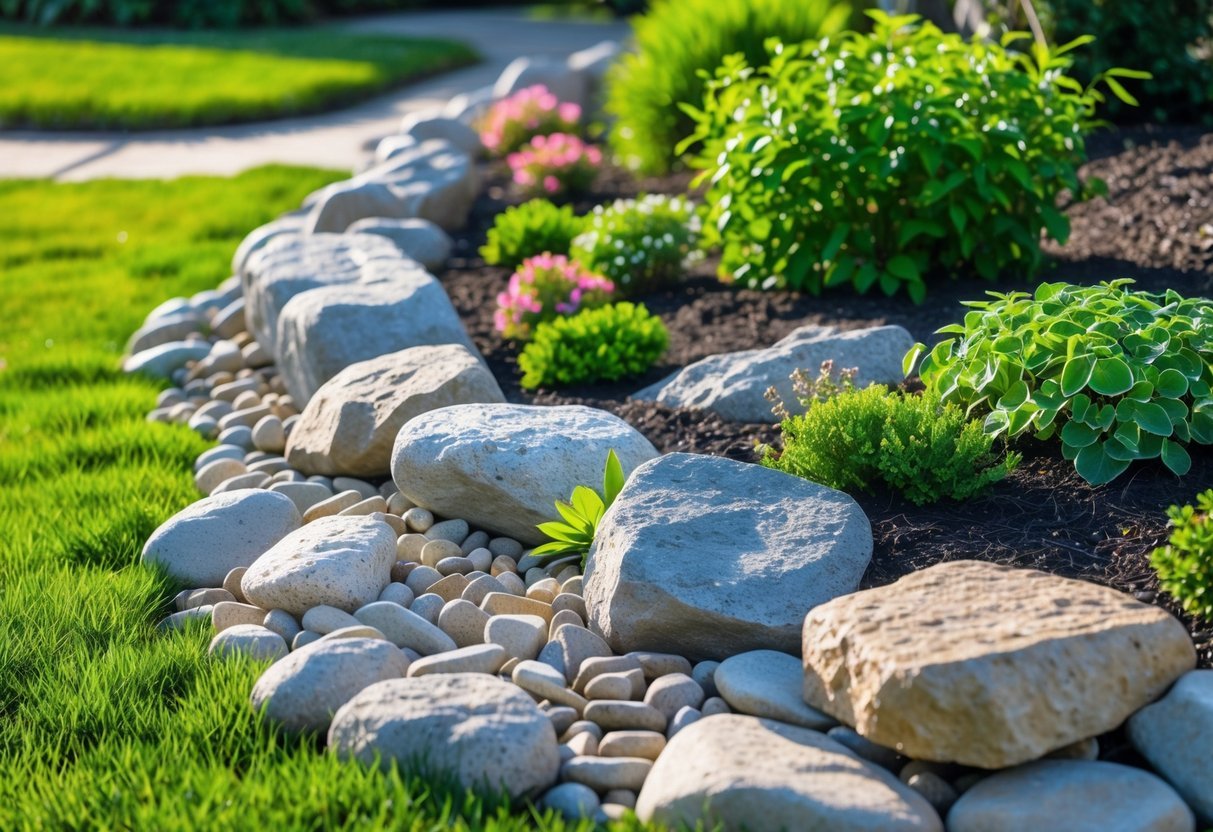
You need sturdy rocks, good soil, proper drainage, and smart placement to make a lasting border. Each part affects plant health, erosion control, and the final look.
Choosing the Right Rocks
Pick rocks that match your garden’s scale and style. Use larger boulders (12–24 inches) to anchor corners or slopes, and smaller river stones (1–4 inches) to define straight edges. Match rock color and texture to nearby features—gritstone for rustic beds, smooth basalt for modern layouts.
Check hardness and porosity. Hard, low-porosity stones like granite last longer and resist frost. Avoid soft sandstone that crumbles. For edging stability, choose flat-faced rocks for dry stacking or stones with consistent thickness for mortared edges.
Think about weight and handling. Large rocks need help to move; plan for equipment or extra hands. Place focal rocks first, then fill gaps with medium and small stones for a natural look.
Soil Preparation Techniques
Remove turf and weeds from the border area down to the topsoil. Dig a trench 6–12 inches deep for most borders, deeper on slopes, and break up compacted soil to improve root growth.
Amend soil according to plant needs. Mix 25–50% coarse sand or grit into clay soil to improve drainage. For alpine or succulent plantings, add 30–50% coarse grit and reduce organic matter to keep soil lean.
Lay landscape fabric only when you need long-term weed suppression, and leave gaps for deep-rooted perennials. Backfill around stones with a blend of native soil and small gravel to lock rocks in place and prevent settling.
Designing for Drainage
Always direct water away from plant crowns and foundation walls. Slope the soil 1 inch per 8–10 feet away from structures and position rocks to guide runoff along low points.
Use a gravel base beneath rock borders on heavy soils. Install a 2–4 inch layer of crushed stone under larger stones to create a permeable bed. This prevents water pooling and reduces frost heave in cold climates.
Consider a French drain for areas with persistent saturation. Place a perforated pipe in a gravel trench below the root zone and cover with geo-textile fabric to keep soil out. Test after heavy rain and adjust rock placement to maintain clear flow paths.
Border Placement Strategies
Place borders to define paths, separate mulch from lawn, or protect slopes from erosion. For walkways, keep the edge 3–6 inches higher than the path surface to hold material in place.
Use staggered rock placement on slopes to interrupt water flow and reduce erosion. Set larger stones on the contour and tuck smaller ones at the base to catch soil. On flat beds, create a gentle curve rather than straight lines; curves look more natural and reduce visual monotony.
Allow 6–12 inches of planting space behind the rock edge for root growth and mulching. Keep the border at least 12–18 inches from building foundations to avoid trapping moisture against walls.
Rock Garden Border Design Styles
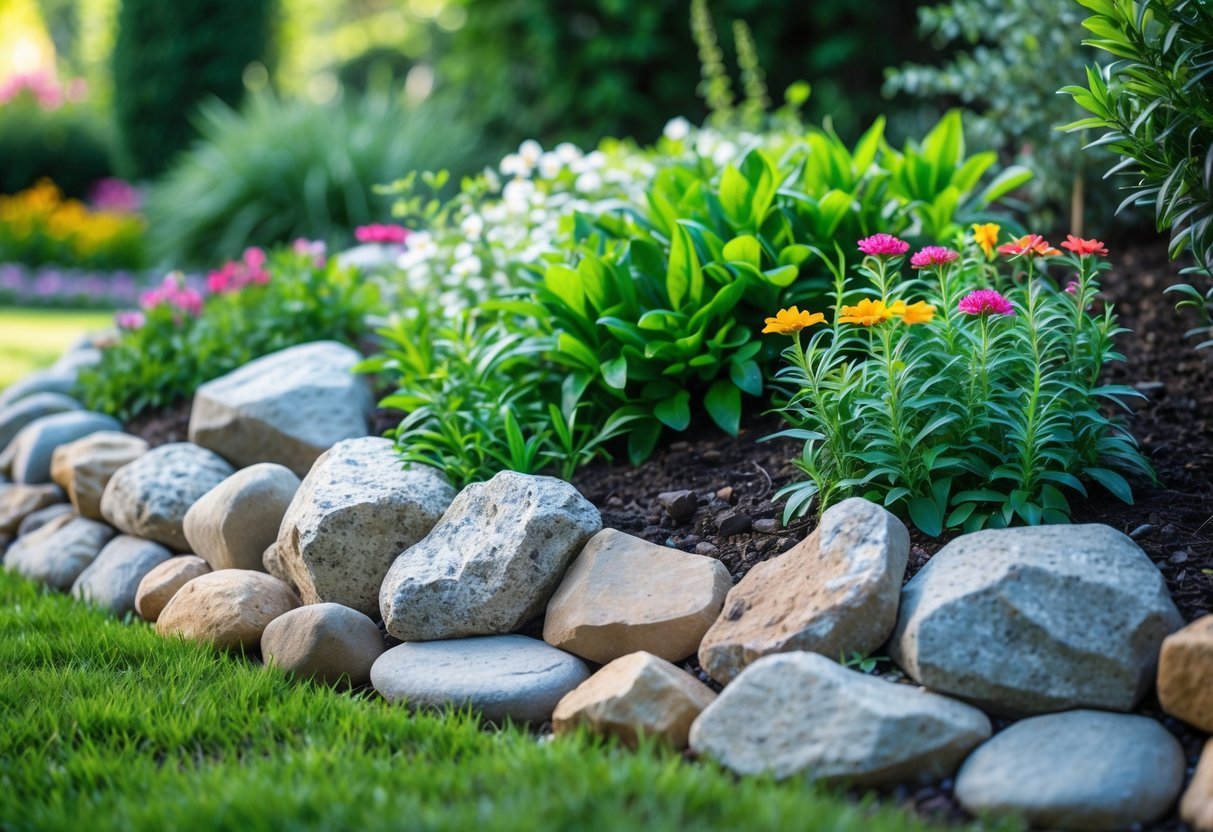
Choose an edging style that matches your yard’s slope, plant types, and how much time you want to spend on upkeep. Think about stone size, placement pattern, and whether you want the edge to look natural or formal.
Naturalistic Edging Approaches
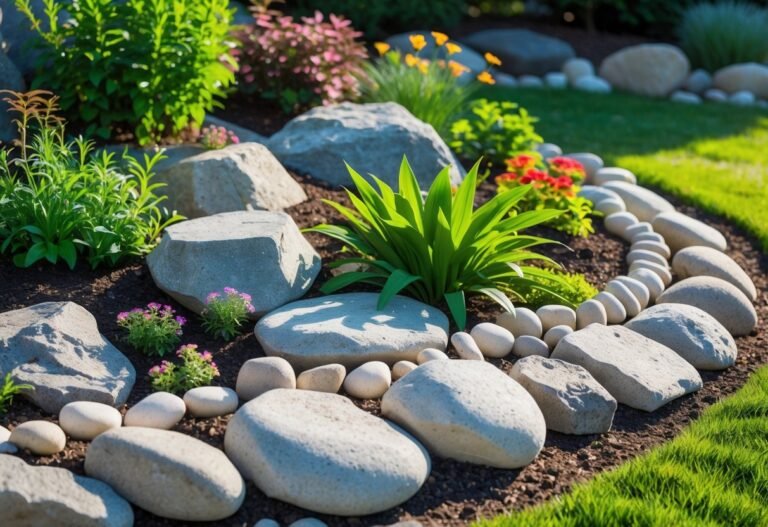
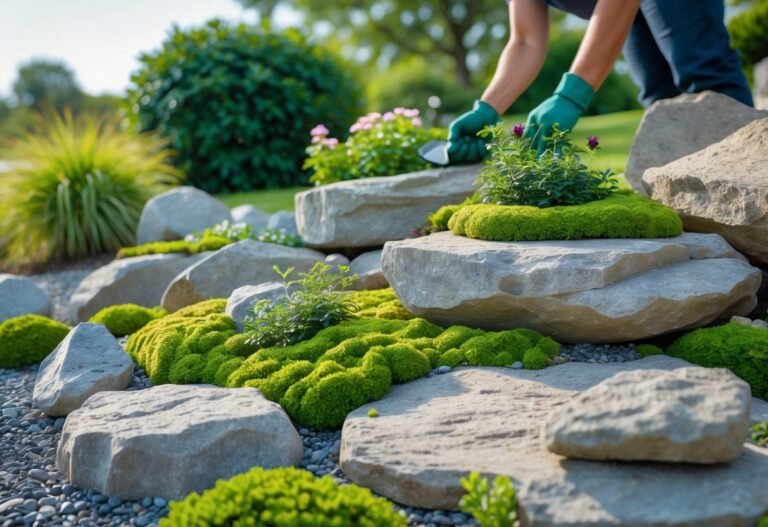
Use irregular stones, gravel, and native plants to make the border blend with the landscape. Place larger rocks at varied angles and tuck smaller stones between them. This creates natural pockets for drought-tolerant plants like sedum, thyme, or low alpine species.
Keep the line slightly uneven rather than straight. Let groundcover spill over the edge to soften transitions. Mulch with small gravel to improve drainage and stop soil from washing out on slopes.
You can layer stone sizes: larger boulders at the back, medium rocks along the face, and pebbles at the edge. This variation looks intentional but low-effort and helps with erosion control.
Formal Rock Borders
Formal borders use uniform stone size, straight beds, and a clear height line for a tidy look. Cut stone, brick-faced rock, or consistently sized river rock work well here. Set stones tightly with minimal gaps to form a clear, crisp edge.
Define the border with a shallow trench and compacted base so the stones don’t shift. A clean edge suits clipped shrubs, boxwood, or repeating plant patterns that echo the border’s geometry.
Use mortar or landscape adhesive if you need a rigid, permanent edge. For a strong visual effect, place edging about 2–4 inches above lawn level to create a visible separation between grass and garden.
Curved Versus Straight Edges
Curves create flow and soften hard lines; straight edges give structure and formality. Choose curves for informal rock gardens, winding paths, and to follow natural contours. Use sweeping arcs no tighter than a 3–4 foot radius for easy mowing and path use.
Pick straight edges where you want symmetry, formal plantings, or to highlight a focal point. Straight lines simplify installation and mowing but can look strict if used everywhere.
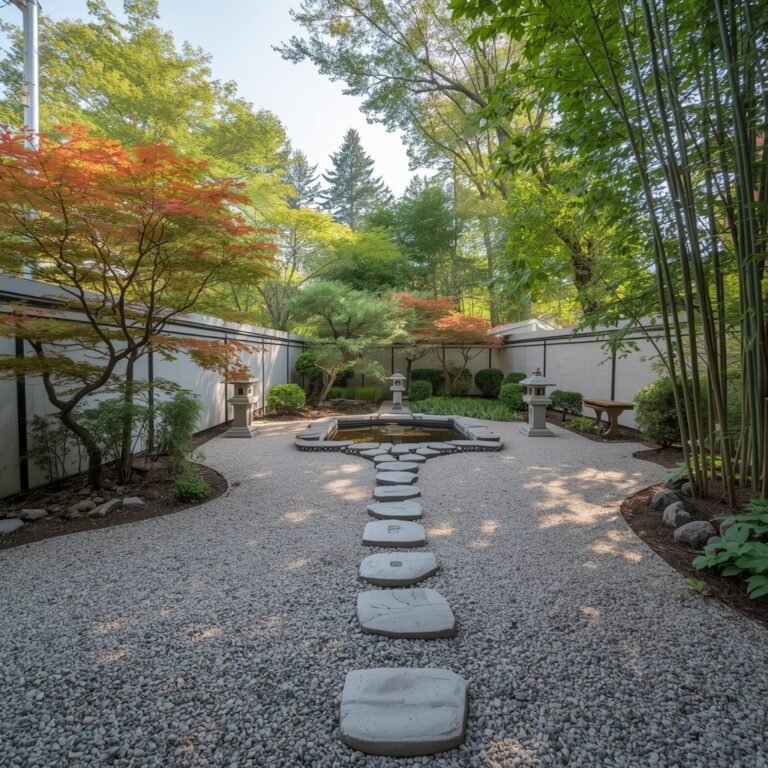
Mix both styles for balance: run a straight border near the house for neatness, then transition to gentle curves farther out to blend with the landscape. Use flagstones or stepping stones to mark transitions between the two styles.
Plant Combinations for Rock Borders
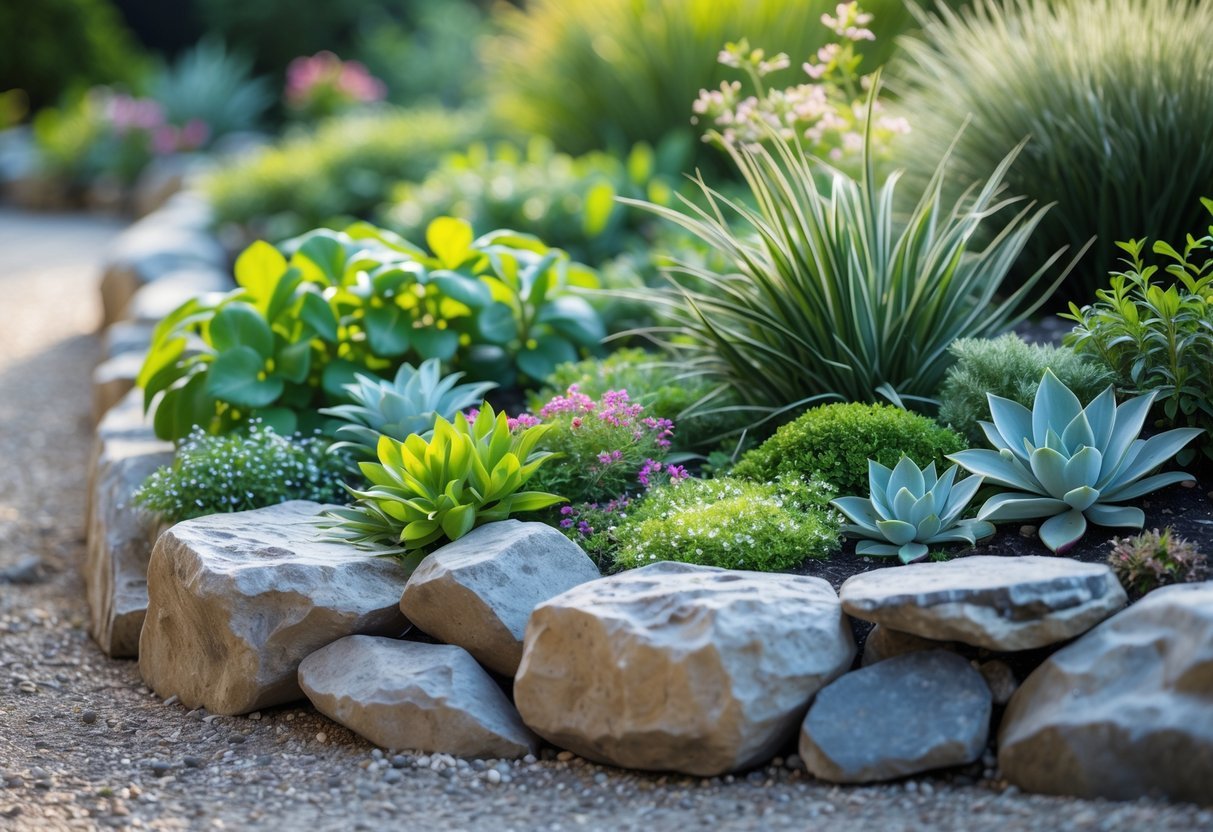
Pick plants that match your soil, sun, and the scale of your rocks. Focus on low water needs, varied textures, and staggered bloom times to keep the border interesting through the year.
Low-Growing Succulents
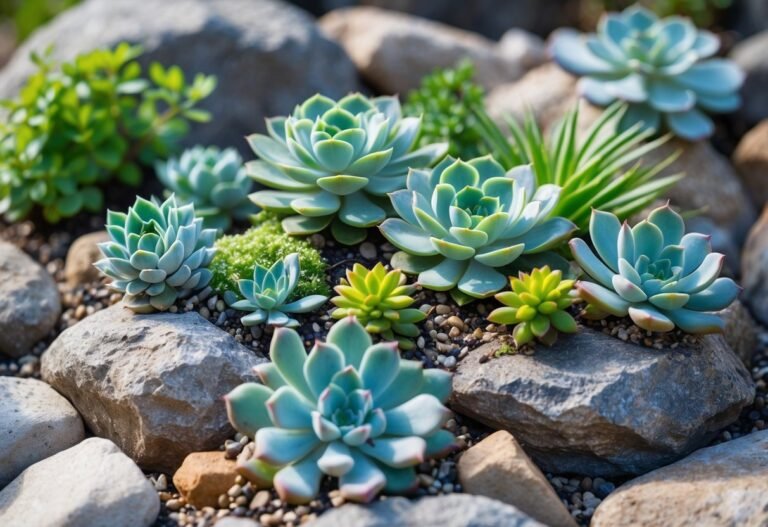
Succulents work well in shallow soil pockets between rocks. Choose rosettes like sedum (Sedum spurium) and sempervivum (hens-and-chicks) for tight clumps that spill over edges without overtaking paths. Their shallow roots mean you can fit them into narrow gaps and raised rock mounds.
Mix leaf shapes and colors: blue-gray sempervivum, chartreuse sedum, and low Crassula produce contrast. Plant in well-drained, gritty mix and avoid heavy mulch that holds moisture. Space plants 4–8 inches apart so they can fill in without crowding.
Use succulents on sunny, warm borders or paired with gravel mulch. They tolerate drought and need little fertilizer. Replace any that rot after wet winters to keep the display tidy.
Flowering Perennials
Add perennials for seasonal color and pollinators. Low mounding types like aubrieta, dianthus, and creeping phlox create carpets that soften rock edges. Taller perennials—like catmint and salvia—work behind the rocks to add height and vertical flower spikes.
Stagger bloom times: plant early bloomers (aubrieta), mid-season (phlox), and late bloomers (sedum spectabile). This gives continuous color from spring to fall. Choose perennials adapted to your sun exposure and soil pH for best long-term performance.
Plant in small pockets with good drainage and mix in a little compost to help establishment. Deadhead spent blooms to extend flowering and divide crowded clumps every 3–4 years to maintain vigor.
Ornamental Grasses
Use low, clumping grasses to add movement and fine texture. Varieties like blue fescue (Festuca glauca) and dwarf carex sit well in rock borders without hiding stones. Their narrow leaves contrast with broad-leaf succulents and flat stones.
Place grasses where wind and light will show their blades and seed heads. Space them 12–18 inches apart depending on mature size so you keep visibility of rocks and paths. Cut back in late winter before new growth begins to keep the border neat.
Combine grasses with flowering perennials for seasonal color and with succulents for year-round structure. Choose drought-tolerant species for low-maintenance borders.
Maintenance Tips for Lasting Appeal
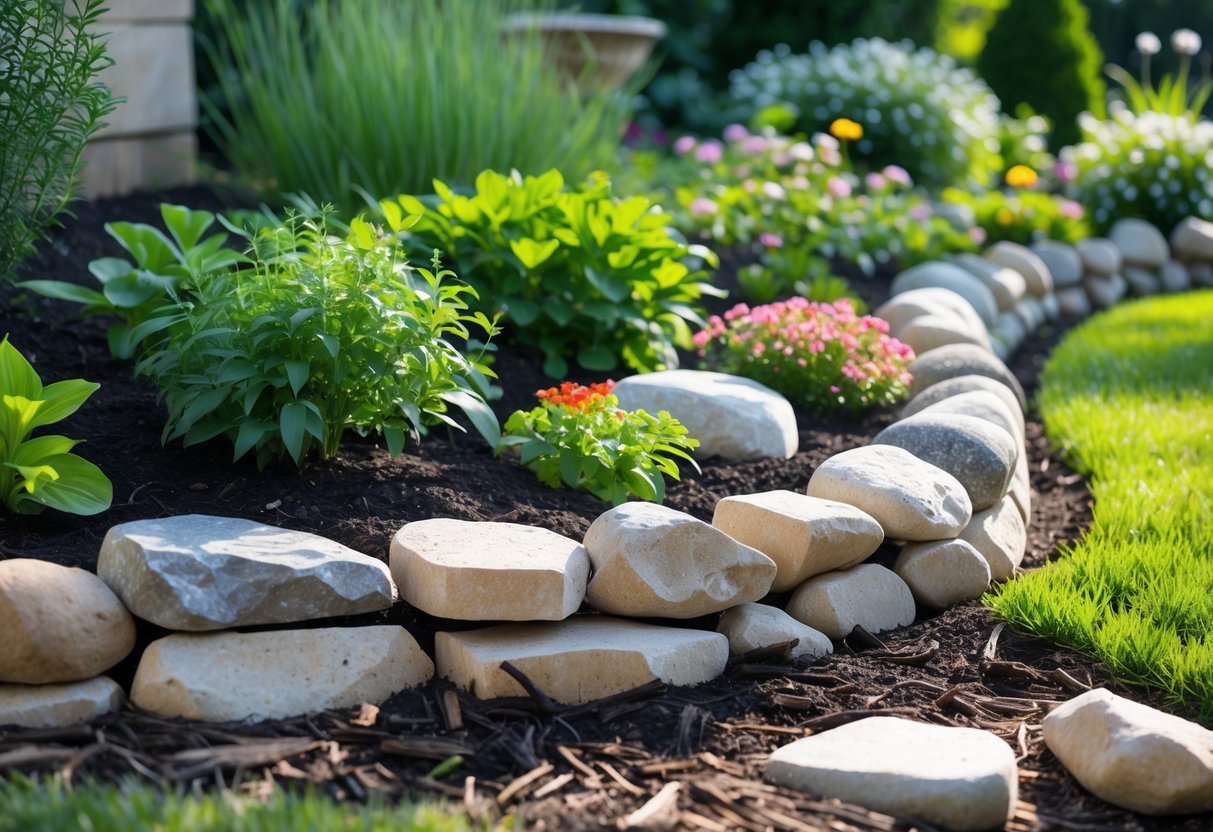
Keep edges tidy, stop weeds early, and check stones and drainage each season. Small, regular tasks prevent big repairs and keep your border looking sharp.
Weed Control Methods
Pull weeds when soil is moist to remove roots easily. Hand-pull or use a small weeding tool to get the root crown; this cuts regrowth and protects nearby plants.
Apply 2–3 inches of mulch between rocks to block light and reduce new seeds sprouting. Use inorganic mulch like crushed stone near succulents or organic bark where perennials grow.
Spot-treat persistent weeds with a targeted herbicide only on the weed base. Avoid broadcast sprays near desired plants. For gravel borders, rake monthly to expose and remove seedlings before they root.
Install a 4–6 inch landscape fabric under larger rocks when building the border. This limits deep-rooted weeds but still allows water to drain. Replace torn fabric sections promptly.
Seasonal Upkeep Routines
Inspect the border each spring and fall for settled stones, erosion, and drainage paths. Reset stones that have shifted and add 1–2 inches of bedding sand or gravel where gaps appear.
Clean out plant debris and dead leaves in late fall to stop fungal growth and pests. Trim overgrown plants back 25–30% to keep roots from spreading under the border.
Check drainage after heavy rains; clear any blocked channels and regrade areas that pool water. Add a perforated drain or adjust slope if water repeatedly soaks the border base.
Do a quick winter prep: tighten loose stones and move delicate potted plants to shelter. In spring, refresh mulch and replace any washed-away gravel to keep the edge neat.
Frequently Asked Questions
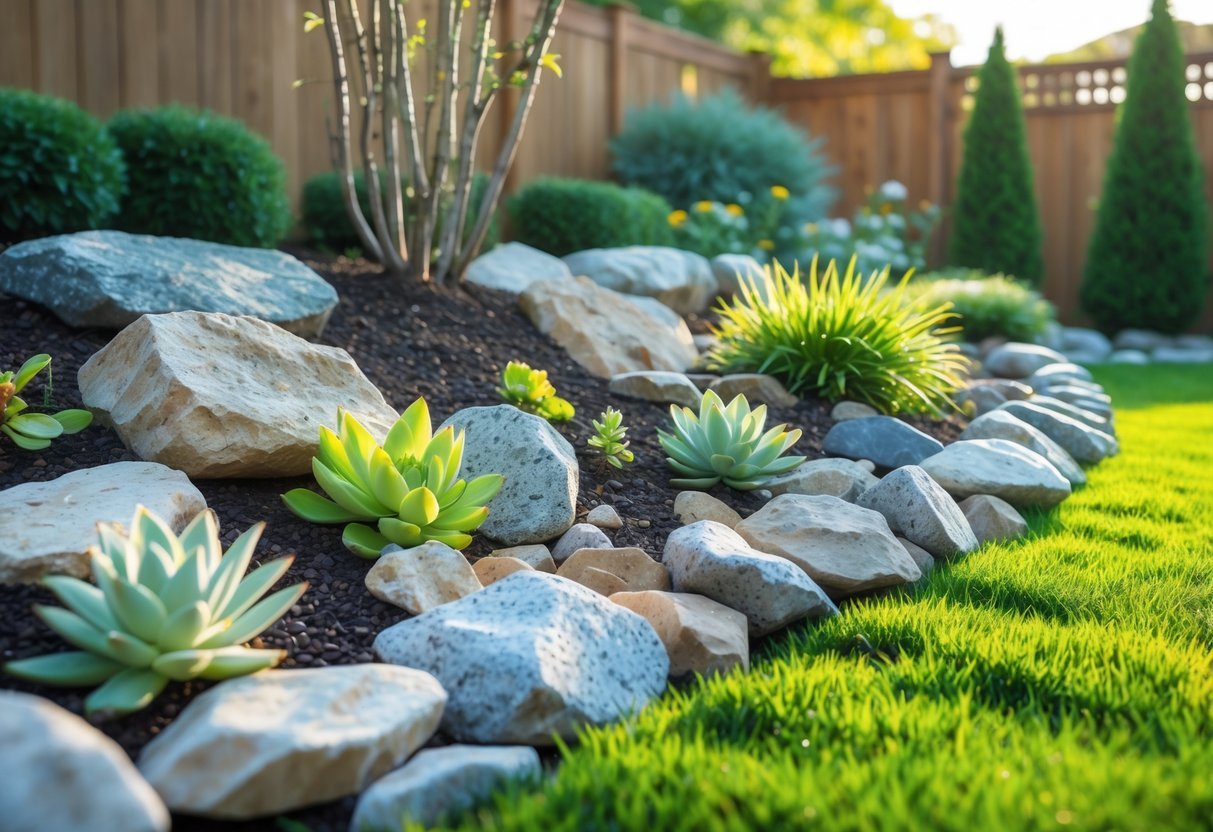
These answers focus on practical steps you can take, the materials to choose, and layout tips that fit common yards and budgets. Each response gives clear actions you can use right away.
How can I create a low maintenance rock garden border?
Choose durable materials like river rock, crushed gravel, or fieldstone that resist weathering and shifting. Use a weed barrier fabric under the rocks and add 2–3 inches of coarse gravel to improve drainage and reduce weed growth.
Plant low-growing, drought-tolerant species such as sedum, thyme, or native grasses to fill gaps. Mulch with small pebbles around plants to keep soil moist and cut back on watering and weeding.
What are some simple design ideas for rock garden borders?
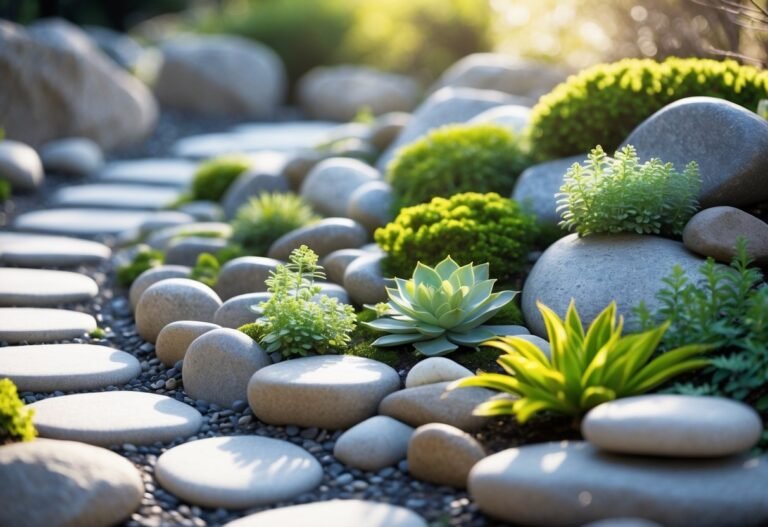
Line a curved path with flat flagstones set slightly apart for a natural look and easy walking. Stack small fieldstones in a single row to create a rustic raised edge.
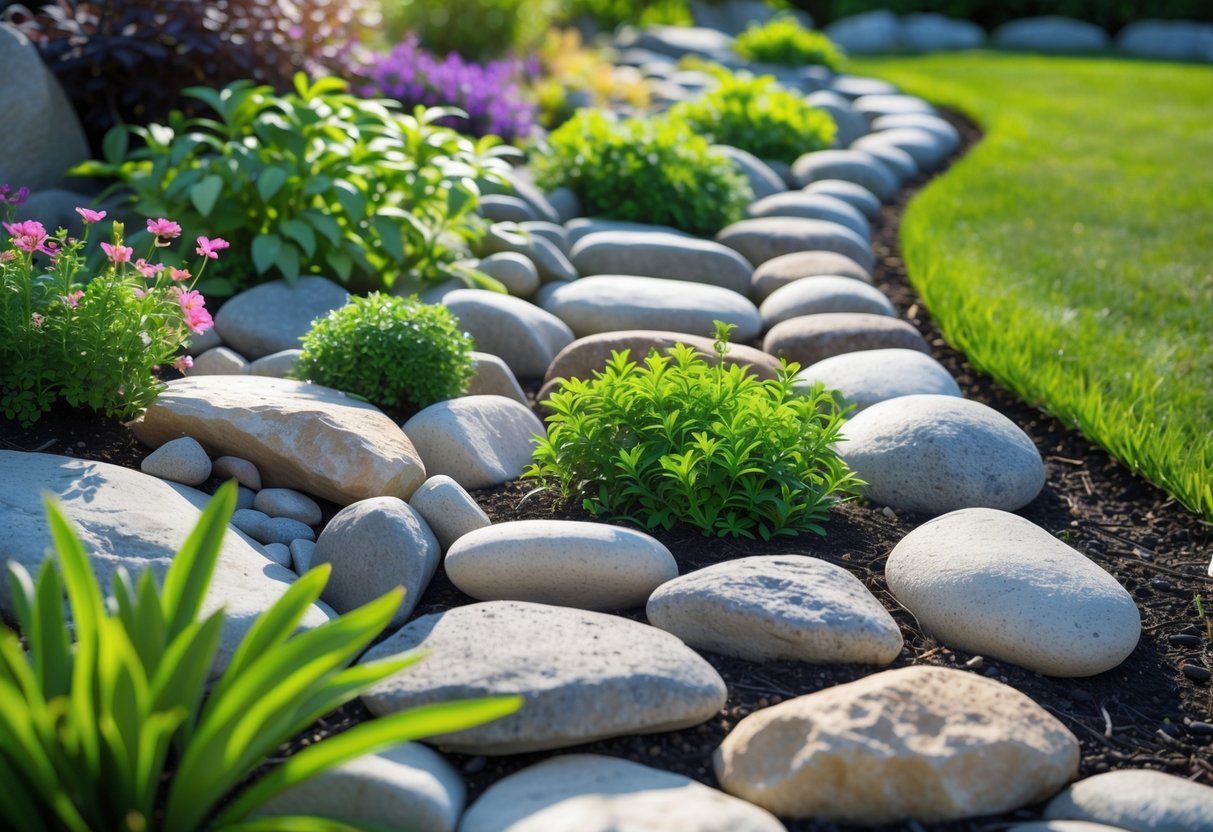
Use mixed-size river rocks for an informal border that hides uneven ground. Place larger boulders as focal points and surround them with low groundcovers to soften edges.
What are budget-friendly options for constructing a rock garden border?
Use reclaimed stones, broken concrete pieces, or free local river rock to lower material costs. Buy bulk crushed gravel from a landscape supplier, which often costs less per cubic foot than decorative stones.
Install the border yourself with basic tools: shovel, wheelbarrow, tamper, and landscape fabric. Do the labor in stages—prepare a short section at a time to spread out cost and effort.
What are the steps to create a natural rock garden edging?
Mark the border line with string or spray paint to set the curve or straight edge you want. Dig a shallow trench about 3–4 inches deep and level the base to prevent stones from shifting.
Lay landscape fabric in the trench, then add a 1–2 inch base of compacted crushed stone. Place the border stones on top, fit them snugly, and backfill with smaller gravel to lock them in.
What are common design mistakes to avoid when planning a rock garden border?
Avoid using stones that are too uniform in size and shape; this creates a manufactured look. Don’t skip proper base preparation—stones will settle unevenly if you place them on loose soil.
Don’t plant aggressive groundcovers that will overrun the rocks. Also avoid placing large boulders on extreme slopes without anchoring, as they can shift and cause erosion.
How should I layout my rock garden to enhance its aesthetic appeal?
Use an odd number of focal stones (three or five) to create a balanced, natural group that draws the eye. Mix stone sizes and textures—smooth river rock, rough fieldstone, and flat flagstone—to add visual interest.
Follow the rule of thirds: position main elements off-center and create flowing lines or gentle curves. Place taller plants or stones at the back and low groundcovers at the front to keep sightlines clear.