7 River Rock Garden Ideas to Transform Small Yards and Patios
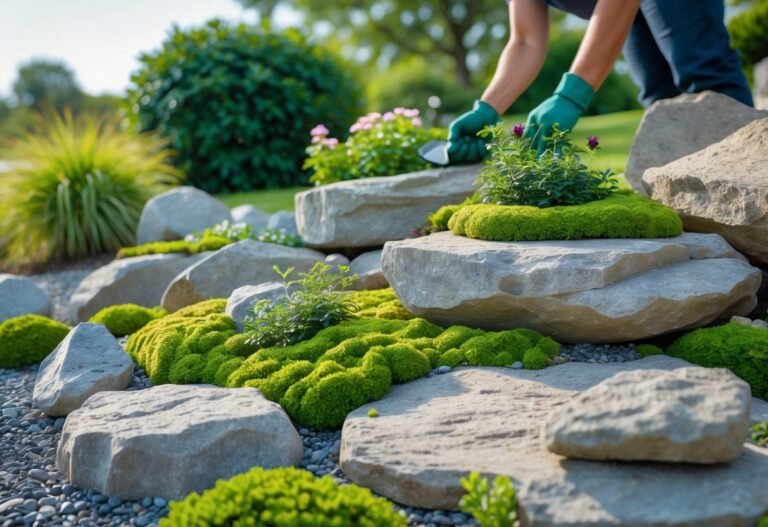
You can make your garden look cleaner and more natural with river rocks. They work well for edges, pathways, dry creek beds, and low-maintenance mulch, so you can shape your outdoor space without a lot of work.
River rocks give your garden texture and function, helping with drainage, weed control, and curb appeal while keeping upkeep low.
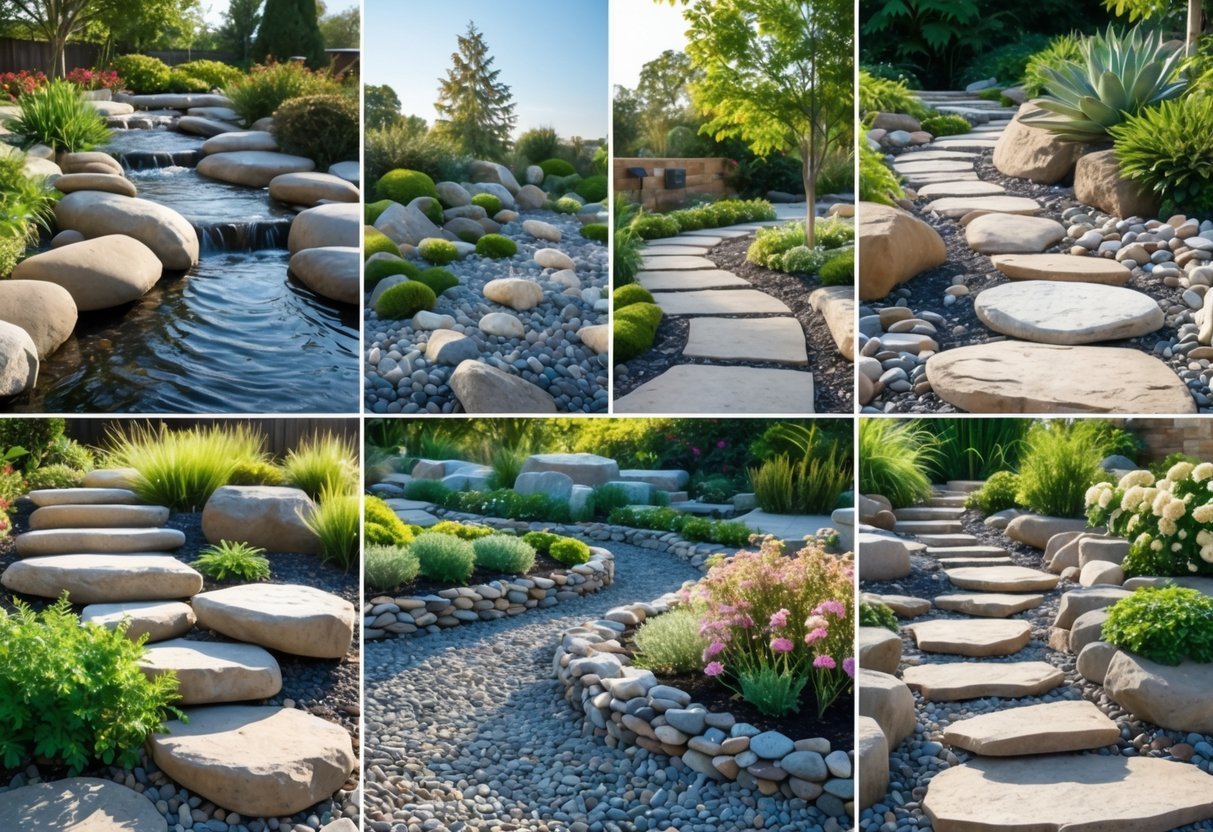
This article shows seven simple ways to use river rock so you can pick ideas that match your style and needs. Expect practical tips on borders, pathways, planting areas, and maintenance to help you plan and build a garden that looks good and lasts.
1) Create a decorative border using small and medium river rocks to define garden beds
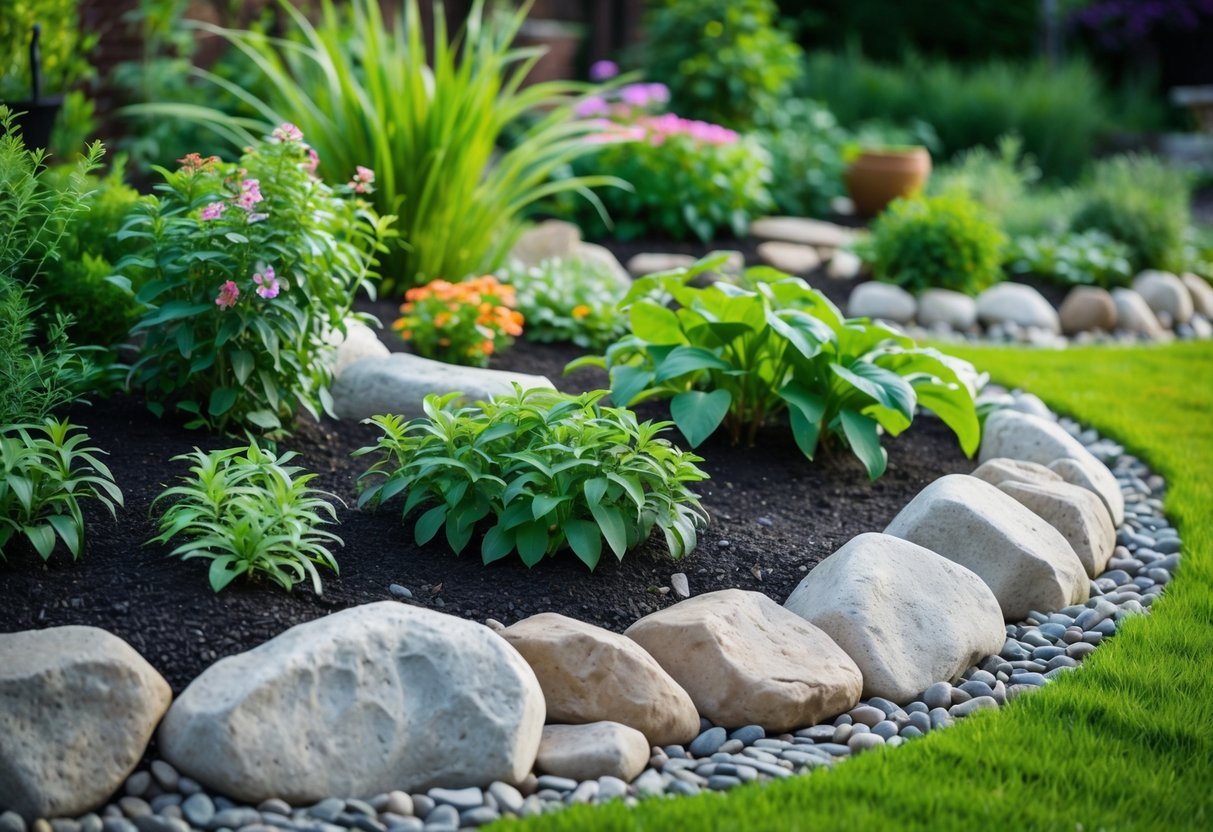
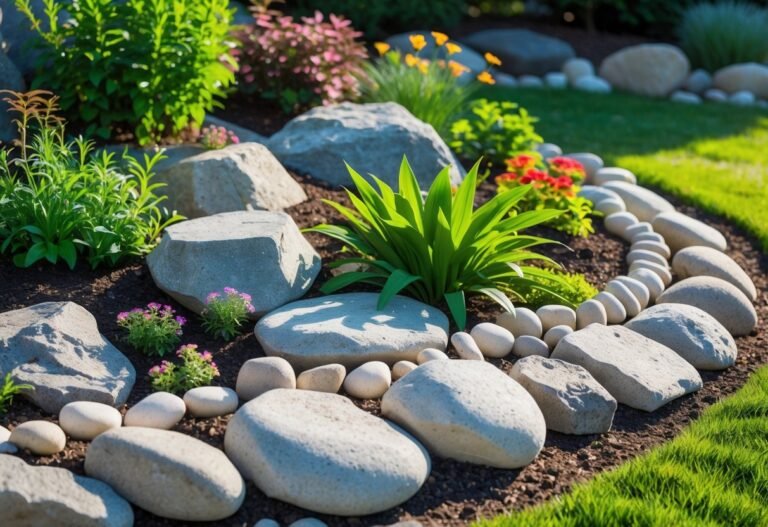
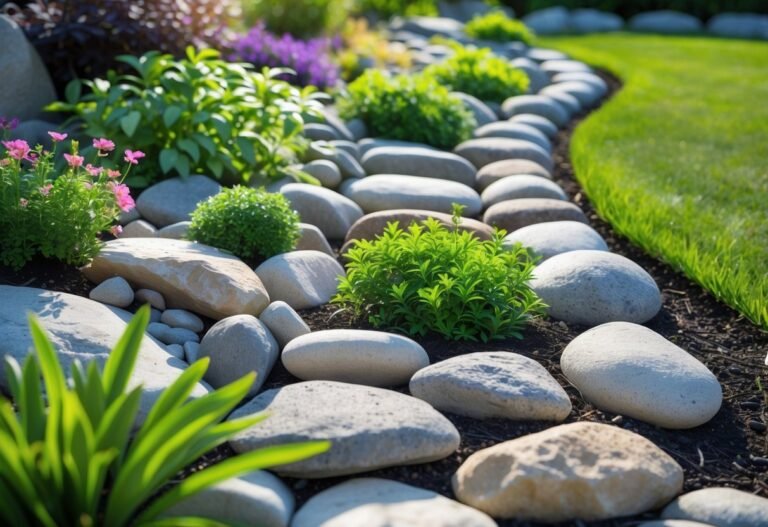
Choose small or medium river rocks to form a tidy edge between lawn and bed. You can lay them single-file for a neat look or two rows for more presence.
Press rocks slightly into soil so they stay put and shed water away from plant crowns. This reduces mulch washout and keeps roots from getting buried.
Mix sizes and colors for a natural feel, and place larger stones at corners or curve points. The result frames plants without hard edging or constant upkeep.
2) Build a natural pathway by placing stepping stones with river rocks filling the gaps
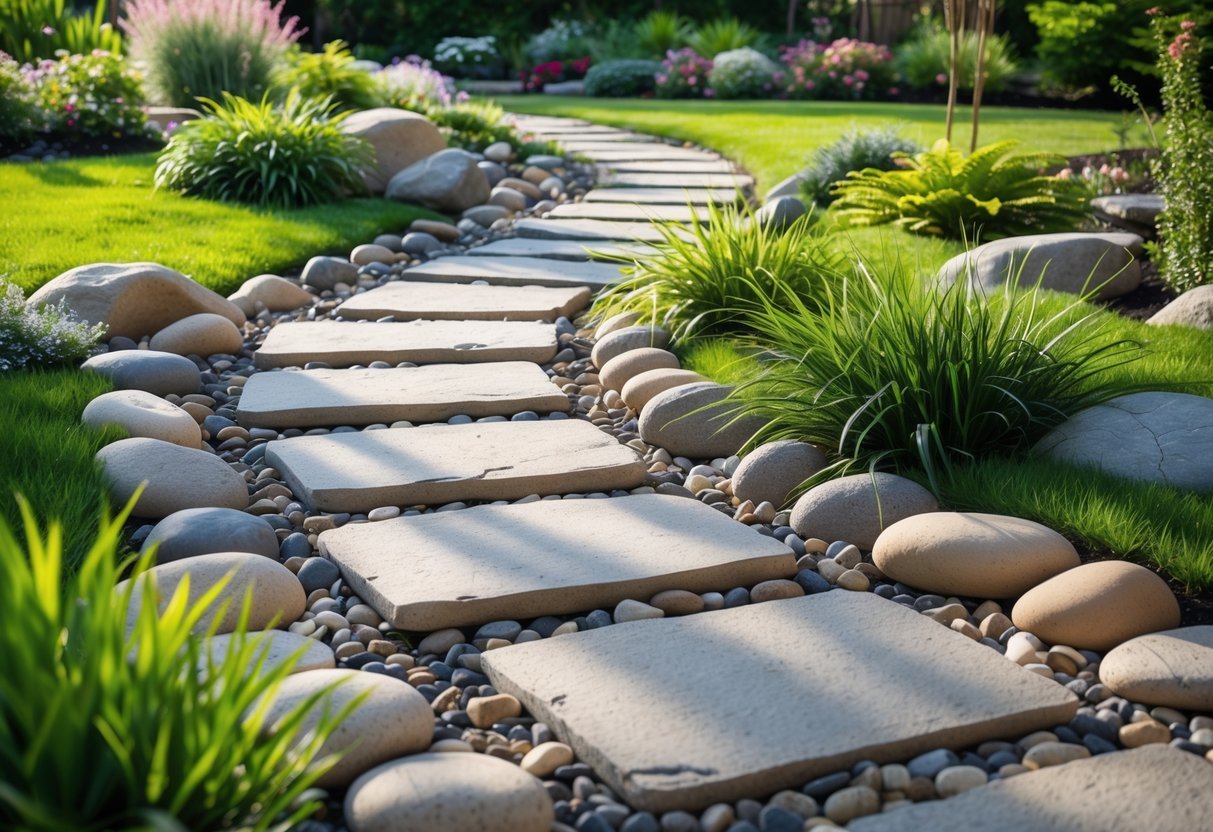
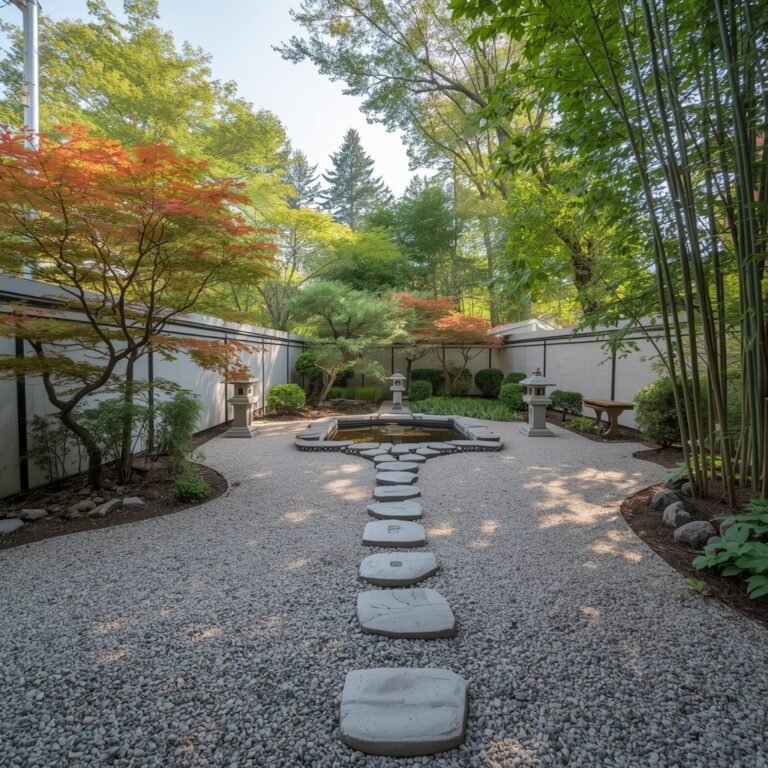
Choose flat stepping stones set evenly for safe, comfortable walking. Place them on firm base material so they stay level.
Fill spaces between stones with small river rocks to create a finished, natural look. The rocks hold soil and reduce weed growth while guiding foot traffic.
Vary stone size and spacing to match your garden’s style and use. Add edging if you want a cleaner border.
3) Use river rock mulch around drought-tolerant plants for low-maintenance landscaping
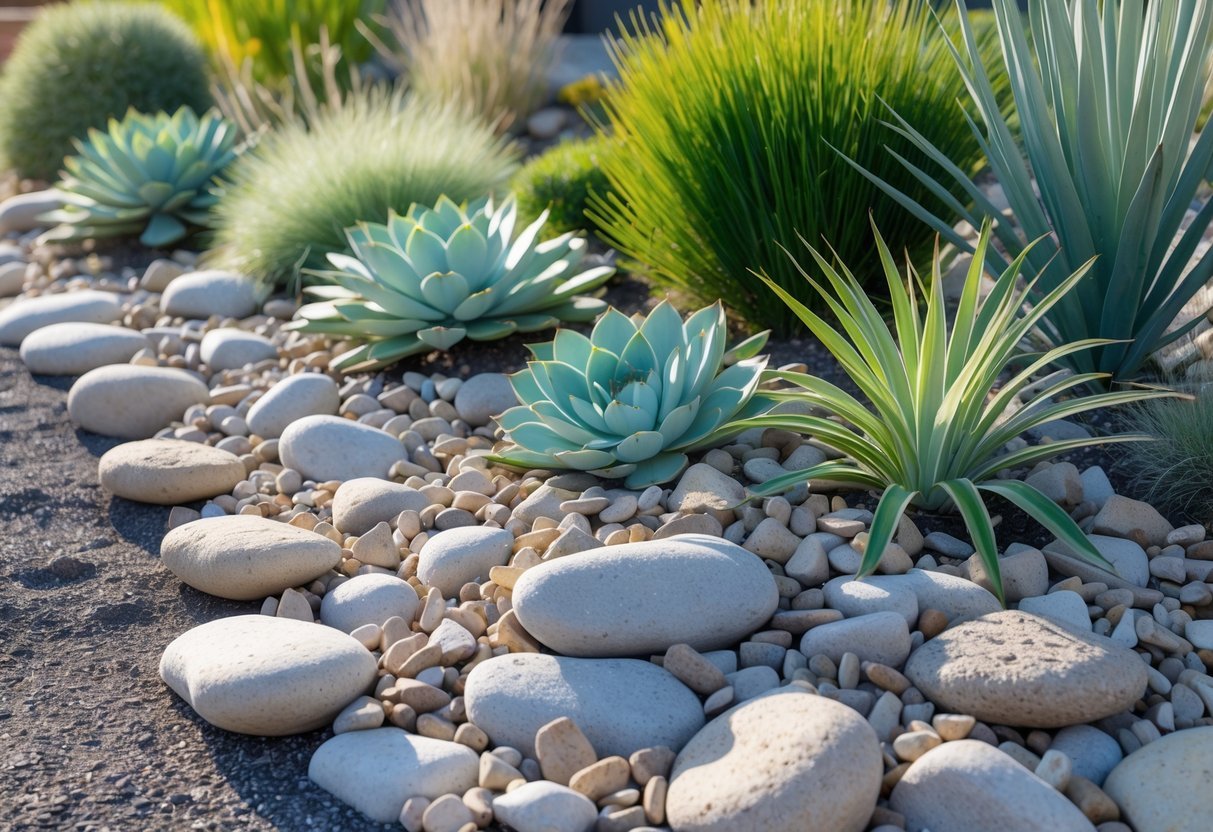
You can lay river rock as mulch to cut water loss and reduce weeds around drought-tolerant plants.
Rocks let water reach roots while preventing soil from drying too fast, so plants like lavender, yucca, and ornamental grasses thrive.
Place larger stones near stems and finer gravel between plants for better drainage and a neat look.
River rock also resists wind and salt, so it stays tidy longer than organic mulches and needs less frequent upkeep.
4) Incorporate river rocks in foundation planting to enhance curb appeal

Use river rocks as a clean border along your foundation to hide soil and keep mulch in place. They improve drainage near walls and reduce splashback that can stain siding.
Mix rock sizes and colors to match your home’s palette and to create visual interest. Add low-growing plants or shrubs between rocks so your beds look natural and tidy.
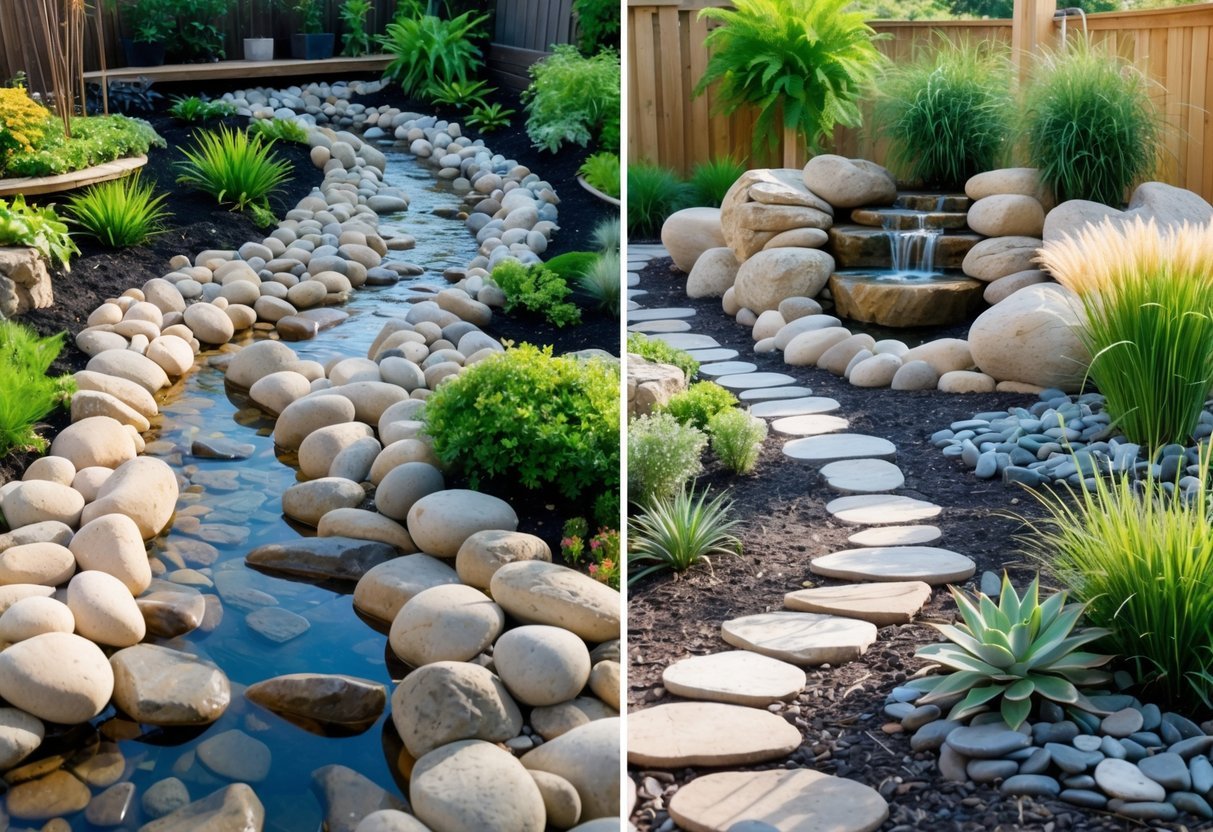
5) Design a dry creek bed with river rocks to manage drainage and add visual interest

You can direct runoff away from foundations by routing it through a shallow, stone-lined channel. Use larger rocks for edges and mixed river rock or gravel in the center to slow water and reduce erosion.
Keep the channel gently curving for a natural look and easier flow. Plant low-maintenance grasses or native shrubs along the sides to stabilize soil and soften the stone.
6) Combine river rocks with ornamental grasses like blue oatgrass or Karl Foerster grass
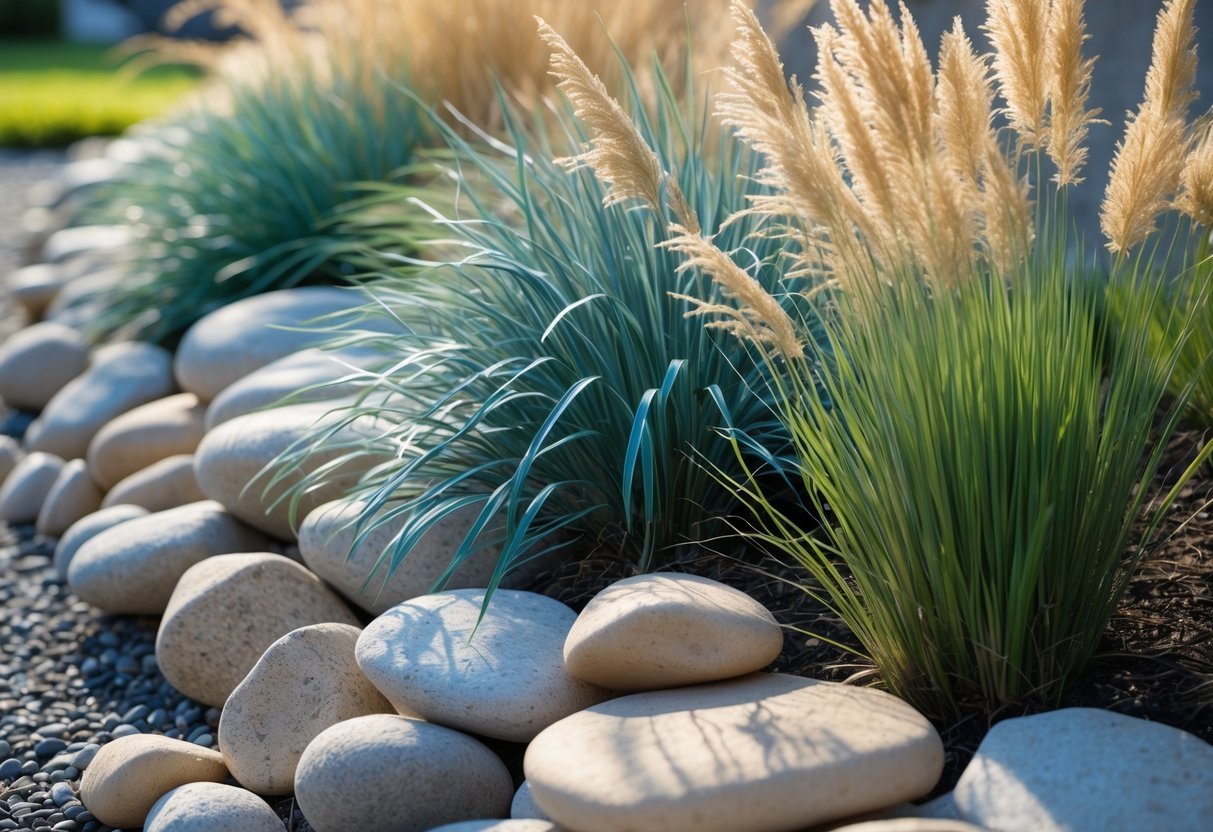
You can plant clumps of blue oatgrass or Karl Foerster grass among river rocks to add texture and movement.
The grasses soften the stones’ edges and create a natural flow across the bed.
Place grasses in small islands or along paths to define edges and guide sightlines.
Both grasses are low-maintenance and drought-tolerant, so they work well with river rock mulches.
7) Line patios or seating areas with river rocks to create clean edges and prevent weed growth
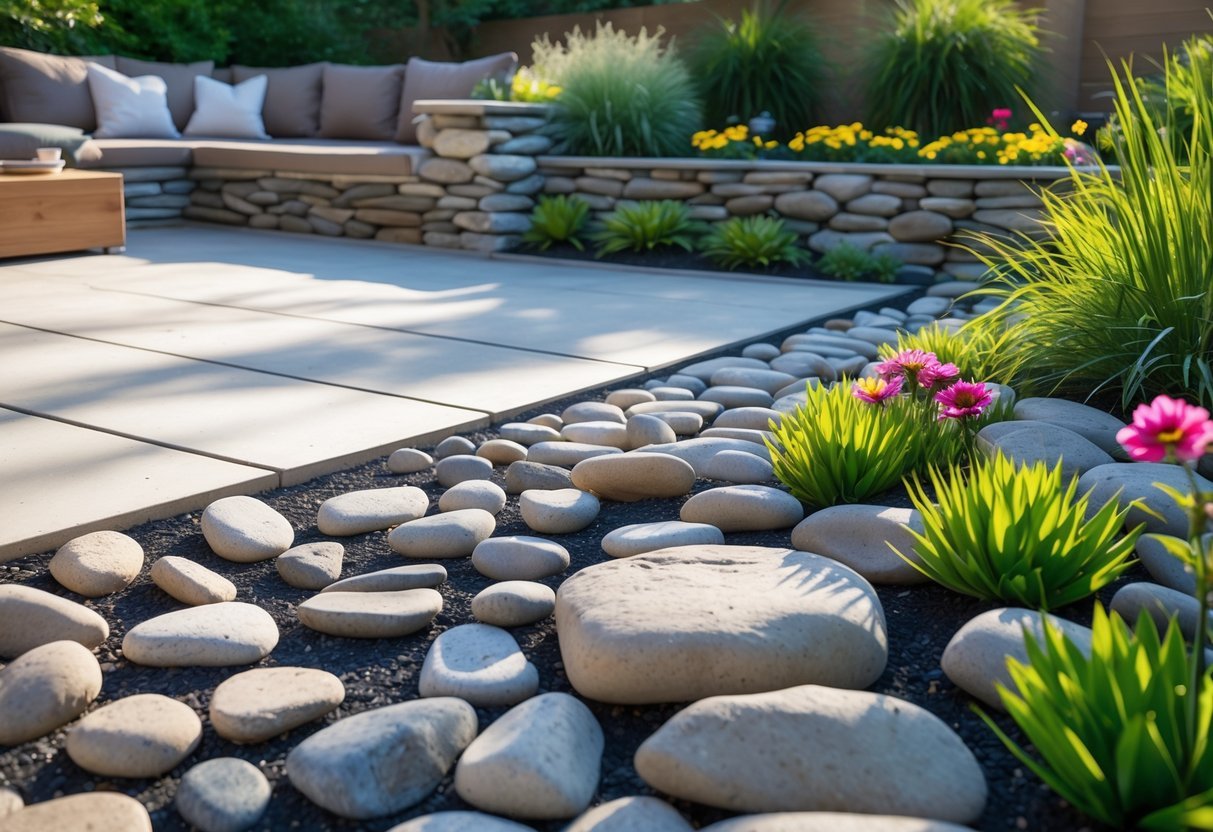
You can frame patios or seating areas with river rocks to make edges look neat and intentional. A narrow trench, landscape fabric, and a layer of rocks keep weeds down and reduce maintenance.
Choose rock size and color that match your patio. The stones also improve drainage around the edge so water won’t pool against your paving.
Design Principles for River Rock Gardens
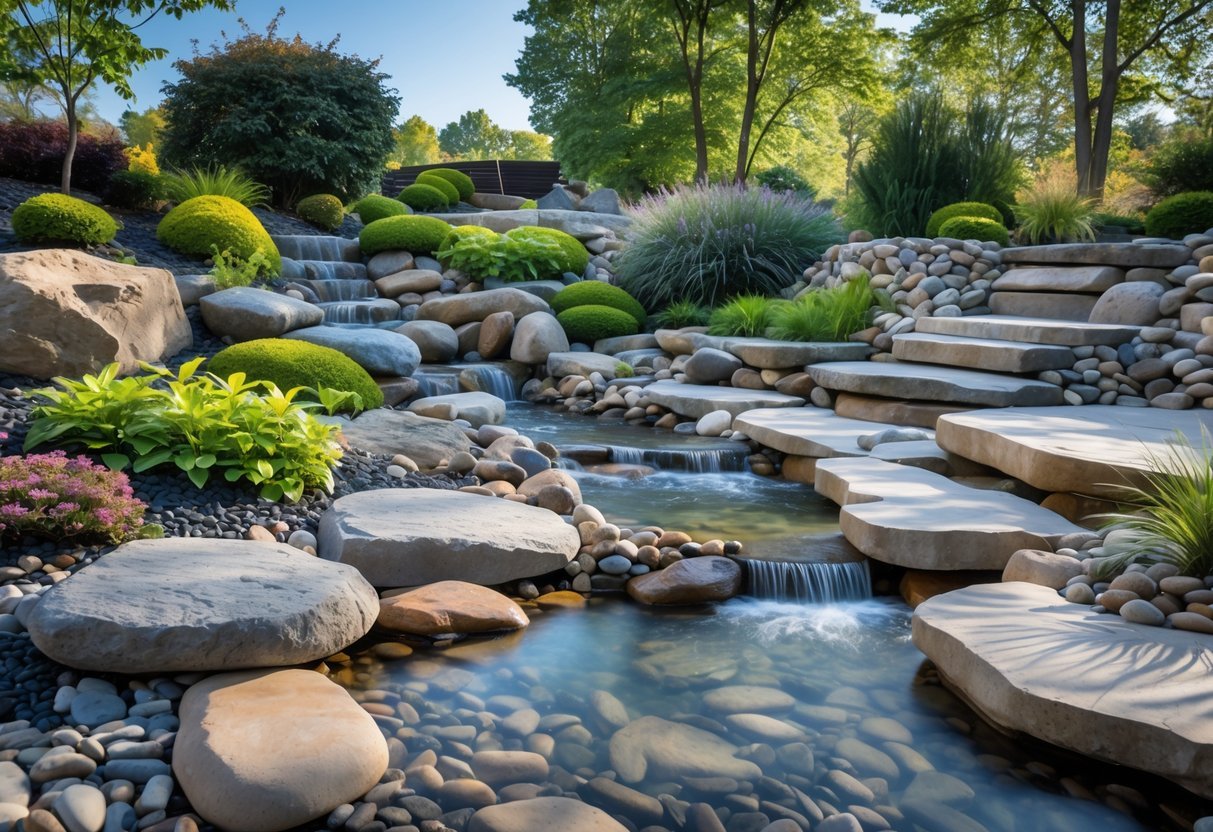
Think about rock size, color, and how you’ll edge beds before you start. Pick rocks that match the garden’s scale, mix tones for depth, and use borders to keep rocks contained and plants tidy.
Choosing the Right River Rocks
Choose rock sizes that fit the scale of your space. Use small (½–1½ inches) or pea gravel for ground cover and between stepping stones. Select medium (2–4 inches) or large (6+ inches) rocks for focal points, dry streambeds, or to anchor a planter.
Check rock shape and finish. Smooth, rounded stones work for natural beds and paths because they pack well and resist tripping hazards. Flat river stones suit stepping areas or low walls.
Think about durability and local availability. Local stone often blends with native plants and costs less. Avoid very porous rocks in freeze–thaw climates where they can crack.
Blending Colors and Textures
Match rock color to your home and plant palette. Cool grays and blues pair with silver-leaf plants; warm browns and tans suit native grasses and succulents. Use a dominant color for most areas, then add one contrasting color to create visual interest.
Mix textures for depth. Combine smooth river rocks with coarse gravel or mulch to highlight paths and planting areas. Place larger, rougher boulders near focal plants to create scale and shadow.
Test a small patch before you commit. Lay out samples next to plants and walk the path to see how colors change in morning and evening light.
Incorporating Edging and Borders
Use edging to keep rocks in place and define planting beds. Metal or plastic landscape edging works well for clean lines along lawn edges. For a softer look, use natural stone or low stacked rocks as a border.
Choose edging depth based on rock size. Install edging at least 2–3 inches higher than the rock layer for small stones, and deeper anchors for heavy rock to prevent shifting. Secure edging with stakes every 18–24 inches.
Consider functional borders. A shallow trench with landscape fabric under the rock prevents weeds. Add a narrow concrete or paver border where you expect heavy foot traffic to stop rocks from spilling onto walkways.
Maintenance and Care Tips
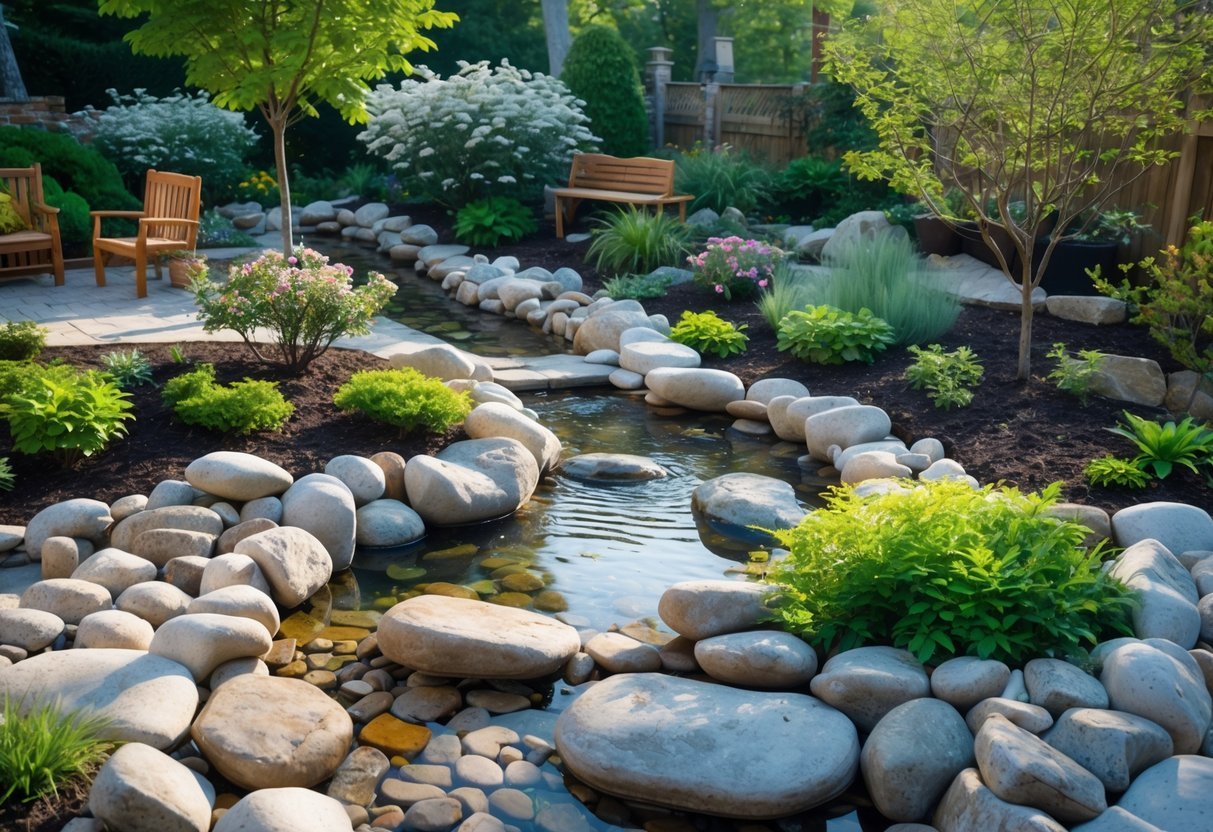
Keep rocks tidy, stop weeds early, and protect slopes from washout. You’ll need occasional raking, targeted weeding, and season-based checks to keep the rock bed stable and attractive.
Controlling Weeds and Erosion
Pull weeds by hand when they are small to stop roots from spreading. Use a long-handled weeder for deep roots and remove the whole root. Spot-treat persistent weeds with a glyphosate-free herbicide if hand-pulling fails, following label directions.
Lay landscape fabric under the rocks to cut weed growth where planting is not needed. Leave openings at planted areas and tuck fabric edges under the rock to hold it down. Add a 2–3 inch layer of crushed gravel under the larger river rocks on slopes to improve drainage and reduce movement.
Prevent erosion by anchoring rocks along edges with metal edging or a shallow concrete bead. On slopes, use staggered baffles (rows of larger rocks) to slow water flow. After heavy rain, inspect for exposed fabric or moved stones and replace them promptly.
Seasonal Upkeep Guidelines
Spring: rake to level the stones and remove debris that traps soil and seeds. Top up rock depth where it has thinned; most beds need an extra 1–2 inches every few years. Check fabric and edging for damage after winter freeze-thaw cycles.
Summer: pull new weeds frequently and prune nearby plants so roots don’t push rocks aside. Water only established plants; river rock reduces evaporation but can hide dry soil, so probe with a trowel before watering.
Fall/Winter: clear fallen leaves before they break down into soil. Add a thin layer of coarse sand or pea gravel to fill gaps and lock smaller stones in place where frost heave is common. Remove any displaced rocks and re-secure edging before the first freeze.
Frequently Asked Questions
This section answers how to use river rock in paths, borders, dry creek beds, and as mulch around drought-tolerant plants. It also covers costs, plant choices, maintenance issues, and the difference between a rock garden and a rockery.
How can one incorporate river rock in DIY landscaping?
Use small and medium river rocks to make a clean border around beds. Lay them over landscape fabric to reduce weeds and keep edges neat.
Fill gaps between stepping stones with river rocks to create a natural pathway. Compact a sand or gravel base first so stones stay level.
Spread 2–3 inches of river rock as mulch around drought-tolerant plants. For drainage features like dry creek beds, place 4–6 inches of rock and use a geotextile fabric underneath.
What creative designs are popular for using blue river rocks in gardens?
Blue river rocks make strong color contrast with green foliage and pale gravel. Use them as a striking border or to fill a narrow strip beside a walkway.
Line a dry creek bed with blue rocks to create a cool-toned accent. Mix blue rocks with larger natural boulders to add depth and texture.
Place blue river rocks around a focal plant or sculpture to draw the eye. Combine with stepping stones to create repeating color accents through the yard.
What are the common challenges with maintaining a river rock garden?
Weed growth between rocks can be persistent if fabric or edging fails. Pull weeds promptly and consider adding a weed barrier under the rock.
Rocks can shift or sink over time, especially on slopes or high-traffic paths. Re-level or add more base material when you see uneven areas.
Dust and organic debris collect on rocks and can look untidy. Rake or hose down the area seasonally to remove buildup.
Which plant species thrive best amongst river rocks?
Drought-tolerant perennials like Russian sage and salvia do well with rock mulch. Grasses such as blue oatgrass and ornamental Karl Foerster thrive in well-drained rocky soil.
Low shrubs like barberry and succulents also suit river rock settings. Choose species that prefer fast drainage and less root moisture.
What is the typical expense for purchasing and installing river rock?
Small bags of river rock cost less per bag but add up for large areas. Expect higher unit prices for washed, colored, or specialty stones.
For DIY installation, budget for rock, landscape fabric, edging, and delivery. Hiring a contractor increases cost but reduces physical labor and ensures proper base and drainage for features like dry creek beds.
How does a rock garden differ from a rockery in design and purpose?
A rock garden focuses on plants and uses small rocks as mulch and accents to support alpine or drought-tolerant species. You place plants among rocks to mimic a natural hillside or alpine environment.
A rockery emphasizes the arrangement of large stones and boulders as the main feature. Plants are secondary and often used sparingly to highlight stone shapes and structure.