Creative Plant Wall Decor Ideas for Interiors: 7 Stylish Ways to Transform Indoor Spaces
You can turn any blank wall into a living feature that adds texture, color, and calm to your home. This article shows ways you can create stylish plant walls — from low-maintenance air plant displays to bold modular succulent frames — so you can pick ideas that fit your space and skills.
You’ll find options that suit small apartments, large rooms, and different budgets, plus practical tips on installation and care. Use the ideas to match your decor, improve mood, and make your interior feel fresher and more personal.
1) Vertical succulent garden with modular frames
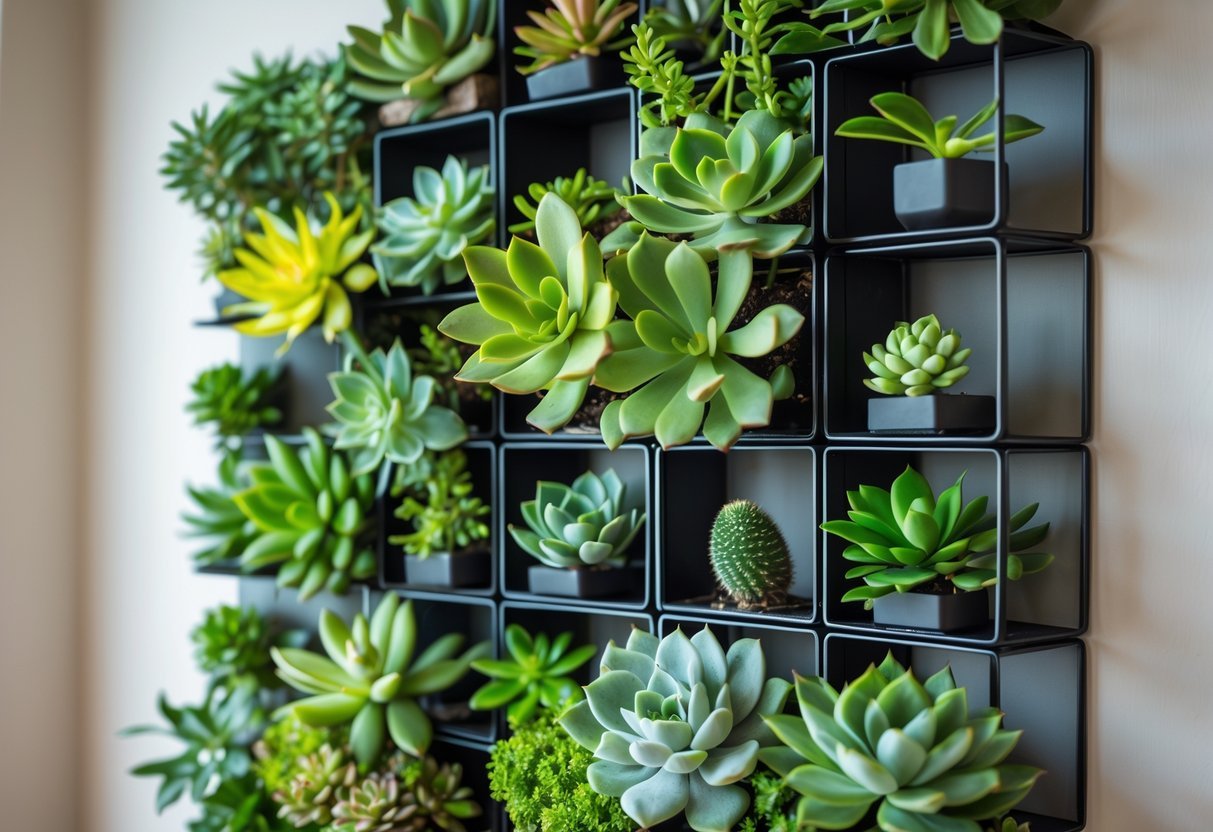
You can mount modular frames to a wall to create a compact, living display that fits small spaces. Arrange the frames in patterns or grids to suit your room and style.
Choose shallow frames and well-draining soil to keep succulents healthy. Water sparingly and give the wall bright, indirect light for best results.
Swap plants or rearrange frames anytime for a fresh look. Modular systems make maintenance and redesign simple.
2) Macrame hanging planters in geometric shapes
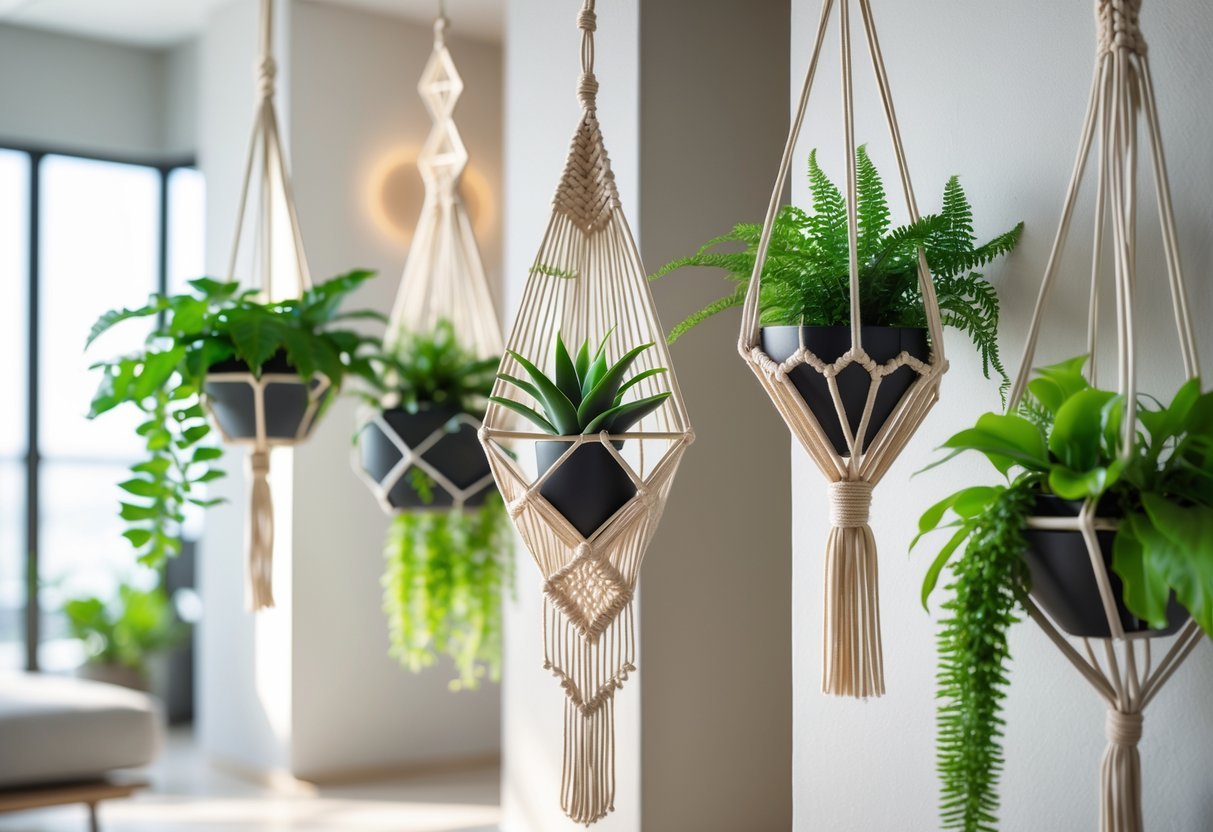
You can add visual interest with macrame hangers tied into triangles, diamonds, or hexagons.
Geometric frames give structure to trailing plants and fit modern or boho rooms.
Choose thicker cord and a sturdy frame for heavier pots.
You can mix wood, metal, or wrapped rings to match your decor.
Hang several at different heights for a dynamic wall.
This creates depth without using floor space.
3) Reclaimed wood pallet plant wall
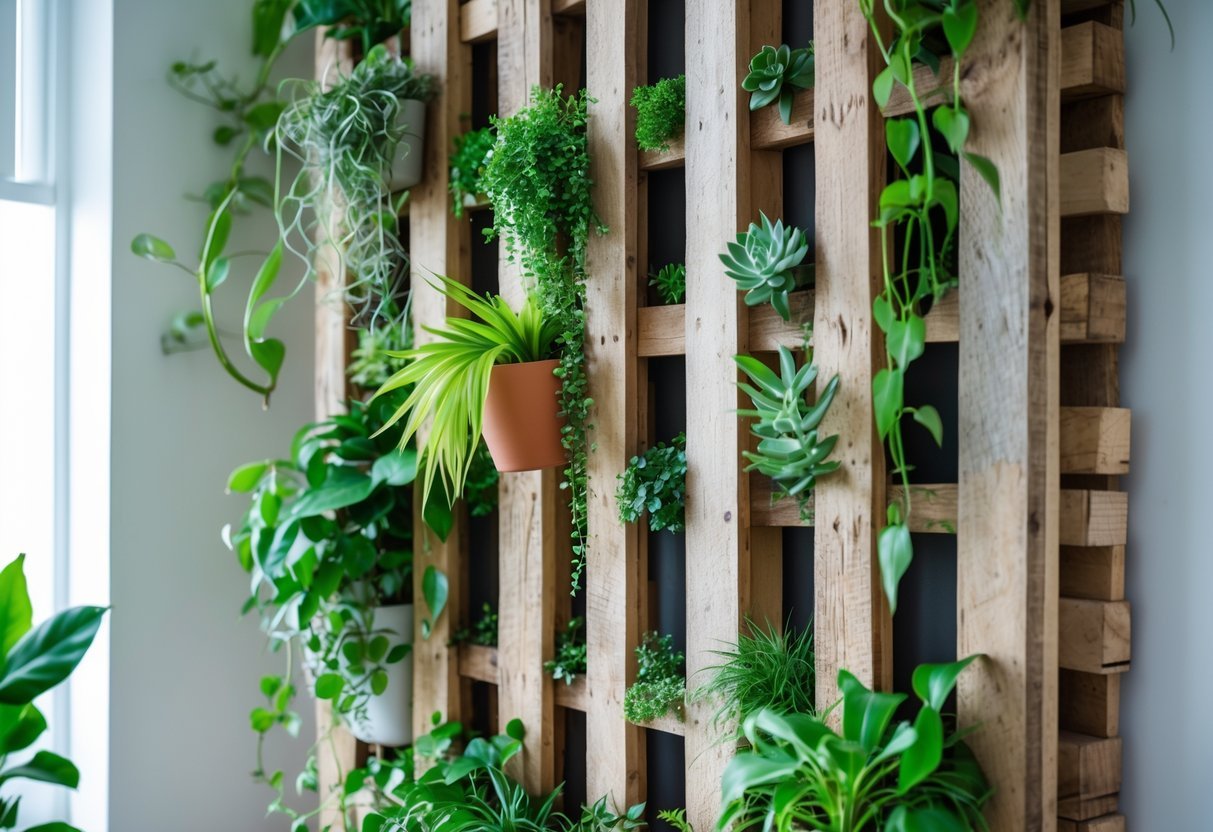
You can turn an old pallet into a vertical garden that adds warmth and texture to your room. Sand and seal the wood, then attach planters or pockets to hold small pots or succulents.
Place the pallet where it gets suitable light and secure it to the wall for safety. This option is low-cost, eco-friendly, and works well in living rooms, hallways, or covered balconies.
4) Living moss art panels
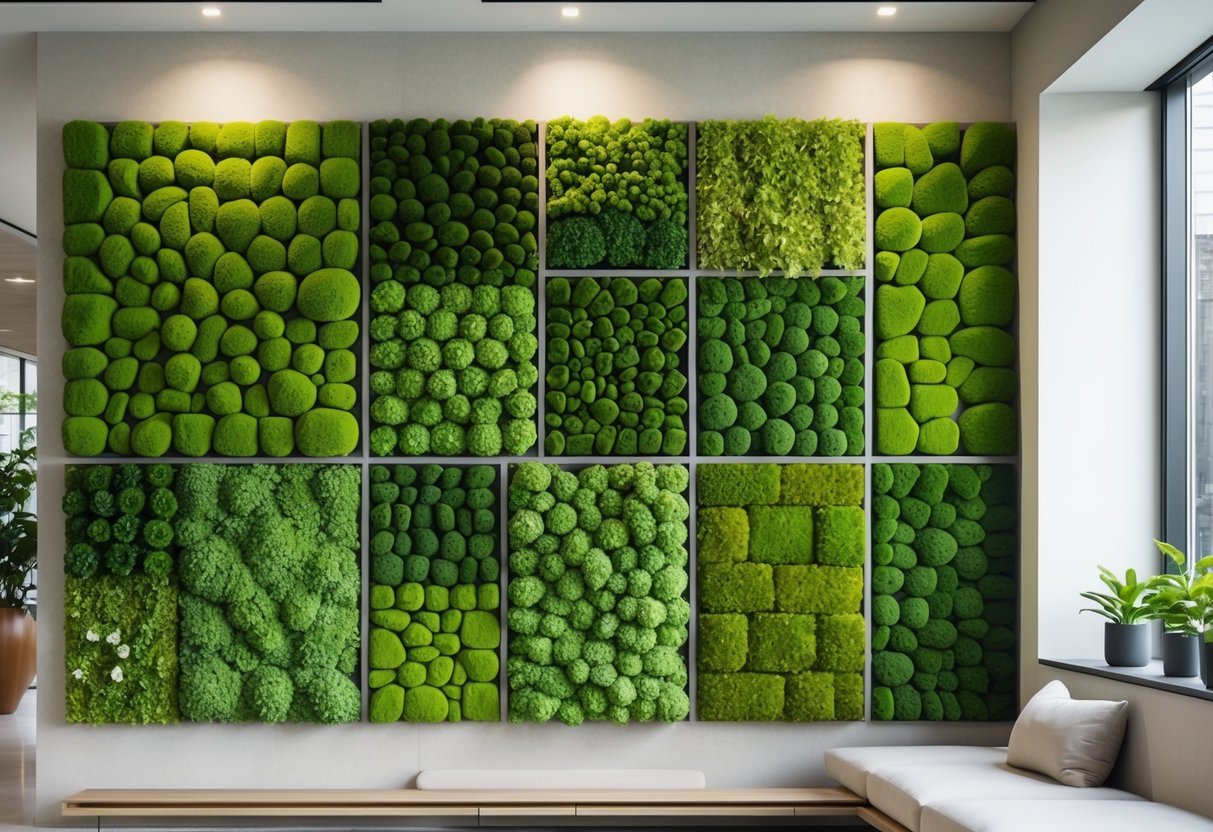
You can add soft texture and calm green tones with living moss art panels. They work well as framed pieces or full-wall installations to bring nature into your room.
Choose preserved moss for low care or live moss if you can meet humidity and light needs. Panels let you mix colors and patterns for a custom look that fits your style.
5) Wall-mounted air plant displays
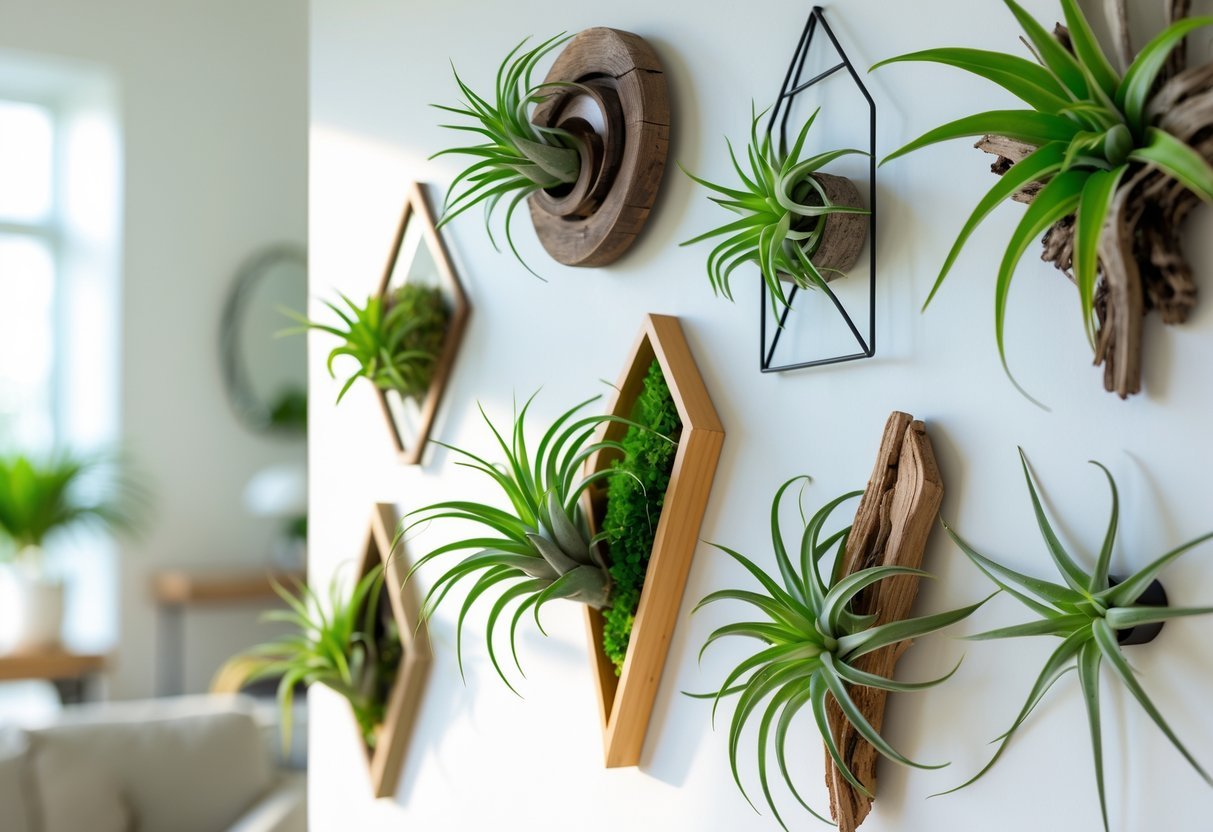
You can mount air plants on wood, frames, or wall grids to add living art without soil.
They work well with colorful Tillandsia and need bright, indirect light and occasional misting.
Use small clips, thin wire, or non-toxic adhesive to secure plants safely.
Place displays where you can water them easily and avoid direct heat or drafts.
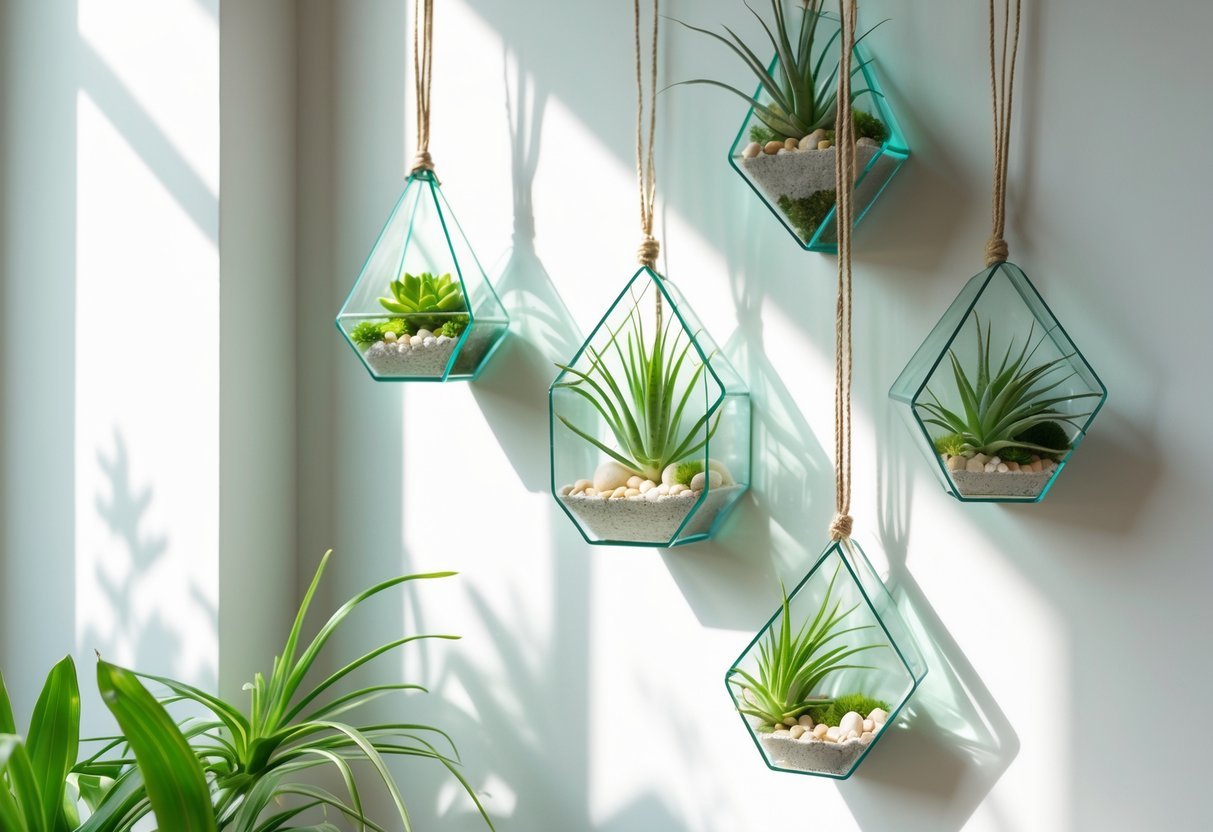
6) DIY hanging terrarium wall cluster
You can build a striking feature by clustering glass terrariums at different heights. Use air plants, moss, or low-water succulents so maintenance stays simple.
Mix clear glass orbs and geometric shapes for visual interest. Hang them with thin wire or macramé for a lightweight, modern look.
Place the cluster near natural light but away from direct sun to protect plants. Rotate pieces occasionally so each gets even light.
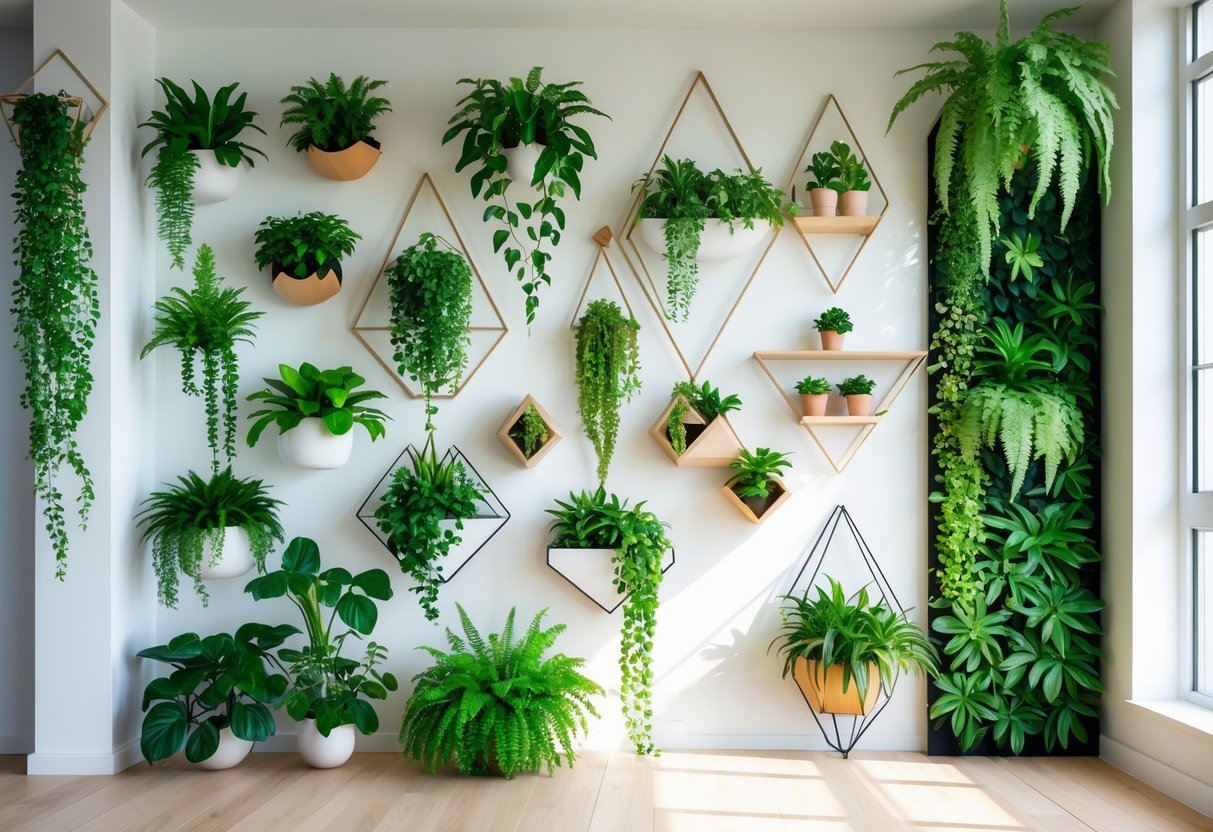
7) Metal grid panel with clipped houseplants
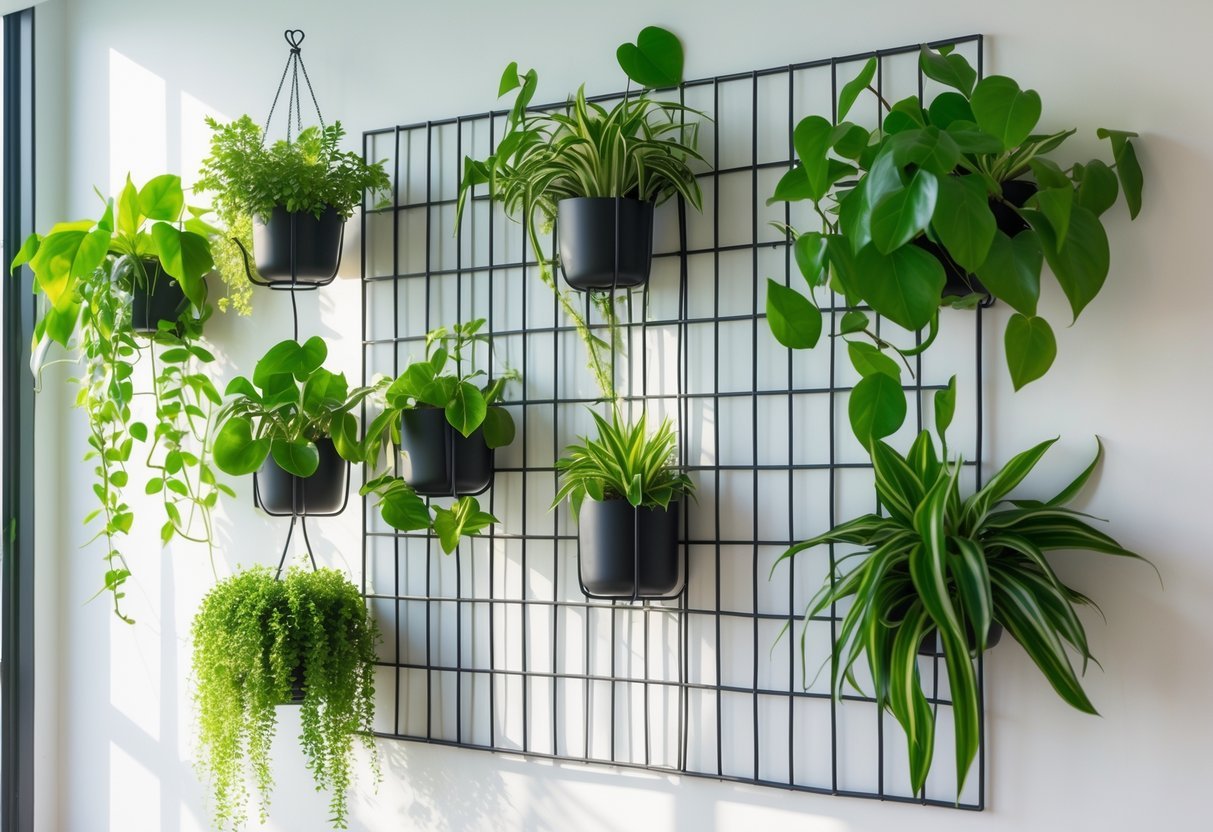
Hang a metal grid on your wall to create a flexible plant display. You can clip small pots, planters, or hanging hooks to the grid and rearrange them when you want a new look.
Choose a mix of trailing and upright houseplants for texture. Use lightweight pots and secure clips to protect both plants and wall.
Benefits of Plant Wall Decor
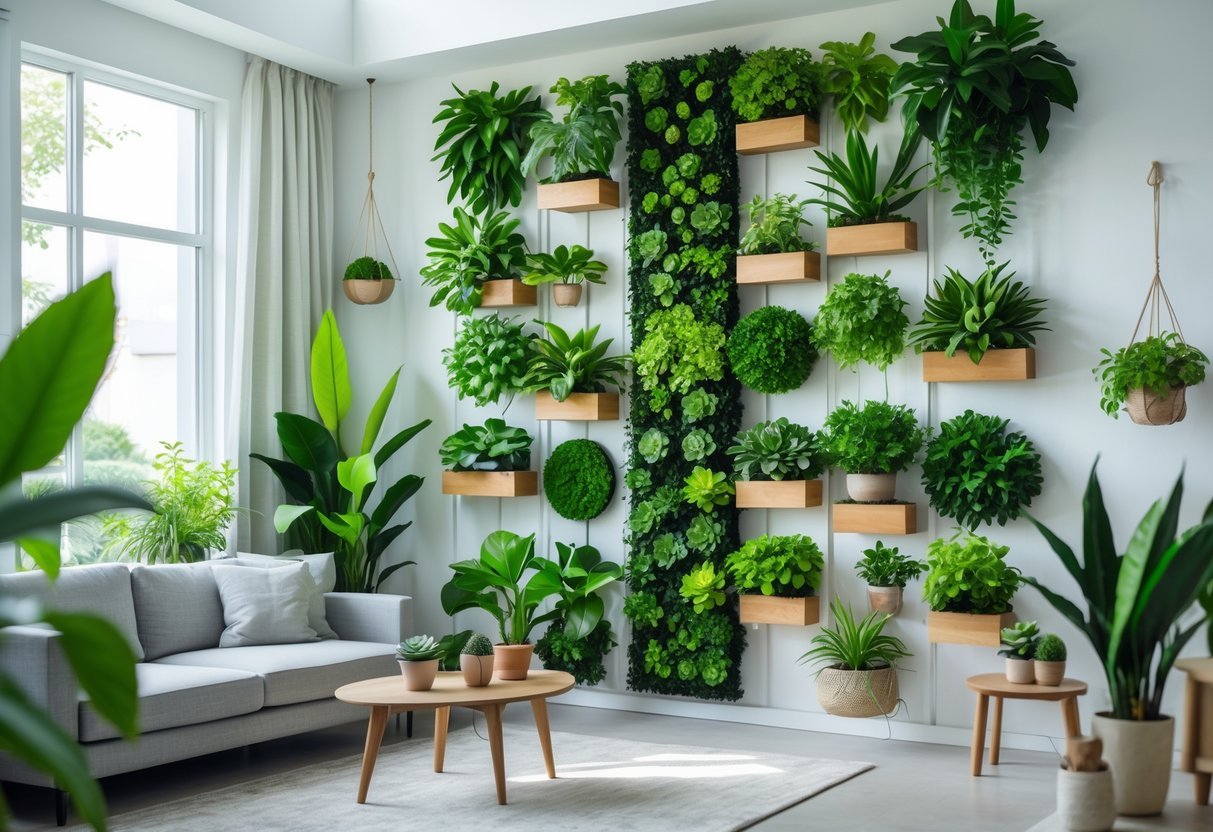
Plant walls bring measurable health, mood, and design benefits to your space. They improve air quality, lift mood, and add layered texture that changes how a room feels and functions.
Enhanced Indoor Air Quality
Plants remove common indoor pollutants like benzene, formaldehyde, and xylene through leaf uptake and root-zone microbes. Choose spider plants, pothos, philodendron, and peace lilies for proven performance in homes and offices.
A living wall with many small pots or a modular planter maximizes leaf surface area, which boosts pollutant removal per square foot.
Maintain air benefits by watering correctly and avoiding overfertilizing, which can release ammonia. Clean dusty leaves every few weeks so plants can photosynthesize and filter air efficiently. If you have pets, verify plant toxicity before installing to keep everyone safe.
Mood and Well-Being Improvements
Seeing and caring for plants lowers stress markers like cortisol and can reduce perceived noise in busy rooms. Position a plant wall where you spend time—behind your desk or near seating—to get regular visual and tactile interaction.
Short daily tasks like misting or pruning give quick, low-effort breaks that improve focus and reduce fatigue.
Plants also help regulate humidity by releasing moisture during transpiration. That extra humidity can ease dry skin and irritated airways during winter, improving comfort without a humidifier. For best results, mix plants with different transpiration rates to keep humidity steady.
Aesthetic Appeal and Texture
A plant wall creates a living focal point that changes across seasons and growth stages. Use a mix of leaf shapes, colors, and heights—trailing pothos, sculpted sansevieria, and feathery ferns—to build depth and contrast.
Frame or backlight the wall to highlight texture and to integrate it with your room’s style. Vertical plant systems come in many forms: mounted pots, pocket planters, and modular panels. Each gives a different visual rhythm and maintenance approach.
Arrange plants in patterns or clusters for a clean modern look, or mix species for a lush, layered feel. Swap or rotate species every few months to refresh the look and adapt to changing light conditions.
Essential Considerations Before Installation
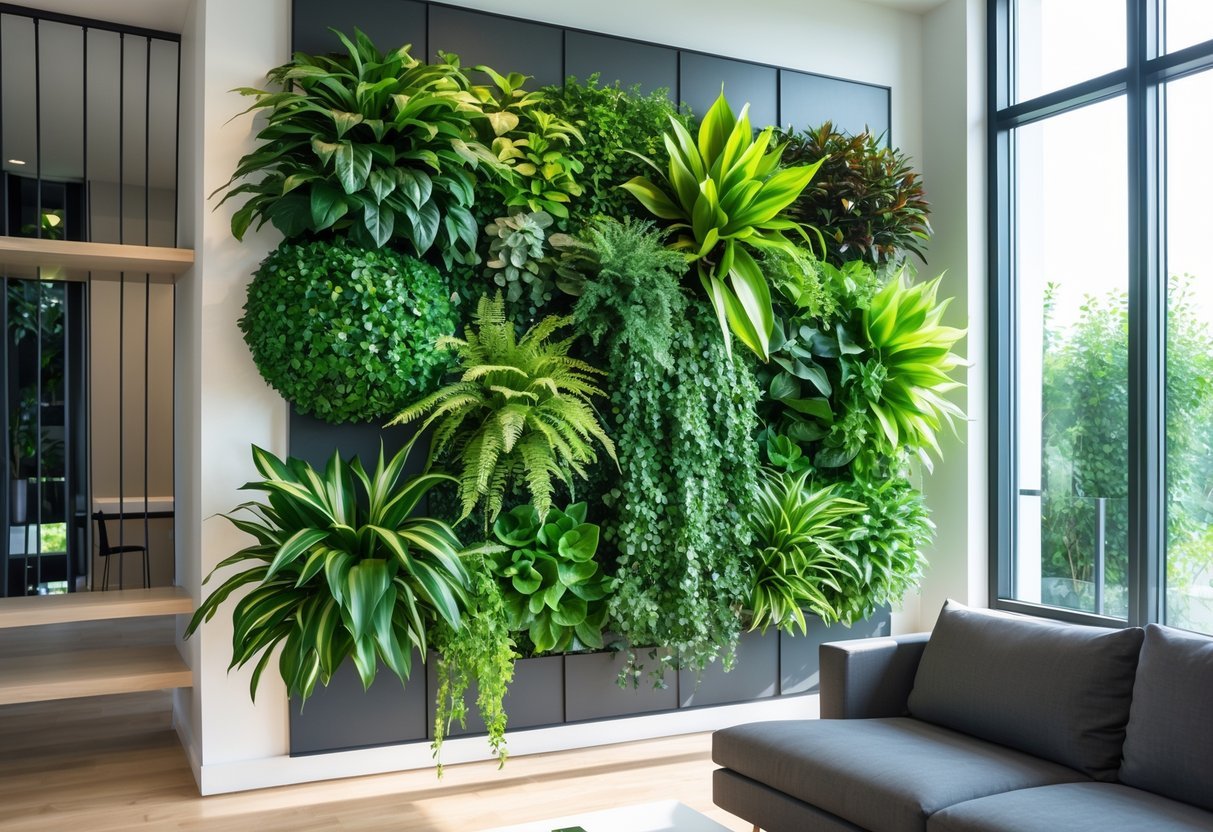
Plan for the light each wall gets, how much room you can devote, and who will care for the plants. Measure the wall, note windows and vents, and decide how often you can water and prune.
Light and Space Requirements
Check the exact hours of direct and indirect light the wall receives each day. South- or west-facing walls often get 4–6+ hours of direct sun; north-facing walls may only get bright, indirect light. Match placement to those conditions.
Measure wall width and height, and mark obstacles like outlets, radiators, or trim. Allow at least 6–12 inches of clearance from heat sources and give trailing plants room to hang. If you plan a dense living wall, estimate pot or panel weight and confirm the wall can support it.
If natural light is poor, plan for grow lights. LED shop lights or plant-spectrum strips work well; place them 12–24 inches above plants and run timers for 10–14 hours per day. For apartments, pick shallow-planter systems to save space.
Choosing the Right Plants
Pick plants that match your light and humidity. Low-light options include pothos, snake plant, and ZZ plant. Bright-light choices include succulents, echeveria, and string-of-pearls. For humid rooms, ferns and philodendrons thrive.
Consider growth habit and size. Use trailing plants to soften edges, upright plants for structure, and compact species for tight panels. Avoid fast-rooting or large trees that will outgrow wall systems in months.
Check toxicity if you have kids or pets. Label each plant with its common name and basic care notes. For mixed systems, group plants with similar water needs to avoid over- or under-watering.
Maintenance and Upkeep
Set a realistic care schedule before installation. Plan weekly quick checks for pests, leaf health, and moisture. Schedule fuller tasks—pruning, fertilizing, and rotating plants—every 4–6 weeks.
Choose irrigation based on your availability. Options include manual watering with a long-neck watering can, drip irrigation hooked to a reservoir, or self-watering planters with wicks. For drip systems, test flow and drainage twice a month.
Keep basic supplies nearby: pruning shears, a moisture meter, balanced liquid fertilizer, and insecticidal soap. Record each plant’s watering interval on a small map or app so you can track needs and spot problems early.
Frequently Asked Questions
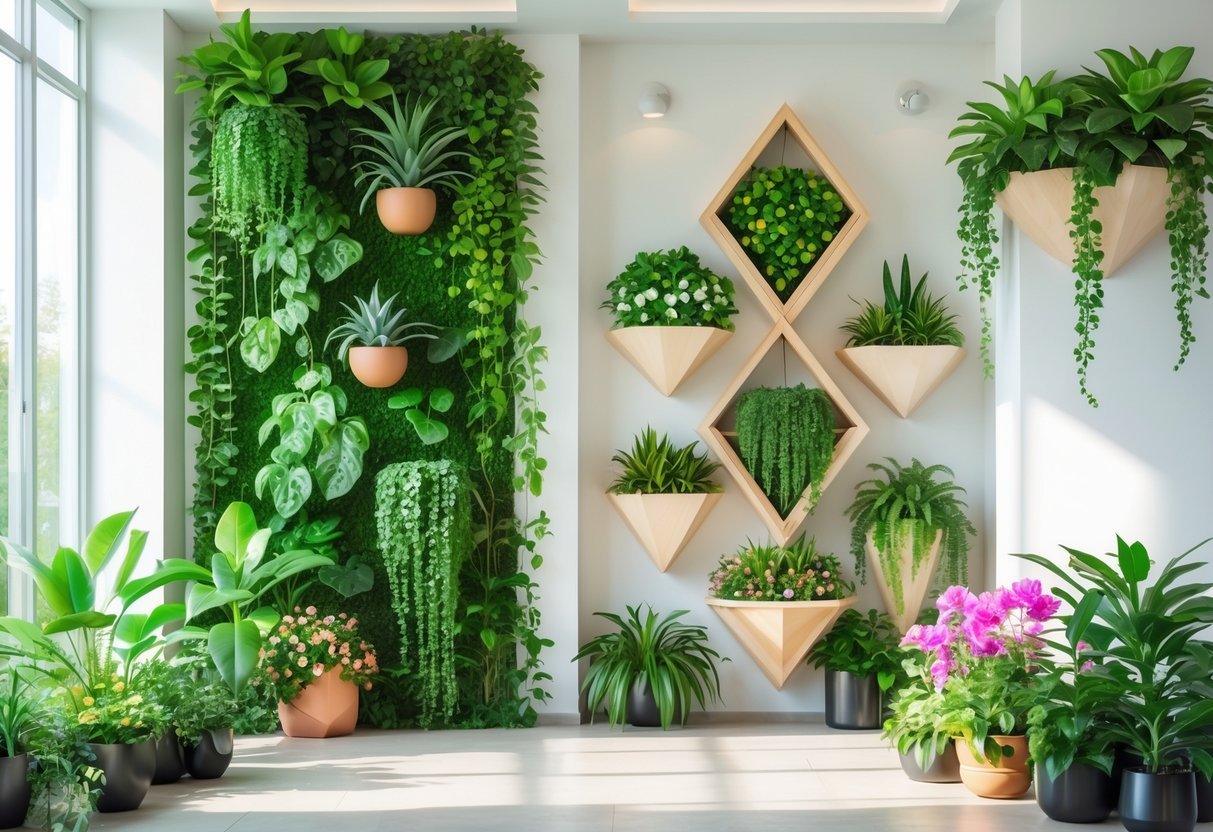
This section answers practical how-tos for choosing plants, building displays, and keeping plant walls healthy. It covers placement, watering, plant choices, and creative DIY options using frames, pallets, macramé, moss panels, and air-plant mounts.
How can I incorporate Pothos into my interior plant wall design?
Pothos adapts well to vertical and modular systems. Place it in hanging planters or modular frames so vines can trail down or weave through the structure.
Choose a bright, indirect light spot to keep variegation strong. Water when the top inch of the soil dries and use a well-draining potting mix to prevent root rot.
Train vines along trellises, macramé cords, or reclaimed wood slats for a layered look. Trim regularly to control length and encourage bushier growth.
What are some creative DIY methods for setting up an indoor plant wall?
Use modular frames to create a vertical succulent garden with easy rearrangement. These frames hold small pots or pocket planters and let you swap plants quickly.
Turn a reclaimed wood pallet into staggered shelves for multiple pots. Secure liners and drainage trays to protect the wall.
Make macramé hanging planters in geometric shapes and hang them at different heights for depth. Combine with wall-mounted air plant displays or living moss panels for mixed textures.
Which plants are best suited for a living room plant wall feature?
Pick low-light tolerant, attractive species like pothos, snake plant, and ZZ plant if natural light is limited. These handle indoor conditions and need less frequent care.
For brighter living rooms, add ferns, philodendrons, and small succulents in modular frames. Mix textures: trailing vines, upright foliage, and compact succulents for visual interest.
Consider air-purifying traits and growth habits. Use lighter-weight plants near mounted frames and heavier pots on secure shelves.
What are the crucial considerations when designing a plant wall for a bathroom?
Check light levels first—bathrooms often need plants that tolerate low light and high humidity. Ferns, moss panels, and pothos work well in moist air.
Plan for drainage and moisture control. Use waterproof backing, trays, or sealed planters to protect walls from leaks and mold.
Choose corrosion-resistant mounting hardware and avoid heavy installations near plumbing lines. Ventilation matters; keep a fan or window to reduce stagnant moisture.
Can you suggest ways to create an outdoor-inspired plant wall for interior spaces?
Mimic outdoor layers by combining living moss panels with trailing vines and vertical succulents. Place reclaimed wood or stone-look backdrops to add natural texture.
Include air plant displays mixed among wood or metal frames for pockets of wild growth. Use varied pot shapes and heights to copy a natural slope.
Add small accent features like a pebble base or low LED uplighting to suggest sunlight and depth.
How do I maintain my interior plant wall to ensure long-term health and aesthetics?
Set a watering schedule based on plant types and container drainage. Check soil moisture with your finger and avoid overwatering modular frames and pallets.
Prune and rotate plants every few weeks to keep even light exposure and tidy growth. Replace any plants that decline to prevent pests or disease spreading.
Inspect mounting hardware and waterproofing twice a year. Clean dust off leaves and refresh soil or fertilizer seasonally for steady growth.