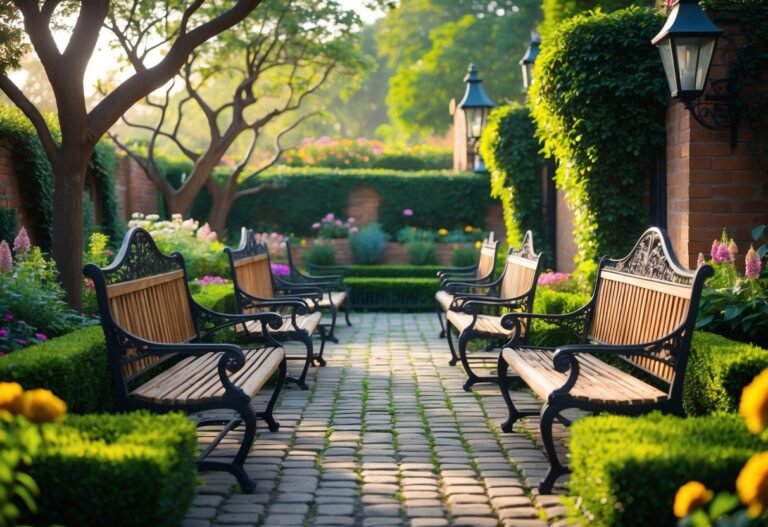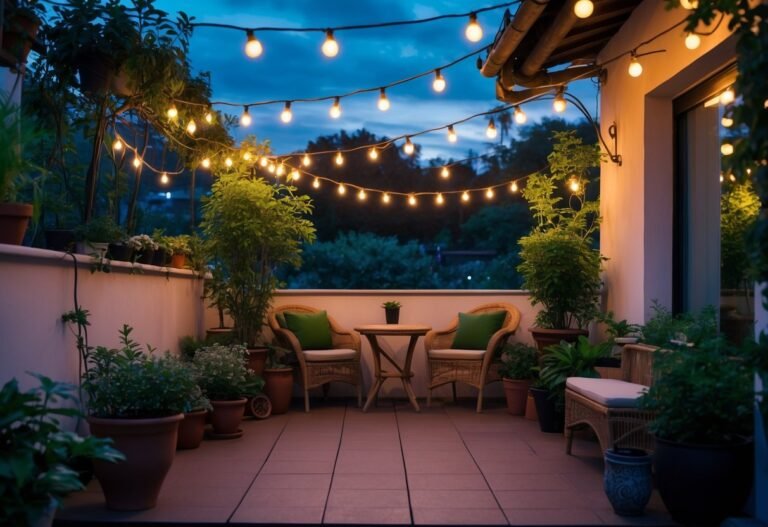
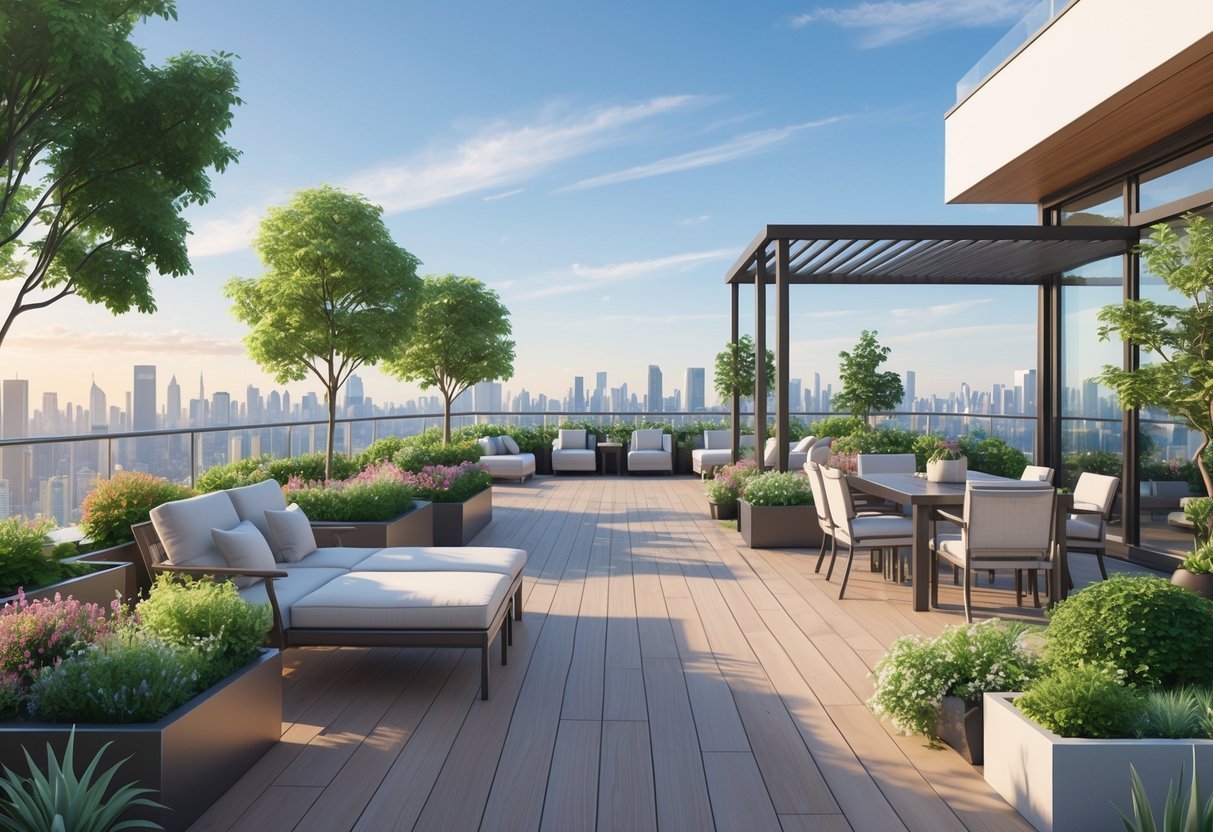
Penthouse Rooftop Terrace Garden Design Tips for Luxury Urban Living
You can turn a penthouse rooftop into a private garden that feels like a calm retreat and a statement space for guests. With the right layout, plants, and durable materials, your rooftop terrace can offer year-round greenery, usable outdoor living areas, and low-maintenance systems like drip irrigation and weatherproof planters. Design choices can balance beauty and safety so the space feels both luxurious and practical.
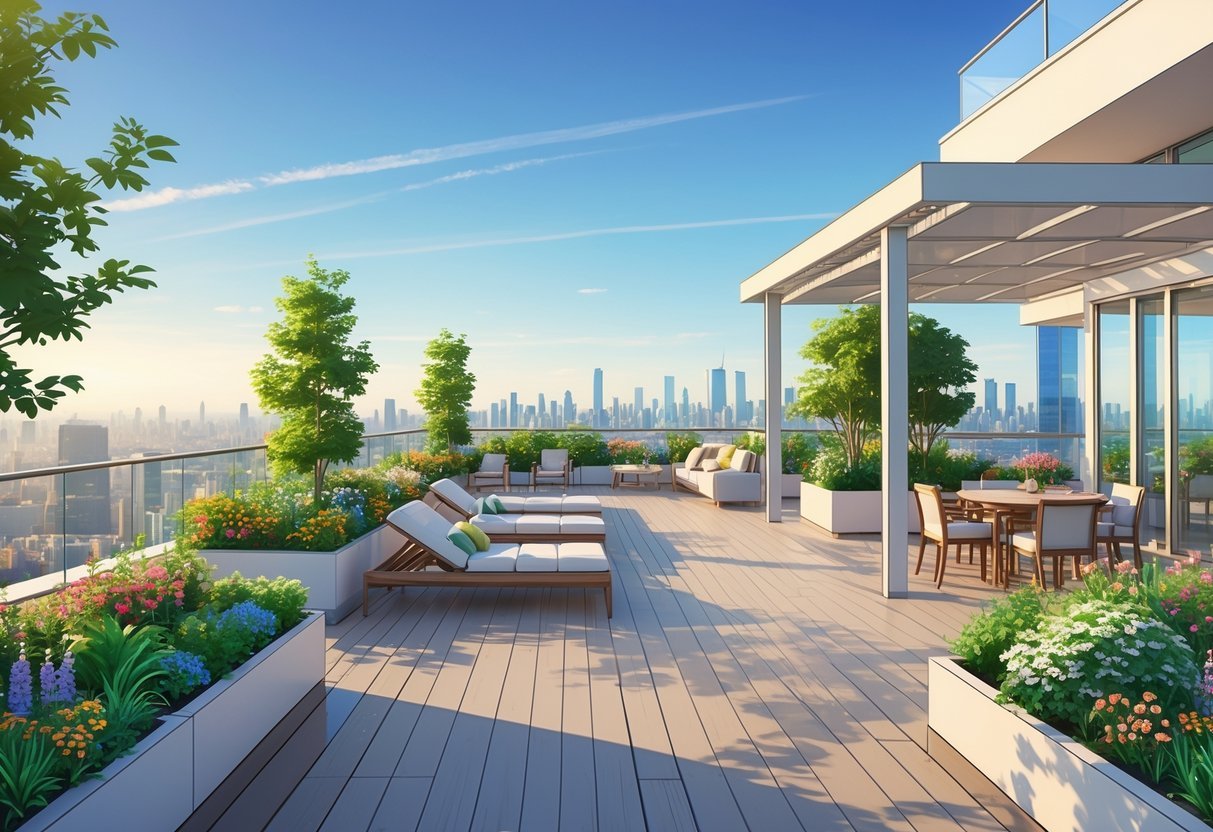
Think about how you want to use the terrace—entertaining, relaxing, or growing edible plants—and plan paths, seating, and shade around those needs. Pay attention to weight limits, wind exposure, and easy irrigation to keep the garden thriving without constant work.
Key Takeaways
- Plan the terrace around how you will use the space.
- Choose durable materials and simple watering systems for low upkeep.
- Check structural limits and safety while designing your rooftop garden.
Designing a Penthouse Rooftop Terrace Garden
You will plan layout, pick plants that handle wind and sun, and choose furniture that fits weight and exposure limits. Focus on drainage, maintenance, and creating zones for cooking, lounging, and plants.
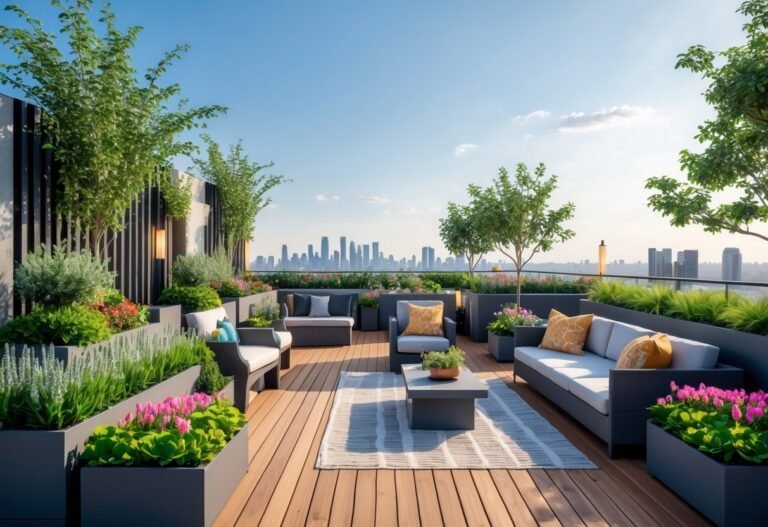
Layout Planning and Zoning
Start by mapping existing features: roof access, HVAC units, drains, and safety rails. Mark areas with full sun, afternoon shade, and prevailing wind direction. Use tape or chalk to draw zones for dining, seating, cooking, and planting.
Prioritize circulation. Keep a 90–100 cm (3 ft) clear path from the door to main zones. Place heavier items—planters, built-in benches—near structural supports or along perimeter walls. Use lightweight, modular planters where roof load is limited.
Include service access. Locate water source, irrigation lines, and storage close to the planting zone. Position a compact grill or pizza oven at least 1–1.5 m (3–5 ft) from combustible materials and ensure local codes allow rooftop appliances.
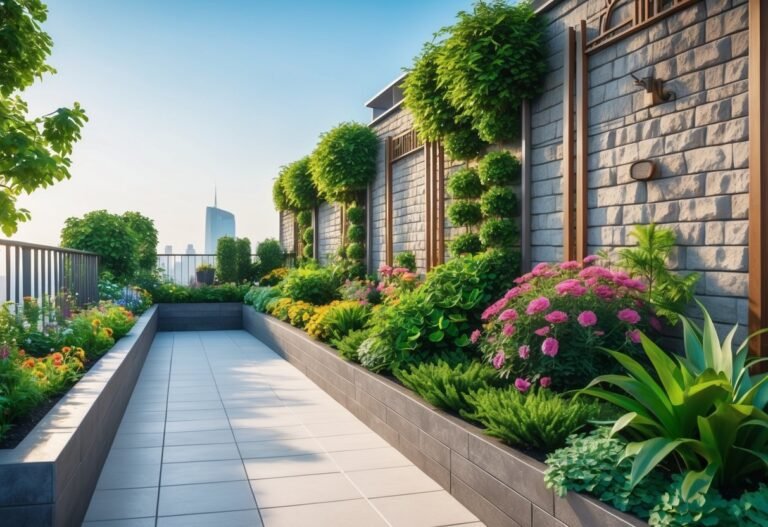
Add visual buffers. Use trellises, low walls, or layered planters to create privacy and reduce wind at eye level. Keep sightlines to the city or view corridors open from main seating areas.
Plant Selection for Rooftop Conditions
Choose plants that tolerate wind, reflected heat, and variable soil depth. Opt for evergreen shrubs (boxwood, dwarf conifers), ornamental grasses (miscanthus, feather reed), and hardy perennials (sedum, lavender). These handle rooftop stress and need less replacement.
Mix heights and textures. Use tall windbreaks like bamboo or pleached trees at the perimeter and low groundcovers in shallow troughs. Include seasonal color with container annuals and bulbs for spring interest.
Match container depth to root size. Small annuals need 15–20 cm (6–8 in), shrubs need 30–60 cm (12–24 in), and small trees need deeper structural planters. Use high-quality potting mix with good drainage and add slow-release fertilizer.
Plan irrigation and winter care. Install drip irrigation with pressure regulators and freeze-proof shutoffs. Choose plants rated for your climate zone and protect sensitive specimens with removable covers or moveable containers.
Outdoor Furniture and Decor
Pick furniture rated for outdoor use and salt or UV exposure if your building faces coastal winds. Choose lightweight aluminum or synthetic wicker for easy rearrangement. Anchor large pieces if wind gusts exceed local norms.
Think multifunctional. Use benches with built-in storage, foldable dining sets, and stackable chairs to save space. Select cushions with quick-dry foam and solution-dyed acrylic fabric for fast drying and fade resistance.
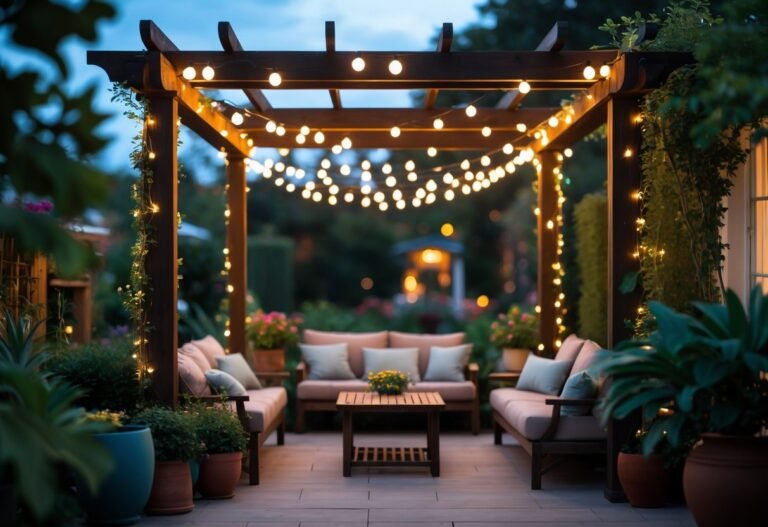
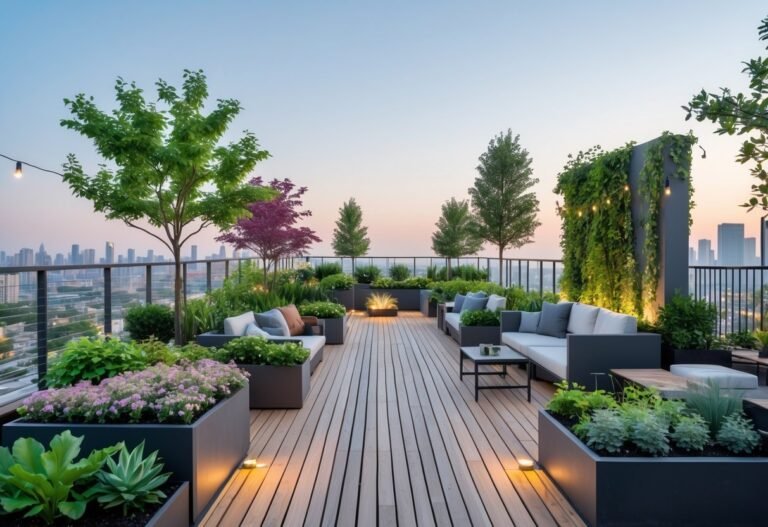
Add durable surfaces and lighting. Use composite decking or porcelain tiles over roof membrane where allowed. Install low-voltage LED lighting for paths and task areas; place lights on timers or smart controls.
Keep decor minimal and functional. Use durable planters, stainless or powder-coated metal accessories, and weatherproof rugs. Secure loose items and store cushions indoors during storms.
Structural Considerations and Safety
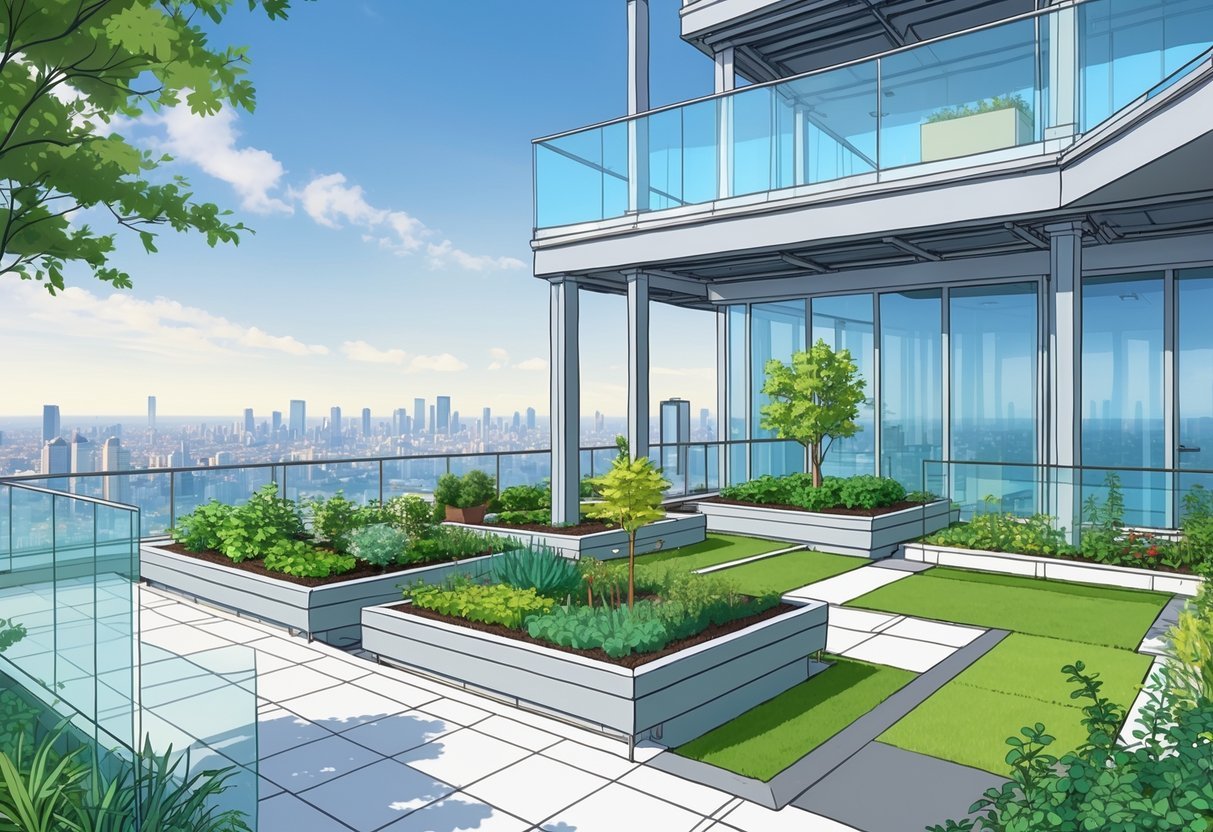
You must confirm your roof can carry the garden’s weight, stop water from entering the building, protect plants and people from wind, and provide safe access and barriers. Get an engineer to calculate loads, specify waterproofing, and detail rails and doors before work starts.
Weight Load and Waterproofing
Have a structural engineer check live and dead loads and give you a stamped report. Tell them plant types, soil depth, pot weights, planters, paving, furniture, and water features so they can size beams and slabs. Typical intensive roof gardens need 150–500 kg/m² depending on soil depth and hardscape; lightweight green roofs can be 50–150 kg/m².
Protect the structure with a multi-layer waterproofing system: a root-resistant membrane, primary waterproofing (liquid-applied or sheet membrane), and a protection board. Add a drainage layer and filter fabric to avoid ponding and root penetration. Include inspection points and access to drains so you can clear blockages before they cause damage.
Plan for water management: design positive falls to outlets, use overflow paths, and ensure roof outlets match the maximum rainfall for your area. Detail load paths for concentrated loads (heavy planters or equipment) and place them over structural supports or add local reinforcement.
Wind Protection Strategies
Study local wind loads and exposure; buildings on corners or taller than neighbors face stronger gusts. Use wind maps or the engineer’s guidance to set design pressures for screening and tall planting. Anchor all large planters and structures to resist uplift and overturning.
Design wind screens that balance shelter and airflow. Perforated panels, slatted screens, or staggered hedging cut gusts while reducing turbulence. Locate seating and fragile plantings in the most sheltered zones, typically near parapets or behind built structures.
Consider plant selection and placement: low, dense shrubs and groundcovers reduce wind erosion, while tall trees need wind-tolerant species and secure root barriers. Test screens and furniture connections for the expected wind speeds and specify corrosion-resistant fixings.
Safety Railings and Access
Install railings to meet local building codes for height, load, and opening limits. Common requirements call for 1.1 m minimum height on residential terraces and 0.9 m for some balustrades, but you must follow your jurisdiction’s rules. Provide wind-load and climb-resistance specifications in the railing design.
Use guarded access points: lockable doors, ramp gradients within accessibility standards, and non-slip thresholds. Add clear routes to drains and service hatches so maintenance crews can work safely. Ensure gates and handrails are continuous and corrosion-resistant.
Label emergency exits and include fall-protection anchors for maintenance work. Specify tempered or laminated glass where glazing forms part of the barrier. Maintain a schedule for inspecting railings, fixings, and access hardware at least annually and after severe weather.
Sustainable and Smart Solutions
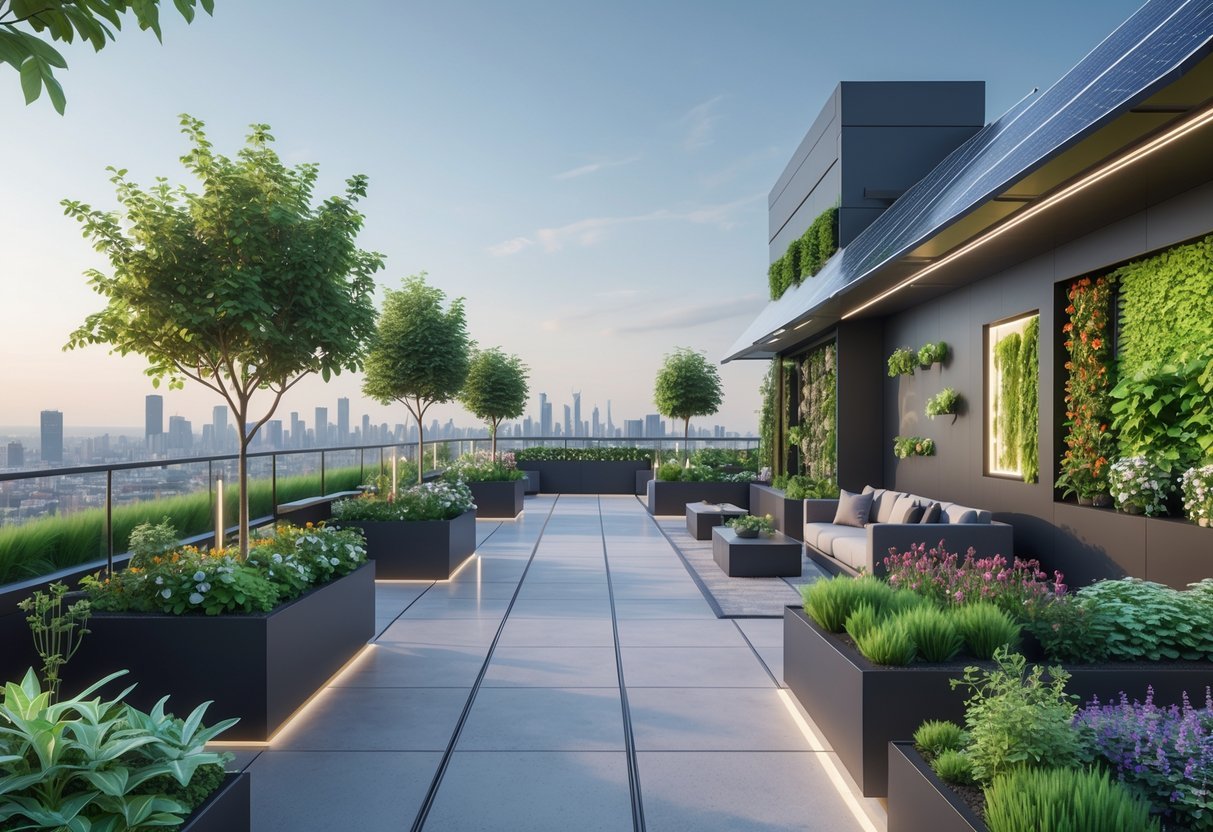
Focus on water efficiency, structural safety, and low-energy systems that reduce maintenance and operating costs. Choose materials and controls that save resources and match your building’s load limits.
Irrigation and Drainage Systems
Install a drip irrigation network with separate zones for planters and turf to match different water needs. Use pressure-compensating emitters and a timer or smart controller that schedules water by local weather data to avoid overwatering.
Include a layered drainage system under planting areas: a lightweight growing medium, a water retention layer, and a root barrier. Add inspection ports and overflow scuppers that tie into the building’s storm system to prevent backups.
Consider rainwater harvesting with a cistern or tank sized to your roof area and irrigation demand. Filter harvested water before use and add a backflow preventer. Monitor soil moisture with simple sensors so you only run irrigation when needed.
Eco-Friendly Materials and Lighting
Pick lightweight, recycled or certified materials to reduce load and embodied carbon. Use modular planter kits with expanded clay or perlite mixes instead of heavy topsoil. Choose aluminum, stainless steel, or composite decking that resists rot and needs little upkeep.
For lighting, specify LED fixtures with warm color temperature and dimming controls. Mount fixtures on timers or motion sensors and connect key areas to a low-voltage circuit for safety. Use solar-powered path lights where wiring is difficult, and ensure all fixtures have an IP rating suitable for rooftop exposure.
Prioritize non-toxic finishes and native plant choices to lower pesticide needs. Label materials with weight and maintenance notes so you and your contractor can plan service and avoid surprises.
Frequently Asked Questions

This section covers practical steps for planning, planting, and maintaining a rooftop terrace garden. Expect clear guidance on design, costs, plant choices, structural needs, and how a rooftop garden affects property value.
How can I design a garden in a rooftop penthouse?
Start by measuring the terrace and noting load limits, sun exposure, wind, and access points. Use those facts to choose containers, soil depth, and plant types that fit your space and structure.
Plan zones for dining, lounging, and planting. Place heavier elements near structural supports and use lightweight containers or raised beds where load is limited.
Include irrigation and drainage in the design. Drip irrigation and a clear drainage path protect the roof and keep plants healthy.
What are the key considerations when looking for a penthouse with a rooftop terrace?
Check the building’s structural capacity and any engineering reports. Ask for documented load limits and past modifications to the roof.
Confirm legal and insurance rules. Review building codes, homeowner association rules, and how the rooftop affects your insurance.
Evaluate utilities and access. Look for water hookups, electricity, safe access for deliveries, and space for maintenance equipment.
What elements define a high-quality rooftop terrace garden?
A solid waterproofing and drainage system prevents leaks and roof damage. Quality membranes and overflow drains are essential.
Good soil and proper containers support plant health. Use lightweight, well-draining growing media and containers sized for root depth and wind stability.
Smart layout and hardscaping improve use and longevity. Durable decking, wind screens, planters secured to prevent tipping, and integrated irrigation make the space functional and low-maintenance.
How much additional cost should I expect for maintaining a garden in a penthouse?
Monthly maintenance for a modest rooftop garden typically ranges from $100 to $400 for basic watering, pruning, and seasonal care. Costs vary by garden size, plant types, and whether you hire a pro.
Expect occasional higher expenses for replacements, pest control, or irrigation repairs. Budget for annual checks on waterproofing and structural inspections.
Can rooftop terrace gardens increase the property value of a penthouse?
Yes, a well-designed rooftop garden can make a penthouse more attractive to buyers and renters. Buyers often pay more for usable outdoor living, privacy, and low-maintenance greenery.
Value gains depend on quality and upkeep. Professional design, durable materials, and documented roof integrity support a stronger price premium.
What are the best plants to cultivate in a penthouse rooftop garden?
Choose plants that tolerate wind, sun, and temperature swings. Drought-tolerant perennials, ornamental grasses, small trees in large containers, and Mediterranean herbs work well.
Use native and low-maintenance species for easier care. Mix evergreen shrubs for year-round structure with seasonal flowers for color.
Include edible options if you want produce. Compact fruit trees, container vegetables, and herbs thrive with good soil and regular watering.