Modern Garden Design Ideas for Small Urban Yards and Sustainable Landscapes
You can make your outdoor space feel calm, modern, and useful without starting from scratch. Use clean lines, simple plant palettes, and a few bold materials like stone, metal, or wood to create a fresh look that fits your home and budget. A modern garden focuses on clear shapes, low-maintenance plants, and smart hardscaping so you get style and function at once.
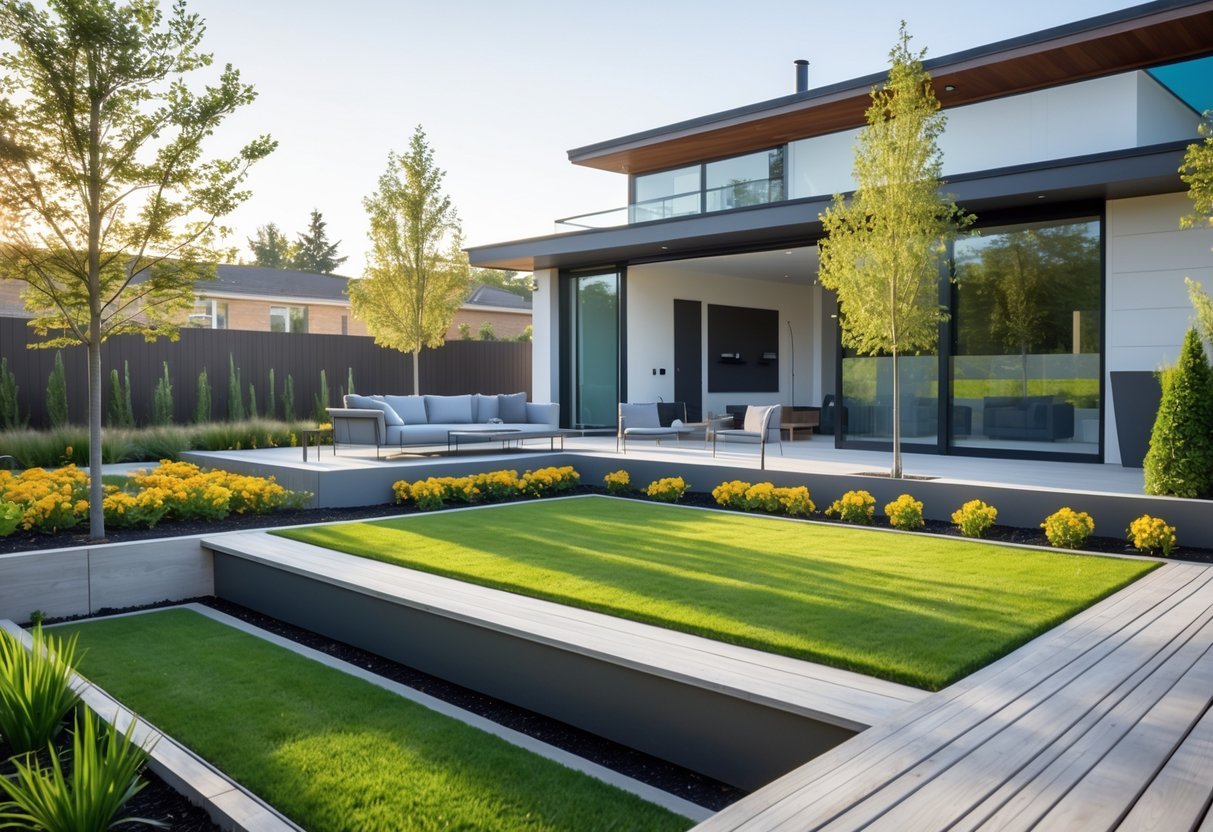
Think about how you want to use the space—lounging, dining, or quiet reflection—and let that guide layout and features. Small changes like geometric paths, layered lighting, or a sculptural planter can make a big impact and keep upkeep easy.
Key Takeaways
- Choose simple shapes and limited plant types for a tidy, modern look.
- Add durable materials and practical features to boost style and use.
- Design the layout around how you want to spend time outdoors.
Core Principles of Modern Garden Design
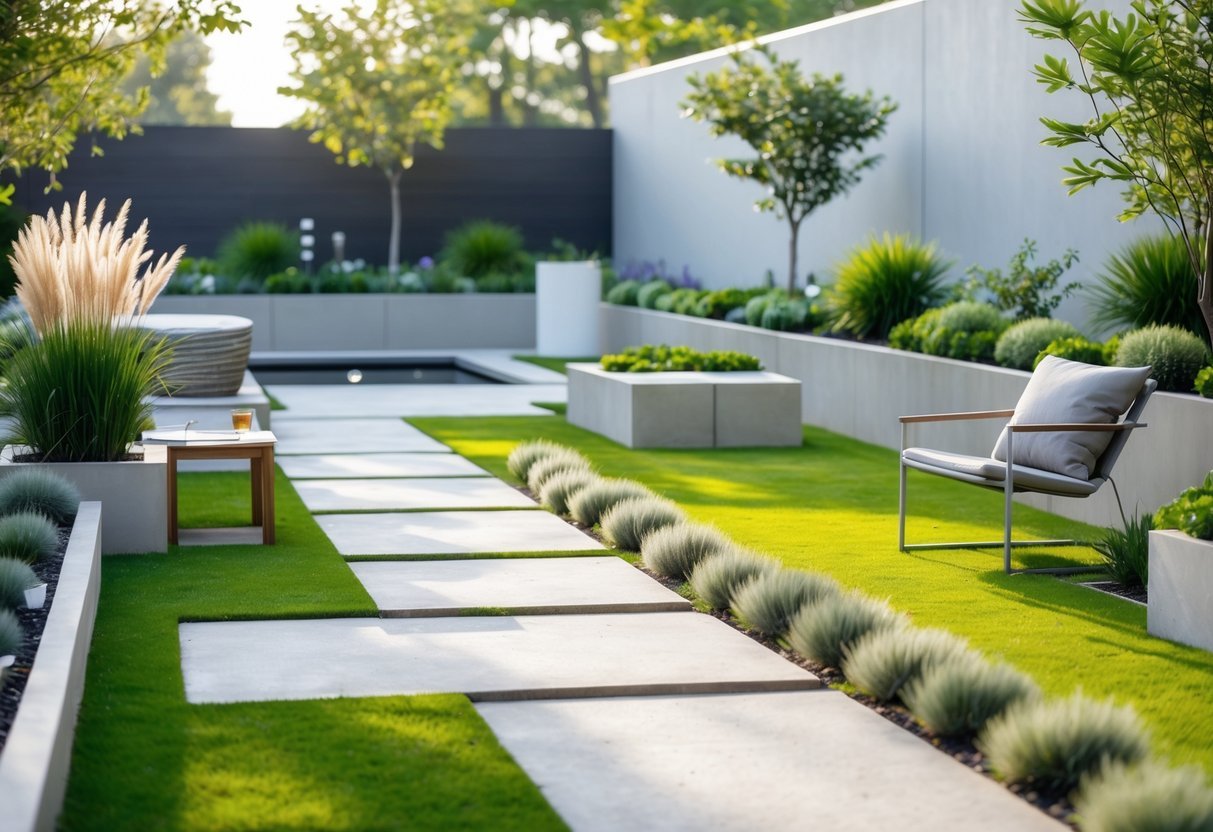
Focus on simplicity, strong shapes, and clear open areas. These choices make maintenance easier, improve flow, and create a calm, modern look.
Minimalist Aesthetics
You remove clutter and keep plant choices purposeful. Pick a few plant types with repeated forms—ornamental grasses, boxwood, and a single flowering accent—to create rhythm without chaos. Use a tight color palette: two or three plant colors plus foliage tones.
Limit decorations. Choose one or two focal pieces like a bench or sculpture rather than many small ornaments. Materials should match the house or patio—concrete, steel, or natural stone work well.
Plan for easy care. Group plants by water need and use mulch or low-maintenance groundcover. This reduces pruning and watering while keeping the clean look.
Clean Lines and Geometric Layouts
You prioritize straight edges, circles, or simple rectangles to guide sightlines. Define planting beds with crisp borders—steel edging, cut pavers, or narrow gravel strips—to keep shapes readable.
Use geometry to create function. A square lawn can frame a fire pit; a long rectangle can form a pathway garden. Repeat the same shape at different scales to tie the space together.
Hardscape materials should align with the geometry. Lay pavers in grid patterns or use long planks to emphasize direction. Keep joints tight and patterns consistent for a refined appearance.
Open Space Utilization
You plan clear zones for activity, movement, and rest. Reserve open turf or gravel areas for play or gatherings, and place seating where views and sun exposure work best.
Make paths direct and wide enough for two people to walk side-by-side. Use negative space—empty areas—as a design element to highlight features like a tree or sculpture.
Balance openness with structure. Add low hedges, raised beds, or a single statement tree to frame open areas without crowding them. This keeps sightlines clean while giving the garden definition.
Contemporary Landscaping Features
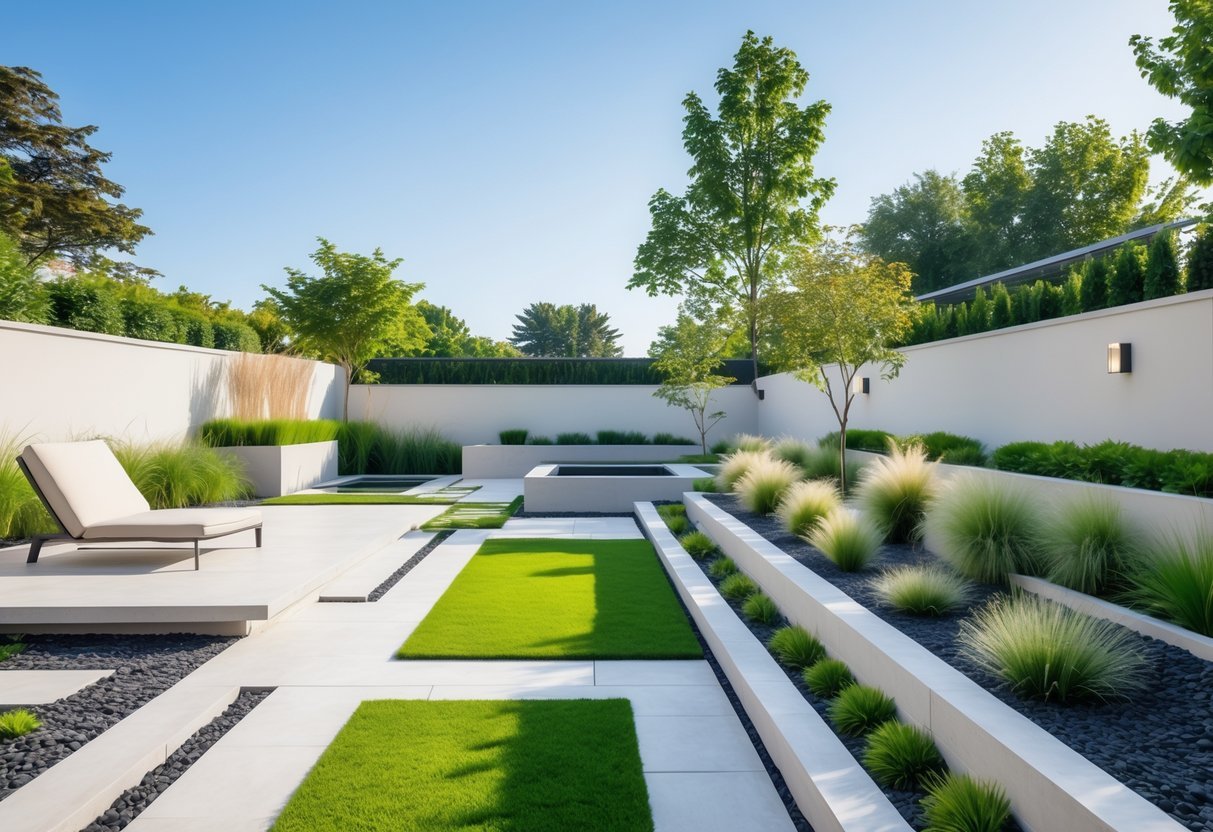
You will learn practical ways to make your garden modern, efficient, and beautiful. Focus on long-lasting materials, smart water elements, useful lighting, and plants that mix food and form.
Sustainable Materials
Choose materials that last and need little upkeep. Use porcelain pavers, acid-washed concrete, or recycled composite decking for paths and patios. These resist stains, fading, and cracking better than untreated wood.
For edging and retaining walls, pick locally quarried stone or modular concrete blocks. They cut transport emissions and reduce cost. Use permeable gravel or porous pavers in driveways and high-traffic areas to let rain soak into the soil and reduce runoff.
Add recycled materials for detail work: reclaimed wood for benches, crushed glass mulch for color accents, or salvaged metal for planters. Seal surfaces with low-VOC products and use stainless or powder-coated fasteners to avoid corrosion.
Water Features Integration
Place water features where you can hear them from seating areas and see them from main windows. Small reflecting pools or linear troughs suit modern gardens. Use hidden pumps and insulated plumbing to cut noise and extend pump life.
For moving water, pick variable-speed pumps to control flow and save energy. Integrate a simple biofilter or planted gravel filter to keep water clear without harsh chemicals. If space is tight, use a wall-mounted cascade or a bubbling urn that recirculates water.
Install an automated timer and a freeze-protection valve in colder climates. Line basins with durable EPDM liners or concrete with a proper sealant. Light the feature with low-voltage LED spotlights placed to reduce glare and highlight texture.
Outdoor Lighting Techniques
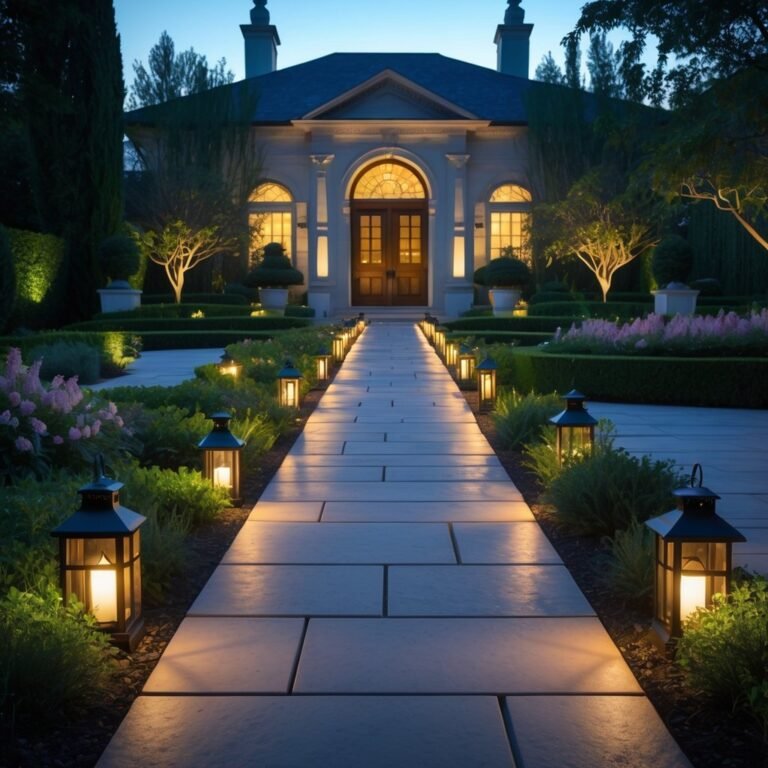
Layer lighting into three zones: task, accent, and ambient. Use warm-white LEDs (2700–3000K) to create a cozy feel while keeping color true. Place task lights along steps and pathways for safety.
Accent lighting should highlight specimen plants, sculptures, or water features. Use narrow-beam spotlights and aim them from low angles to create depth. For ambient light, install dimmable wall washers or string LED tape under overhangs to set mood.
Choose fixtures with IP65+ ratings for wet areas and corrosion-resistant finishes for coastal sites. Use motion sensors at entry points and smart controls to schedule scenes and save energy. Conceal wiring in conduit under paving or inside raised beds for a clean look.
Edible and Decorative Plant Combinations
Mix fruiting shrubs, herbs, and ornamental grasses to get beauty and function. Plant espaliered apple or pear trees along walls to add vertical form and fruit production. Combine rosemary, lavender, and thyme in gravel beds for scent, drought tolerance, and pollinator value.
Use layered planting: low groundcovers like thyme, mid-height herbs or perennials, and taller fruiting shrubs at the back. Repeat plant groups in odd numbers (3–5) for a modern, balanced look. Include edible flowers such as nasturtium or calendula to add color and attract beneficial insects.
Choose disease-resistant varieties and plan irrigation zones by water need. Use mulched berms or raised beds filled with well-draining soil to improve yields. Label plants with simple metal tags for easy care and harvest.
Innovative Outdoor Living Spaces
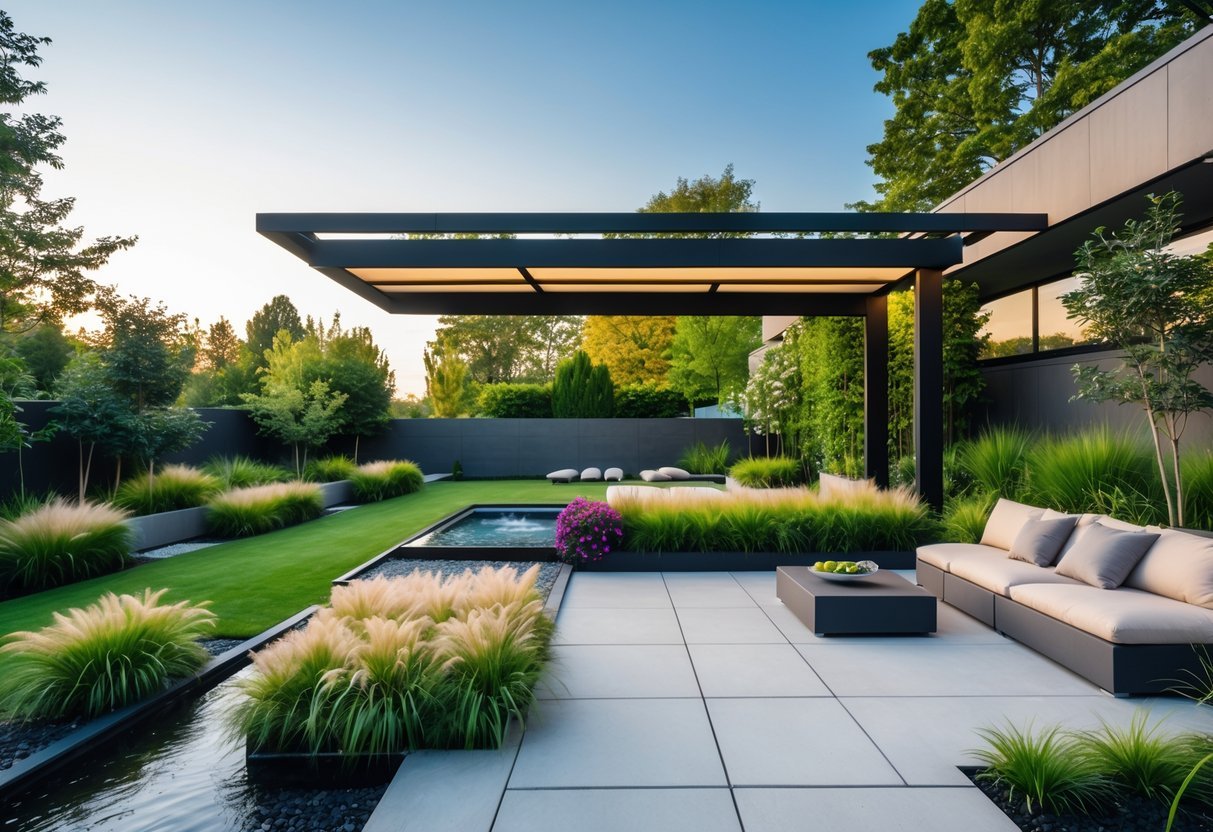
You can create outdoor rooms that work for cooking, relaxing, and play. Prioritize durable furniture, smart storage, and layered lighting so the space functions day and night.
Multi-Functional Seating Areas
Design seating that serves more than one purpose. Use built-in benches with storage beneath for cushions, toys, or grill tools. Choose weatherproof materials like powder-coated steel, teak, or composite wood to reduce upkeep.
Arrange seating to support different activities: a low sofa and coffee table for conversation, movable stools for extra guests, and a bench along a dining table for meals. Add cushions in quick-dry fabrics and removable covers for easy cleaning.
Include at least one surface at dining height and one at lounge height. Position seating near a heat source—an infrared heater, fire pit, or chiminea—to extend use into cool evenings. Keep pathways clear so people can move freely.
Vertical Gardening Solutions
Use walls, fences, and trellises to grow plants when ground space is limited. Install modular panel systems or hanging pots to create a living wall you can change seasonally. Choose lightweight substrates and a simple irrigation line to avoid wall damage.
Mix plant types by layer: a base of trailing plants, a middle of foliage or herbs, and a top layer of flowering accents. For edible vertical gardens, stagger herbs and salad greens where you can harvest easily.
Anchor vertical elements securely and plan for maintenance access. Add a drip irrigation timer and leave 6–12 inches between modules for airflow to prevent rot. Label plants so you remember watering needs.
Integrated Art and Sculptures
Pick art that complements the garden scale and materials. Use metal sculptures near gravel or paving for contrast, and weather-resistant ceramics by seating areas for color accents. Place pieces where lines of sight from the house or patio highlight them.
Combine functional art—sculptural planters, water features, or trellis panels—with standalone pieces. Balance height and mass: a tall sculpture anchors a corner, while low works frame pathways. Use lighting to show texture and create evening focal points.
Mount sculptures on simple bases or plinths to protect them from soil moisture. Consider removable mounts for winter storage in cold climates.
Frequently Asked Questions
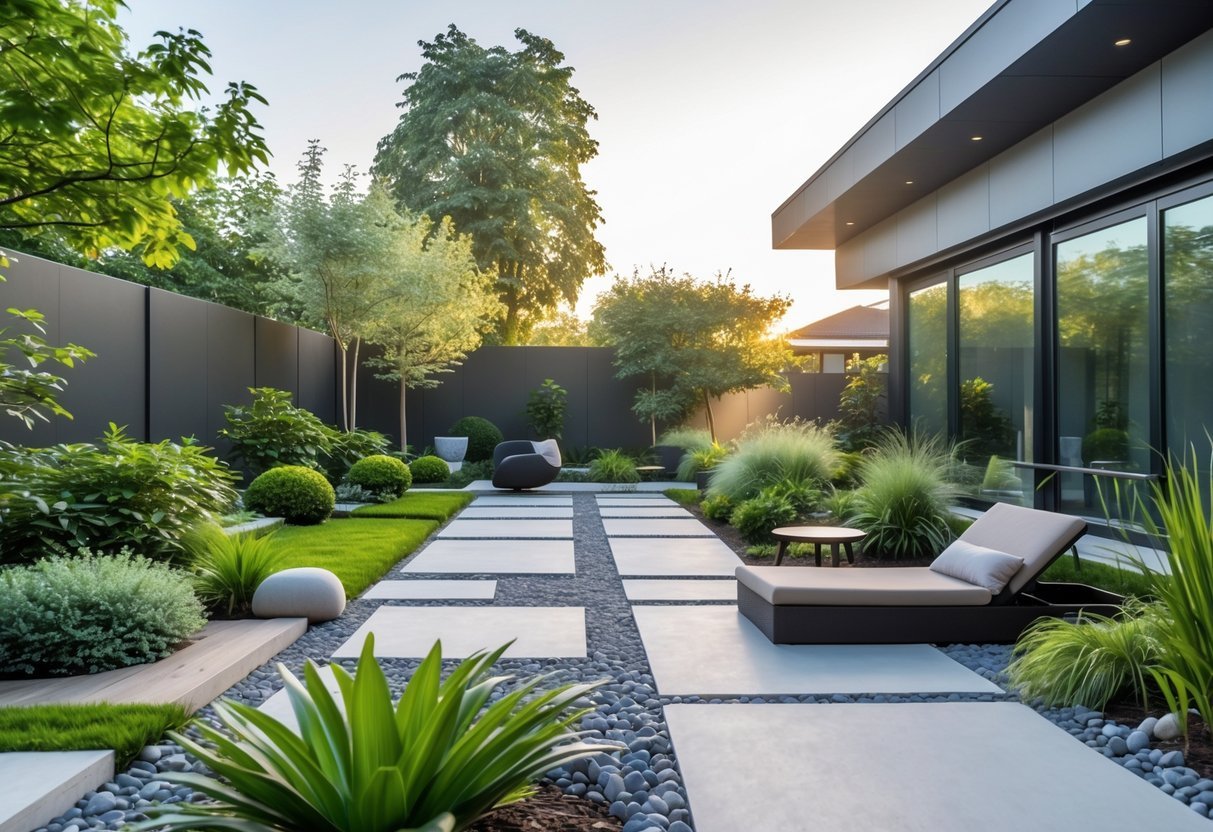
Modern gardens use clean lines, strong shapes, and low-water plants. You can mix gravel, pavers, architectural plants, and focused lighting to make a simple, modern outdoor room.
What are the key elements of a modern garden design?
Use geometric hardscaping: straight-edged patios, rectangular pavers, and gravel rings.
Choose architectural plants like palms, agaves, and clipped shrubs for strong silhouettes. Add a limited palette of materials—concrete, metal, wood, and gravel—to keep the look cohesive.
Add focal points such as a single specimen plant, a water blade, or a sculptural feature. Use uplighting or path lights to highlight those elements at night.
How can I create a low maintenance garden with a contemporary look?
Pick drought-tolerant and slow-growing plants that need little pruning. Group plants with similar water needs and use drip irrigation to cut water use.
Cover soil with gravel, mulch, or larger pavers to reduce weeding. Choose durable materials for paths and seating that won’t need frequent repair.
Keep the planting palette limited to three to five species. Fewer varieties means less pest and disease work and a cleaner visual effect.
What are some innovative ideas for landscaping a front yard in a modern style?
Use layered hardscape planes: a narrow concrete strip, a gravel bed, and raised planters to add depth. Replace a full lawn with lawn alternatives—gravel, groundcover, or synthetic turf in careful shapes.
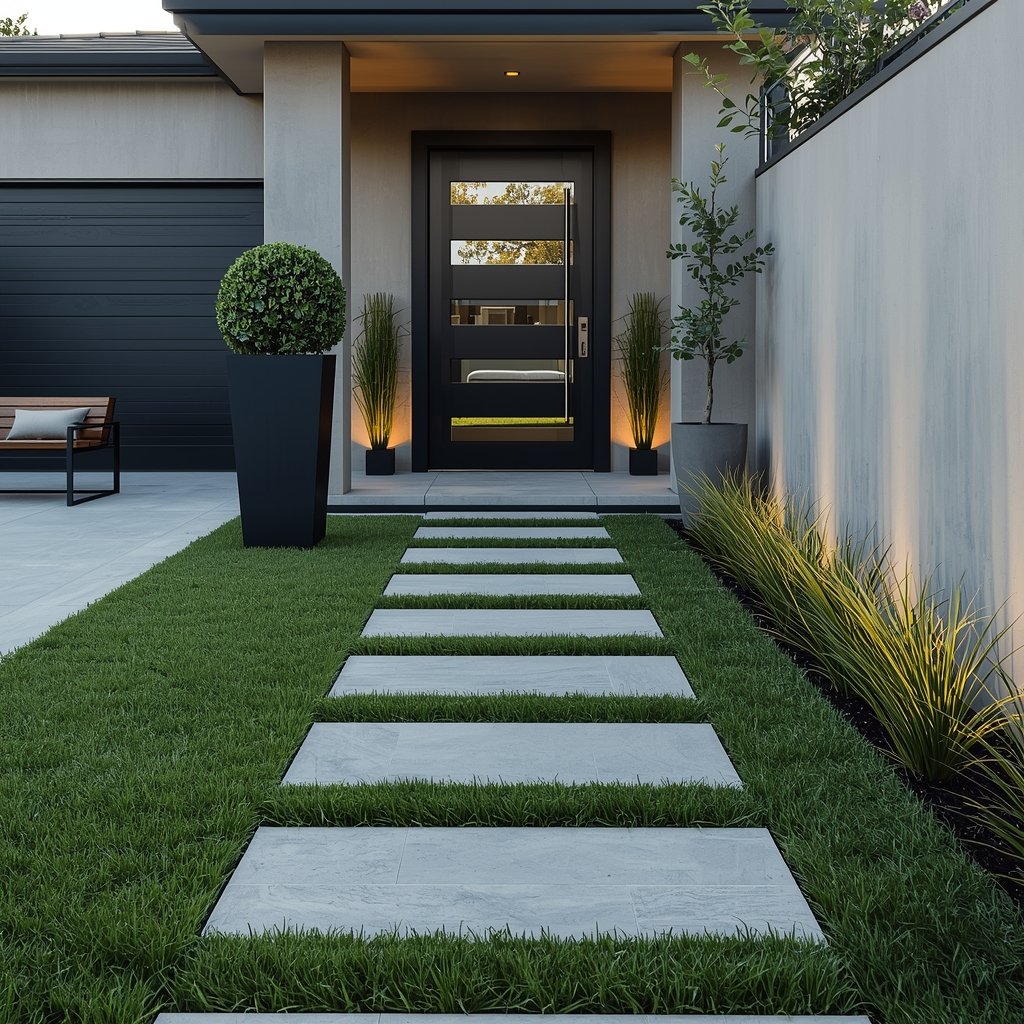
Frame the entry with matching planters or vertical screens and add a clear walk line with rectangular pavers. Integrate smart lighting and house numbers in a minimal font for a tailored look.
How do I incorporate a minimalist approach to my garden landscaping?
Limit plant variety and repeat a few shapes throughout the space. Use open negative space—gravel or lawn—to let key elements stand out.
Choose one strong material for paths or walls and keep colors neutral. Remove small decorative clutter and focus on scale, form, and texture instead.
Can you suggest ways to integrate a pergola into a modern garden layout?
Place the pergola over a dining or seating area with a simple rectangular plan. Use slim metal posts and horizontal slats for a clean profile.
Add a retractable shade or motorized louvre if you need sun control. Anchor the pergola with linear pavers or a raised planter to tie it into the rest of the design.
What are the current garden decor trends for outdoor spaces?
Architectural plants and single-specimen features remain popular for sharp silhouettes. Gravel beds, clean-cut lawns alternatives, and linear pavers create modern geometry.
Outdoor lighting and low-maintenance materials get more attention. People also favor multifunctional features like built-in seating, fire bowls, and discreet storage.