7 Metal Flowers Garden Ideas to Transform Your Outdoor Space
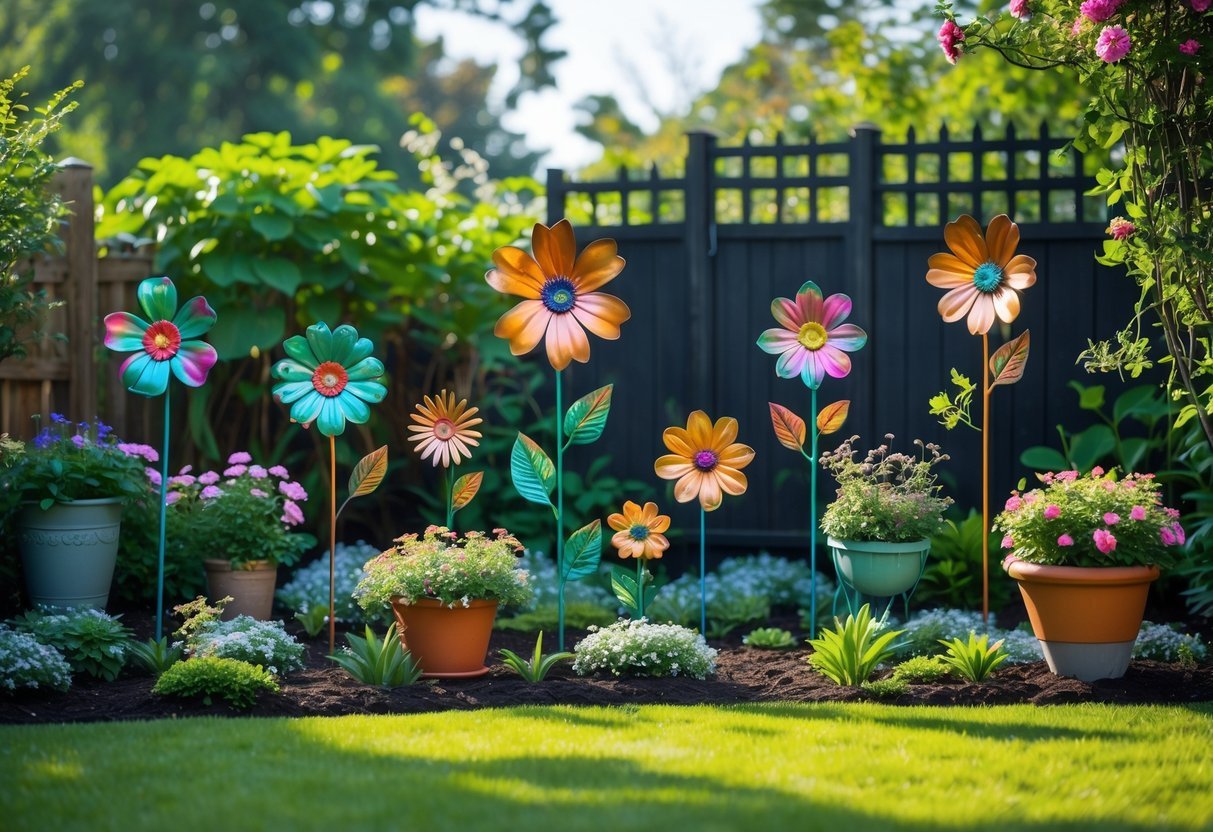
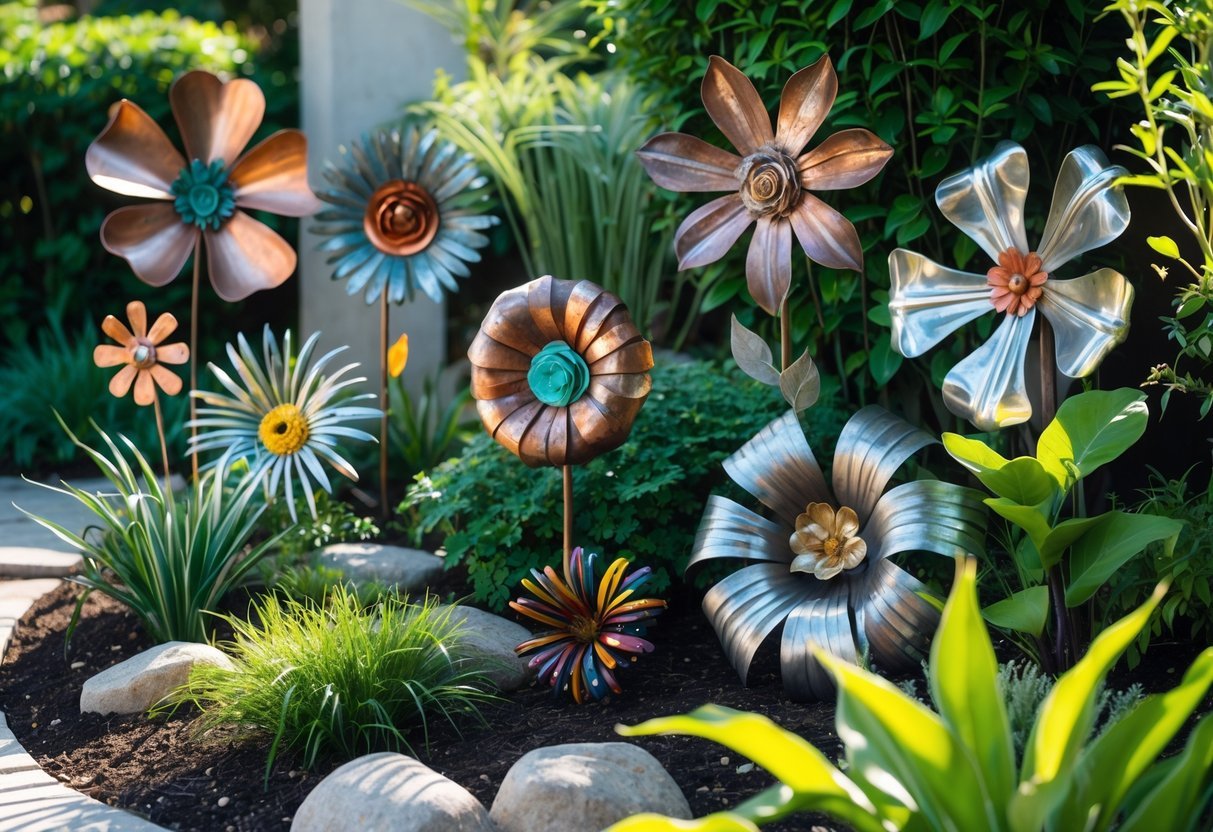
Metal flowers give your garden color and personality that lasts through every season. They let you add bold shapes, low-maintenance accents, and recycled-metal charm without the worry of wilting or constant upkeep. You can pick seven metal flower styles—like tulips, daisies, roses, stakes, wall art, wind-spinners, and mirrors—to mix texture, height, and color for an instant garden upgrade.
Place a few pieces where they catch the eye: along paths, near seating, clustered in beds, or mounted on fences to create focal points and visual flow. With basic tools or simple DIY tricks, you can match metal flowers to your garden style, from rustic and weathered to sleek and modern.
Key Takeaways
- Choose seven varied metal flower types to add lasting color and shape to your garden.
- Position pieces to create focal points and guide sightlines through your outdoor space.
- Pick durable finishes and simple care steps to keep metal flowers looking good year-round.
Designing with 7 Metal Flowers in Your Garden
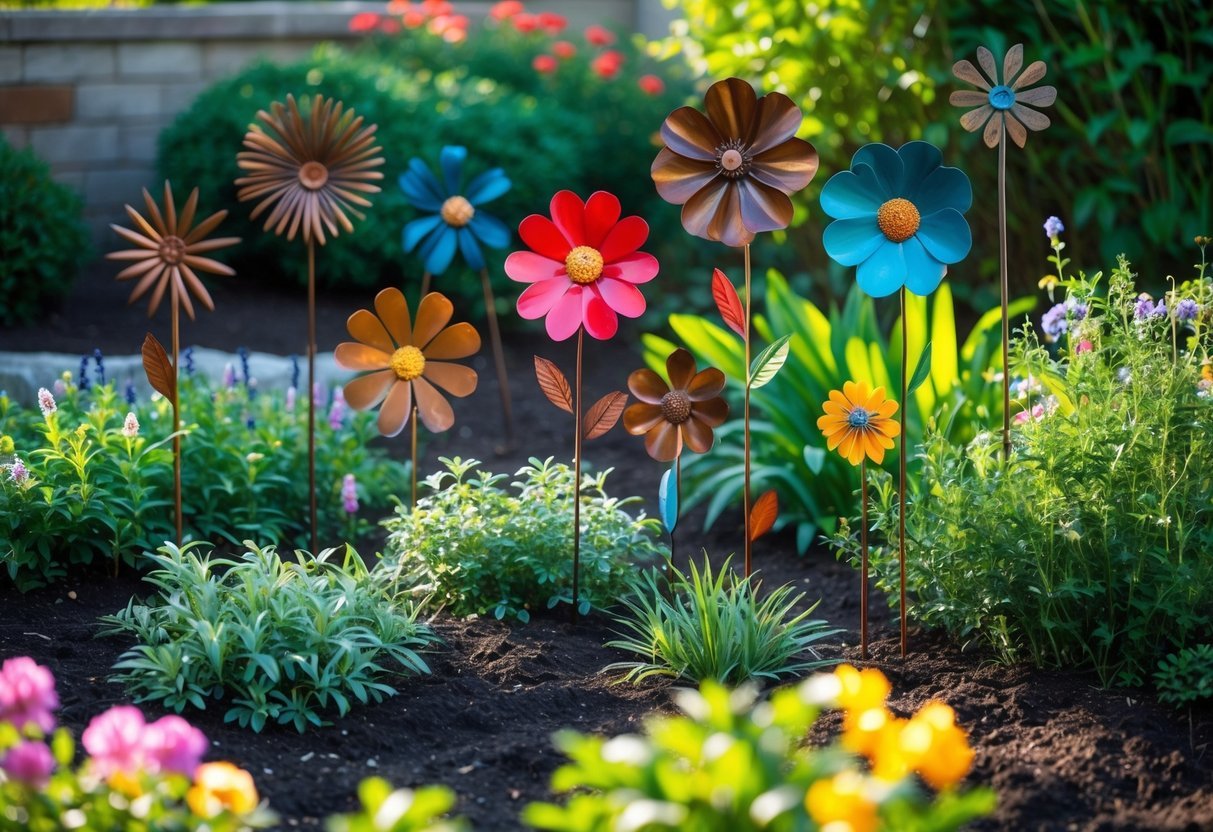
Pick styles that match your garden’s look, place them so they lead the eye, and choose colors and metals that hold up to weather. Think about scale, contrast, and how each flower will age over time.
Choosing the Right Metal Flower Styles
Decide whether you want realistic blooms or abstract shapes. Realistic metal roses, poppies, or daisies work well near flower beds where they mimic live plants. Abstract or geometric flowers suit a modern patio or mixed-material beds.
Match the scale to nearby plants and structures. Use taller metal flowers (3–5 ft) behind low perennials and shorter ones (1–2 ft) in front. If your garden has small beds, pick slim stems so the piece doesn’t overwhelm the space.
Think about movement and texture. Open-petal designs catch light and shadow. Layered or cut-metal flowers add depth and stand out against foliage. Choose pieces with stable bases if they’ll be windy.
Arranging Metal Flowers for Visual Impact
Start with a focal point: place one or two larger flowers where paths or sightlines converge. Then group the remaining five pieces in odd-numbered clusters (3 and 2 or 1–3–3) for a natural look.
Vary height and spacing. Stagger stems by 6–18 inches to create depth. Put taller pieces at the back or center of a cluster and shorter ones at the edges. Leave breathing room so each flower can be seen.
Use line and flow to guide the eye. Arrange flowers to lead from a seating area toward a view or feature. Anchor metal flowers near rocks, planters, or a small trellis to tie them into the landscape.
Color Coordination and Material Selection
Choose metal finishes that match your garden’s palette. Rusted steel gives a warm, earthy tone that blends with clay pots and autumn foliage. Powder-coated or painted flowers provide bright accents against green beds.
Consider corrosion and maintenance. Stainless steel and aluminum resist rust and need little upkeep. Corten steel develops a protective rust patina; buy pieces made to weather safely so flakes don’t stain nearby plants.
Balance color intensity. Use one or two bright colors (red, blue, yellow) and keep the rest neutral (black, bronze, rust). This prevents the display from looking busy and helps key pieces stand out.
Creative Placement Ideas for Metal Flowers
Place metal flowers where they serve a clear purpose: mark paths, add height among low plants, or peek out from behind shrubs. Think about sightlines, scale, and weather exposure when you pick spots.
Highlighting Walkways and Borders
Use metal flowers to guide people along paths. Place a single bright metal bloom every 6–8 feet to create rhythm and lead the eye. Taller pieces work well at corners or junctions; short, low-profile flowers suit narrow stepping-stone routes.
Mount some flowers on short stakes so the tops sit 10–18 inches above the ground. That keeps them visible above groundcover but below the eye level of adults. For gravel or mulch paths, use heavy bases or ground spikes to stop tipping in wind.
Mix heights and colors. Pair rusted steel tones with painted accents to match your home or hardscape. Keep them 12–18 inches back from the edge of pavers to avoid tripping and mowing damage.
Enhancing Flower Beds
Set metal flowers in beds as permanent color that works year-round. Place them in odd-numbered clusters (3 or 5) for natural balance. Use taller metal stems at the back or center, with smaller pieces near the front.
Anchor them securely so roots, watering, and foot traffic won’t shift them. If your soil is soft, use rebar or a concrete footing below the base. Choose finishes that resist corrosion if beds get heavy watering or sprinkler spray.
Match metal flower scale to nearby plants. Don’t hide them behind taller perennials; instead, let the metal shapes peek above mid-height plants like salvia or coneflowers for contrast and texture.
Integrating with Live Plants
Combine metal flowers with living plants to create dynamic contrast. Place a metal blossom next to a clump of lavender or ornamental grass so the metal stands out without crowding roots. The metal won’t compete for water, but leave 6–12 inches so soil and mulch cover don’t trap moisture against metal.
Use metal flowers to add structure in seasonal beds. Install them near bulbs so they show while bulbs are dormant. In container mixes, secure smaller metal pieces into the pot’s foam or gravel layer to keep them upright.
Think about color and texture. Polished metal reflects light; matte or rusted finishes blend with earth tones. Use the difference to highlight focal plants or to repeat a color from blooms elsewhere in the garden.
Maintenance and Care for Metal Garden Flowers
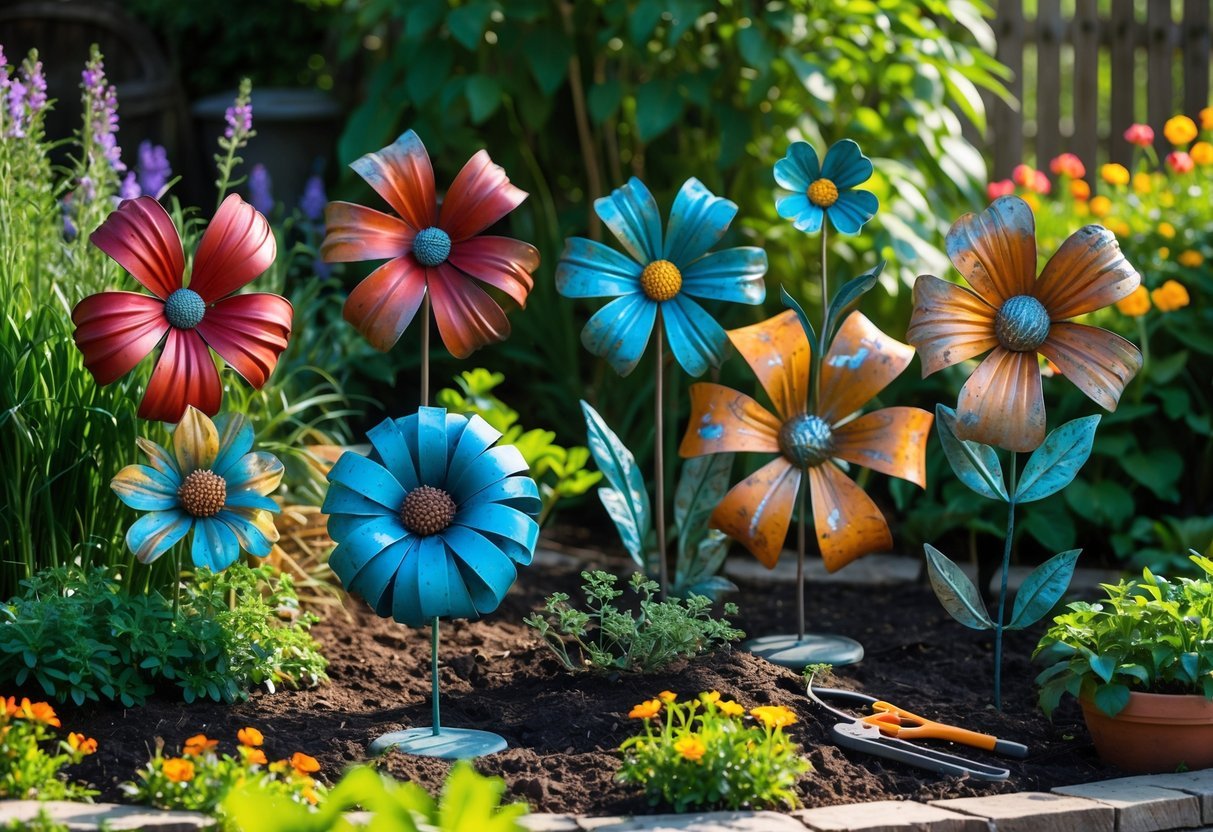
Keep metal flowers rust-free, stable, and clean by using the right finishes, routine checks, and simple cleaning tools. Small actions—like sealing welds or tightening stakes—prevent bigger repairs later.
Protecting from Weather Elements
Choose paint or sealant matched to the metal type. For mild steel use a rust-inhibiting primer plus an outdoor enamel. For corten or stainless steel, a clear topcoat slows surface changes without hiding the finish.
Anchor pieces firmly. Drive stakes 12–18 inches into the ground or bolt bases to a paver so wind won’t tip them. Use rubber washers on bolts to reduce water intrusion at joints.
Use covers or moveable placement for winter. Store small pieces in a shed or lean them against a wall. For fixed large items, apply a UV-resistant clear coat each 1–2 years to guard paint and metal.
Long-Term Cleaning and Upkeep
Clean regularly with mild soap and water to remove dirt and plant sap. Rinse with a garden hose and dry with a cloth to avoid water spots that trap moisture.
Remove surface rust with a wire brush or fine sandpaper, then touch up exposed metal with primer and paint. For stubborn rust, use a rust converter before painting.
Inspect welds, bolts, and fasteners every season. Tighten loose hardware and file sharp edges created by corrosion. Keep a small repair kit (touch-up paint, epoxy, replacement bolts) handy for quick fixes.
Frequently Asked Questions
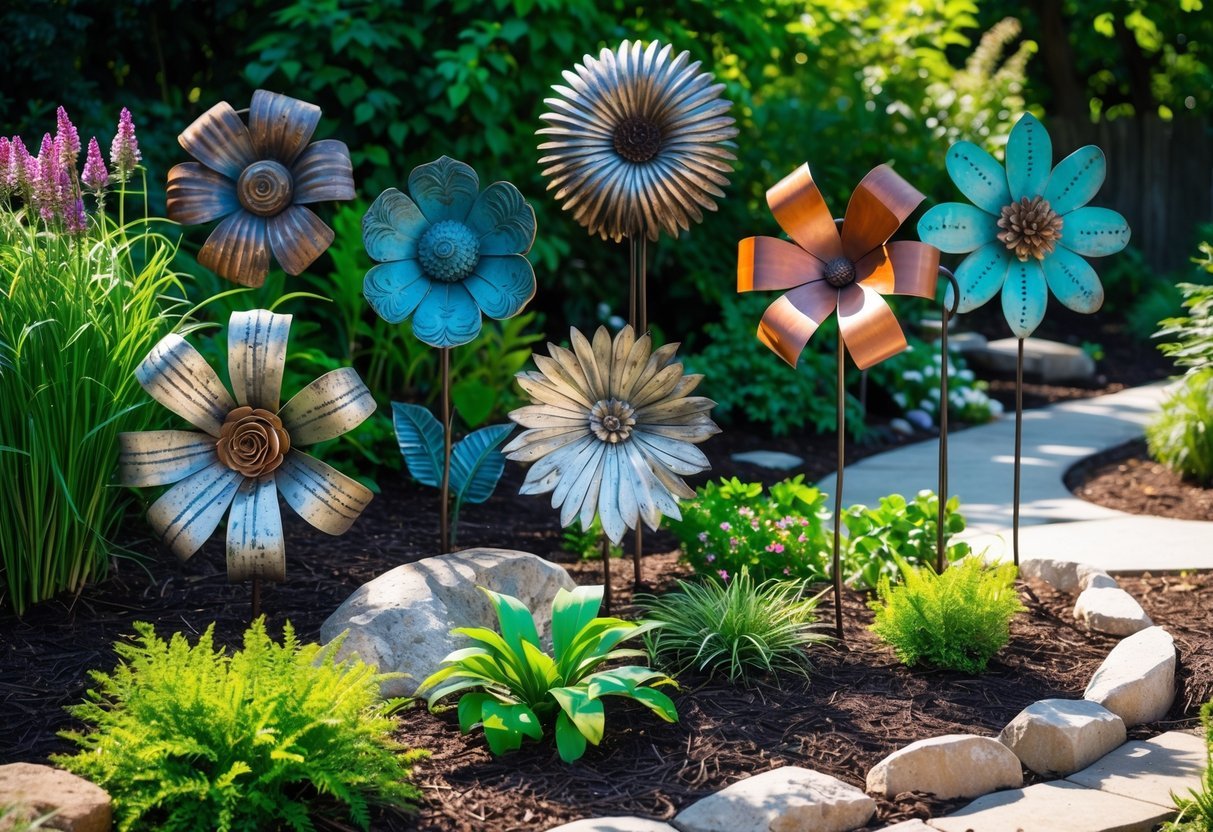
This section answers how to place metal flowers, which real blooms pair well, how to care for them, what meanings they carry, eco-friendly options, and creative placement ideas. Read the short, specific tips to use metal flowers well in your garden.
How can metal flowers be incorporated into garden design?
You can use metal flowers as focal points in a flower bed or at the end of a path. Place tall metal stems behind low plants so the metal stands out without blocking sight lines.
Anchor free-standing metal pieces in gravel or concrete for stability. Mount smaller metal flowers on stakes and group them in odd numbers for a natural look.
Use metal flowers to mark entryways, highlight seating areas, or add color to a bare corner. Mix heights and finishes—rusty corten steel, bright painted steel, or polished copper—for contrast.
Which species of actual flowers complement metal flower sculptures?
Bright, round blooms like dahlias, coneflowers, and zinnias contrast well with geometric metal shapes. Their soft, full forms balance the hard lines of metal.
Fine-textured plants such as lavender, ornamental grasses, and thyme work well at the base of metal stems. They hide anchors and soften the transition between metal and soil.
Bulbs like tulips and alliums add seasonal bursts near metal pieces. Choose flower colors that pick up tones in the metal finish to create a cohesive palette.
What are the best methods for maintaining metal flowers outdoors?
Wash painted metal with mild soap and water once or twice a year to remove dirt and pollen. Rinse well and dry to prevent water spots.
Touch up paint chips promptly with rust-inhibiting primer and paint. For uncoated steel, apply a clear sealant or wax if you want to slow rusting without losing a weathered look.
Tighten any loose screws or welds each season. In areas with heavy winter freeze-thaw, consider removing lightweight pieces or storing them indoors to avoid damage.
What symbolism is associated with the use of metal flowers in landscaping?
Metal flowers often symbolize permanence or endurance because metal lasts longer than cut blooms. People also use them to mark special places like memorials or celebration gardens.
Different metal finishes carry subtle meanings: polished metals feel modern, while rusted finishes suggest age and natural change. You can choose a finish to match the mood you want in the space.
Are there eco-friendly types of metal flowers for garden use?
Look for sculptures made from recycled steel, aluminum, or reclaimed scrap metal to reduce new material use. Ask makers about their sourcing and whether they use post-consumer recycled content.
Choose powder-coated finishes and low-VOC paints to reduce harmful emissions. When buying, prioritize locally made pieces to cut transport impact.
What creative uses exist for metal flowers in outdoor spaces?
Use small metal flowers as plant labels by attaching a metal tag with plant names. They resist weather and won’t break down like paper tags.
Create a kinetic display by mounting metal petals on bearings so wind causes gentle movement. Group metal flowers with potted succulents on a patio table for a sculptural centerpiece.