Landscape Succulents for Home: Low-Maintenance Design and Care Guide
You can give your yard big style with very little work by using landscape succulents. They survive heat and drought, add lasting color and shape, and fit beds, borders, rock gardens, and pots so you can change your space without a lot of work. Choose a few tough varieties and place them where they get good sun and quick-draining soil, and you’ll have a low-maintenance display that looks intentional and modern.
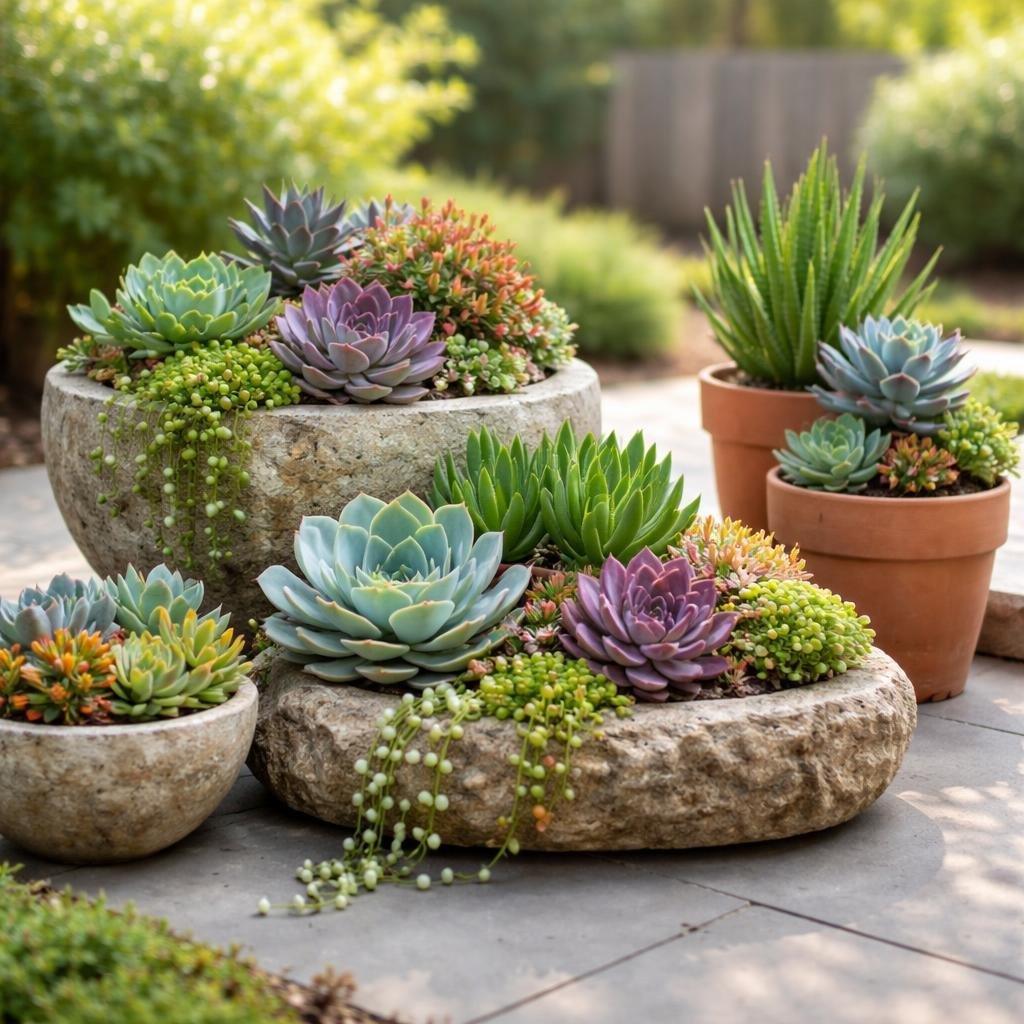
Start by picking succulents that match your climate and soil, then mix heights, textures, and colors for visual impact. With a few simple placement and watering rules, you’ll limit chores and still enjoy striking, year-round interest that boosts curb appeal.
Key Takeaways
- Use drought-tolerant plants and quick-draining soil for long-lasting results.
- Mix shapes and sizes to create visual interest with minimal effort.
- Simple watering and placement rules keep maintenance low.
Benefits of Landscape Succulents for Home
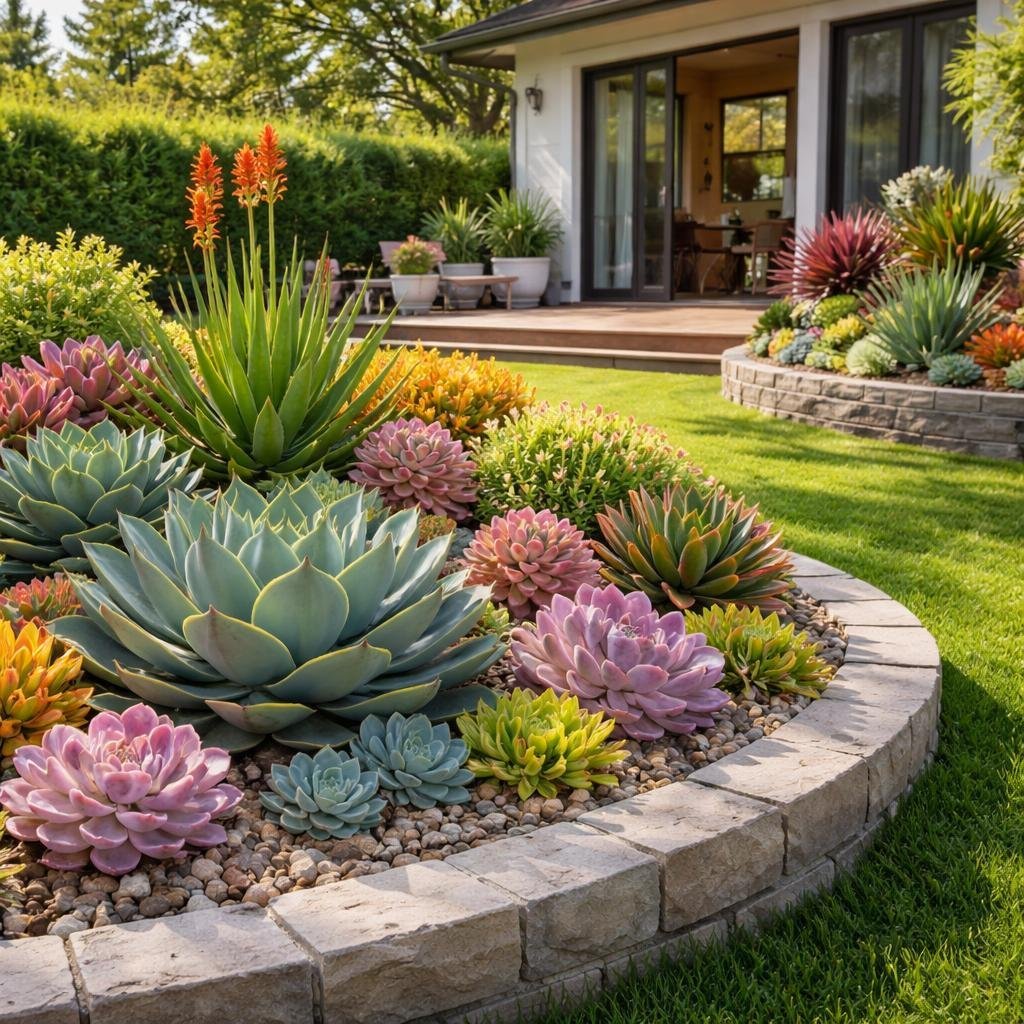
Succulents save you time, water, and upkeep while adding strong shapes and color to beds, borders, and containers. They suit slopes, rock gardens, and tight spots where other plants struggle.
Low Maintenance Requirements
You won’t need daily care for succulents. Most species store water in their leaves, so you can space watering to every 2–4 weeks in dry seasons. That reduces time spent on routine chores like frequent watering and deadheading.
Soil and placement matter more than constant attention. Plant succulents in gritty, well-draining mix and give them full sun to partial shade depending on the variety. This prevents root rot and keeps plants compact.
Pruning and pest care are minimal. Remove a few dead leaves and trim leggy growth once or twice a year. Common pests are easy to spot and treat with insecticidal soap or manual removal, not heavy pesticides.
Water Conservation Advantages
Succulents cut your landscape’s water use significantly. Many garden succulents, like sedum, agave, and aloe, thrive on natural rainfall once established, needing supplemental irrigation only during long dry spells.
Use drip irrigation or soaker hoses on low settings if you water at all. That targets moisture to roots and avoids waste. Group succulents by water needs to prevent overwatering thirsty neighbors.
Drought-tolerant beds also lower runoff and irrigation costs. In clay or compacted soils, amend with sand, pumice, or expanded shale to improve drainage so water soaks in where plants need it.
Year-Round Visual Appeal
Succulents provide structure and interest across seasons. Many hold bold forms and colors through winter—blue agave, sempervivum rosettes, and sedum foliage keep texture when perennials die back.
You can layer leaf shapes and heights for constant contrast. Combine groundcover sedums with upright aeoniums and trailing crassulas for a mix of heights and lines that reads well from a patio or window.
Flowers add seasonal highlights without losing the base interest. Even when not blooming, succulents still offer predictable shapes and low-maintenance color that looks intentional year-round.
Best Succulent Varieties for Home Landscaping
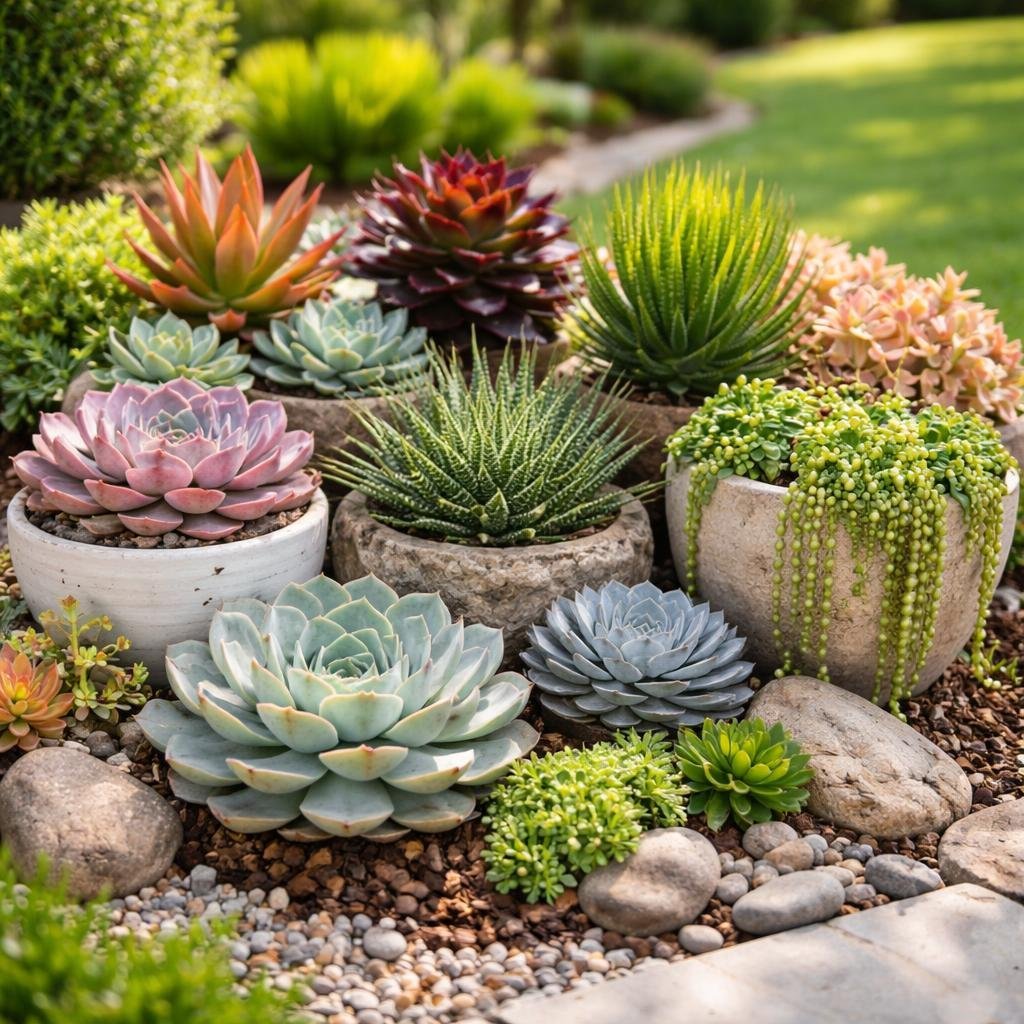
These choices focus on ease of care, size, color, and climate tolerance so you can pick plants that fit your yard, pots, or rock garden. Each group lists specific species and why they work for common home landscaping needs.
Top Picks for Outdoor Gardens
Choose succulents that handle full sun, heat, and occasional drought. Agave americana and Agave parryi give strong architectural form and make good focal points. Plant them in well-draining soil and leave 3–6 feet between large agaves to allow growth.
Echeveria species make low rosettes that fill beds and tolerate sun if given afternoon shade in hot climates. Sedum spurium and Sedum spurium ‘Dragon’s Blood’ form mats that suppress weeds and bloom in summer. Add Sempervivum (hens-and-chicks) in rockier spots; they survive poor soil and propagate quickly.
Water deeply but infrequently. Mulch with gravel to keep crowns dry and limit rot. Protect young plants from heavy frost with temporary covers.
Compact Options for Small Spaces
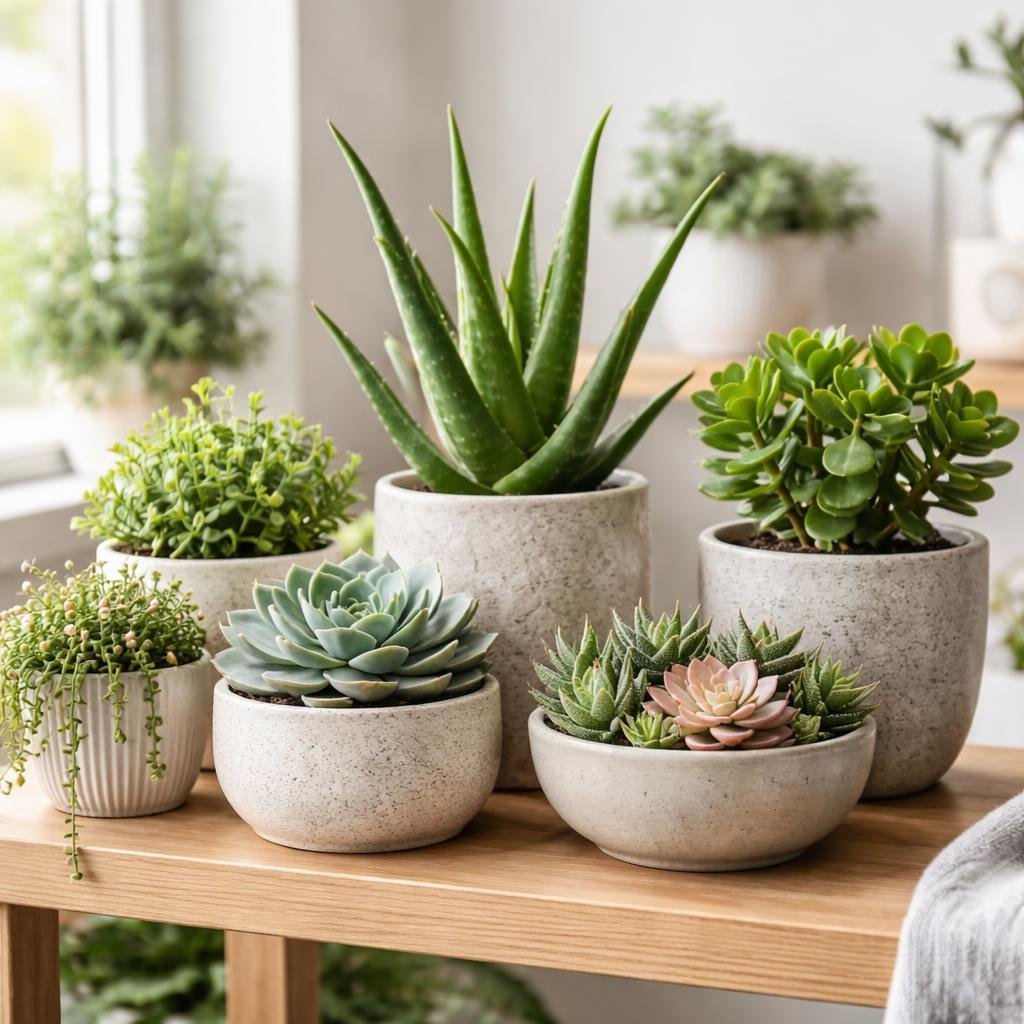
When space is tight, pick slow-growing, small-form succulents for containers, narrow borders, and window boxes. Echeveria ‘Lola’ and ‘Perle von Nurnberg’ stay compact, 3–8 inches across, and display tidy rosettes.
Crassula ovata ‘Gollum’ and Crassula perforata suit small pots and can be pruned to control size. Sedum album and Sedum pachyphyllum work as low groundcover between stepping stones. String of Pearls (Senecio rowleyanus) and Senecio radicans trail from hanging pots and add vertical interest without taking ground space.
Use 50–70% mineral-based potting mix and pick shallow containers with drainage holes. Water sparingly—allow the top 1–2 inches of soil to dry before watering again.
Colorful Succulents for Visual Impact
Add succulents that change color with sun, stress, or season to create focal points. Echeveria ‘Afterglow’ and Echeveria ‘Black Prince’ show purple and black tones under bright light. Sedum spurium ‘Dragon’s Blood’ turns deep red in cool weather and provides strong contrast.
Aeonium arboreum ‘Zwartkop’ delivers near-black rosettes on tall stems and stands out against silver agaves. Crassula capitella ‘Campfire’ shifts from green to orange-red in full sun; use it near paths or entryways for a splash of color.
Group 3–5 contrasting colors (greens, reds, silvers) for immediate impact. Place heat-tolerant colors where they get at least six hours of sun for the richest tones.
Cold-Hardy Species
If you face hard freezes, pick species rated to about USDA zone 4–6 that survive snow and freezing temperatures. Sempervivum (hens-and-chicks) tolerates deep freezes and spreads quickly across rock gardens. Sedum telephium and Sedum album handle cold and rebloom in late summer.
Orostachys malacophylla and Jovibarba heuffelii withstand frost and perform well in gravel beds. Choose shallow-rooted succulents for raised beds or rock walls to reduce water pooling around crowns, which leads to rot in winter.
Avoid tropical succulents like Aloe and most Agave in cold climates unless you can move them indoors or provide root heat and dry winter storage.
Design and Arrangement Tips
Use strong lines, varied heights, and good drainage. Place taller plants toward the back or center, group similar water-needs together, and add gravel or rock mulch to improve drainage and reduce watering.
Creating Eye-Catching Patterns
Start with a focal plant such as an agave or echeveria and build outward in concentric rings or radiating rows. Repeat colors and textures every 2–3 feet to create rhythm and guide the eye across the bed. Mix rosette shapes with spiky and trailing types for contrast.
Use contrasting colors—blue-green agaves against red sedums—for instant impact. Keep spacing in mind: allow mature spread for each species (check plant tags), so patterns don’t collapse over time. Use gravel paths or bands of crushed stone to define pattern edges and keep soil from eroding.
Blending Succulents With Other Plants
Place succulents with low water needs near drought-tolerant grasses, lavender, or rosemary. Match irrigation: group all low-water plants on the same irrigation zone or keep them in separate containers. Avoid pairing succulents with thirsty bedding plants.
Use succulents as foreground or border plants where their low form shows well. Taller, softer-textured perennials can sit behind succulents to add seasonal flowers without increasing water demand. In partial shade, choose shade-tolerant succulents like haworthias and pair them with ferns that tolerate drier soil.
Maximizing Space in Home Landscapes
Use vertical space with wall planters, trellised pockets, or stacked pots to add many plants in a small area. Place shallow trays or troughs on patios and window sills to create layered displays that don’t take yard space.
Plant tight clusters in containers to reduce bare soil and show variety. For ground beds, mix small, medium, and large species in repeating groupings to cover more area while keeping maintenance low. Ensure each planting has well-draining soil and monitor watering closely; drainage is the most important factor for compact, healthy succulents.
Care and Maintenance of Landscape Succulents
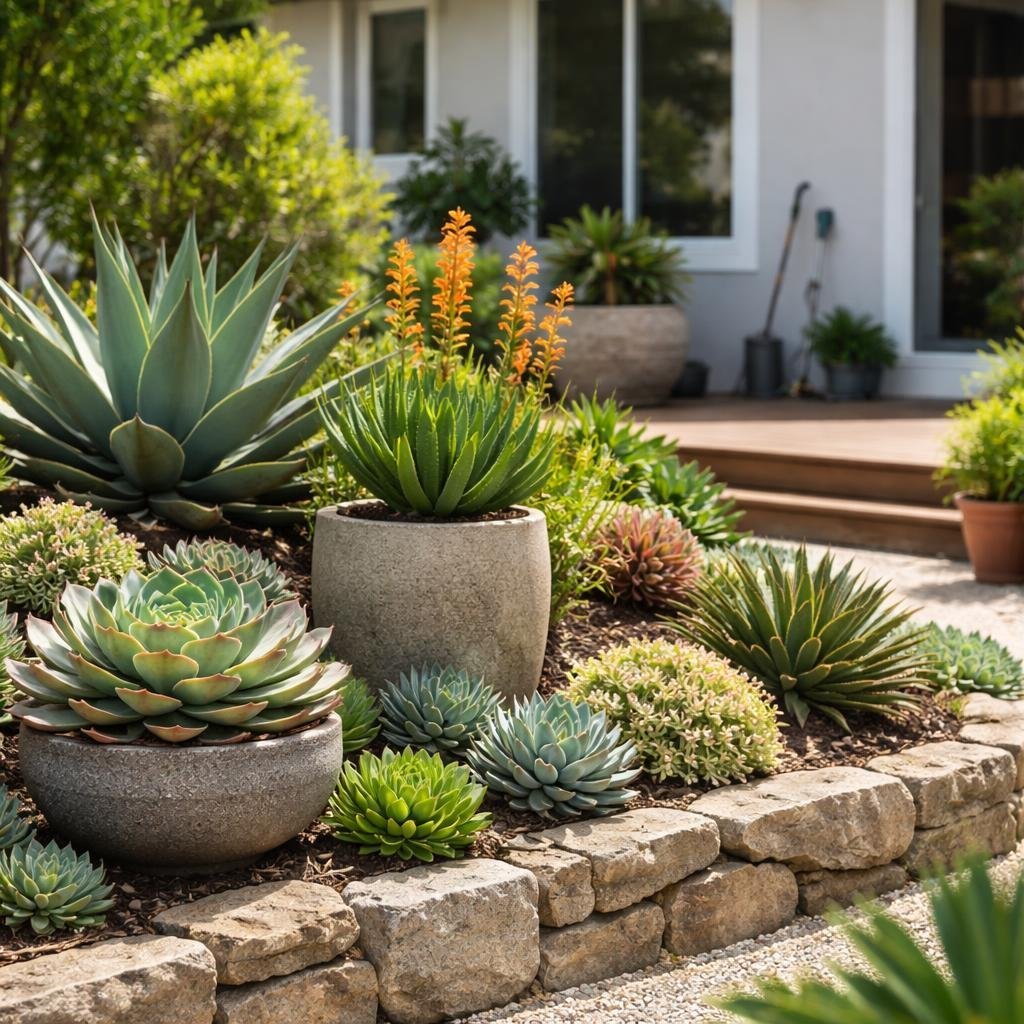
Succulents need fast-draining soil, limited water, light feeding, and seasonal protection from extreme cold or heat. Follow specific soil mixes, watering schedules, and simple winter or summer steps to keep plants healthy.
Soil and Drainage Considerations
Use a gritty, well-draining mix so water leaves the root zone within minutes to a few hours. Start with equal parts coarse sand or poultry grit, pumice or perlite, and quality potting soil, then adjust to be lighter for arid-climate varieties like agave. Avoid heavy garden clay unless you amend it heavily with grit and organic matter.
Plant on raised beds, mounds, or in containers with drainage holes to prevent standing water. If you’re planting in-ground, create a shallow berm and add 2–4 inches of coarse material beneath the root zone. Test drainage by filling a hole with water; it should empty within an hour or two.
Mulch with small gravel or decomposed granite to keep soil surface dry and reduce splash. Do not use organic mulches that stay wet, such as bark chips, directly against succulent crowns.
Watering Guidelines
Water deeply but infrequently so roots grow downward and not near the surface. For established landscape succulents, soak the soil and let it dry to the touch for 1–3 inches before watering again. Frequency varies: every 1–2 weeks in active growth and every 3–8 weeks during dormancy.
Adjust for season and climate. In hot, dry summers you may water more often; in cool, wet winters hold water and avoid irrigation if soil stays moist. Use a moisture meter or finger test to check the top 2–3 inches.
Water at the soil line, not over the leaves, to prevent rot and fungal issues. For frost-prone areas, stop watering before expected freezes to reduce ice damage to roots.
Fertilizing Succulents
Feed sparingly with a balanced, low-nitrogen fertilizer to avoid leggy growth. Use a 5-10-10 or 10-10-10 formula diluted to one-quarter strength, or choose a fertilizer labeled for cacti and succulents.
Apply during active growth: typically spring and early summer. For most landscape succulents give one to two light feedings per growing season. Container plants may need another light feeding midseason.
Avoid heavy feeding in fall and winter when plants rest. Overfertilizing causes weak tissue and higher rot risk. Always water after applying granular fertilizers so salts don’t concentrate at the roots.
Seasonal Protection Strategies
Protect succulents from hard freezes and extreme heat with simple covers and shade. In cold zones, cover plants with frost cloth or move potted plants indoors when temperatures drop below a species’ tolerance. Use straw or breathable fabric—avoid plastic touching foliage.
Provide afternoon shade or shade cloth during prolonged heat waves to prevent sunburn and dehydration. For outdoor beds, add temporary shade screens or use nearby structures and taller plants to filter sun.
Inspect for pests and disease during seasonal transitions. Remove dead or rotting tissue before storing or covering plants. For long wet seasons, improve drainage and raise plants on slight slopes or in containers to lower root-rot risk.
Frequently Asked Questions
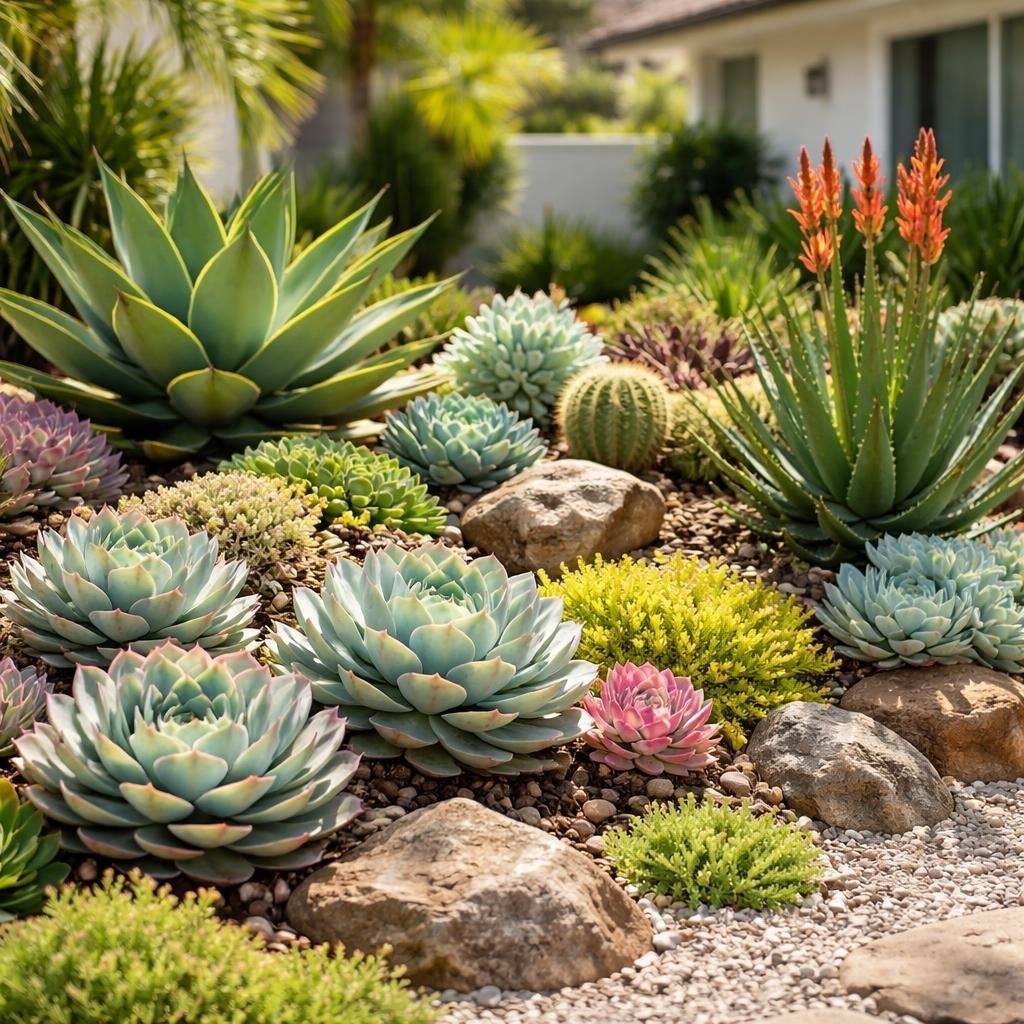
You will find clear care steps, watering schedules, and plant choices to help your outdoor succulents thrive. Each answer focuses on practical actions you can use in your yard or containers.
How should I care for outdoor succulents during winter?
Move cold-sensitive potted succulents into a garage or indoors when night temps fall below 40°F (4°C). Protect in-ground succulents with frost cloth and a 1–2 inch layer of dry mulch if temperatures dip briefly below freezing.
Reduce watering in winter. Most succulents go dormant and need almost no water until spring when they start growing again.
What are the best practices for maintaining succulents outdoors?
Plant succulents in fast-draining soil or raised beds to prevent root rot. Use grit, pumice, or coarse sand mixed with potting soil to improve drainage.
Place sun-loving succulents where they get 6+ hours of bright light; give shade-tolerant kinds morning sun and afternoon shade. Check plants weekly for pests and remove dead leaves to avoid rot.
Which succulents are most suitable for growing in larger outdoor landscapes?
Agave, Aloe (hardy types), and Sedum offer strong structure and fill large areas well. Sempervivum and larger Echeveria can create mats and focal points across beds.
Choose species rated hardy for your USDA zone and space them according to their mature width to avoid overcrowding.
Can succulents be grown indoors, and if so, how does their care differ?
Yes. Indoors, give succulents the brightest light you can, ideally a south- or west-facing window. Rotate pots every week so plants grow evenly.
Water indoor succulents less often than outdoor ones and ensure pots have drainage holes. Indoor air is drier and warmer, so watch for stretched, pale growth that signals low light.
What are some low-maintenance succulent varieties for outdoor gardening?
Sedum (stonecrop) tolerates poor soil and spreads to fill groundcover needs. Agave and some yucca species survive with minimal water and need little pruning.
Sempervivum (hens and chicks) and hardy Aloe varieties also handle cold and neglect. Pick plants labeled for your local climate.
How often should landscape succulents be watered?
Water deeply but infrequently. For established outdoor succulents, soak the soil then let it dry completely before watering again — often every 2–4 weeks in warm seasons, depending on rain and soil type.
Reduce or stop regular watering in winter when plants are dormant. Check soil moisture by inserting your finger 1–2 inches deep; if it’s dry, water.