Japanese Rock Garden Design Ideas: Minimalist Layouts, Planting Tips, and Stone Arrangement Guidance
You can create a calm, low-maintenance Japanese rock garden that fits any space by using a few simple elements: carefully placed rocks, raked gravel or sand, and a touch of moss or small plants. These gardens focus on balance and simplicity, so you can design a peaceful spot without a lot of work or cost.

Think about how shapes, texture, and negative space work together as you plan your layout, and choose stones and plants that match the scale of your yard. A small set of well-arranged rocks, clean gravel patterns, and a couple of green accents give you the classic Zen look and a place for quiet reflection.
Key Takeaways
- Use a few key elements—stones, gravel, and moss—to build a balanced rock garden.
- Design with scale and empty space in mind to create a peaceful layout.
- Pick low-care plants and simple patterns for easy upkeep and lasting beauty.
Essential Elements of Japanese Rock Garden Design
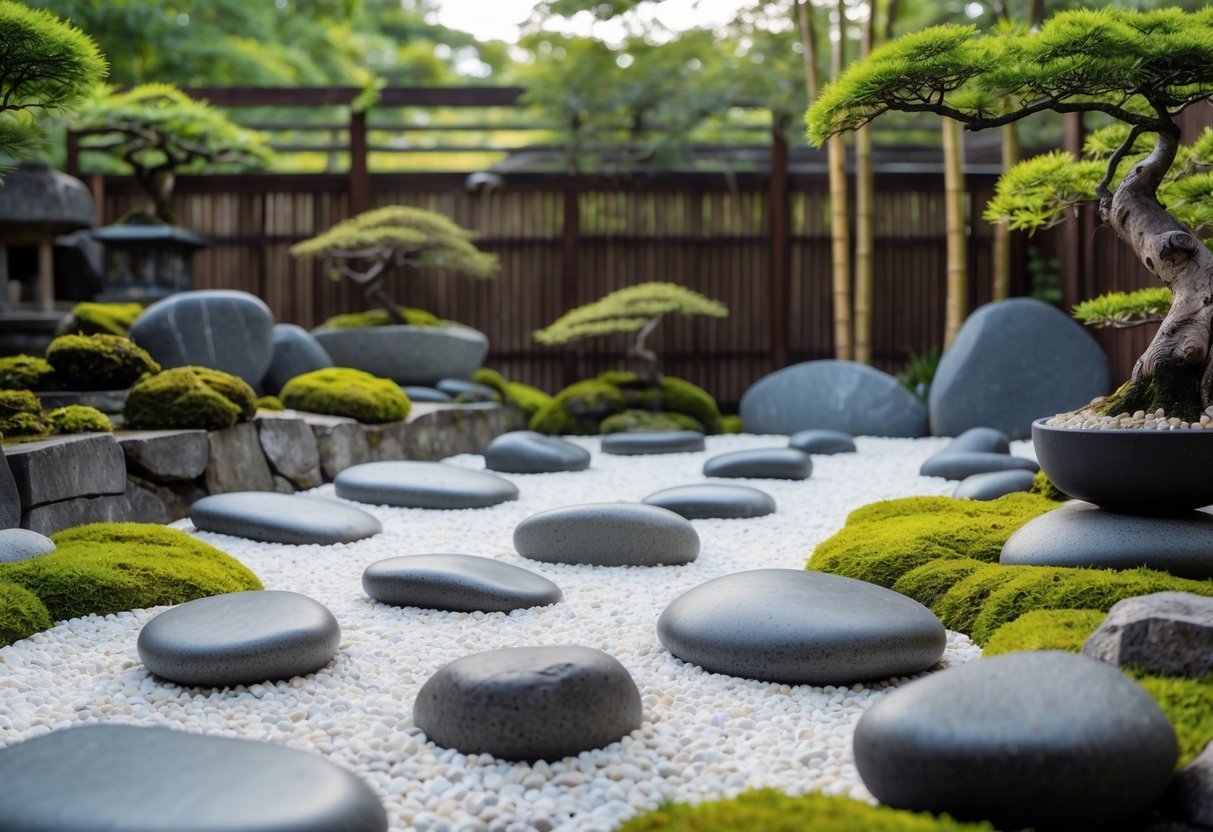
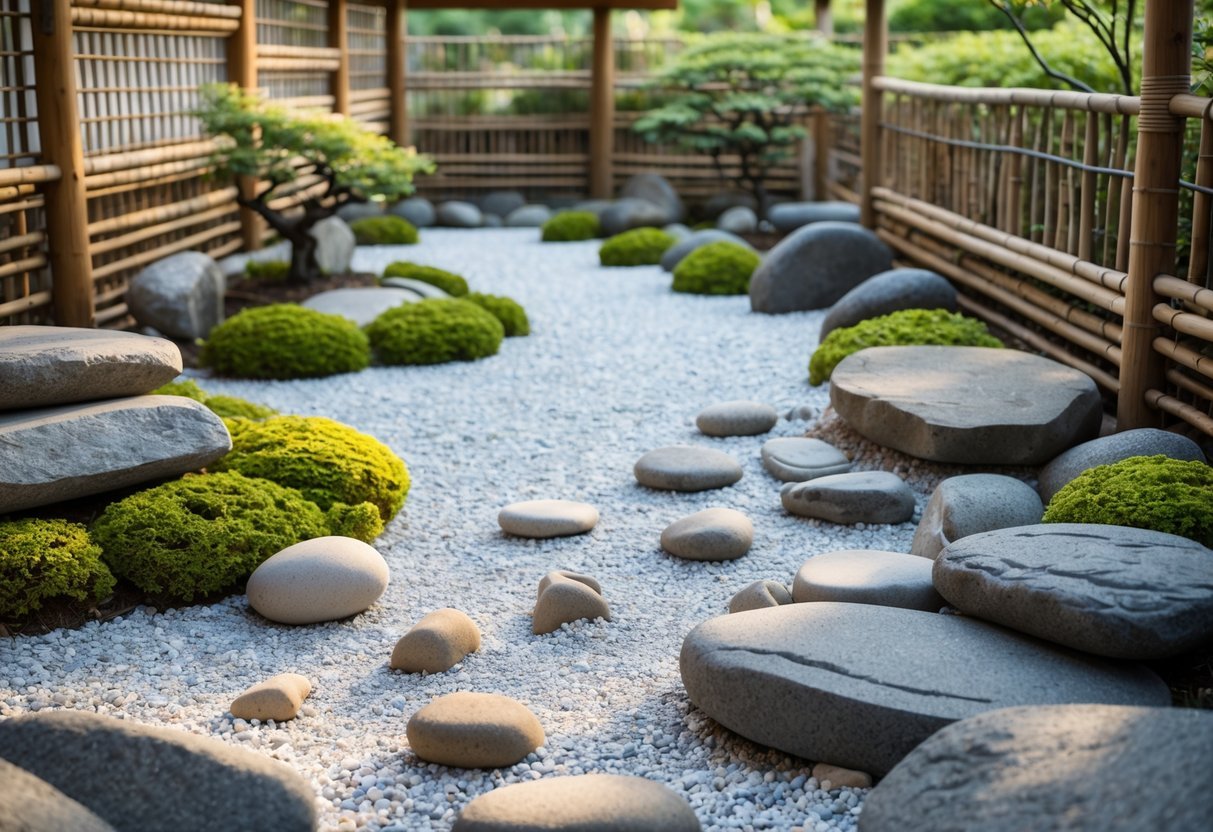
You will focus on balance, careful placement of stones, and deliberate gravel patterns to create a calm space. These parts work together to suggest nature, control sight lines, and invite quiet reflection.
Understanding Karesansui Principles
Karesansui (dry landscape) uses minimal elements to suggest mountains, water, and islands. You should aim for asymmetry and empty space, not symmetry. Asymmetry makes scenes feel natural and less staged.
Keep scale in mind: small stones read as distant hills when grouped correctly. Use height and texture contrast—tall vertical stones, low flat stones, and moss—to create depth. Sight lines matter. Place focal stones so they draw the eye along a subtle path, then let space and gravel breathing room balance the view.
Avoid clutter. Each element must have a purpose: suggest landscape, guide movement, or offer a point for contemplation. Maintain simplicity in plant choice—moss, dwarf pines, or bamboo accents—to support the stones without competing.
Stone Selection and Placement
Choose stones by shape, size, and character. Use three-stone groupings for a strong focal composition: a tall primary stone, a supporting medium stone, and a low anchoring stone. Mix textures—rough, weathered surfaces with smoother stones—to add visual interest.
Place stones with deliberate spacing. Angle each stone to suggest natural forces like wind or water flow. Anchor large stones partly into the ground to look settled and natural. Use smaller stones or gravel to transition between large rocks and open areas.
Label stone roles in your plan: primary (focal), secondary (support), and filler (connective). This keeps placement purposeful and avoids random scattering. Test arrangements by viewing from key sight lines before final setting.
Gravel Patterns and Symbolism
Gravel represents water or emptiness and sets the garden’s rhythm. You should rake patterns that match the concept: parallel ripples for calm lakes, radiating arcs around stones to imply waves. Keep rake lines consistent and well-spaced for a refined look.
Use gravel grain size to match scale. Fine gravel allows crisp, precise raking; coarser gravel reads as rough water or riverbed. Rake maintenance matters—regular re-raking preserves intent and symbolism.
Design patterns with intent: circular swirls emphasize a stone’s importance, while long swept lines guide the eye across the garden. Avoid overcomplicating patterns; clarity and repetition strengthen the symbolic meaning.
Inspirational Japanese Rock Garden Layouts
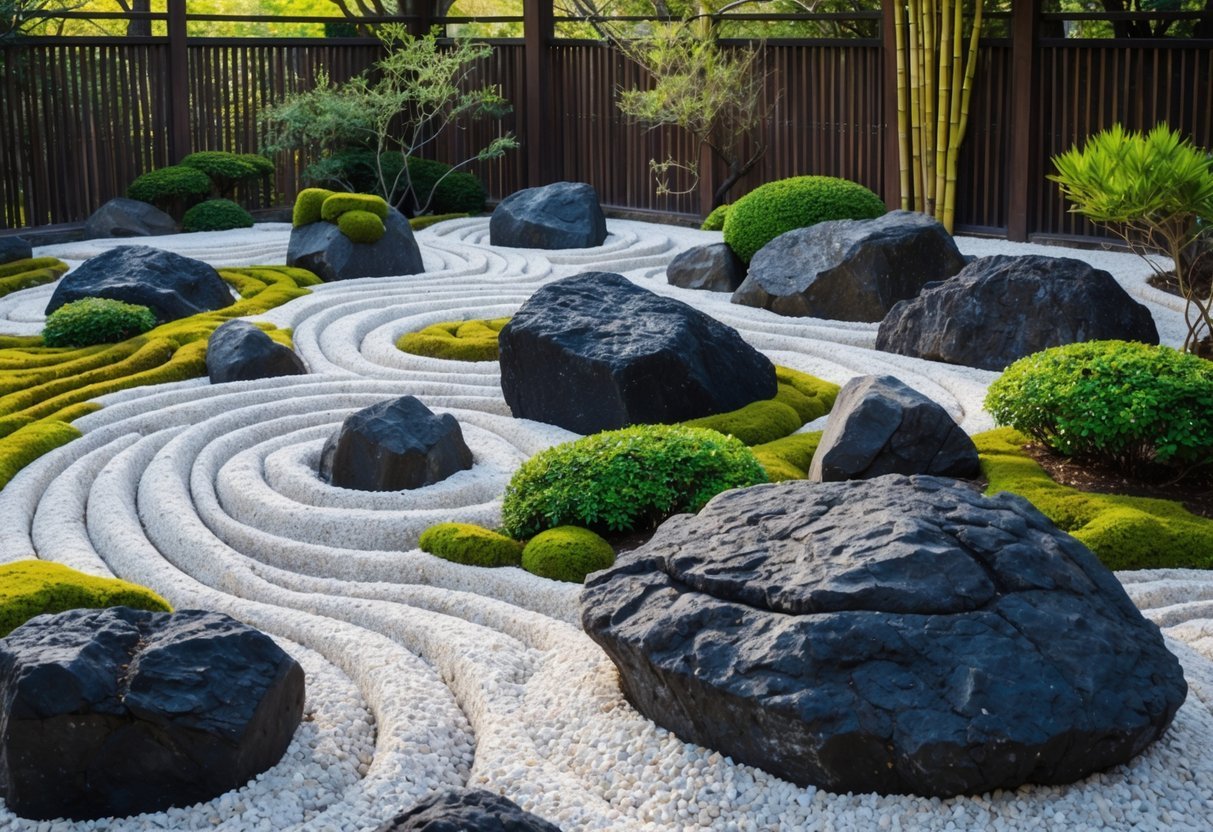
You will find layouts that use stones, gravel, and a few plants to create calm, ordered spaces. Each layout shows how to place rocks, shape gravel, and choose plants for low upkeep and clear sightlines.
Minimalist Zen Spaces
Focus on a small number of large stones and raked gravel to create a strong focal point. Place one or three main stones on a bed of fine gravel. Leave open space around them so the stones read clearly from the viewing spot.
Use raked lines to suggest water flow. Rake concentric circles around a single stone or parallel lines that run past a stone group. Keep plantings to moss patches and one low shrub, like dwarf juniper, to avoid clutter.
Choose a neutral palette: gray stones, pale gravel, and deep green moss. This makes maintenance easier and keeps the visual effect calm. Limit tools to a rake, hand trowel, and pruning shears for a tidy routine.
Courtyard Garden Arrangements
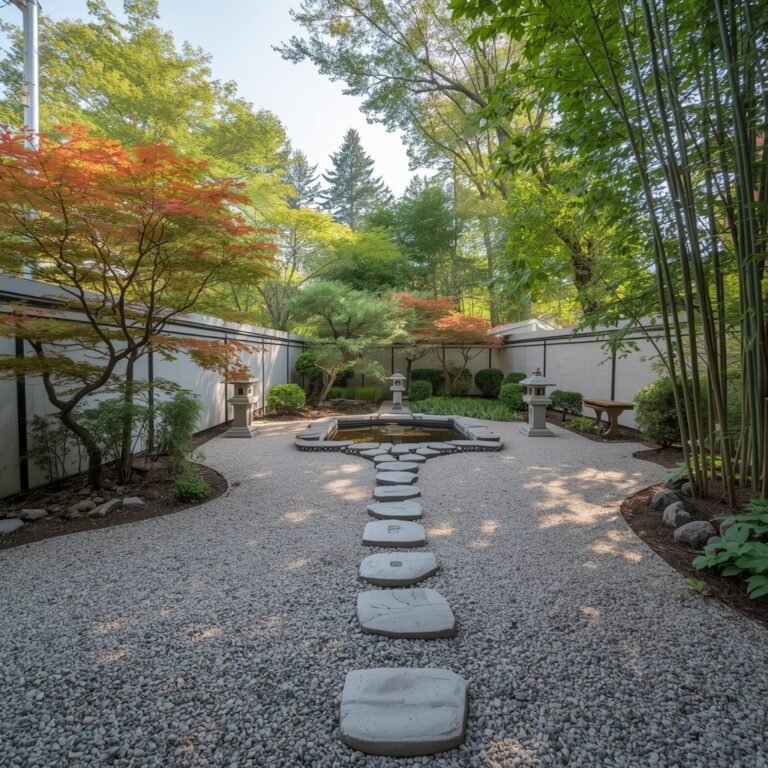
Scale the design to fit tight, enclosed areas. Place a central rock island off-center from doorways so you view it from multiple angles. Surround the island with compact gravel and a narrow moss border for a soft edge.
Use vertical elements sparingly. A single bamboo screen or a low lantern can add height without crowding the floor plane. Position seating or a stepping stone at one side so you sit and look across the composition.
Pick plants suited to partial shade and small soil volumes. Groundcover moss, hosta, and small ferns work well. Keep pathways narrow and straight to preserve the sense of enclosure and focus on the rock arrangement.
Pathway Integration Ideas
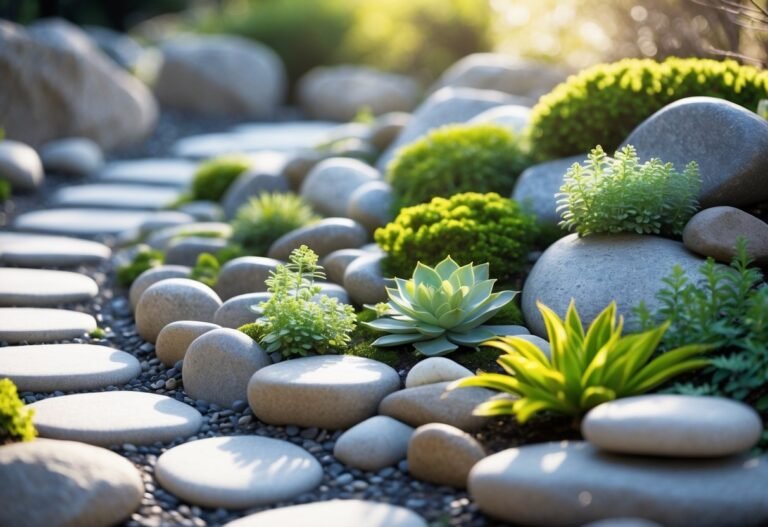
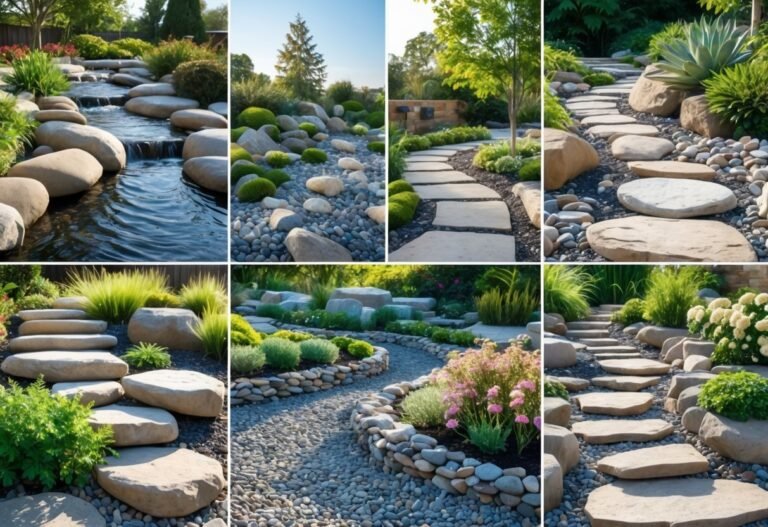
Let paths connect viewing points while reinforcing the garden’s rhythm. Use flat stepping stones set in gravel to guide movement and keep the gravel pattern visible between stones. Space stones unevenly for natural flow, but keep the line readable from entrances.
Match gravel raking with the walkway direction. Rake parallel lines that lead the eye along the path, or create waves that break around each stepping stone. Use small, low plants like mondo grass along the edges to hold the gravel and soften hard lines.
Consider transitions between materials. Use a shallow curb of compacted soil or low edging stones where gravel meets paving. This keeps gravel contained and makes the path easy to sweep and maintain.
Plant Choices and Accents for Japanese Rock Gardens
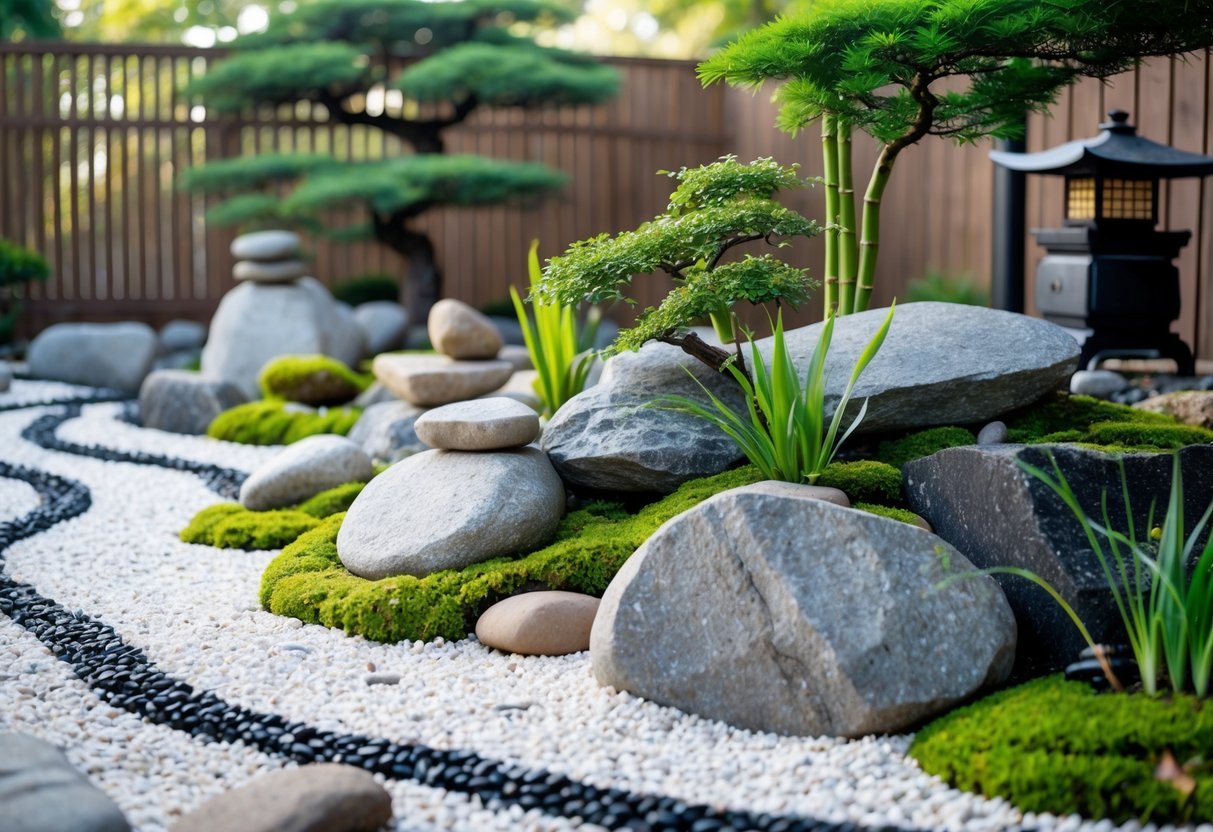
Choose low-growing, hardy plants and a few sculptural trees or shrubs. Pick materials that age well and need little pruning. Add a simple water basin or stone ornament to anchor the view.
Moss and Ground Cover Options
Moss creates a soft, green carpet that ages gracefully and fits the rock-and-gravel look. Choose groundcovers based on light and moisture: sheet moss or cushion moss for shady, damp spots; Sedum spurium or Thymus serpyllum for sunnier, drier areas.
Prepare the base by removing weeds, adding a thin layer of compost, and firming the soil. Press moss pieces or plugs into contact with the soil and keep them moist until established. Groundcovers like Irish moss tolerate light foot traffic and help edge paths.
Use low, spreading plants to fill gaps between stones and gravel. Pick varieties under 6 inches high to keep the court-like scale. Avoid aggressive spreaders that will overrun gravel designs.
Strategic Use of Shrubs and Trees
Place one or two focal trees for height and seasonal interest. Japanese maple (Acer palmatum) or dwarf pines give year-round structure without overwhelming small spaces. Keep trunks visible by pruning low branches to show form and bark.
Position shrubs like azalea, nandina, or camellia near seating or along sightlines. Choose dwarf cultivars to maintain scale and reduce pruning. Group a small cluster of shrubs rather than a long hedge to preserve open gravel areas.
Prune with intent: remove cluttered growth and shape for silhouette. This keeps the garden feeling calm and controlled while highlighting rocks and paths.
Water Basin and Ornament Ideas
A tsukubai-style stone basin adds a quiet focal point and can be fed by a bamboo spout or a hidden pump. Set the basin on a bed of small gravel and surround it with moss or low sedge to blend stone with planting.
Use one or two ornaments maximum. Choose natural stone lanterns, a simple bench, or a carved basin that matches the garden’s stone color and texture. Place ornaments so they read against negative space, not crowded by plants.
Keep mechanical elements simple and hidden. A small recirculating pump under the basin works well and avoids visible pipes.
Maintaining and Enhancing Your Japanese Rock Garden
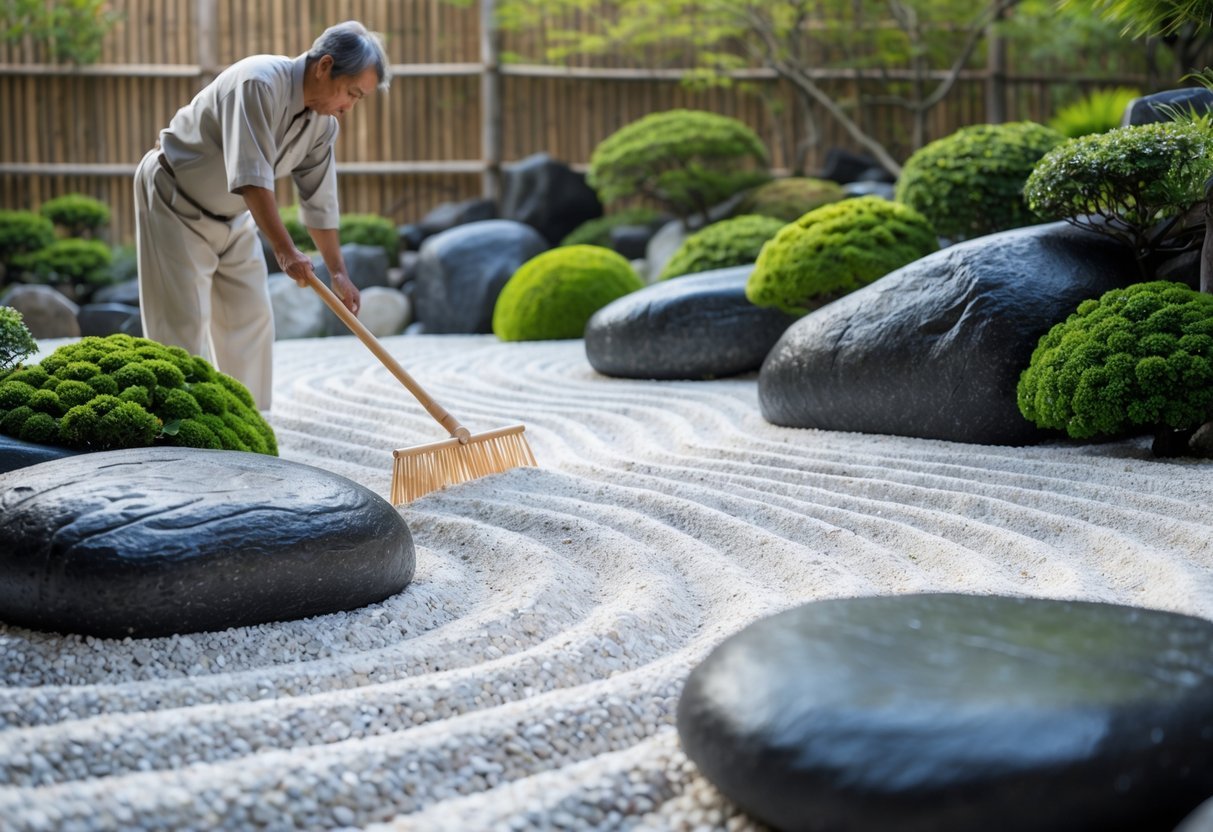
Focus on regular, simple steps to keep gravel clean, moss healthy, and stones stable. Small upgrades like adding a bamboo water spout or changing plant choices can improve look and function over time.
Seasonal Care Guidelines
In spring, remove debris and check gravel depth. Rake patterns, then add fresh gravel where ruts or thin spots appear. Trim any groundcover or moss encroaching on stone arrangements to keep clear lines.
In summer, water moss lightly during dry spells and shade young plants if afternoon sun is strong. Pull weeds by the root to stop them from returning. Watch for pests on maples or shrubs and treat with gentle, targeted methods.
In fall, clear fallen leaves daily to prevent staining and mold. Cut back perennials after the first frost and protect delicate moss with a light layer of breathable mulch if winters are harsh. In winter, ensure drainage is clear so melting snow won’t pool; avoid salt near plants.
Long-Term Design Adaptations
Every few years, reassess stone placement and gravel flow. Move a boulder or reset edging if erosion changes sightlines. Keep changes small—shift one element at a time to preserve balance and test how the garden feels.
Update plant choices as your microclimate or light levels change. Replace high-maintenance species with mosses, sedums, or low shrubs that match the garden’s scale. Consider adding subtle features like a bamboo fountain, stepping stones, or a low bench to guide use.
Plan for aging materials: refresh gravel, tighten edging, and replace weathered wood. Document changes with photos so you can track what works and what to avoid.
Frequently Asked Questions
These answers cover step-by-step choices for layout, materials, and plant picks, plus budget-friendly and low-maintenance methods. You will find clear design actions, examples of modern twists, and ways to add Zen principles in small spaces.
How do I design a simple yet authentic Japanese rock garden?
Start by choosing a focal stone or small cluster of stones. Place them off-center and vary their heights to suggest a natural scene.
Use gravel or coarse sand to cover the ground and rake it into simple, flowing patterns. Keep plant use minimal—choose moss and a single shrub or bamboo screen if you need greenery.
Limit decorations and avoid bright colors. Keep paths narrow and use stepping stones to guide movement without clutter.
What are modern interpretations of Japanese rock garden aesthetics?
Combine classic elements—stones, gravel, moss—with clean metal or concrete edging for a contemporary look. Use geometric planting beds or square gravel fields to contrast with the organic stone groupings.
Introduce subtle lighting to highlight stone shapes at night. Low, warm LED uplights work best; avoid colorful fixtures that distract from the calm.
You can also mix drought-tolerant succulents or ornamental grasses for a modern, low-water twist while keeping the minimalist layout intact.
Can you suggest Japanese rock garden designs suitable for a tight budget?
Use local stones instead of bought boulders to save money. Gather gravel in bulk and spread a thinner base layer over weed barrier fabric to cut costs.
Choose inexpensive plants like moss fragments, fescue grass, or dwarf conifers. Small, gradual improvements work well—start with the stone arrangement and add planting and lighting later.
DIY raking and stone placement reduce labor costs. Rent a tamping tool and use sandbags for heavy rocks instead of hiring movers.
What are some low-maintenance strategies for creating a Japanese rock garden?
Lay landscape fabric under gravel to limit weeds and reduce weeding time. Use coarse gravel that resists compaction and keeps raking patterns visible longer.
Select hardy plants such as moss, Japanese sedge, or small pines that need little pruning. Avoid high-maintenance flowers or large lawns near the garden.
Design for clear drainage so water does not pool around stones. Proper grading prevents erosion and cuts down on cleanup after storms.
How can I incorporate the principles of Zen into a small Japanese rock garden?
Focus on simplicity: limit elements to stones, gravel, and a touch of moss or one small shrub. Keep open space to suggest calm and to let the stone shapes speak.
Arrange stones to show balance and asymmetry rather than symmetry. Use raked gravel patterns to suggest water flow and to encourage stillness when you view them.
Create a single, quiet viewing spot—perhaps a bench or a small deck—so you can sit and reflect without distraction.
Which elements are essential to include for an authentic Japanese garden experience?
Stones and gravel are essential; stones represent mountains or islands while gravel stands in for water. Place stones thoughtfully to form a visual narrative.
Moss or minimal plantings provide soft texture and green contrast. A simple border, stepping stones, or a bamboo fence can frame the space without dominating it.
Avoid excessive ornamentation. Authenticity comes from restraint, careful placement, and natural materials.