Japanese Garden Design Principles for Modern Small Yards
You can use simple shapes, water, stone, and plants to make a calm, balanced Japanese garden that fits your space and skill level. A well‑designed Japanese garden brings quiet, natural order to your yard through deliberate placement of rocks, water, and minimal planting.
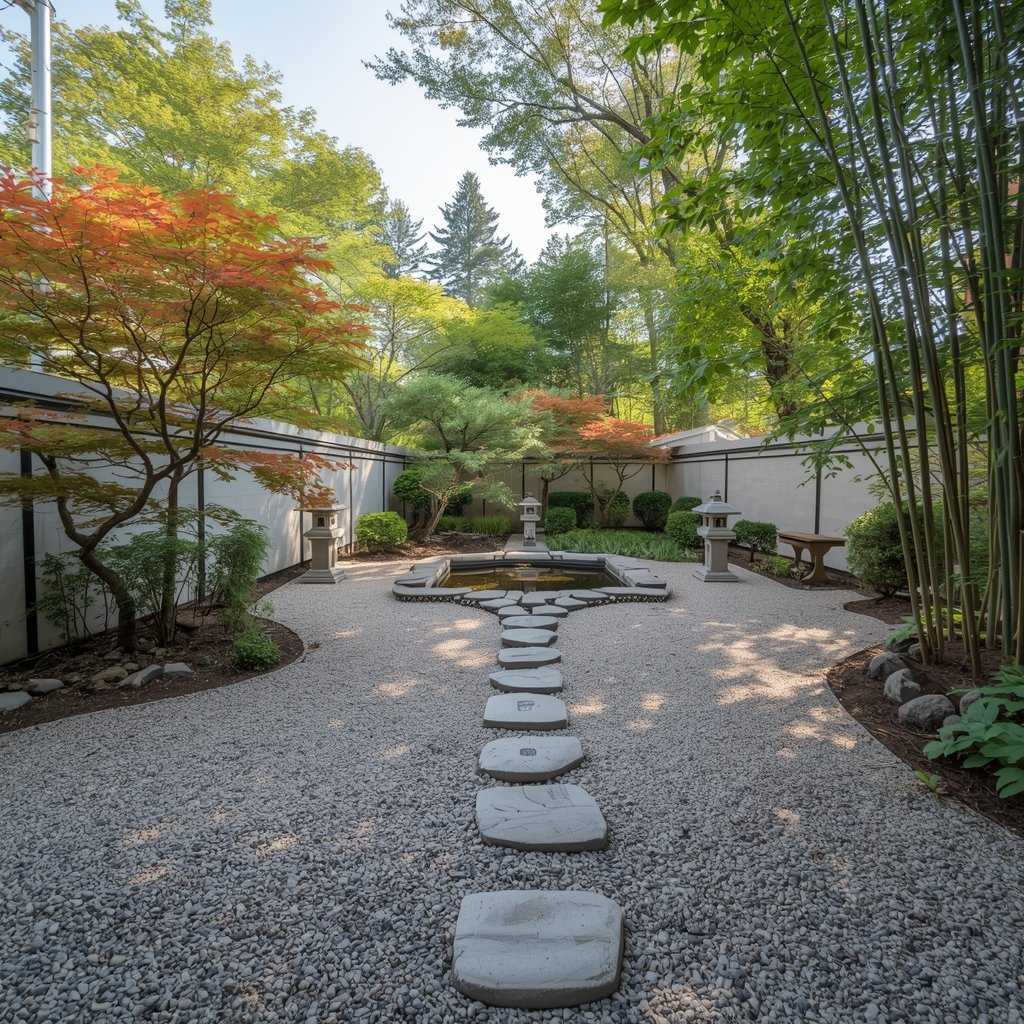
This post shows practical steps and clear ideas so you can plan and build a garden that feels meditative and easy to maintain. Expect guidance on layout, key materials, and small design choices that create a big impact.
Key Takeaways
- Start with a clear focal point and simple layout.
- Use water, stone, and restrained planting to set the mood.
- Plan for scale and maintenance before you build.
Fundamental Elements of Japanese Garden Design
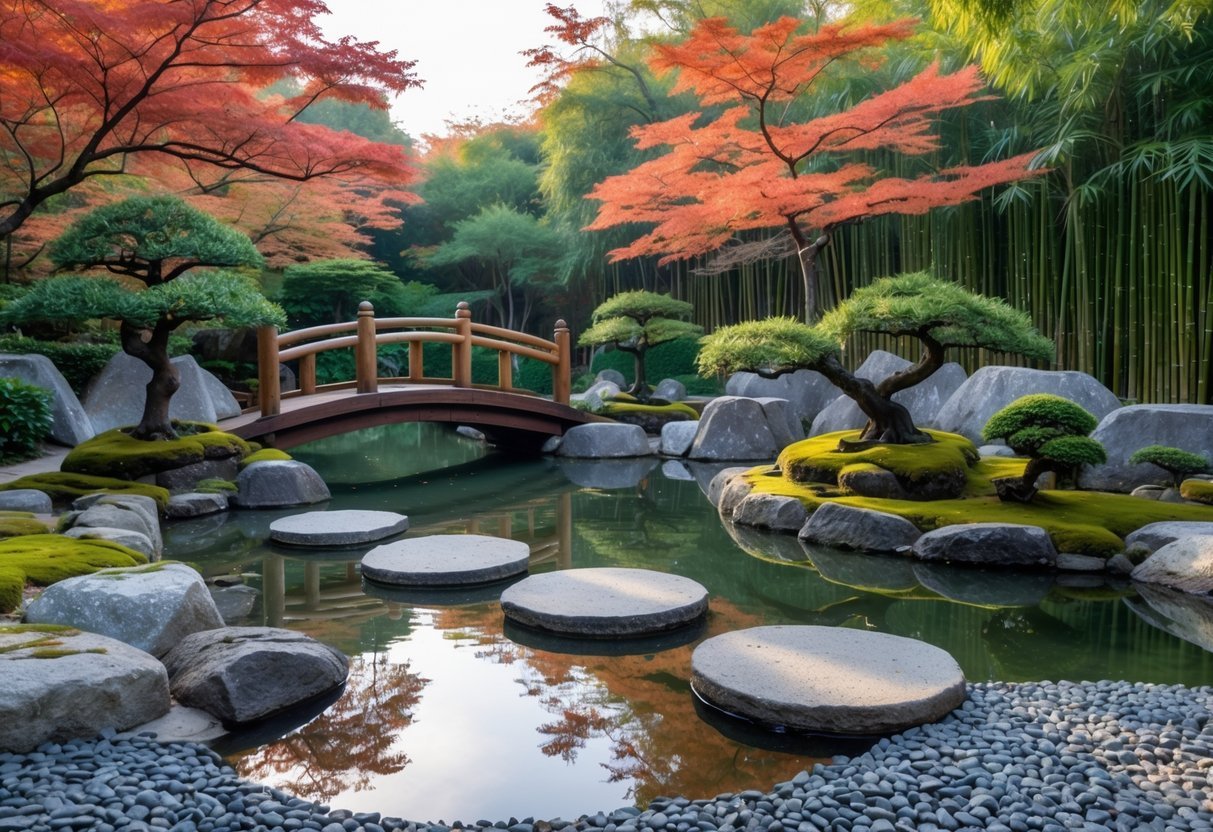
You will find clear elements, guiding principles, common garden types, and rich symbolism that shape every Japanese garden. These parts work together to create balance, stillness, and a sense of place.
Essential Features
Japanese gardens use a small set of physical elements to suggest nature. Expect water (ponds, streams, or basins) to represent life and reflection. Rocks and stones form the “bones” of the layout; their size, shape, and placement create structure and movement.
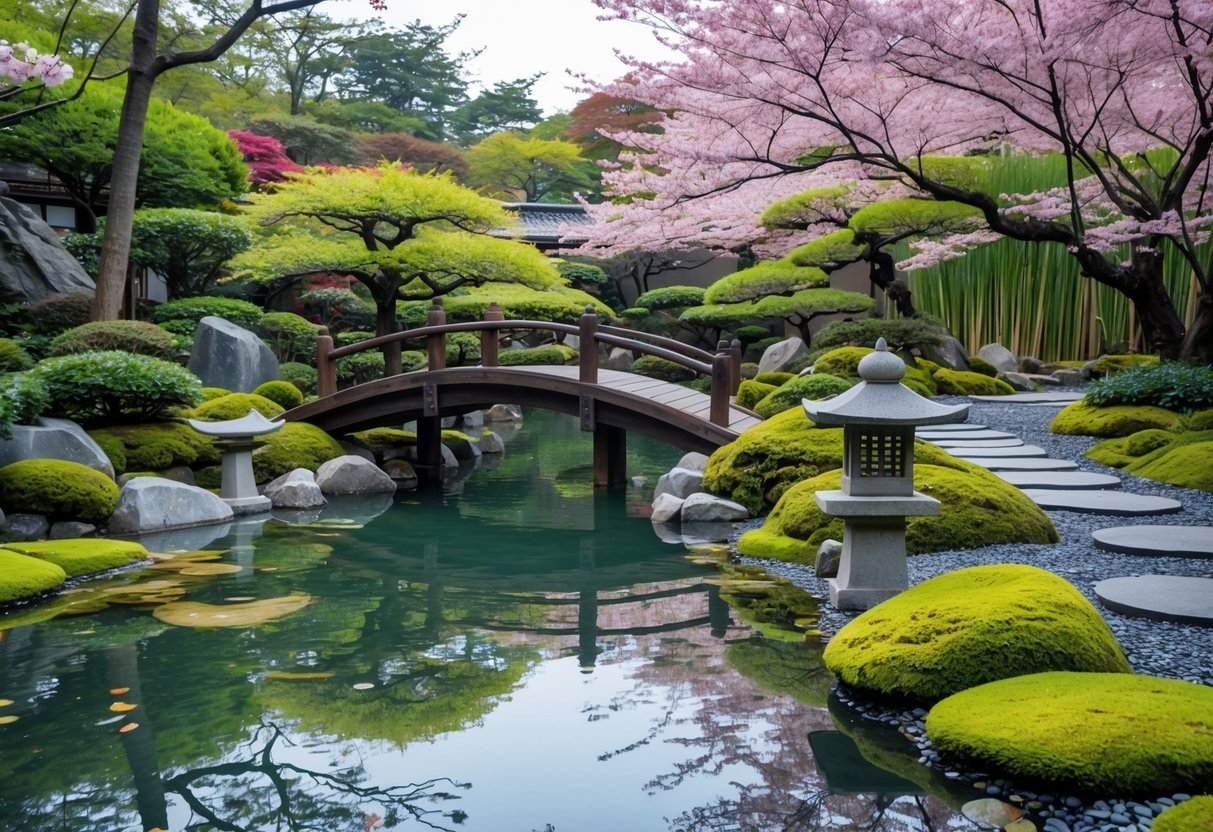
Plants are chosen for texture, seasonality, and form rather than color. Evergreens, maples, moss, and bamboo provide year-round shape and subtle seasonal change. Paths, bridges, lanterns, and gates guide movement and frame views.
You should notice careful scale and restraint. Each object relates to human scale so you can move through and experience the scene. Materials are natural and weather with time.
Key Principles
Asymmetry guides composition so your eye moves naturally rather than landing on a central focal point. Balance appears through contrast—rough stone next to smooth water, sparse space next to dense planting.
Borrowed scenery (shakkei) uses distant hills, trees, or structures to extend the garden’s perceived size. Enclosure and framing control what you see next and create intimate pauses.
Simplicity and restraint reduce clutter. Every element has a purpose. You should aim for suggestive detail rather than literal replication of nature.
Types of Japanese Gardens
Know the main types so you can choose a style that fits your space and use.
- Stroll garden (kaiyū-shiki): Designed for a walking route around ponds and views. Use winding paths and stepping stones.
- Tea garden (roji): Small, simple, and focused on the approach to a tea house. Include a waiting area, stepping stones, and a stone basin.
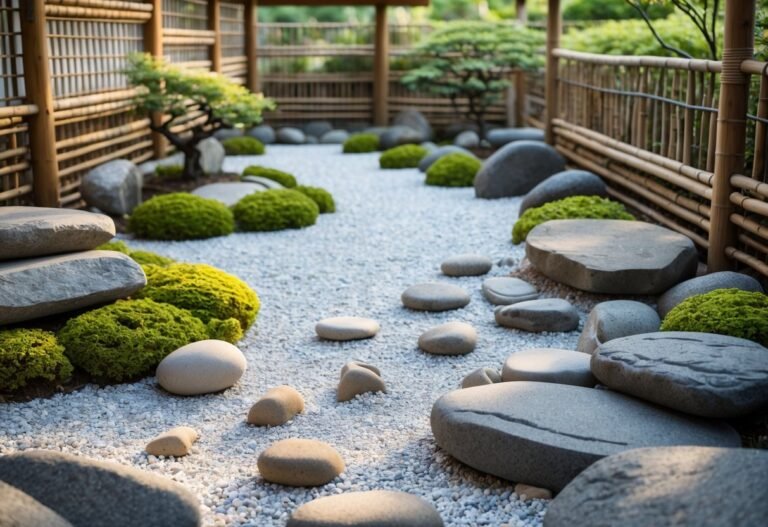
- Dry landscape (karesansui): Uses rocks and raked gravel to represent mountains and water. Ideal for meditation or small urban sites.
- Courtyard and residential gardens: Compact and private. Emphasize views from specific rooms and doorways.
Each type dictates the layout, plant choices, and how you move through the space.
Symbolism and Meaning
Objects carry layered meanings that guide design choices. Rocks often symbolize islands, mountains, or animals. Water represents purity, renewal, or the flow of time. Gravel and raked patterns can stand in for rivers or the sea.
Lanterns, gates, and teahouse elements mark transitions and ritual. Plant choices signal seasons and emotional tone—cherry blossoms for fleeting beauty, moss for age and calm.
You should place symbolic elements so they support experience and movement, not dominate it. The goal is clear: invite reflection through deliberate, meaningful detail.
Design Techniques and Materials

You will use living plants, stones, water, and paths to shape sightlines, balance, and seasonal interest. Each element should serve a purpose: structure, texture, or movement.
Plant Selection and Arrangement
Choose plants that match your climate and the garden’s scale. Use evergreens like pine or cedar for year-round structure and maples or cherry for seasonal color. Place taller plants toward the back or near fences and smaller shrubs and groundcovers in front to create layered depth.
Prune with intent. Keep shapes simple and controlled to highlight form and texture rather than showy blooms. Space plants so each specimen has room to age without crowding.
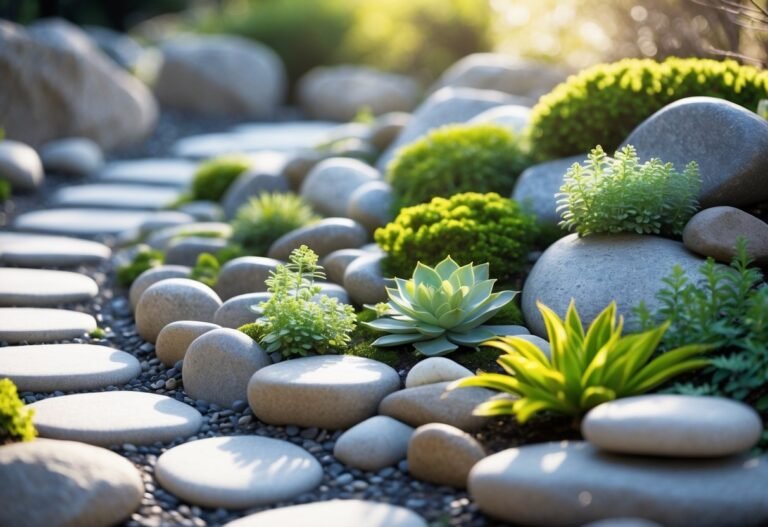
Use repetition of a few species to create calm and rhythm. Add moss in shaded, moist spots to soften edges and connect stone and soil visually.
Rock and Stone Placement
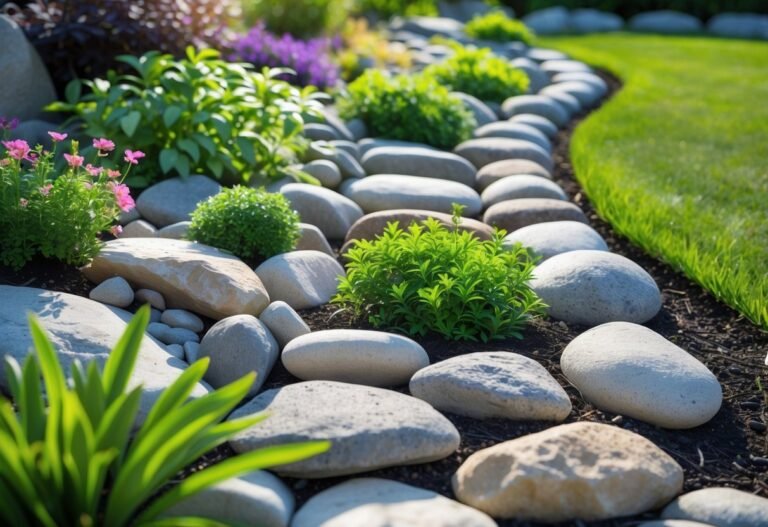
Select stones for size, texture, and color that suit your garden’s style. Use large, upright stones as focal points and flat stones for stepping areas. Anchor major stones into the ground so they look natural and stable.
Group stones in odd numbers—typically three—to create a balanced cluster. Position each stone with its natural face visible and avoid symmetrical arrangements. Use gravel or crushed stone to contrast darker rocks and to define dry stream beds or raked areas.
Match stone scale to nearby plants and structures so nothing feels out of place.
Water Features
Decide between still water (pond) and moving water (stream or basin) based on sound and maintenance you can accept. Ponds add reflections and wildlife; streams and waterfalls add sound and motion that mask noise.
Keep edges natural. Use boulders and planting to hide liners and pumps. For a simple option, place a tsukubai (basin) near a path for a quiet focal point and easy upkeep.
Filter and circulate water to prevent stagnation. Use native aquatic plants at pond margins to stabilize banks and support insects and birds.
Pathways and Bridges
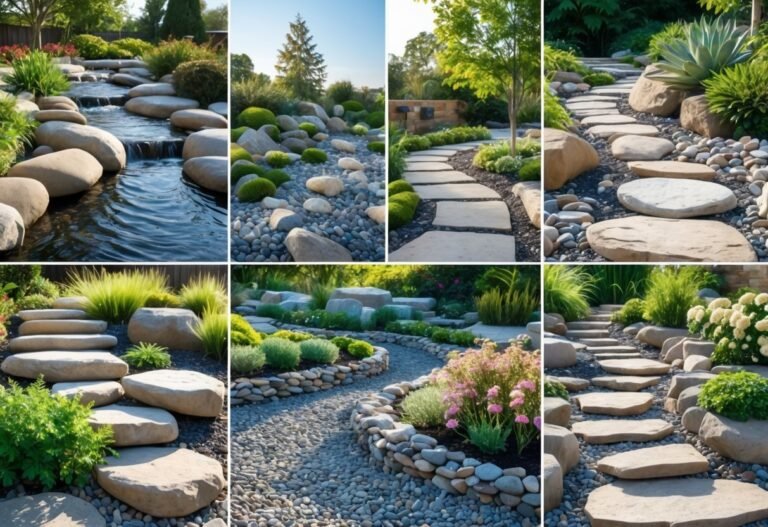
Lay paths to guide movement and control viewing angles. Use stepping stones for slow, deliberate walking; compacted gravel or decomposed granite for informal strolls; and flagstone for stable, wider routes. Keep path widths proportional: single-stepping paths often 18–24 inches, main paths wider.
Position bridges at visual focal points or where a path must cross water. Use simple wooden or stone bridges with low railings to maintain sightlines. Angle paths to reveal scenes gradually rather than showing everything at once.
Edge paths with low plants, moss, or small stones to blend them into the garden and reduce hard edges.
Planning and Implementation
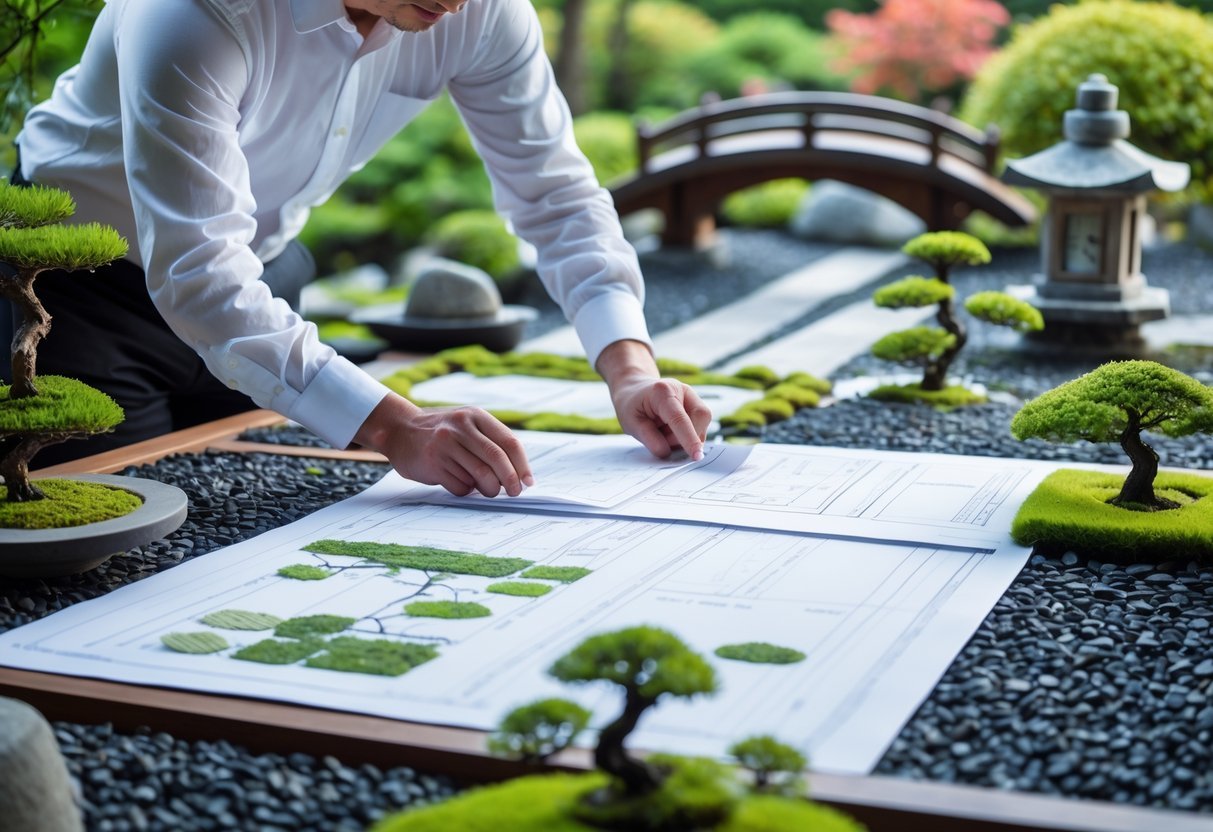
Decide where to place major elements, how much work you can commit to, and how your local climate affects plant and material choices. Make practical plans for layout, supplies, and ongoing care before you start digging.
Site Selection and Layout
Pick a site with the right light and drainage for your main plants. For shade-loving maples and moss, choose a spot with morning sun and afternoon shade. For dry rock gardens, pick a sunnier, well-drained area.
Draw a simple plan to scale on graph paper or use a phone app. Mark existing trees, slopes, and views. Place paths so they guide movement: curved stepping-stone routes slow you down, straight paths speed you up. Put water features where you can hear them from a sitting area and where water runoff won’t pool against structures.
Choose focal points and sightlines. Position a stone, lantern, or specimen tree where you want attention. Use borrowed scenery—align sightlines to a distant tree, fence, or hill—to make the space feel larger. Keep proportions balanced: a large boulder needs a wider planting bed or multiple smaller stones nearby.
Maintenance Practices
Decide on a maintenance schedule before planting. Weekly tasks might include sweeping paths, clearing fallen leaves from water, and checking irrigation. Monthly tasks can include light pruning, weeding, and topping up gravel or sand in dry gardens.
Use proper tools: a bamboo rake for sand, sharp shears for pruning maples, and a hand trowel for moss work. Prune to maintain form, not size; remove crossing branches and dead wood. Rake gravel along the same pattern to preserve the intended lines.
Plan for seasonal chores. In spring, check for winter damage and clean ponds. In fall, remove excess leaves from moss and water features to prevent rot. Record tasks on a simple calendar so you don’t miss key maintenance windows.
Adapting to Different Climates
Match plant lists to your hardiness zone. In cold climates, choose cold-tolerant species like conifers, birch, and hardy maples. In warm or dry areas, use drought-tolerant plants such as Japanese holly, ornamental grasses, and pines adapted to heat.
Adjust materials and construction methods for local weather. Use frost-resistant stone and raised beds in areas with heavy freeze-thaw cycles. In wet climates, add drainage trenches and gravel layers under paths to prevent ponding and root rot.
Modify water features and irrigation to suit rainfall. In arid regions, install drip irrigation and use small recirculating ponds to conserve water. In rainy climates, design overflow paths and choose plants that tolerate wet feet to avoid water damage.
Frequently Asked Questions
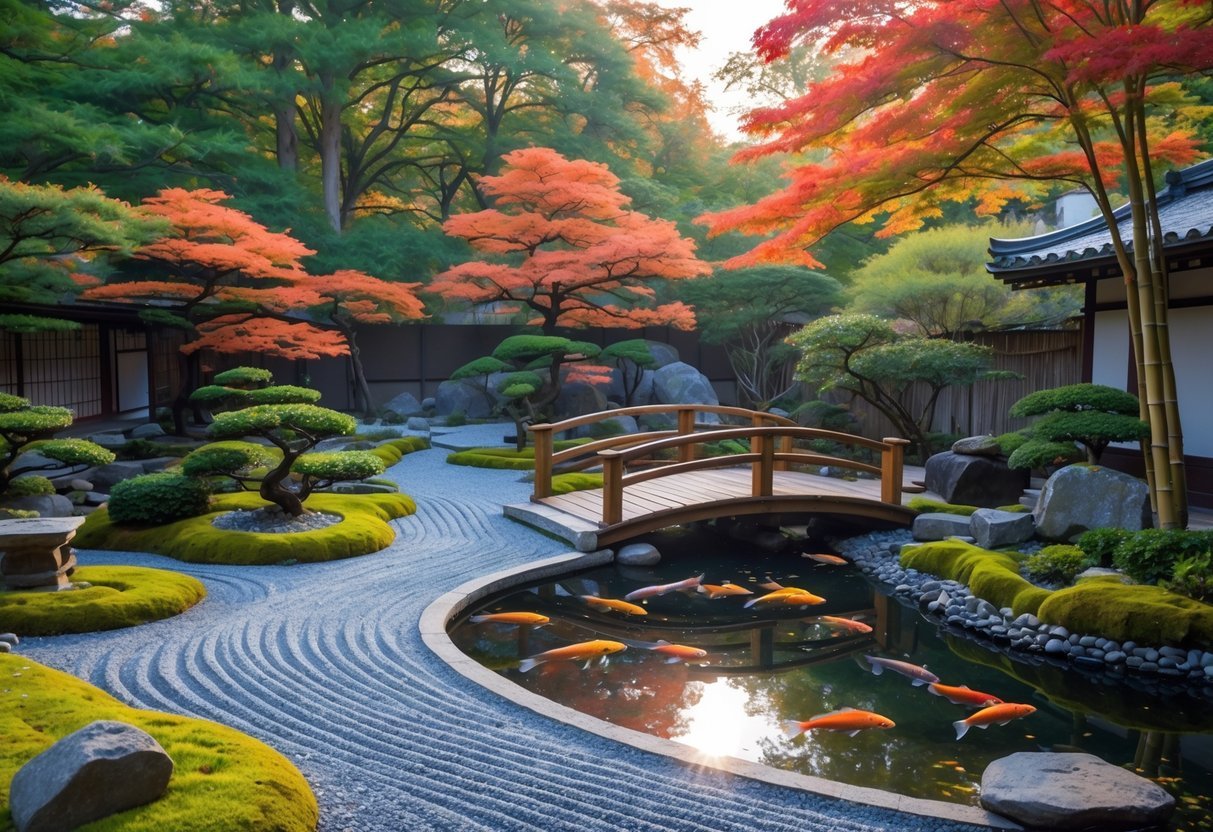
This section covers specific choices you can make: which elements fit tight spaces, how to get a modern look, key design rules, low-cost options, easy-care plants, and a step-by-step layout plan. Each answer gives concrete actions you can use when planning or changing your garden.
What are essential elements to include in a small space Japanese garden?
Pick one focal element, such as a stone lantern, a small pond, or a dwarf maple. One strong focal point keeps the space from feeling cluttered.
Use gravel or raked sand to suggest water and add texture without needing much room. Keep paths narrow and curved to make the area feel deeper.
Include evergreen shrubs and moss to keep year-round color. Limit plant varieties to three or four to simplify maintenance and visual balance.
How can one achieve a modern Japanese garden aesthetic?
Choose clean lines and simple materials like concrete, black slate, and smooth river rock. Use geometric shapes for paving and low, linear planting beds.
Limit plant palette to a few sculptural species, such as Japanese maple, bamboo, and ornamental grasses. Add a single, modern water feature or minimalist basin for sound and reflection.
Use lighting sparingly and place it to highlight texture or a focal object. Keep furniture minimal and in neutral tones.
What are the key principles of Japanese garden design?
Balance asymmetry with careful placement of stones, plants, and water. Avoid perfect symmetry; aim for visual harmony instead.
Emphasize proportion and scale so each element fits the space. A large rock should not overwhelm small plants.
Create borrowed scenery by framing views of nearby trees, walls, or sky. Use stepping stones or paths to control movement and reveal views gradually.
How can a Japanese garden be designed on a budget?
Reuse materials like salvaged stones, old tiles, or reclaimed wood for edging and paths. Buy small plants and let them grow into place rather than buying mature specimens.
Keep hardscape simple: gravel, sand, and a few large rocks cost less than a full pond or elaborate water feature. Do the digging and planting yourself to save labor costs.
Focus spending on one high-impact item, such as a quality lantern or a single granite basin, and keep other elements modest.
What are some low-maintenance plants for a Japanese garden?
Evergreen azaleas and dwarf Japanese maples give year-round form with modest pruning. Boxwood and Japanese holly provide neat, slow-growing structure.
Moss prefers shade and moist, compacted soil and makes a soft, low-care ground cover. Ferns and hostas work well in shaded corners and need only occasional trimming.
What is the process for planning a Japanese garden layout?
Start by measuring the site and noting sun, shade, drainage, and views. Sketch a simple map showing existing trees, slopes, and fixed features.
Decide on a main focal point and secondary features, then place paths to lead visitors to those focal points. Choose materials and plants based on scale, maintenance, and budget.
Draw a planting plan with spacing and mature sizes, then phase construction: hardscape first, soil work next, and plants last.