Japanese Backyard Garden Ideas: Minimalist Design Tips for Tranquil Outdoor Spaces
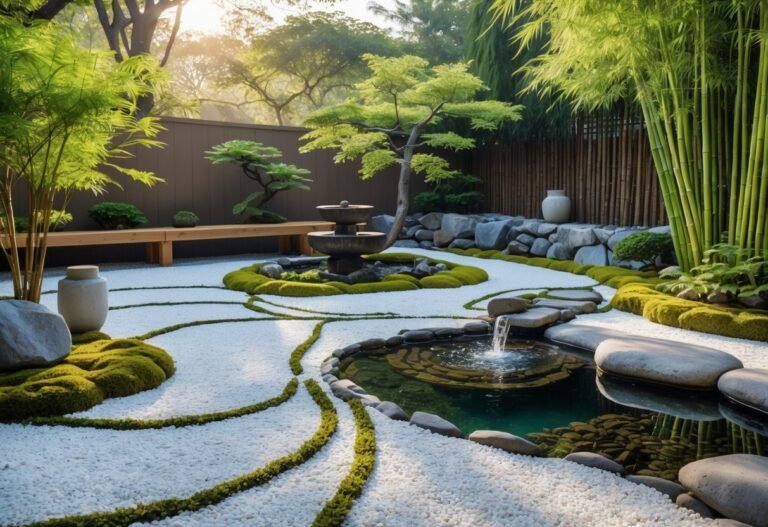
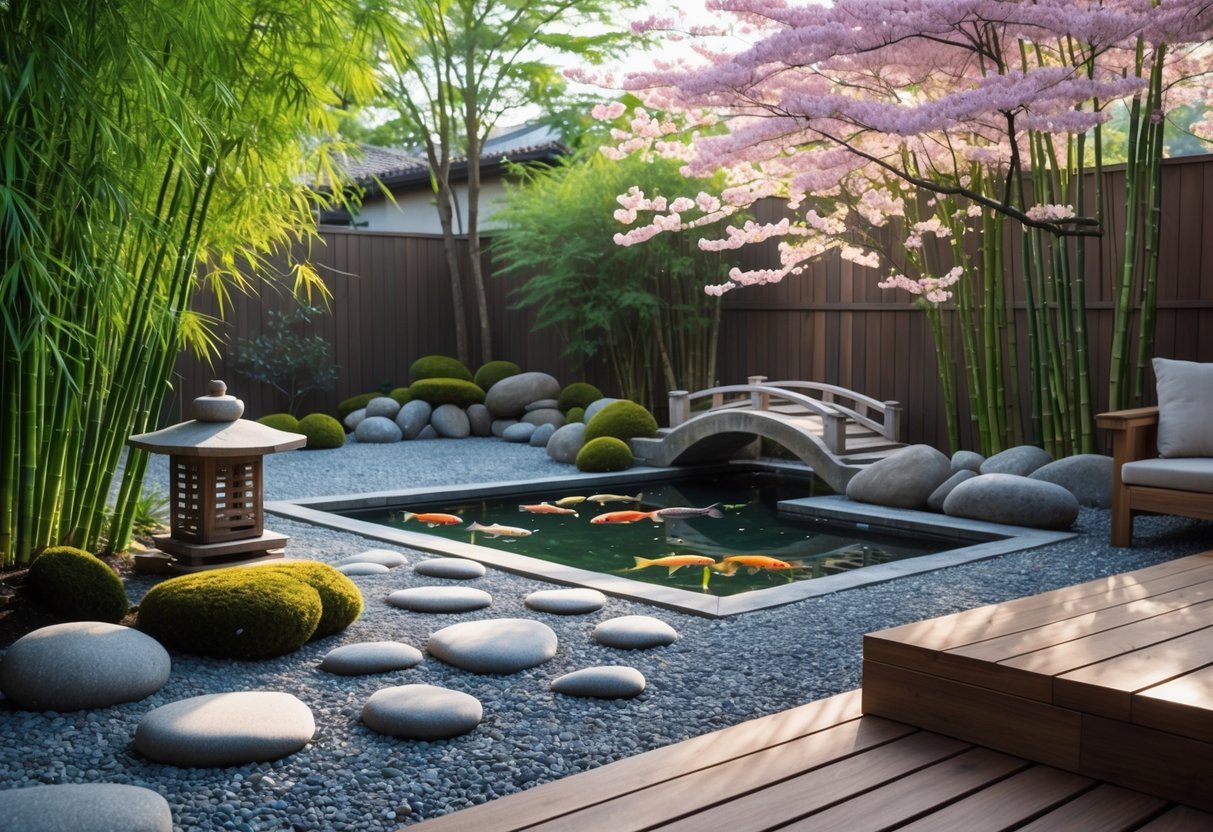
You can turn your backyard into a calm, Japanese-style garden that fits your space and budget by using simple elements like stones, water, plants, and quiet paths. Mix a small koi pond or a bamboo water feature with moss, maples, and gravel to create a peaceful spot for sitting or walking.
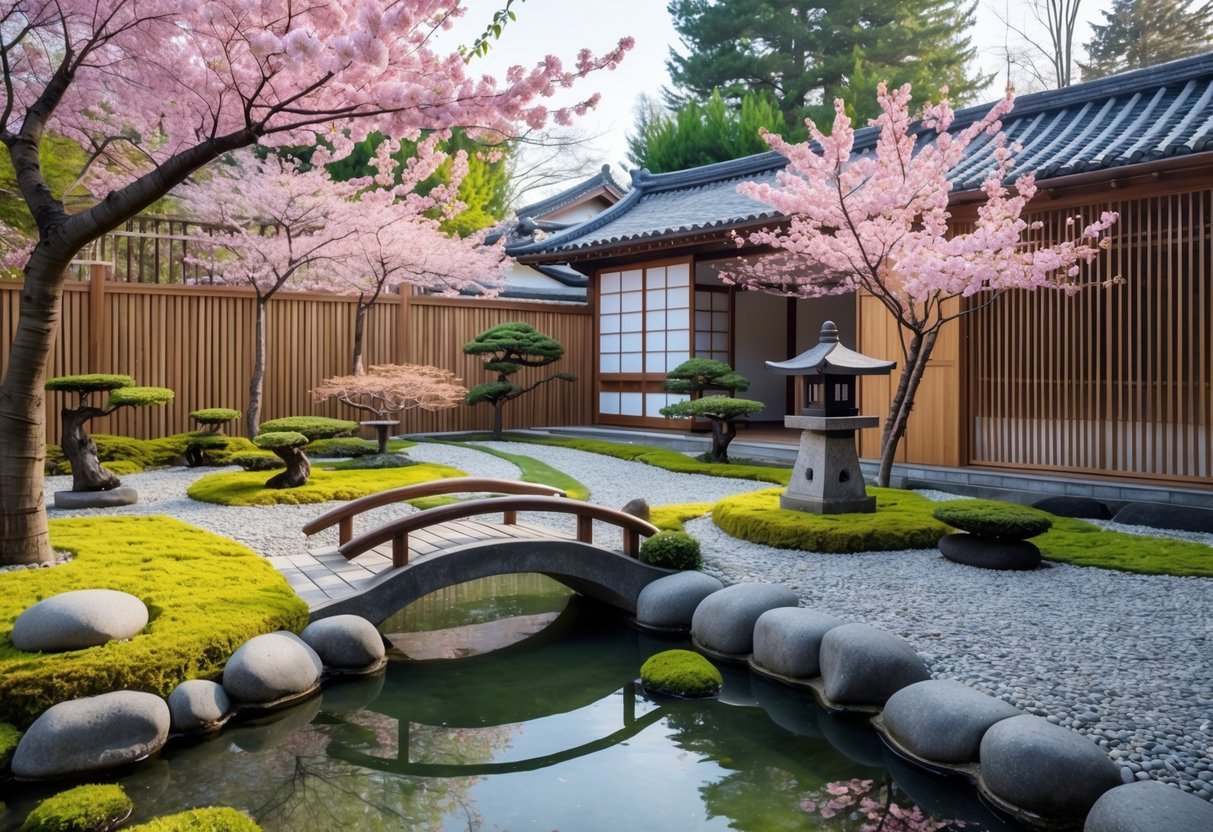
Choose shapes and layouts that guide the eye and slow your pace, and add a lantern, bench, or tea house corner to give the space purpose and charm. A thoughtful mix of stone, water, plantings, and minimal decor gives you a serene, low-maintenance garden you’ll want to use every day.
Keep seasonal needs and easy maintenance in mind so the garden stays beautiful year-round without extra work.
Key Takeaways
- Use stones, water, plants, and simple paths to craft a calm backyard retreat.
- Pick layouts and a few structures to set mood and function.
- Plan for seasonal care to keep the garden easy and lasting.
Core Elements of Japanese Backyard Gardens

These elements work together to create calm, balance, and clear sightlines. You will use stone, water, and plant choices to shape movement, sound, and seasonal interest in your backyard.
Natural Stone Pathways
Choose flagstones, stepping stones (tobi-ishi), or compacted gravel to guide movement through the space. Place stones with uneven spacing so each step slows you and invites a pause. Use larger, flat stones for primary routes and smaller, irregular stones for secondary paths.
Set stones on a crushed-rock base for stability and drainage. Add moss or low groundcover between joints to soften edges and reduce erosion. Keep path widths narrow—about 18–30 inches for walking routes—to maintain an intimate scale.
Edge paths with low borders like bamboo, low shrubs, or river rock to define the route. For a traditional look, use bluestone, granite, or slate. For low maintenance, pick durable stone and give joints a weekly sweep and annual resetting if stones shift.
Water Features and Ponds
A small pond, shallow basin (tsukubai), or simple bamboo spout (kakei) brings sound and reflection to your garden. Place a water feature where you can hear it from seating areas but where it won’t flood plants. Keep pond edges natural with stones and marginal plants like water iris.
For safety and ease, build ponds no deeper than 18–24 inches in small yards and use a pump and filter to prevent stagnation. A tsukubai works well near an entrance or seating area; position it low so people naturally bow or pause when they approach.
Use a discreet liner and hidden overflow to protect plant beds. Regularly remove leaves and algae. Add a few koi only if your pond is large enough and has proper filtration.
Traditional Japanese Plants
Pick plants that give year-round structure and seasonal highlights. Key choices: evergreen pines and maples for form, azaleas and camellias for spring blooms, and mosses for groundcover. Use bamboo as an accent—not a hedge—unless you install a root barrier.
Prune selectively to keep shapes simple and to reveal branch lines. Favor slow-growing varieties that hold a compact form, such as Japanese maple (Acer palmatum), dwarf hinoki cypress, and sasanqua camellia. Plant in odd-numbered groupings for natural balance.
Match plant size to your space. In small yards choose dwarf cultivars and container plantings. Provide well-drained soil for shrubs and richer, slightly acidic soil for moss and azaleas.
Design Principles and Layout Ideas
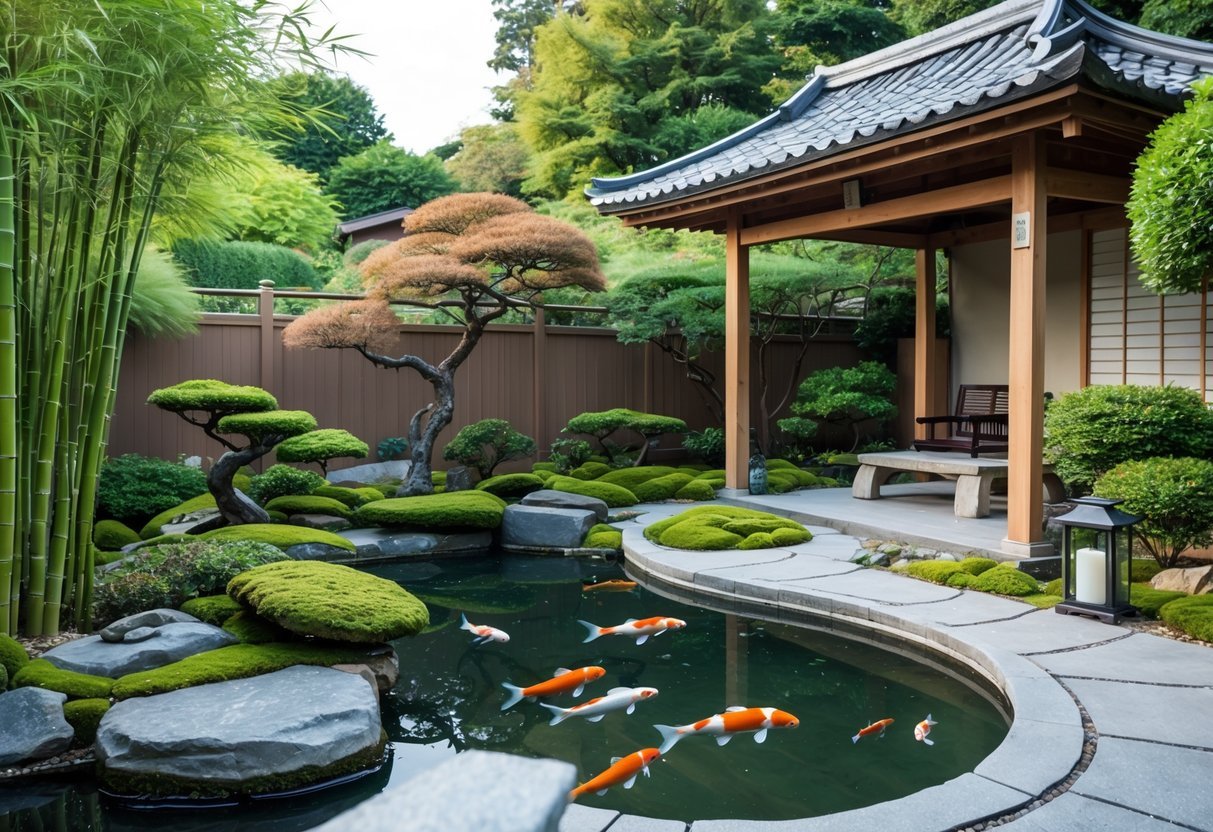
Focus on simple lines, plant placement, stone arrangement, and sightlines. Use these elements to shape movement, frame views, and create quiet spots for rest or contemplation.
Balance and Asymmetry
Aim for visual balance without mirror symmetry. Place a dominant element—like a stone lantern or small maple—offset from the center and counter it with lower shrubs or a groundcover patch. This creates a natural, relaxed feel.
Use odd numbers for groupings (three rocks, five bamboo stalks). Vary heights: a tall feature, a middle layer of shrubs, and a low moss or gravel carpet. Leave negative space around focal pieces so each element reads clearly.
Create sightlines that draw the eye along a path or to a water feature. Position stepping stones or a path that curves gently rather than running straight through the garden. This encourages slow movement and reveals views sequentially.
Zen Garden Integration
Reserve a small area for a dry (karesansui) garden if you want a meditative spot. Use raked gravel or sand to represent water and place a few carefully chosen rocks to suggest islands or mountains.
Keep plantings minimal near the Zen area—low moss, a single dwarf pine, or clipped boxwood work well. Use a simple border of larger stones or compacted soil to separate the raked gravel from planted beds.
Plan maintenance access so you can regularly rake patterns and trim the few plants. That keeps the space crisp. Add a single bench or flat stepping stone for sitting and viewing, positioned where lines in the gravel point toward a focal rock.
Privacy and Enclosure
Define edges with layered plantings and structures. Combine a low bamboo fence or wooden slat screen with evergreen shrubs like yew or holly to block sightlines year-round.
Create depth by placing taller evergreens or bamboo at the back, mid-height shrubs in the middle, and groundcovers or moss at the front. This layered screen absorbs noise and hides neighboring yards without feeling like a wall.
Use gateways and short winding paths to mark transitions between public and private zones. A small arched gate or torii can signal entry to a more secluded area. Keep hardscape materials consistent—same wood tone or stone type—to unify the enclosure.
Enhancing Ambiance With Structures and Decor
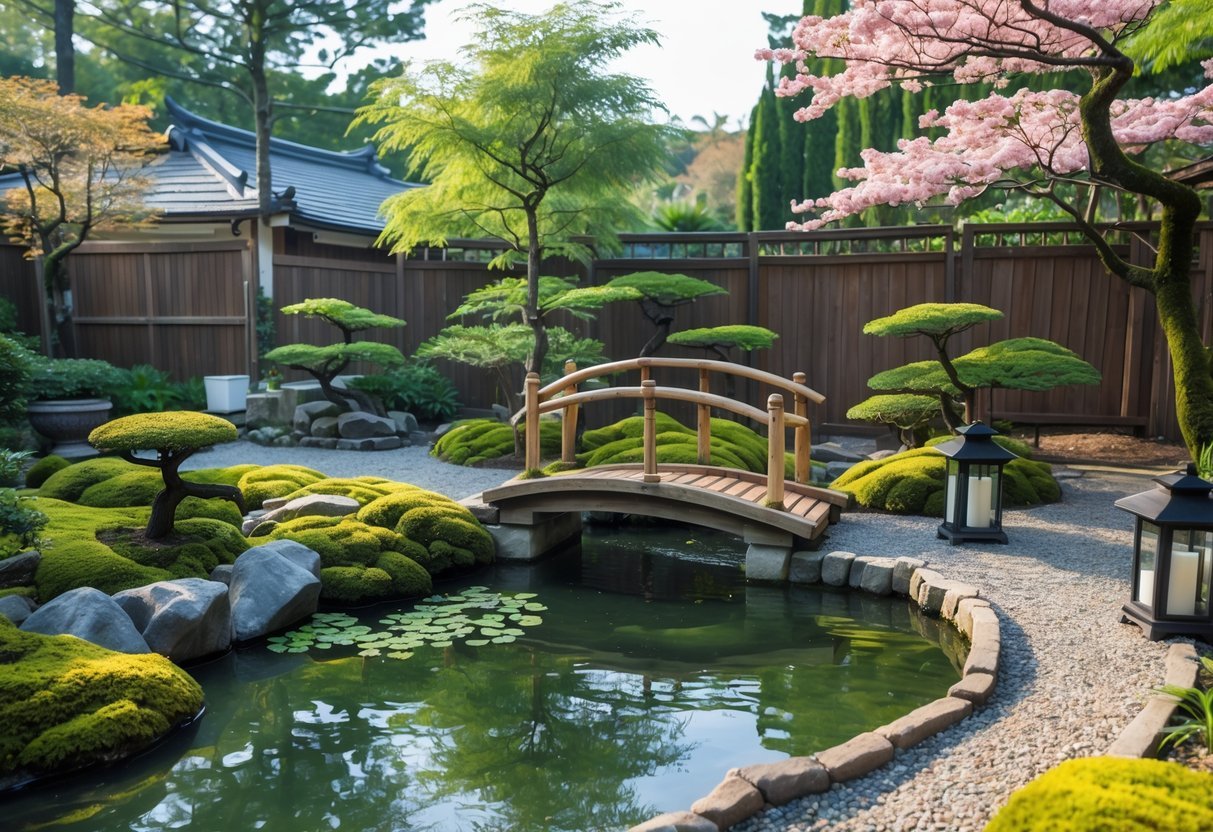
You can use hardscape and decor to shape how your garden feels at different times of day. Choose pieces that add soft light, visual rhythm, and quiet places to sit or pause.
Japanese Lanterns
Place stone or metal lanterns near paths, water, or seating to create focal points and soft lighting. A common choice is the toro style: pedestal (daitō), small hanging (tsuri-dōrō), or buried base (ikekomi-dōrō). Position them so light washes a moss patch or stone, not directly into your eyes.
Use low-voltage LED or solar lights inside lanterns for safety and low maintenance. For authenticity, select warm white bulbs (2700–3000K) and conceal wiring along edges or under gravel. Space lanterns unevenly—clusters of one or two work better than a straight line.
Keep materials simple: granite, cast stone, or weathered metal fit most yards. Clean moss lightly; don’t remove it entirely. Secure tall lanterns on level footing to avoid tipping.
Bamboo Fencing
Bamboo fencing defines edges and offers privacy without heavy walls. Choose traditional bamboo poles tied horizontally with black jute for an authentic look, or use woven bamboo panels for quick installation. Measure height for privacy (typically 4–6 feet) and allow a 2–3 inch gap at the base for airflow and drainage.
Anchor posts in concrete for stability in windy spots. Stain or seal only if needed; untreated bamboo weathers to a gray tone that many prefer. For longevity, install a moisture barrier at the bottom where bamboo contacts soil to slow rot.
Combine bamboo fencing with climbing plants or low evergreen hedges to soften joins and reduce visible seams. Replace individual slats as needed rather than the whole run to save cost.
Tea Houses and Pavilions
A small tea house or open pavilion creates a calm place for sitting, meditation, or tea service. For compact yards, consider a 6×8 foot footprint with sliding screens (shōji-style) or open rafters. Use cedar or cypress for framing; choose a simple raised floor to keep the structure dry.
Design doorways and windows to frame a garden view, not to dominate it. Keep interior furnishings minimal: a low bench, tatami-style mats, and a small table are often enough. Add removable screens for shade and privacy.
Ensure foundations handle rain and frost: use concrete piers or treated posts on stone pads. Check local codes for structures under a certain size to avoid permits. Use natural finishes and muted colors so the building blends with plants and stone.
Seasonal Variations and Maintenance Tips
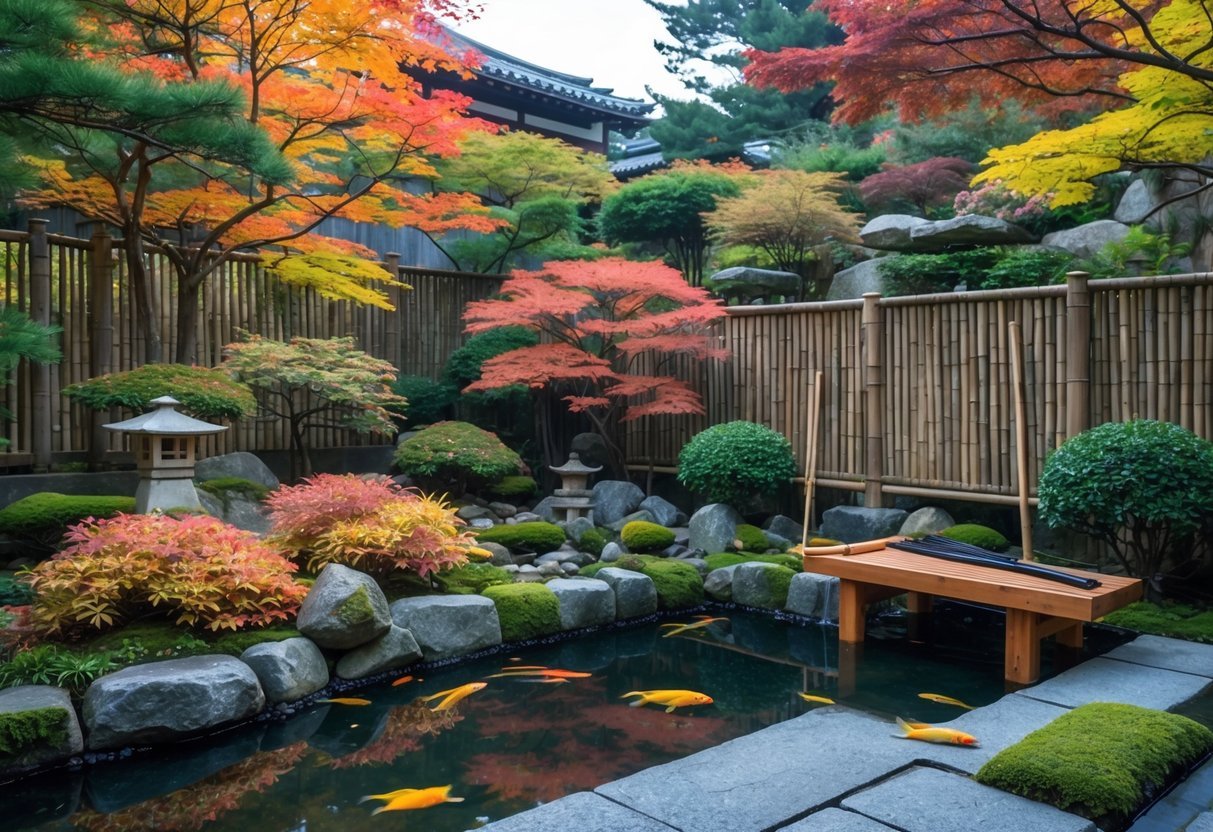
Plan for peak bloom, falling leaves, and low-effort upkeep so your garden stays balanced through the year. Focus on timing plantings, protecting delicate species, and keeping hardscape elements clear.
Spring Planting and Color
Plant bulbs like daffodils and tulips in late fall so they bloom in spring. Add azaleas and rhododendrons for bright color; place them where they get morning sun and afternoon shade. Space shrubs 3–5 feet apart depending on mature size to avoid overcrowding.
Refresh soil with 2–3 inches of compost around beds in early spring. Mulch with 2 inches of bark to conserve moisture and suppress weeds, keeping mulch 1–2 inches from stems to prevent rot. Prune only dead or crossing branches; heavy pruning can remove next season’s flowers.
Water new plantings twice weekly for the first month, then reduce to once weekly as roots establish. Check soil moisture by feeling 2 inches down—if dry, water. Clean paths and raked gravel areas weekly to keep lines and patterns crisp.
Autumn Foliage Planning
Choose maple varieties like Acer palmatum for vivid red and orange leaves that last several weeks. Plant maples where their fall color won’t drop directly onto moss or gravel features you want to keep clear. Add dogwood or Japanese spindle for yellow and purple tones.
Cut back perennials after the first hard frost, leaving some seed heads for winter interest and birds. Rake fallen leaves from walking areas daily during peak drop to prevent slippery surfaces and to keep stone lanterns and stepping stones visible. Compost healthy leaves; discard diseased material.
Protect young or shallow-rooted plants with a 2–3 inch winter mulch after ground freezes. Wrap tender specimens with burlap if temperatures drop below their hardiness level. Drain and winterize any ponds or pumps to avoid freeze damage.
Minimalist Maintenance Practices
Adopt a pruning routine twice a year: light shaping in late spring and cleanup in late autumn. Focus on removing dead wood and maintaining simple silhouettes rather than ornate trimming. This saves time and preserves the garden’s calm lines.
Use low-maintenance groundcovers like moss or sedge in shaded spots to reduce weeding. Replace high-maintenance lawn patches with gravel or stepping stone islands to cut mowing and irrigation. Group plants by water needs so you can water selectively, saving water and time.
Keep a small toolkit by the gate: hand pruners, a leaf rake, a hand trowel, and a stiff broom. Spend 15–30 minutes three times a week on quick tasks: sweeping paths, checking mulch, and inspecting for pests or disease. Regular short visits prevent big chores later.
Frequently Asked Questions
These answers focus on clear, practical steps: which plants, stones, and water features to use; how to size paths and focal points; and simple construction or planting tips you can apply in small backyards.
How can I incorporate traditional elements into a small space Japanese garden?
Choose a single strong focal point, such as a stone lantern, bamboo water spout (shishi-odoshi), or a small dry rock arrangement. Place it off-center and frame it with low shrubs or a narrow gravel path to create depth without crowding.
Use stepping stones or a short stone path to guide movement. Keep hardscape proportions small—compact boulders and thin gravel beds work better than large rocks that dominate the space.
Limit tall features. Use a short maple, dwarf bamboo, or clipped evergreen for vertical interest. These give a traditional look while keeping sightlines open.
What are the essentials for creating a simple yet authentic Japanese garden in my backyard?
Start with three basic elements: stone (path or feature), water (real or suggested), and plantings (evergreen plus one seasonal accent). Arrange them so your eye moves naturally from one to the next.
Add gravel or sand that you can rake for a dry garden effect. A single basin or small pond provides a quiet water element without complex plumbing.
Include evergreen anchors like boxwood, yew, or dwarf pines. Add one or two seasonal plants—Japanese maple or azalea—for color and contrast.
What are some budget-friendly ways to create a Japanese garden aesthetic outdoors?
Reuse materials you already have: old bricks become edging, broken concrete can serve as stepping stones, and native stones work as feature rocks. Shop local salvage yards for lanterns, basins, and stones at low cost.
Opt for minimalist planting and small-scale water features. A simple pebble bed, a cast-iron basin, or a recirculating pump in a shallow container gives the look without high expense.
Choose low-cost plants like moss plugs, groundcover sedums, and dwarf evergreens. These establish the style quickly and need little care.
How can I design a low-maintenance Japanese garden?
Favor evergreen shrubs, moss, and groundcovers that need little pruning. Select plants adapted to your local climate to cut watering and care.
Use mulch or gravel to suppress weeds and reduce watering. Place stepping stones or mulched paths to limit lawn areas that need mowing.
Keep the layout simple with fewer plant species. A restrained palette means less seasonal cleanup and easier long-term care.
What plants and features should be prioritized for a minimalist Japanese garden?
Prioritize evergreen structure: dwarf conifers, boxwood, or clipped yew for year-round form. Add moss and shade-tolerant groundcovers for soft texture at the base.
Choose one seasonal accent plant like a small Japanese maple, azalea, or camellia. Limit bright flowering plants to one or two spots to keep the calm feel.
Include a single stone lantern, a water basin, or a rock grouping as your focal feature. One well-placed element reads as intentional and keeps the design minimalist.
What design principles should be considered for a small Japanese garden to ensure tranquility and balance?
Use asymmetry to create natural balance—place elements off-center and avoid perfect symmetry. This makes the space feel calm, not staged.
Apply the rule of thirds in layout: divide the area visually and place key features at intersections. Keep sightlines open and use low plants to preserve views.
Control scale by matching stone size, plant height, and path width to your yard. Keep ratios small so no single element overwhelms the space.