7 Iris Flowers Garden Ideas for Stunning Color, Structure, and Low-Maintenance Design
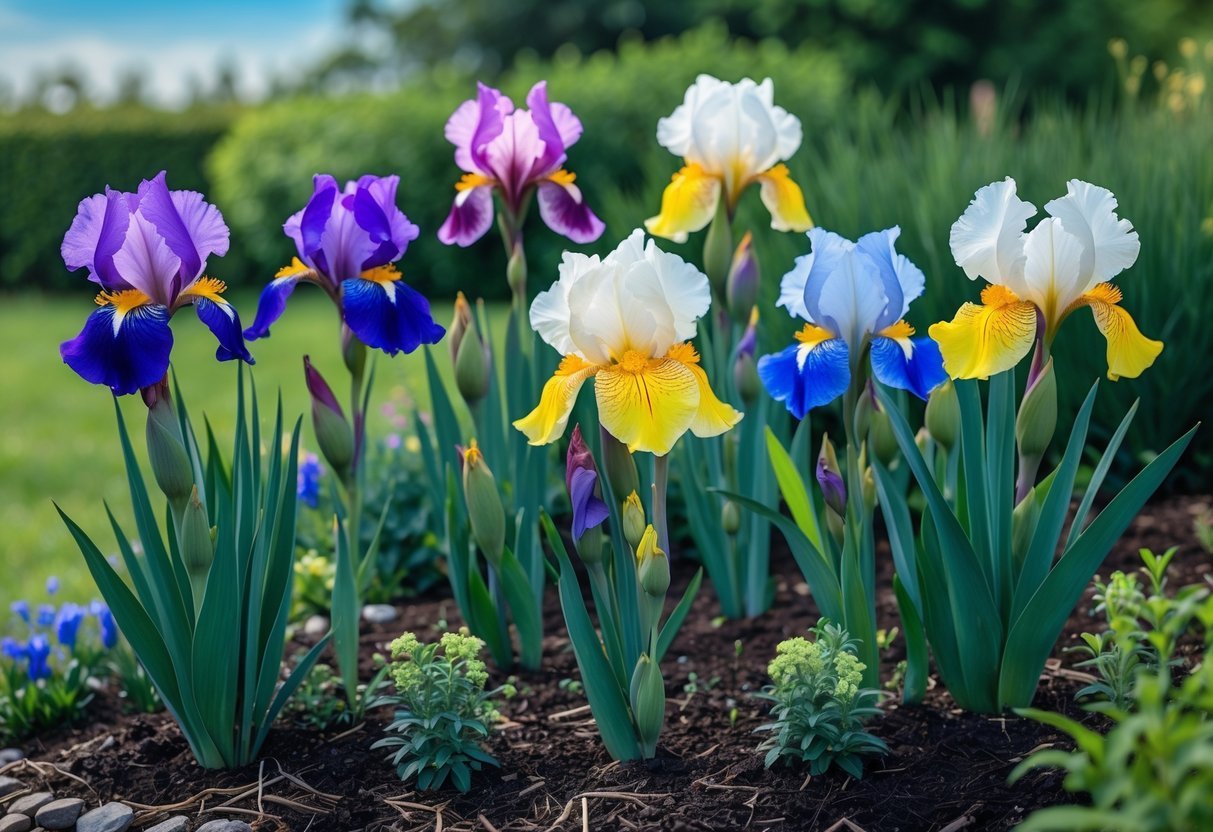
You can give your garden fresh color and clear structure with iris flowers. This article shows seven practical ways to use irises so you can choose ideas that match your yard, style, and maintenance level. You will see options for neat, single-color beds, mixed-height plantings, pathway accents, and pairing irises with bulbs, grasses, and pollinator-friendly plants.
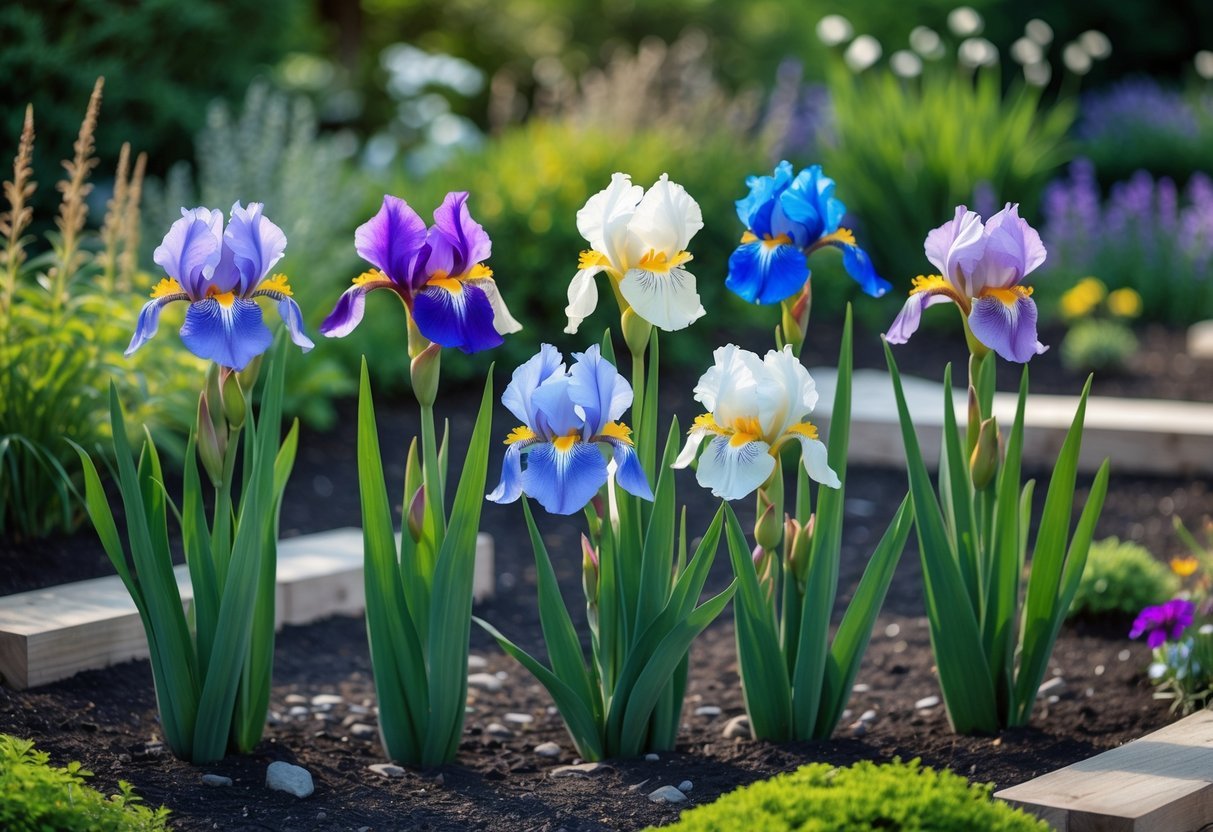
Expect straightforward tips on where and how to plant irises, what conditions help them thrive, and simple design moves that boost curb appeal and backyard habitat. Use these ideas to shape a garden that fits your space and keeps irises blooming year after year.
1) Create a monochromatic iris flower bed for a sleek, unified look
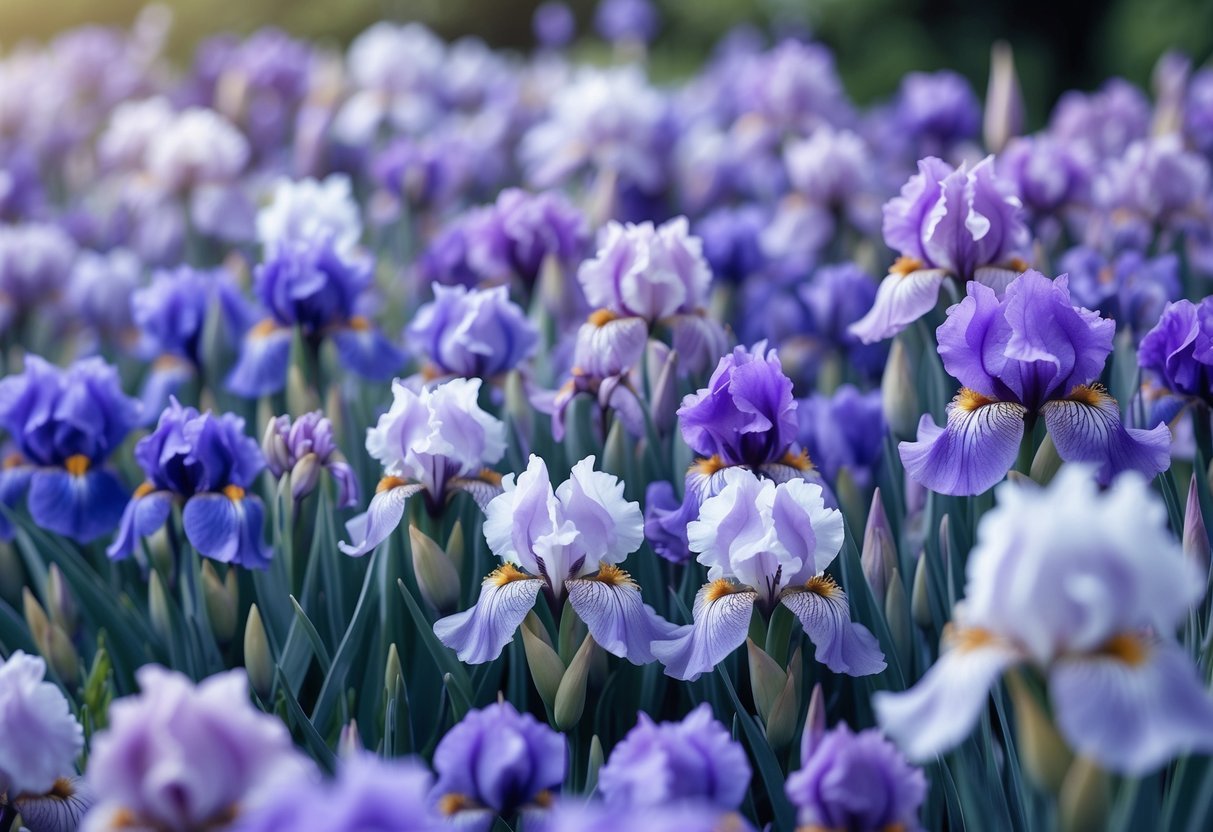
Choose one color family for a calm, modern feel. You can plant different iris varieties in shades of the same color to add depth without breaking the palette.
Place clusters of 3–5 plants to create bold spots of color. Vary height with dwarf and tall irises so blooms layer nicely and stay visible from different angles.
2) Mix bearded and Siberian irises for varied textures and heights
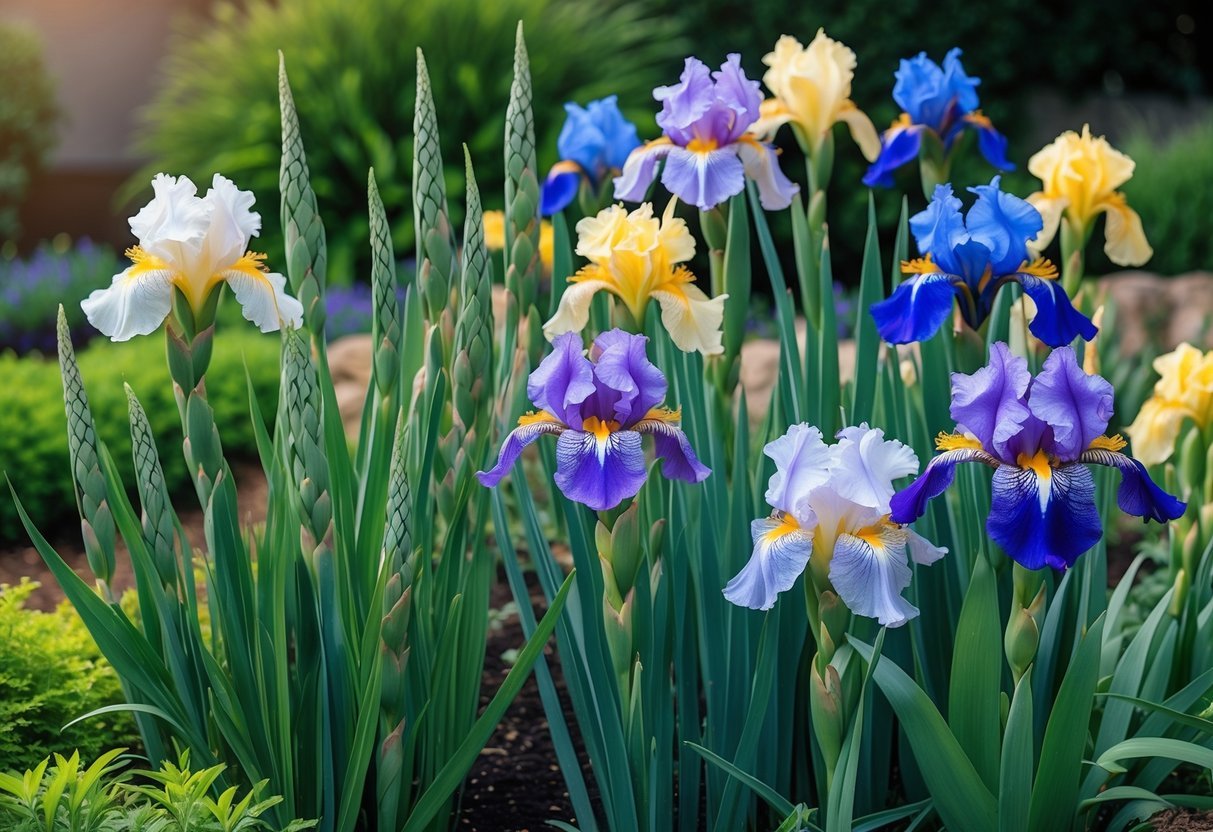
Pair bearded irises with Siberian irises to add contrast in height and leaf shape.
Bearded types offer bold, ruffled blooms while Siberians bring tall, graceful stems and fine foliage.
Plant bearded irises in sunny spots where their crowns stay dry.
Place Siberians slightly closer to moist or partially shaded areas if available.
Group each type in small clusters for a natural look.
This gives layered color and keeps your bed interesting through the season.
3) Plant irises along garden paths to add vibrant color and structure
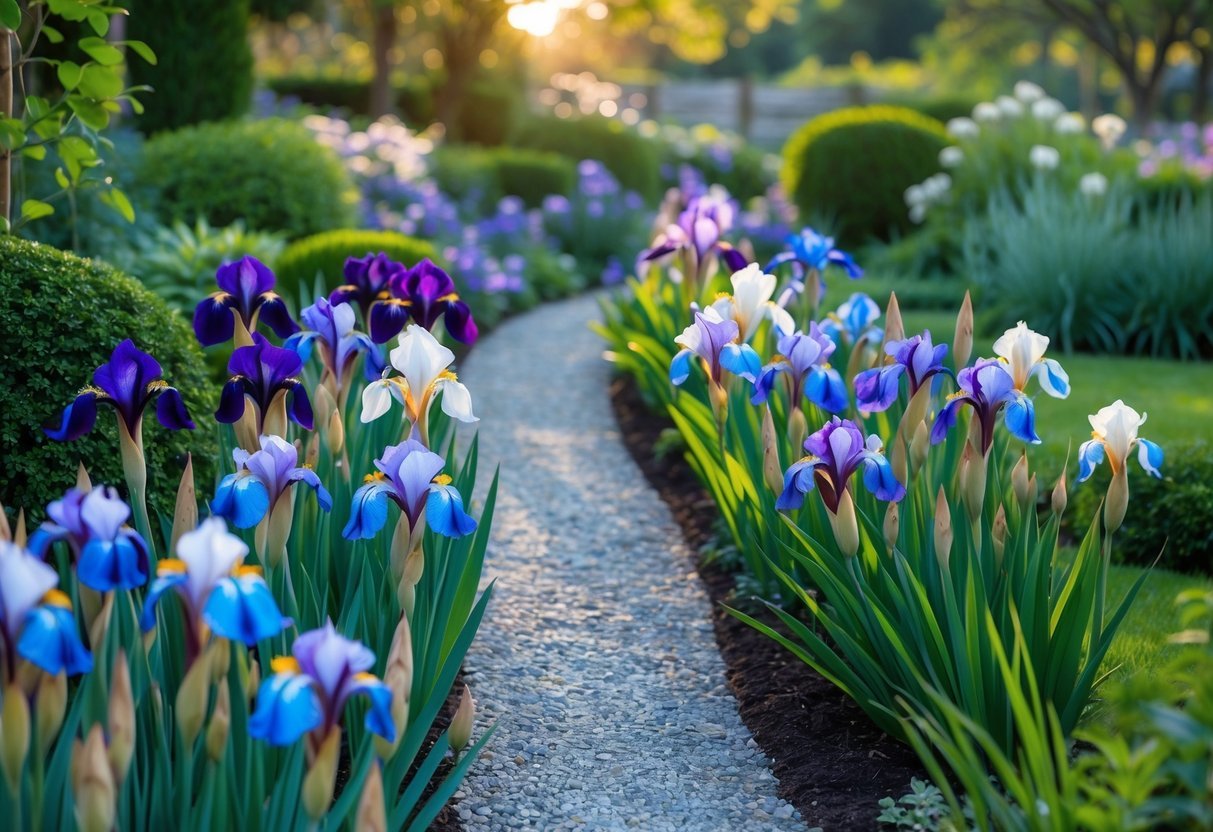
Plant irises beside paths to guide movement and draw the eye. Their upright leaves create a neat edge while blooms provide bright, seasonal color.
Space rhizomes 8–12 inches apart for airflow and easy maintenance. Choose mixed heights so flowers don’t block the walkway and stagger colors for continuous interest.
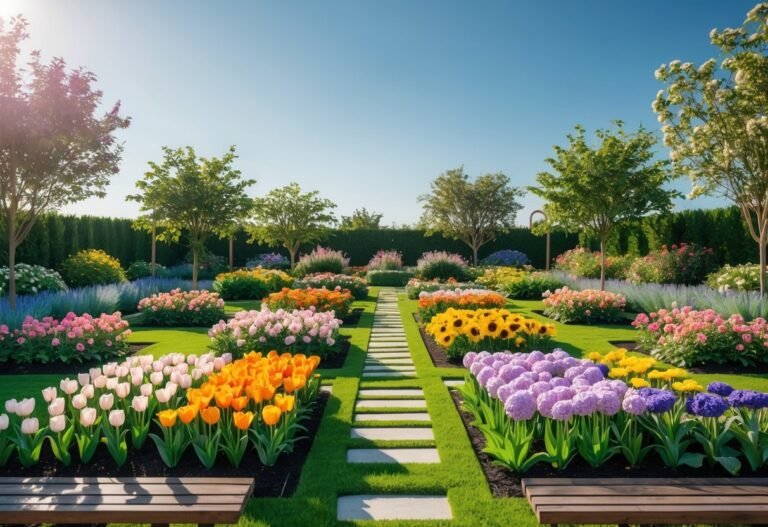
4) Incorporate irises with spring bulbs like tulips for staggered blooming
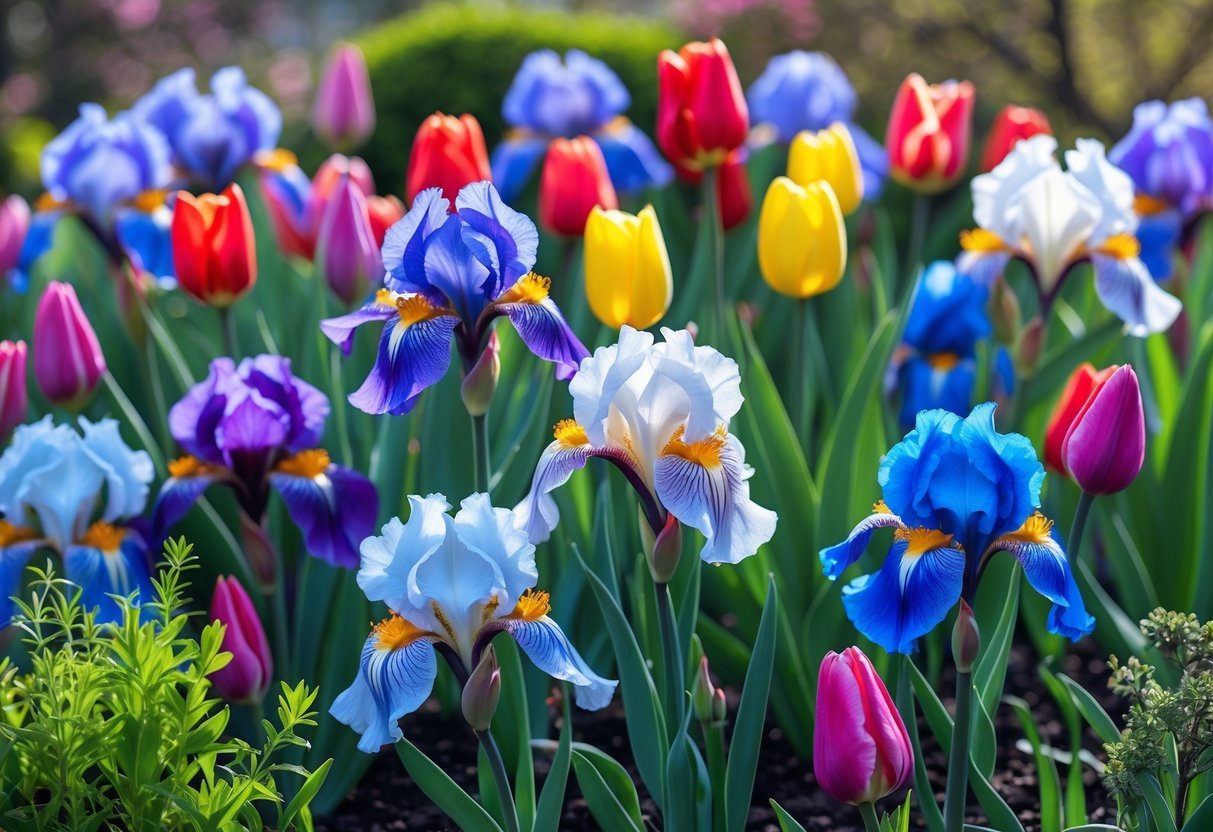
Plant tulips, daffodils, or hyacinths near irises to lengthen the spring display. Bulbs bloom earlier, then irises take over as bulbs fade.
Space bulbs in clusters for bold color and plant irises in drifts for a softer follow-up. Match sun and soil needs so both types thrive.
Choose bulb varieties that die back cleanly to avoid competing with iris foliage. This gives your bed continuous interest without extra work.
5) Design a butterfly-friendly iris garden to attract pollinators
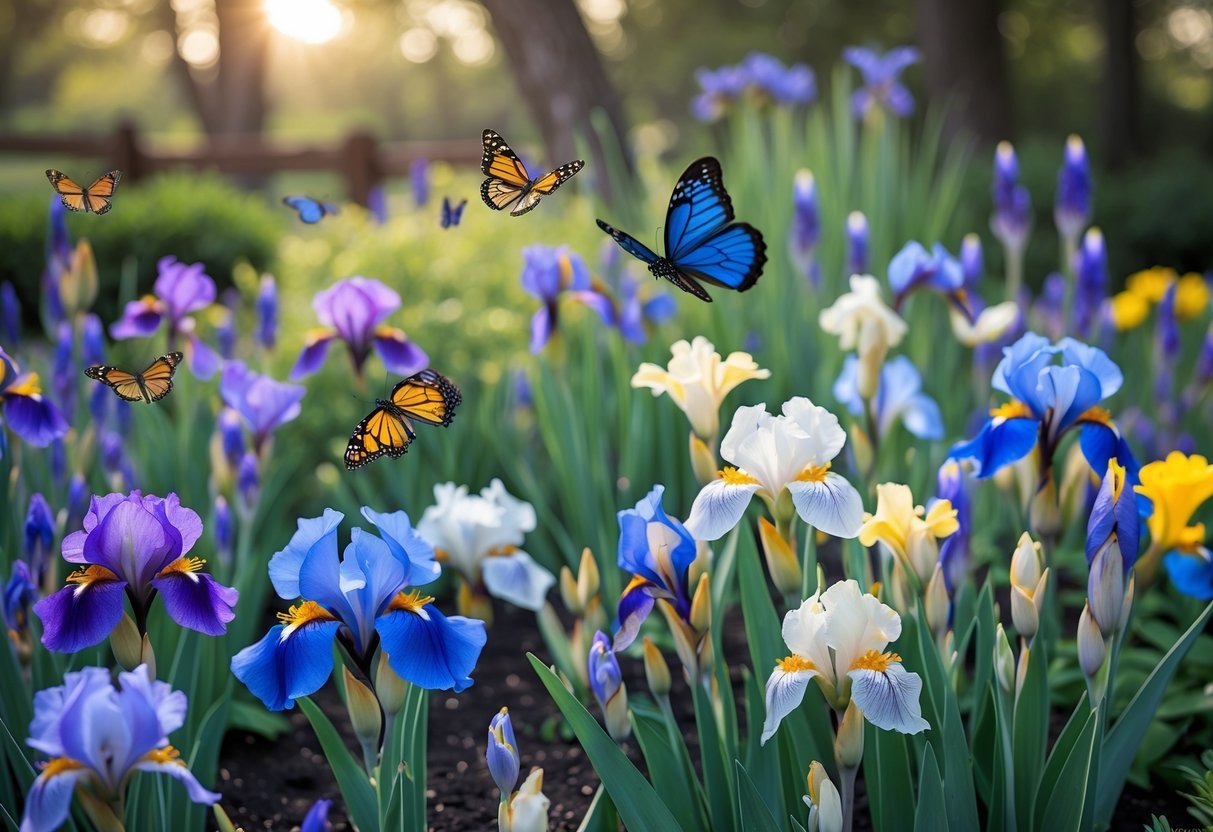
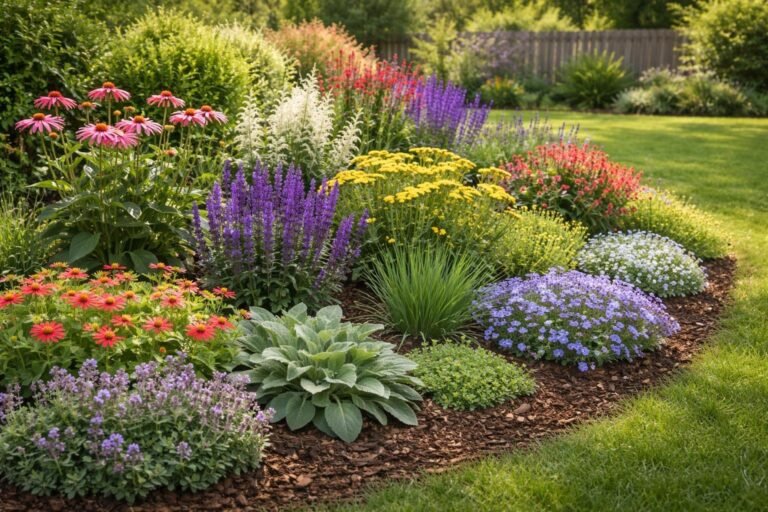
Plant a mix of irises and other nectar-rich flowers so butterflies have food all season. Choose native irises and nearby blooms like coneflowers or lantana to suit your local climate.
Place sunny spots and some sheltered areas so butterflies can feed and rest. Avoid pesticides and provide shallow water sources or damp sand for minerals.
Include host plants for caterpillars near your irises to support the full butterfly life cycle.
6) Use irises in front yard landscaping for curb appeal
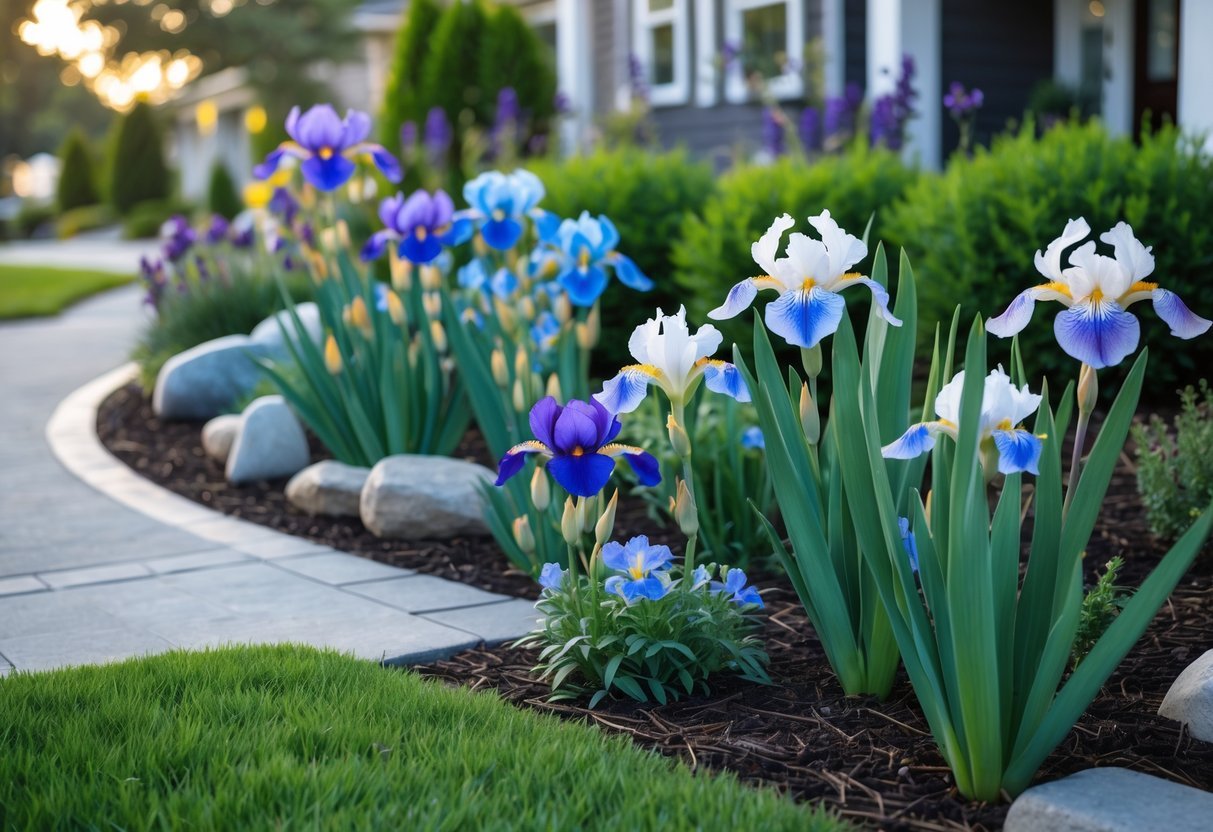
Plant irises along walkways or near the porch to add bold color and structure to your front yard. They bloom in spring and early summer, giving your home a clean, seasonal boost.
Mix tall bearded varieties with lower Siberian or dwarf types for layered height and year-long interest. Group them in odd numbers for a natural, attractive look.
Place them in well-drained soil and full sun for best performance. Mulch lightly and avoid overwatering to keep foliage healthy.
7) Combine irises with ornamental grasses for a naturalistic effect
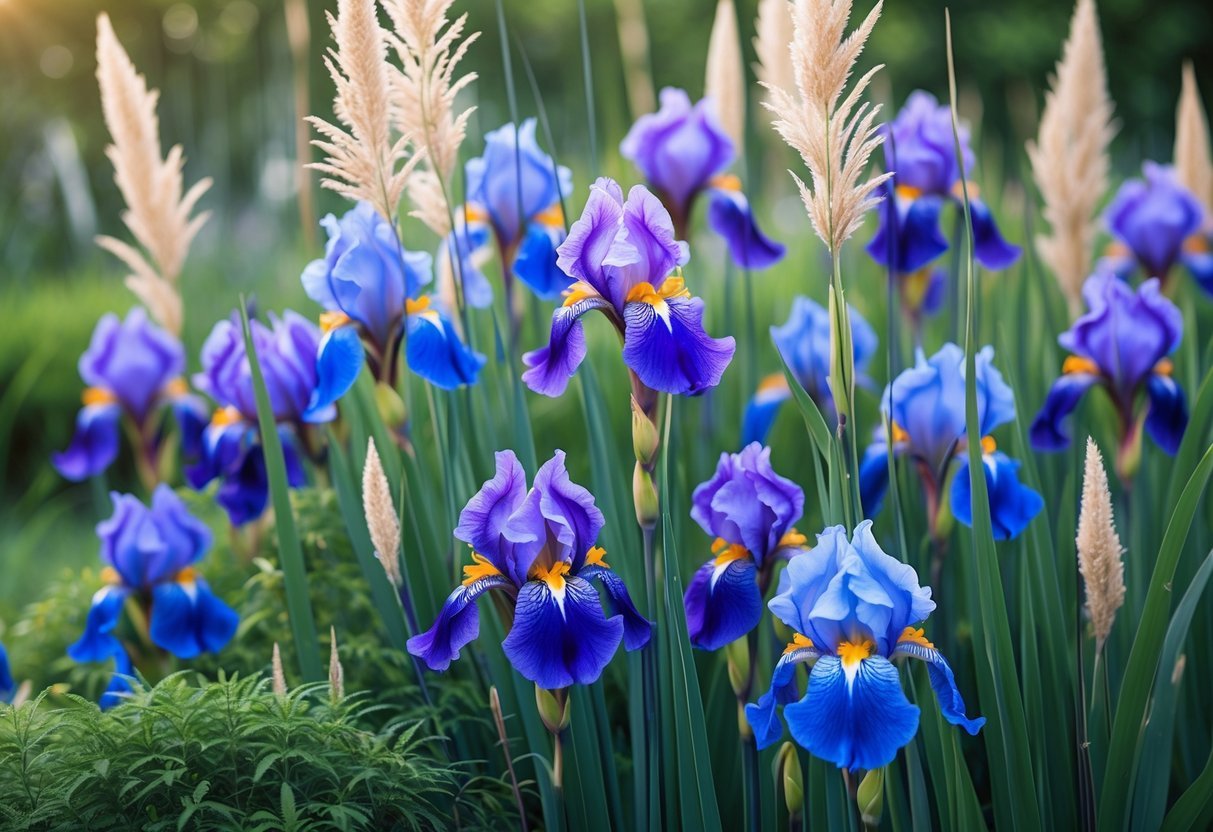
Pair irises with clumping or fine-textured grasses to mimic a meadow. The grasses add movement and soft lines that contrast iris blooms.
Choose grasses that match site conditions, like moisture and sun. Siberian irises work well with moist-site grasses, while bearded irises suit drier, sunnier mixes.
Plant grasses behind or between iris clumps to keep flowers visible. This layered look feels natural and eases maintenance.
Optimal Growing Conditions for Iris Flowers
Iris plants need firm soil structure, steady sun, and careful watering to bloom well. Pay attention to soil pH, drainage, and the timing and amount of water for best results.
Soil Preferences and Amendments
You should plant irises in well-draining soil to prevent rot. Aim for a loamy mix with good crumb structure; heavy clay must be loosened with coarse sand or compost. Work in 1–2 inches of compost per square foot to improve fertility and drainage.
Target a soil pH between 6.5 and 7.0 for most bearded and Siberian irises. Test your soil; add garden lime to raise pH or elemental sulfur to lower it, applied according to package rates. Plant rhizomes so the tops sit at or just above soil level to keep them dry.
Space plants 12–18 inches apart to improve air flow and reduce disease. Avoid deep planting and heavy mulch directly over rhizomes; use a thin layer of coarse mulch only if needed to control weeds.
Sunlight and Watering Requirements
Place irises where they receive at least 6 hours of direct sunlight daily; 8 hours is ideal for taller bearded varieties. Siberian and Japanese irises tolerate slightly less sun but still perform best in bright light.
Water established irises sparingly. Give about 1 inch of water per week during dry spells; reduce watering after bloom. Overwatering or poorly drained sites cause rhizome rot, so allow the soil surface to dry between thorough waterings.
During establishment (first season), keep soil evenly moist but not soggy. Increase watering in extreme heat, and cut back in cool, wet weather to prevent fungal issues.
Design Tips for Incorporating Irises
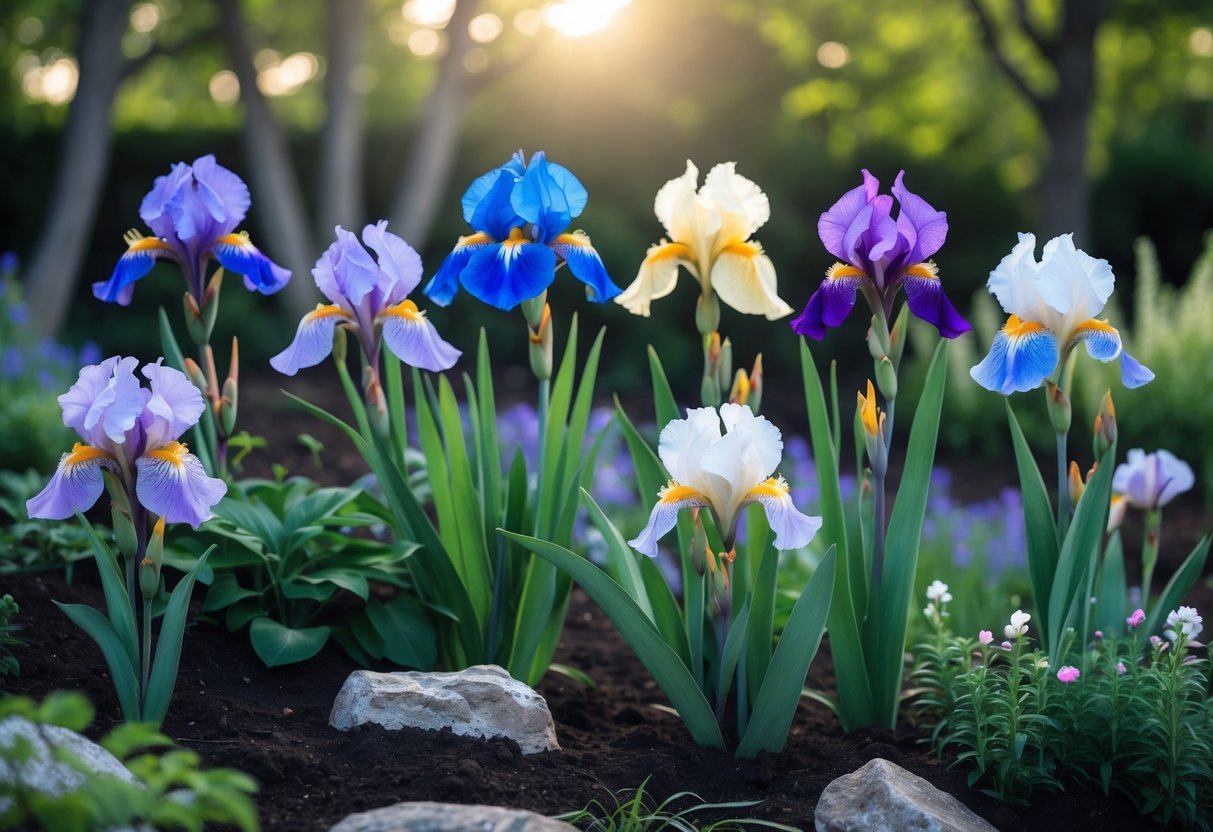
Plan for bloom time, height, and leaf texture to make irises stand out. Choose colors that fit your yard’s style and pick companions that fill gaps before and after iris bloom.
Color Matching and Garden Themes
Pick a dominant color scheme first. For a calm, formal look use one color family—deep purples or soft blues—planted in blocks. For a cottage or mixed-bed style, mix complementary colors like yellow irises with purple or blue ones to create contrast.
Match iris height to sightlines. Tall bearded irises work behind shorter perennials or along fences. Dwarf and intermediate types suit front borders and rock gardens. Use foliage color too; gray-green leaves pair well with bright blooms.
Think of repeat and rhythm. Repeat a color every 5–8 feet to guide the eye along a path or border. Use odd-numbered groupings (3–7 plants) for a natural feel. Place the brightest colors where you want attention—near entrances or seating areas.
Companion Plants for Iris Varieties
Choose companions that fill seasonal gaps and share soil and sun needs. Bearded irises prefer well-drained soil and full sun. Good partners include peonies, daylilies, and catmint; these bloom slightly later or earlier and hide spent foliage.
For Siberian and Japanese irises that like more moisture, use sedges, astilbes, and primroses to keep the bed lush. These plants have contrasting textures—fine foliage against broad iris leaves—that prevent a flat look.
Avoid aggressive spreaders like mint or fast-growing groundcovers that will crowd iris rhizomes. Instead, use low-growing thyme or alyssum at the front edge to frame blooms without stealing nutrients.
Frequently Asked Questions
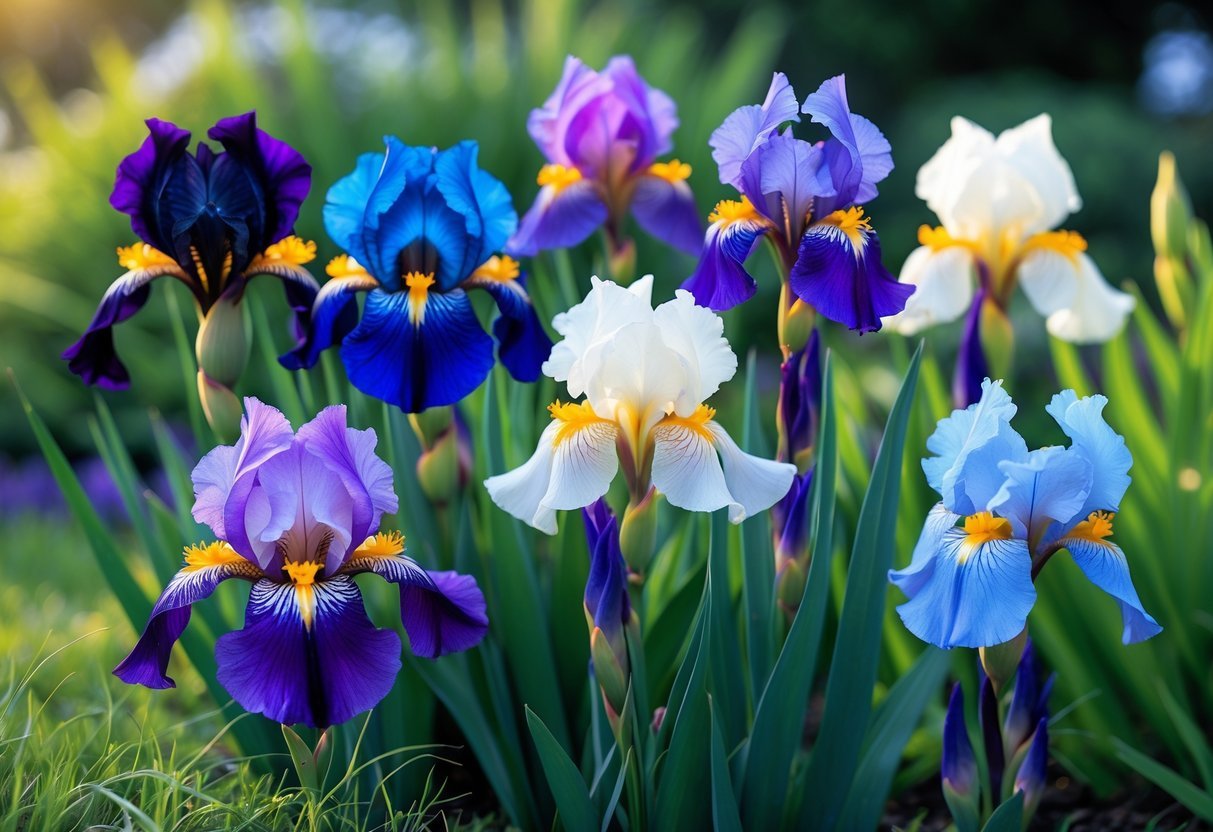
These answers cover spacing, light, soil, water and feeding, disease signs and treatment, and how to divide and move iris plants. Each item gives clear, practical steps you can use in the garden.
How should I space my iris plants for optimal growth?
Space bearded irises about 12–18 inches apart to allow rhizomes to get air and sunlight.
Siberian irises need 18–24 inches between plants because they form clumps and send up many flowering stalks.
Leave about 12–18 inches between rows for walking and maintenance. This makes weeding, dividing, and deadheading easier.
Can irises be grown in partial shade, or do they require full sun?
Most irises bloom best with at least 6 hours of direct sun per day.
Bearded irises prefer full sun; Siberian irises tolerate partial shade and still flower well.
If you plant along a path near taller plants, choose Siberian or other shade-tolerant types. Morning sun with light afternoon shade is usually fine.
What are the best soil conditions for cultivating iris flowers?
Irises prefer well-draining soil with a neutral to slightly acidic pH (about 6.5 to 7.0).
Work in compost to improve drainage and fertility, but avoid heavy, waterlogged soils that cause rot.
For clay soils, raise beds or add coarse sand and organic matter. For sandy soils, add compost to hold moisture and nutrients.
How often should irises be watered and fertilized?
Water newly planted irises once or twice a week until established, then water only during dry spells.
Overwatering leads to rhizome rot, so let the top inch of soil dry between waterings.
Fertilize in early spring with a low-nitrogen, balanced fertilizer and again after bloom if growth looks weak. Avoid high-nitrogen feeds that encourage leaf growth over flowers.
What are the signs of common diseases affecting irises, and how can they be treated?
Yellowing leaves, soft or mushy rhizomes, and brown leaf spots point to rot or fungal disease.
Remove and destroy infected leaves and rhizomes. Improve air flow and drainage to reduce disease risk.
Iris borer damage shows as chewed leaves and hollow rhizomes; cut out tunnels and dispose of affected parts. Use clean tools and rotate plantings to lower future risk.
How do I properly divide and transplant iris bulbs?
Divide irises every 3–4 years in late summer after flowering when foliage fades.
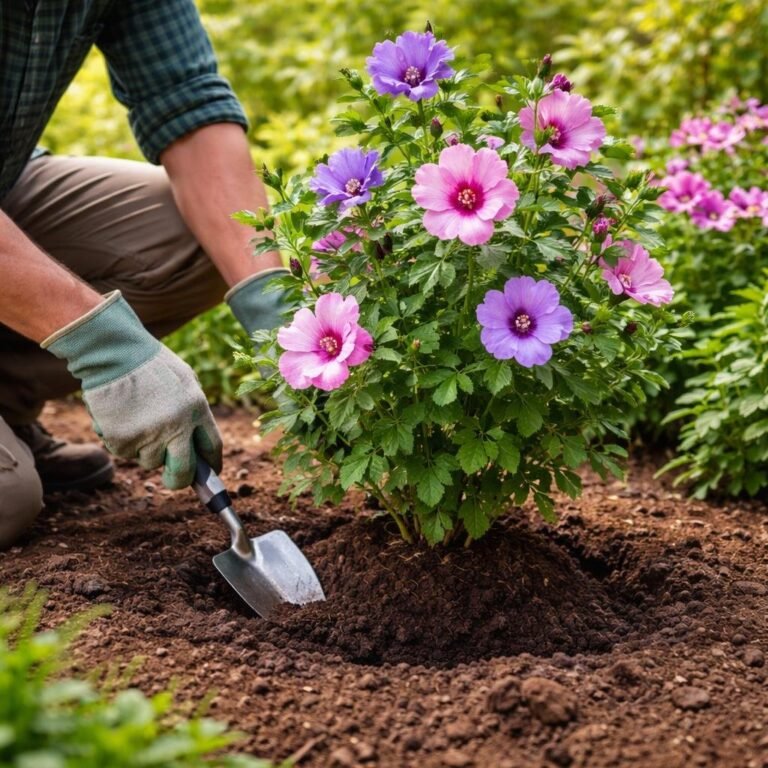
Dig up the clump, trim leaves to about 6 inches, and separate healthy rhizomes with visible fans of roots.
Replant rhizomes so the top is just at or slightly above soil level, spacing 12–24 inches by type. Water well after transplanting and keep soil mostly dry while roots establish.