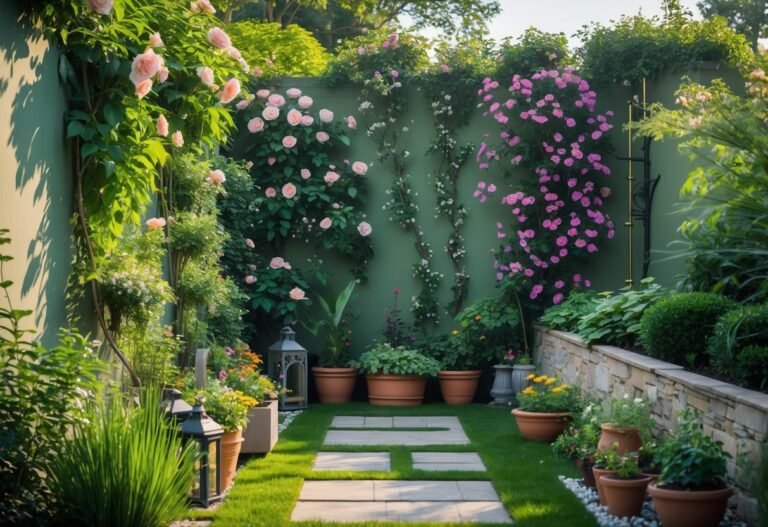
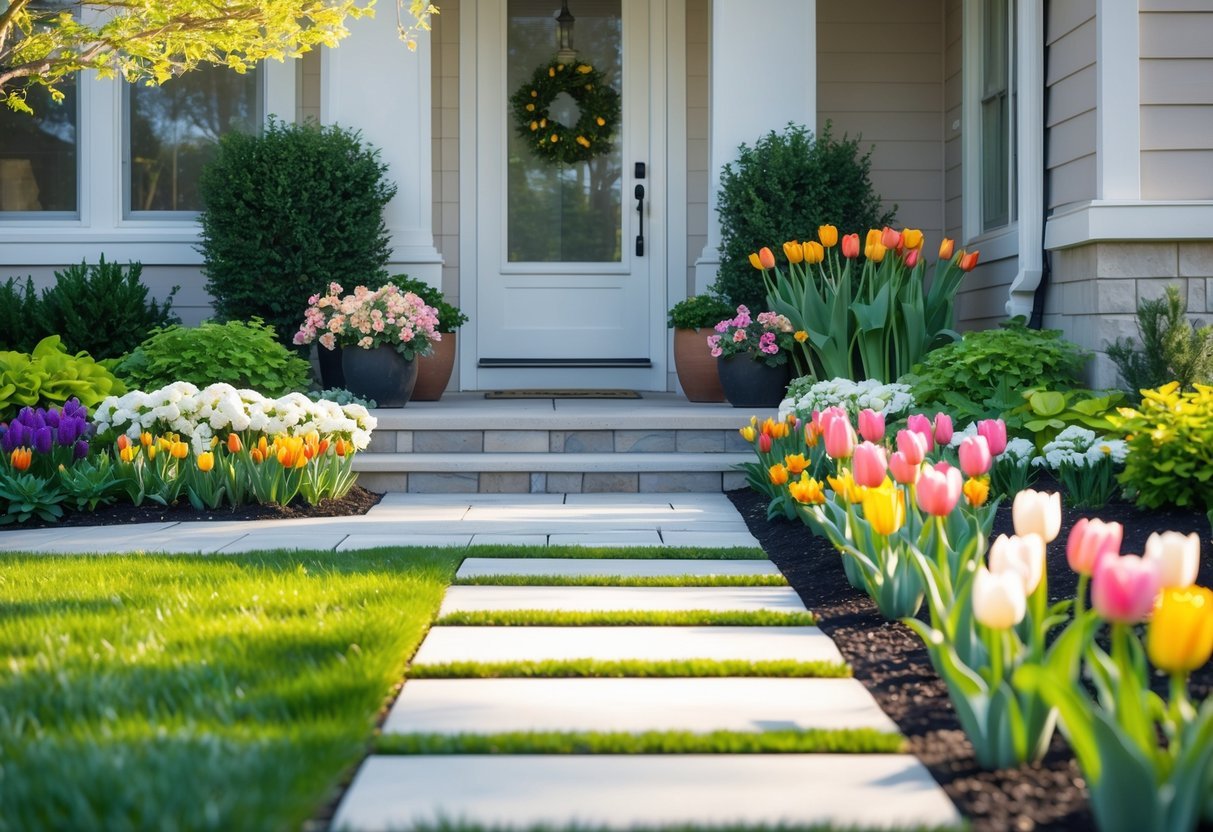
Home Entrance Flower Garden Ideas to Boost Curb Appeal with Low-Maintenance Plants
Make your home entrance stand out with flower gardens that match your style and budget. Pick simple layouts, low-maintenance plants, and a pop of color to welcome guests and boost curb appeal. A well-planned entrance flower garden uses structure, seasonal blooms, and easy-care choices to create a lasting, tidy welcome.
You will find practical layout ideas, plant pairings, and care tips that fit small porches, wide walkways, and container arrangements. Use these ideas to plan a front garden that looks great year-round and stays easy to maintain.
Key Takeaways
- Choose a clear layout and plants that suit your space and sunlight.
- Mix seasonal blooms with low-care perennials for steady color.
- Keep upkeep simple with mulch, pruning routines, and timed planting.
Design Principles for a Welcoming Home Entrance
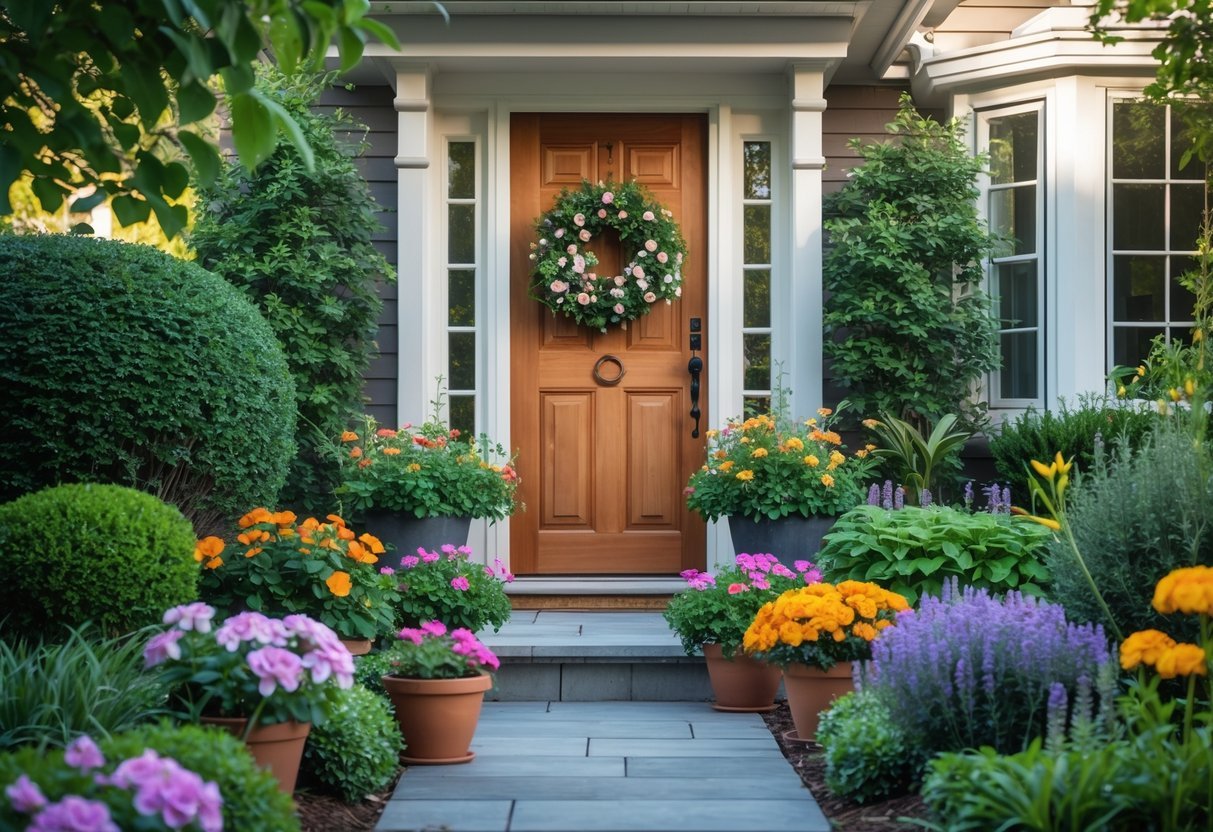
Place taller plants at the back, low-growing blooms near the path, and use matching containers to tie the look together. Think about bloom time, maintenance, and how plants will look from the street and front door.
Choosing the Right Flowers for First Impressions
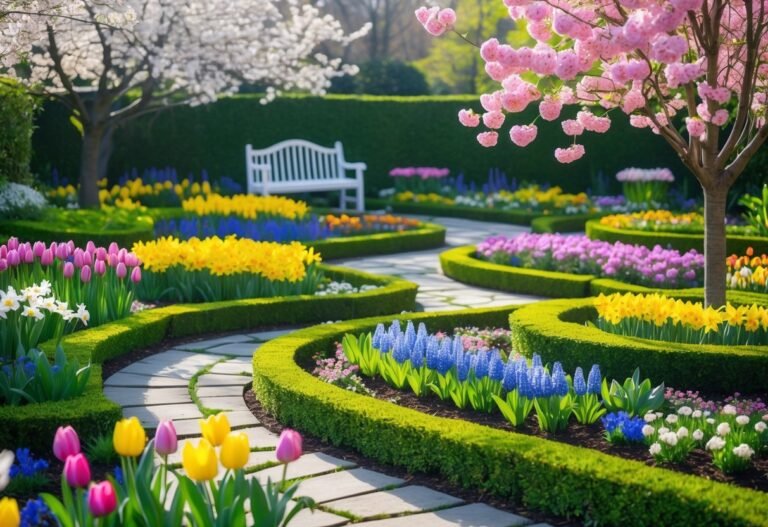
Pick flowers that bloom when you entertain most or when curb appeal matters most to you. Use long-blooming varieties like salvia, geraniums, and coneflowers for steady color. Add seasonal bulbs such as tulips or daffodils for spring impact and chrysanthemums for fall brightness.
Think about height and texture. Place taller, structural plants (ornamental grasses or foxglove) toward the back or sides. Put low, tidy plants—lobelia, alyssum, or dwarf petunias—along walkways and in containers near the door.
Factor in light and care. Choose sun-loving flowers for bright entrances and shade-tolerant picks like hostas for covered porches. Match plant care to your available time: pick low-maintenance perennials if you want less watering and deadheading.
Color Coordination and Visual Balance
Start with a palette of two to three main colors plus one accent. For example, pair soft lavender and white with a single bright yellow accent to draw the eye. Keep color repeated at least three times to create rhythm.
Balance dense, colorful beds with areas of green foliage to rest the eye. Use symmetry—matching pots or twin flower beds—to make formal entrances feel polished. For a casual look, stagger plant heights and repeat a color in different textures.
Consider scale from the street. Use larger groupings of color for homes set back from the road. For close-up entrances, use smaller, finer blooms so details show up at porch level.
Incorporating Pathways and Edging
Design a clear path to the door that feels inviting and safe. Use a 3- to 4-foot-wide walkway for two-way traffic and line it with low edging plants like dwarf mondo grass or creeping thyme. These keep edges tidy and reduce soil spillage onto the path.
Choose hardscape materials that match your home—brick for historic homes, smooth pavers for modern homes. Add lighting along the path to highlight flowers and improve night safety. Small solar lights or low-voltage fixtures work well.
Use edging materials—stone, metal, or plastic—to separate beds from the lawn. This prevents roots and mulch from spilling onto the walk and gives the flower garden a clean, intentional border that frames your entrance.
Creative Entrance Flower Garden Layouts
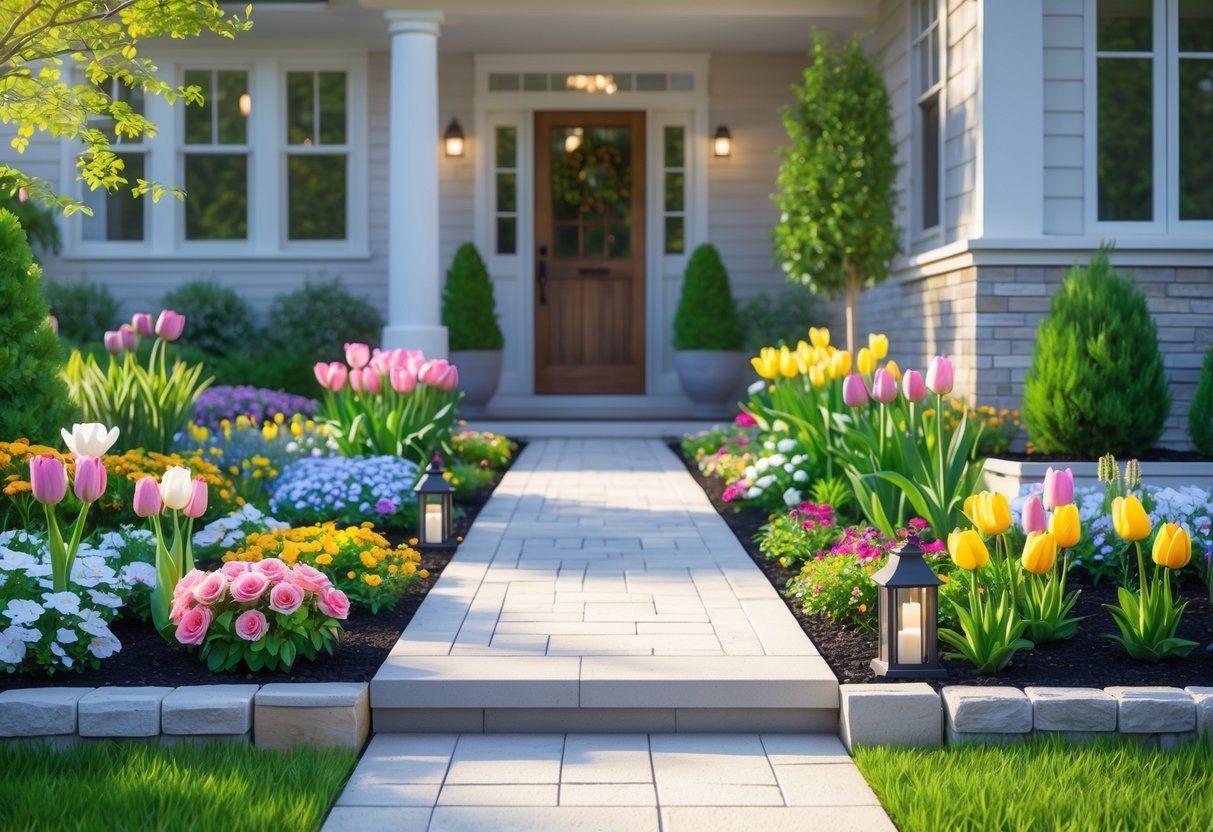
Plan shapes, plant heights, and focal points that guide visitors to your door. Use strong lines, repeat colors, and mix textures so your garden looks tidy from the street and inviting up close.
Symmetrical Versus Asymmetrical Arrangements
Symmetry uses matching beds, pairs of shrubs, or identical planters on each side of your path. This works well for formal houses or wider entrances. Place low, repeated flowers like lavender or dianthus along the path edge, then set matching taller plants such as boxwood or roses behind them to create depth. Symmetry gives a clear center line to lead the eye to your door.
Asymmetry feels more natural and suits cottage or modern homes. Balance a tall specimen plant or small tree on one side with a cluster of mixed containers on the other. Use three repeating colors or plant types to unify the look. Asymmetry lets you fit plants around utilities, steps, or odd shapes without losing harmony.
Small-Space Front Garden Solutions
When space is tight, focus on vertical lines and layered planting. Install a narrow border along the walkway with a groundcover, a mid-height perennial, and a single tall accent like a columnar yew or clematis on a trellis. This gives the illusion of width without crowding the path.
Use edging to define planting zones and keep maintenance low. Replace some beds with stacked planters or wall-mounted pots to free ground space. Choose compact cultivars: dwarf hydrangeas, mini-hostas, and small-flowered salvias fit small plots while still offering color.
Container Flower Garden Ideas
Containers let you control soil, color, and placement precisely. Match pot style to your house—ceramic for a classic look, galvanized metal for farmhouse, or sleek concrete for modern. Group containers in odd numbers (3 or 5) and vary heights using stands or stacked pots.
Use a planting formula: one thriller (tall focal plant), two spillers (trailing plants), and three fillers (mid-height blooms). Examples: a tall salvia, petunia spillers, and geranium or marigold fillers. Rotate seasonal plants: bulbs in spring, annuals in summer, pansies in cool months.
Essential Maintenance and Seasonal Tips
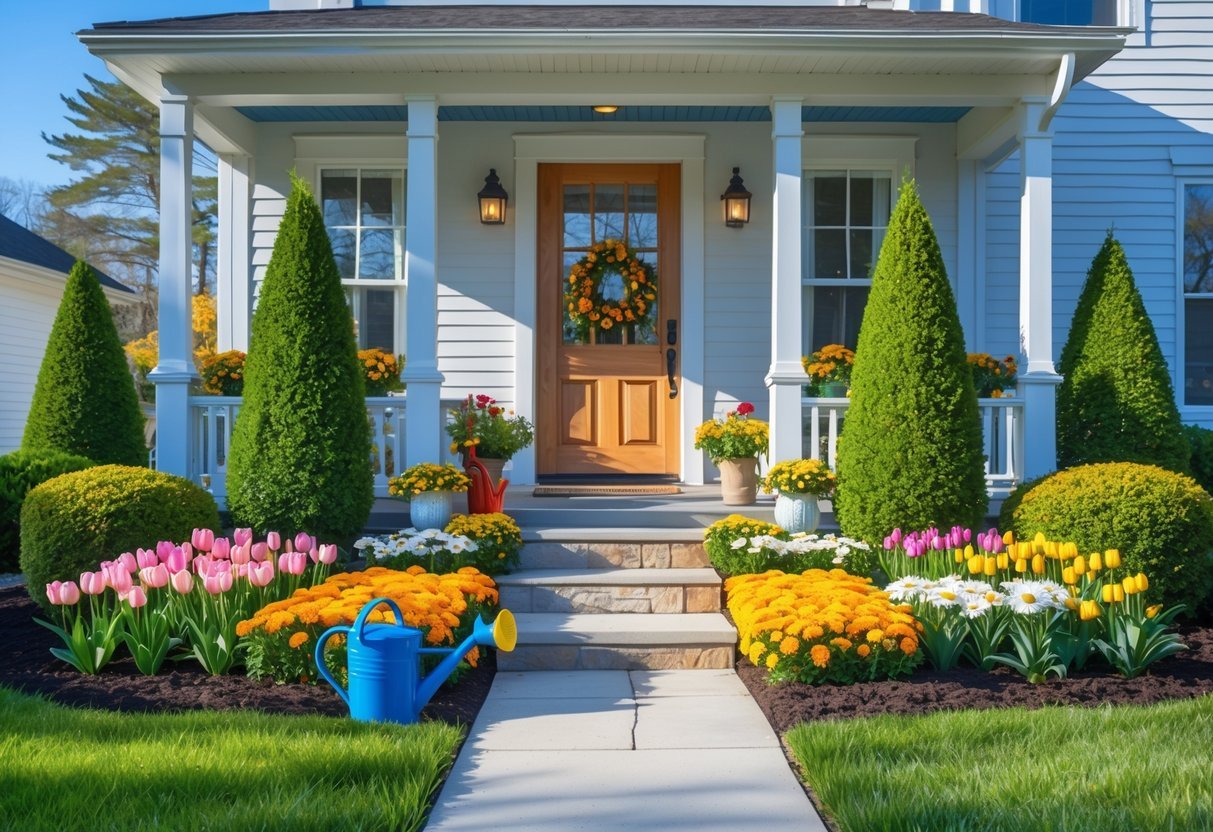
Keep plants healthy by choosing the right species for your climate, watering on a schedule, and adding mulch or compost to improve soil. Use lighting and simple decorative accents to boost curb appeal and extend evening visibility.
Year-Round Flower Selection
Pick a mix of perennials, annuals, and seasonal bulbs so your entrance shows color most months. Plant bulbs like tulips and daffodils in fall for spring color. Add hardy perennials such as coneflowers, salvia, and lavender for summer and repeat blooms. Include a few evergreen shrubs or ornamental grasses to give structure in winter.
Group plants by sun exposure and bloom time. Place sun-loving annuals where they get six+ hours of sun and shade-tolerant plants near the porch. Replace a few annuals each season to refresh color without redoing beds. Keep a simple planting map so you remember what to remove or move.
Watering and Soil Care for Entrance Gardens
Test soil texture and pH before planting. Sandy soil drains fast; add compost to hold moisture. Clay soil holds water; mix in coarse sand and organic matter for better drainage. Aim for a pH between 6.0–7.0 for most garden flowers.
Water deeply and less often to encourage strong roots. Use a drip line or soaker hose to deliver water directly to roots and cut evaporation. Mulch 2–3 inches around plants to keep soil moist and reduce weeds. Fertilize with a balanced slow-release formula in early spring and again midseason for annuals.
Lighting and Decorative Accents
Install low-voltage or LED path lights 6–8 feet apart to mark walkways and steps. Place a spotlight to highlight a focal plant or shrub, and use warm (2700–3000K) bulbs for a welcoming glow. Solar lights work well but test them for a full night before buying in bulk.
Use containers and planters for instant color and flexibility. Pick frost-hardy pots if you live in cold zones. Add a small layer of gravel or decorative rock to the bottom of planters for drainage. Keep accents simple: one bench, a pair of matching pots, or a single trellis to avoid clutter.
Frequently Asked Questions
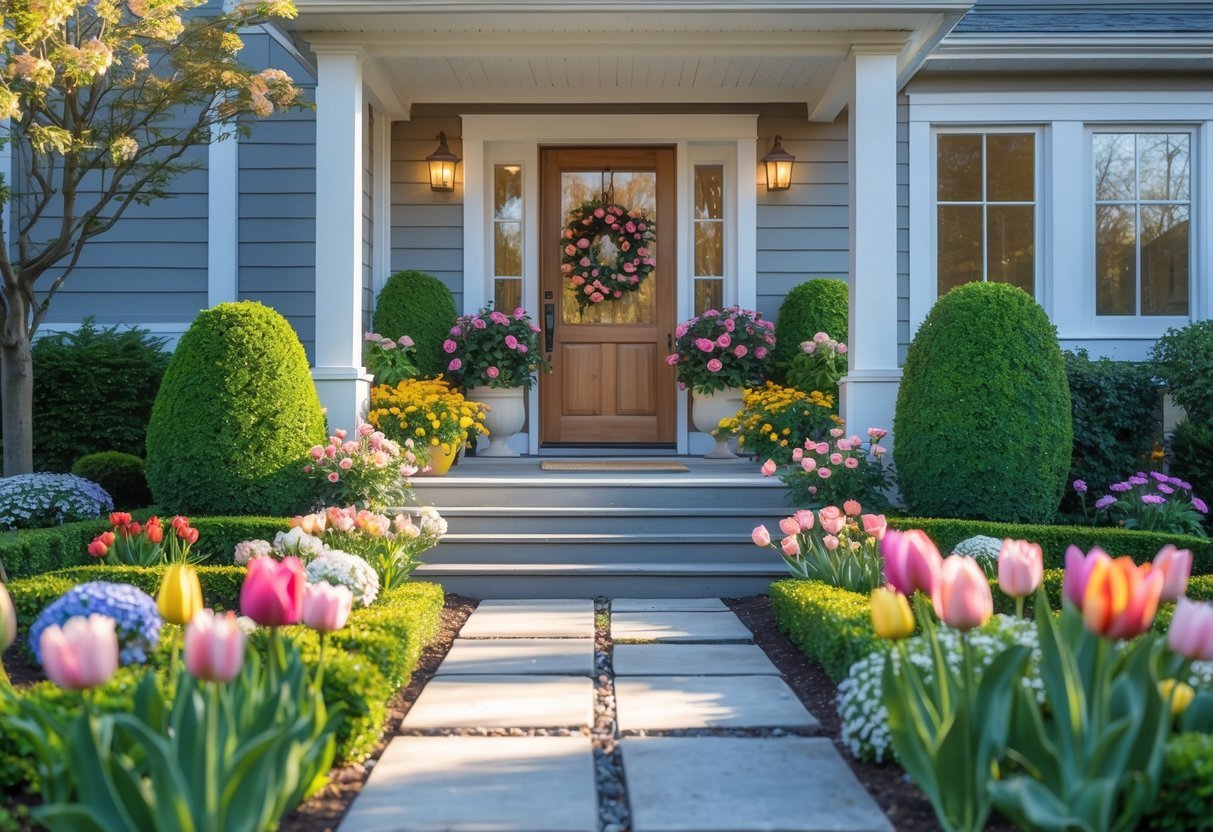
These answers show practical steps, plant picks, and simple layouts you can use at your front door. Read the short how-to tips, plant lists, and DIY ideas to start designing a neat, low-maintenance entrance garden.
How can I create a simple flower garden at my home entrance?
Pick a narrow bed along the walkway or under the windows. Measure the space, mark planting lines, and remove weeds and grass.
Add 4–6 inches of compost to improve soil, then mulch to keep moisture in and weeds down. Plant in groups of three to five for a tidy look and water well after planting.
What are some low maintenance plants for a front flower bed?
Choose perennials, drought-tolerant shrubs, and ornamental grasses. Examples: lavender, catmint, salvia, daylilies, boxwood, and sedum.
Add a few evergreen accents for year-round structure. Use native species when possible to reduce watering and pest issues.
Which flowers are best suited for a small entrance garden?
Pick compact or columnar varieties that won’t crowd the path. Try dwarf roses, violas, pansies, alyssum, and small salvias.
Use vertical elements like a slim trellis with clematis or a hanging planter to add height without taking ground space.
How do I incorporate rocks into my front-of-house flower bed design?
Use flat stepping stones to create a mini path or place large rocks as focal points. Surround rocks with low groundcovers like creeping thyme or sedum.
Keep a consistent color palette and scale the rocks to the bed size so they look natural and not crowded.
Can you suggest easy DIY ideas for a home entrance flower garden?
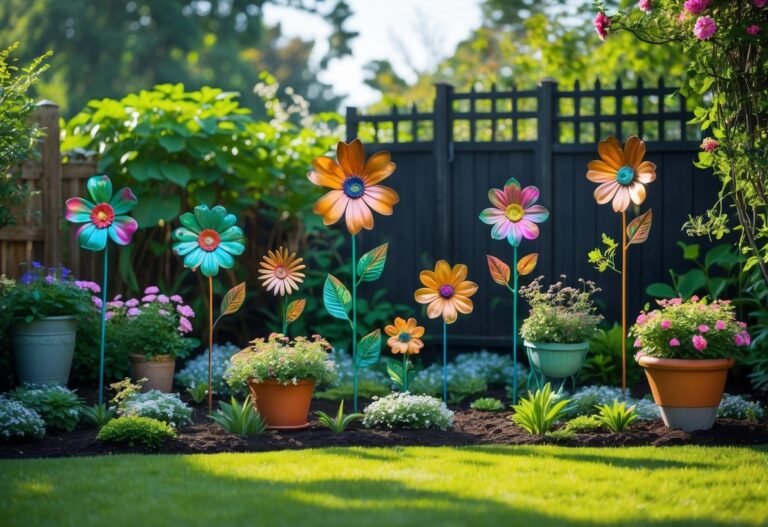
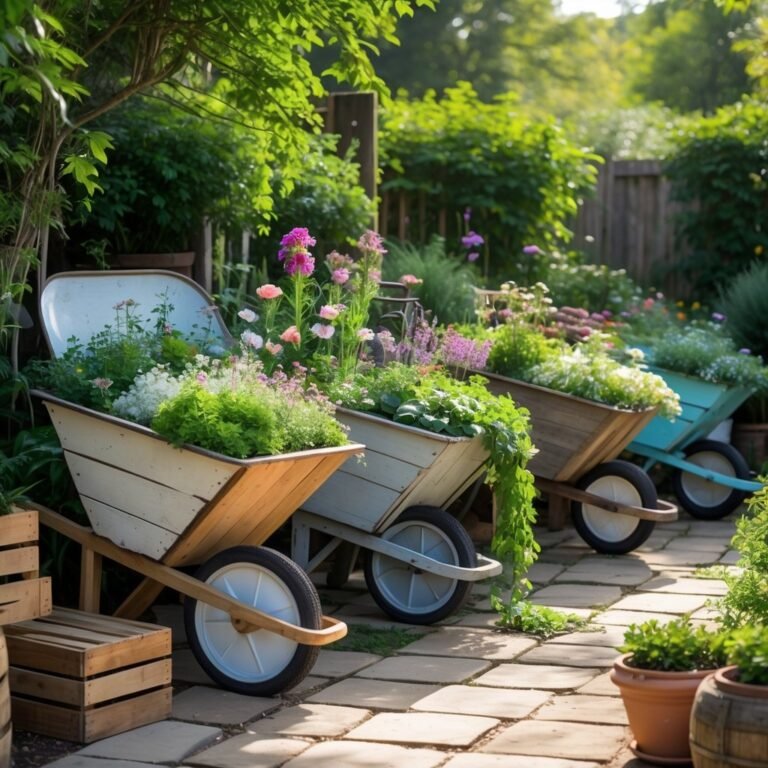
Reuse containers like wooden crates or ceramic pots for instant color. Create a simple border with recycled bricks or paver stones laid edge-to-edge.
Build a raised bed from treated lumber for better drainage and less bending. Plant a mix of annuals and perennials for immediate bloom and lasting structure.
What are essential tips for designing a flower bed in front of a house?
Match plant height to sightlines: short plants near the path, medium near the house, taller at the back. Space plants according to mature size to avoid overcrowding.
Plan irrigation—soaker hoses or drip lines save water and time. Stick to three or four main plant colors to keep the design cohesive.