10 Gravel Front Garden Ideas to Transform Your Curb Appeal with Low-Maintenance Style
Gravel makes your front garden low‑maintenance, drought‑friendly, and instantly stylish, so you can boost curb appeal without endless mowing. You can pick gravel colors and sizes, add paths, plant pockets, and simple accents to create a neat, weather‑proof front garden that fits your home and budget.
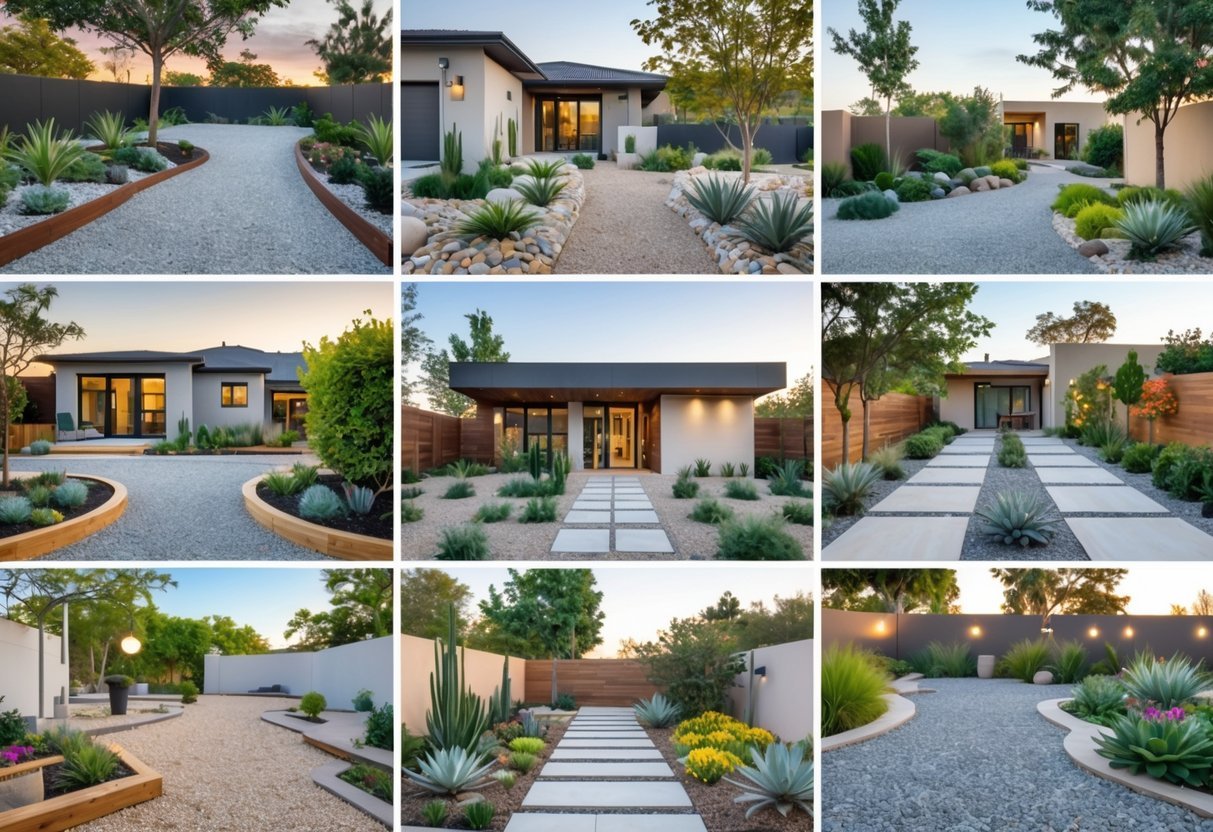
This post gives 10 clear gravel front garden ideas you can use right away, from minimalist layouts to texture‑rich mixes and easy plant pairings. Expect practical tips on materials, design choices, and small touches that make a big visual impact.
Key Takeaways
- Choose gravel color and size to match your home’s style and maintenance needs.
- Combine pathways, planting pockets, and borders for a balanced design.
- Use simple accents to add curb appeal without extra work.
Gravel Styles and Materials
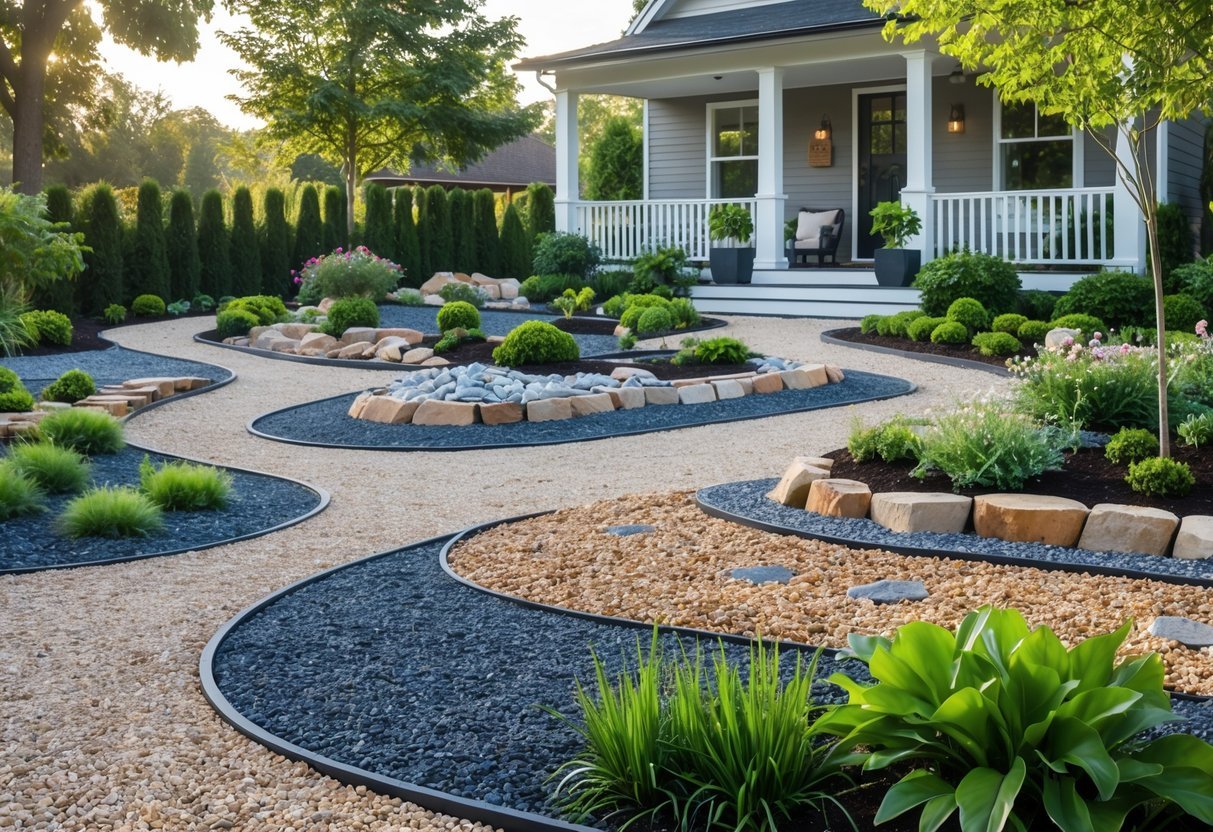
Gravel choice affects drainage, upkeep, and the look of your front garden. Pick a size, color, and source that match your home’s style and the garden’s use.
Choosing the Right Gravel Type
Match gravel size to purpose. Use 3/4-inch crushed rock or decomposed granite for driveways and high-traffic paths because it compacts well and resists shifting. Choose pea gravel or 1/4- to 1/2-inch river rock for patios and decorative beds where you want a softer appearance but accept more movement underfoot.
Consider angular versus rounded stones. Angular crushed stone locks together and gives a firmer surface. Rounded pebbles roll and shift more, so they suit borders and dry riverbeds rather than walkways.
Factor in maintenance. Smaller, compactable mixes need edging and occasional rake-leveling. Larger stones hide weeds better but may require more effort to remove leaves and debris.
Color and Texture Selection
Pick a color that complements your house materials. Warm tans and buff gravels work with brick and wood; cool grays and blue gravels pair well with modern siding and metal. You can combine two tones—use darker gravel along edges to define beds and lighter gravel in central areas to brighten the space.
Texture affects visual weight. Fine, uniform gravel gives a clean, minimalist look. Mixed-size or crushed stone adds rustic texture and hides footprints and tire marks. Test a small patch in daylight and shade to see how color shifts through the day.
Think about contrast with plants and hardscape. Pale gravel makes green foliage pop, while dark gravel makes flowering colors look richer.
Eco-Friendly Gravel Options
Consider recycled crushed concrete or reclaimed asphalt for budget-friendly, eco-aware choices. They provide good compaction for paths and reuse materials that would otherwise go to landfill.
Choose locally quarried stone to cut transport emissions. Native stone often blends better with your regional climate and local plants.
Permeable gravel mixes—coarse stone with larger voids—help stormwater soak into the soil. Pair these with a gravel grid or edge restraints to stabilize the surface while keeping runoff low.
Designing Your Gravel Front Garden
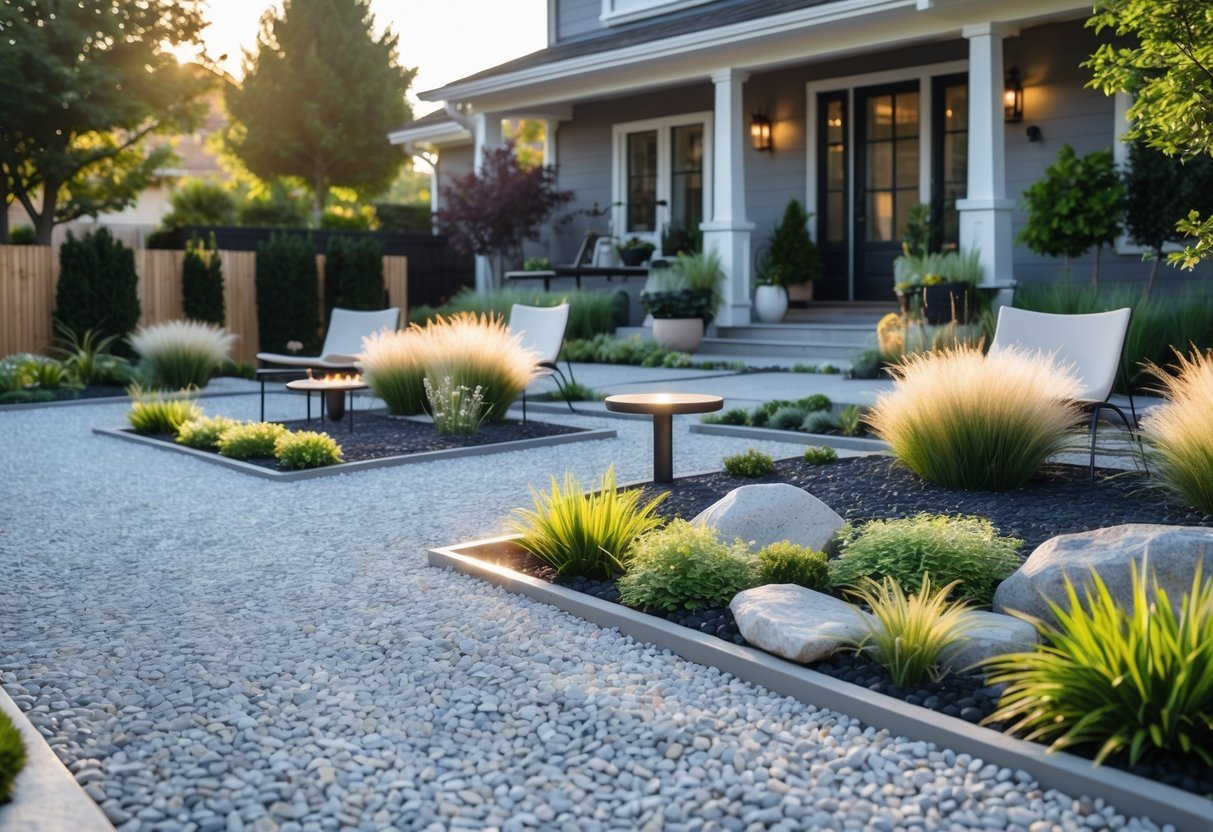
Plan layout, plant placement, and one strong focal element before you buy materials. Think about how people will move through the space, where plants need water, and what feature will draw the eye from the street.
Defining Pathways and Borders
Decide where you want people to walk and how you will keep gravel contained. Use stepping stones, pavers, or compacted crusher-run as a firm walking surface. Place stones 18–24 inches apart for comfortable strides, and set them on a crushed rock base to prevent sinking.
Create borders with metal edging, timber, or a row of larger stones to stop gravel from spilling onto lawns or driveways. Edge depth of 2–4 inches is usually enough to hold small gravel. For a cleaner look, choose edging that matches your home—dark metal for modern homes, timber for cottage styles.
Think about drainage when shaping paths. Slope paths slightly away from the house, and add a layer of landscape fabric under gravel to reduce weeds and mixing with soil. Mark clear entry points from the sidewalk or driveway for easy navigation.
Integrating Plant Beds
Group plants into beds that break up gravel areas and add texture. Use raised beds or low stone rings to define soil zones and keep gravel out. Aim for groupings of three to five plants rather than single specimens for a fuller look.
Pick drought-tolerant plants such as lavender, rosemary, sedums, and ornamental grasses. Position taller plants toward the back or near walls and shorter groundcovers at the front. Leave 12–36 inches between plants depending on mature size to avoid overcrowding.
Install drip irrigation or soaker hoses for targeted watering that won’t wet the gravel. Mulch around plant crowns with small decorative stones or coarse bark to retain moisture and hide drip lines. Check soil depth—most gravel gardens need at least 6–12 inches of good planting soil.
Creating Focal Points
Choose one main focal point to anchor the design and add one or two smaller accents. Options include a sculptural boulder, a large pot with a specimen plant, a seating bench, or a small fountain. Place the focal point where it’s visible from the street and along main sightlines.
Use contrast to make the focal point stand out: dark stone against white gravel, a tall plant against low groundcover, or a bright pot against neutral tones. Keep surrounding gravel raked or swept to frame the feature.
Balance the focal point with secondary elements like pathway lights, matching pots, or repeat plant colors to guide the eye. Ensure the focal piece fits the scale of your yard—too large overwhelms; too small gets lost.
Creative Gravel Front Garden Ideas
These ideas focus on low water use, clean lines, cozy cottage charm, and calm Japanese layouts. Each option shows plants, hardscape choices, and simple steps you can use to build the look.
Low-Maintenance Xeriscapes
Choose drought-tolerant plants like lavender, Russian sage, yucca, and lomandra to cut watering needs. Plant in drifts of three to five for a natural look and group by water needs to make irrigation simple.
Use 3–4 inches of crushed gravel over a weed barrier to improve drainage and reduce weeds. Add larger boulders or a dry-well near downspouts to handle runoff. For color, pick gravel in warm tones—tan, rust, or cream—and contrast with dark mulch islands around plants.
Keep edging low and firm: steel or concrete edging stops gravel migration and keeps pathways tidy. For maintenance, rake once a season, refresh gravel top-up every few years, and prune plants lightly in spring.
Modern Minimalist Designs
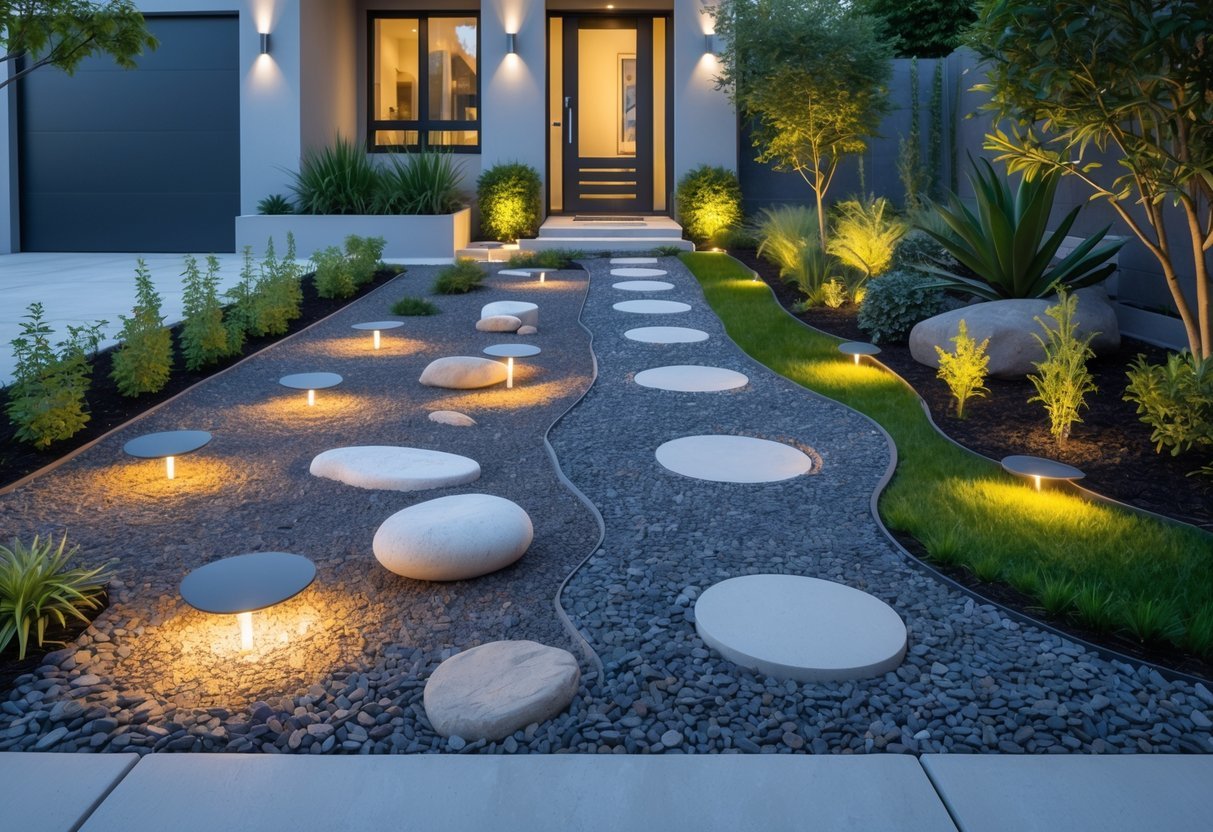
Aim for strong geometry: straight lines, square pavers set in gravel, and a narrow strip of low groundcover like thyme between stones. Use monochrome gravel—charcoal or white—for a sleek backdrop that highlights architecture.
Limit plant palette to two or three sculptural species such as boxwood, agave, and grasses. Place plants in precise groupings or single specimens to emphasize form. Use a single focal element—a bench, a smooth boulder, or a steel sculpture—to anchor the design.
Lighting should be linear and subtle: path lights flush with the ground and one directional spotlight on the focal piece. Keep maintenance minimal by sealing joints on pavers and removing debris monthly.
Cottage-Style Gravel Gardens
Mix pea gravel with informal planting for a relaxed, welcoming entry. Choose fragrant, flowering plants like rosemary, catmint, roses, and foxglove to create scent and seasonal color near the door.
Create curved beds edged with reclaimed brick or low cedar boards to keep the soft cottage feel. Add small stepping stones through the gravel so visitors can walk without disturbing plant roots. Use recycled terracotta pots and a wooden trellis for climbers like clematis or sweet pea.
Mulch around young plants to retain moisture, then let gravel serve as the surface layer. Deadhead spent flowers and prune lightly after bloom to keep the mix lush but tidy.
Japanese-Inspired Gravel Spaces
Focus on balance and simplicity: smooth raked gravel, a few shaped stones, and moss or dwarf conifers for texture. Choose fine, uniform gravel in pale gray or beige for the raked surface.
Arrange larger stones asymmetrically to suggest islands and place low planting like hakone grass or dwarf pines for green contrast. Use narrow stepping stones to invite a slow, contemplative approach to the entry.
Rake patterns thoughtfully, following the lines of the house or path, and keep plantings sparse to maintain the calm. Use bamboo edging or low stone curbs to define borders while preserving an understated look.
Frequently Asked Questions
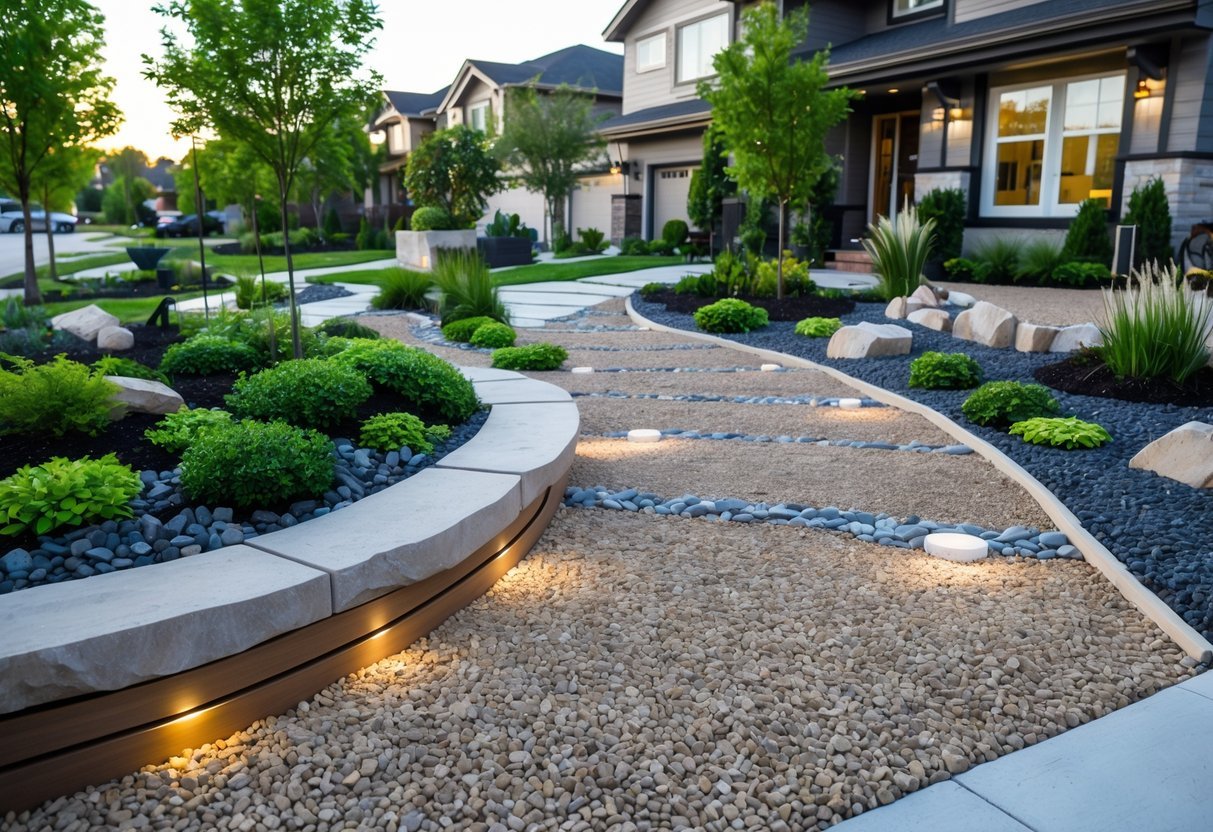
These answers cover cost-saving layout tips, how to use rocks and plants for a natural look, common DIY mistakes, and ways to keep your gravel front garden low maintenance. Expect practical, step-by-step ideas you can use on small or large front yards.
What are some affordable gravel garden design strategies for small front yards?
Choose one or two plant beds instead of covering the whole yard to save on gravel and labor. Use smaller gravel (8–12 mm) for paths and a cheaper bulk mix for filler areas.
Reuse materials like broken pavers or reclaimed bricks for edging. Lay a simple fabric weed barrier under the gravel to cut long-term maintenance costs.
Pick a limited palette of plants and repeat them to create visual unity. Buy young plants or plugs rather than mature specimens to lower initial expense.
How can I incorporate rocks into my gravel garden design for a natural look?
Place a few larger boulders or flat stones as focal points rather than scattering many small rocks. Group stones in odd numbers (three or five) and partially bury them so they sit naturally.
Use flat stepping stones to form a path that looks worn and intentional. Match rock color to the gravel to keep the design cohesive and calm.
Add small rock piles near plant clusters to mimic natural outcrops. Keep the scale of rocks proportional to the yard size.
Which plants are most suited for growing in a gravel-based front garden?
Choose drought-tolerant, well-draining plants such as sedums, lavender, thyme, and yucca. These plants handle hot, dry soil and look good against gravel.
Grasses like blue fescue and fountain grass add movement and soft texture. Use native plants where possible for better survival and lower water needs.
Place deeper-rooted shrubs like rosemary or dwarf conifers where soil depth allows. Group plants with similar water needs to simplify irrigation.
What are the common pitfalls to avoid in DIY gravel garden landscaping?
Skipping a proper edge will let gravel spread onto sidewalks and lawn. Install metal, plastic, or stone edging to keep clean lines.
Ignoring soil preparation can cause poor drainage or weeds. Remove turf, grade the soil, and add a weed barrier before laying gravel.
Mixing many different gravel sizes and colors can look messy. Stick to two coordinated sizes and one or two colors for a tidy appearance.
How can I ensure low maintenance for my gravel front garden?
Use a permeable weed barrier and compact the gravel in high-traffic areas to reduce weed growth and shifting. Refresh the top layer every few years to keep it even.
Install a drip irrigation line on a timer for plant rows and beds. That gives water only where plants need it and cuts routine watering time.
Prune plants to shape and remove dead material once or twice a year. Sweep or blow the gravel lightly instead of frequent raking.
Can you show examples of simple yet effective gravel garden designs?
Design 1: Narrow path of 8–12 mm gravel between two planted beds with flat stepping stones and three boulders as focal points. Use lavender and blue fescue for color and texture.
Design 2: Single gravel plane with a central circular bed of drought-tolerant succulents and a low metal edge. Add a drip line to the bed and a seating stone at the edge.
Design 3: Split front yard into symmetrical halves with different gravel colors, a central path, and repeated plant groupings of rosemary and sedum. Keep edging crisp and use larger stones near the walkway.