Garden Flowers Design Idea: Practical Layouts and Seasonal Planting Plans
You can make a beautiful flower garden that fits your space, skill level, and budget by choosing a clear layout, mixing heights and bloom times, and picking plants that suit your climate. Start with a simple plan that groups colors and textures, adds taller plants at the back, and uses low-care, drought-resistant varieties to keep the garden vibrant with less work.
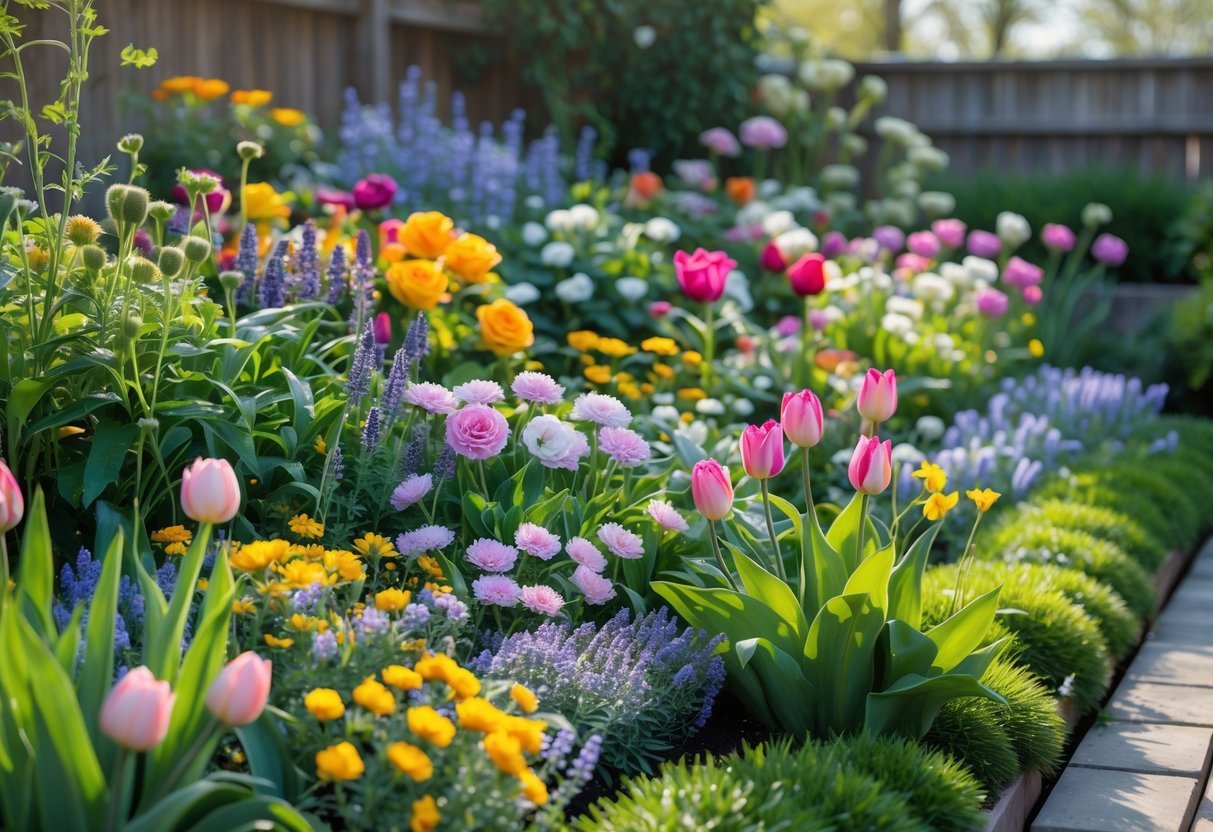
This guide shows easy design ideas—cottage-style clusters, neat perennial borders, pollinator-friendly patches, and container arrangements—so you can pick the style that matches your yard. Follow small, practical steps to plan beds, select plants for season-long color, and arrange blooms for the best visual impact.
Key Takeaways
- Begin with a clear layout that fits your space and climate.
- Mix plant heights, bloom times, and textures for continuous interest.
- Use low-maintenance and water-wise choices to simplify care.
Fundamentals of Garden Flower Design
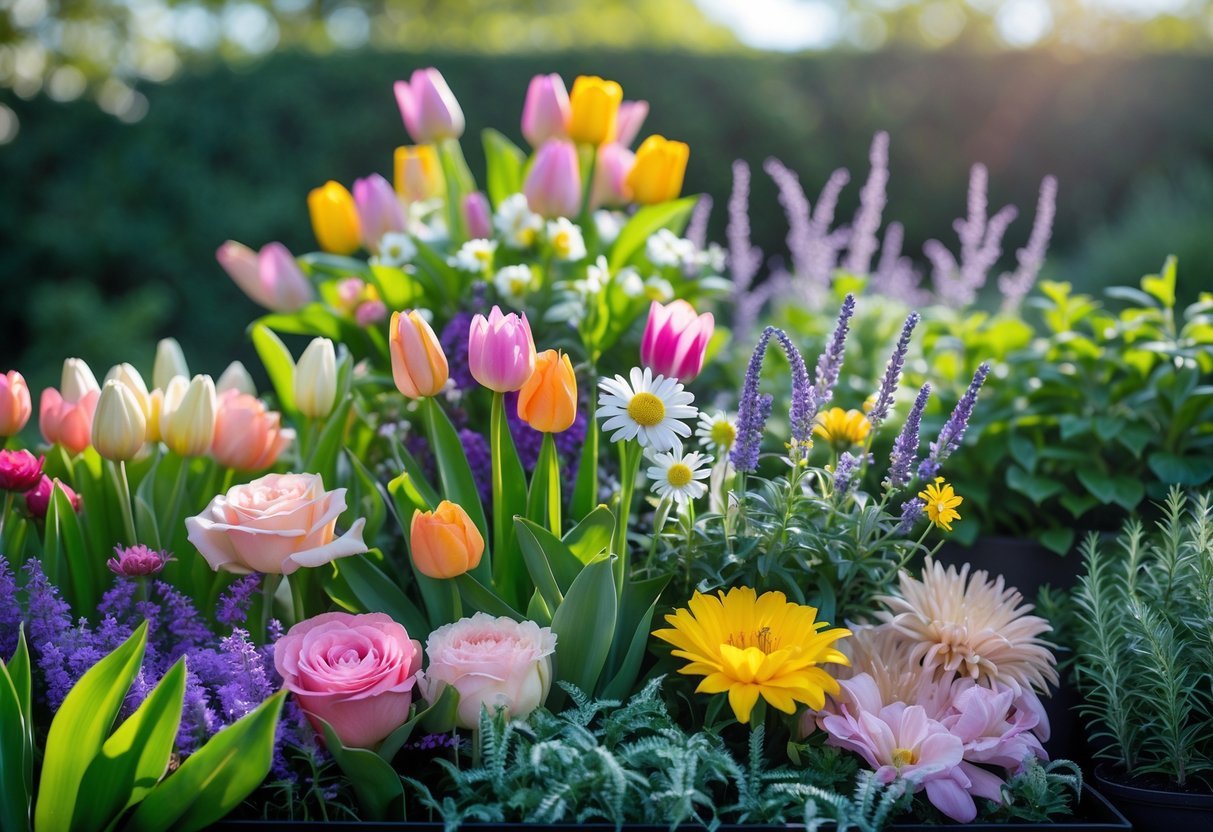
You will learn how to place flowers for good sight lines, mix colors and leaf textures, and pick plants that give blooms or interest across seasons. These choices help create structure, steady color, and low-maintenance care.
Principles of Flower Placement
Place taller plants at the back of beds or center islands so they do not block shorter blooms. Use a layered layout: tall, medium, then low. This keeps sight lines open and shows each plant’s form.
Group plants in odd-numbered clusters (3–7) instead of single rows. Clusters look natural and give stronger color impact. Space groups based on mature size, not seedling size, to avoid crowding later.
Keep pathways and focal points clear. Frame paths with repeat plant groups so the eye moves through the garden. Use edging plants like low lavender or sedum to define borders and reduce mowing or trimming.
Balancing Color and Texture
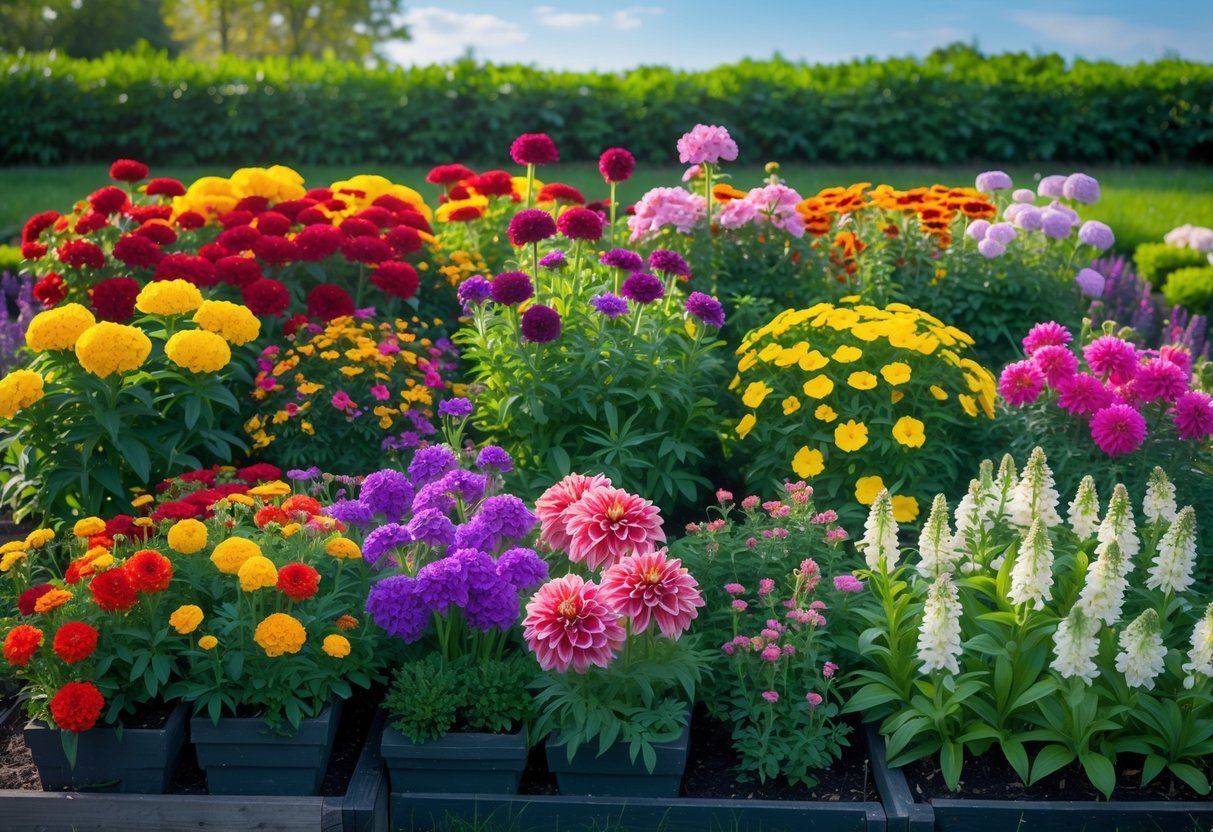
Choose a dominant color, one or two accents, and a neutral filler to avoid visual noise. For example: blue and white as dominants, yellow as an accent, and soft green foliage as filler.
Mix leaf shapes: broad leaves (hosta), fine leaves (ornamental grasses), and glossy leaves (boxwood). Texture contrast makes blooms stand out even when flowers are not at peak.
Use color temperature to guide mood. Cool colors (blues, purples) calm; warm colors (reds, oranges) energize. Place contrasting colors opposite each other to increase vibrancy, and repeat key colors across the space to tie the design together.
Choosing Plants for Year-Round Interest
Include perennials that return each year for a backbone—e.g., coneflower, daylily, and salvia. Add annuals or bulbs for seasonal bursts: tulips in spring, marigolds in summer, chrysanthemums in fall.
Select plants for your light and soil: full sun lovers in the sunny bed, shade-tolerant species under trees. Match water needs to planting zones to avoid extra watering and stressed plants.
Plan staggered bloom times so something is flowering most months. Add structural plants—evergreen shrubs or grasses—for winter form. This mix gives color, texture, and shape through changing seasons.
Popular Garden Flower Design Ideas
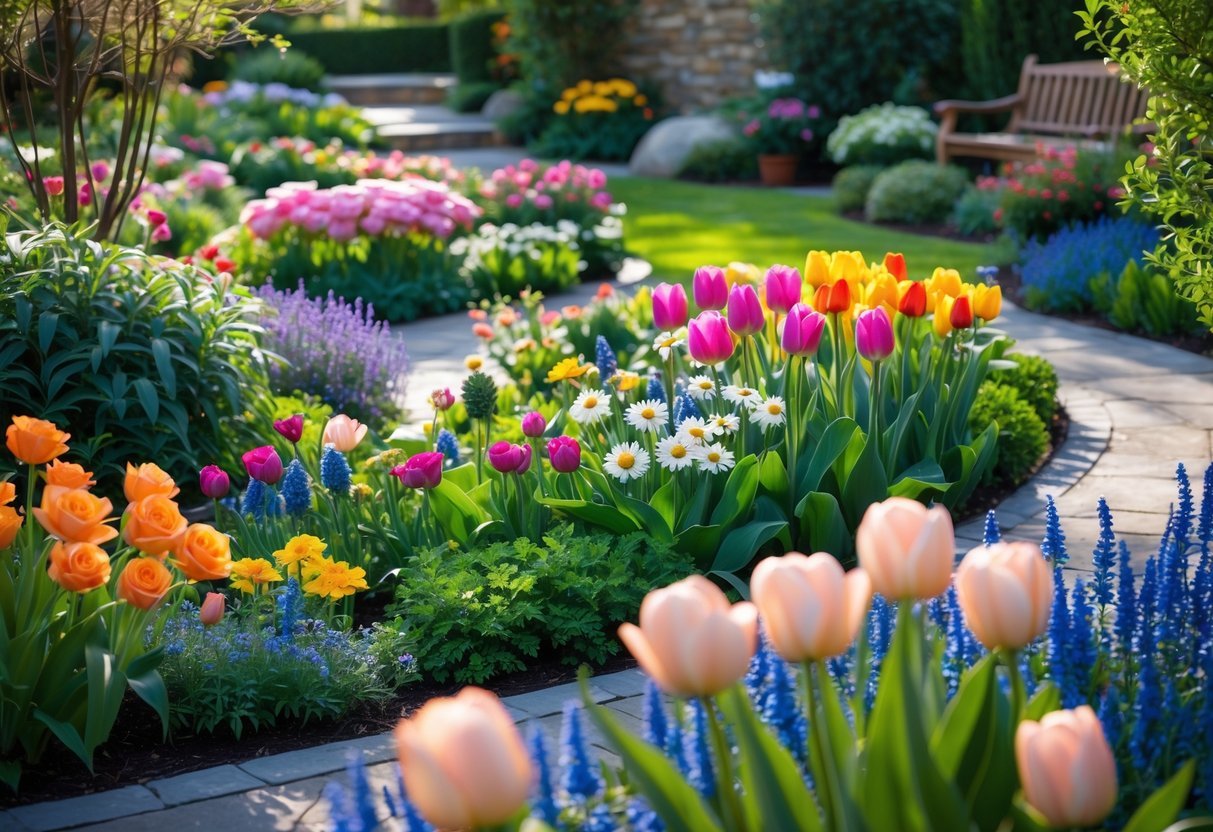
You’ll find styles that fit small yards, formal plots, and wildlife-friendly borders. Each idea below lists key plants, layout tips, and care notes so you can use them right away.
Cottage Style Flower Beds
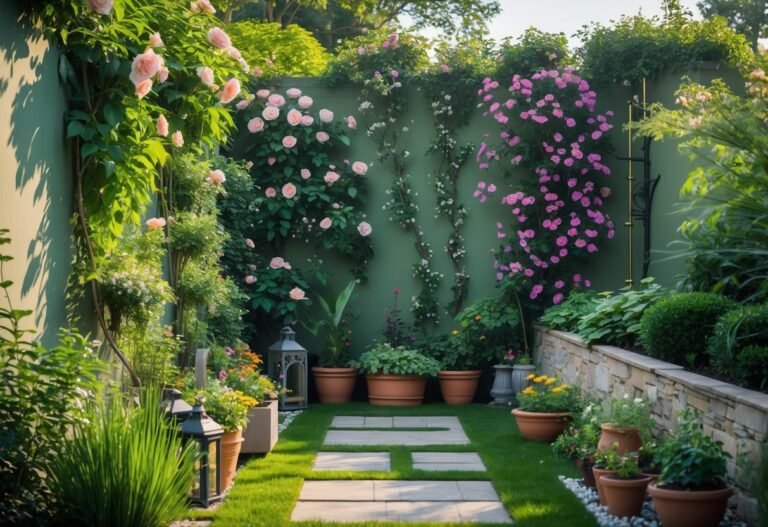
Cottage beds mix heights and textures. Plant tall delphiniums or foxgloves at the back, mid-height roses or peonies in the middle, and low thyme or pansies at the front. Add self-seeding annuals like calendula to fill gaps and keep the look relaxed.
Use curving edges rather than straight lines to make the bed feel natural. Place a rustic focal point — a wooden bench or arched trellis — and let vines such as clematis climb it. Feed regularly with compost and water deeply once a week in dry spells to support heavy bloom.
Pest control stays simple: hand-remove slugs and use insecticidal soap for aphids. Deadhead spent flowers to prolong blooms. Aim for layered color blooms from spring through fall for continuous interest.
Modern Minimalist Flower Gardens
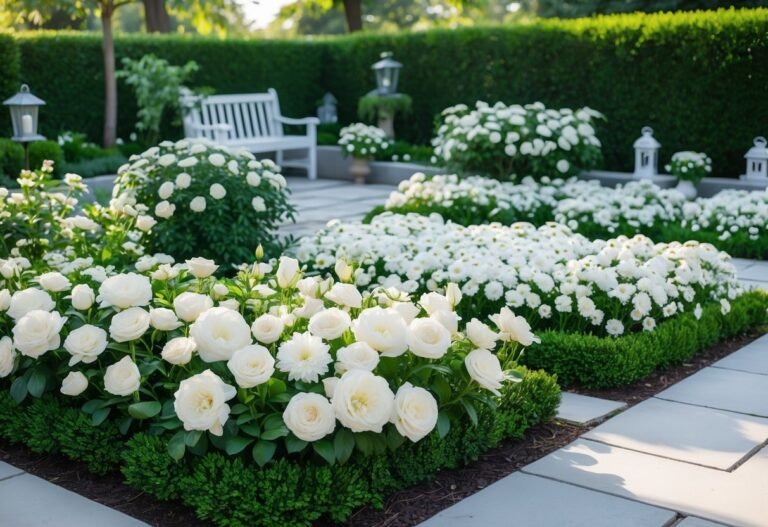
Minimalist gardens use fewer species with strong form and repeated patterns. Choose three to five plants max, such as ornamental grasses, agapanthus, lavender, and boxwood for structure. Plant in repeated blocks or rows to create crisp geometry.
Keep color restrained: white, purple, or blue flowers with lots of green foliage work best. Use clean materials like gravel paths and low concrete planters to match the plant palette. Water efficiently with drip irrigation and mulch to reduce maintenance.
Prune for clear silhouettes and remove any volunteer seedlings that break the pattern. This style benefits from precise spacing — measure before planting to keep sightlines and balance.
Pollinator-Friendly Plantings
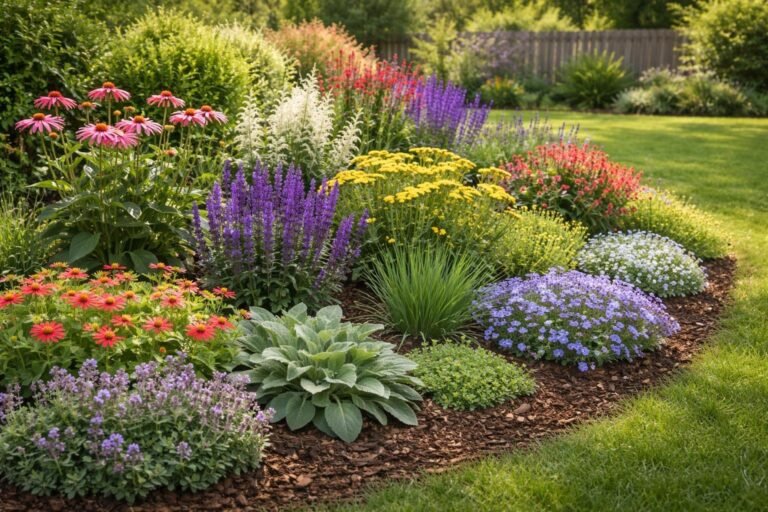
Pick native perennials that bloom at different times to feed bees, butterflies, and hoverflies. Examples: coneflower (Echinacea) for summer nectar, asters for fall, and native salvias for spring-summer visits. Include milkweed to support monarch caterpillars.
Provide water and shelter: a shallow birdbath and undisturbed leaf piles or brush piles offer habitat. Avoid broad-spectrum pesticides; use targeted methods like row covers for caterpillar pests or hand-picking.
Plant in clumps of the same species (five to ten plants per group) so pollinators can find flowers easily. Add a mix of single-flower cultivars rather than double blooms, since singles expose nectar and pollen.
Seasonal Flower Arrangements
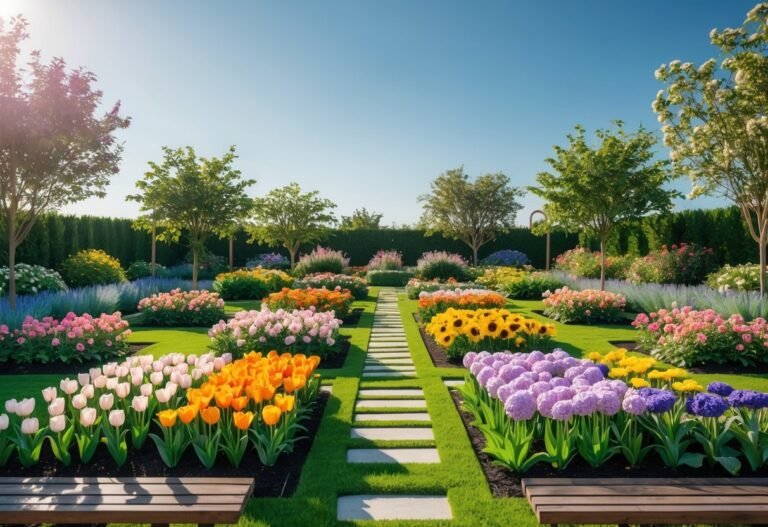
Plan for sequence: bulbs for spring, early perennials for late spring, annuals for summer peak, and asters or sedums for fall structure. Example schedule: tulips and daffodils in April, peonies and irises in May–June, zinnias and cosmos in July–September, and asters in October.
Design containers and borders with a focal flower plus fillers and a trailing plant. For a summer pot, pair geraniums (focal), lobelia (filler), and sweet potato vine (trailer). Replenish soil nutrients with slow-release fertilizer and deadhead weekly.
Store a planting calendar and note bloom times so you can swap plants each year. That helps you maintain color and texture from spring through frost.
Customization and Creative Tips
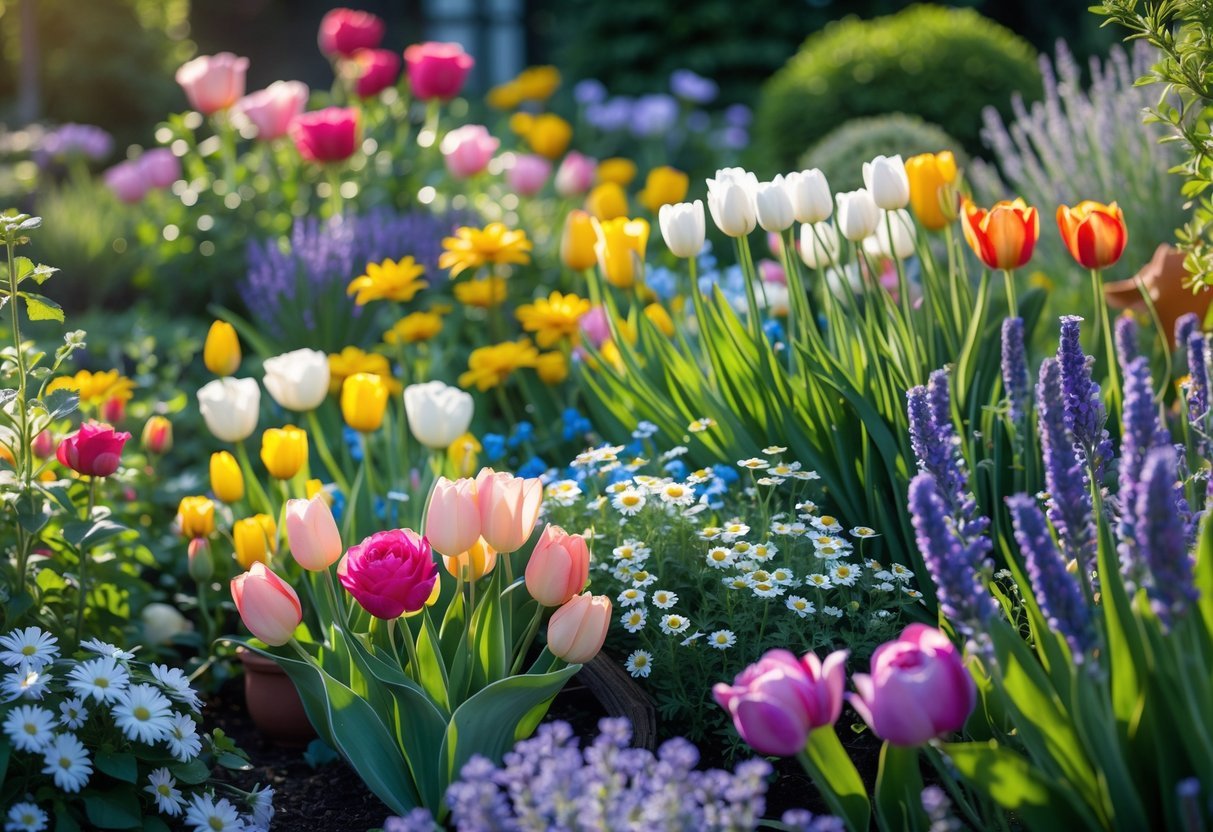
Focus on adding height, choosing plants that fit your climate, and using containers to make flexible, high-impact displays. Pick materials and plant combinations that match your space, sun, and maintenance level.
Incorporating Vertical Elements
Use trellises, obelisks, arbors, and wall planters to add height without losing ground space. Train clematis, climbing roses, or sweet peas up a trellis; these give color at eye level and free lower beds for perennials or groundcovers.
Combine tall spikes like liatris or delphinium with vertical supports to prevent flopping after rain. For small yards, attach narrow vertical planters to fences and fill them with trailing lobelia or herbs. Use staggered shelf planters on patios to create depth.
Choose materials that resist moisture and sun: metal for modern looks, treated wood for a cottage feel, and untinted cedar for longevity. Anchor freestanding structures against wind and follow local height rules.
Designing with Native Flowers
Select native species that match your USDA zone and soil type to cut watering and care needs. Examples: in zone 6, consider coneflower, asters, and bee balm for summer color and pollinator support.
Mix bloom times for continuous color: plant early-flowering native bulbs, midseason perennials like black-eyed Susan, and late asters. Group plants in drifts of three to five for visual impact and easier maintenance.
Avoid invasive lookalikes and check local nursery labels for provenance. Add a thin layer of mulch to suppress weeds and keep roots cool without burying crowns.
Container Flower Garden Concepts
Pick containers with drainage holes and size them to match root systems: 12–16 inch pots for mixed annuals, larger planters for small shrubs. Use high-quality potting mix and add slow-release fertilizer for steady blooms.
Create combos with a thriller (tall focal plant), spiller (trailing plant), and filler (bushy mid-height). Example: canna (thriller), sweet potato vine (spiller), and marigolds (filler). Rotate seasonal plants to refresh color and control pests.
Group containers by watering needs and place saucers to protect decks. For mobility, put heavy pots on casters so you can move them for sun, shade, or winter storage.
Frequently Asked Questions
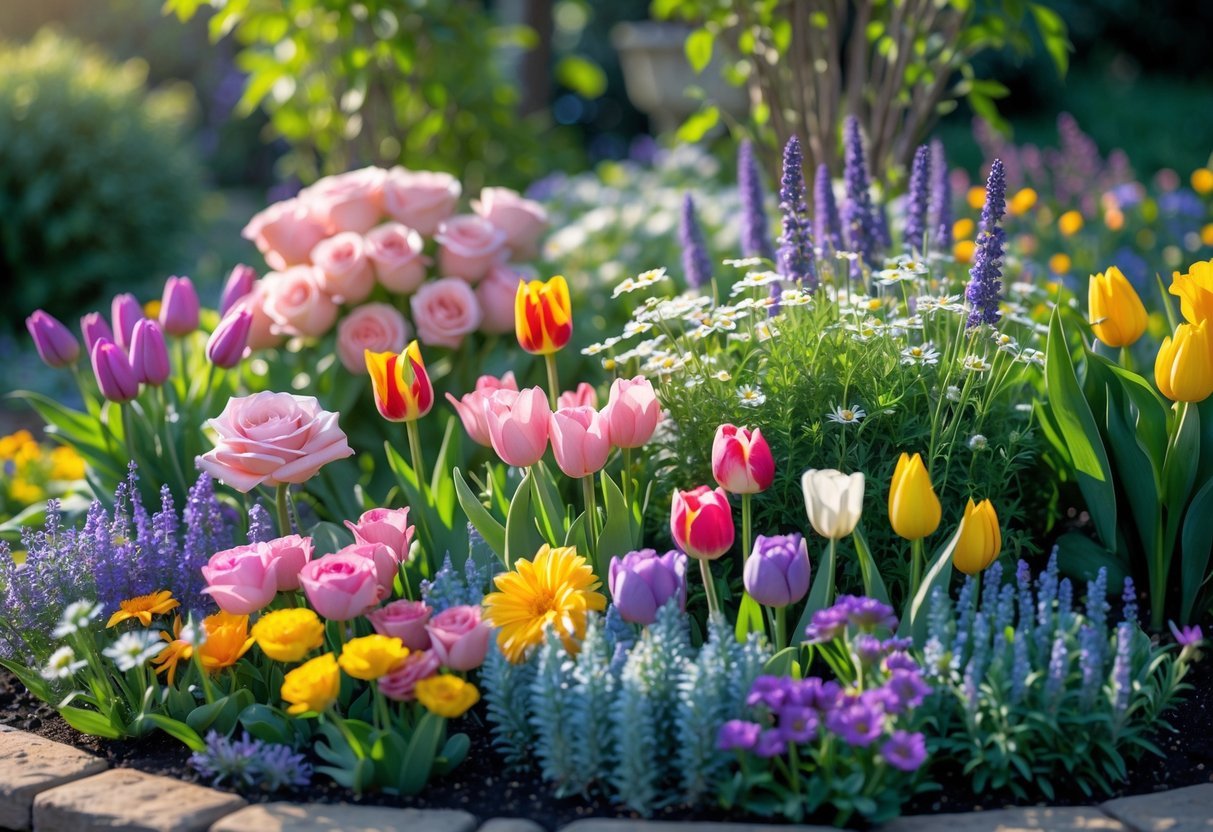
This section answers practical design choices, plant pairings, and space-saving tips you can use right away. Expect clear steps for layouts, small yards, low-care mixes, front-yard curb appeal, perennial/annual balance, and the 70/30 rule.
What are some simple flower garden layout strategies?
Use a focal point like a small tree, statue, or tall plant to anchor the bed. Arrange plants in thirds: tall at the back, medium in the middle, and low at the front to keep sightlines clean.
Try curved beds instead of straight lines; curves soften the space and guide the eye. Group plants in odd-numbered clusters (3–7) to look natural and full.
Create repeating color or texture every few feet to tie the design together. Repeat a single color or foliage type three times across the garden ideas for harmony.
How do I create a flower garden in a small space?
Choose compact varieties and dwarf cultivars to fit small beds and containers. Use vertical elements like trellises, obelisks, or hanging baskets to add height without losing ground space.
Mix containers with a narrow border bed to increase planting area. Place taller pots at the back and smaller ones in front to keep layering visible.
Pick multi-season bloomers and plants with attractive foliage to keep the space interesting year-round. Swap a few annuals each season for fresh color without redoing the whole layout.
What are some low-maintenance garden flowers design tips?
Start with reliable perennials like daylilies, sedum, and coneflowers that need little care once established. Use mulch to cut weeds and reduce watering.
Group plants by water and sun needs so you can water efficiently. Choose native species adapted to your local climate for fewer problems and less work.
Keep paths or stepping stones for easy access to beds. Prune briefly each season rather than heavy trimming often.
Could you suggest design ideas for a flower garden in the front yard?
Frame the entry with symmetrical plantings on either side of the path or steps. Use a mix of evergreen shrubs and seasonal flowers to keep the front yard attractive all year.
Plant a low hedge or border plants to define the space and protect beds from foot traffic. Add a small focal feature like a bench, birdbath, or a container with bold blooms.
Use curb-friendly heights: keep plants near the sidewalk under 3 feet and taller ones nearer the house. This maintains visibility and street appeal.
What are the best practices for combining perennials and annuals in a garden design?
Use perennials as the backbone of your design to provide structure and long-term form. Fill gaps and add seasonal color with annuals that you can change each year.
Plant annuals in front of taller perennials or in containers for pops of color. Match soil and light needs before planting together to avoid high-maintenance mixes.
Stagger bloom times: choose perennials that peak at different times and add annuals to cover the gaps. This keeps continuous color with minimal replanting.
What does the 70/30 rule entail for flower garden design?
The 70/30 rule means about 70% of your planting is stable, low-change plants (perennials, shrubs, grasses). The remaining 30% is for changeable elements like annuals, seasonal bulbs, and containers.
Use the 70% to create form and year-round interest, and the 30% to add color trends or experiment with new varieties. This balance reduces work while keeping the garden fresh.