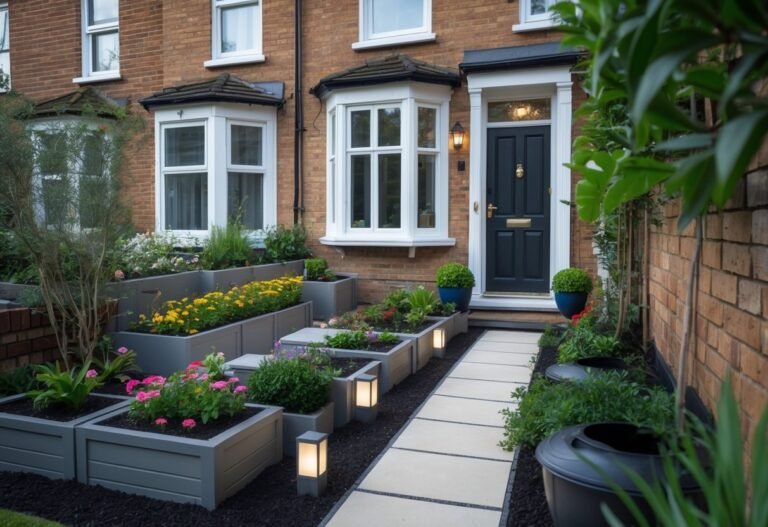

Garden Decor Design Ideas That Transform Small Outdoor Spaces
You can turn any yard or balcony into a place you love by choosing a few smart decor pieces and arranging them with purpose. Pick focal points, mix textures like wood and stone, and add layers of plants and lighting to make the space feel complete and welcoming.
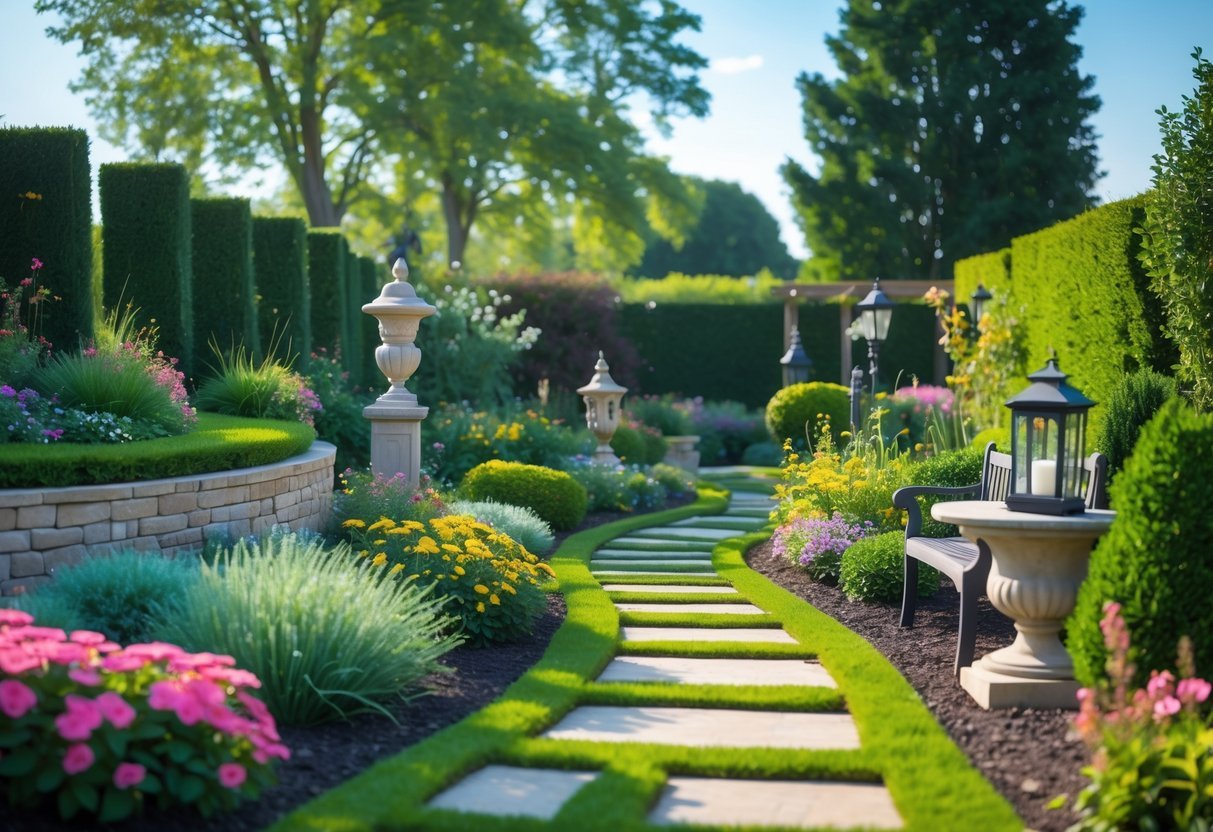
Think about how you use the space and add items that fit that use—comfortable seating for lounging, raised beds for easy gardening, or weatherproof art for visual interest. Small changes like a statement planter, path lighting, or a colorful textile can lift the whole area without a big budget.
Key Takeaways
- Start with clear purpose and simple focal points.
- Combine natural materials and layered lighting for balance.
- Personal touches make the space functional and inviting.
Fundamental Principles of Garden Decor Design
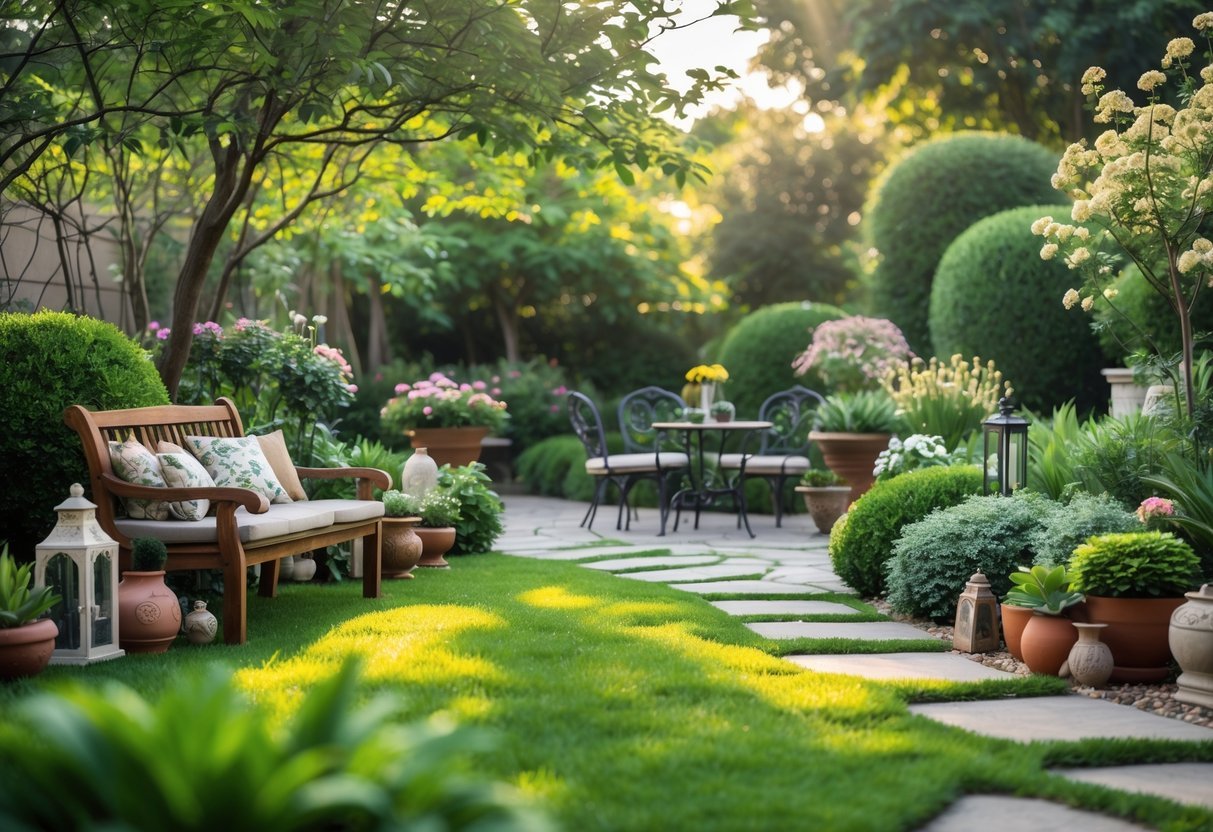
Focus on practical choices that make your garden look intentional and work well. Balance looks and use, pick a clear theme, and choose colors that tie plants, furniture, and hardscape together.
Balancing Aesthetics and Functionality
Decide what you need from the space first: seating for three, a play area, raised beds, or a dining spot. Place paths and furniture where movement flows naturally between doors and features.
Use durable materials for high-use areas. Choose weatherproof furniture on patios and softer materials where comfort matters. Match scale: large pots suit wide patios; skinny planters fit narrow balconies.
Mix beauty and utility by planting edible herbs near the kitchen, and attractive shrubs to block wind. Keep maintenance realistic—select plants you can prune, water, and replace within your time and budget.
Selecting a Theme
Pick a simple, clear theme to guide choices—modern minimal, cottage, Mediterranean, or tropical. Define 3 main elements for the theme: plant types, materials, and furniture style.
List plants that fit the theme and your climate. For a Mediterranean feel, choose lavender, olive-like shrubs, and terracotta pots. For a cottage look, use mixed perennials, white picket accents, and weathered wood.
Apply the theme consistently but allow small contrasts. One contrasting item—like a bright cushion or sculptural pot—adds interest without breaking the theme.
Coordinating Color Palettes
Start with a base palette of two neutral tones for hardscape and large furniture. Add one or two accent colors for cushions, pots, and blooms.
Use color tools: pick a dominant plant color and repeat it in two other elements (e.g., pillows and a pot). For cooler palettes, combine blues and silvers; for warm palettes, use terracotta and golden yellows.
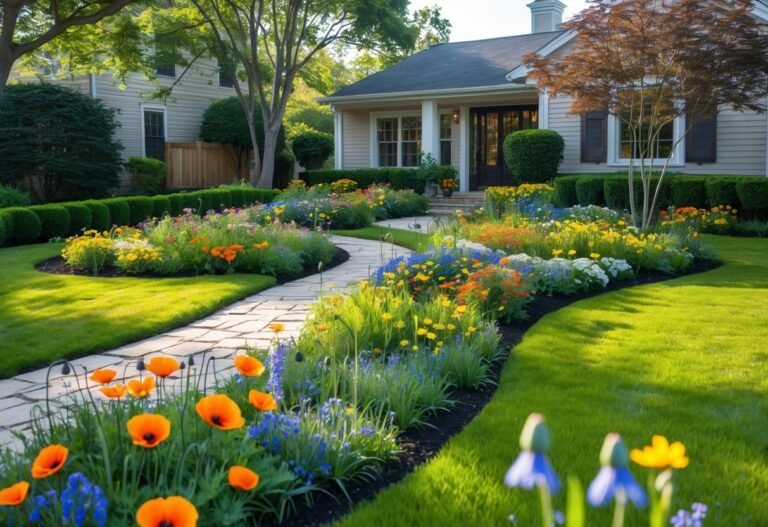
Think seasonally. Choose perennials and shrubs that offer color at different times so your palette stays cohesive through spring, summer, and fall. Keep contrast legible: don’t mix too many bright hues in one view.
Creative Outdoor Decor Elements
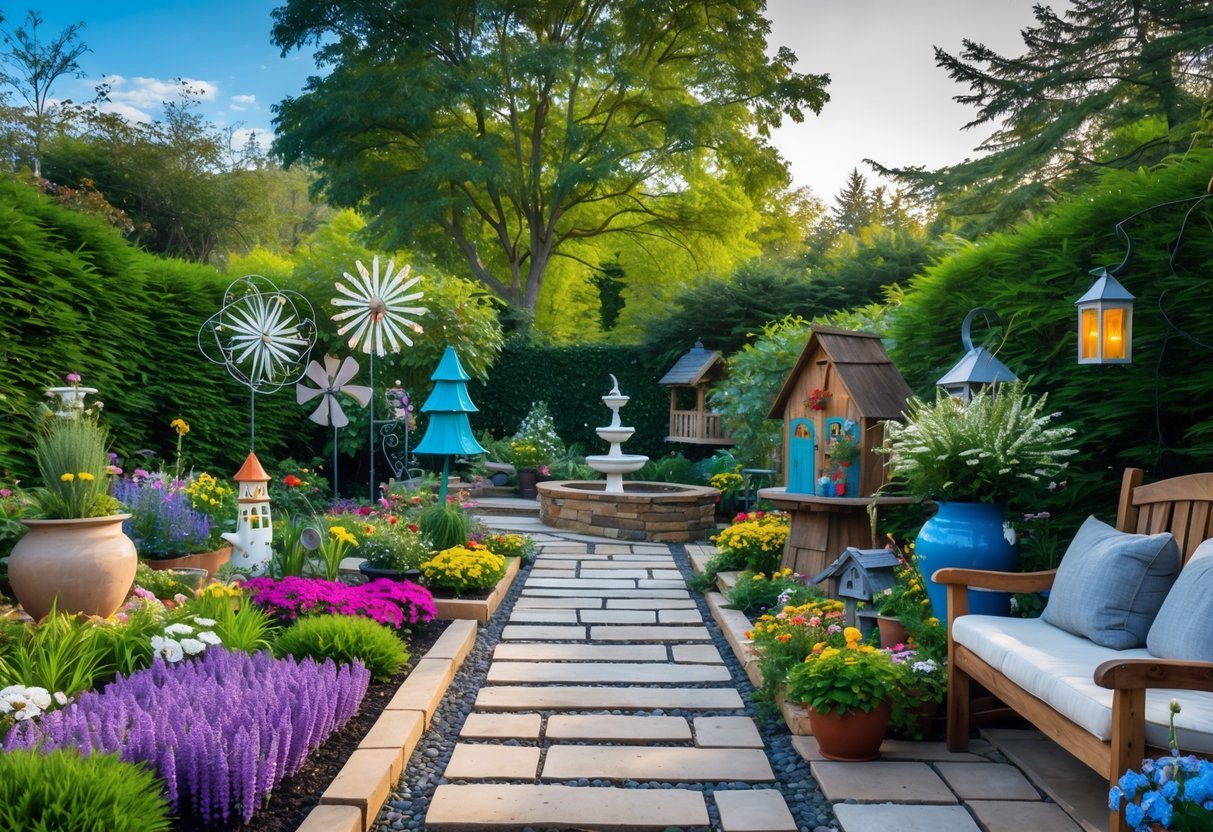
These details help define the feel of your garden: focal art, moving water, smart lighting, and planters that match scale and style. Pick pieces that fit your space, budget, and maintenance time.
Garden Statues and Sculptures
Choose statues that match your garden’s size and style. A small bronze bird or stone rabbit works well near flower beds. A larger abstract metal sculpture suits a lawn or patio focal point.
Think about materials. Stone and concrete resist weather but can be heavy. Metal offers thin profiles and modern lines but may need rust protection. Fiberglass and resin are lightweight and affordable for movable displays.
Place sculptures with purpose. Use the rule of thirds—position a piece off-center for natural balance. Place a statue where paths or sightlines lead the eye. Add a low spotlight so the statue reads at night.
Consider scale and grouping. A single large piece anchors a big space. A trio of small figures creates rhythm near steps or borders. Keep walking clearance and avoid cluttering planting beds.
Water Features
Choose the right type: a small bubbling fountain, a birdbath, or a pond with a pump. A fountain fits patios and small yards. A pond suits larger spaces and supports plants and fish.
Think about sound and sight. Gentle bubbling masks noise and adds calm. A taller fountain creates more splash and drama but needs more water and cleaning. Place features where you can hear them from seating areas.
Plan maintenance early. Pumps need annual checks. Algae control requires circulation, shade, or plants. Winterize by draining or using a de-icer if you live where temperatures drop below freezing.
Safety matters with ponds. Use shallow edges or plant buffers if children or pets visit. Add stones or a low fence for protection and visual trimming.
Outdoor Lighting Ideas
Layer lighting for safety, mood, and focus. Use path lights for walkways, wall lights for steps, and spotlights to highlight trees or sculptures. Combine warm LEDs for seating areas with cool whites for task zones.
Choose fixtures by task. Solar stake lights are cheap and easy for soft path light. Low-voltage wired systems give steady brightness and work with timers. Hardwired fixtures suit pergolas, arbors, and detailed focal points.
Control and placement matter. Mount lights 18–36 inches off the ground for path lighting. Angle spotlights 20–30 degrees to avoid glare. Use timers or smart plugs to save energy and keep consistent schedules.
Safety and durability matter. Pick outdoor-rated fixtures (IP44 or higher) and corrosion-resistant finishes. Seal connections and bury cables to avoid trip hazards.
Decorative Planters
Match planter size to plant root needs. Small herbs need 6–8 inch pots; shrubs need 12–20+ inches. Choose deeper pots for vegetables and shallow wide pots for succulents.
Pick materials for style and climate. Terracotta breathes but can crack in freeze-thaw cycles. Glazed ceramic adds color but can be heavy. Resin and fiberglass are light, durable, and mimic other looks.
Group pots for impact. Arrange in odd numbers and vary heights using plant stands or stacked crates. Mix textures—rough terracotta with smooth metal—for visual interest.
Mind drainage and soil. Drill or use pots with drainage holes. Use potting mix, not garden soil. Add a layer of coarse gravel or broken pot shards at the bottom only if drainage is slow.
Incorporating Natural Materials
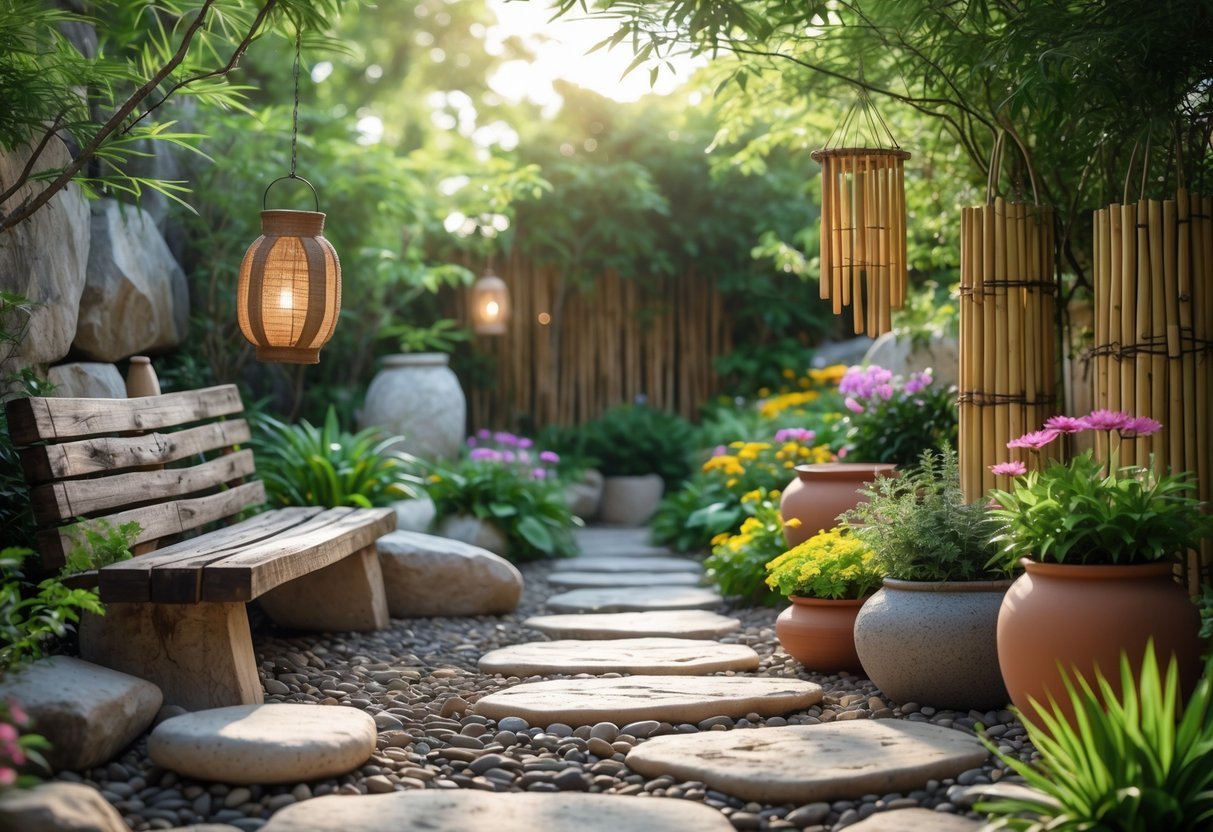
Use materials that age well, need little upkeep, and match your yard’s soil and sun. Choose stone, wood, and living elements based on scale, budget, and how much maintenance you want.
Stone and Pebble Pathways
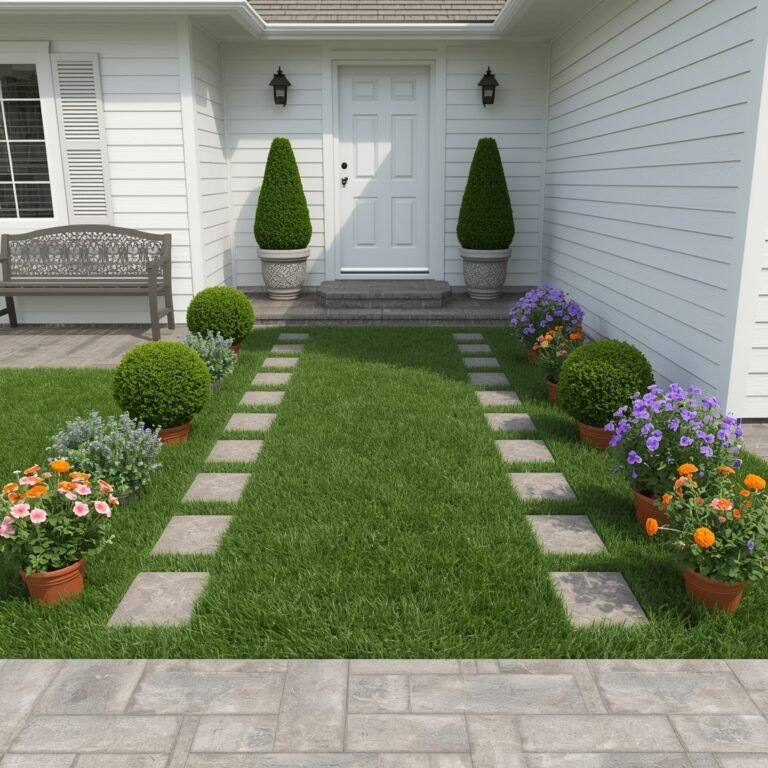
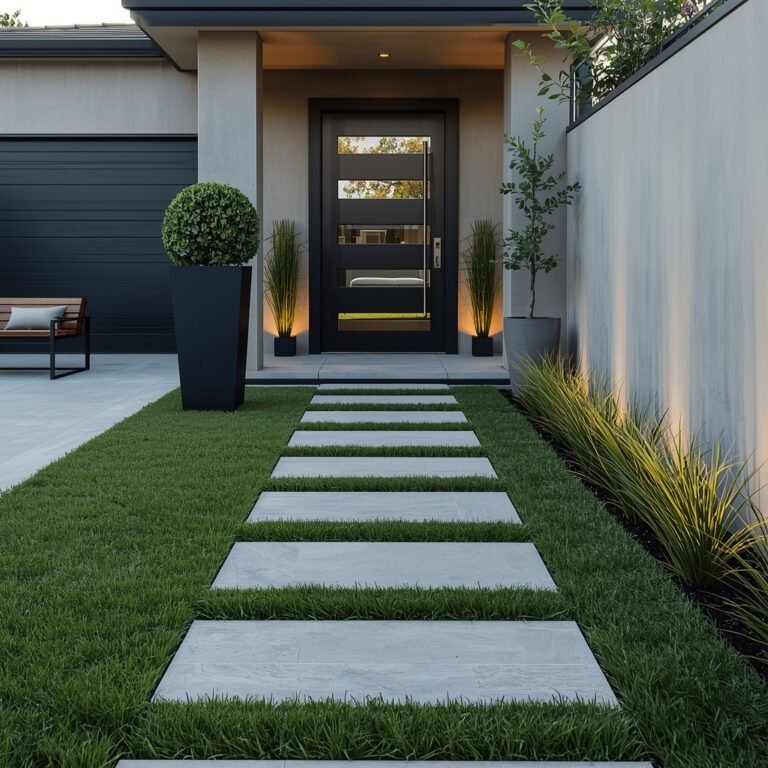
Stone and pebble paths give structure and guide movement. Lay flat stepping stones on compacted sand for a low-rise path that won’t shift much. For higher-traffic routes, set pavers in mortar or gravel with a weed barrier underneath.
Match stone size to use: large flagstones suit main walkways; pea gravel or river pebbles work for garden beds and side paths. Edge paths with metal, brick, or timber to keep stones contained and reduce spreading.
Think about drainage and slip resistance. Create a slight crown or gaps between stones filled with sand or moss for water to run off. Use textured stone or add grit to cemented areas in wet climates.
Wood Accents
Use natural or reclaimed wood for benches, planters, pergolas, and edging. Cedar and redwood resist rot without heavy chemical treatment. For small budget projects, use pressure-treated lumber but seal cut ends to resist moisture.
Design wood pieces to match scale: a wide bench for a patio, narrow slatted planters for a balcony. Fasten pieces with exterior-grade screws and stainless hardware to avoid rust stains. Stain or oil wood every 1–3 years to maintain color and protect against UV.
Avoid ground contact for untreated wood. Raise planters on feet or use concrete blocks under posts to extend life. Consider using preserved or composite boards for low-maintenance options that still look natural.
Living Walls and Vertical Gardens
Living walls add plants where ground space is tight. Use modular planters or wall pockets anchored to a sturdy frame that allows airflow behind the plants. Choose shallow-rooted species like succulents, herbs, and small ferns for slim profiles.
Plan irrigation and drainage before planting. A drip line or built-in reservoir keeps moisture even and prevents rot. Place a catch tray or direct runoff to soil beds below to reuse water.
Pick plants by microclimate: sun lovers on the south side, shade-tolerant species on the north. Rotate or replace plants seasonally to keep the wall full and healthy.
Seasonal and Holiday-Themed Decor
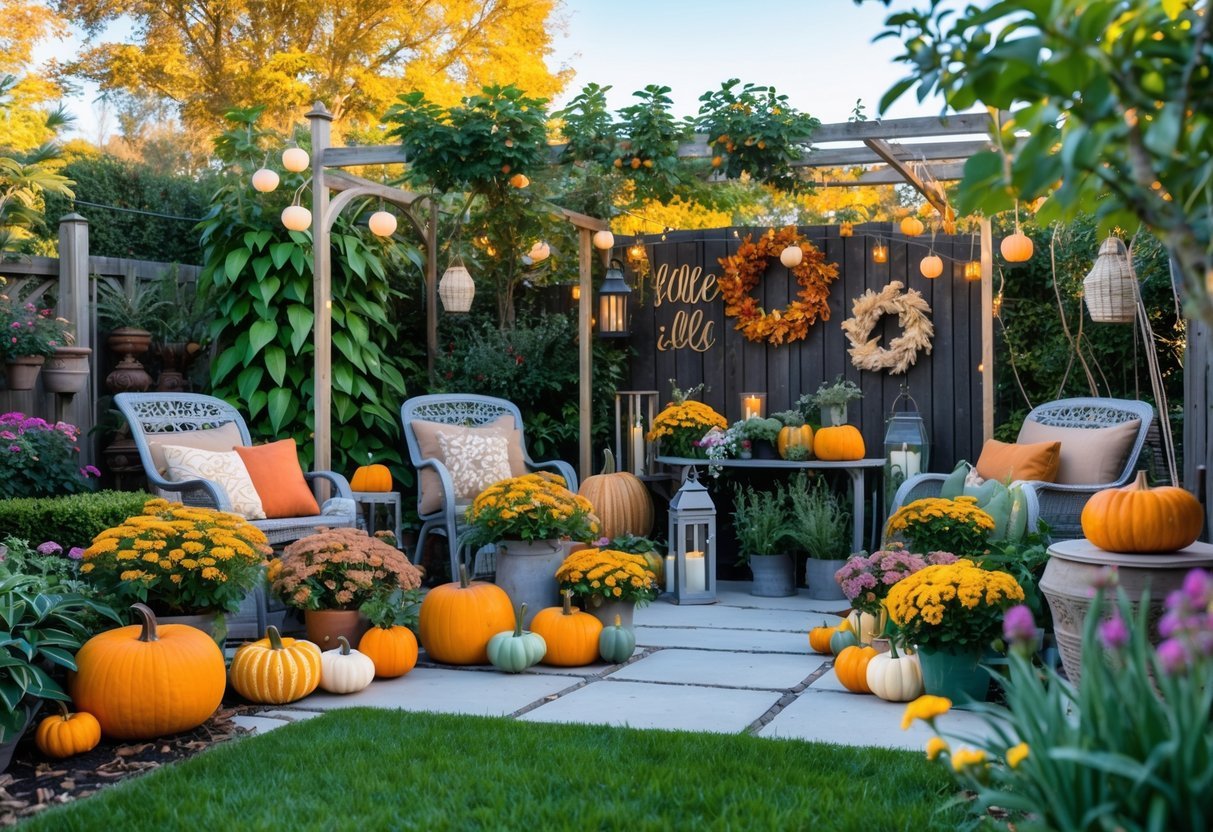
Choose plants, colors, and accessories that match each season. Use containers, lighting, and simple DIY pieces to change the mood quickly without redoing major planting.
Spring and Summer Accents
Plant bright, repeat-blooming annuals like petunias, marigolds, and geraniums in grouped containers by the entryway. Use 2–3 coordinated colors per container to keep a clean look. Add tall stakes or obelisks for clematis or sweet peas to bring vertical interest.
Place a pair of seating areas—one in sun, one in shade—to encourage use at different times of day. Use lightweight, weather-resistant cushions in colors that echo your flowers. Install solar path lights and string LED fairy lights on pergolas to extend evening use without wiring.
Create a simple water feature, such as a small fountain or birdbath, to attract birds and cool the area. Keep mulch and drip irrigation in place to reduce watering needs and keep beds tidy during heat.
Autumn Arrangements
Switch to warm, muted tones: mums, pansies, ornamental cabbage, and late-blooming sedums work well. Arrange these in heavy planters near steps and on porches to frame entrances and add texture.
Use natural elements like dried grasses, seed heads, pine cones, and corn stalks to build layered table centerpieces and porch displays. Tie bundles with burlap or twine for a rustic look that withstands wind.
Add practical lighting such as lanterns with LED candles and amber string lights to counter shorter days. Place a few durable blankets in a waterproof bin near outdoor seating so you can keep using your patio as temperatures drop.
Festive Winter Displays
Focus on structure and light: evergreens, boxwood topiaries, and winterberry offer color and shape when perennials die back. Cluster clipped evergreen swags and potted conifers by the door to add greenery with minimal fuss.
Use warm white LED lights on trees and hedges. Avoid heated elements; choose battery or solar-powered options to lower risk and simplify setup. Add weatherproof ornaments, metal stars, or lanterns filled with faux pine and cones for a tidy holiday look.
If you want DIY decor, make wreaths from foraged branches and dried citrus slices, or fill clear vases with pine cones and fairy lights. Keep decorations secured against wind and wet weather for safety and longevity.
Personalizing Your Garden Spaces
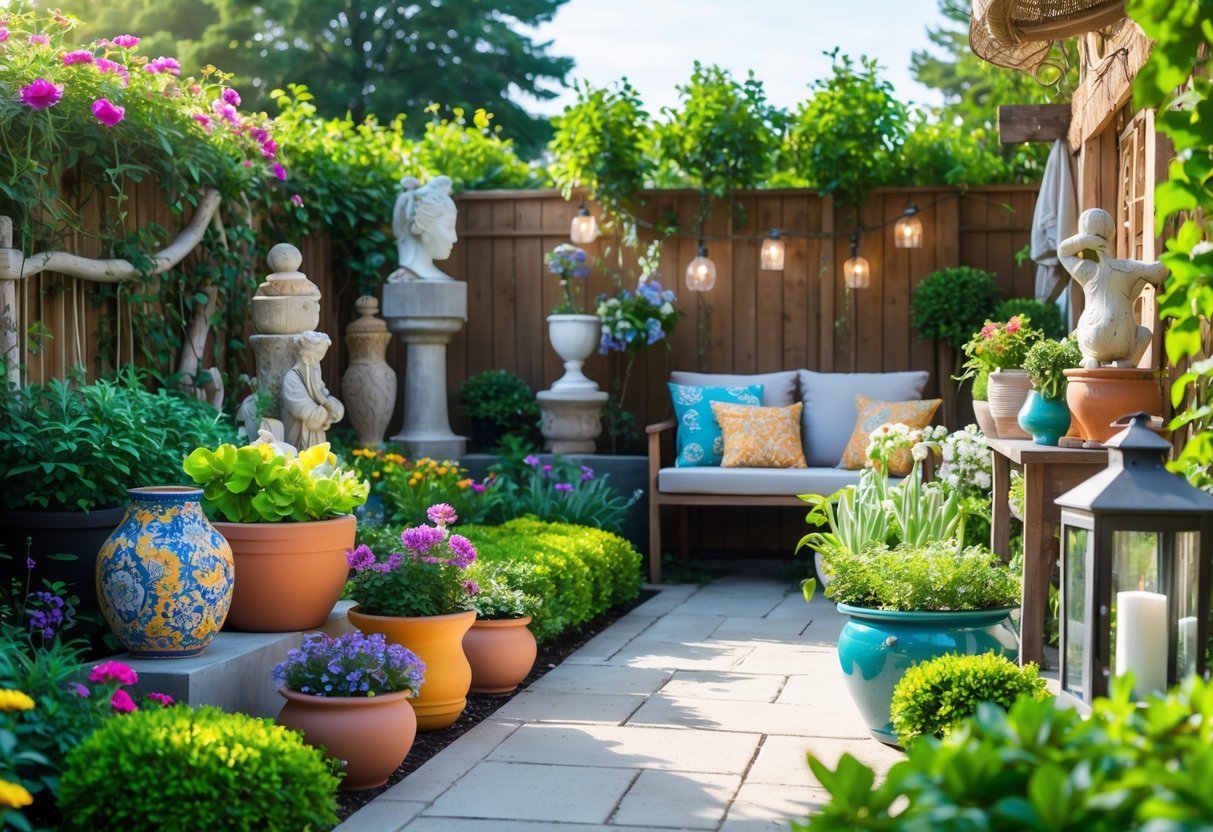
Choose elements that match how you use the space and the look you want. Focus on easy DIYs, smart reuse of materials, and one-of-a-kind handcrafted pieces to make the garden feel like yours.
DIY Decor Projects
Build simple items that add function and style, like a pallet bench, a raised herb bed, or a string-light pergola. A pallet bench only needs sanded wood, outdoor screws, and weatherproof stain; finish with cushions that match your color palette. For herbs, use untreated cedar boards and landscape fabric to create beds that drain well and sit at a comfortable planting height.
Lighting projects boost evening use. Hang solar string lights on a wire or mount lanterns on shepherd hooks near paths. Make a rain chain from copper cups for a decorative downspout that also calms with sound.
Keep tools and instructions short and specific. Measure spaces before building. Use weatherproof materials and quick seals to make projects last.
Repurposed and Upcycled Features
Turn old items into focal points: a vintage ladder becomes a tiered plant shelf, an antique door serves as a garden gate, and ceramic plates make a mosaic stepping-stone. Choose pieces with sturdy structure and prep them by cleaning and sealing to protect against moisture.
Paint helps unify mixed materials. Use outdoor paint or a clear exterior sealer. For metal items, remove rust, prime, and apply rust-resistant paint.
Create functional upcycles like a wheelbarrow planter or a bathtub pond. Add drainage holes and a liner where needed. Label repurposed pieces with small signs so visitors know their past life and your intention.
Unique Artisanal Touches
Commission or buy a few handmade pieces to anchor your style. Small metal sculptures, hand-thrown pots, and carved wooden markers give a crafted look that mass-made items can’t match.
Place larger artisanal pieces where they catch the eye: beside the main path, at a seating area, or as a focal point in a planting bed. Mix textures—glazed pottery, raw wood, and hammered metal—to create contrast.
When choosing, consider scale and maintenance. Ask the maker about finishes and outdoor suitability. A sealed concrete or fired-clay piece will hold up better than untreated softwood.
Frequently Asked Questions
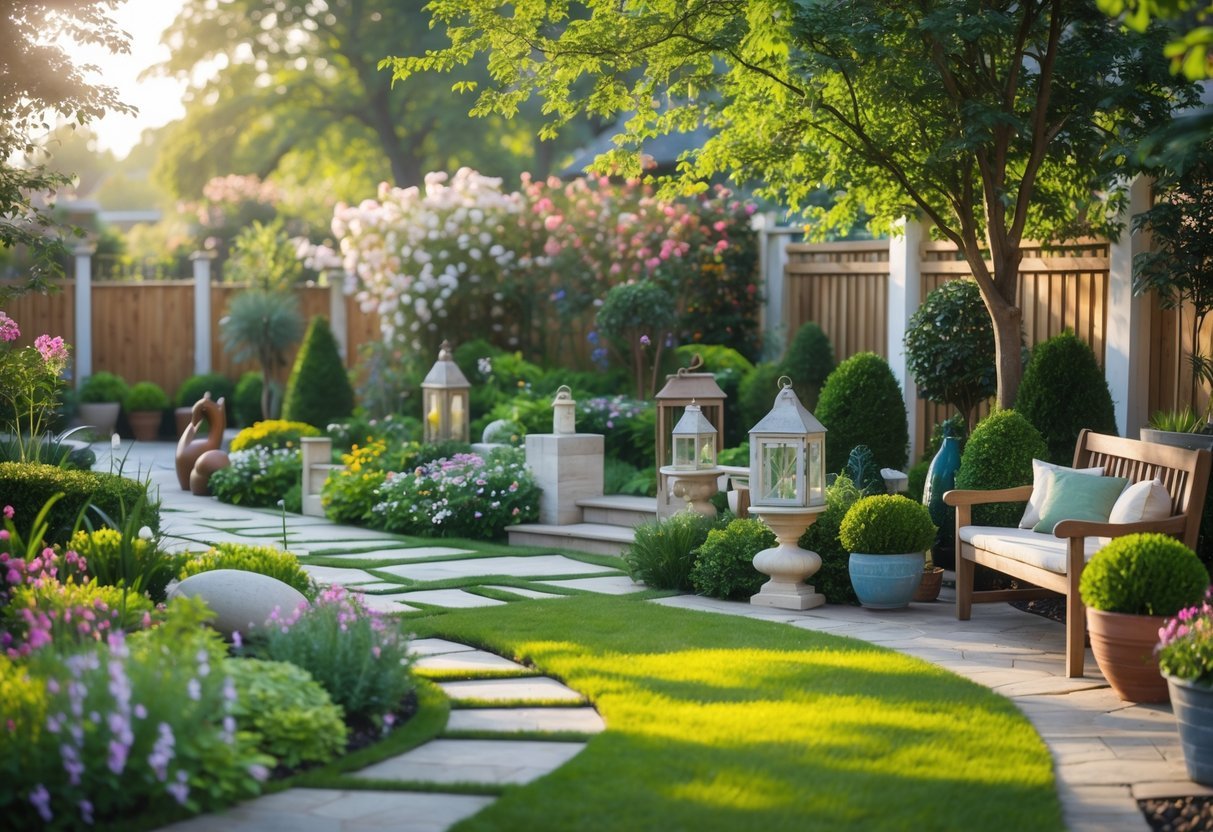
You’ll find quick, practical answers for decorating, styling, and improving function in your garden. Each question gives clear steps, materials, and examples you can use right away.
What are some simple ways to decorate a garden?
Add potted plants with a mix of heights and colors to create instant interest. Use solar pathway lights and string lights for evening ambiance without wiring.
Place a few comfortable chairs or a bench to make a sitting spot. Layer outdoor rugs and cushions for color and texture.
Add one focal piece, such as a planter, sculpture, or water bowl. That single item draws the eye and makes the space feel designed.
How can I create a unique look for my garden?
Choose a clear theme like cottage, modern, or Mediterranean and repeat a few elements. Stick to two main colors and one accent to keep the look cohesive.
Use reclaimed or unusual materials for planters, furniture, or edging. Old doors, pallets, and metal tubs add character you won’t find in stores.
Mix plants with different leaf shapes and sizes for texture. Add a custom art piece or painted wall to make the space truly yours.
What are the latest trends in garden decor for this year?
Low-maintenance native plants are popular to save water and time. People pair these with drought-tolerant grasses and wildflowers.
Outdoor rooms are trending: kitchen, dining, and lounging zones with defined flooring and furniture. Mixed materials like concrete, wood, and woven textures are common.
Vertical gardens and living walls continue to grow in small and large spaces. Solar lighting and smart irrigation systems are also on the rise.
How can I make my small garden space visually appealing?
Use vertical space with wall planters, trellises, or shelves to free up ground area. Tall, narrow pots give height without taking much room.
Choose a limited palette of plants and materials to avoid visual clutter. Mirrors or reflective surfaces can make the area feel larger.
Create defined zones with rugs or different paving to suggest purpose. A single statement piece, like a fountain or sculptural planter, anchors the space.
Can you suggest some DIY garden decoration ideas?
Turn old crates into stackable planters for herbs or succulents. Paint them in a single color for a neat look.
Make stepping stones with concrete and simple imprints like leaves or small tiles. They’re easy to customize and add a personal touch.
Create a simple trellis from bamboo poles tied with twine. It’s cheap, lightweight, and supports climbing plants.
What are some tips for creating a magical garden atmosphere?
Layer lighting: low path lights, soft string lights, and focused spotlights on key plants. Lighting creates depth and extends use into the evening.
Add sound, such as a small fountain or wind chimes, to make the space feel calmer. Soft water noise masks street sounds and adds charm.
Plant fragrant flowers near seating areas and use varied textures. Night-blooming plants and subtle colored lights enhance nighttime drama without overwhelming.