Garden Aesthetic Design Ideas: Practical Tips for Stylish, Low-Maintenance Outdoor Spaces
You can turn any outdoor spot into a calm, beautiful place that fits your taste and budget. Mix simple layout rules, a few key plants, and lighting or seating to make a clear style that feels like yours. Use balance, texture, and focal points to create a garden aesthetic that looks planned but still feels natural.
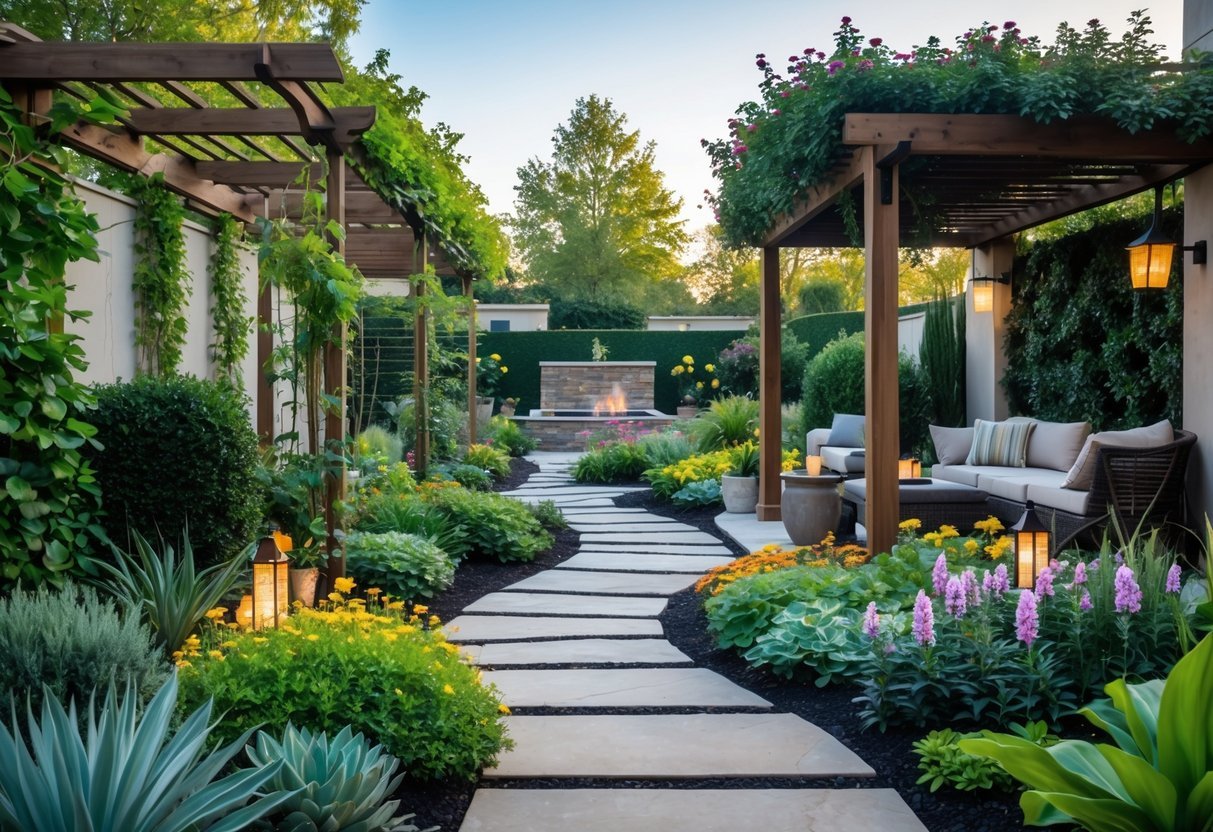
This post gives practical ideas and quick examples you can copy, whether you like modern lines, cottage charm, or a cozy nook for evenings. You’ll find ways to personalize the space, pick the right plants, and add small features that make a big impact.
Key Takeaways
- Start with basic design rules to shape your space.
- Pick a style and add a few strong elements to define it.
- Personal touches and small features make the garden feel yours.
Fundamental Principles of Garden Aesthetic Design
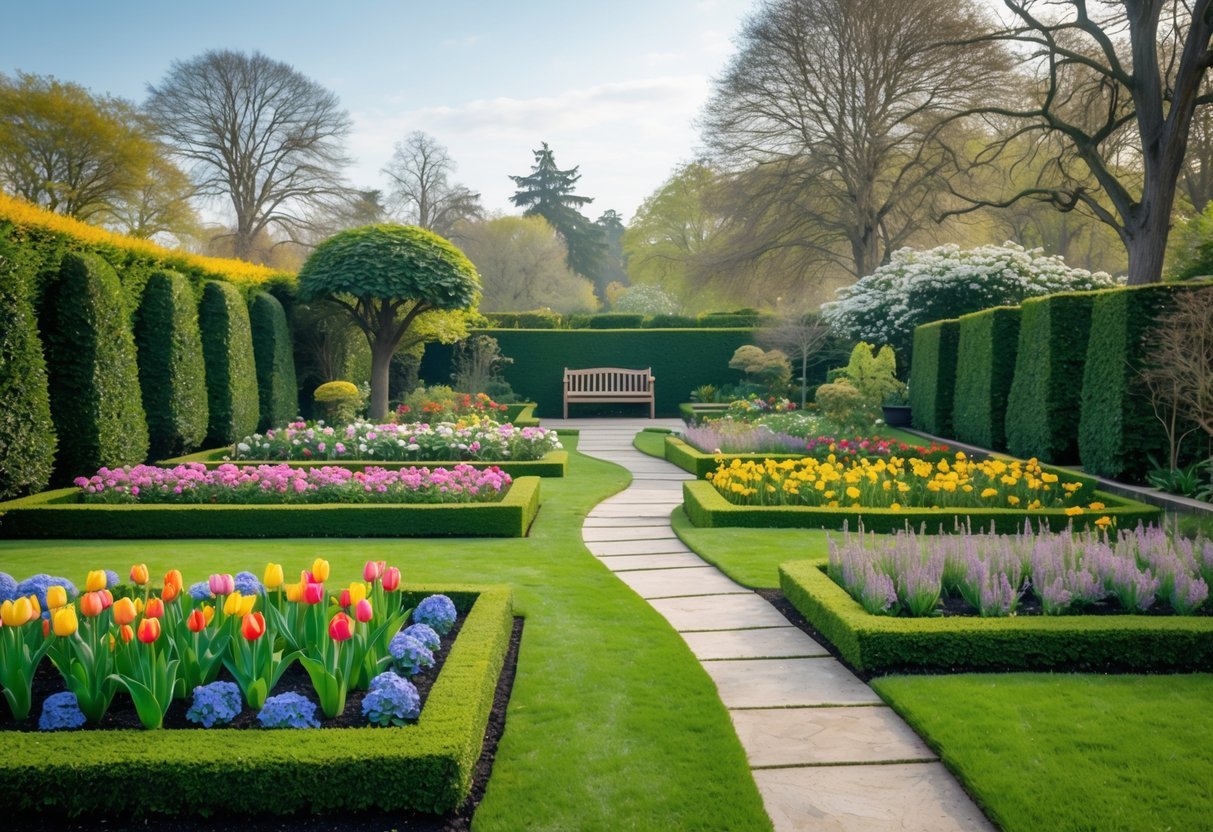
These principles help you shape a garden that looks good and works well. You will focus on plant form, practical needs, color choices, eye-catching features, and the routes people take through the space.
Balancing Form and Function
You should pick plants and hardscape that meet both beauty and use. Choose shrubs with strong shapes near pathways to guide movement and softer, textural plants in rest areas where people linger. Consider scale: small plants suit narrow beds, while large trees anchor wide lawns.
Think about maintenance. Use drought-tolerant plants where watering is hard, and place mulch beds to reduce weeding. Add seating sized for your space; a narrow bench fits a tight border, a round table suits a wider patio.
Hard materials matter. Match path width to expected traffic and use slip-resistant pavers for safety. Combine curving beds with straight-edged paving to balance form and pragmatism.
Color Theory for Outdoor Spaces
Plan color groups rather than random picks. Use a dominant color, one or two supporting hues, and a contrast color for accents. For example, a base of greens, accents of blue flowers, and a pop of orange for contrast creates harmony.
Consider light and season. Bright colors read stronger in full sun; pastels suit shaded corners. Use foliage color—variegated leaves, gold tones, and dark purples—to give interest across seasons when blooms fade.
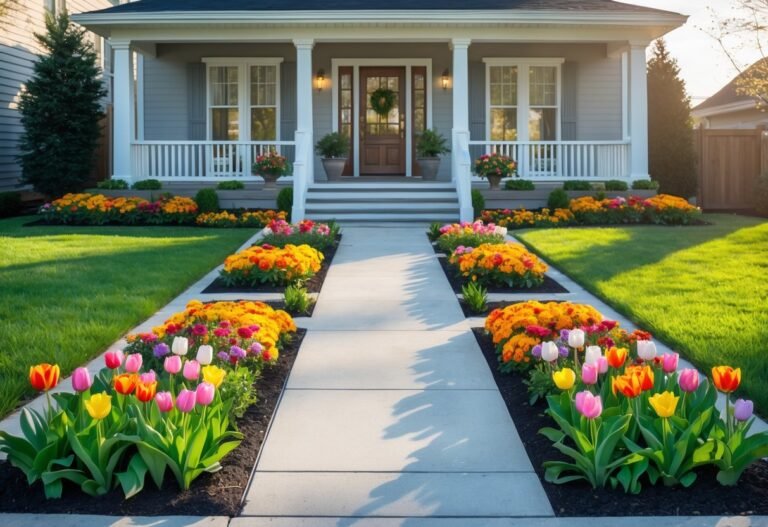
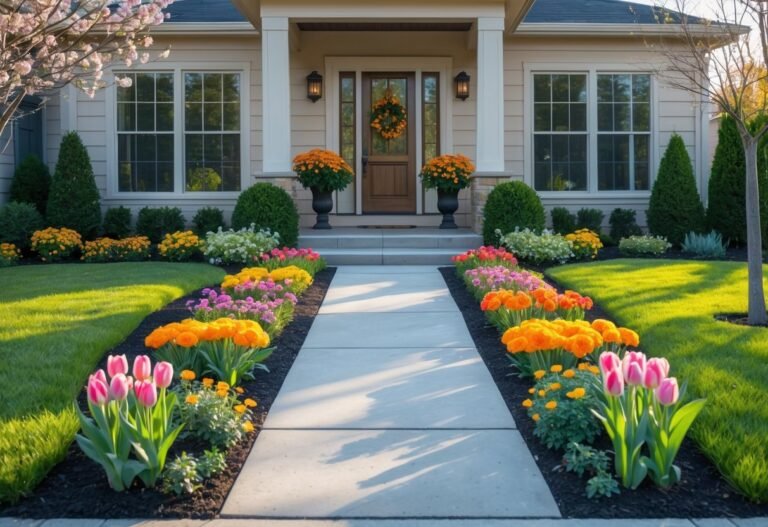
Apply color in layers. Put taller, darker tones at the back, mid-height colors in the middle, and bright or pale colors at the front. This helps the eye move naturally through the bed.
Incorporating Focal Points
Decide what you want viewers to notice first. A sculpture, specimen tree, water feature, or a bold container can serve as a focal point. Place it where paths meet, at the end of a sightline, or in a clearing to draw attention.
Use scale and contrast to make the focal point readable. A small statue needs a planted backdrop; a large boulder should sit on lower plants. Add lighting to important features so they work at night.
Limit focal points to one or two per view. Too many competing features create clutter. Repeat a material or color from the focal point elsewhere to tie the design together.
Creating Visual Flow
Guide the eye with lines and repetition. Use curving paths, repeating plant shapes, or recurring colors to lead people through the garden. Change textures slowly so transitions feel natural.
Frame views with plants at different heights. Low edging plants set the foreground, mid-size shrubs define the middle ground, and trees form the background. This layered approach creates depth and makes movement predictable.
Consider sightlines from key positions like the house, patio, or gate. Arrange plants so each view ends at a resting point—such as a focal plant or open lawn—so the eye can pause naturally.
Popular Garden Aesthetic Styles
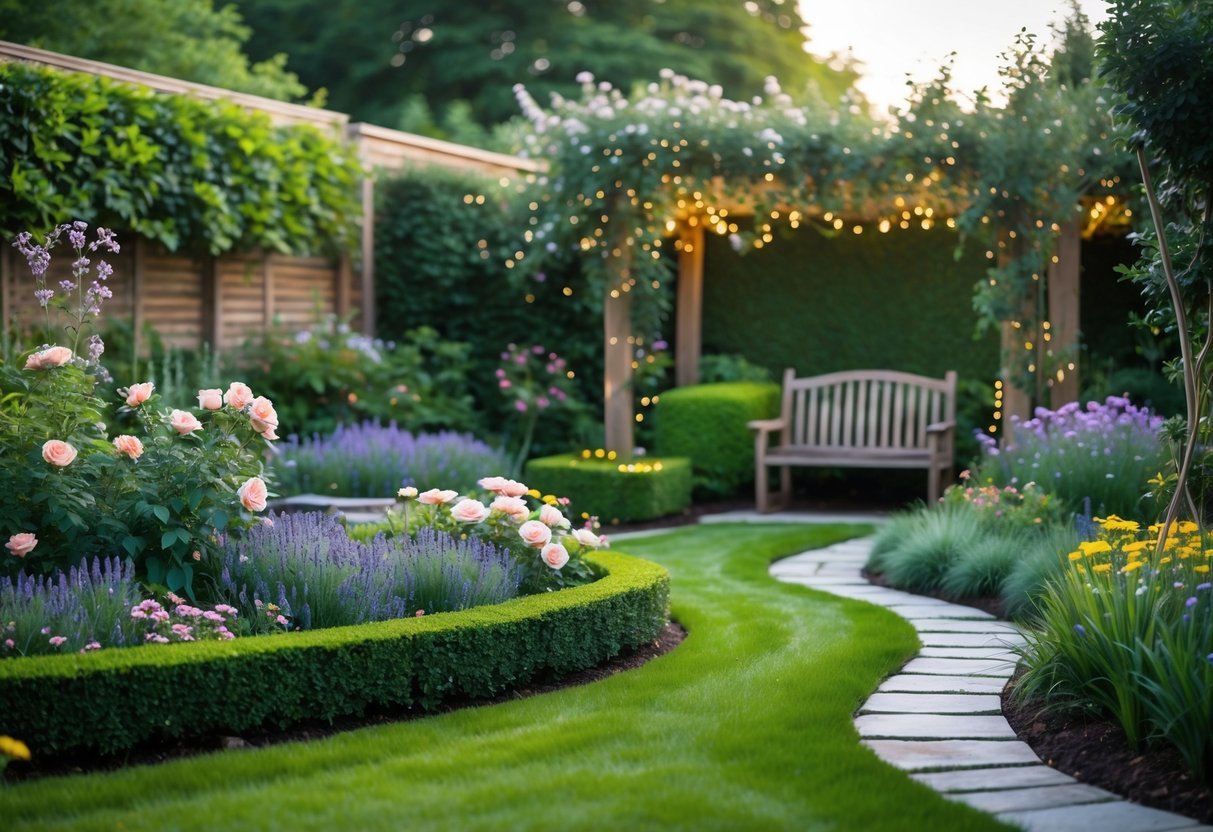
Choose a style that fits your site, budget, and how you want to use the space. Think about plant care, material costs, and the mood you want—calm, colorful, or simple.
Contemporary Minimalist Gardens
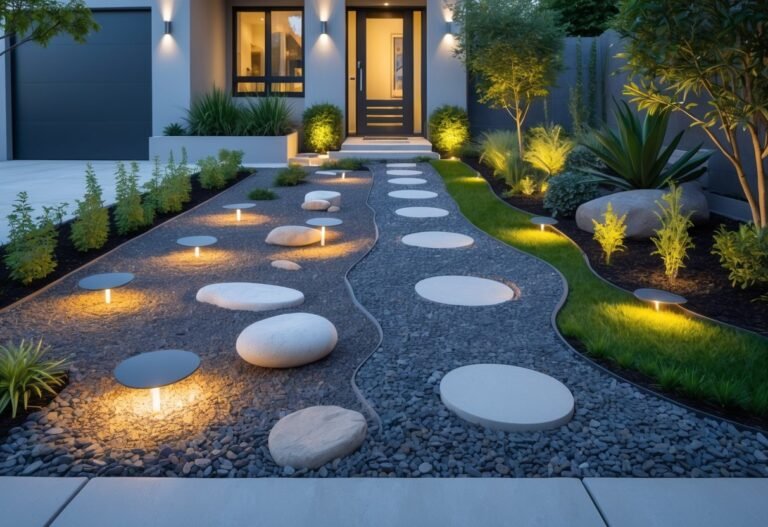
You focus on clean lines, simple plant palettes, and a few high-quality materials. Use concrete pavers, gravel, and steel edging to create crisp paths and defined beds. Limit plant choices to about three or four species that provide year-round form, such as ornamental grasses, boxwood, and a sculptural tree.
Keep maintenance low by using mulch and drip irrigation. Arrange plants in blocks or rows rather than mixed masses to emphasize shape. Add a single strong focal point—like a bench, water bowl, or metal sculpture—to anchor the view. Lighting should be subtle and directional to highlight textures at night.
Cottage Garden Charm
You aim for a lively, layered look with dense plantings and mixed colors. Combine perennials (lavender, foxglove, coneflower) with climbing roses and edible herbs. Plant in informal drifts and fill gaps with annuals to keep blooms continuous.
Paths of reclaimed brick or crushed stone add a rustic touch. Use varied heights—tall back borders, medium centers, low edging—to create depth. Add simple features like an arched trellis, birdbath, or painted wooden bench to enhance the cozy feel. Expect regular deadheading, pruning, and seasonal replenishing of soil and plants.
Japanese Zen Inspirations
You prioritize calm, balance, and mindful detail. Choose a restrained palette: moss, bamboo, maples, and evergreens. Hardscape plays a big role—raked gravel, stepping stones, and low timber fences create structure and rhythm.
Design with asymmetry and negative space to invite contemplation. Include water in a small basin or narrow stream for gentle sound. Place elements with intent: a lantern near a path, a singular stone as a focal point, and low plantings to maintain sightlines. Plan for moss-friendly soil and shaded spots, and maintain the space with careful pruning and regular sweeping.
Innovative Garden Design Ideas
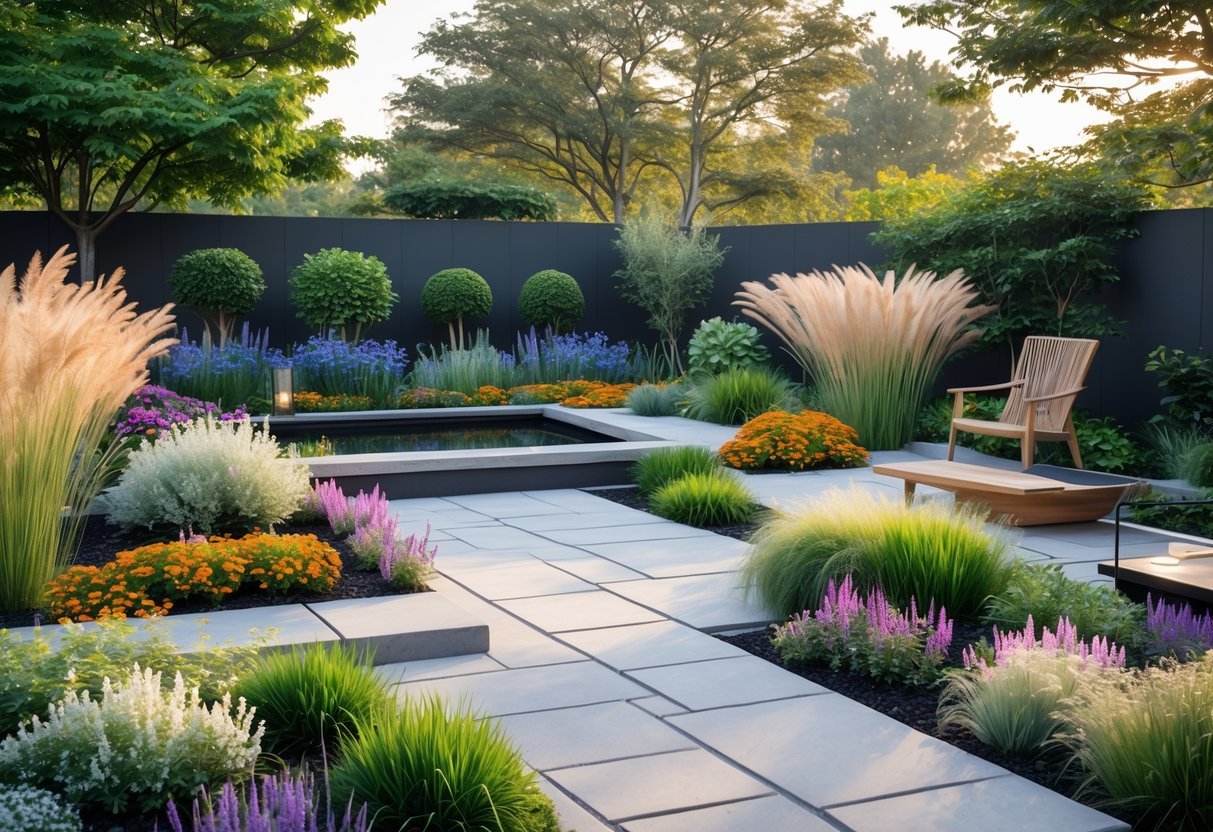
You can add height, food, wildlife value, and sculptural focus to your garden. Each idea below gives practical steps you can use to make those features work in small or large spaces.
Vertical Gardens and Living Walls
Vertical gardens let you grow dozens of plants in a small footprint. Use modular panels, pocket systems, or stacked planters fixed to a wall or fence. Choose a lightweight medium like coco coir or felt pockets and a drip irrigation line to keep watering even.
Pick plants by light: succulents and sedums for bright sites; ferns and begonias for shade. Anchor heavier pots to studs or a sturdy frame. Include a shallow trough at the base to catch run-off and redirect water to other beds.
Maintenance focuses on pruning, replacing spent plants, and flushing salts from the medium every few months. Rotate seasonal plants to refresh color and texture. Vertical systems work well on patios, balconies, and sheltered exterior walls.
Edible Landscapes
You can blend beauty and harvest by mixing vegetables, herbs, and fruit with ornamentals. Plant pathways edged with thyme or chives, and place berry canes as living screens. Use raised beds and container clusters to control soil, drainage, and access.
Design for succession: sow salad greens in spring, follow with beans or squash, and finish with cool-season brassicas. Incorporate dwarf fruit trees in containers or espalier against a fence to save space and add form. Mulch beds with compost to retain moisture and feed plants.
Plan for ease of harvest: keep taller crops to the back, use trellises for vining crops, and leave 18–24 inches around beds for access. Protect young plants with netting or cloches to reduce bird and pest damage.
Wildlife-Friendly Features
Invite birds, bees, and beneficial insects by providing food, water, and shelter. Plant native flower clusters in different bloom times to offer nectar all season. Add a shallow birdbath or drip fountain and keep a log or brush pile for shelter.
Avoid broad-spectrum pesticides; use hand removal and targeted traps instead. Provide nesting options like bee hotels for solitary bees and native shrubs with dense cover for birds. Include seed-bearing plants such as coneflowers and grasses for winter food.
Place features strategically: water near seating so you can observe wildlife, and group flowering plants to make foraging efficient. A small native-plant patch requires less water and boosts local biodiversity.
Sculptural Plant Arrangements
Use bold shapes and contrast to create focal points. Combine architectural plants—boxwood, agave, or ornamental grasses—with seasonal color to maintain interest. Arrange in odd-number groupings (3–5) for a natural look.
Think in layers: a strong structural plant at the back, mid-height flowering plants, and a low groundcover in front. Use containers of varying heights and materials (stone, corten steel, ceramic) to add texture and form. Repeat a plant or color three times across the garden to tie the design together.
Prune to preserve silhouette and remove competing shoots. Change seasonal fills in containers to keep the main sculpture visible year-round.
Personalizing Your Outdoor Space
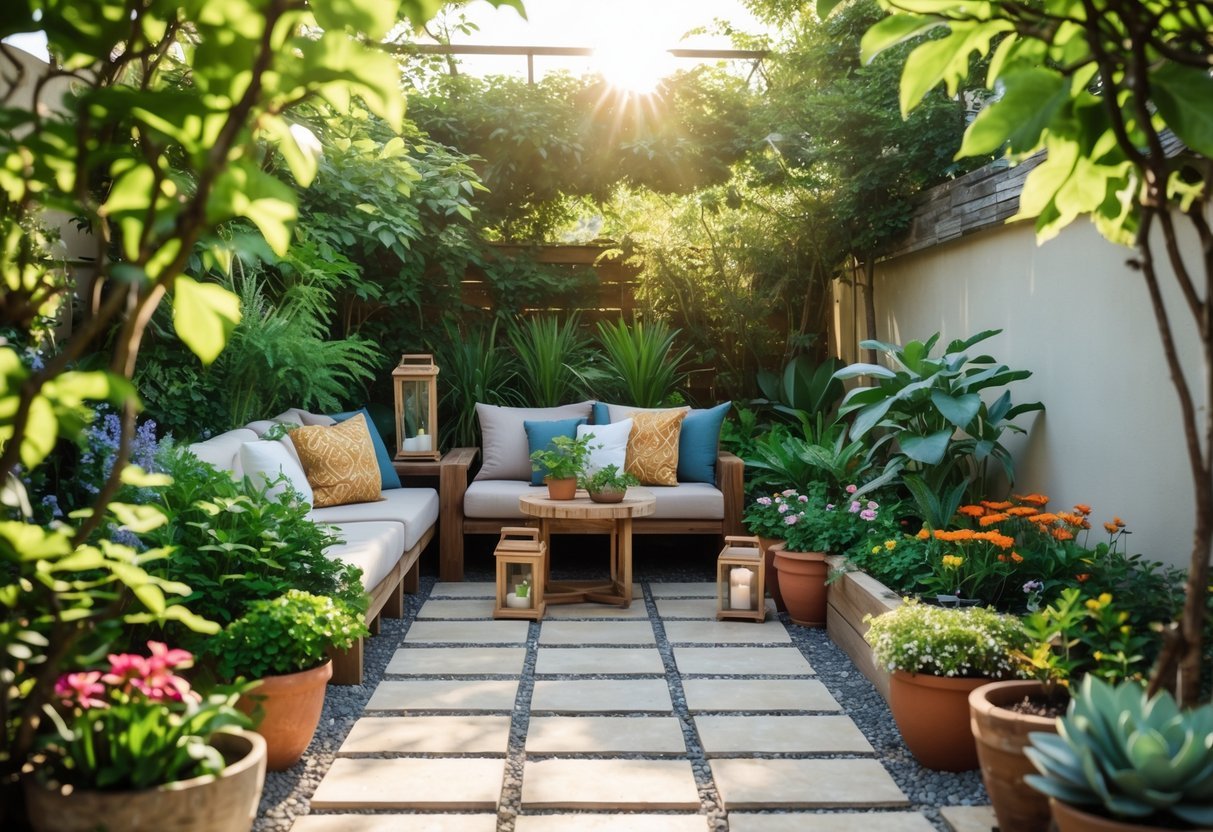
Choose pieces that match how you use the space, the look you like, and the climate where you live. Focus on three areas: visual accents, layered lighting, and furniture that fits your size and routines.
Using Art and Decorative Elements
Pick art that holds meaning or fits a clear style, such as metal wall sculptures for modern gardens or painted wooden signs for cottage looks. Place taller items like sculptures near paths or at focal points so they draw the eye without blocking movement.
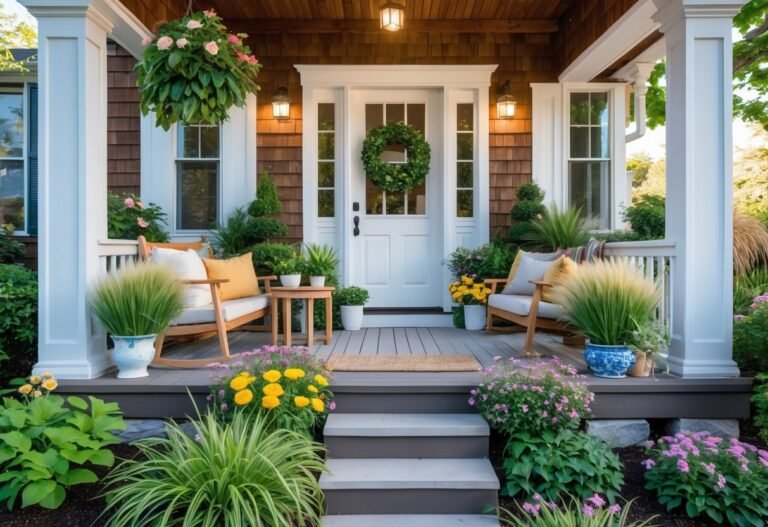
Use containers and planters as decorative elements. Group three pots of different heights and similar colors to create a small vignette by a door or bench. Hang small pieces—wind chimes, macramé, or ceramic plates—on a fence or pergola to add vertical interest.
Include one or two statement items rather than many small decorations. Too many pieces make the space feel cluttered. Rotate seasonal items—pumpkins in fall, ceramic birds in spring—to keep the space feeling fresh.
Lighting to Enhance Mood
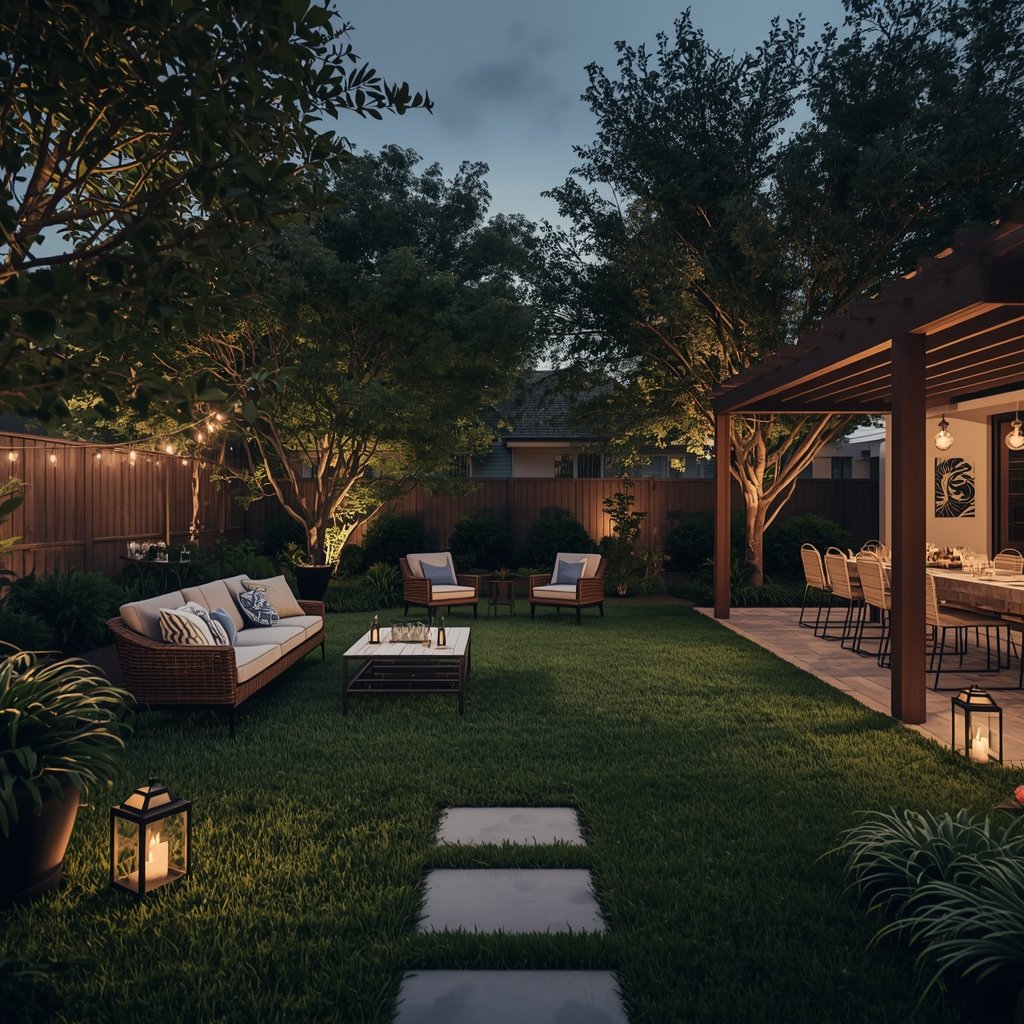
Layer three types of lighting: task, ambient, and accent. Task lights go near seating and work areas—clip-on lamps for an outdoor table or a bright wall sconce by a grill. Ambient lighting covers broad areas with string lights, lanterns, or low bollards to create safe, even glow.
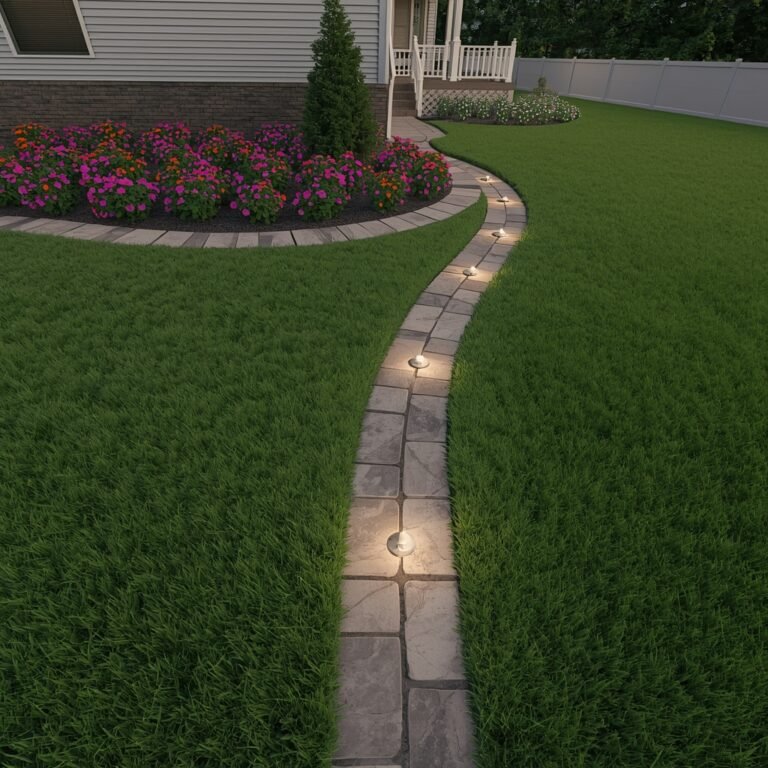
Add accent lights to highlight features: uplights for specimen trees, spotlights for sculptures, and small stake lights to show a path. Use warm white LEDs (2700K–3000K) to make skin tones and plant colors look natural.
Include switches or smart bulbs so you can dim lights for dinner or boost them for gatherings. Solar lights work well for low-use spots, but wired fixtures give steadier brightness for main entertaining zones.
Outdoor Furniture Selection
Measure your space before buying. Leave at least 3 feet (about 1 meter) for walkways and 18–24 inches between seating and tables for legroom. Choose furniture materials that match your climate: teak or aluminum for wet areas, powder-coated steel for mixed climates, and synthetic wicker for sunny patios.
Pick seat heights and cushion depths that match how you sit. Deep seats suit lounging; upright chairs suit dining. Focus on one cohesive color palette—two main colors and one accent—to keep the area visually calm.
Consider modular pieces for flexibility: a sectional you can reconfigure or benches with built-in storage for cushions and garden tools. Test cushions for water resistance and quick-dry foam if you expect rain.
Frequently Asked Questions
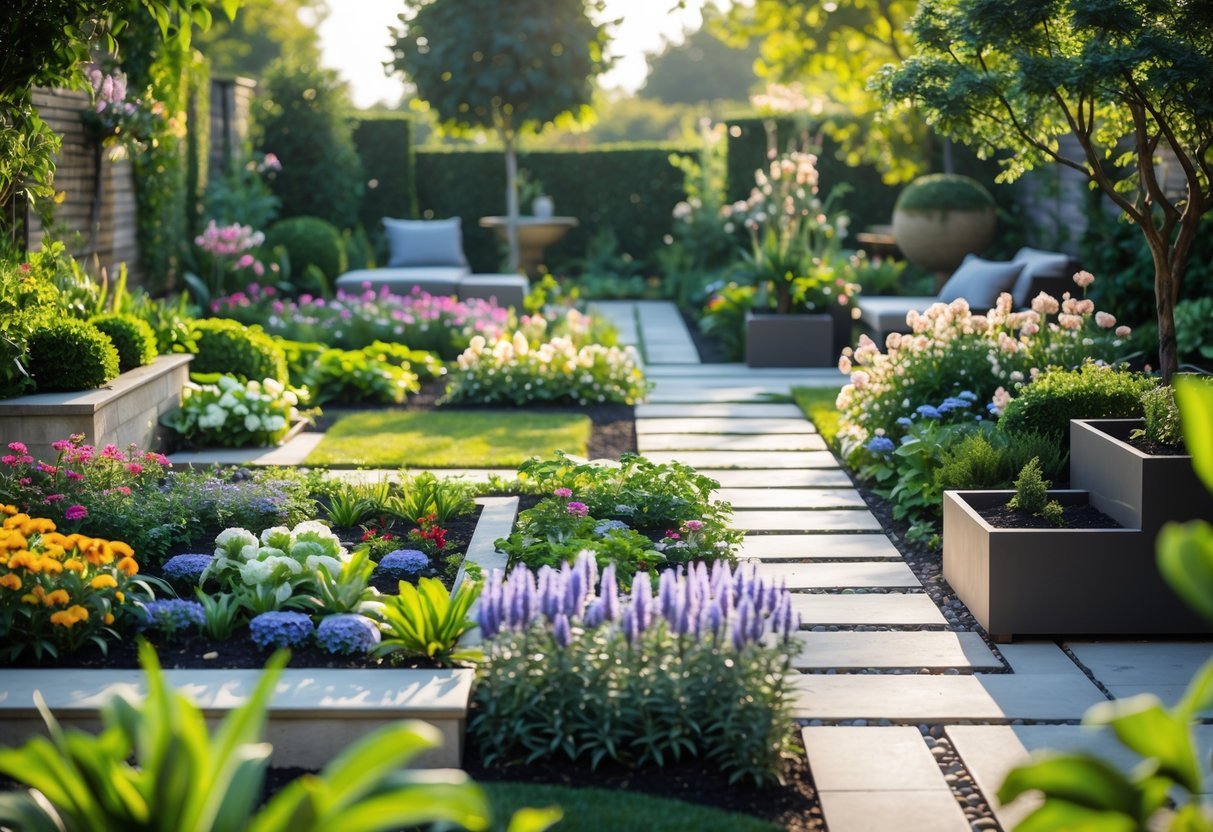
These answers show specific steps you can take, like choosing compact plants, using raised beds, adding simple paths, and picking a clear color palette. Each item focuses on practical choices you can apply right away.
What are essential elements to include for a small garden to enhance its aesthetic appeal?
Use a clear focal point such as a sculpture, a small tree, or a water feature to draw the eye.
Keep plant sizes small or layered: low groundcover, medium shrubs, and one taller accent plant.
Choose multi-use items like benches that double as storage or raised beds that act as borders.
Limit your color palette to two or three main colors to avoid visual clutter.
How can I incorporate a vegetable patch into my aesthetic garden design without compromising style?
Use raised beds with clean edges in wood or metal to create neat, defined vegetable zones.
Frame beds with low hedges or gravel paths to make the patch look intentional and tidy.
Mix vegetables with flowering herbs and edible flowers for color and texture.
Label beds with simple signs or uniform plant markers to keep the area organized and visually pleasing.
What are some budget-friendly ideas to elevate the aesthetic of my garden?
Reuse materials like pallets for planters or old bricks for edging to save money.
Add mulch or gravel to paths; both are low-cost and instantly neaten beds.
Plant perennials and bulbs for long-term color without yearly replanting.
Paint worn fences or pots a single color to create a cohesive look at low cost.
How can one draw inspiration from Pinterest to create an aesthetic garden space?
Create a dedicated board for gardens you like and pin only images that show specific features you want.
Look for repeat elements—materials, colors, or layouts—and note which you can realistically copy.
Save close-up photos of plant combinations and hardscape details rather than wide shots alone.
Use notes on each pin with measurements or plant names to make execution easier.
What are some simple changes that can significantly improve the aesthetic of a garden area?
Define edges with clean borders or narrow paths to make beds look intentional.
Clear clutter and group similar items, like pots or tools, in one tidy spot.
Add lighting along paths or near a focal point to extend use into evenings.
Swap a few tired plants for bold foliage or seasonal blooms to refresh the look quickly.
What current garden design trends can help achieve a modern aesthetic look?
Use native and drought-tolerant plants to create low-maintenance, modern planting schemes.
Choose simple materials—concrete, corten steel, smooth gravel—and repeat them across the space.
Favor geometric beds, straight lines, and open sightlines for a contemporary feel.
Incorporate multifunctional features like built-in seating or planters that double as room dividers.