Romantic Front Yard Flower Bed Ideas with Cottage Garden Blooms & Front Entry Landscaping Tips
Transform your front yard into a cozy, romantic space by choosing soft, layered flowers and a clear path that leads guests to your door. Use cottage garden blooms like roses, peonies, and lavender with simple edging and a welcoming walkway to create instant curb appeal and a warm entryway.
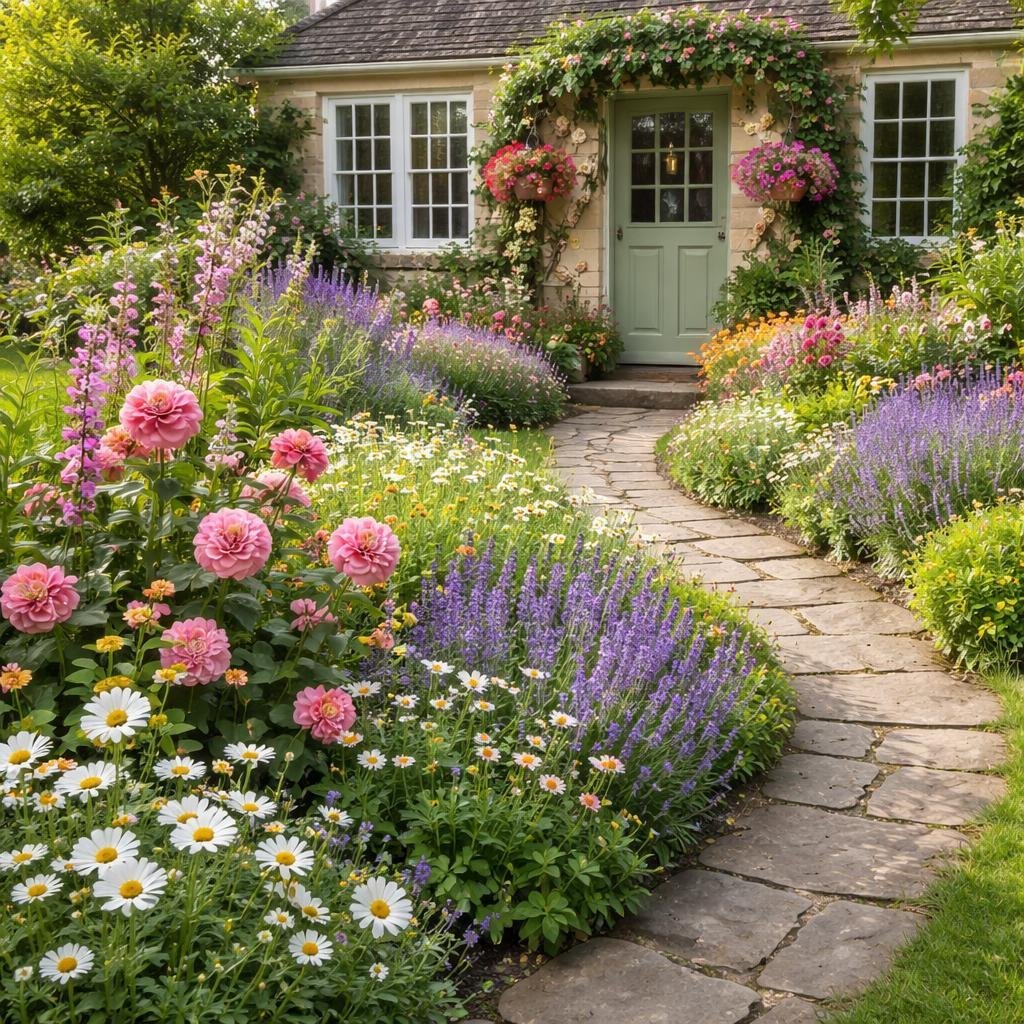
You will learn practical layout ideas, plant pairings that look charming together, and low-effort care tips that keep the bed lush through the seasons. Small personal touches—a bench, climbing roses on an arch, or vintage-style edging—turn a pretty bed into a place you and others will want to linger.
Key Takeaways
- Plan a layered layout and a clear path to frame your front entry.
- Pick cottage-style blooms that mix color, scent, and seasonal interest.
- Use simple maintenance and personal accents to keep the space inviting.
Planning A Romantic Front Yard Flower Bed
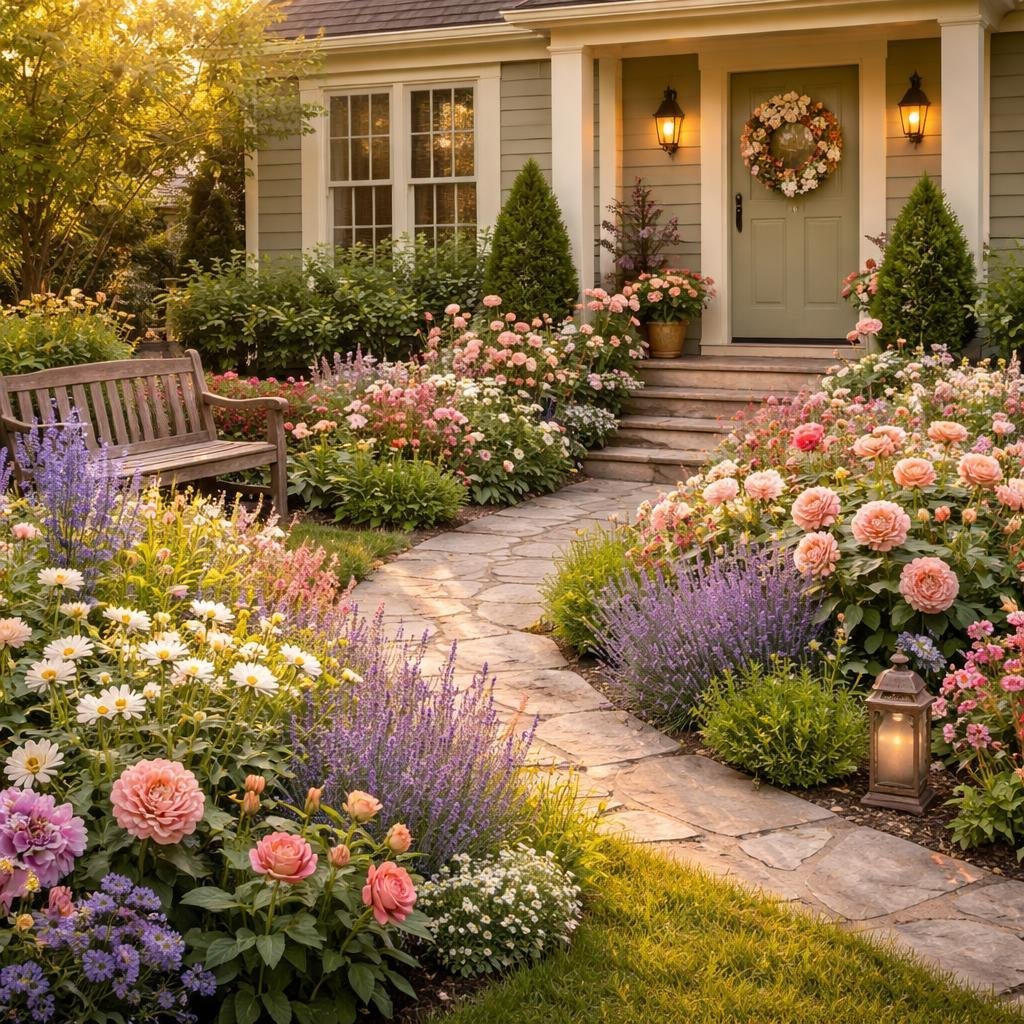
Focus on sunlight, sight lines from the street and entry, and paths that invite walking. Pick spots that get the right light, frame your door, and lead visitors with gentle curves and layered plants.
Choosing The Best Location And Layout
Stand at your front door and look outward. Note how many hours of sun each area gets and mark spots that get full sun (6+ hours), part sun (3–6 hours), or shade (under 3 hours). Place sun-loving roses, zinnias, and lavender where they get full sun. Put ferns, hellebores, and hostas in shadier pockets.
Sketch a simple plan to scale on graph paper or use an app. Show the house, walkways, and utilities. Place taller plants and climbing roses toward the back near the house. Use medium shrubs and seasonal perennials in the middle, and low groundcovers or edging flowers at the front. Leave 18–36 inches between plants for mature size. This prevents crowding and keeps the romantic, airy feel.
Incorporating Flowing Pathways
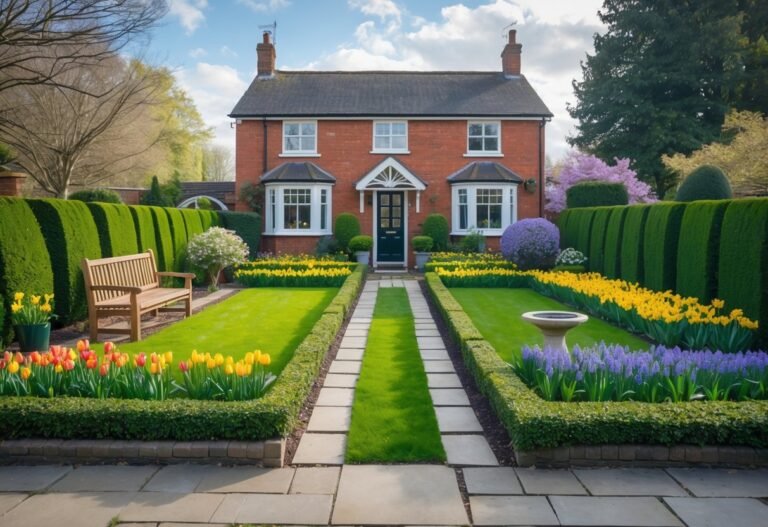
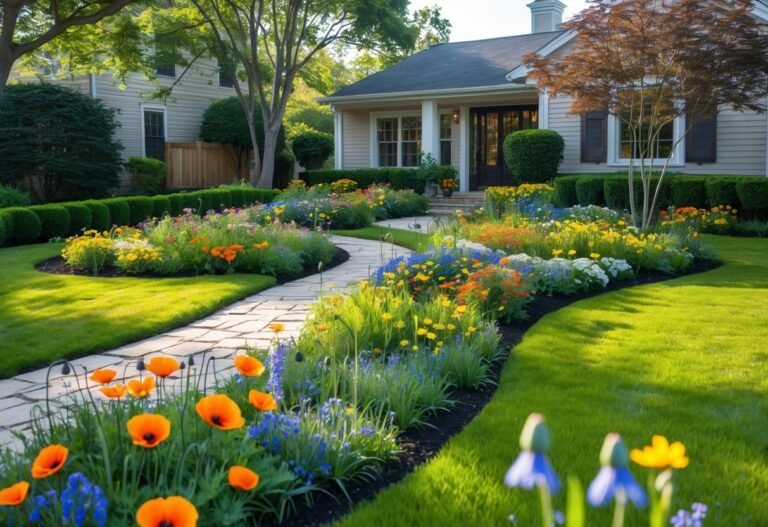
Choose soft, curved paths rather than straight lines to make the approach feel welcoming. Use materials like crushed gravel, brick, or irregular pavers set in groundcover to keep a cottage look. Aim for a path width of 36–42 inches for comfortable two-way walking.
Add small breaks where a bench, urn, or a cluster of tall roses can sit. These pauses create focal points and make the walk feel like a slow reveal. Plant low, fragrant flowers—lavender, catmint, or sweet alyssum—along path edges to release scent as you pass. Use edging stones or low hedges to keep mulch and soil from washing onto the path.
Balancing Color And Texture
Pick a restrained palette of three to five colors to keep the bed cohesive. Combine soft pastels—pale pink, cream, and lavender—with one deeper accent like burgundy or blue to add depth. Repeat colors in clusters across the bed to guide the eye.
Mix plant textures: feathery grasses, chunky rose blooms, glossy-leaf shrubs, and lacy foxgloves. Layer height from tallest at the back to lowest at the front for visual balance. Include evergreen shrubs or clipped boxwood for structure and winter interest. Stagger bloom times by planting early bulbs (tulips), spring perennials (delphinium), summer bloomers (peonies, roses), and fall asters to keep the bed romantic through the seasons.
Selecting Cottage Garden Blooms For Curb Appeal
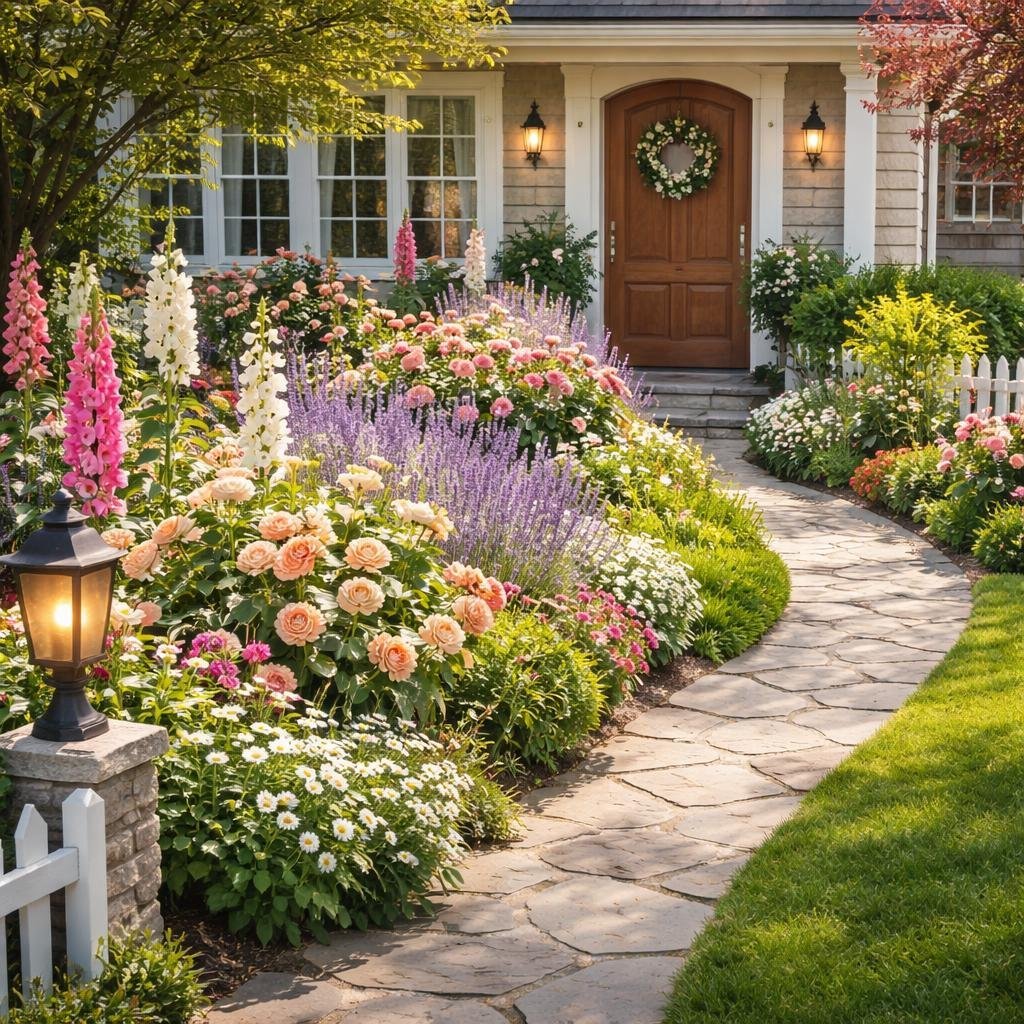
Choose plants that give scent, texture, and lasting color. Pick varieties that fit your soil, sun exposure, and the space near your front entry.
Romantic Flower Varieties
Select flowers known for soft shapes and perfume. Peonies offer large, showy blooms in late spring and create a dramatic focal point near the walkway. Roses—especially old garden or English roses—give classic fragrance and repeat blooms if you choose shrub or landscape types. Foxgloves and delphiniums add vertical interest; plant them behind lower border plants so they frame a path or porch.
Include smaller companions like lavender, salvia, and catmint for blue-purple tones and scent. Use pastel annuals such as cosmos or sweet peas in containers or gaps for extra romance and quick color. Avoid overly tall plants that block sightlines to your door.
Year-Round Bloom Planning
Map out bloom times so your front bed rarely looks bare. Start with spring bulbs (tulips, daffodils) for early color. Follow with peonies, irises, and early-blooming perennials. Mid- to late-summer should feature roses, coneflowers, and salvias to carry the show through warm months.
Add fall interest with asters and sedum that hold color into October. Evergreen shrubs like boxwood or dwarf holly keep structure and color in winter. Create a simple calendar: list month, primary bloomers, and one filler plant to avoid long gaps.
Combining Perennials And Annuals
Rely on perennials for long-term structure and mix in annuals for instant color. Place perennials where you want permanence—near foundations and along borders. Use annuals in containers, window boxes, or front-row spots to change seasonal color quickly.
Use a planting ratio of about 70% perennials to 30% annuals to keep maintenance manageable. Group plants in odd-numbered clusters (3–5) for a natural look. Mulch around perennials to suppress weeds and keep soil moist. Stagger heights: tall perennials in back, mid-height in the middle, low groundcovers and annuals at the front to keep your entrance visible and inviting.
Designing Inviting Front Entry Landscaping
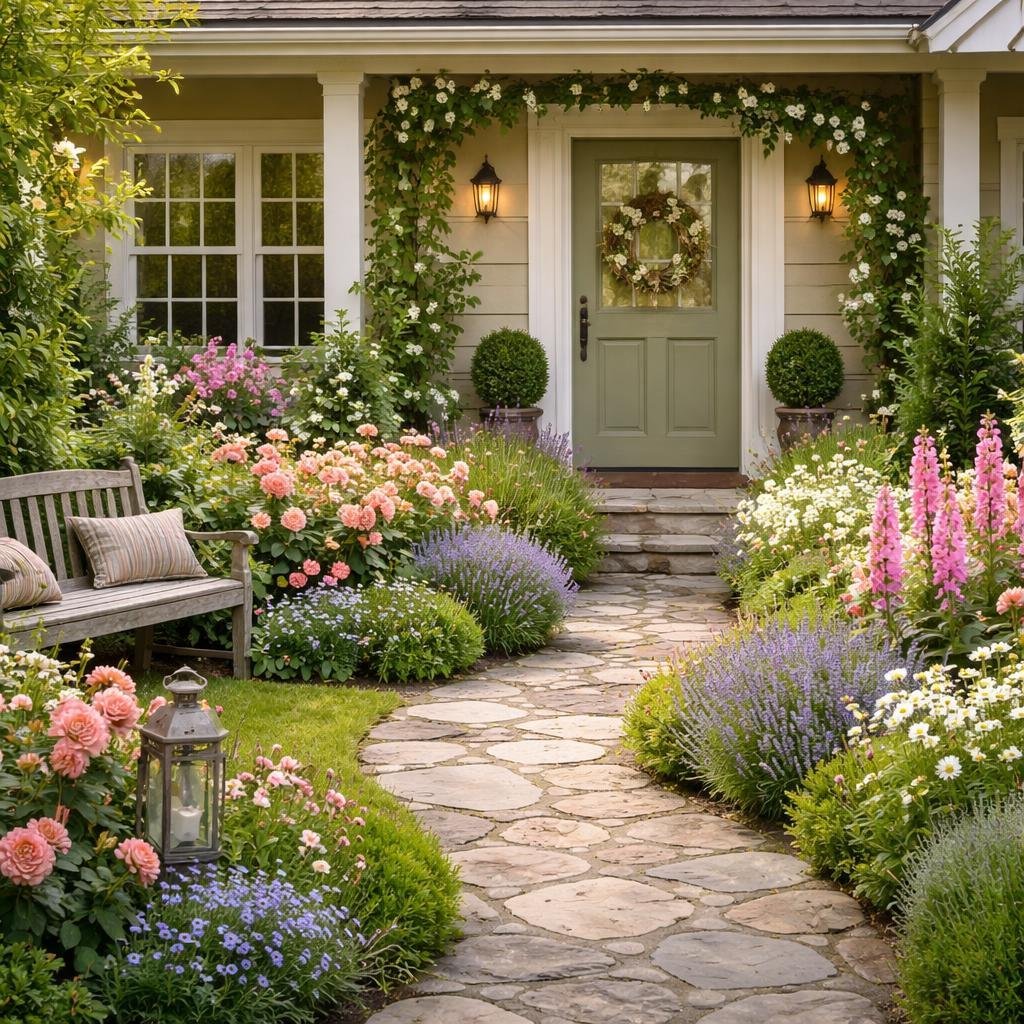
Focus on sight lines, scent, and easy access: frame the path with plants at different heights, add a scented climber near the door, and keep the main walk clear and well-lit.
Creating A Welcoming Entryway
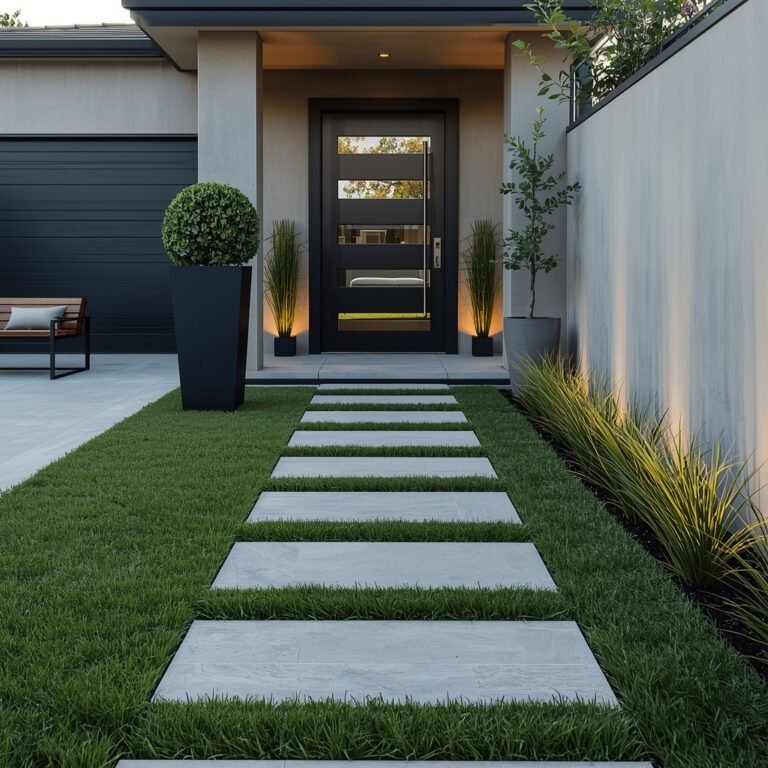
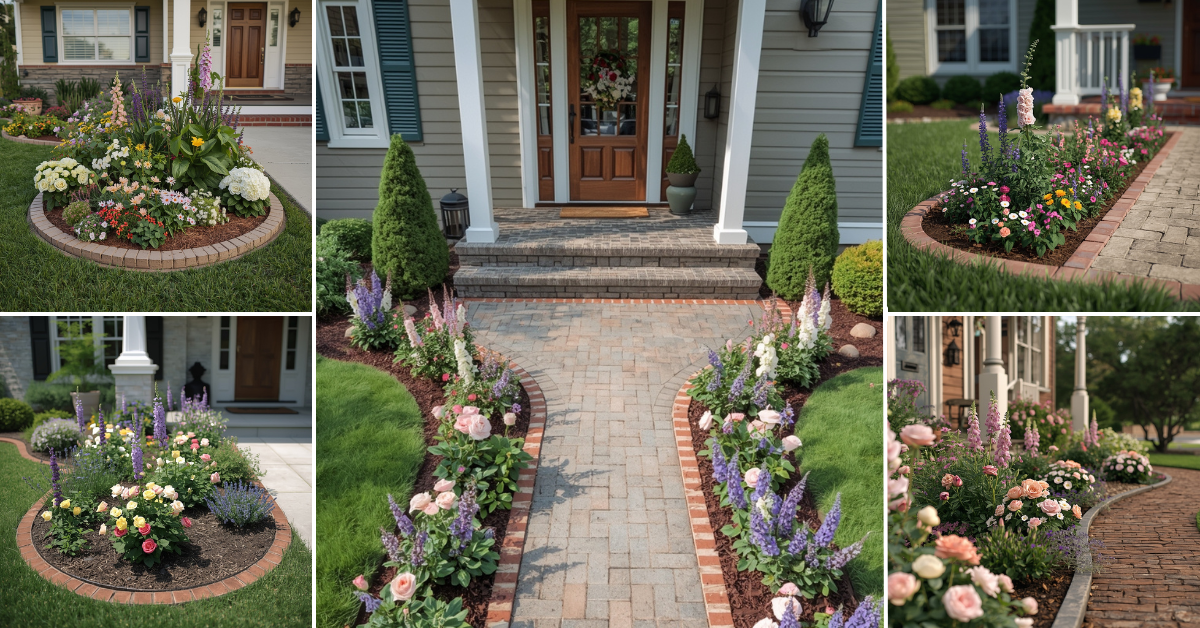
Place a clear path that leads the eye to your front door. Use a 3–4 foot wide walk made of pavers, gravel with stepping stones, or flagstone so two people can pass comfortably. Keep the surface even and add low edging to hold mulch or groundcover.
Frame the door with plants that bloom in sequence. Put taller shrubs or small trees (6–8 feet) back, mid-height perennials like foxglove or peonies in front, and edging plants such as thyme or dwarf lavender near the path. Add a fragrant climber, like a climbing rose or clematis, on an arbor or trellis so scent greets visitors as they arrive.
Include a small flat area for a bench or pair of chairs if space allows. This creates a pause point and makes the entry feel lived-in.
Hardscape Elements For Charm
Choose materials that match your home’s style. Use warm brick or tumbled stone for a cottage look, or reclaimed wood for a rustic touch. Mix textures—smooth pavers with rough stone—to add visual interest.
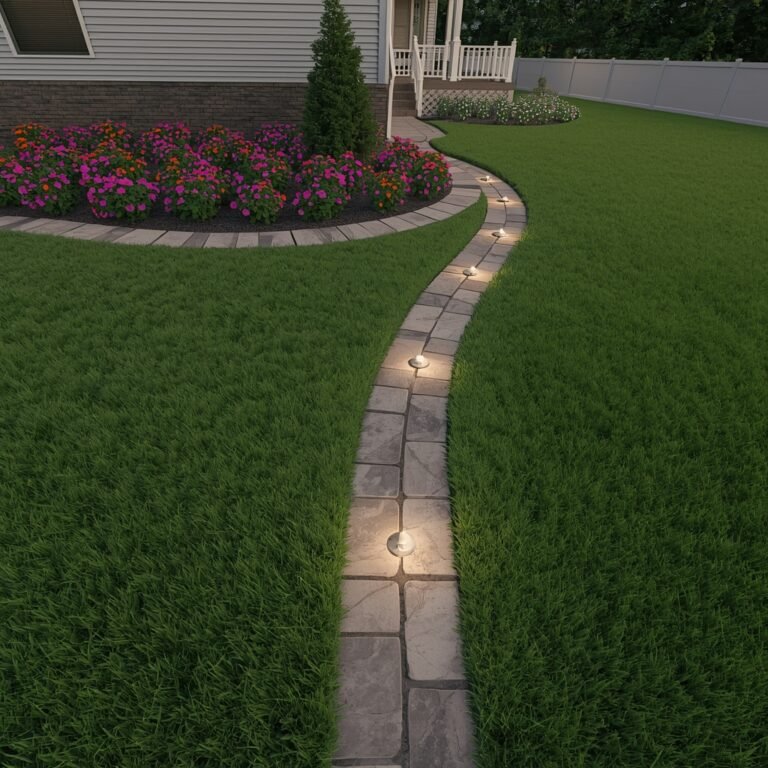
Add functional features: a low clipped hedge or stone border defines the bed edge and keeps mulch contained. Install 2–3 low bollard lights or path lights spaced 8–10 feet apart to highlight the walk and steps. Place one focal element, such as a birdbath or urn, at a natural stopping point to anchor the view.
Keep maintenance in mind. Use permeable surfaces for drainage and set edging to prevent grass invasion.
Care And Maintenance Tips For Lush Flower Beds
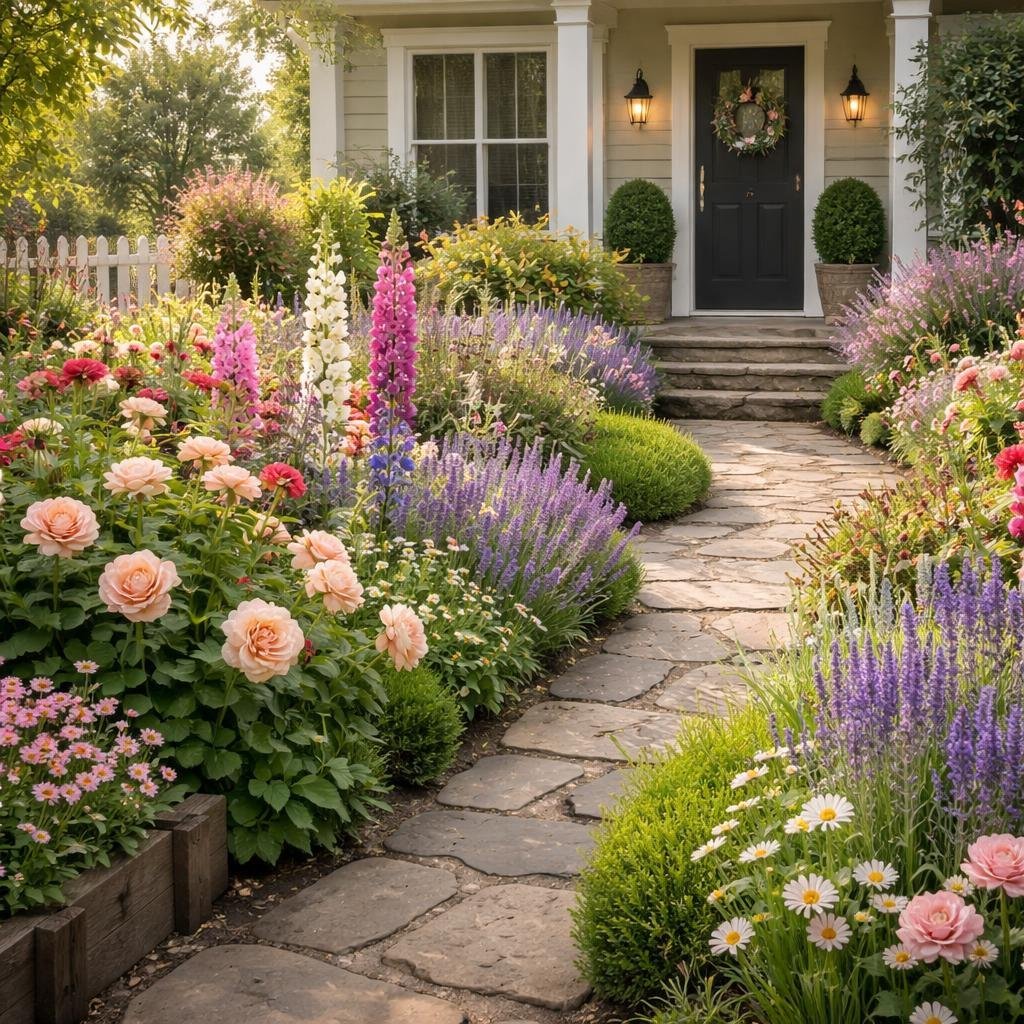
Keep soil rich, water wisely, and prune regularly to encourage strong growth and long bloom times. Focus on deep watering, steady nutrient replenishment, and timely deadheading to keep cottage-style beds looking full and healthy.
Watering And Soil Preparation
Test your soil pH with a kit. Most cottage garden flowers do best in slightly acidic to neutral soil (pH 6.0–7.0). Add 2–3 inches of compost and mix into the top 6–8 inches of soil before planting to improve structure and fertility.
Water deeply at the base of plants rather than frequent shallow sprinkling. Aim for 1–1.5 inches of water per week from rain plus irrigation. Use a soaker hose or drip line to keep foliage dry and reduce disease.
Mulch 2–3 inches around plants with shredded bark or leaf mold. Mulch keeps soil moist, suppresses weeds, and slowly adds organic matter as it breaks down. Replenish mulch each spring.
Pruning For Continuous Blooms
Deadhead spent flowers regularly to encourage more blooms. Pinch off faded blooms at the stem base or use clean pruners for tougher stems. For roses, remove spent blooms and thin crossing canes in early spring.
Cut back perennials in late fall or early spring depending on the plant. Remove old, woody growth from shrubs after flowering to open the center and improve air flow. Do light shaping during the season to keep paths and entries neat.
Sanitize pruning tools between plants to prevent disease spread. Use sharp shears and make clean cuts at a 45° angle about 1/4 inch above a healthy bud.
Adding Personal Touches To Enhance Romance
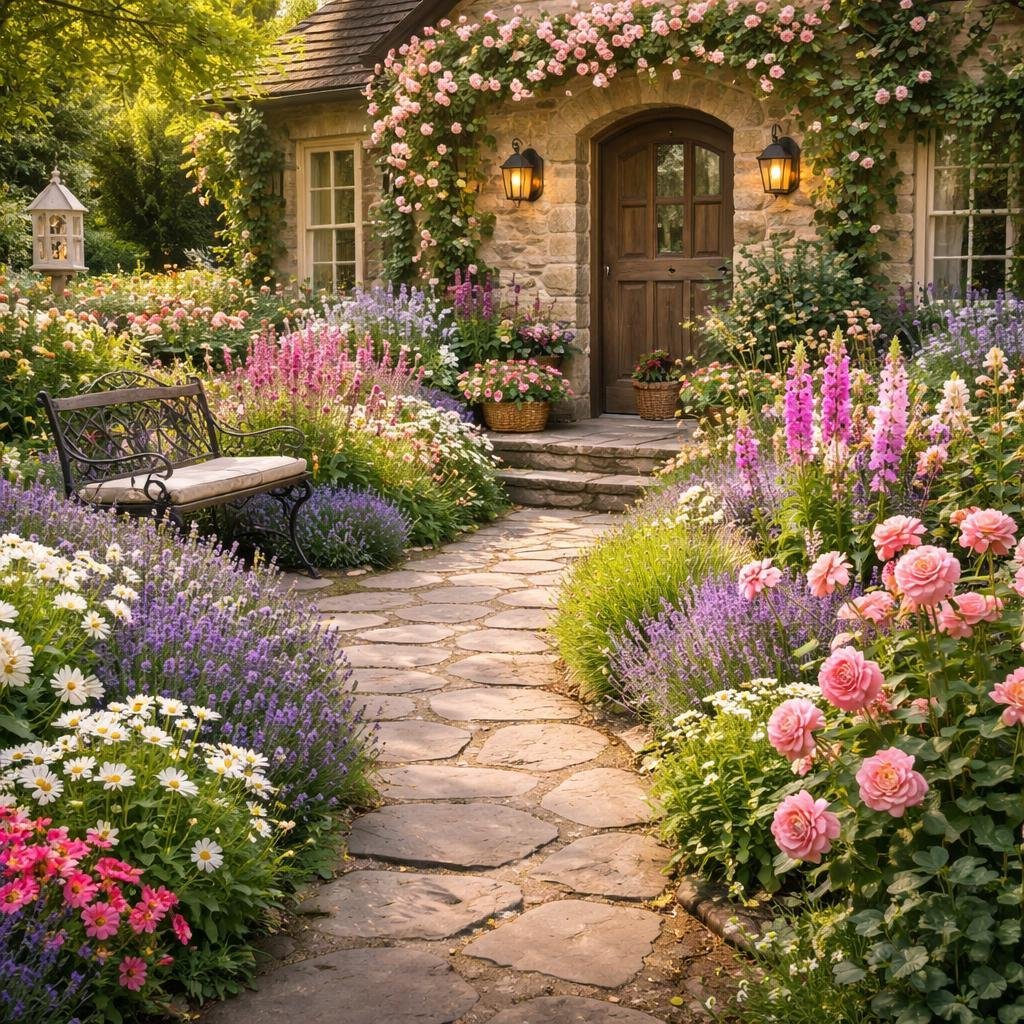
Add small, tactile elements and soft lighting to create a warm, private feel. Choose items that match your cottage style and are weatherproof.
Decorative Features And Accents
Pick a focal accent like a vintage wooden bench or a wrought-iron bistro set placed near a flower bed edged with lavender and roses. Position a birdbath or a small stone fountain within sight of the entry to add gentle sound and a lived-in look.
Use planters and containers in mixed heights—galvanized tubs, terra-cotta pots, and hanging baskets—to layer color and texture. Anchor paths with low boxwood or thyme borders and add a trellis with climbing sweet peas or clematis for vertical interest.
Include personal items: a favorite lantern, a framed garden sign, or a stash of seasonal cushions in muted florals. Make sure materials resist moisture and sun. Secure lighter pieces so wind won’t scatter them.
Lighting For Evening Ambiance
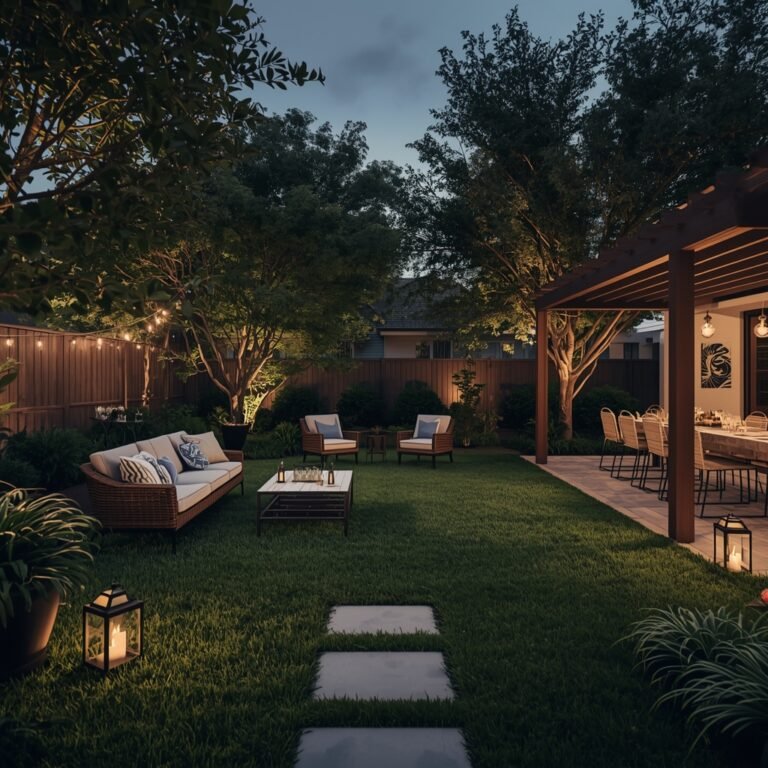
Place warm-white string lights along the eaves or woven through a pergola for soft, even glow. Aim for 2700–3000 K bulbs to keep light warm and flattering to skin and blooms.
Line walkways with low solar stake lights or LED bollards set on dimmers to guide guests without glare. Use spotlights pointed upward on a specimen shrub or arch to create depth and shadow.
Add focused task lighting near seating—small table lamps rated for outdoor use or shielded downlights—to make reading and dining comfortable. Use timers or smart plugs to automate dusk-to-dawn operation and preserve bulbs.
Frequently Asked Questions
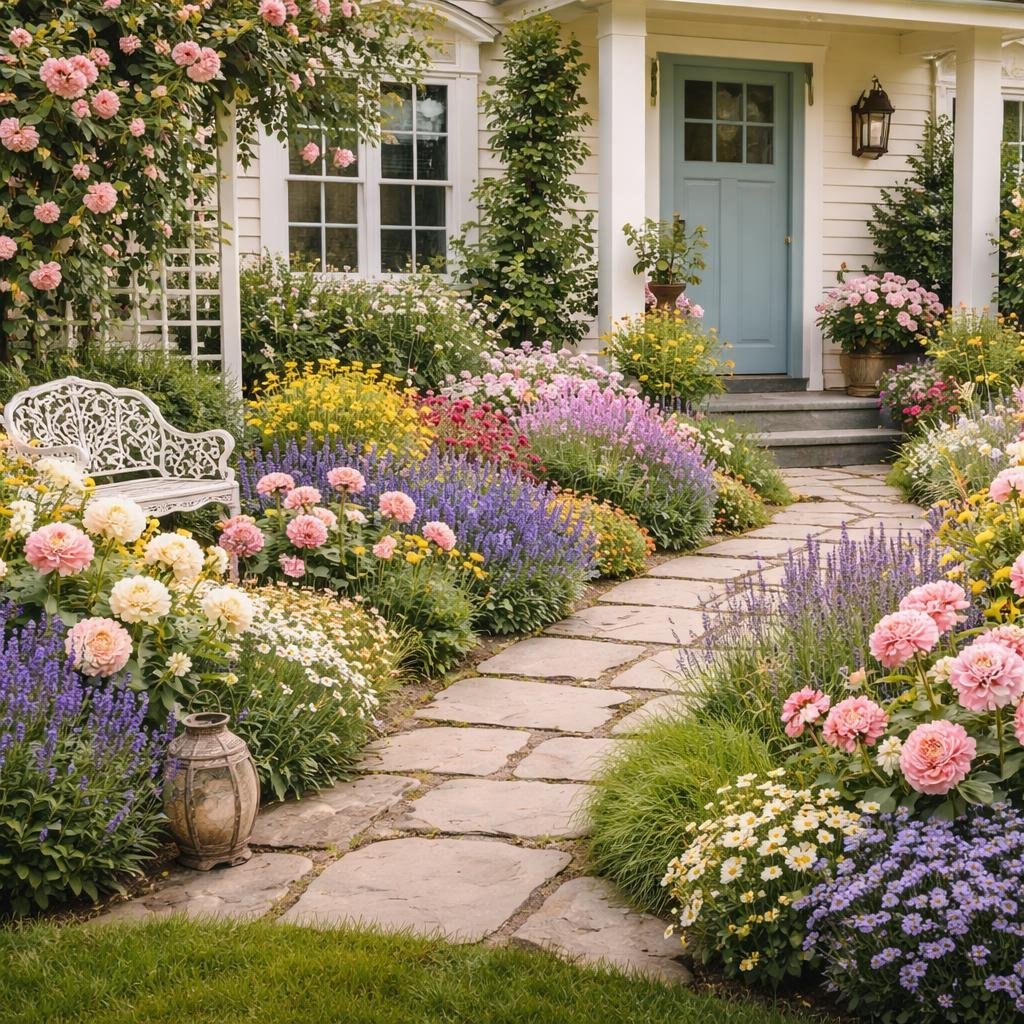
These answers give clear, practical steps for planting, layout, and decor. You will find plant choices, layout tips, and simple installation steps to make a romantic cottage-style front yard.
What are some simple yet romantic cottage garden flower bed designs for front yards?
Pair a curved border bed with a low clipped hedge to frame your entry and add structure. Plant mixed-height layers: tall climbers near a porch, mid-height perennials in the middle, and low edging plants at the walk.
Use repeating color groups—soft pinks, whites, and lavender—to create a cohesive, romantic look. Add a few focal plants like roses or peonies and repeat them across beds for unity.
How do you design a cottage garden landscape for a welcoming front entry?
Center a path that leads the eye to your door and flank it with symmetrical or mirrored beds for a tidy, inviting feel. Place a focal point—an arbor, bench, or container—near the door to draw attention.
Soften hard edges with drifts of perennials and trailing plants. Add scent near the entry: lavender, sweet peas, or climbing roses work well.
Which flowers should I choose for long-lasting blooms in my romantic cottage garden?
Choose a mix of perennials and repeat-blooming annuals for continuous color. Good perennials: daylilies, coreopsis, salvia, and peonies; repeat-blooming shrubs: roses and hydrangeas.
Add annuals like cosmos, zinnias, and geraniums for filler and color between perennial cycles. Plant staggered bloom times—early bulbs, spring perennials, summer shrubs, and fall asters—to extend the season.
What are the best practices for creating a cottage garden walkway that complements the front yard?
Pick a material that matches your home: reclaimed brick, crushed gravel, or natural flagstone suit cottage style. Keep the path gently curved and about 3–4 feet wide for comfort.
Edge the walkway with low plants like lavender or thyme to create fragrance and soften edges. Use irregular shapes and mixed materials for a relaxed, handmade look.
Can you suggest some farmhouse rustic garden decor ideas to enhance a romantic cottage garden atmosphere?
Use a weathered wooden bench or an old iron gate as focal points. Add galvanized containers, vintage watering cans, or a wire cloche for small accents.
Hang a simple porch lantern or string soft white lights for evening glow. Keep decor limited and placed intentionally so plants remain the main focus.
What are the essential steps in designing a cottage garden from scratch?
Start by mapping your space and noting sunlight, soil, and drainage in each area. Sketch a layout that includes a path, focal points, and layered planting zones.
Build soil with compost, then install paths and hardscape before planting. Plant in groups, repeat key plants for unity, mulch to retain moisture, and plan for maintenance like pruning and deadheading.