Front Porch Garden Design Ideas for Small Spaces: Practical, Low‑Maintenance Plans
You can turn your front porch into a garden that boosts curb appeal and invites you to sit and relax with a few smart choices in plants, containers, and layout. Pairing easy-care plants with layered containers and a clear path to the door gives you a welcoming, low-maintenance space that works for any season.
Choose a mix of hardy plants, varied container sizes, and simple seating to create a porch garden that looks intentional and stays easy to care for.
Use color, texture, and practical details like drainage and lighting to match your home’s style and make the space feel finished without adding a lot of work.
Key Takeaways
- Start with a clear layout and try plants that tolerate your porch light and wind.
- Use varied pots and heights to add visual interest with minimal effort.
- Add practical touches like drainage, lighting, and seasonal swaps to keep the porch inviting.
Key Elements of Front Porch Garden Design
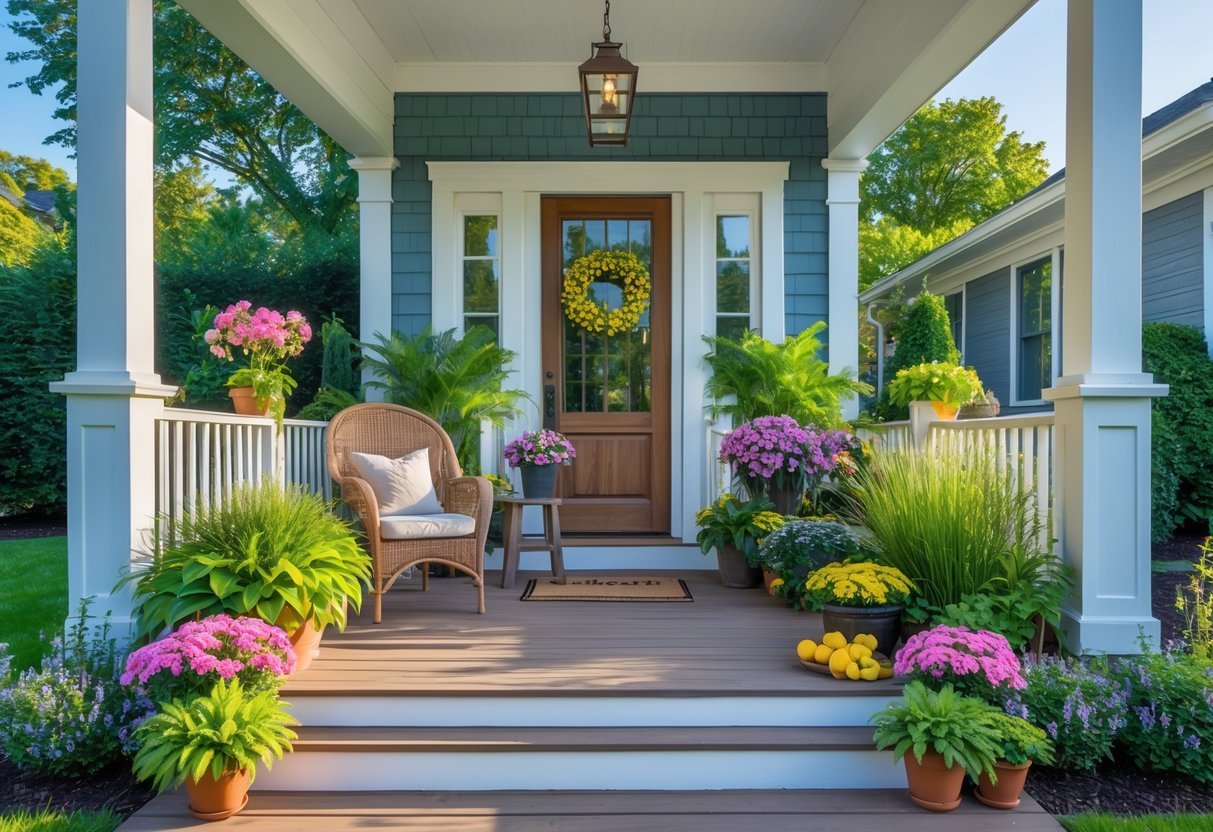
Focus on plant choice, smart container use, and comfortable seating to make your porch both attractive and practical. Pick plants that match light and season, use containers to save space, and create a seating layout that invites use.
Choosing the Right Plants
Choose plants that match the light your porch gets. For full sun, pick drought-tolerant options like lavender, rosemary, or sedum. For partial shade, ferns, hostas, and impatiens work well. If your porch is fully shaded, use snake plant, caladium, or peace lily.
Think about seasonal interest. Combine spring bulbs, summer annuals, and evergreen shrubs so something looks good year-round. Check mature sizes on labels to avoid overplanting small pots or narrow porches.
Match plant care to your schedule. Choose low-water plants if you travel often, or go for flowering annuals if you like frequent change. Group plants with similar water and light needs to make care easier.
Maximizing Space with Containers
Use containers to fit more plants into tight porch areas. Tall narrow urns save floor space and add height. Shallow window boxes fill rail space and show color at eye level.
Mix materials for function. Use lightweight fiberglass for easy moving, ceramic for a polished look, and terracotta where good drainage matters. Place trays or saucers under pots to protect porch flooring.
Arrange containers in groups of odd numbers for visual appeal. Put tallest pots at the back and smaller ones up front. Include at least one trailing plant in each group to soften edges.
Incorporating Seating Areas
Decide what you want from seating: reading, socializing, or quick shoe changes. A small two-seat bench fits narrow porches. A hanging chair or single rocking chair works where space is very limited.
Plan circulation so you can open the door and walk past seats. Keep a 30–36 inch clear path if possible. Use a narrow side table for drinks and a weatherproof rug to define the space.
Choose durable, low-maintenance materials. Metal frames resist pests, treated wood warms the look, and all-weather wicker stays comfy. Add cushions rated for outdoor use and store them when wet to extend their life.
Design Styles for Front Porch Gardens

Choose plants, containers, and furniture that match the look you want. Think about color, texture, and how much care you can give the plants.
Cottage Garden Aesthetic
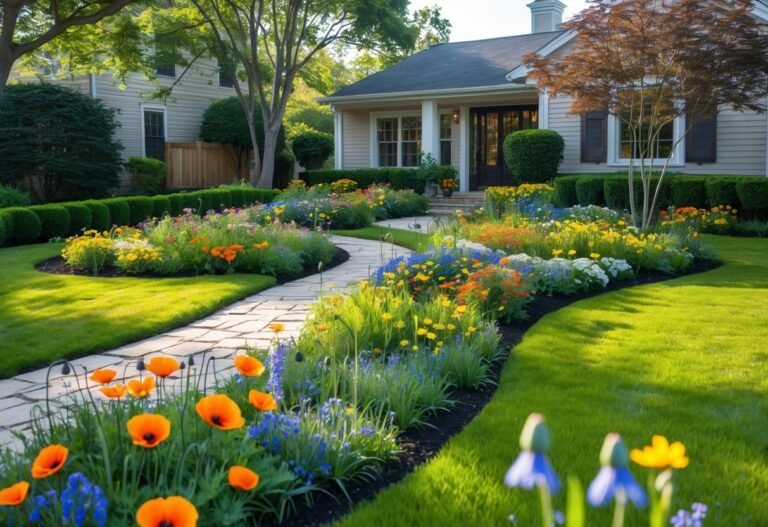
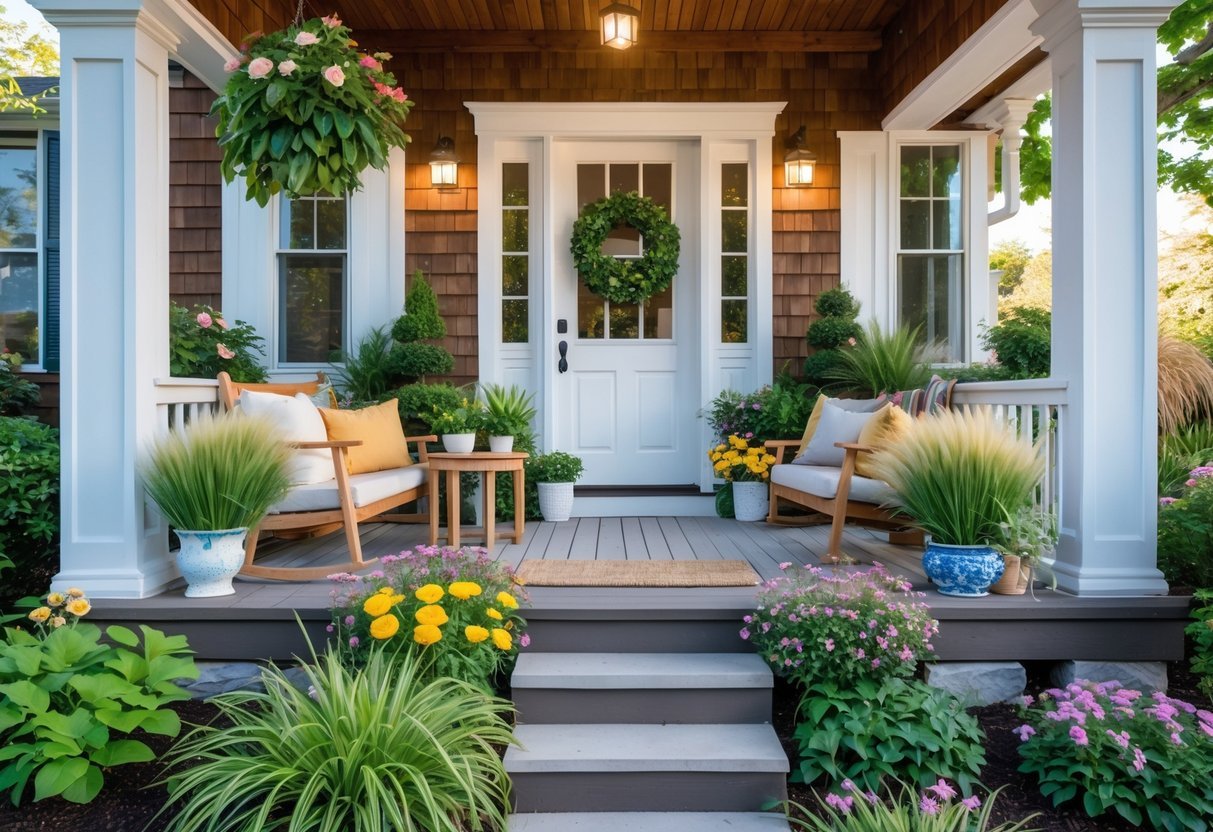
You can create a cozy, layered look with mixed flowers and herbs. Use overflowing containers like terracotta pots, wooden window boxes, and woven baskets. Plant classics such as lavender, roses, salvia, and thyme for scent and color. Mix heights: taller plants at the back, trailing plants at the edges.
Add small decorative touches: a painted bench, a metal watering can, or a simple trellis for climbing sweet peas or clematis. Keep paths or stepping stones clear so the porch feels inviting. Water regularly and deadhead spent blooms to keep the display full.
Modern Minimalist Approach
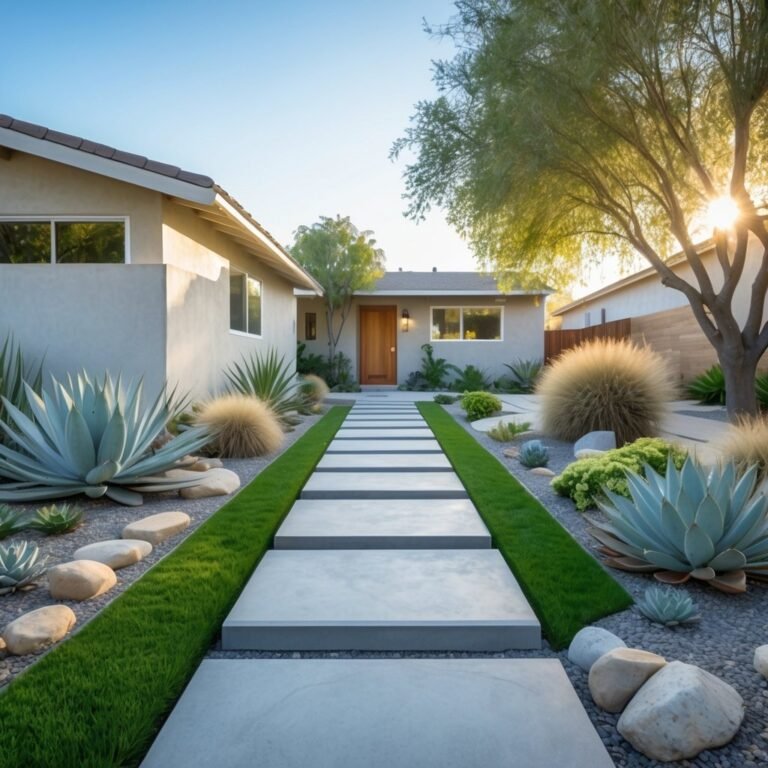
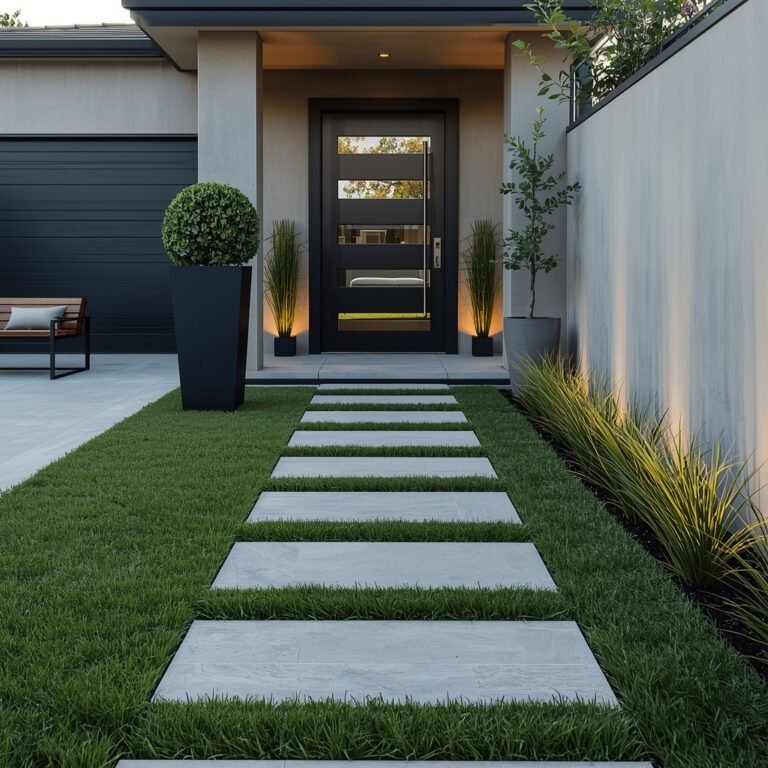
Focus on clean lines, a tight plant palette, and restrained color. Choose two or three plant types and repeat them in matching containers. Good choices: boxwood or dwarf conifers for structure, snake plant or agave for sculptural form, and a single seasonal bloom for contrast.
Pick sleek containers in matte black, white, or concrete. Arrange them in balanced groupings rather than scattering pots. Limit accessories to one or two functional pieces like a simple bench or a geometric mat. Prune to keep shapes crisp and remove clutter often.
Rustic and Natural Themes
Select rugged materials and native plants that handle local weather. Use reclaimed wood planters, galvanized tubs, and stone accents. Favor prairie-style grasses, echinacea, rudbeckia, and native sedges for low care and wildlife value.
Let plantings look a bit wild—avoid precise lines. Add a few practical elements: a bench with visible grain, a stack of firewood, or a bird feeder. Mulch with bark or gravel to reduce weeds and protect roots. Aim for durability and low maintenance while keeping a lived-in, welcoming feel.
Seasonal and Practical Considerations
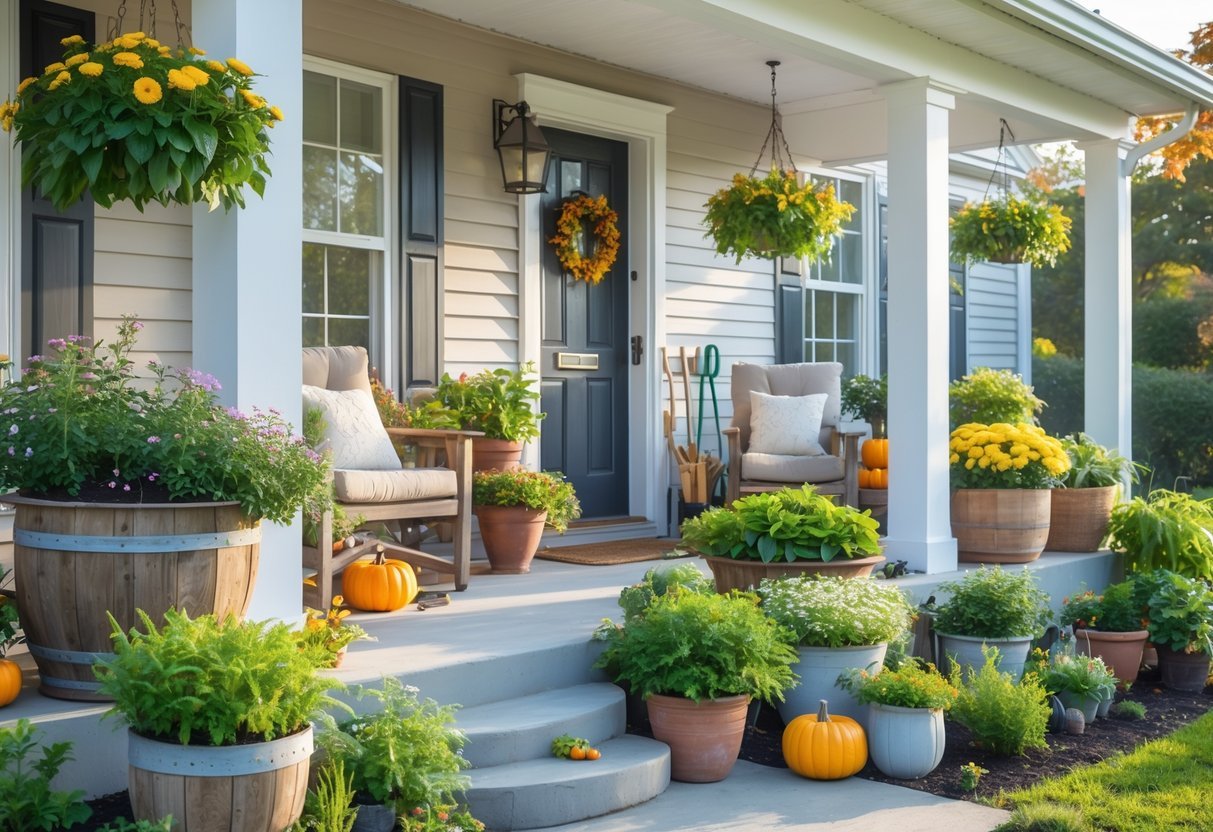
Plan for chores, watering, and plant swaps so your porch looks good through heat, cold, and wet weather. Pick containers, soil, and plant types that match your schedule and the local climate to cut work and avoid surprises.
Low-Maintenance Options
Choose sturdy containers like resin or glazed ceramic that resist cracking and hold moisture longer. Use a well-draining potting mix with moisture-retaining crystals or coconut coir to reduce the need for daily watering. Group plants with similar light and water needs—for example, full-sun drought-tolerant herbs in one cluster and shade-loving ferns in another—to simplify care routines.
Pick perennials and evergreen shrubs for structure: boxwood, lavender, sedum, and ornamental grasses return each year and need only seasonal pruning. Add self-watering planters or drip irrigation on a timer if you travel or have a busy schedule. Mulch top layers to reduce evaporation and keep roots cooler in summer.
Seasonal Color Rotation
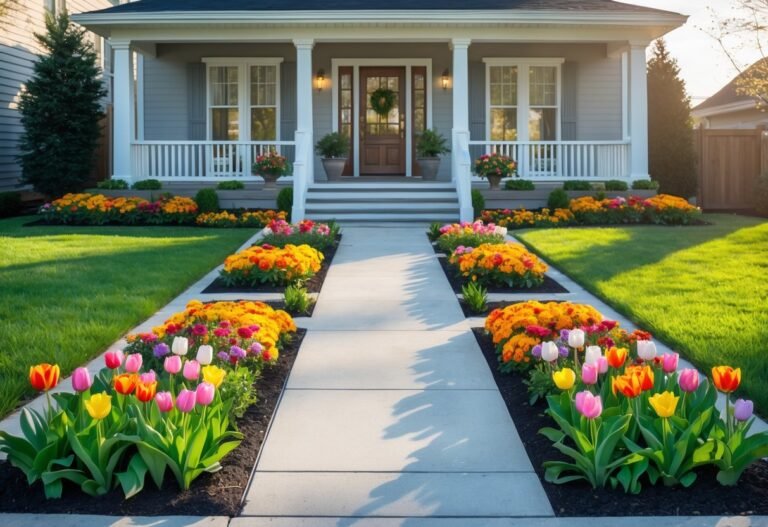
Plan four palettes: spring bulbs and cool-season annuals, summer bedding plants, fall mums and ornamental kale, and winter greens with berries. Use a few large pots for structural evergreens and swap smaller pots inside those for seasonal color—this saves effort and preserves your core layout.
Time your changes: plant cool-season containers in March–April, switch to heat-tolerant annuals by late May, move to mums and ornamental grasses in September, and add evergreen boughs, holly, or potted conifers in November. Keep a small storage bin with plant food, pruners, and replacement liners to make swaps quicker.
Frequently Asked Questions

These answers give practical plant picks, layout tips, and budget-friendly ideas. You will find steps for low-maintenance choices, space-saving layouts, raised-bed options, and where to look for design examples.
What are the best plants for a low maintenance front porch garden?
Choose plants that tolerate your light and water conditions. For sunny porches pick lavender, sedum, ornamental grasses, and rosemary.
For shaded porches use hostas, ferns, heuchera, and impatiens.
Use container-friendly shrubs like dwarf boxwood or nandina for structure. Succulents and drought-tolerant perennials cut watering needs.
Group plants with similar water needs so you can water in one go.
How can I design a simple and elegant front porch garden?
Stick to a limited color palette and repeat a few plant types. Use two to three plant varieties and one or two focal containers.
Choose neutral pots and clean lines to keep the look refined.
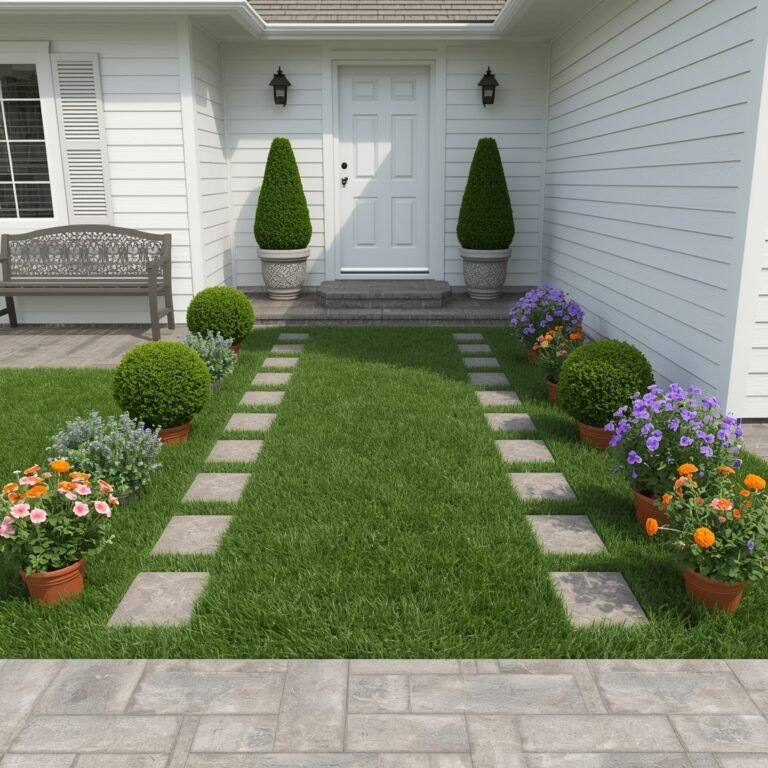
Add a single architectural plant, like a potted olive or dwarf conifer, to anchor the space. Use mulch and matching gravel or pavers for a tidy ground plane.
What are some inventive ideas for raised landscaping on a front porch?
Build shallow raised beds along the porch edge with treated wood or stone to add height. Use tiered planters or stacked crates for vertical interest.
Install built-in bench planters to combine seating with planting space.
Try a narrow raised trough for herbs or a long box to frame the walkway. Make sure raised structures have proper drainage and use lightweight soil mixes for containers.
How do I make the most of a small space when landscaping my front porch?
Use vertical space with wall-mounted planters, hanging baskets, or a trellis. Choose narrow, tall pots instead of wide ones to save floor area.
Keep pathways clear and place seating against a wall to open the central area.
Select multi-use plants like fragrant herbs that also look attractive. Use mirrors or light-colored walls to make the area feel larger.
Where can I find inspiration for front porch landscaping designs?
Browse home and garden websites, design blogs, and social media boards for photos and step-by-step guides. Look at local garden centers for seasonal displays you can copy.
Visit nearby homes and public gardens to see real-world plant performance in your climate.
Save photos of layouts, plants, and color palettes you like. Use those images to create a simple plan before you buy materials.
What are some effective flower bed arrangements suitable for front porches?
Layer plants by height: tall plants at the back, medium in the middle, low at the front. Use repeating groups of three to five plants for balance.
Combine evergreen structure with seasonal flowers for year-round interest.
Edge beds with low, neat borders like boxwood or stone to keep a clean look. Add a mix of textures—broad leaves, fine grasses, and rounded blooms—for visual depth.