Front Garden Ideas UK: Practical Low-Maintenance Designs for Small Spaces
Your front garden can lift your home’s look and make daily life nicer with just a few smart changes. Choose plants that suit UK seasons, add a clear path, and pick a simple focal point to create a welcoming, low-maintenance space that works for your home.
You can work with any size plot — from tiny terraces to larger yards — by combining evergreen structure, seasonal colour, and practical features like lighting and defined walkways. Use hardscape to reduce maintenance, add wildlife-friendly plants, and place lighting for safety and curb appeal to get the biggest impact for your time and money.
Key Takeaways
- Focus on durable layout choices that suit UK weather and your space.
- Mix evergreen structure with seasonal plants for year-round interest.
- Add clear paths and lighting to boost usability and kerb appeal.
Front Garden Design Principles
You should aim for a clear layout, practical features, and plants that suit your soil and light. Focus on first impressions, safety, ease of care, and year-round colour when choosing surfaces, planting and screening.
Curb Appeal Essentials
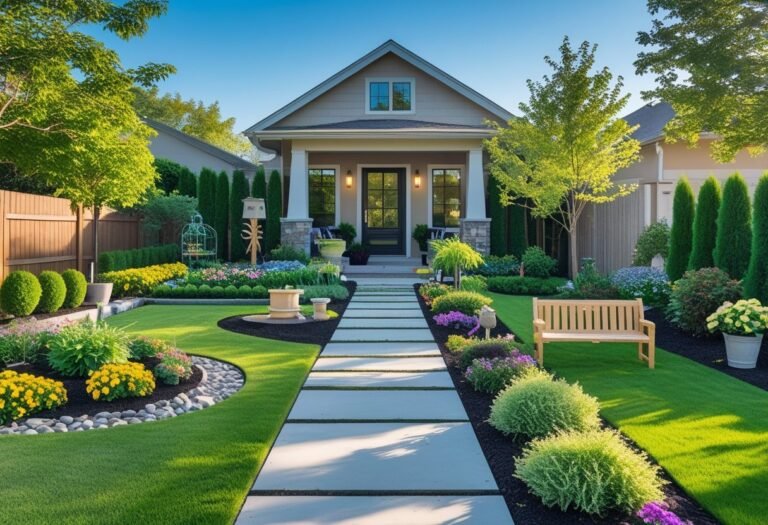
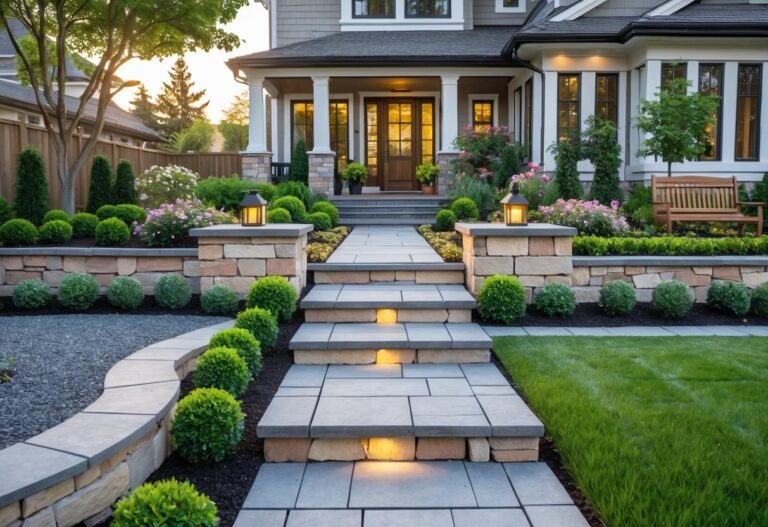
Make the entrance obvious and tidy. Use a defined path from the pavement to your door—choose materials like gravel, paving slabs, or resin that match your home’s style. Keep the path at least 900–1200mm wide for easy access and to fit a pram or bin trolley.
Frame the front with two or three focal points: a specimen shrub, a small tree, or matching pots. Use symmetry for a formal look or staggered planting for a relaxed style. Limit the palette to three main plant colours to keep the view cohesive.
Manage sightlines: cut back overhanging hedges and keep lower planting under 60cm so your house remains visible. Add a neat lawn or low groundcover between planting beds to soften hard surfaces.
Privacy and Security Features
Place a low hedge, railings, or a 1–1.2m wall to mark your boundary without blocking light. Choose evergreen hedging like box, yew or privet for year-round cover; mix in native shrubs if you want wildlife value.
Use a single, solid gate or a gate with slats if you need privacy but still want airflow. Fit outdoor lighting along paths and by the door—motion sensors increase security and save energy.
Avoid tall obscure fencing near the pavement; instead, design layered planting so you have privacy at eye level but don’t create a hidden space that feels unsafe. Position shrubs to prevent easy access to windows and keep sightlines to the street for natural surveillance.
Low-Maintenance Strategies
Pick plants suited to your soil and light so they need less watering and feeding. Choose hardy perennials, native shrubs, and small trees such as buddleia, cotoneaster, or acer that cope with UK weather.
Use mulches and a drip irrigation line to reduce weeds and hand-watering. Replace grass strips with gravel, aromatic groundcover, or hard surfacing in narrow areas to cut mowing time.
Group plants with similar needs into the same beds and label them for quick care. Use a slow-release fertiliser in early spring and prune shrubs once a year to keep shapes tidy. Choose pots on saucers for easy seasonal swaps without replanting permanent beds.
Planning for Seasonal Interest
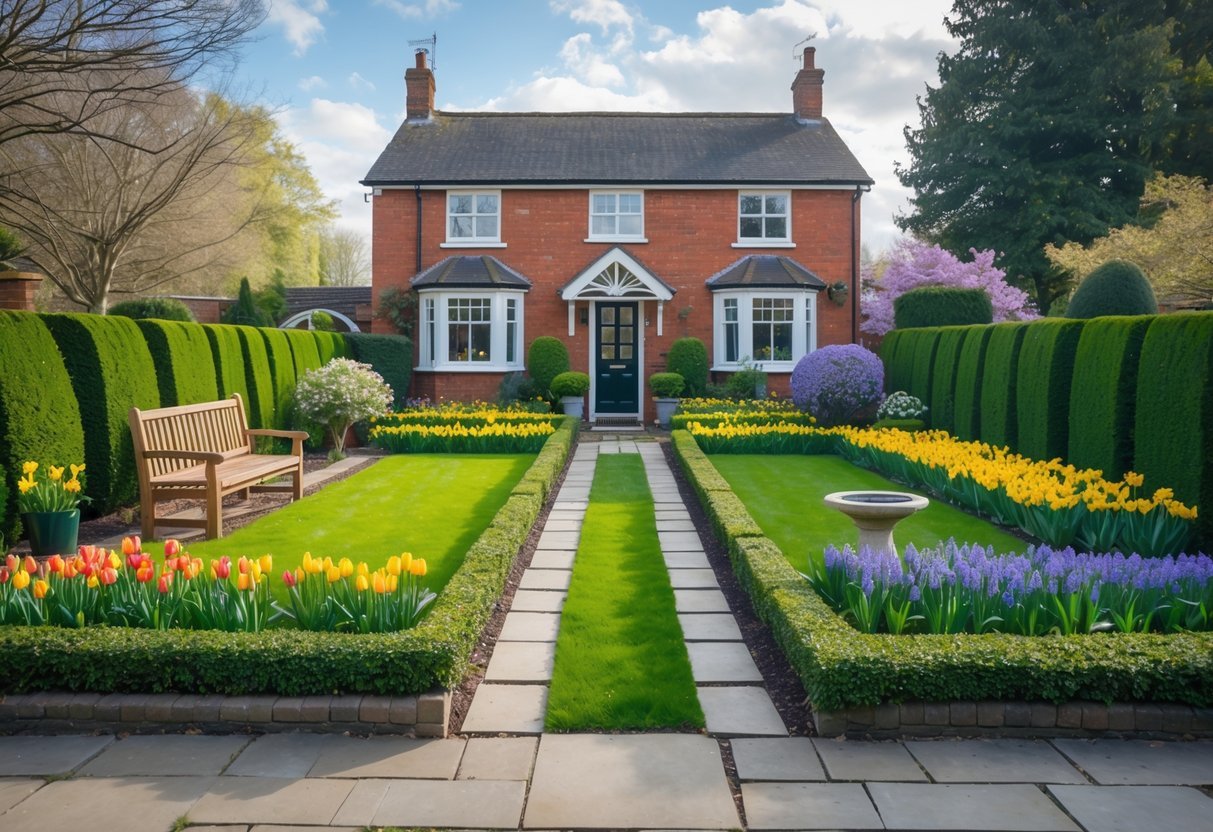
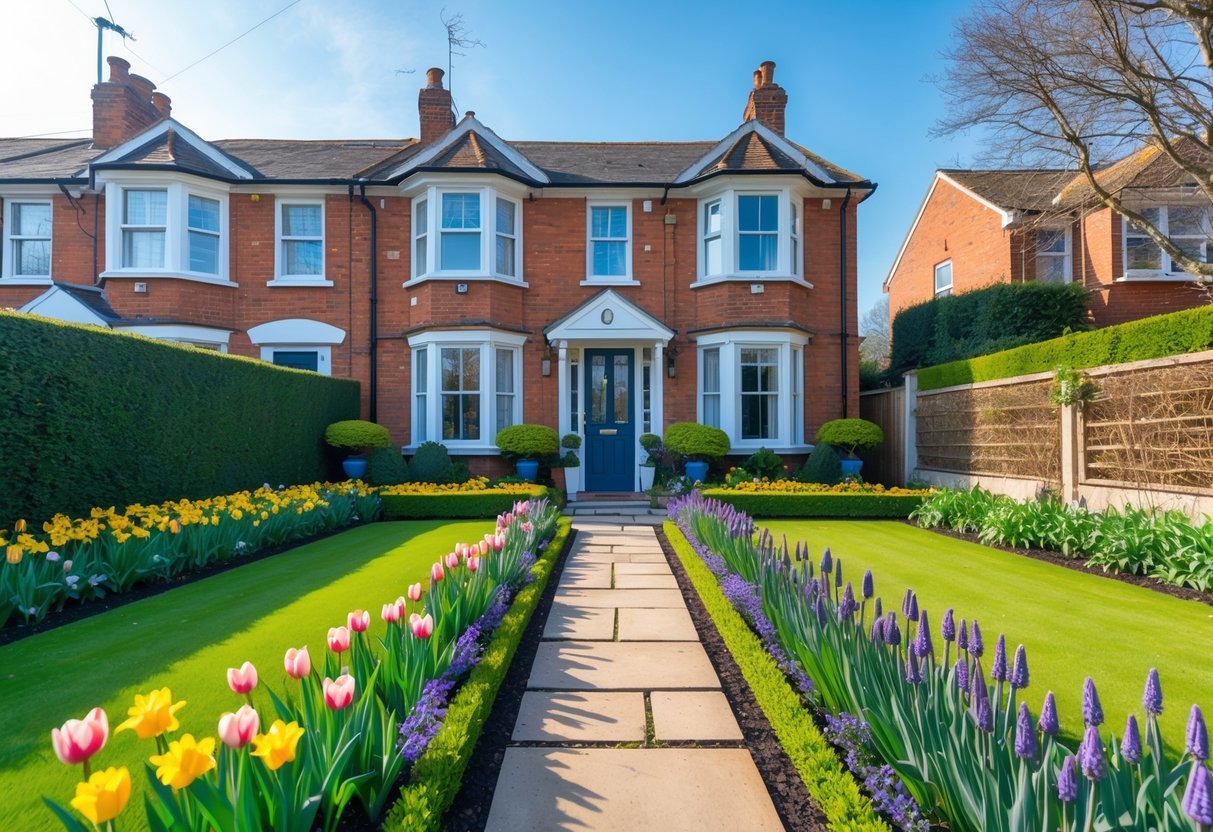
Plant for four-season structure by combining spring bulbs, summer perennials, autumn berry shrubs, and evergreen forms. For spring, use crocus and tulips; for summer, plant lavender and roses; for autumn, choose cotoneaster or holly for berries.
Include evergreens like box or yew to hold shape and provide winter colour. Add a small ornamental tree—Malus or Amelanchier—for blossom in spring and berries or leaf colour later in the year.
Use repeat planting to create rhythm: place the same shrub or pot at intervals along the path. Swap annuals in pots for quick colour changes and plant late-flowering perennials to extend interest into autumn.
Planting Ideas for UK Front Gardens
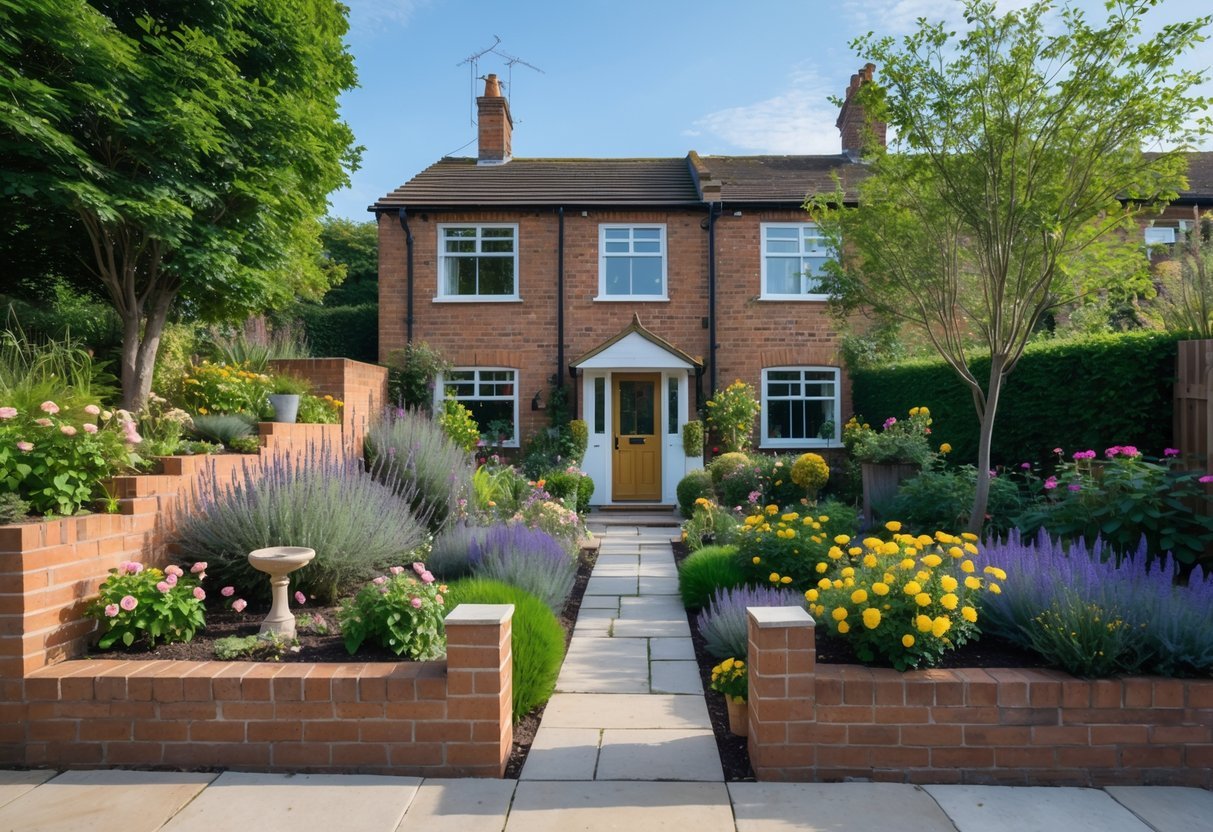
Choose plants that suit your soil, light and how much time you have for care. Aim for structure from evergreens, bursts of seasonal colour, habitat for wildlife, and some drought-tolerant picks for dry spells.
Evergreen Shrubs and Hedges
Evergreen shrubs give year-round shape and privacy. Plant box (Buxus) or dwarf yew for formal edges and quick definition. Use photinia or elaegnus for taller screening; they handle wind and coastal exposure better than many broadleaf evergreens.
Space hedging plants according to their mature width — for example, plant a 1 m-wide hedge at 1 m intervals. Add a layer of mulch to retain moisture and reduce weeds. Prune lightly in late spring to keep a neat form; avoid heavy cuts in late autumn when frost can damage new growth.
Mix in smaller evergreen perennials like hebe or sarcococca near paths for scent and winter interest. These need less maintenance than large shrubs and keep your front tidy between seasonal flowers.
Colourful Flower Borders
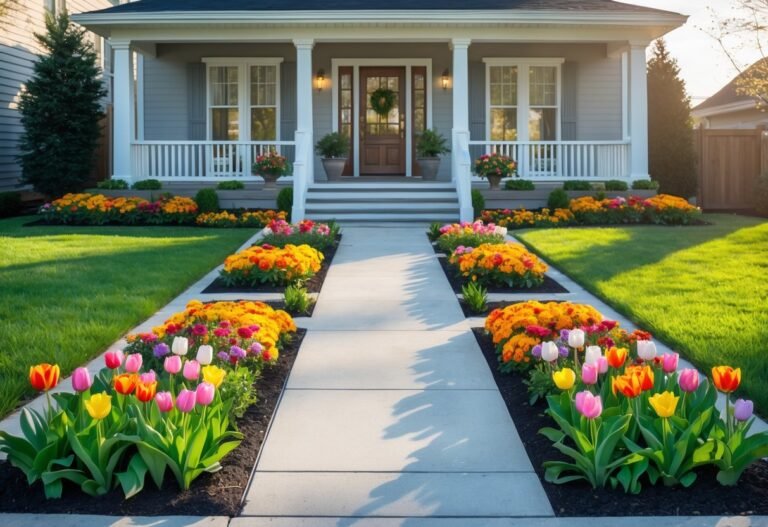
Choose plants that bloom across seasons so your front looks alive from spring to autumn. Combine daffodils and tulips under later-flowering perennials like salvia, geraniums and roses for continuous colour.
Plant in groups of three to five for impact and repeat colours along a path to tie the design together. Use height layers: low groundcover (ajuga, thyme), mid-height perennials (coreopsis, achillea), and taller back plants (lupins, delphiniums) if space allows.
Consider container planting by the door with seasonal swaps: pansies in spring, lobelia or fuchsia in summer, and cyclamen in autumn. Deadhead spent flowers to extend display and feed with a balanced fertilizer in early spring and midsummer.
Wildlife-Friendly Plant Choices
Pick native and nectar-rich species to support bees, butterflies and birds. Plants like buddleia (butterfly bush), lavender and honeysuckle provide nectar. Native hawthorn or blackthorn offers berries and spring blossom for insects and nesting birds.
Create layered planting: tall trees or large shrubs for shelter, mid-level shrubs for nesting, and low flowers for insects. Include a small log pile or a shallow water dish to give insects and birds a place to feed or drink.
Avoid heavy use of pesticides and choose organic compost to improve soil life. Planting a small wildflower patch with oxeye daisy, ragged robin and meadow grasses attracts pollinators and needs little mowing.
Drought-Tolerant Varieties
Pick drought-tolerant plants for sunny, free-draining spots or if you want low maintenance. Lavender, sedum, rosemary and gaura cope well with dry periods and keep colour through summer.
Use gravel mulch or a coarse bark layer to reduce evaporation and plant in soil improved with grit for better drainage. Group drought-tolerant plants together so watering needs match and you avoid over-watering moisture-sensitive species.
For paved or very small front gardens, use planted troughs or pots with good drainage and a free-draining compost mix. Water deeply but infrequently to encourage deep roots and resilience during hot spells.
Pathways, Lighting and Decorative Features
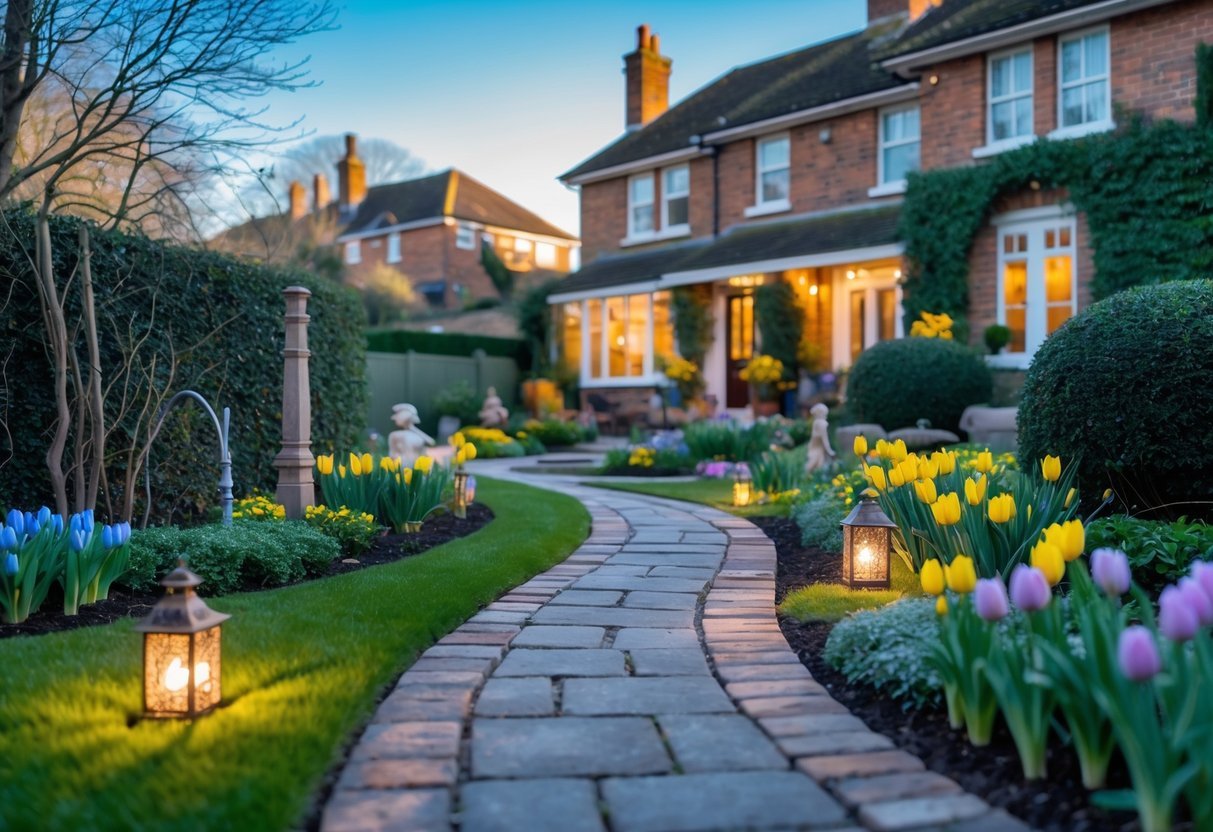
You’ll choose hardwearing materials, smart lighting and a few bold planters to make your front garden safe, welcoming and low‑maintenance. Focus on durable paths, layered lights for evenings, and planters that suit your house size and style.
Practical Pathway Materials
Pick materials that suit foot traffic and local weather. For heavy use, go with block paving or concrete slabs set on a compacted subbase; they resist frost and stay level. For a softer look, choose natural sandstone or limestone flags. These look traditional in UK homes but need non‑slip finishes and good jointing to avoid weeds.
Gravel works well on a budget and drains quickly, but add edging and a weed membrane and expect regular topping up. Resin-bound surfaces give a smooth, wheelchair‑friendly finish and come in many colours, though they cost more. Include a 1:50 fall for drainage and avoid dark colours on south‑facing paths that can retain heat.
Outdoor Lighting Solutions
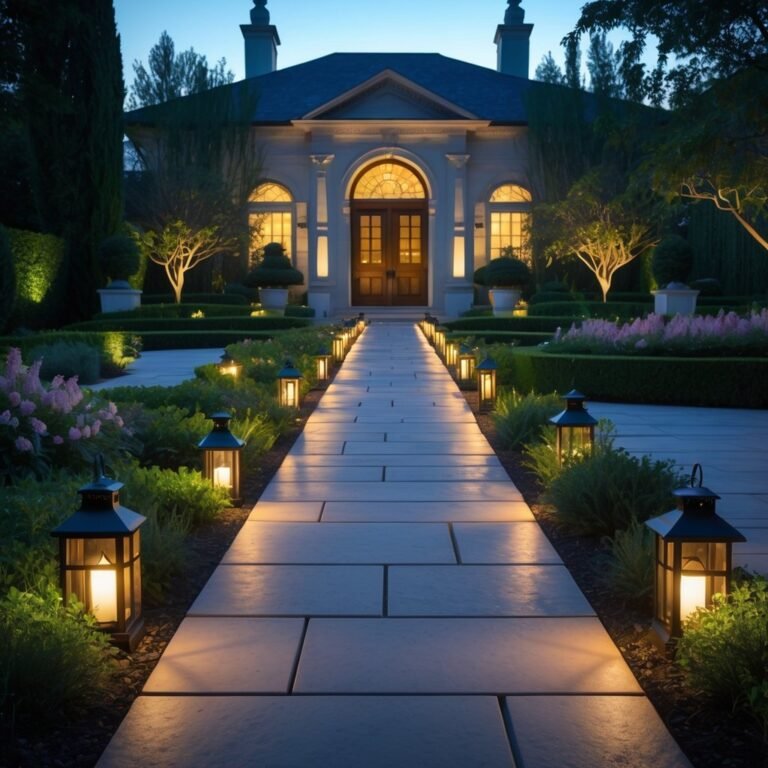
Layer lighting to cover safety, ambience and feature highlights. Use low-level bollards or recessed ground lights along paths to prevent trips. Place them 1–1.5 metres apart on straight runs, and closer on curves for even illumination.
Add wall-mounted uplighters or pendant lights by the door for clear entry lighting. Solar stake lights suit areas with good sun and need minimal wiring, but wired LED fittings offer brighter, more reliable light and work well with timers or motion sensors. Use warm white (2700–3000K) for a welcoming glow and choose IP44 or higher for outdoor fittings.
Adding Statement Planters
Choose planters that match your home’s scale and materials. Large rectangular timber or stone planters frame a porch and hide pipes; one or two matching pots either side of a door creates symmetry. For small plots, use tall, narrow planters to add height without taking floor space.
Pick evergreen shrubs like box or laurel for year‑round structure. Mix in seasonal bulbs or perennials—daffodils in spring, evergreen heathers in winter—to keep colour through the year. Ensure planters have drainage holes and use a good quality compost; add slow‑release fertiliser and water-retention granules for easier care.
Frequently Asked Questions
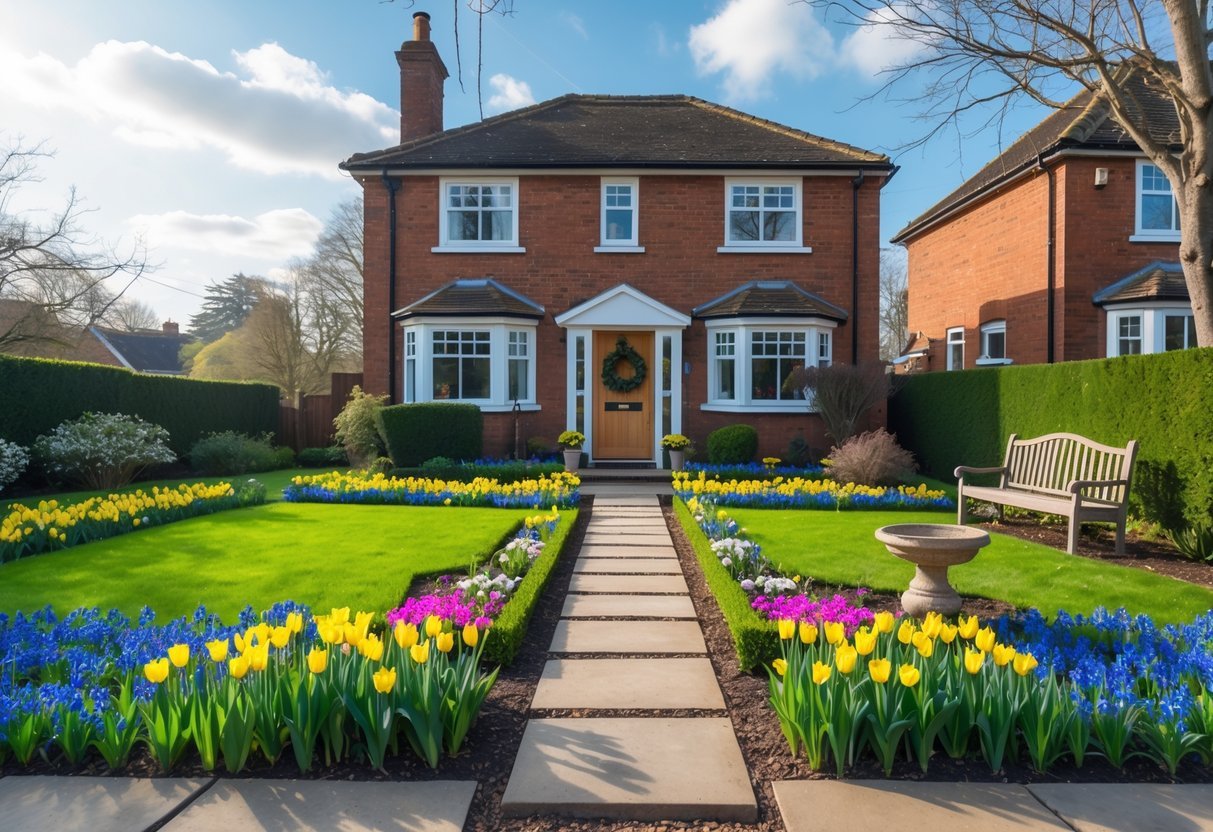
This section gives clear, practical answers about planning layout, plant choices, hard landscaping, and low‑maintenance options for UK front gardens. You will find specific tips for small spaces, plant lists, modern styles, driveway planning, and grass-free decoration.
How can I design a small front garden in the UK?
Measure the area and note sun, shade, and soil type before you buy anything. Use a simple plan with one or two focal points like a shrub or a pot to avoid clutter.
Choose vertical interest: trellises, narrow trees (e.g., Amelanchier) or trained climbers (e.g., clematis). Keep paths straight and narrow to save space and use pale paving to make the area feel larger.
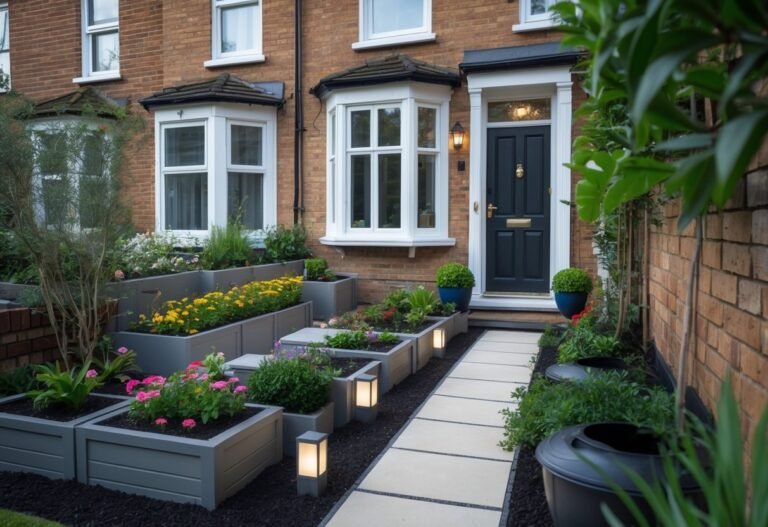
Use multi‑purpose elements: a bench with built‑in storage, raised beds for easy planting, and slim planters along boundaries. Stick to a limited colour palette to create a calm, cohesive look.
Which plants are ideal for adding aesthetic appeal to UK front gardens?
Evergreens give year‑round structure: box (Buxus), yew (Taxus), and Pittosporum add neat shape. Mix them with seasonal flashes from hellebores, crocus, and tulips for early colour.
Add scented shrubs near the door, like lavender, sarcococca, or shrub roses, for welcome fragrance. Grasses such as Festuca or Pennisetum add movement and low fuss.
Use native and wildlife‑friendly choices where possible: hawthorn, elder, and wildflower mixes attract birds and pollinators. Position plants by height—taller at the back, lower at the front—to keep sightlines clear.
What are some modern design options for UK front gardens?
Choose simple geometry: rectangular beds, straight paths, and consistent materials such as charcoal paving or timber decking. Minimal planting with bold structural plants creates a clean contemporary look.
Combine mixed materials in small doses—concrete, gravel, and timber—to add texture without clutter. Add a single sculptural tree or a statement pot to anchor the design.
Use integrated lighting: low bollards along the path and uplights for feature plants make the space safe and stylish after dark. Keep ornamentation to a minimum for a sleek finish.
How do I create a low maintenance front garden in the UK?
Pick long‑lived plants and group species with similar water and light needs. Use evergreens, ornamental grasses, and shrubs that need little pruning.
Replace lawn with hard landscaping, gravel, or groundcovers like thyme to cut mowing time. Install a simple drip irrigation or soaker hose for occasional deep watering rather than frequent hand‑watering.
Apply a good layer of mulch to suppress weeds and retain moisture. Use weed membrane under gravel in high‑traffic zones, but leave planting areas open for soil health.
What are the best strategies for incorporating a driveway into my front garden design?
Match driveway materials to the house and garden—block paving, resin, or permeable gravel all work well. Choose permeable options or add drainage to reduce surface water run‑off.
Plan sightlines so vehicles don’t dominate the view; frame the drive with planting stripes, low hedges, or edging. Make the path to your door clear and safe with a separate pedestrian route.
Include functional details: a turning area if space allows, appropriate edging to protect beds, and lighting for safety. Check local planning rules if you will change permeability or add hard surfacing.
How can I effectively decorate my UK front garden with no grass?
Use paved or gravel areas with raised beds and containers for easy care and strong style. Mix textures—smooth paving, chunky gravel, and planters—to avoid a flat look.
Create focal points such as a bench, water feature, or a group of pots with varied heights. Groundcover plants like sedum or Thymus serpyllum between pavers will soften hard surfaces and add colour.
Keep maintenance low with hardy perennials and shrubs, and add seasonal pots for colour that you can change easily.