7 Front Garden Ideas to Transform Your Outdoor Space Effortlessly
A front garden can greatly influence the look and feel of a home. It offers a chance to showcase personal style while improving the overall appeal of the property. Creating a front garden that is both inviting and easy to maintain adds value and comfort to any home.
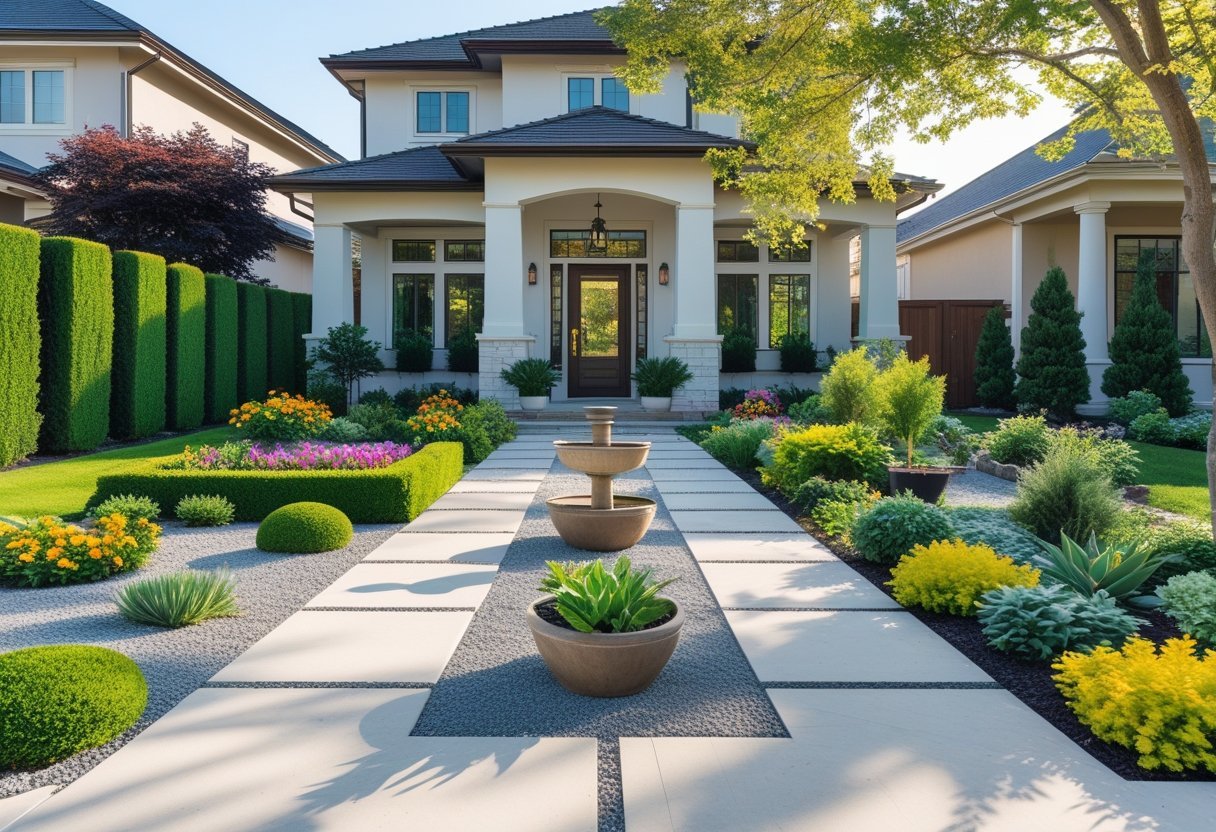
Good front garden design ideas work for all yard sizes and can fit different budgets and climates. Thoughtful design helps make the space attractive without requiring too much effort or cost. This article presents seven ideas that balance beauty and practicality.
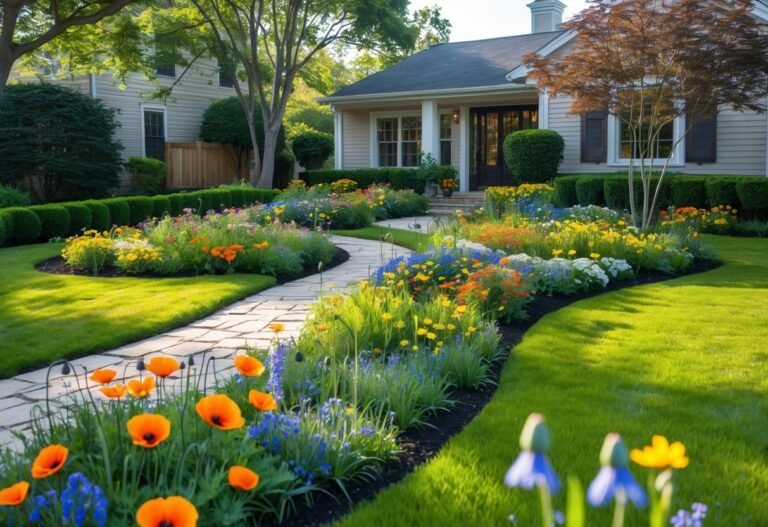
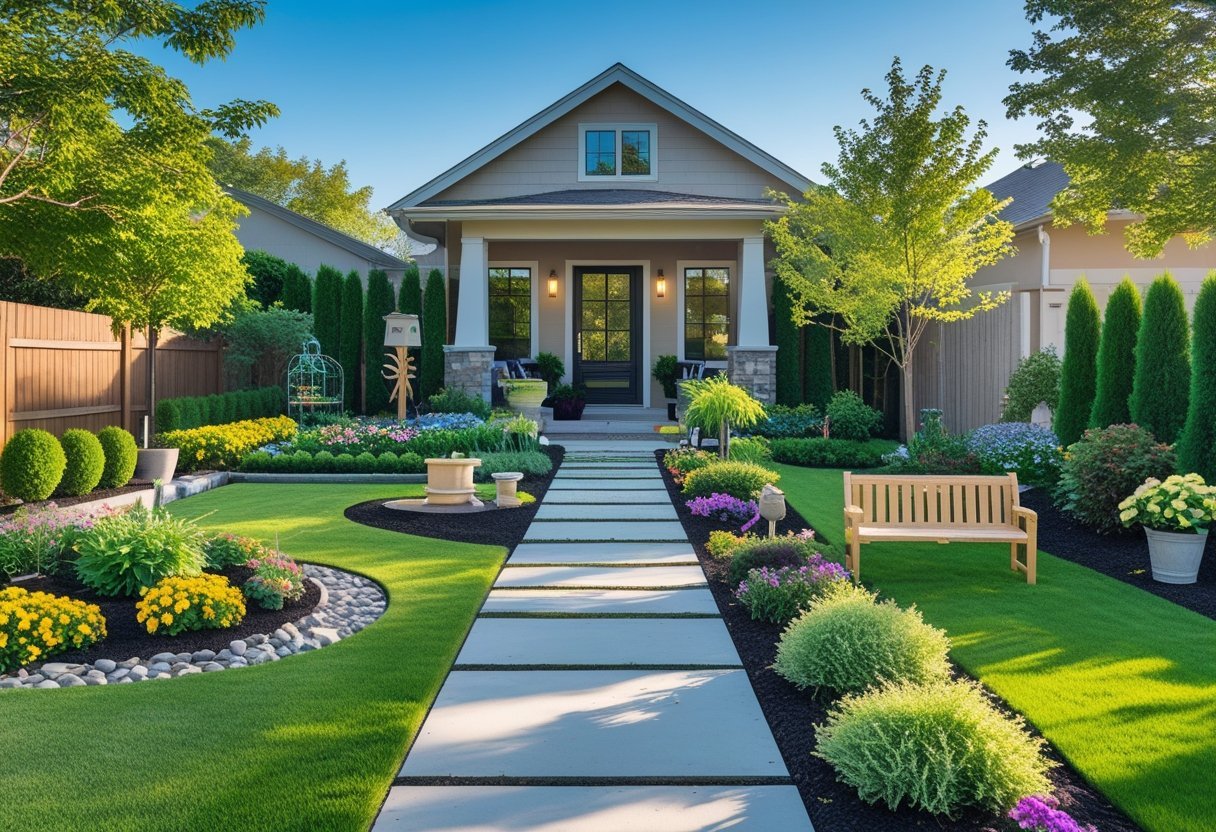
1) Create a curved flower bed with mixed perennials for continuous color

A curved flower bed adds shape and flow to the front garden. Using mixed perennials ensures color returns year after year without replanting.
They can combine blooms like coneflowers, salvia, and black-eyed Susans for variety and long-lasting color. Arranging tall plants in the back and shorter ones in front balances the design.
Flexible edging helps keep the curves smooth and defined. Adding mulch keeps the soil moist and controls weeds, supporting healthy plant growth.
2) Install low-maintenance shrubs combined with decorative mulch

Low-maintenance shrubs are a smart choice for a front garden. They need little care and still add color and structure. These plants usually only require occasional pruning.
Using decorative mulch around shrubs helps keep soil moist and reduces weeds. It also gives the garden a neat and finished look. Combining shrubs with mulch makes the yard easier to manage while still looking attractive.
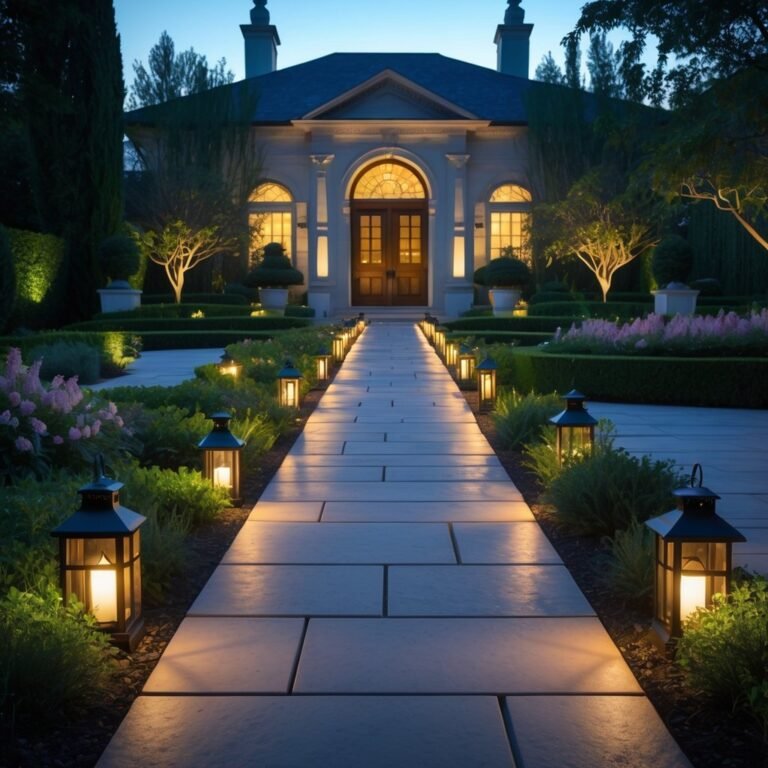
3) Add a stone pathway lined with solar lights for evening appeal
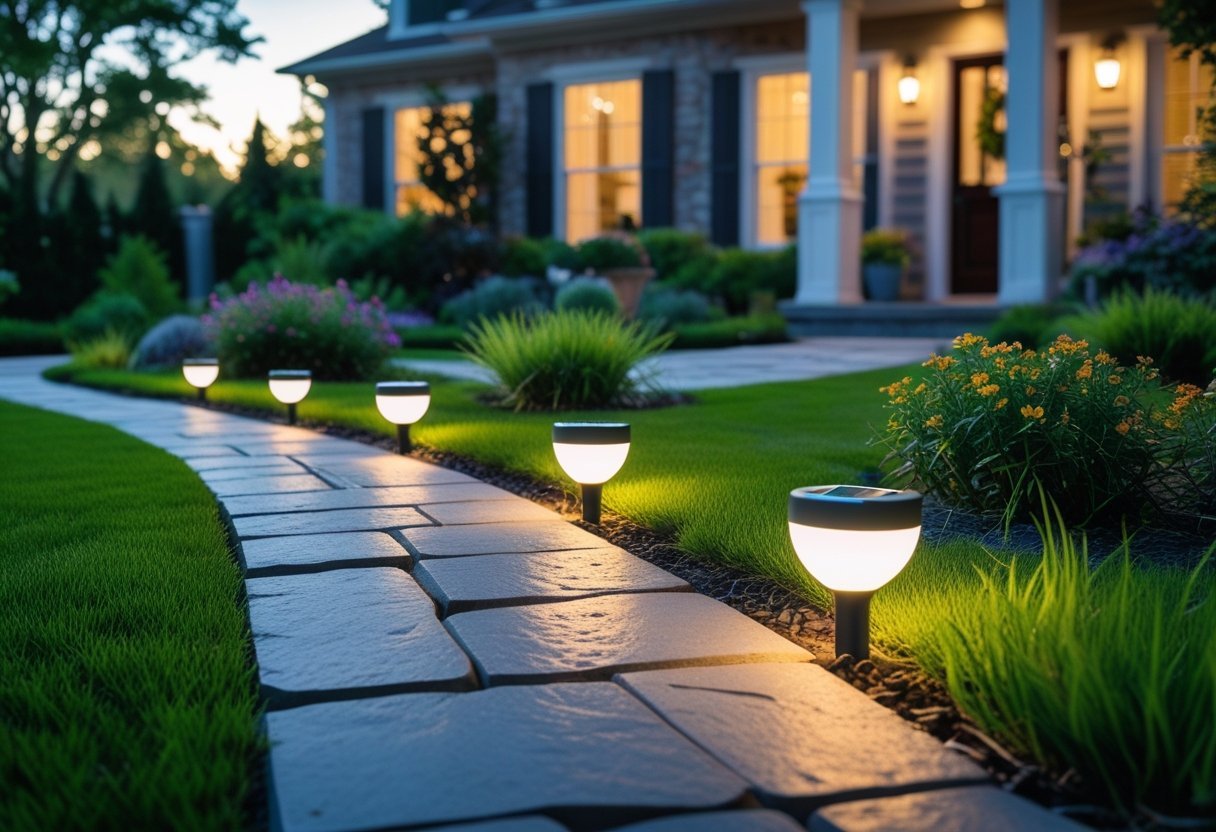
A stone pathway adds structure and charm to the front garden. It guides visitors clearly while blending with natural surroundings.
Lining the path with solar lights improves safety after dark. Solar lights are easy to install and don’t require wiring.
This combination creates a welcoming glow that highlights the garden’s features. It offers both function and style without increasing energy costs.
4) Incorporate vertical gardens on fences to maximize small space
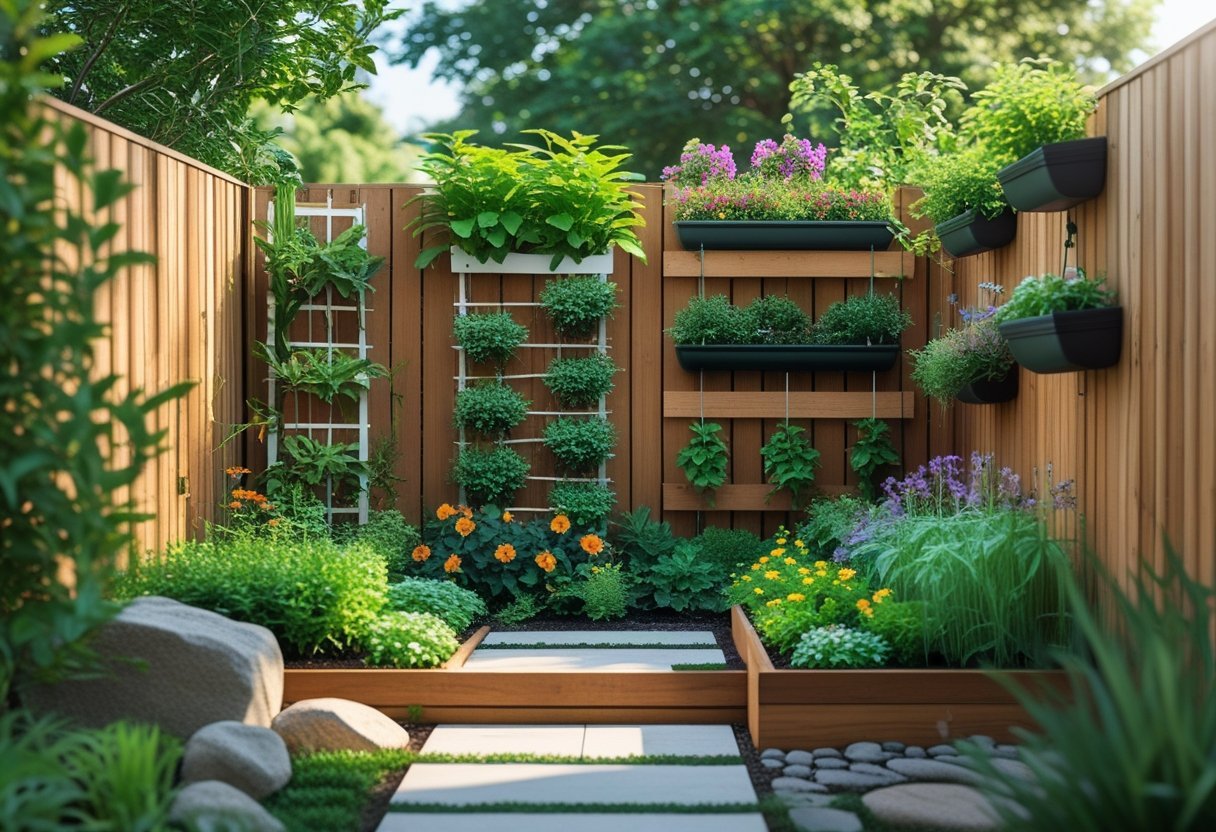
Vertical gardens on fences use wall space to grow plants without taking up ground area. They are ideal for small front gardens where space is limited.
Climbing plants, herb pockets, and hanging planters can turn a plain fence into a green feature. This adds height and color while keeping pathways clear.
Using vertical gardens on fences also helps create privacy and a natural barrier. It allows for easy care and watering, making it practical for busy homeowners.
5) Use edible plants like herbs and berries for functional landscaping
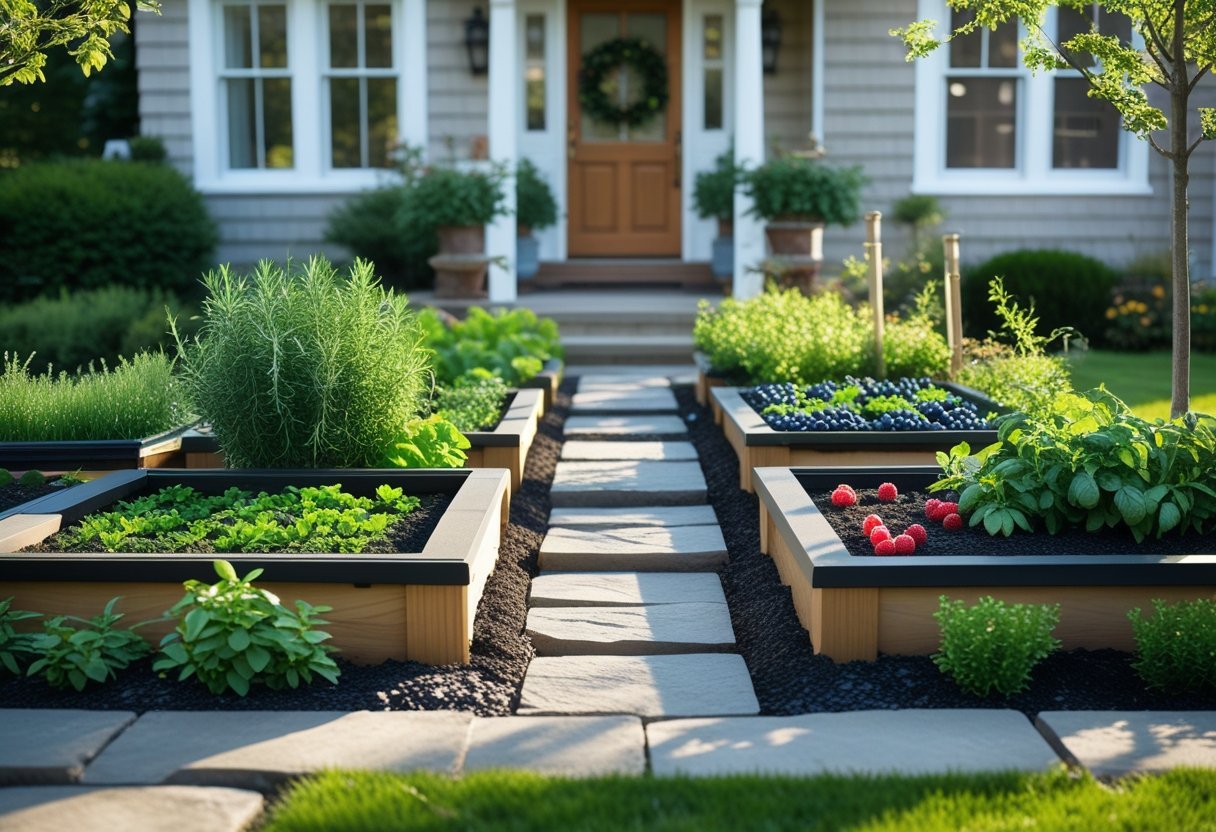
Using edible plants such as herbs and berries adds both beauty and usefulness to a front garden. These plants can be mixed with flowers and shrubs to create an attractive, practical space.
Herbs like rosemary, thyme, and basil are easy to grow and provide fresh flavors for cooking. Berry bushes, such as raspberries and blueberries, offer color and seasonal fruit.
This type of landscaping saves space and reduces trips to the store. It also encourages spending time outdoors while tending the garden.
6) Plant shade-tolerant ground covers under trees for texture
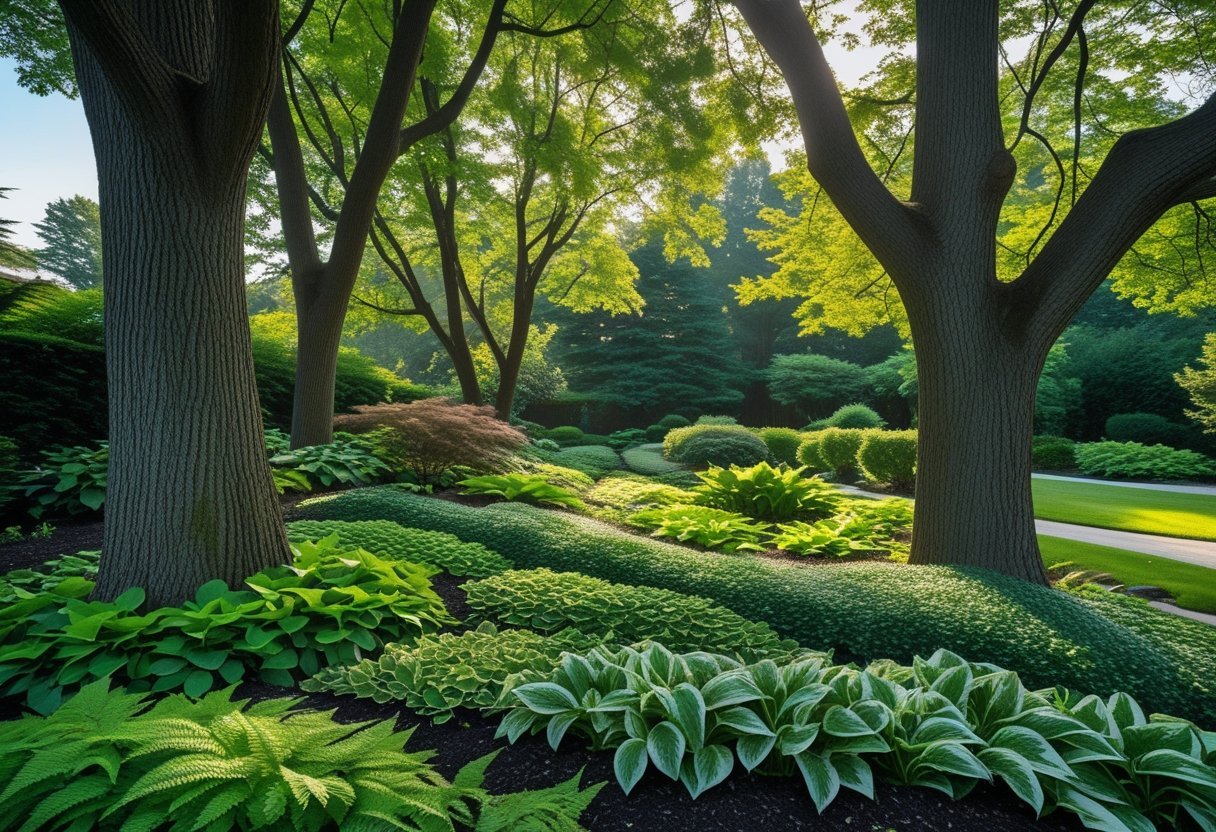
Planting shade-tolerant ground covers under trees adds texture and color to shaded areas. These plants grow well in low light and help cover bare soil around tree roots.
They also reduce weeds and create a neat, green carpet beneath tree branches. Examples include pachysandra, which stays green year-round and spreads easily.
Choosing the right ground cover depends on soil moisture and light levels under the tree. This method improves the garden’s look without needing extra care.
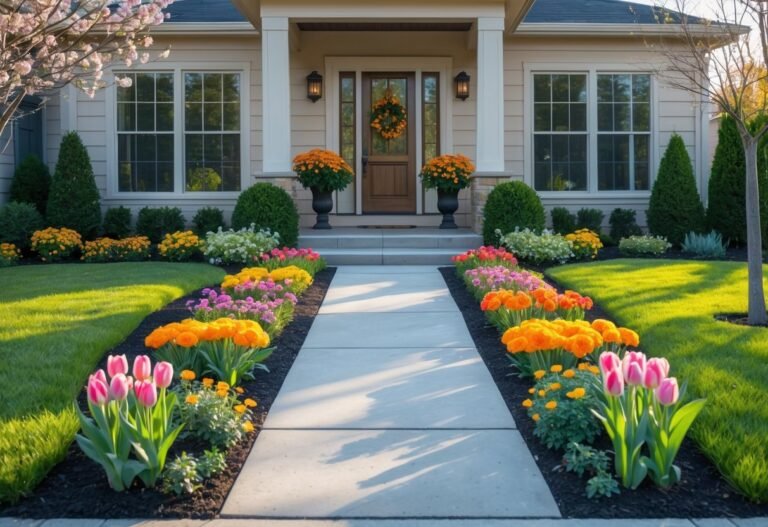
7) Add colorful planters with seasonal flowers on the porch
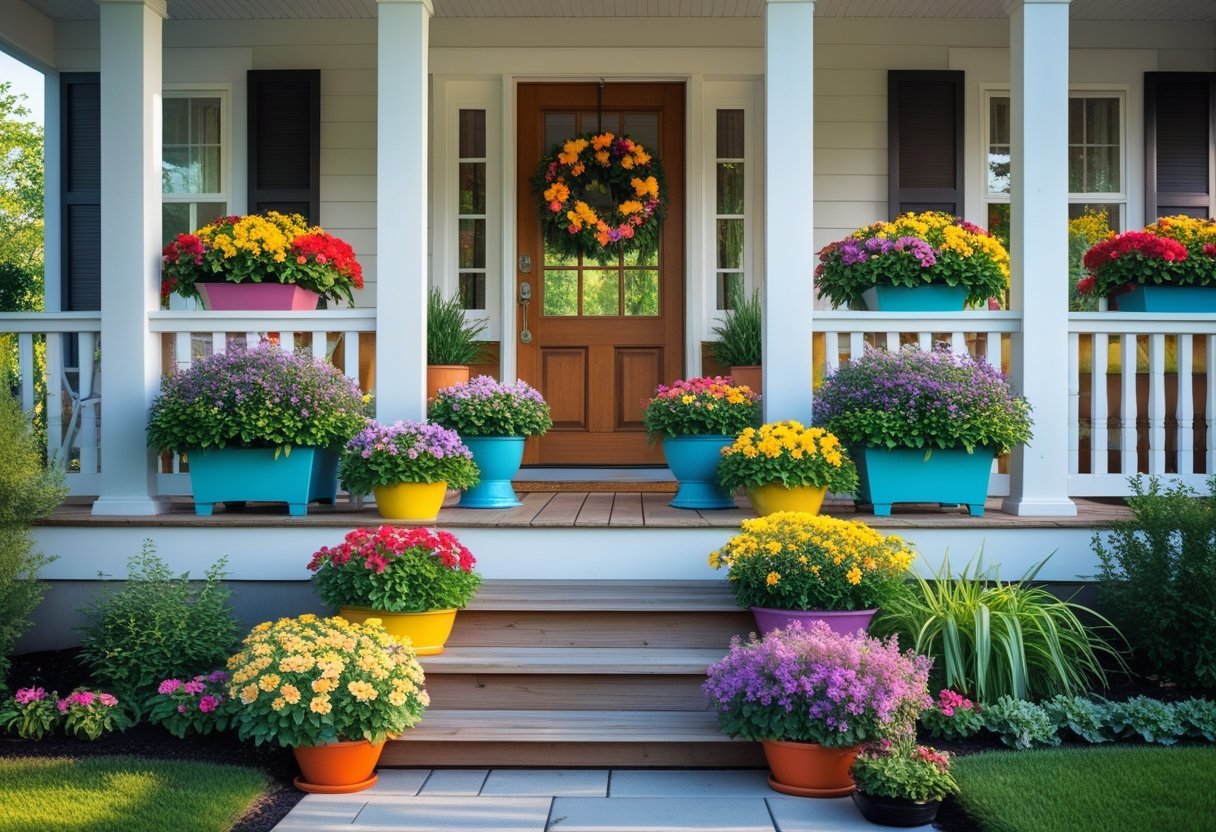
Adding colorful planters with seasonal flowers can brighten up any front porch. These planters create a welcoming look that changes throughout the year.
Choosing flowers that suit each season keeps the porch fresh and interesting. In spring, bright blooms add energy. Summer calls for bold greens and vibrant colors. Fall brings warm tones, and winter can include evergreen or cozy plants.
Planters also allow for easy rearranging. This makes it simple to update the porch style whenever needed.
Principles of Front Garden Design
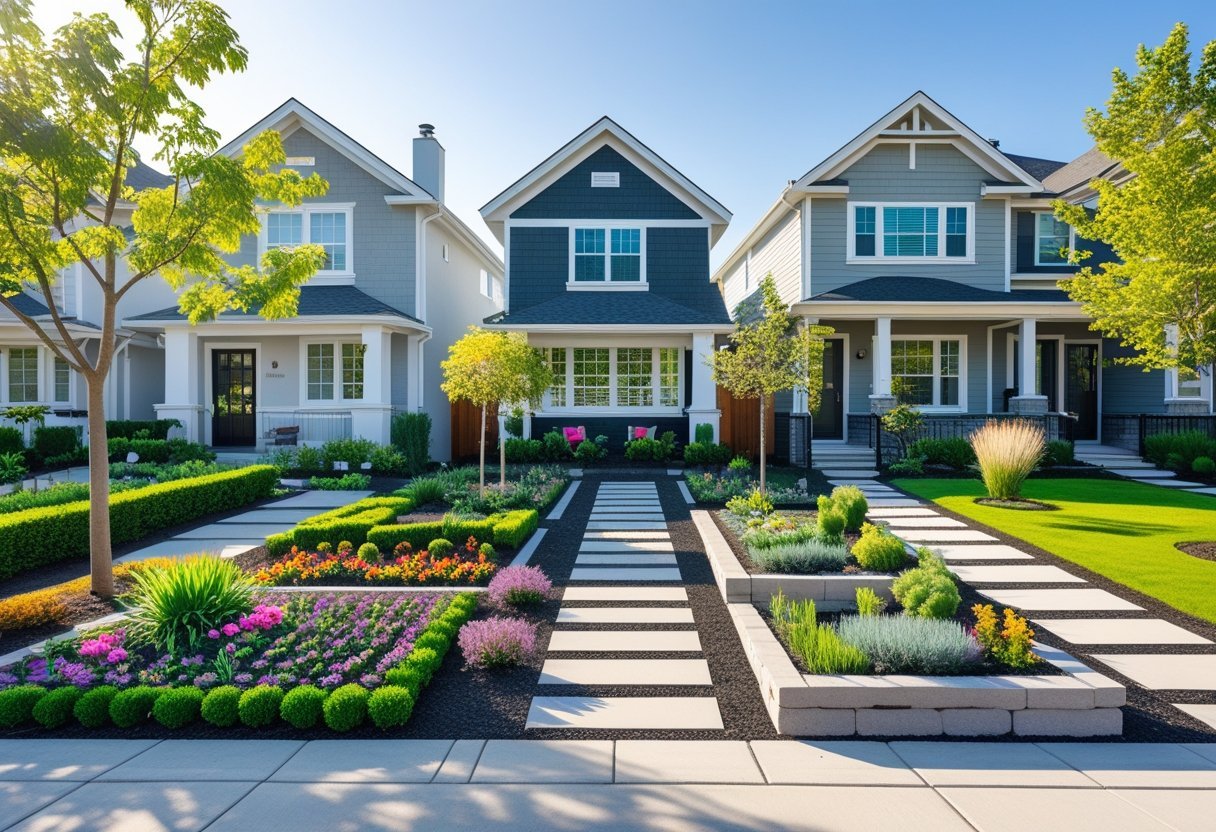
A front garden should be both inviting and functional. Its design focuses on enhancing the home’s appearance while fitting the needs of the residents. Key points include how to catch attention in a positive way and how to manage views between the garden and the street or neighbors.
Maximizing Curb Appeal
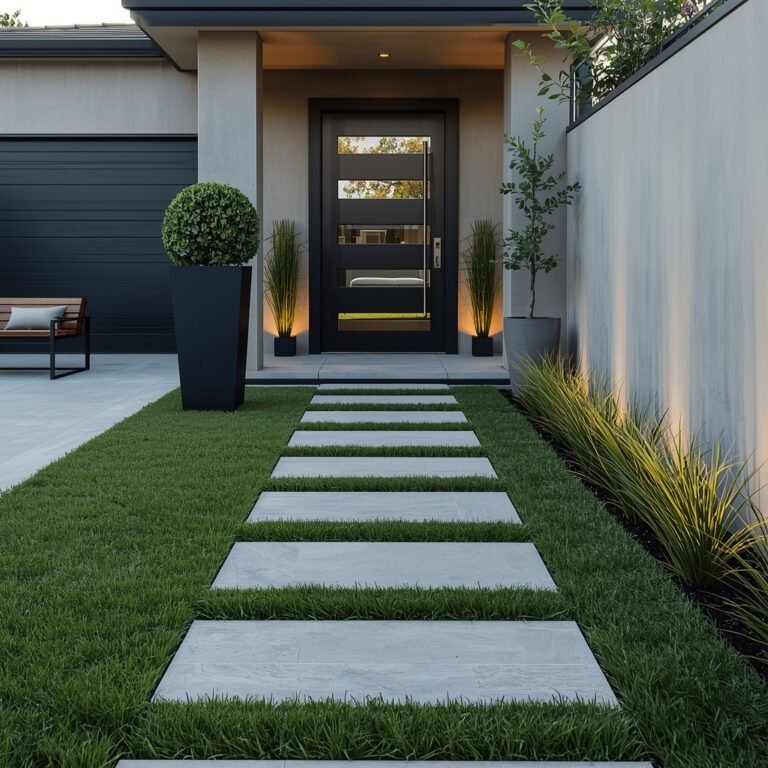
Curb appeal idea about making a strong, positive first impression from the street. To achieve this, a front garden should combine neat, easy-to-maintain plants with clear, attractive pathways. Using features like a statement stone wall or modern concrete edging adds structure and style.
Colors and textures are important too. Bright flowers and evergreen shrubs provide year-round interest. Good lighting along paths and near the entrance highlights key areas and improves safety.
Plant beds should be shaped to draw the eye toward the front door. Avoid over-crowding; space helps plants stand out. Using a balance of low and mid-height plants keeps the view open but lush.
Balancing Privacy and Openness
A front garden must feel welcoming but can also offer privacy. This balance can be reached by using elements like tall shrubs, low fences, or decorative screens. These block direct lines of sight without creating a fortress-like atmosphere.
Planting layers help. Taller plants at the edges mixed with shorter ones in front can shield the house but still allow light and views. Paths or seating areas should feel safe but not closed off.
There is a choice between solid barriers, such as brick walls, and more natural options, like hedges or grasses. Each offers different levels of privacy and openness depending on the homeowner’s needs.
Combining these design choices carefully makes the yard inviting while protecting personal space.
Sustainable Planting Strategies
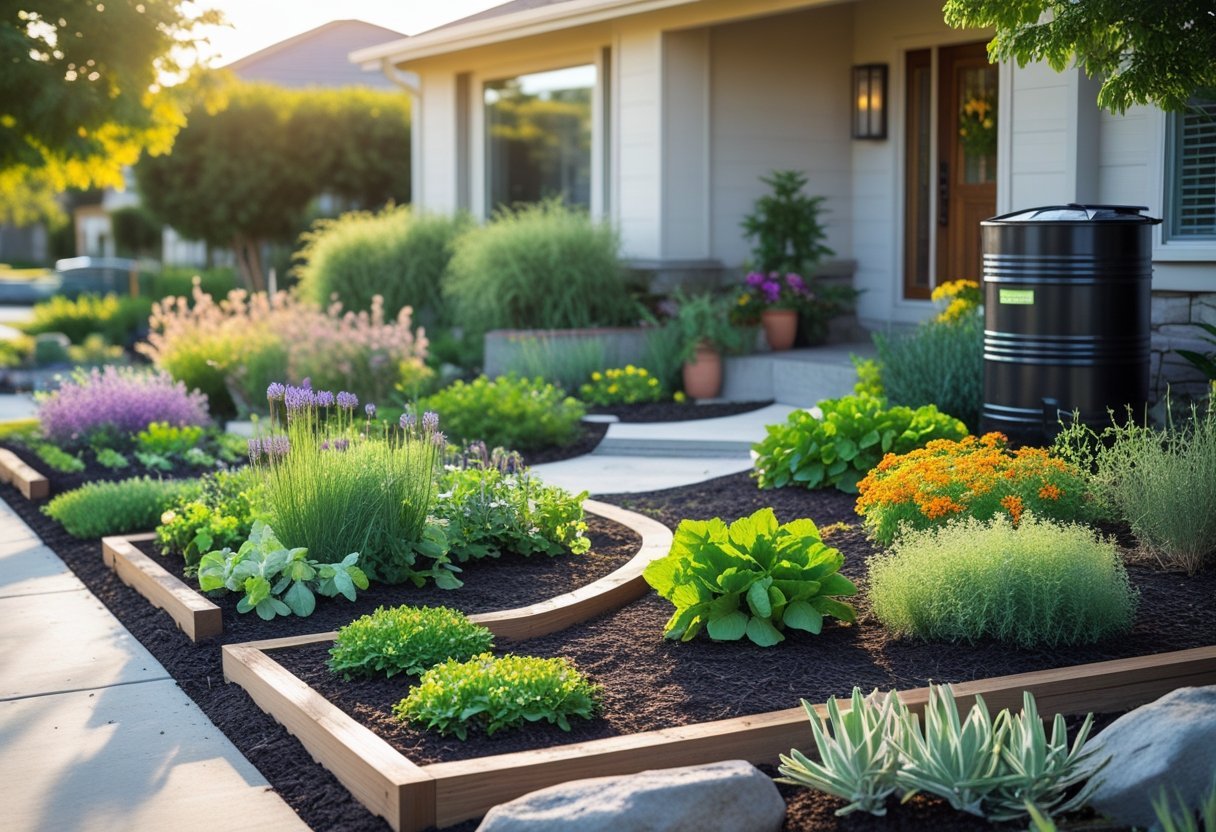
Sustainable planting helps reduce water use and supports the environment. Choosing the right plants and creating habitats for wildlife makes a front garden both practical and eco-friendly. These methods focus on saving resources while enriching the local ecosystem.
Drought-Tolerant Choices
Selecting drought-tolerant plants cuts down on watering needs significantly. These plants are adapted to survive with little water and still look good through dry seasons. Examples include lavender, sedum, and native grasses.
Using mulch around these plants keeps soil moist and cool. It reduces evaporation and stops weeds from taking nutrients. Grouping plants with similar water needs also prevents overwatering.
Choosing drought-resistant native plants helps the garden thrive naturally. These plants handle local climate changes better and need less care than non-native options. This saves water and reduces maintenance.
Supporting Local Wildlife
Plants can create habitats that feed and shelter birds, bees, and butterflies. Native flowering plants like coneflowers and milkweed attract pollinators essential for a healthy garden.
Adding features like birdbaths or small brush piles encourages wildlife to visit and stay. This supports biodiversity and keeps pests under control naturally.
Using a variety of plants that bloom throughout different seasons provides continuous food sources. This diversity helps maintain a balanced ecosystem and keeps the garden lively year-round.
Frequently Asked Questions
A successful front garden often combines practical features with visual interest. Using curves, vertical space, and a mix of plants helps maximize small areas. Low-maintenance choices and thoughtful pathways also improve the look without extra work.
What are some simple landscaping ideas for a small front garden?
Curved flower beds with mixed perennials bring color that lasts through many seasons. Adding vertical gardens on fences can save space while adding greenery.
How can I design a low maintenance front garden?
Choosing shrubs that require little care and using decorative mulch reduces watering and weeding needs. Solar lights along paths improve appearance without daily attention.
Which plants are suited for a full sun front yard landscape in Zone 7?
Drought-tolerant shrubs and sun-loving perennials like lavender, coneflowers, and ornamental grasses work well. Edible plants such as herbs thrive in full sun and add function.
What are some effective design strategies for a small, low maintenance front yard?
Combining simple stone pathways with planted beds and mulch keeps the layout neat. Vertical planting and grouping similar plants help to reduce maintenance and enhance appeal.
How can I create a visually appealing front garden with minimal space?
Using layered plantings with different heights adds depth. Curved beds and mixed colors capture attention. Adding features like herb or berry plants makes the space both beautiful and useful.
What are the best practices for planning a front yard landscape in a temperate climate?
Select native and adaptable plants that suit changing seasons. Use mulch and stones to retain moisture and reduce weeds. Plan for pathways and lighting to make the garden inviting year-round.