French Cottage Garden Ideas: 7 Timeless Designs for Charming, Low‑Maintenance Yards
You can bring French cottage charm to your own yard without a big budget or perfect skills. This article shows simple ideas and guiding principles that help you shape walkways, layered plantings, climbers, and cozy flower beds so your outdoor space feels relaxed and full of life.
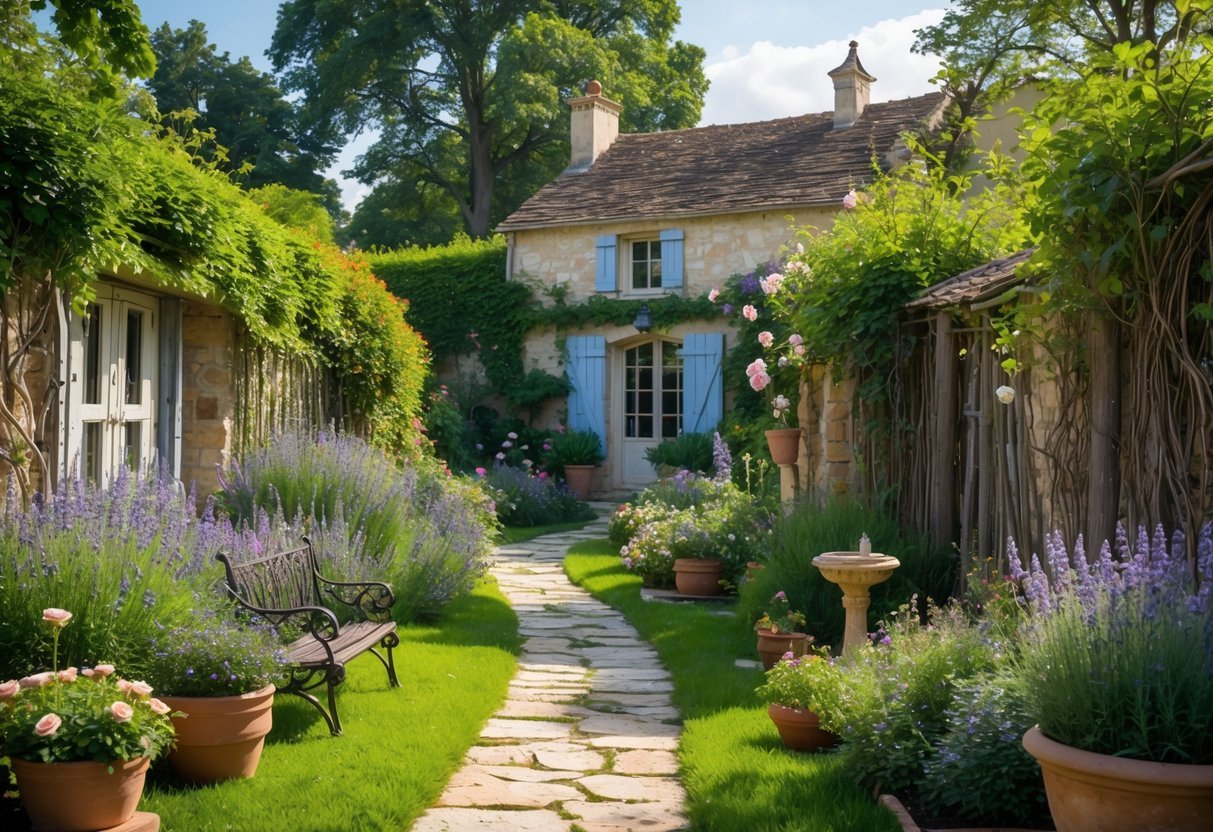
You’ll learn practical ways to add scent, structure, and soft, natural layers so your garden looks inviting and stays easy to care for. Expect tips on hedges, paths, mixed borders, sculpted accents, and low-maintenance choices that fit a real-life schedule.
1) Lavender Hedges Along Walkways
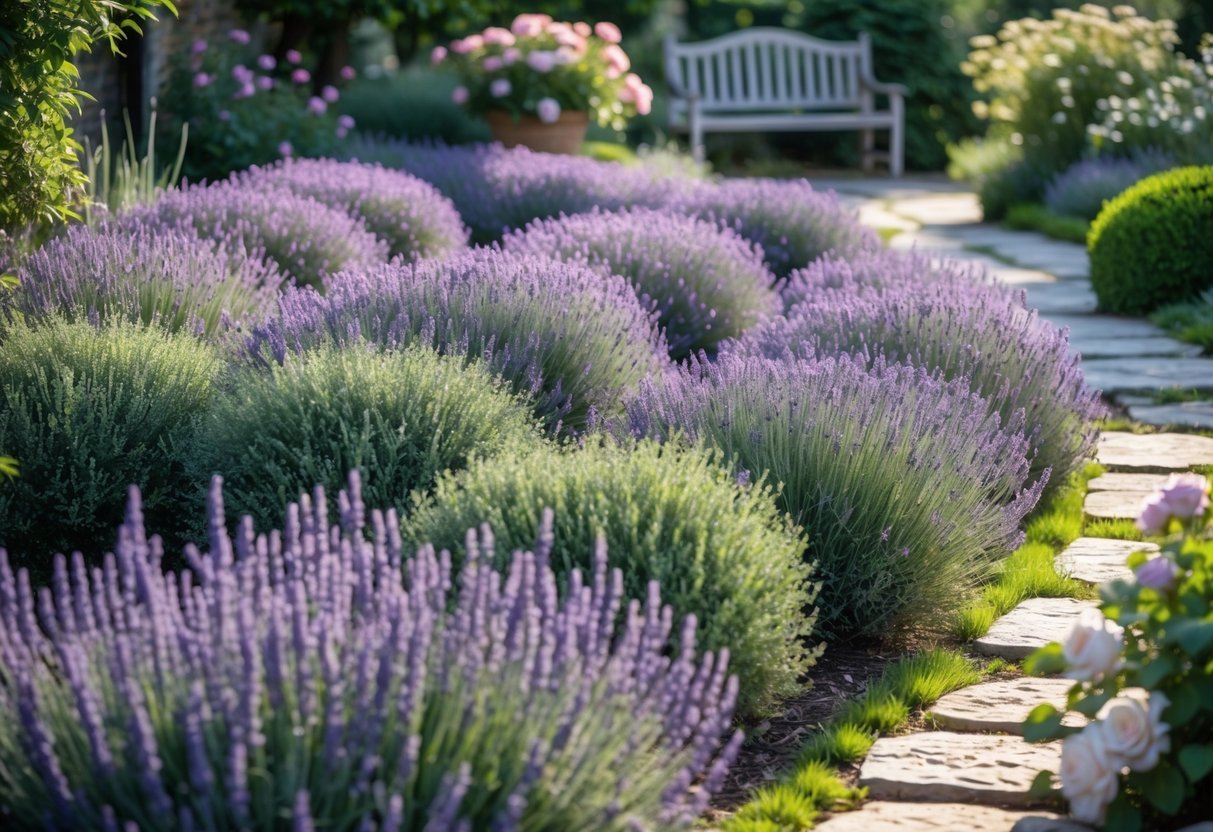
Plant lavender along your paths to add color and a light scent as you walk. Space plants 18–24 inches apart for a neat, continuous border.
Choose English lavender for cool climates and Spanish types for hot, dry sites. Lavender likes full sun and well-drained soil, so avoid low spots that stay wet.
Trim lightly after flowering to keep a tidy shape and encourage new growth. The hedges attract bees, so expect gentle pollinator activity near your walkways.
2) Layered Planting for Depth and Texture
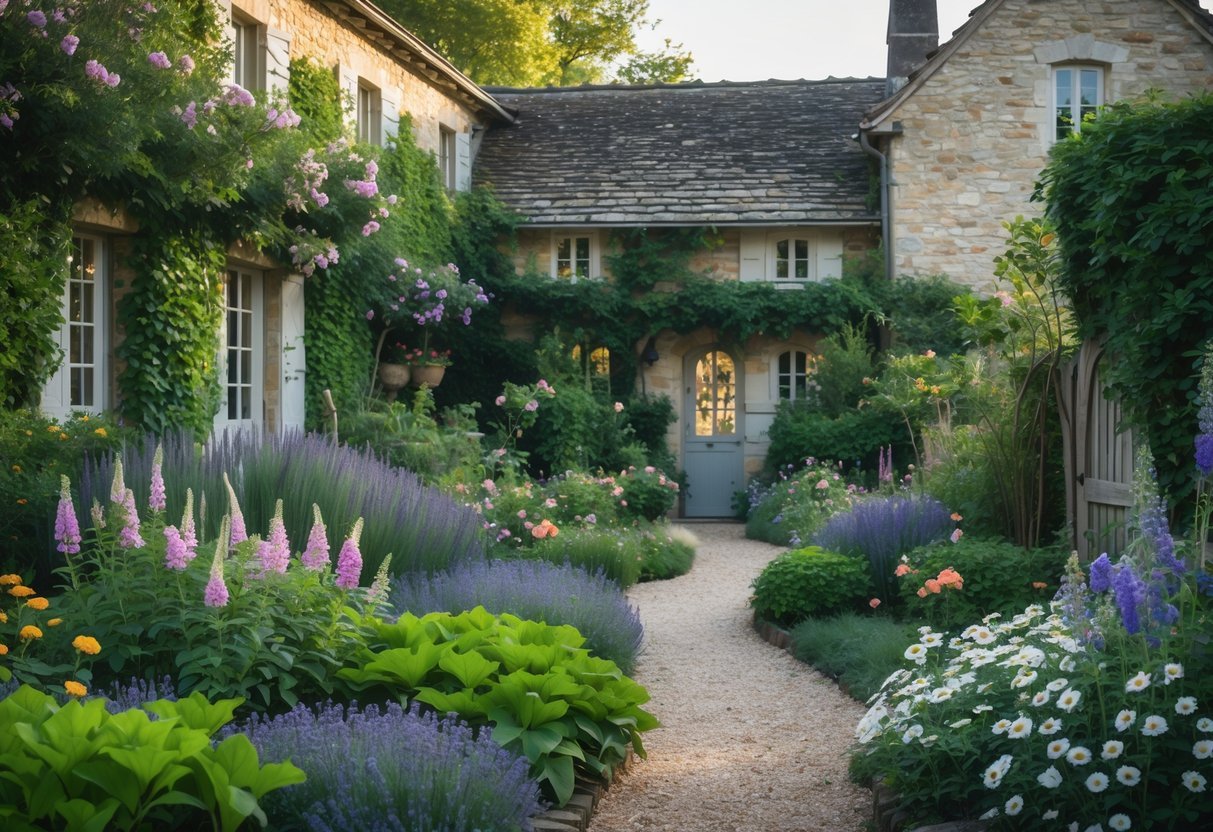
Use layers of different heights to make your garden feel full without taking more space. Place tall spires or climbers at the back, medium shrubs in the middle, and low mounds or groundcover at the front.
Mix textures and leaf shapes to add interest. Combine soft lavender and roses with structured boxwood or grasses for contrast.
Plant in drifts and repeat groups of the same species to create flow. Stagger bloom times so your garden keeps color across seasons.
3) Climbers over Low Shrubs
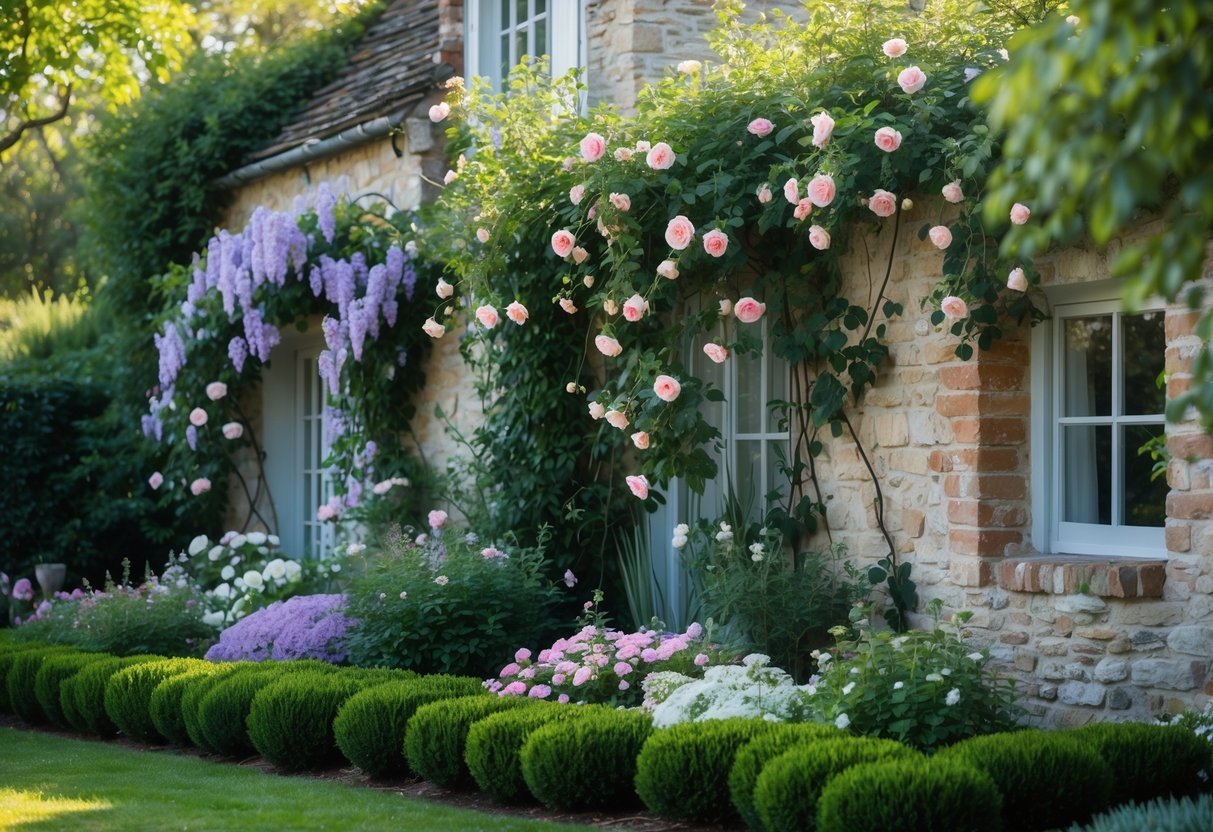
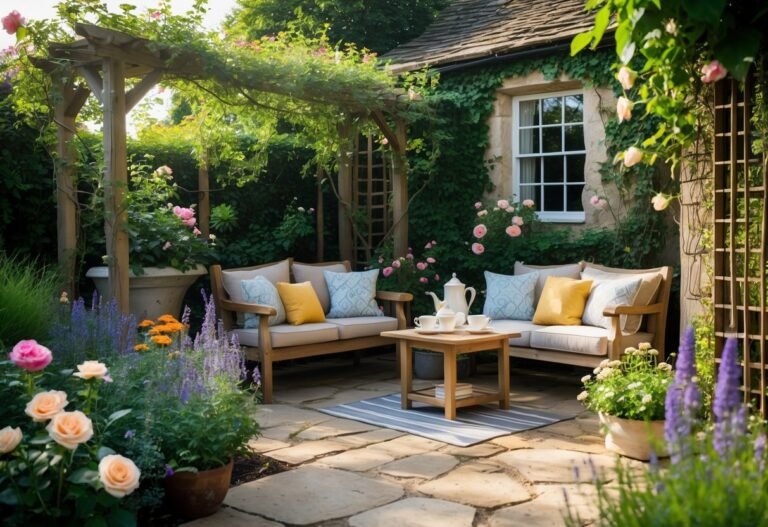
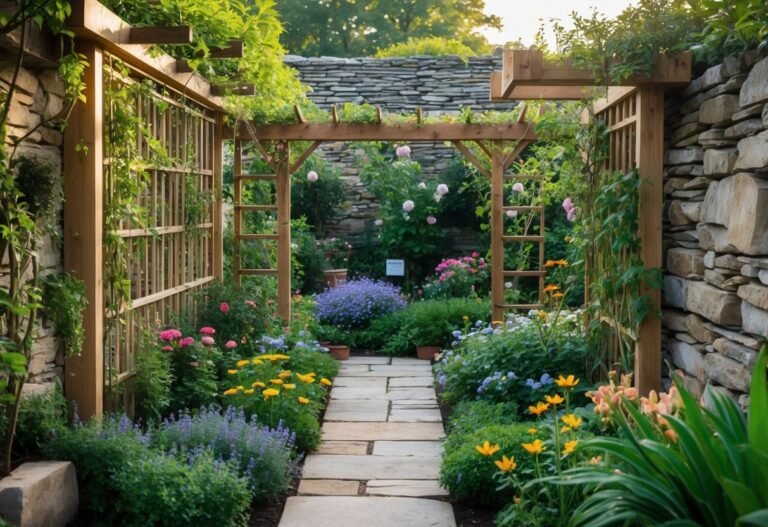
Use climbers to add height without blocking sightlines. Train roses, honeysuckle, or clematis up small arches or frames set just behind low shrubs.
This layered look gives depth and keeps the garden feeling full, not crowded. Prune regularly so climbers don’t overwhelm the shrubs below.
Choose fragrant or seasonal-flowering climbers for scent and color. Tie stems gently and provide sturdy supports to guide growth.
4) Whimsical Curved Pathways
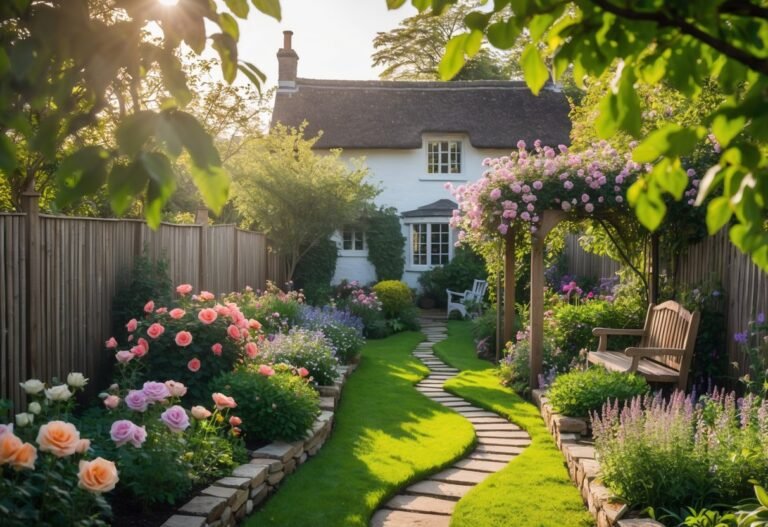
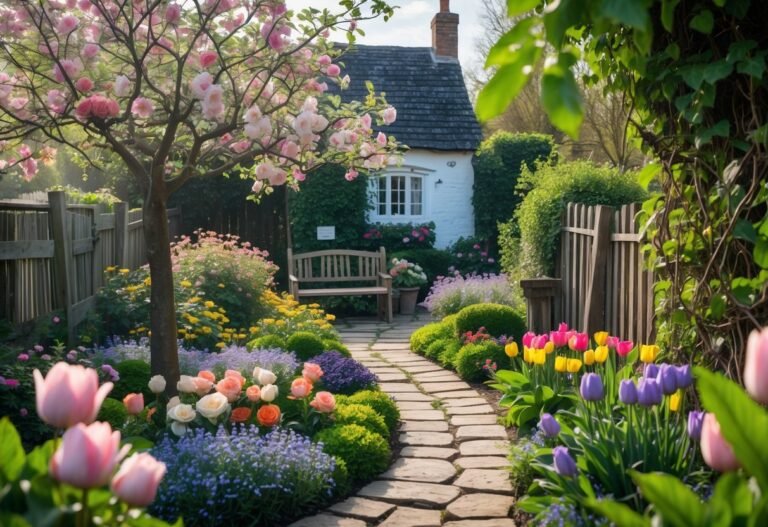
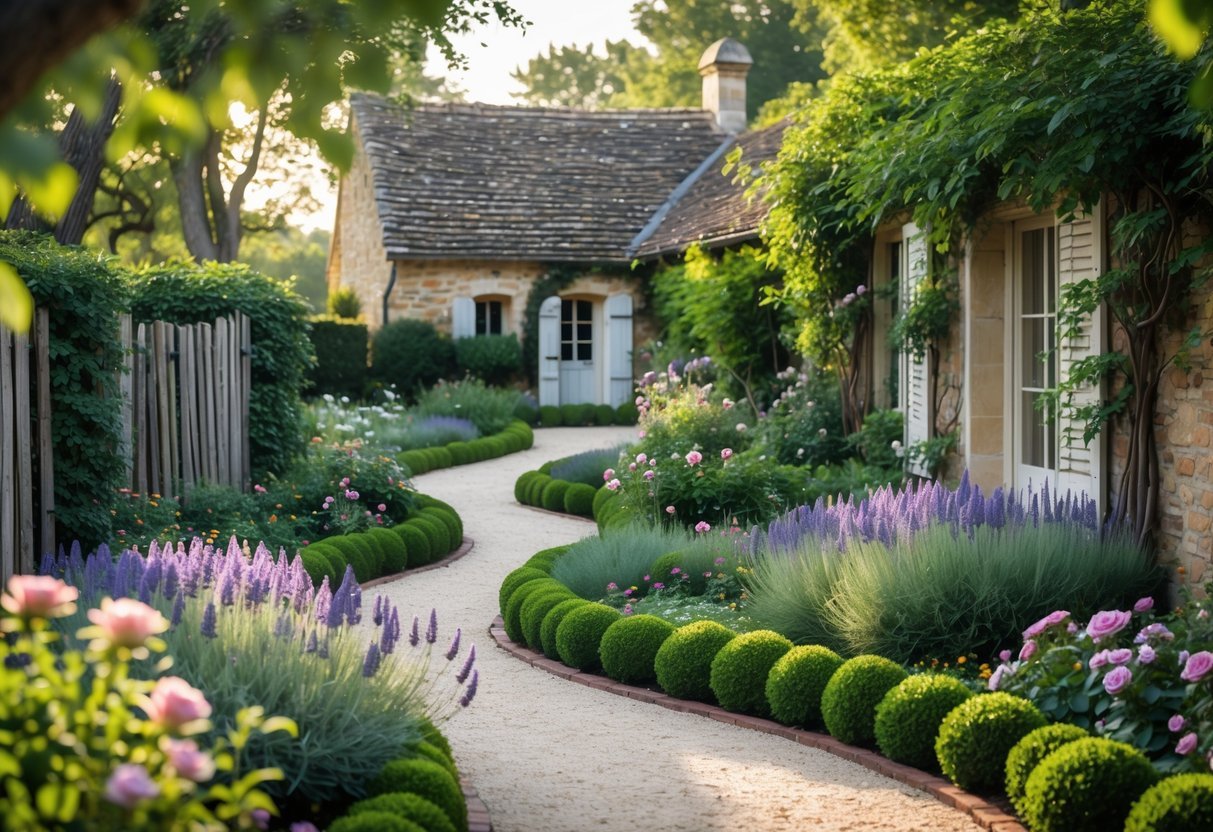
Curved paths guide your eye and slow your pace, creating a gentle, relaxed feel in the garden. Use gravel, brick, or reclaimed stone for a natural, worn look that suits the cottage style.
Plant low borders like thyme, lavender, or creeping phlox to soften edges and add scent as you walk. Let beds spill over the path to keep the layout informal and cozy.
Add a simple arch or bench at a bend to create a pause point. These small moments make the garden feel intimate and inviting.
5) Overlapping Flower Beds
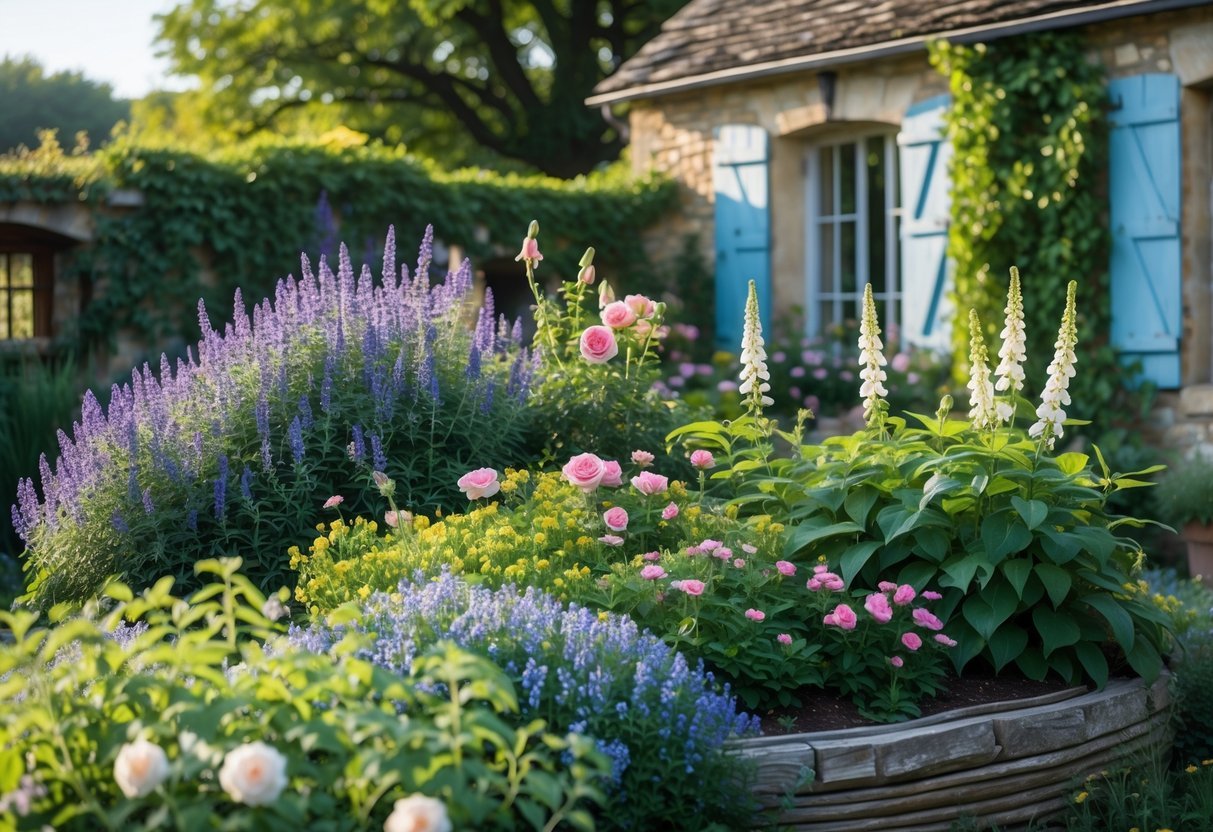
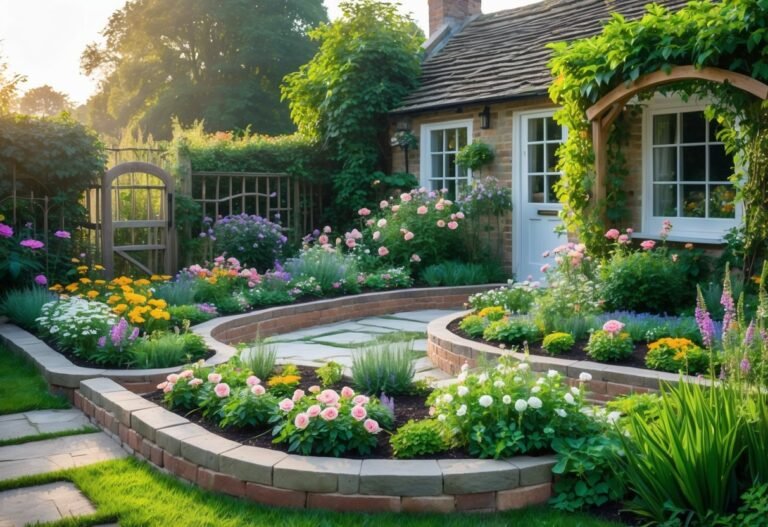
You can layer plants to create the soft, overflowing look of a French cottage garden. Place taller perennials like delphiniums or hollyhocks at the back and let lower flowers spill forward.
Mix textures and bloom times so your beds look full from spring to fall. Use herbs and small shrubs between flowers to add scent and structure without harsh lines.
Let edges blur by allowing groundcovers and trailing plants to spill onto paths. This keeps the garden feeling informal and gently worn.
6) Sculpted Boxwood Balls
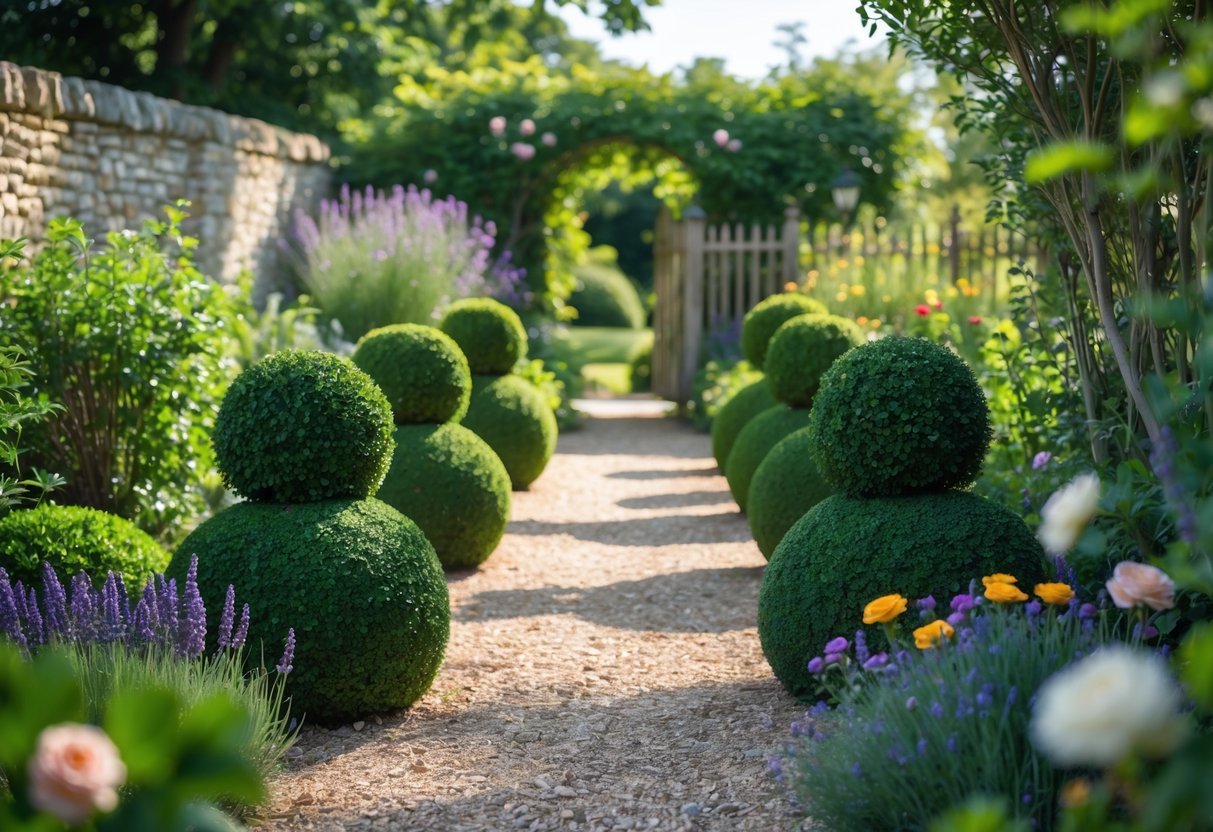
Add sculpted boxwood balls to give your cottage garden tidy form and year-round green. They bring a formal touch without clashing with informal flower beds.
Place them in pairs by a path or mixed among perennials to guide the eye. You can trim them by hand or use simple frames for consistent shapes.
Choose dwarf boxwood varieties for small spaces and plant in well-drained soil. With basic pruning twice a year, they stay neat and low-maintenance.
7) Feathery Ferns for Lush Green Layers
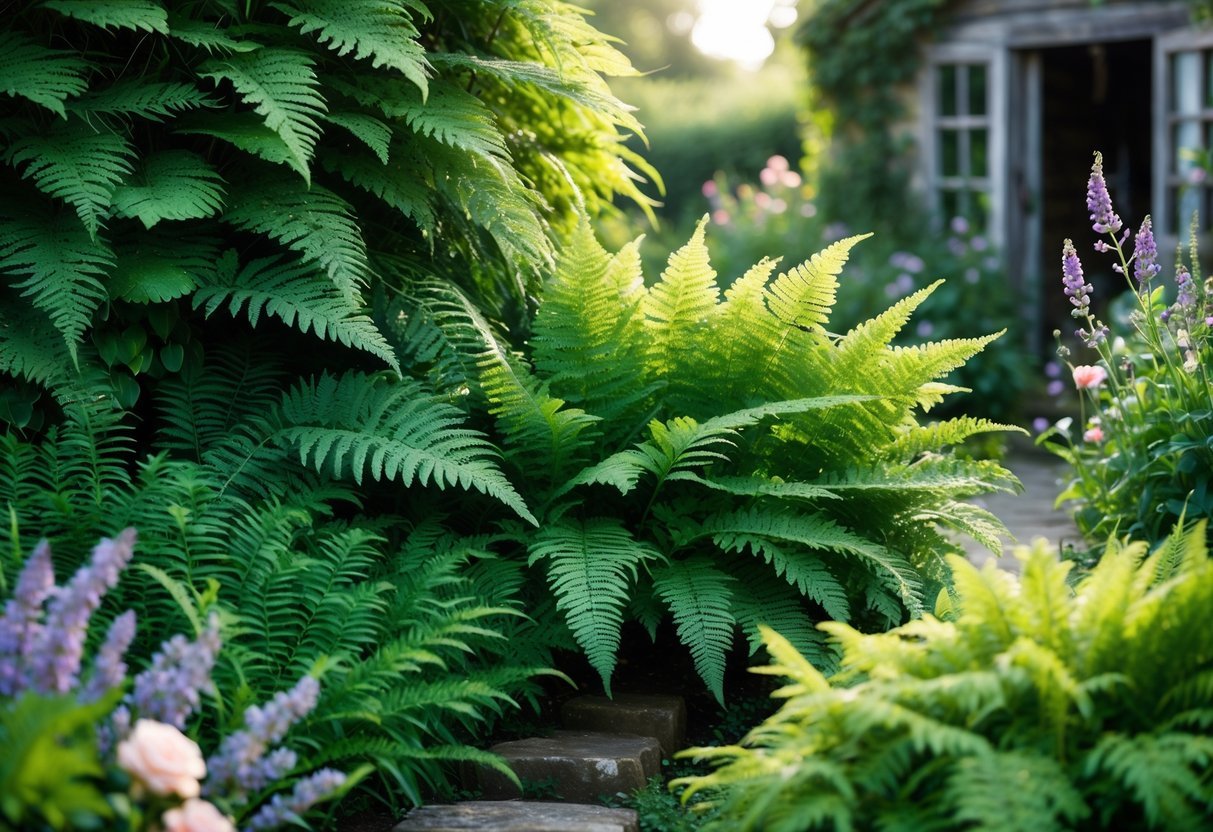
Use ferns to add soft, feathery texture to shady corners of your cottage garden. They fill gaps between flowering plants and create a calm, layered look.
Choose hardy, low-maintenance varieties that suit your climate and soil. Plant in groups for a natural, woodland feel and water regularly until established.
Essential Principles of French Cottage Gardens
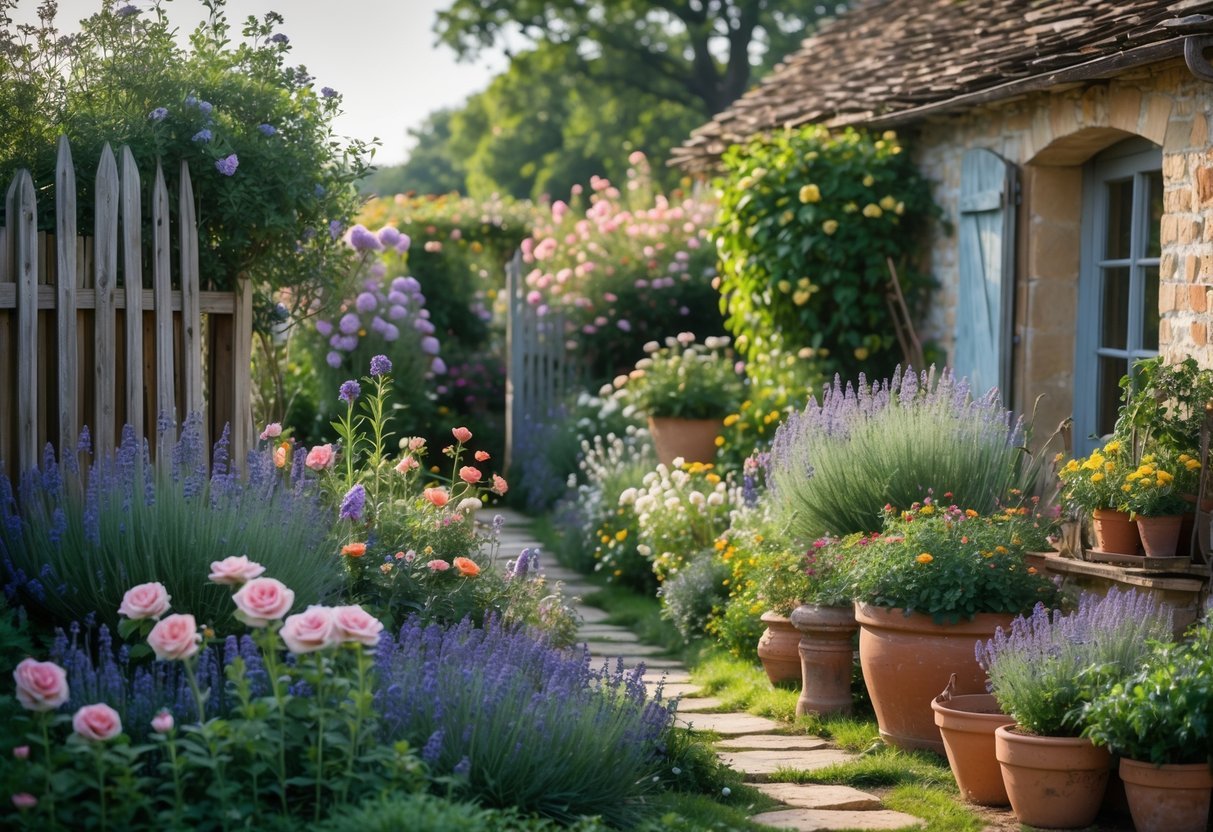
You will focus on creating an informal, layered layout with mixed plantings, simple hardscape, and a soft color palette. Aim for balance between structure (paths, fences, trellises) and free-flowing beds that invite touch and scent.
Design Aesthetics and Layout
Place paths, seating, and structures so they create small rooms and sightlines. Use gravel or stepping stones for paths about 2–3 feet wide to guide movement without formal symmetry. Position a bench or small table at the end of a path or within a planting island to create a moment of pause.
Mix vertical elements—trellises, arbors, short fences—with low beds to add depth. Keep beds informal: curved edges, layered heights, and plants spilling onto walkways. Include one focal point, such as a rose-covered arch, a weathered urn, or a small stone wall, to anchor the design.
Think about maintenance when you lay out the space. Group plants by water needs and allow 18–24 inches between medium perennials for mature spread. This keeps the garden full but reduces constant replanting and tugging at crowded plants.
Traditional Plant Pairings
Combine annuals, perennials, shrubs, and edibles for a lived-in look. Try lavender with roses and catmint along a border for fragrance and repeated bloom. Plant foxglove or delphinium behind lower mounds of geraniums and sweet alyssum to create vertical contrast.
Use edible plants among flowers: plant chives by roses to deter pests, and tuck lettuce or herbs into sunny gaps. Repeat three to five plant types across the garden to create unity without monotony. Include at least one evergreen or structural shrub—boxwood, rosemary, or small yew—to give winter form.
Consider bloom times when you choose plants. Mix early bulbs (tulips, narcissus) with long-blooming perennials (coreopsis, rudbeckia) and late-season asters to sustain color from spring through fall.
Color Palette and Texture
Choose a restrained palette centered on soft pastels—lavender, blush pink, pale blue—with a few deeper accents like deep rose or mauve. Use white and cream flowers to brighten shade and tie beds together. Limit bright primaries to small, intentional spots so they don’t overpower the calm.
Vary texture to add interest: feathery grasses, rounded mounds of salvia, glossy foliage of roses, and lacy fennel or yarrow. Repeat a texture in multiple beds to create rhythm. Use foliage contrast—silvery leaves (lavender, sage) against dark green—to make blooms stand out even when flowers fade.
Add hardscape texture: weathered stone, rough terracotta pots, and worn wood for a rustic feel. These elements balance soft planting and help the garden read as cohesive and intentionally aged.
Maintaining a Sustainable French Cottage Garden
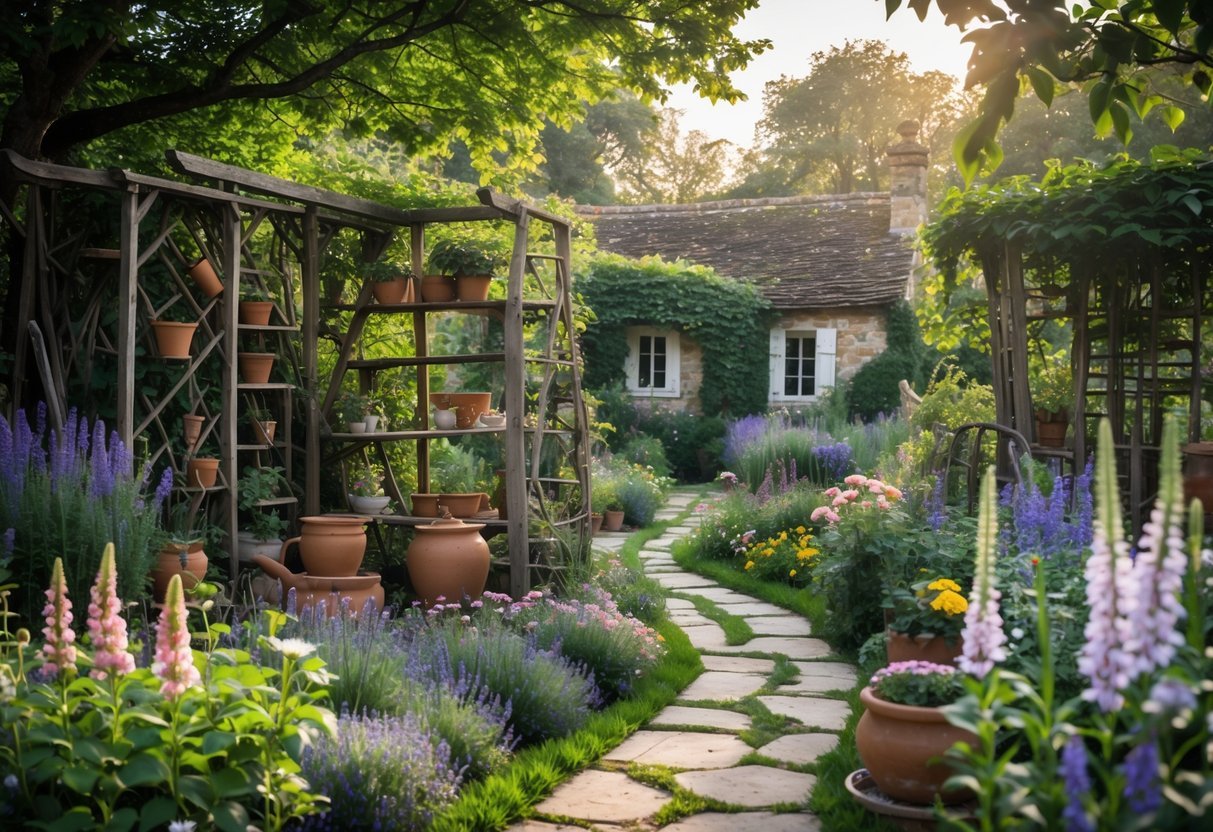
Focus on using low-impact materials, water-saving methods, and plants that fit your soil and climate. Plan seasonal tasks so you reduce waste and keep the garden healthy year-round.
Eco-Friendly Practices
Use native and drought-tolerant plants like lavender, salvia, and yarrow to cut water use and support pollinators. Group plants by water needs in your beds to make irrigation efficient.
Replace peat with compost and well-rotted manure to improve soil structure. Add 2–3 inches of mulch around beds to retain moisture and suppress weeds.
Collect rainwater with a barrel or two; hook them to downspouts and use a watering can for targeted watering. Choose organic pest controls such as insecticidal soap, neem oil, or hand removal for caterpillars and slugs.
Install a small pollinator patch with open-faced flowers and avoid systemic pesticides to protect bees and butterflies.
Seasonal Upkeep Strategies
Spring: divide overcrowded perennials, amend soil with compost, and plant annuals after the last frost. Deadhead spent blooms regularly to extend flowering and reduce seed spread.
Summer: water deeply twice a week for established plants, more for new transplants. Check for mildew on roses and treat early with improved air circulation and pruning.
Fall: cut back tender perennials and collect seed heads for sowing or sharing. Add a 2-inch winter mulch for root protection in colder zones.
Winter: use this slow season to sharpen tools, repair fences, and plan next year’s plant swaps. Monitor bird feeders and leave some hollow stems for overwintering insects.
Frequently Asked Questions
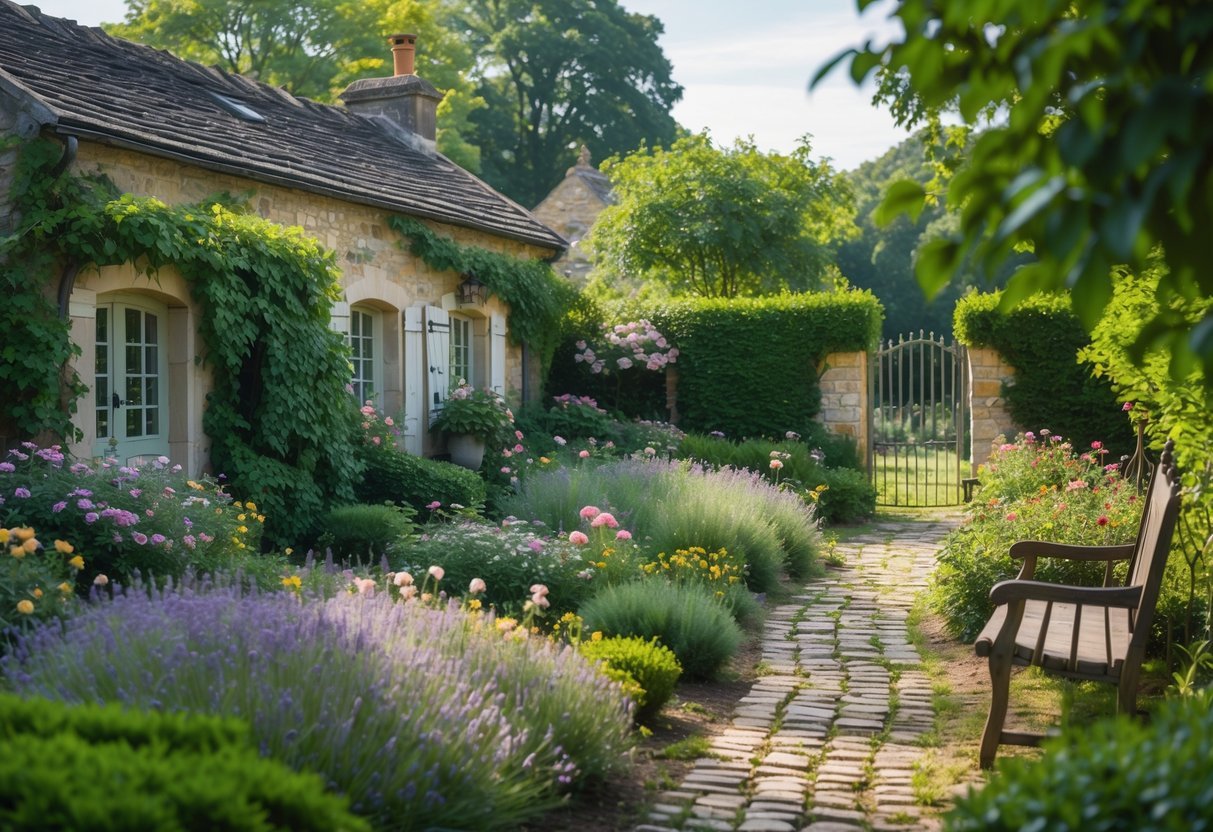
This section answers practical points about layout, plant choices, and small-space tricks. It notes specific features you can use, like lavender hedges, layered planting, climbers, curved pathways, and overlapping beds.
What are the essential elements of a French cottage garden design?
Include winding, whimsical curved pathways to lead the eye. Use layered planting: tall spikes behind low mounds to add depth and texture.
Plant lavender hedges along walkways for scent and a neat edge. Add climbers over low shrubs to create vertical interest and soft transitions.
Use overlapping flower beds that spill into paths. Choose mixed herbs, perennials, and annuals for a relaxed, overflowing look.
How can I incorporate modern elements into a French cottage garden?
Keep the classic plants but use cleaner hardscape lines, like straight-stepped paths within a curved layout. Combine simple, low-maintenance materials such as gravel or corten steel with rustic stone.
Limit the palette to two or three colors for a contemporary feel. Add a single sculptural element or a modern bench to anchor the space without losing cottage charm.
What types of plants are traditionally used in French country gardens?
Lavender, rosemary, and sage provide fragrance and structure. Delphiniums, roses, peonies, and foxgloves give height and color.
Use climbers like clematis and sweet peas over low shrubs or trellises. Include groundcover and edging plants to create the overlapping, spilling beds typical of the style.
How can I create a French garden in a small outdoor space?
Scale down paths to narrow, curved walkways that still feel inviting. Use layered planting in a small bed: tall background plants, mid-height perennials, and low edging plants.
Train climbers on small trellises or archways to add vertical space. Plant a short lavender hedge along a path or patio edge to mimic larger designs.
What are some key differences between English and French cottage garden styles?
English cottage gardens often look denser and wilder, with heavy mixed borders. French cottage gardens favor a slightly more structured look with clear paths and repeating motifs like lavender hedges.
French style uses more herb plantings and aromatic edges. English style leans toward a fuller, less restrained jumble of flowers.
Where can I find inspiration for French country garden decor?
Look at photos of traditional Provence gardens and rural French cottages for layout ideas. Garden books and reputable garden websites offer plant lists and layout plans.
Visit local botanical gardens or nurseries that feature Mediterranean or cottage-style displays. Save images of features you like, such as lavender-lined paths, layered beds, and climbers over shrubs, to guide your own plan.