Fall Vegetable Garden Design Ideas for Small Yards and Seasonal Success
Fall’s cooler weather gives you a chance to grow fresh vegetables when summer crops fade. With thoughtful layout and plant choices, you can fit cold-hardy greens, root crops, and late-season brassicas into small beds or containers and keep harvesting well into autumn.
Plan beds for easy access, choose cold-tolerant varieties, and add simple protection like row cover to extend your harvest. Use staggered planting, vertical supports, and high-value spots for quick-growing crops so your space stays productive and tidy all season.
Keep paths clear, group plants by water and light needs, and pick varieties that improve after light frost to get the most from your fall garden.
Key Takeaways
- Design beds for continuous harvest and easy maintenance.
- Choose cold-tolerant crops and protect them to extend the season.
- Use smart layout and plant timing to maximize small spaces.
Planning a Fall Vegetable Garden
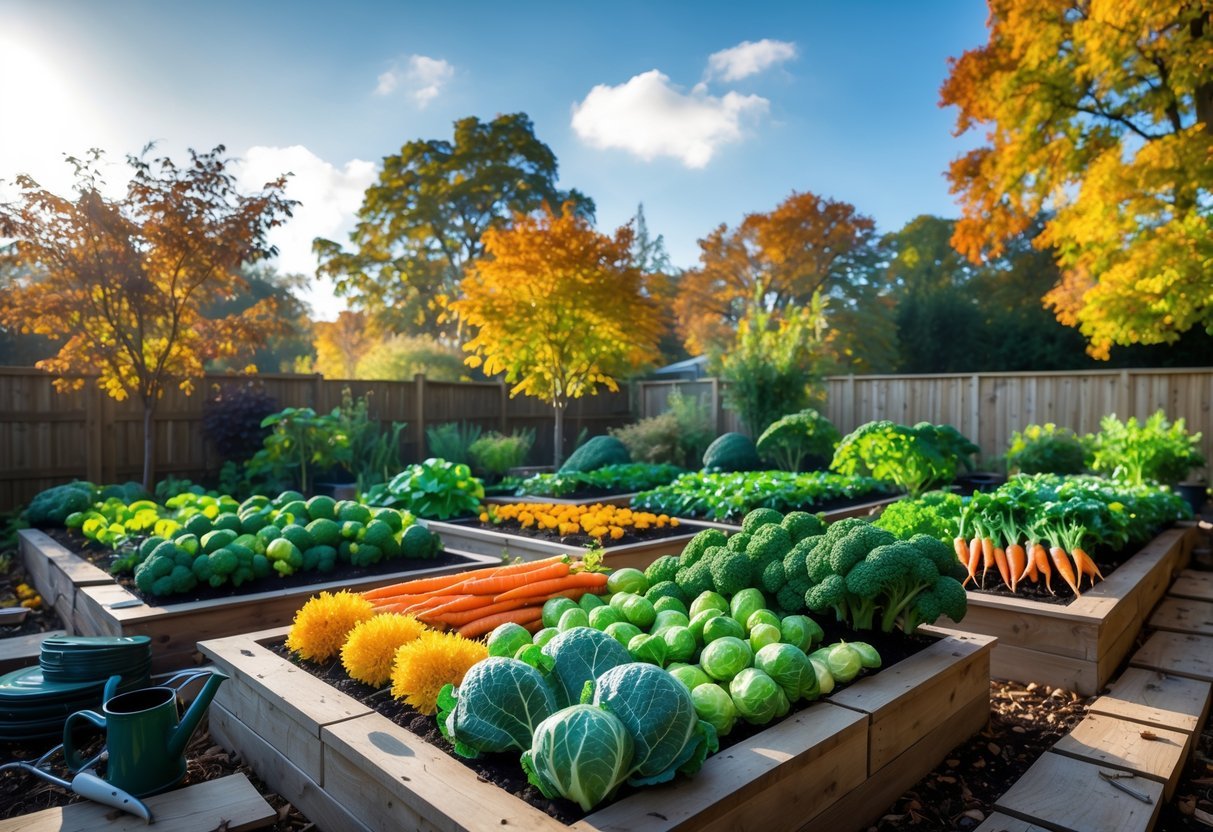
Focus on light, soil, plant choice, and planting dates. Pick a sunny spot, build fertile soil, choose cold-hardy crops, and plant by your local first-frost schedule.
Choosing the Best Site
Select a spot that gets at least 6 hours of sun daily. Morning sun warms plants and dries dew, which reduces disease on brassicas and lettuce.
Check drainage by digging a small hole and filling it with water; it should drain within a day. If drainage is slow, use raised beds or add coarse sand and organic matter.
Place beds where you can reach them easily for watering and harvesting. Keep them near a water source and sheltered from strong winds to protect young transplants and extend harvest time.
Soil Preparation for Autumn
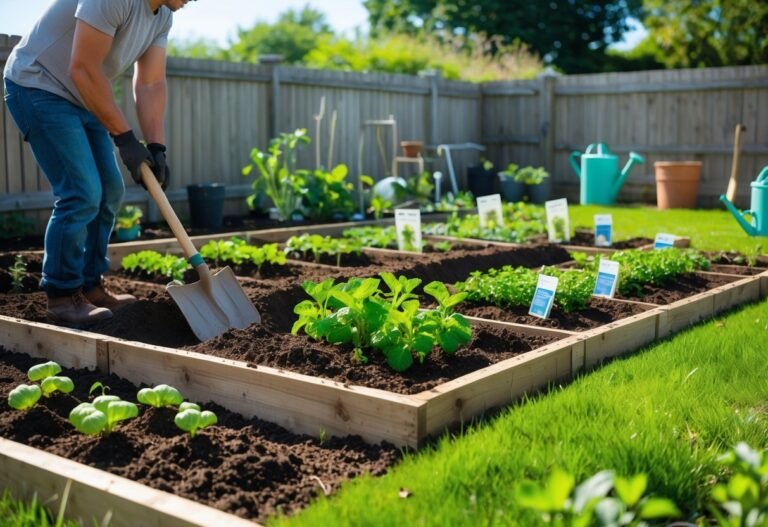
Test soil pH; most cool-season vegetables prefer pH 6.0–7.0. Amend with lime if pH is below 6.0, or sulfur if above 7.5, based on test results.
Work 2–3 inches of compost into the top 6–8 inches of soil to boost fertility and structure. Add a balanced slow-release fertilizer if your test shows low nitrogen or phosphorus.
Smooth the surface and firm lightly. Mulch with straw or shredded leaves after planting to conserve moisture, suppress weeds, and protect roots from early freezes.
Selecting Cool-Season Vegetables
Choose crops known to tolerate cold: kale, spinach, Swiss chard, carrots, beets, radishes, broccoli, cabbage, and peas. These hold flavor after light frosts.
Pick varieties labeled “cold-hardy,” “short-season,” or “frost-tolerant.” For example, plant ‘Winterbor’ kale, ‘Hakurei’ turnips, or ‘Norland’ red potatoes for reliable fall performance.
Mix quick-maturing crops (radishes, spinach) with slower ones (brussels sprouts, carrots) so you harvest continuously. Use succession sowing every 10–14 days for leafy greens.
Timing Your Plantings
Find your average first-frost date from a local extension or weather service. Count back using each crop’s days-to-maturity to set your planting window.
For direct-sown crops, sow seeds so harvest finishes 2–3 weeks after your first frost for carrots and beets. For transplants, start seedlings 4–6 weeks before transplanting outdoors.
Protect young plants with row covers when night temps dip near freezing. For extra time, use cold frames or cloches to push plantings later into fall.
Garden Design Strategies for Fall
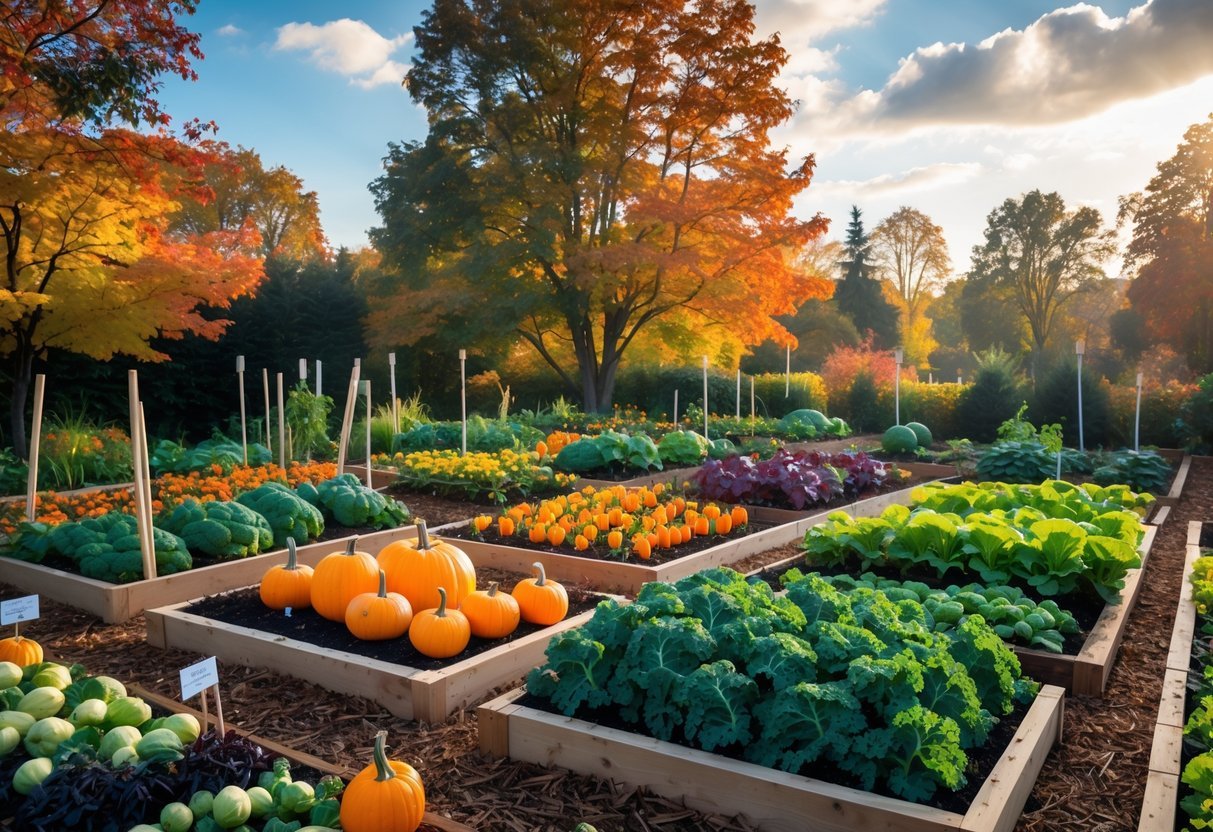
Plan for cool-weather crops, space for rotation, and ways to extend harvest. Focus on plant pairings, bed height and soil warmth, and timed sowing to keep your plot productive into late fall.
Companion Planting Layouts
Use specific pairings to reduce pests and boost yields. Plant carrots next to onions to deter carrot fly; pair beans with cucumbers to share vertical space and fix nitrogen. Avoid planting brassicas (broccoli, cabbage) next to strawberries because they compete for nutrients.
Map beds in a grid or rows, and place taller crops on the north side so they don’t shade shorter ones. Leave 12–18 inches between leafy greens for airflow and 2–3 feet around broccoli or cabbage for head development. Add a 6–12 inch border of marigolds or nasturtiums to attract beneficial insects and repel aphids.
Label each pairing on your plan and rotate families yearly to cut disease build-up. Use a simple table to track who follows whom:
- Year 1: Brassicas → Legumes → Roots → Nightshades
- Year 2: Legumes → Roots → Nightshades → Brassicas
This keeps soil balanced and reduces pest cycles.
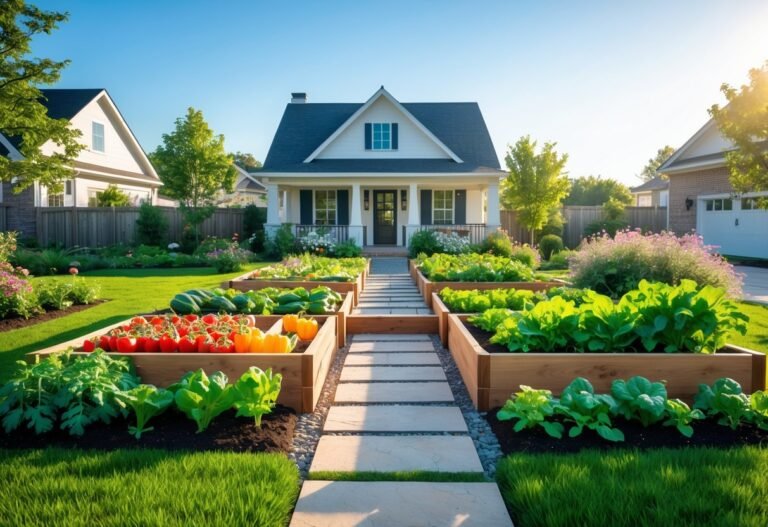
Incorporating Raised Beds
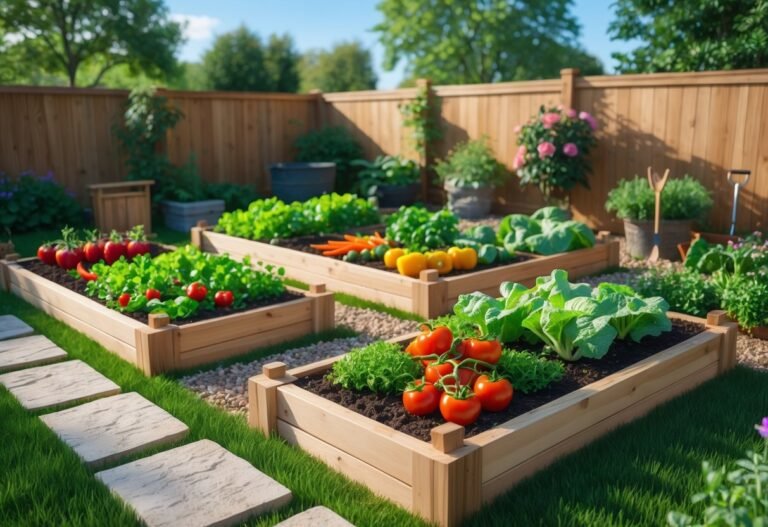
Raised beds warm faster in the fall and drain better after rain. Build beds 8–12 inches high for cooler climates; use 12–18 inches for roots like carrots and beets. Opt for 3–4 foot widths so you can reach the center without stepping on soil.
Use a loose mix: 40% topsoil, 30% compost, 30% coarse material (peat, coconut coir, or aged bark). Mulch with straw or shredded leaves to keep soil temps steady and protect shallow roots. Install simple cold frames or row covers to gain 5–10°F and push harvests later.
Group beds by microclimate: place heat-loving fall members (peppers, eggplant) in the warmest sunny bed and cool-season greens (kale, lettuce) where shade is partial late afternoon. This optimizes sunlight and extends productive days.
Succession Planting Techniques
Stagger sowing to avoid one big harvest and to keep steady produce. Sow quick crops like radishes and lettuce every 10–14 days in late summer through early fall. Plant slower crops—broccoli, cabbage—earlier so they mature before hard frost.
Use underplanting: sow fast greens between slower-growing seedlings so you harvest the small greens while main crops establish. When a bed clears, replace spent plants with a quick crop or cover crop such as winter rye to protect soil.
Track planting dates on a simple chart with expected days to maturity. If frost threatens, be ready with row covers for 1–2 weeks of protection or move potted seedlings under shelter. This planning extends harvest and reduces waste.
Maximizing Harvest and Extending the Season
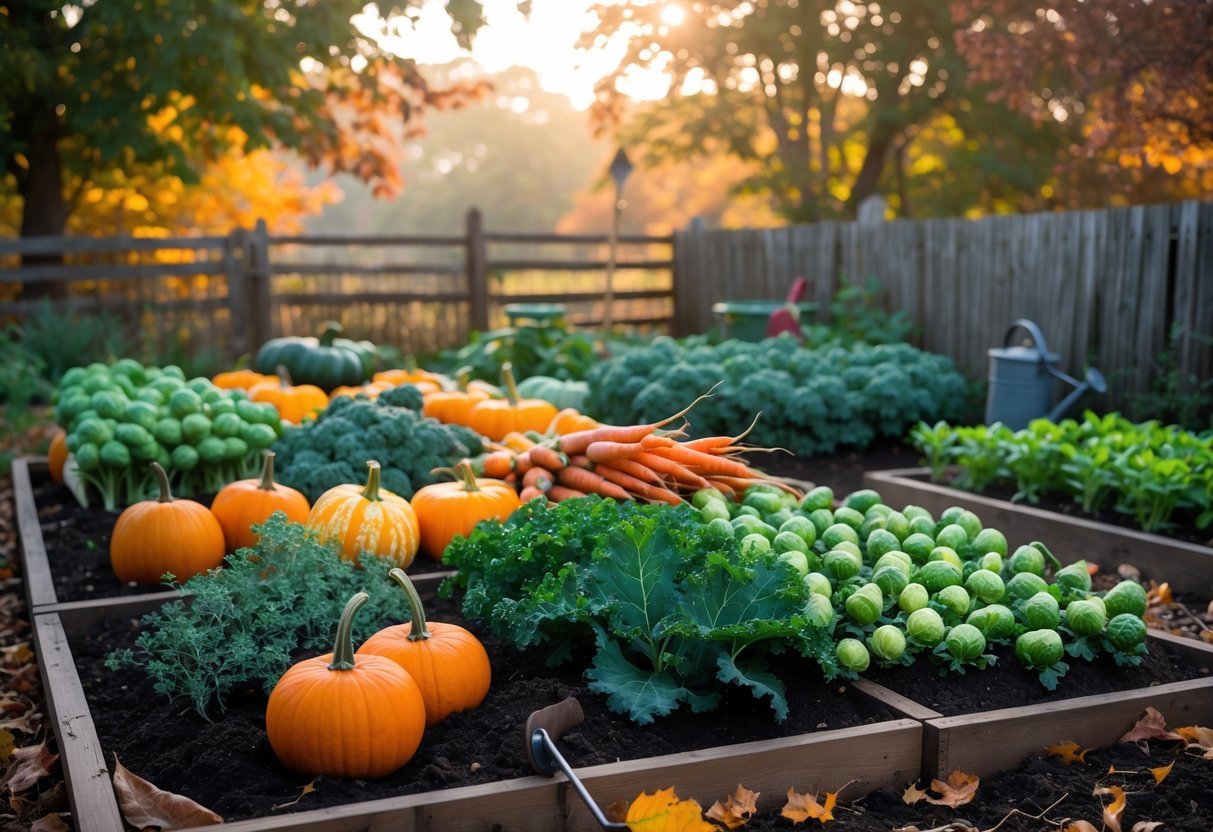
You can push harvests later and protect tender crops with a few practical tools and habits. Focus on frost protection, smart planting patterns, and soil care to keep plants producing into cold weather.
Using Row Covers and Cold Frames
Row covers trap heat and block frost while letting light and water pass through. Use lightweight fabric for early fall to protect greens and herbs; drape it over hoops and anchor the edges with soil or clips. For hardier protection, use heavier fabric or plastic on the coldest nights.
Cold frames act like mini greenhouses. Place them on a south-facing slope or sunny spot, and vent them on warm days to avoid overheating. Use reclaimed windows or clear plastic lids; add a hinge so you can prop the lid open. Monitor temperature—aim to keep it 5–10°F (3–6°C) above ambient to prevent stress.
Both tools let you push planting dates later and grow warm-season crops past first frost. Use thermometers inside frames, and remove covers during the day when temperatures rise above 50°F (10°C).
Crop Rotation in Fall Gardens
Rotate families to reduce disease and pest build-up in fall beds. Avoid planting brassicas where you grew brassicas this year; follow with a legume or root crop instead. Keep a simple map or notebook with bed history to track what you planted and where.
Short-season cover crops fit well in fall rotations. Plant clover, vetch, or winter rye after harvest to protect soil, add nitrogen, and reduce erosion. Terminate them in spring by mowing or cutting before they set seed.
When space is tight, use succession planting within the rotation: follow an early fall lettuce crop with garlic or peas sown for spring harvest. Stagger planting dates to spread harvests and lower pest pressure over time.
Mulching for Late Season Growth
Apply 2–4 inches of organic mulch over root zones to keep soil temperature steady and roots active longer. Use straw, shredded leaves, or composted bark. Mulch also reduces water loss and prevents soil from freezing and thawing repeatedly.
Leave a 1–2 inch gap around stems to prevent rot and pest hiding spots. Replenish mulch after heavy rains or winds. For raised beds, add an extra inch of insulation on the coldest sides to protect shallow roots.
Combine mulch with row covers or cold frames for the best results. Mulch buffers sudden temperature drops, while covers provide direct frost protection—together they extend production for many cool-season vegetables.
Frequently Asked Questions
You will find practical choices for easy-care crops, small-space layouts, and timing for planting to hit spring or fall harvests. The answers list specific vegetables, planting windows, and regional picks for California and Texas.
What are some low-maintenance vegetables to include in a fall garden design?
Choose hardy greens and root vegetables that tolerate cool weather and need little fuss. Kale, Swiss chard, spinach, and lettuce grow quickly and handle light frosts.
Include carrots, beets, and radishes. They store well in the ground and need only consistent soil moisture and occasional thinning.
Which vegetables are suitable for small-space fall gardening?
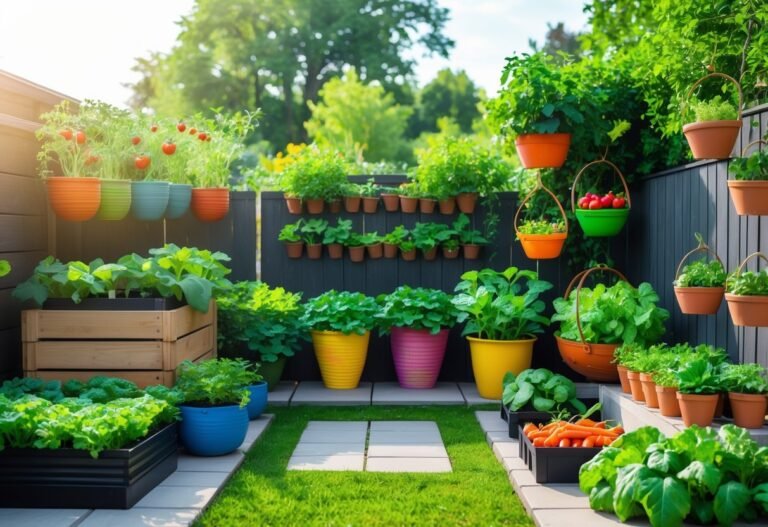
Pick compact or vertical crops that give a big yield from a small footprint. Leafy greens, salad radishes, scallions, and bush beans fit well in containers or small raised beds.
Use vertical supports for peas and small indeterminate tomatoes. Compact varieties of broccoli and cabbage also work in deep containers.
What is the best time to plant a fall vegetable garden for a spring harvest?
For a spring harvest from overwintered crops, plant hardy varieties in late summer to early fall. Aim for 6–10 weeks before your region’s first hard freeze so plants establish roots before cold.
For root crops you want to harvest in spring, plant in early fall so they mature slowly and store in the ground through winter. Check local frost dates and count backward from harvest size.
Can you suggest fall vegetables that thrive in California’s climate?
In most California zones, cool-season crops do well from late summer into fall. Plant kale, Swiss chard, spinach, and bok choy for continuous harvests.
Root crops like carrots and beets perform well in milder coastal and valley areas. In warmer inland spots, choose heat-tolerant brassicas and start them earlier in fall.
What crops should be planted in Texas during the fall?
Texas has wide climate differences, so adjust by zone. In North and Central Texas, sow broccoli, cabbage, cauliflower, and collards in late summer for fall and winter harvest.
In South Texas and coastal areas, plant kale, lettuce, carrots, and beets in fall. Use shade cloth in hotter spots and time planting after extreme summer heat eases.
Which vegetables are ideal for planting in August for a productive fall garden?
In many regions, August is good for quick-maturing greens and roots. Direct-sow radishes, leaf lettuce, spinach (or sow spinach in microclimates or use heat-tolerant varieties), and baby kale now for fall harvest.
Start brassicas like broccoli and cabbage indoors or buy transplants in August to set out later. Also plant carrots and beets in well-prepared soil for mid- to late-fall harvests.