Cottage Garden Design: Timeless Planting Plans and Practical Layout Tips
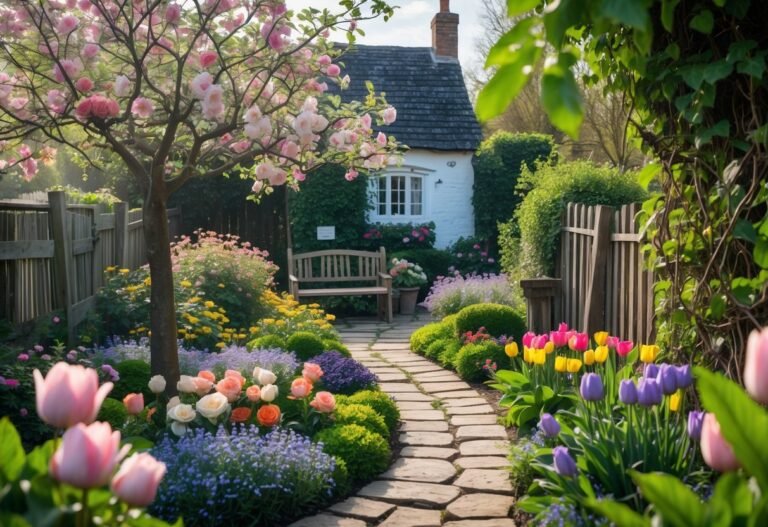
You can create a charming, low-fuss cottage garden by mixing flowers, herbs, and a few practical structures to give the space height, scent, and steady color. Picture rose bushes, climbing clematis, and self-seeding blooms layered with herbs and a small vegetable patch to make your yard feel full and lived-in.
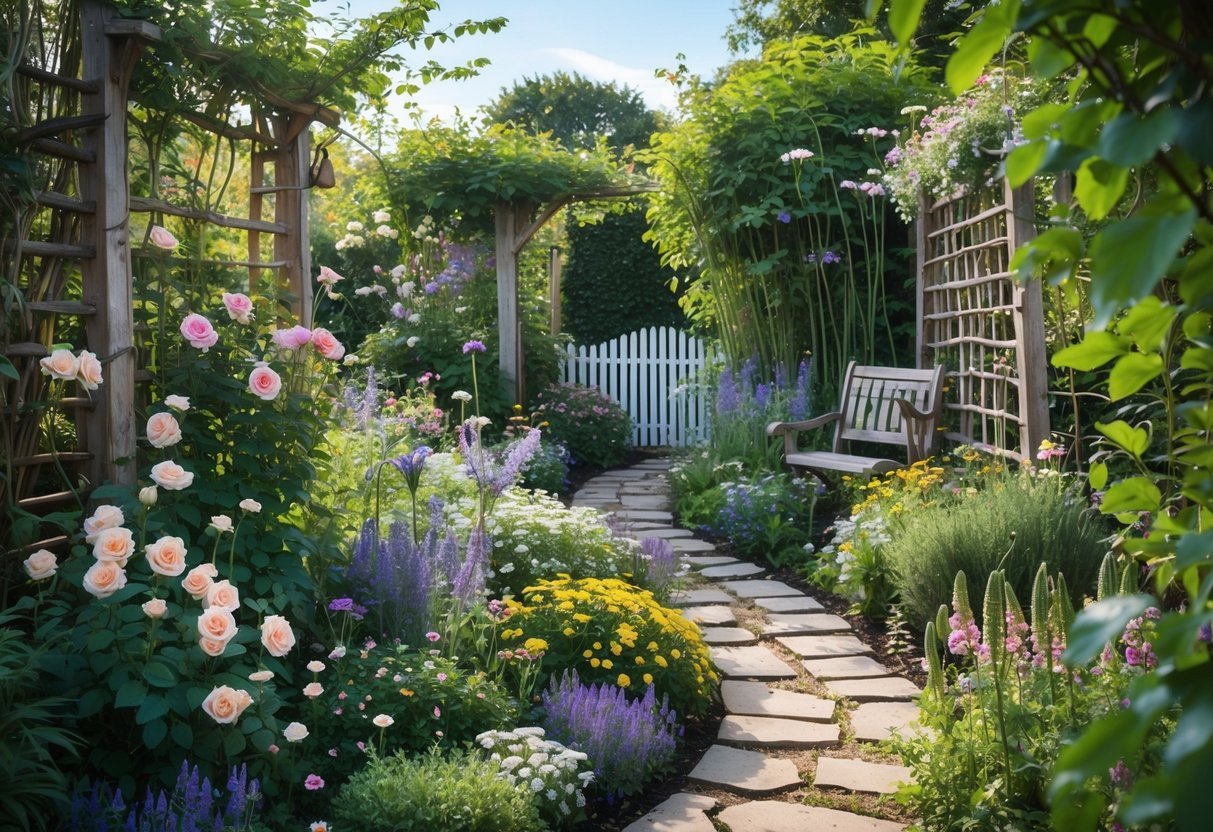
Choose plants that play well together, add informal paths or a trellis for vertical interest, and let some areas self-seed for an easy, natural look. You’ll learn simple layout tips, plant pairings, and styling ideas that match small or large spaces and make maintenance straightforward.
Key Takeaways
- Use a mix of flowers, herbs, and shrubs for varied color and texture.
- Add simple structures and informal paths to create depth and charm.
- Opt for self-seeding and low-maintenance plants to keep care easy.
Principles of Cottage Garden Design
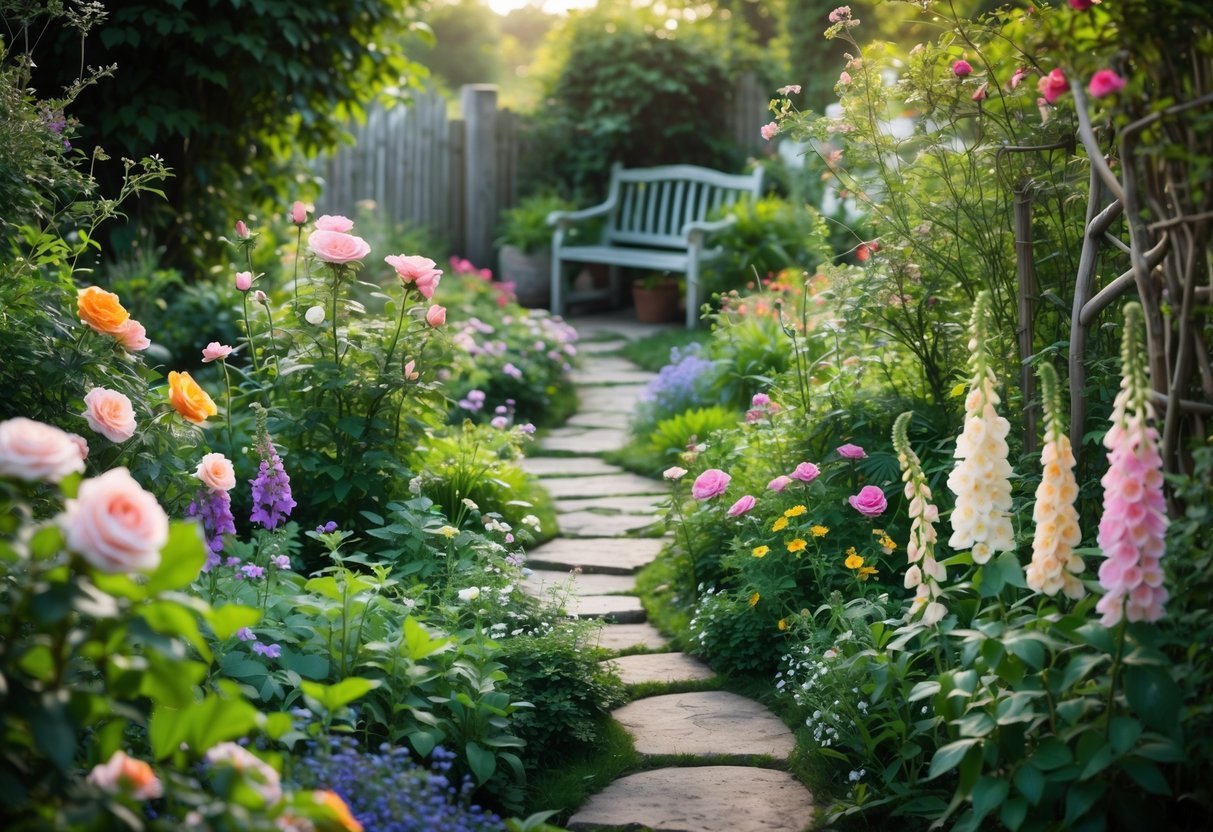
Expect an informal, plant-forward space that balances beauty and function. You will focus on layered planting, mixed species, and thoughtful use of paths and structures.
Characteristics of a Cottage Garden
A cottage garden feels dense and welcoming. You will use many flowering perennials, annuals, and edibles mixed together to create continuous bloom and interest from spring to fall.
Planting looks natural rather than rigid. Group masses of one species for impact, but let volunteers and self-seeders fill gaps to keep the casual look. Include climbers on trellises or fences to add height and vertical interest.
Use scent, texture, and color to engage the senses. Lavender, roses, and herbs add fragrance; airy plants like foxglove or cow parsley bring contrast; and bold colors draw the eye to focal points.
You will accept a bit of mess—deadheading and occasional thinning are fine. The goal is a lived-in, layered garden that feels both productive and charming.
Historical Influences
Cottage gardens grew from English village plots where people mixed ornamentals with food plants. You will see influences like informal beds, meandering paths, and plants that reseed easily from this heritage.
Traditional plants include roses, foxgloves, hollyhocks, and herbs such as thyme and rosemary. These species were chosen for beauty, scent, and usefulness, so your design should favor multipurpose plants.
The style values practical design choices: hedges or simple fences for boundary, small fruit trees for shade and yield, and hand-built structures rather than formal masonry. You can adapt these elements to modern yards while keeping the historical spirit.
Design Elements and Layout
Start with structure: define rooms with low hedges, arbors, or paths made from brick, gravel, or stepping stones. You will use these features to guide movement and frame views.
Layer plants in three zones: groundcover, mid-height perennials, and tall climbers or shrubs. This creates depth and supports pollinators and beneficial insects. Place edibles like lettuce or herbs in sunny patches for easy access.
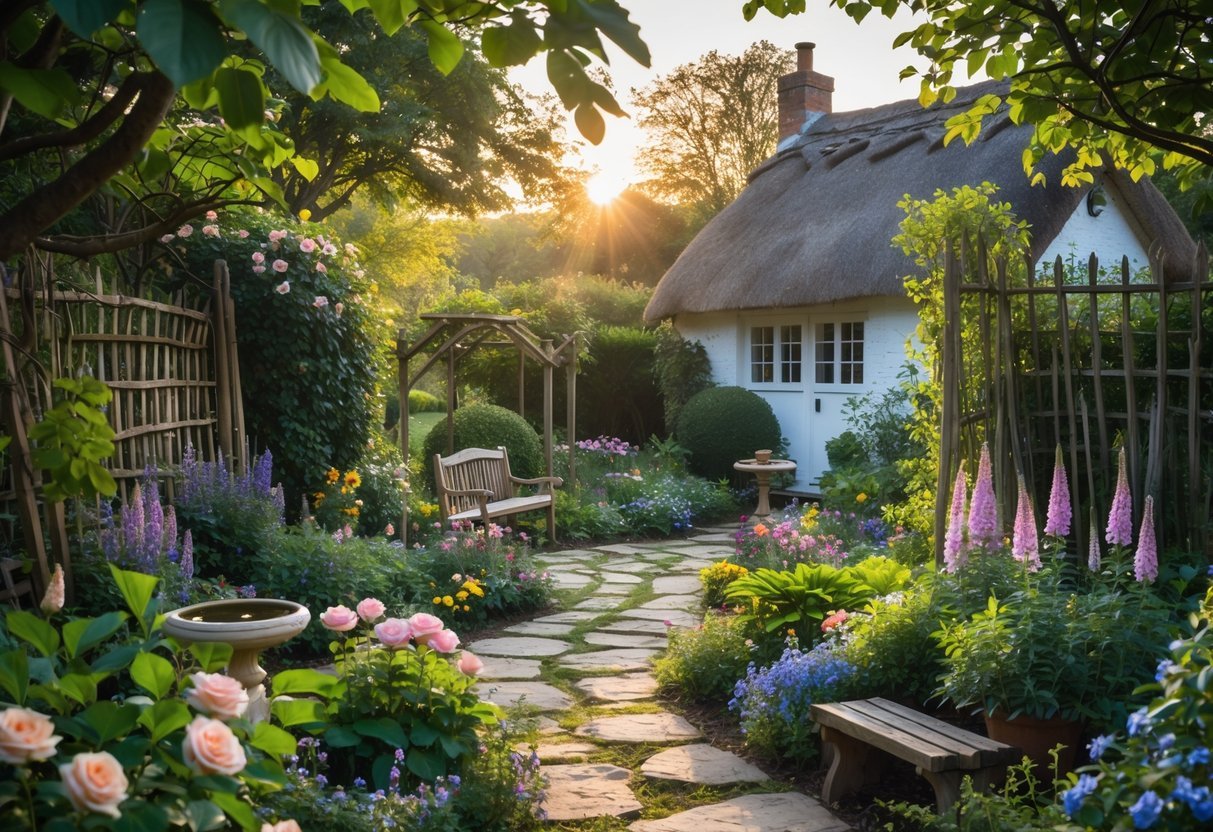
Balance color and texture by repeating a few key plants across the garden. Use focal points—like a bench, birdbath, or cottage-style gate—to anchor sightlines. Keep maintenance realistic: choose mostly low-care species and allow self-seeding for natural renewal.
Plant Selection for Cottage Gardens
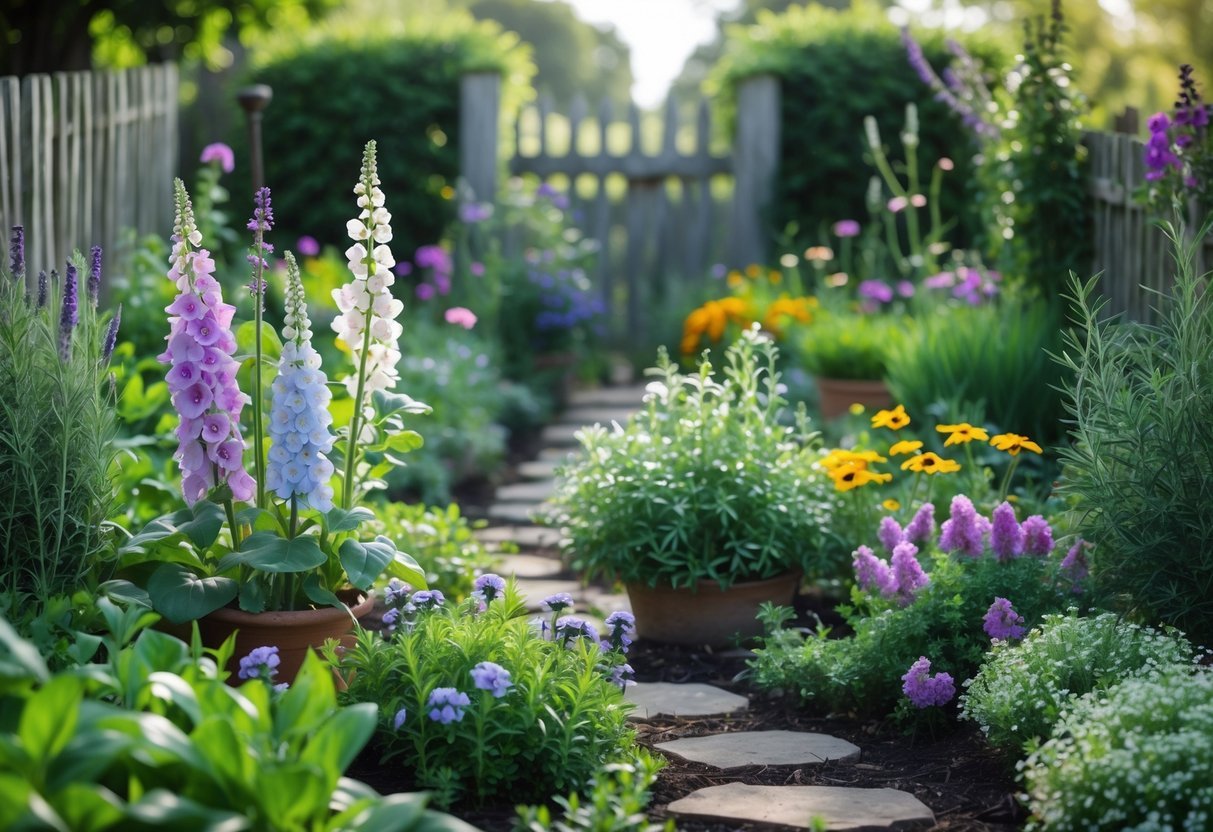
Pick plants that offer layered height, repeated color, and reliable bloom times. Aim for a mix of long-lived perennials, bright annuals, small shrubs, and some taller structural trees or accents so your garden stays full and varied through the year.
Choosing Perennials and Annuals
Perennials form the garden’s backbone. Use plants like catmint, peonies, lavender, and echinacea for repeatable structure and years of blooms. Place taller perennials (3–5 feet) toward the back or center and shorter ones (1–2 feet) at the edges to keep sightlines open.
Annuals add color and fill gaps quickly. Consider cosmos, nasturtiums, and zinnias for bright summer color. Plant annuals in drifts of three or more for bold impact and replace spent plants to maintain continuous bloom.
Mix foliage textures and bloom shapes. Combine spiky plants (delphinium), mounded herbs (sage), and soft fillers (sweet alyssum) to create that layered, informal cottage look.
Incorporating Shrubs and Trees
Small shrubs give structure and year-round interest. Choose roses, hydrangeas, and lavender shrubs for scent and blooms. Position shrubs as anchor points near paths, gates, or seating areas.
Select compact trees or large shrubs for height without overpowering the space. Crabapple, serviceberry, or small flowering cherry work well, offering spring flowers and light shade.
Use woody plants to frame beds and provide winter shape. Prune lightly to keep the informal cottage feel. Space shrubs so perennials can intermingle at their bases.
Native and Pollinator-Friendly Options
Pick native plants adapted to your climate to reduce maintenance and support local wildlife. Examples include native coneflowers, bee balm, and goldenrod where they suit your zone.
Choose nectar-rich flowers and varied bloom times to feed bees, butterflies, and hummingbirds from spring through fall. Plant milkweed for monarchs and asters for late-season pollinators.
Avoid heavy pesticide use. Provide shallow water sources and small undisturbed patches for ground-nesting bees to shelter. Cluster pollinator plants together for easier foraging.
Seasonal Color Planning
Plan for spring bulbs, summer perennials, and fall bloomers to keep color moving. Plant daffodils and tulips for spring, daylilies and roses for summer, and asters and sedum for fall interest.
Repeat color or a theme across beds to create cohesion. Use two or three main colors, then add a few contrasting accents to keep the palette lively without being chaotic.
Map bloom times on a simple calendar. Stagger planting and include late-season seeds like calendula to fill early gaps and extend the flowering season.
Styling and Enhancing Your Cottage Garden
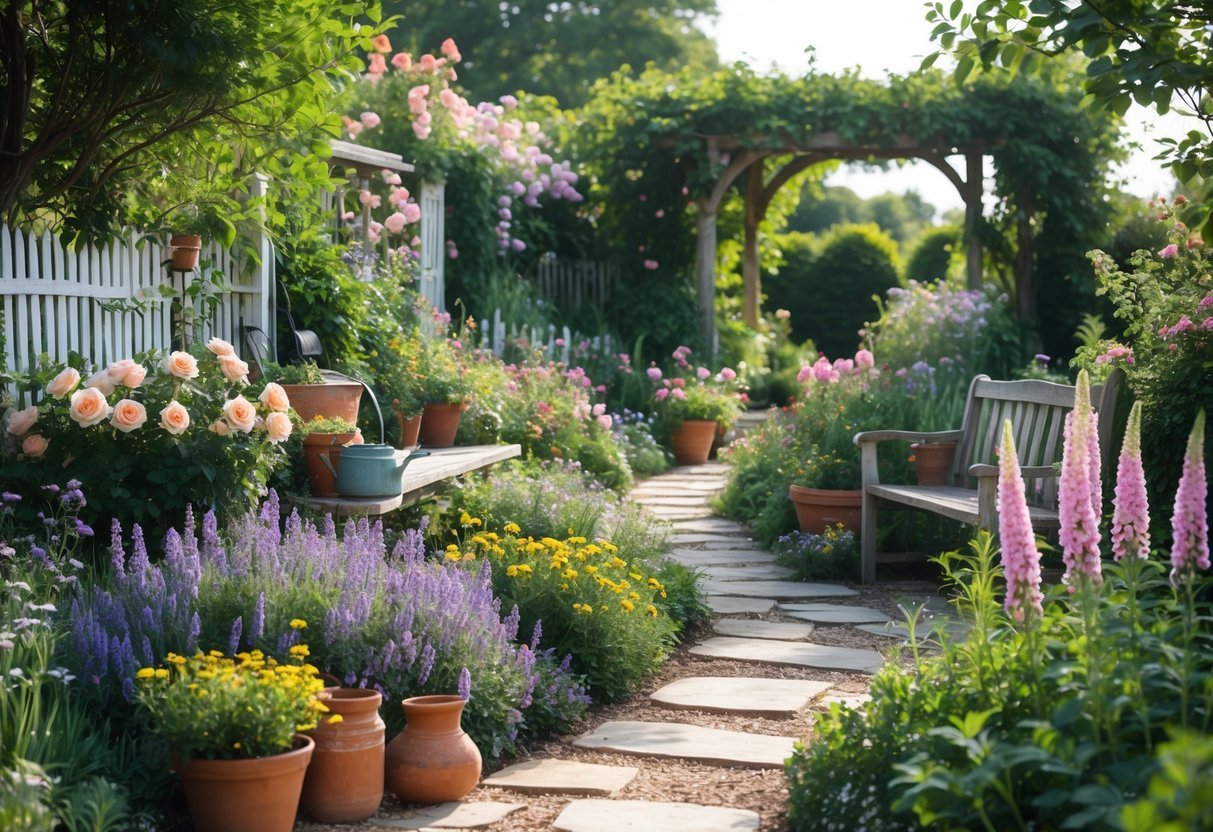
Design choices frame how your garden feels and works. Focus on durable paths, simple structures, and small decorative touches that add charm without extra upkeep.
Pathways and Borders
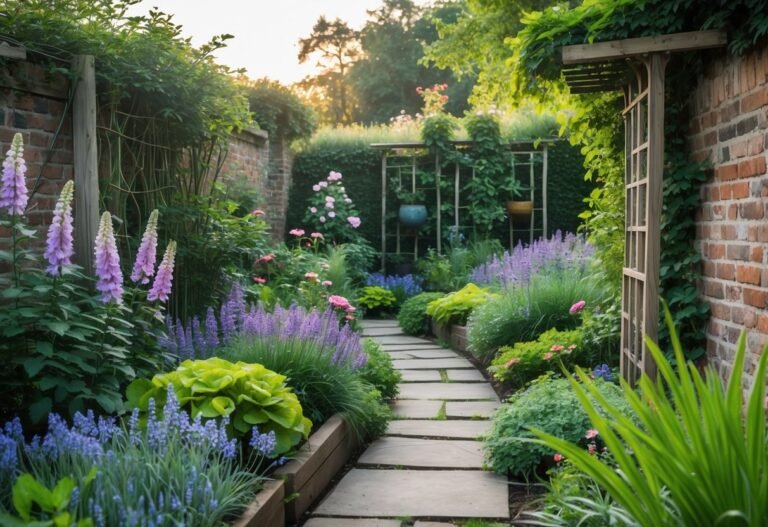
Choose paths that lead visitors and divide beds. Use crushed gravel, reclaimed brick, or stepping stones set in grass for an informal look. Aim for paths at least 24–36 inches wide where people walk frequently.
Keep edges soft. Plant low-growing lavender, thyme, or geraniums along borders to blur lawn-to-bed lines and release scent when brushed. For a tidier look, install a low stone or brick edging that matches your path material.
Use curves rather than straight lines to create a relaxed flow. Add a bench or focal plant at path ends to draw the eye. Maintain paths by topping up gravel annually and resetting any shifted stones.
Garden Structures and Features
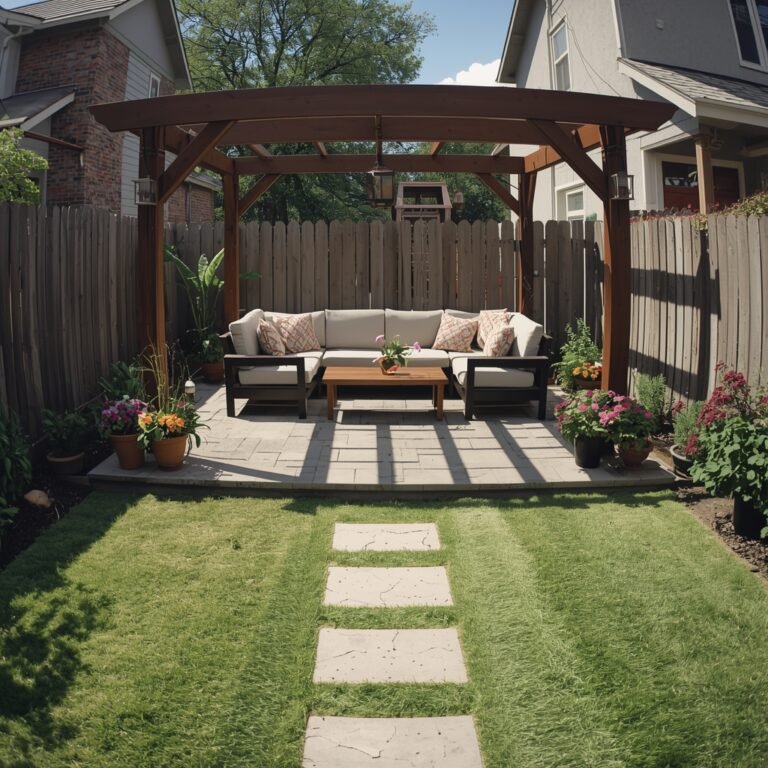
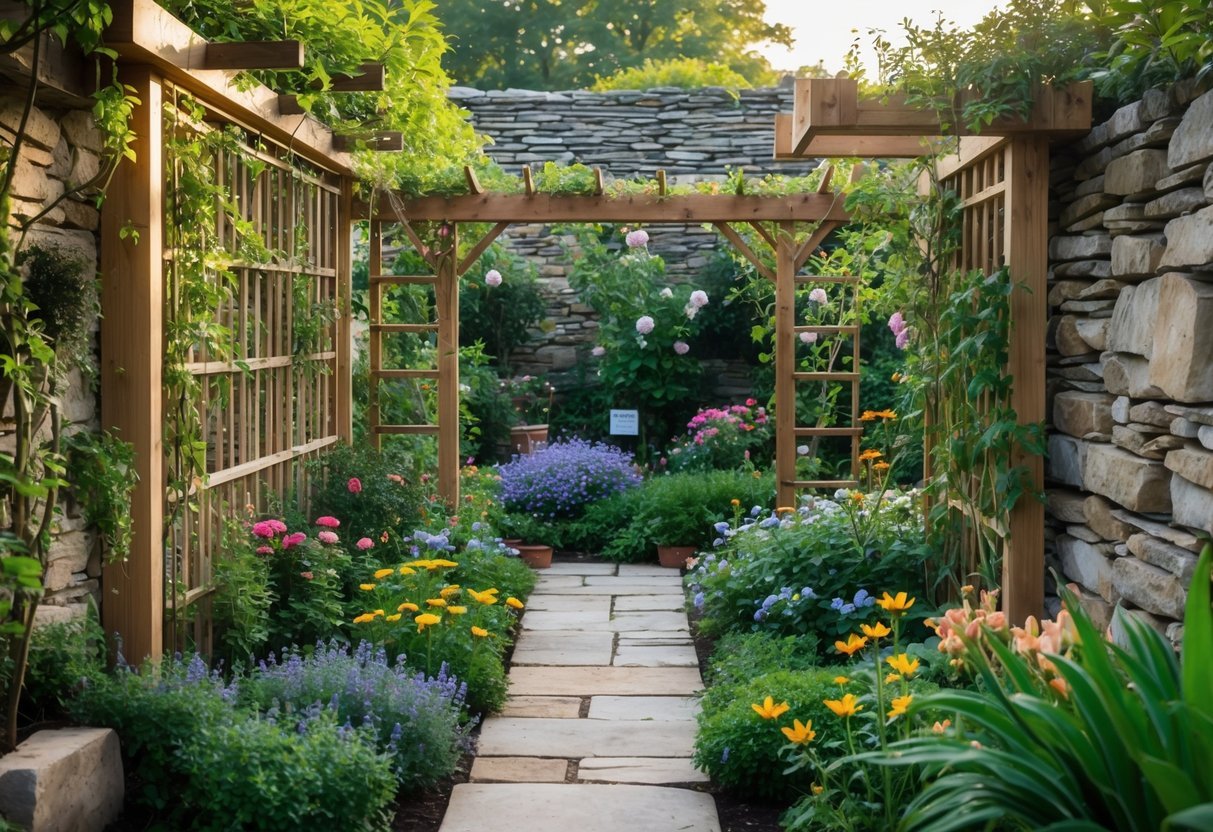
Add a few key structures to support plants and create vertical interest. Install a wooden obelisk or simple trellis for climbing roses and sweet peas. Position them near seating or entrances to highlight scent and bloom.
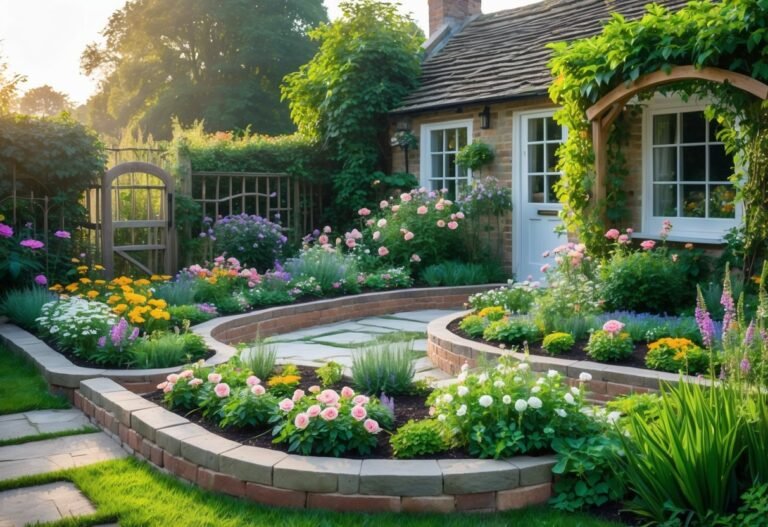
Include a small arbor over an entry path for immediate impact. Use weathered wood or white-painted timber to match cottage style. Add a rustic gate or picket fence to define the space and keep small pets out of beds.
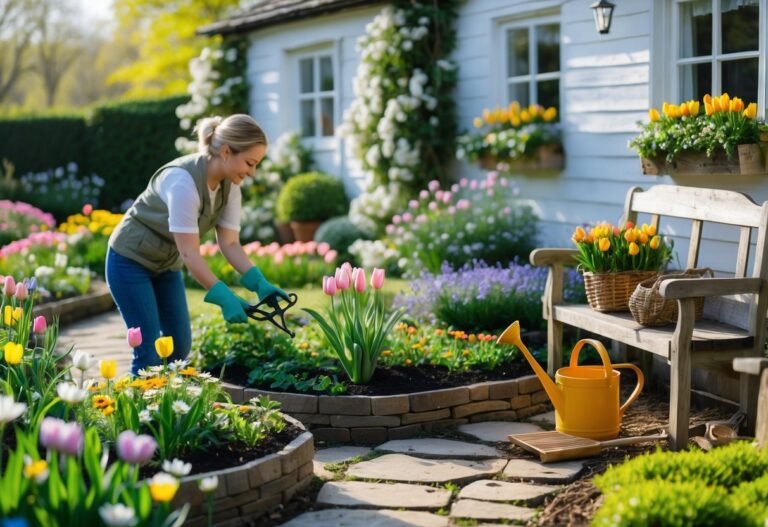
Keep structures functional: use raised beds for better soil control, and place a compost bin within easy reach of planting areas. Anchor structures well and choose rot-resistant materials to reduce repairs.
Ornamental Accents
Select ornaments that feel collected, not staged. A worn metal watering can, a handful of mismatched terracotta pots, or a faded birdbath adds personality without overpowering plants. Place items where they can be seen from a seat or window.
Use repeating accents to create cohesion. Choose one or two colors or materials—like blue glazed pots and ironwork—and repeat them across the garden. This ties varied plantings together.
Add practical decor too. Hang a simple wind chime by a bench and plant a pollinator-friendly patch nearby. These small choices boost sensory appeal and support wildlife while staying true to the cottage aesthetic.
Care and Maintenance of Cottage Gardens
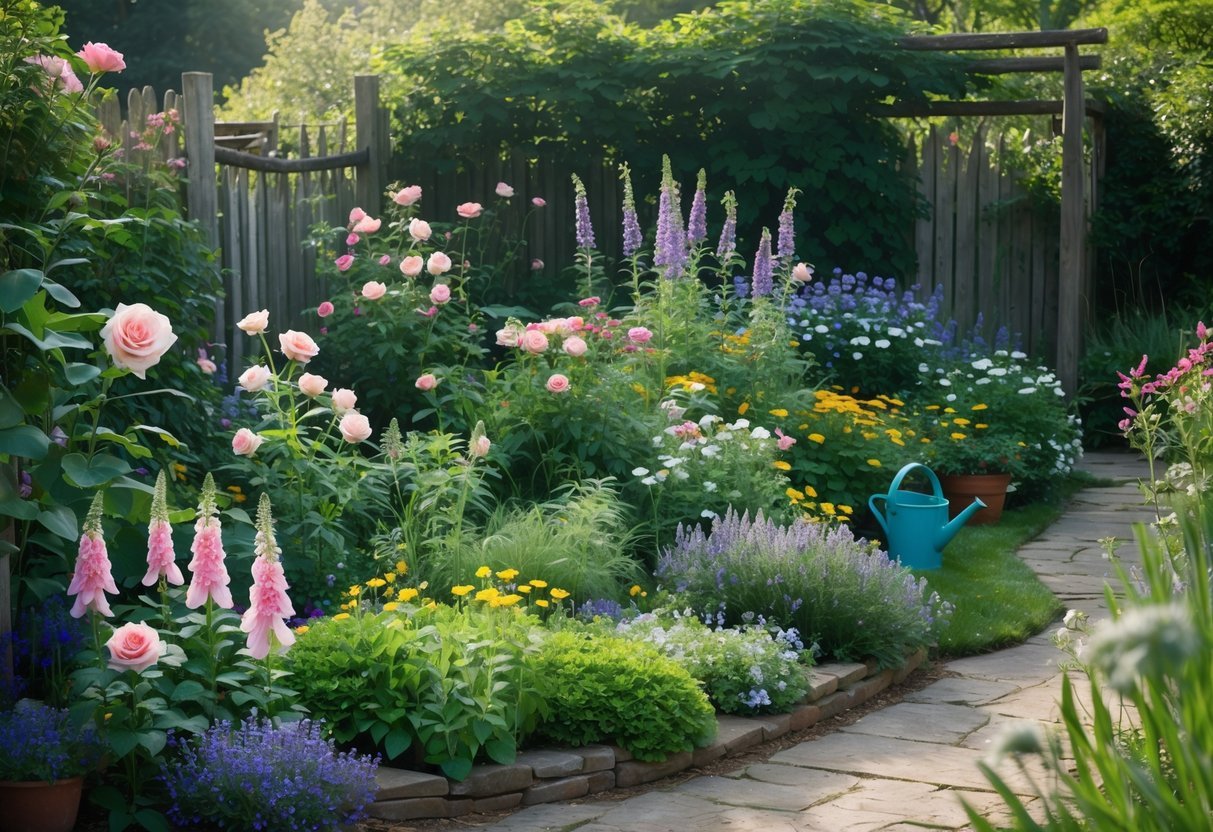
Keep plants healthy with regular pruning, targeted pest control, and plans for long-term soil and plant health. Focus on timing, the right tools, and simple routines that fit the relaxed cottage style.
Pruning and Deadheading
Prune shrubs and perennials in late winter or early spring before new growth starts. Remove dead, damaged, or crossing branches to improve air flow and shape. For roses, cut back to healthy outward-facing buds and remove thin canes that clutter the center.
Deadhead spent flowers every 1–2 weeks during bloom season to encourage more blooms and reduce seed set. Pinch or snip faded blooms on annuals, geraniums, and salvias. Leave attractive seed heads on ornamental grasses or coneflowers if you want winter interest and bird food.
Use sharp, clean tools: bypass pruners for live stems and loppers for woody growth. Sterilize blades with rubbing alcohol between plants when disease is suspected. Wear gloves and remove all prunings to prevent pests and disease buildup.
Weed and Pest Control
Mulch beds with 2–3 inches of organic mulch to suppress weeds and keep soil moist. Pull weeds when young; remove roots to prevent regrowth. Use shallow cultivation between plants to disturb weed seedlings without damaging roots.
Scout for common pests weekly: aphids, slugs, snails, and caterpillars. Handpick slugs at night and use beer traps or diatomaceous earth where appropriate. Spray aphids off with a strong water stream or use insecticidal soap for heavy infestations.
Encourage beneficial insects by planting nectar-rich flowers like calendula and dill. Rotate plant families yearly to reduce disease buildup. Choose disease-resistant varieties and avoid overhead watering to lower fungal problems.
Long-Term Growth Strategies
Test soil every 3–4 years to check pH and nutrient levels. Add compost annually in spring to improve structure and feed plants. Work compost into top 4–6 inches of soil rather than deep tilling to protect soil life.
Divide overcrowded perennials every 3–4 years to restore vigor and control size. Replace short-lived plants as needed and add new layers—groundcover, mid-height perennials, and tall blooms—to maintain the cottage look. Stagger planting times so you always have something in flower.
Keep a simple calendar: prune dates, division windows, fertilizing, and mulching. Small, regular tasks save you time and preserve the relaxed charm of a cottage garden.
Frequently Asked Questions
These answers focus on practical choices: layout sizes, plant types, watering and pruning tips, and ways to keep the garden simple yet full of bloom. Each item gives clear steps you can use right away.
What are essential features for a small cottage garden design?
Use narrow paths and curved beds to make a small space feel larger and more inviting. Include a focal point like a bench, trellis, or small fountain to draw the eye.
Choose compact plants and repeat them in groups for a cohesive look. Mix annuals and perennials so you get quick color and reliable returns each year.
Add vertical elements such as obelisks, wall-mounted planters, or climbing roses to gain height without losing ground space. Keep bed edges informal—soft borders fit the cottage style.
How can I create a low maintenance cottage garden?
Pick hardy, drought-tolerant perennials such as lavender, sedum, and ornamental grasses to cut watering and care. Mulch beds with 2–3 inches of organic mulch to suppress weeds and retain soil moisture.
Use grouped planting (maintenance zones) by putting low-care plants together and higher-care specimens near paths for easier access. Limit the number of plant varieties to reduce disease tracking and simplify pruning.
Install a simple drip irrigation or soaker hose on a timer to reduce watering chores. Deadhead selectively and prune once or twice a year rather than constantly.
What plants are best suited for a cottage garden border?
Combine perennials like foxglove, delphinium, peony, and salvia for height and repeat blooms. Add midsize shrubs such as lavender, rosemary, or dwarf holly for structure and scent.
Use edging plants—sweet alyssum, lobelia, or dwarf geranium—to soften bed edges. Add annuals like nasturtium and calendula for quick color and to fill gaps.
Include a few bulbs (tulips, daffodils, crocus) for early spring interest. Choose plants that share similar sun and water needs to make care easier.
Can you suggest a layout for a traditional cottage garden plan?
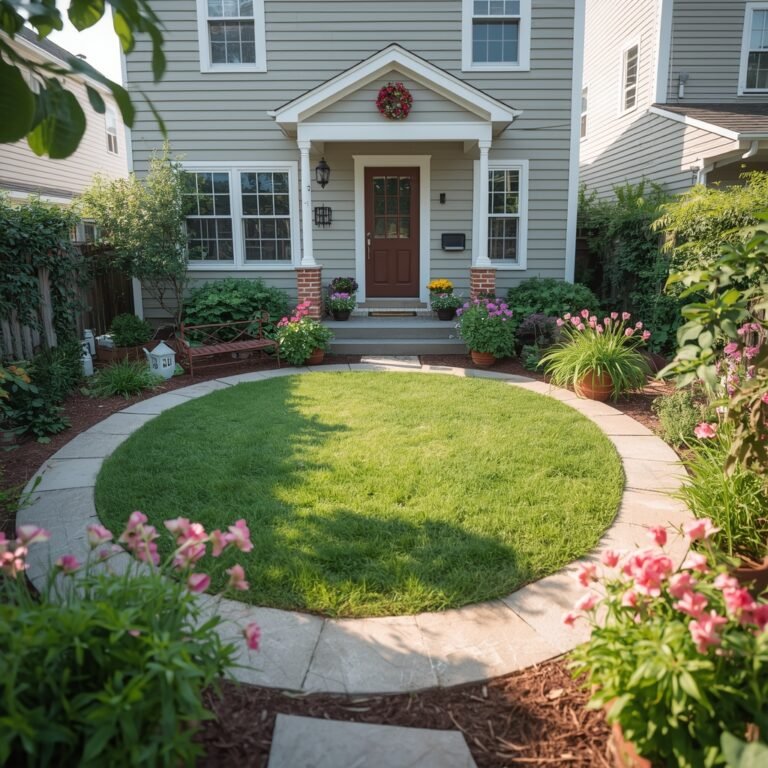
Center a small lawn or gravel seating area and surround it with mixed beds filled from tallest at the back to shortest at the front. Place paths that curve gently, giving access to each bed and creating visual layers.
Set a focal point—an arbor with a climber or a birdbath—at one end of the main axis. Plant in drifts of three or five for a natural, abundant look rather than single rows.
Reserve a small plot for herbs near the kitchen or a cutting garden for bouquets. Keep utility areas (compost, tool storage) tucked behind hedging or lattice.
How does the 70/30 rule apply to cottage gardening?
Use the 70/30 rule by choosing about 70% low-maintenance, long-lived plants and 30% showy, short-lived annuals or bulbs. The larger 70% reduces yearly work and provides a stable structure.
Reserve the 30% for bright colors, seasonal change, and trial plants you may want to replace. This balance helps you keep a full-looking garden without constant replanting.
What are the modern twists on classic cottage garden designs?
Mix native plants and pollinator-friendly species like aster, monarda, and native grasses to support local wildlife and reduce inputs. Use gravel paths, metal edging, or simple pavers for cleaner lines while keeping informal planting.
Include edible plants—strawberries, chard, dwarf fruit trees—within flower beds for a productive, mixed landscape. Choose compact, disease-resistant cultivars to keep the cottage feel but lower maintenance.