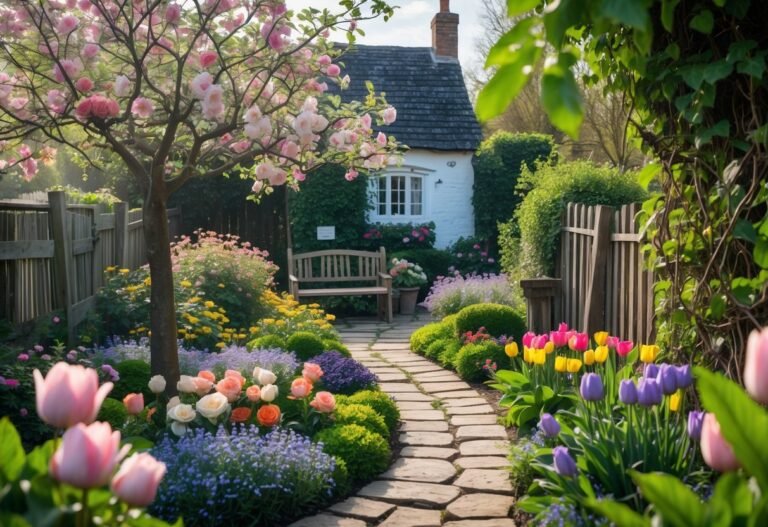
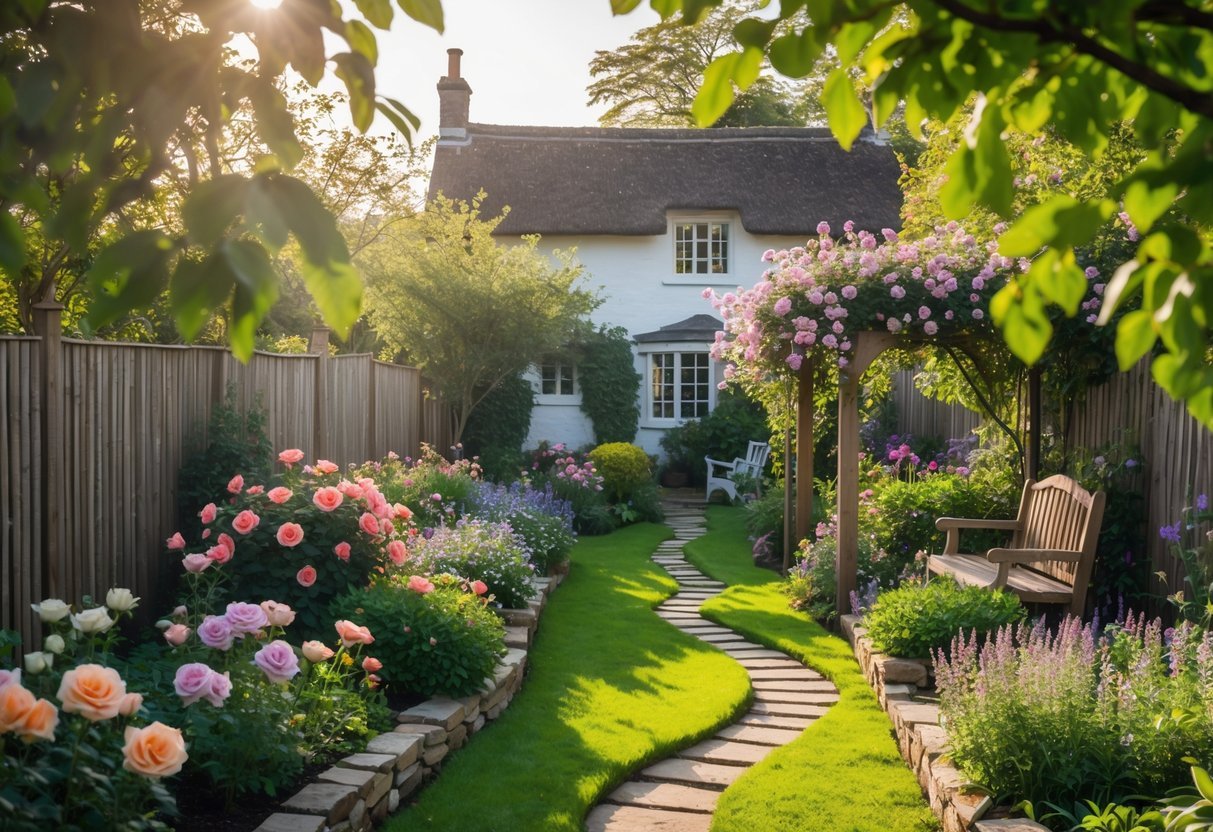
Cottage Garden Backyard Ideas: Charming Planting Plans and Layout Tips
You can turn your backyard into a cozy, colorful cottage garden by mixing layered plantings, winding paths, and a few simple structures to add charm and function. Imagine low hedges, swaths of self-seeding flowers, climbing vines on a trellis, and a small seating nook where you can relax among scent and color.
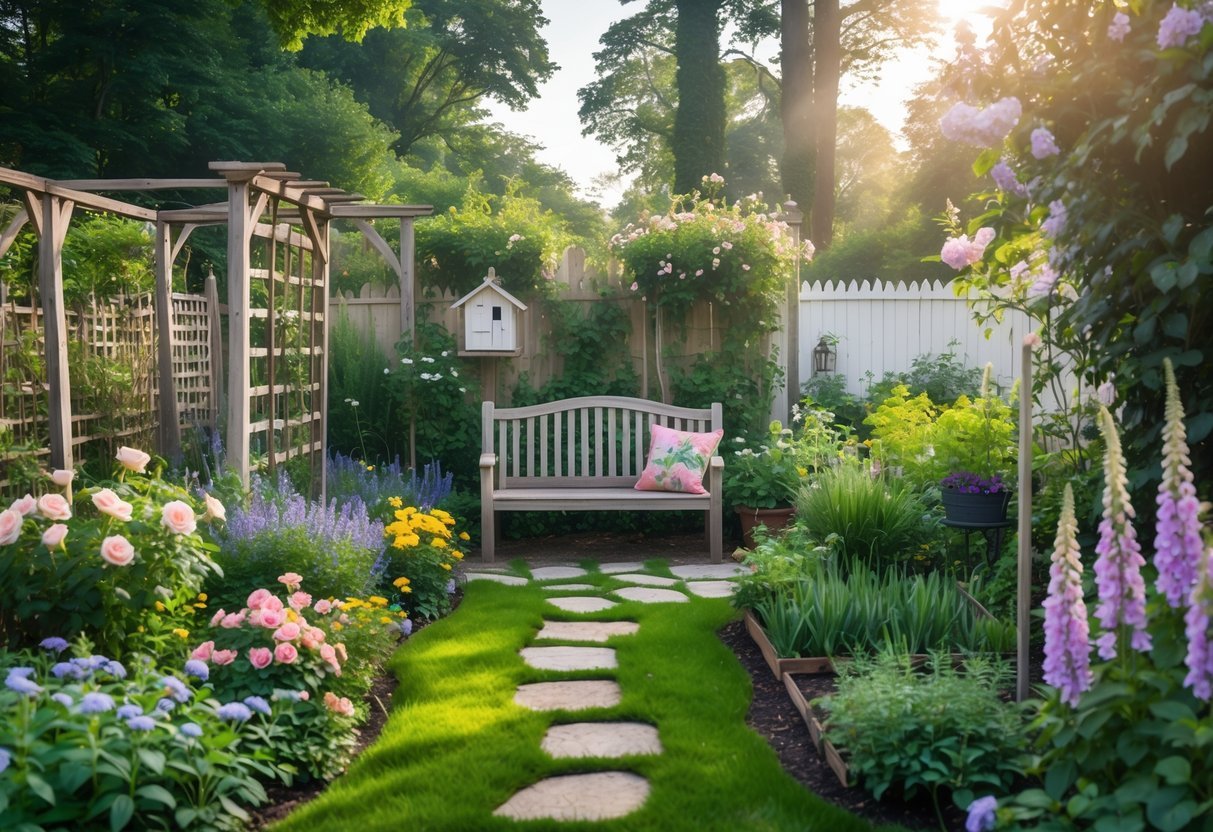
Bold choices in plant height, texture, and scent give the biggest visual payoff while keeping care manageable. Choose a few reliable perennials, add self-seeding annuals and climbing plants, and place a path or bench to create a relaxed, lived-in look that welcomes you outside.
Key Takeaways
- Start with a clear layout and layered plant heights for instant cottage style.
- Combine long-lived perennials with self-seeding blooms for low-effort color.
- Add a path, trellis, or bench to create purpose and charm in your yard.
Cottage Garden Design Essentials
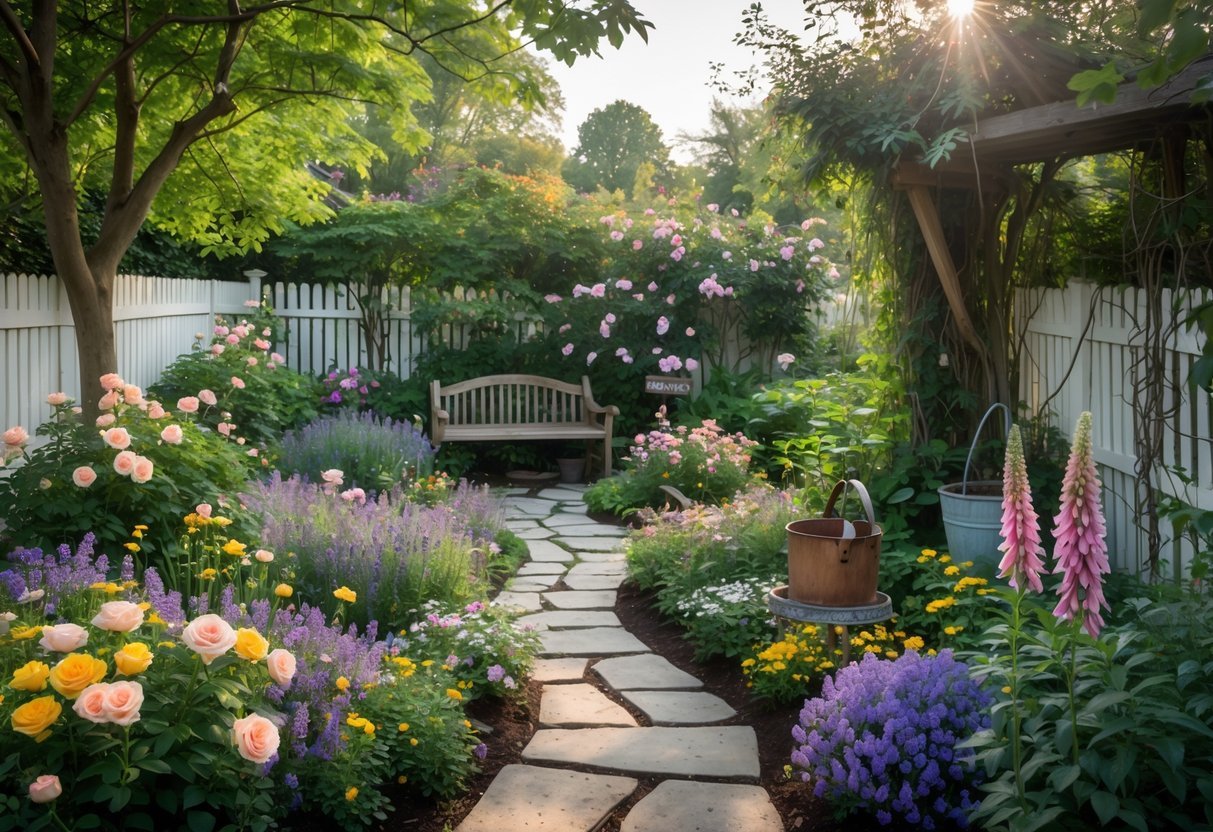
Focus on plants that self-seed or repeat bloom, simple hardscape like narrow paths and a small gate, and a color palette with mixed textures to keep the space cozy and layered.
Choosing the Right Plants for a Cottage Backyard
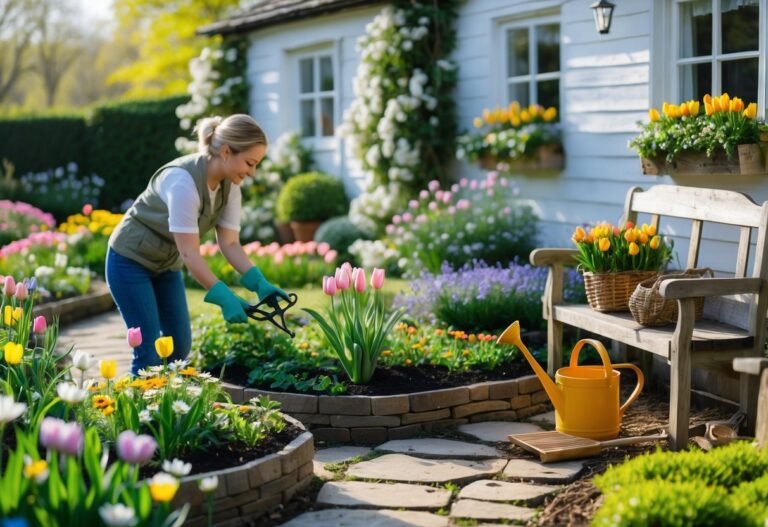
Pick plants that suit your zone and soil first. Choose perennials like foxglove, lavender, and salvia for repeat blooms. Add bulbs (tulips, daffodils) for early spring color and biennials like hollyhocks for tall, romantic spikes.
Mix edible plants with ornamentals. Plant herbs (thyme, rosemary) near paths for scent and easy harvest. Include compact vegetables or berry bushes in a sunny bed to make the garden useful as well as pretty.
Use self-seeders and vigorous spreaders carefully. Designate areas for self-seeding plants so they don’t overwhelm delicate perennials. Stagger bloom times to keep flowers on display all season.
Layout and Structure for a Timeless Look
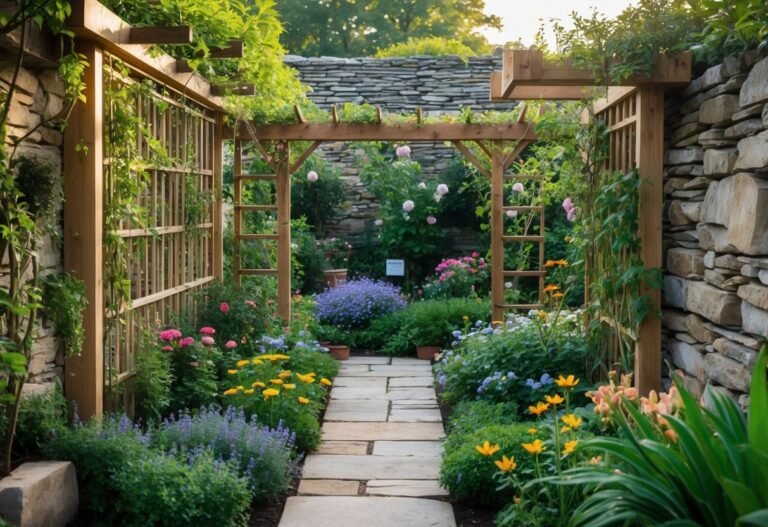
Create a simple path—gravel, stepping stones, or brick—about 2–3 feet wide to guide movement. Place a small gate or arch at a focal point to draw the eye and support climbers like clematis and climbing roses.
Use informal beds with curved edges rather than strict geometry. Plant densely in drifts to achieve that classic cottage overflow while minimizing weeds. Leave small clearings for a bench or a bistro table.
Add low structural elements: a rustic fence, a compact trellis, or a raised bed. These give height and serve as anchors for vertical plants without competing with the soft planting style.
Blending Colors and Textures
Choose a limited color palette—two or three main hues plus accents—to avoid visual chaos. For example, pair soft pinks and whites with deep blue or purple accents to keep the mood calm and cohesive.
Mix foliage textures: feathery ferns, glossy leaves of peonies, and fine thyme groundcovers. Combine tall spiky forms (delphinium, foxglove) with round mounded plants (peonies, geraniums) for visual contrast.
Plan for seasonal shifts. Use evergreen shrubs or small trees for winter structure, bulbs for spring punch, and long-blooming perennials for summer and fall interest.
Inspiring Plant Combinations
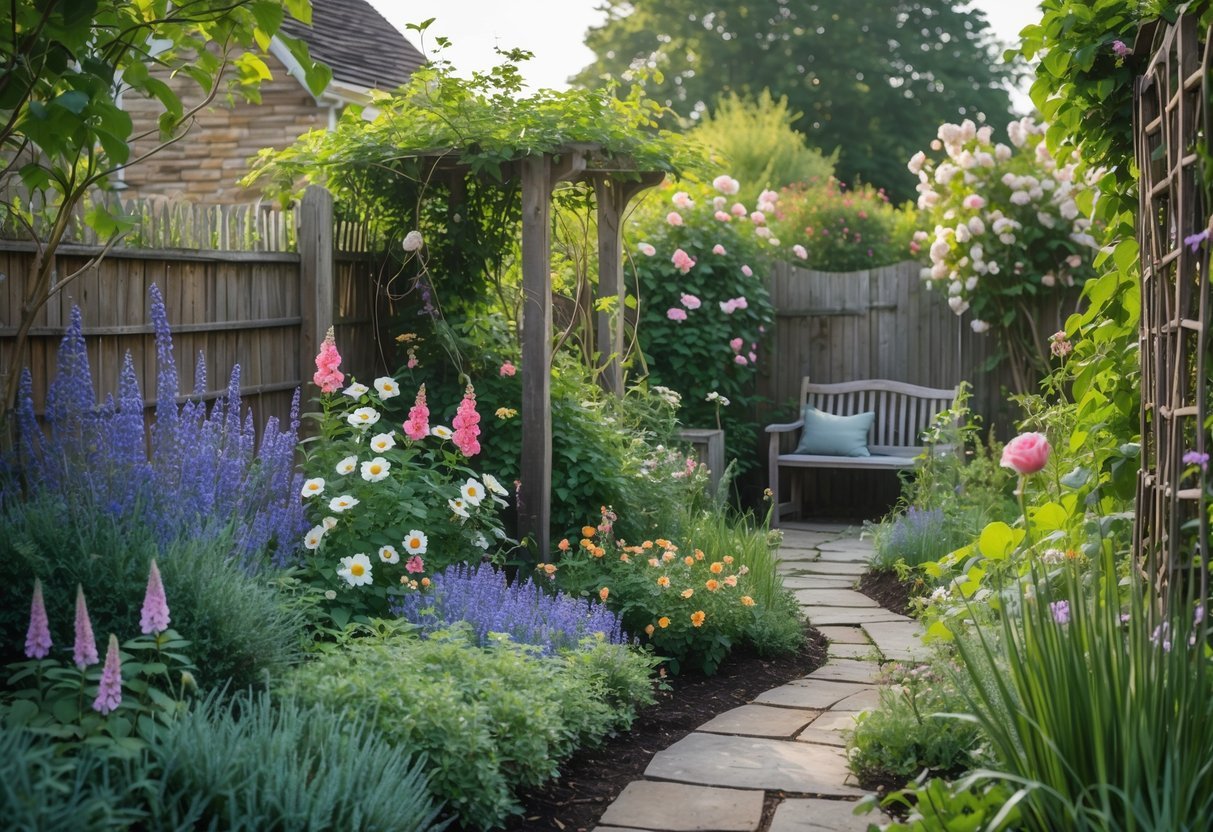
Use layers of height, color, scent, and season to make small beds feel full and changing. Pick at least one tall focal plant, one mid-height filler, and a low edging plant for each bed.
Classic Flower Pairings
Pair roses with lavender for scent and structure. Roses give height and repeat color, while lavender adds a low, fragrant hedge that hides stems and deters pests. Plant lavender 12–18 inches from the rose base in well-drained soil.
Combine foxgloves or delphiniums with shasta daisies to mix vertical spikes and sunny faces. Space tall spikes 18–24 inches behind daisies so the daisies’ blooms cover the spike bases. Use repeat colors every 6–8 feet to lead the eye through the garden.
Add geraniums (cranesbill) as ground-cover between perennials. They tolerate shade and fill gaps. Their rounded leaves contrast well with the upright forms of foxglove and delphinium.
Herbs and Edibles in Cottage Gardens
Interplant thyme or chamomile as a fragrant, low edging that tolerates foot traffic. Plant thyme 6–12 inches apart along paths where you’ll harvest often. It survives dry soil and keeps edges neat.
Place culinary herbs like rosemary, sage, and chives near seating or paths for easy snipping. Group rosemary at the back of beds where its woody stems add structure and shade-tolerant chives near spring bulbs to hide spent foliage.
Mix lettuces and cut-and-come-again greens with annuals such as calendula or nasturtium. Calendula attracts pollinators and provides edible petals; nasturtium trails over walls and deters some pests. Sow lettuce in partial shade beneath taller annuals to extend your harvest.
Planting for Wildlife Attraction
Choose buddleia, echinacea, and native milkweed to draw butterflies and bees. Buddleia gives long summer blooms, echinacea offers sturdy seedheads, and milkweed supports caterpillars. Plant these in sunny spots with good air flow.
Include small water features or shallow dishes with stones for drinking and bathing. Place them near flowering shrubs so visiting birds and insects can hydrate safely. Add seed-bearing plants like sedum and sunflower for fall food.
Leave some seedheads and a small brush pile for overwintering insects and shelter. These features increase biodiversity without much maintenance.
Backyard Features and Decorative Accents
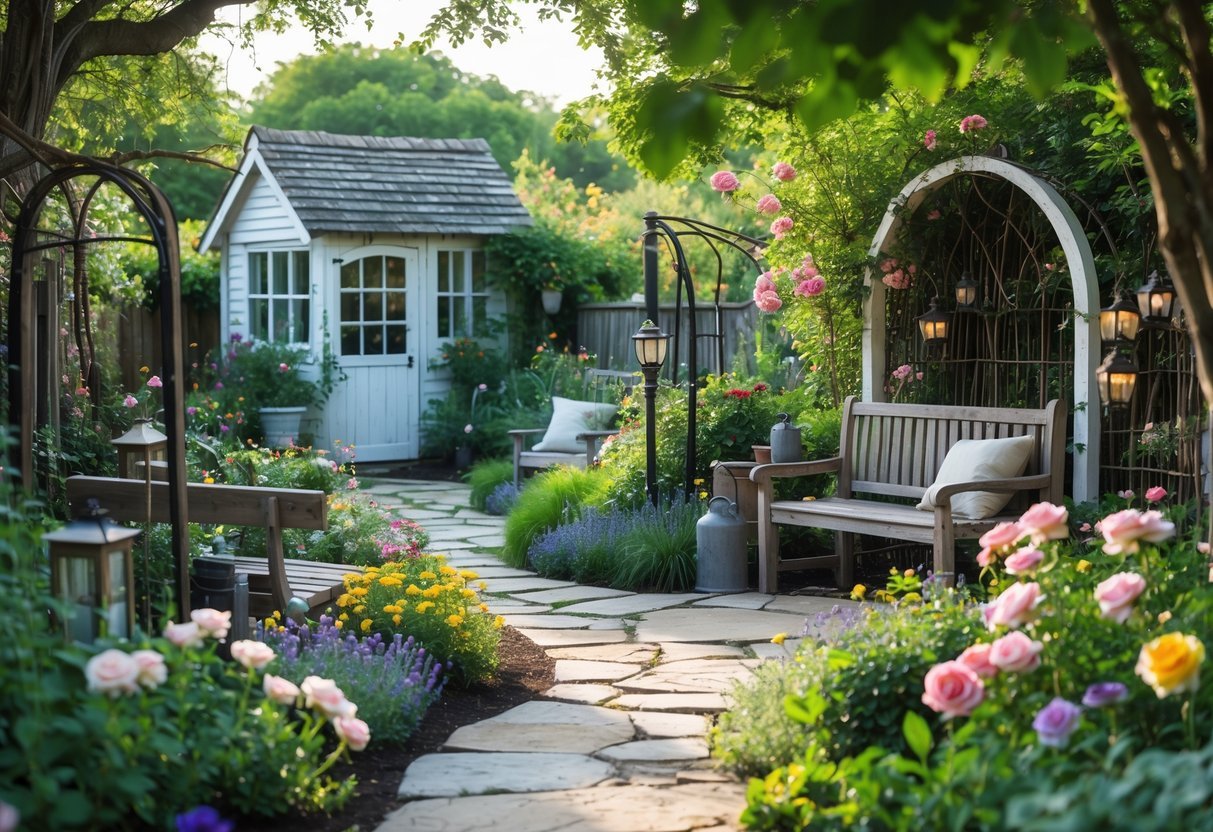
Focus on paths that guide movement, structures that create height and shelter, and vintage pieces that add character. Pick materials and plants that work well together and match the scale of your yard.
Charming Pathways and Borders
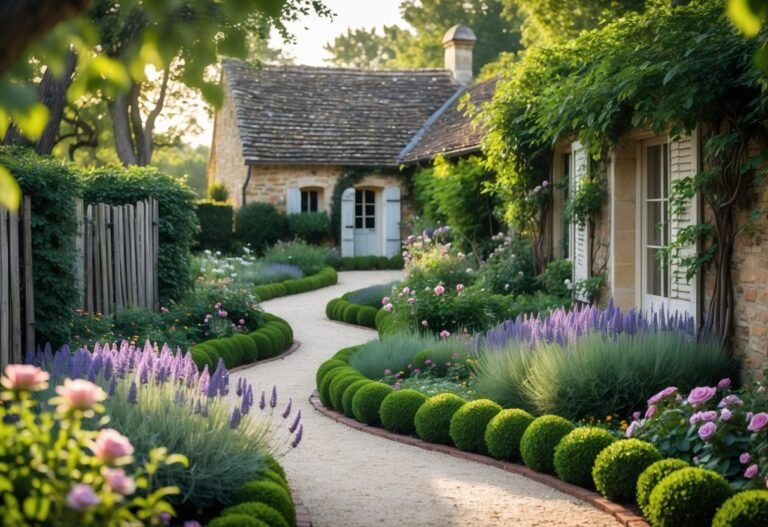
Create paths that lead visitors through planting beds and seating areas. Use pea gravel for a soft sound underfoot, reclaimed brick for a warm look, or irregular flagstone to mimic old cottage lanes. Keep paths between 2.5–4 feet wide for easy walking and wheelbarrow access.
Edge beds with low boxwood, lavender, or thyme to keep lines neat and add fragrance. Use staggered stepping stones through lawn or groundcover for a casual feel. Plant spilling perennials—like Geraniums, Salvia, or coreopsis—close to the path to soften edges and invite touch.
Add small practical touches: a shallow trench for drainage, weed-suppressing fabric under gravel, and a low solar stake light every 8–10 feet for evening use. Place a bench or seat where two paths meet to create a pause point.
Garden Structures and Focal Points
Introduce vertical interest with a trellis, arbor, or pergola to support climbers like roses, clematis, or honeysuckle. Position an arbor at an entry or where a path turns to frame views and create a sense of arrival. Use durable wood or powder-coated metal for long life.
Include one clear focal point per sightline: a small fountain, sundial, or stone birdbath sized to the space. For tiny yards, choose a narrow obelisk or single potted topiary. In larger spaces, a planted island or gazebo anchors the design and gives scale.
Think about function as well as form. Add a potting table near beds, a trellis that doubles as a privacy screen, or a pergola with a retractable fabric cover for shade and rain protection.
Creative Use of Vintage Garden Decor
Integrate vintage items to add story and texture. Use a worn wooden ladder as a plant shelf for potted herbs or trailing ivy. Turn an old wheelbarrow into a raised planter filled with mixed annuals and trailing lobelia.
Mix metals and ceramics: a rusted urn pairs well with glazed tiles or mismatched terracotta. Repair chips and stabilize items, then seal porous pieces to hold soil. Avoid overloaded displays; place one or two vintage pieces where they draw the eye without crowding plants.
Label areas with hand-painted signs or repurposed window frames to create a lived-in, collected look. Keep safety in mind—remove sharp edges and anchor heavy pieces so they won’t tip in wind or on slopes.
Seasonal Care and Maintenance Tips
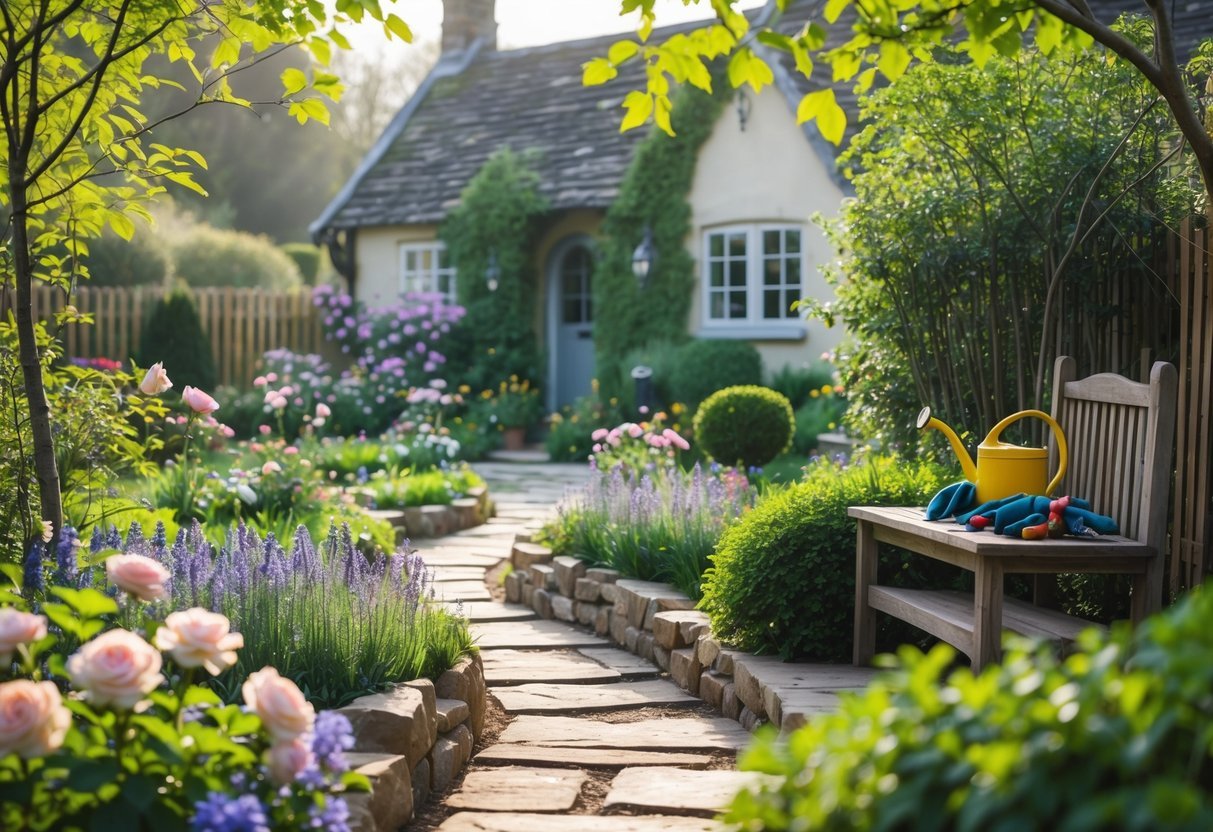
Keep plants healthy through simple seasonal tasks: monitor soil moisture, protect tender plants from frost, and cut back or divide perennials at the right time. Regular feeding, mulching, and watching for pests will reduce big problems later.
Year-Round Plant Health
Feed established perennials and shrubs in early spring with a balanced granular fertilizer or compost — about 1–2 inches of compost spread around the root zone works well. Mulch 2–3 inches around beds in late spring to conserve moisture and suppress weeds, leaving a small gap at plant stems to prevent rot. Water deeply once a week during dry spells rather than frequent shallow watering; aim for 1 inch per week total. Check soil drainage and add organic matter if water pools after rain. In summer, thin overcrowded plants to improve air flow and reduce disease. In fall, cut back annuals after frost and leave seedheads for winter interest and birds, then remove them in late winter before new growth.
Best Practices for Pruning and Deadheading
Prune spring-flowering shrubs right after they bloom to keep next year’s buds. For summer-flowering shrubs and perennials, prune in late winter or early spring while plants are still dormant. Use clean, sharp bypass pruners and make cuts at a 45° angle about 1/4 inch above outward-facing buds. Deadhead spent flowers weekly on roses, salvia, and penstemon to encourage more blooms; remove seedpods on plants you don’t want to self-seed. Cut perennials back by one-third in midsummer if they get leggy. Sterilize tools with 10% bleach solution after cutting diseased material to prevent spread.
Frequently Asked Questions
This section gives clear, practical answers about planning, planting, and laying out a cottage garden. You will find step-by-step tips for small spaces, plant choices, border design, front-yard ideas, low-cost builds, and key perennials to include.
How can I create a cottage garden in a small backyard space?
Use vertical and layered planting to add depth without taking much ground area. Train climbers like clematis or climbing roses on trellises or fences and plant shorter blooms and herbs in front.
Divide the space into small “rooms” with narrow paths or edging to make it feel larger. Containers, window boxes, and raised beds let you grow more plants in tight spots.
What are some low-maintenance plants suitable for a cottage garden?
Choose plants that self-seed or naturalize, such as foxgloves, poppies, and hardy geraniums. These reduce replanting and fill in gaps over time.
Include drought-tolerant perennials like lavender and sedum for easy care. Add a few shrubs such as lavender, rosemary, or buddleia for structure and low upkeep.
How do you design an effective cottage garden border layout?
Start with a tall-back layer, medium middle layer, and low-front layer to create a full, mixed look. Place shrubs and tall perennials at the back, mid-height flowers in the middle, and edging plants or low herbs at the front.
Use curved lines rather than straight edges for a relaxed, natural feel. Mix colors, textures, and bloom times so the border stays interesting across seasons.
Can you provide tips for landscaping a front yard in the cottage garden style?
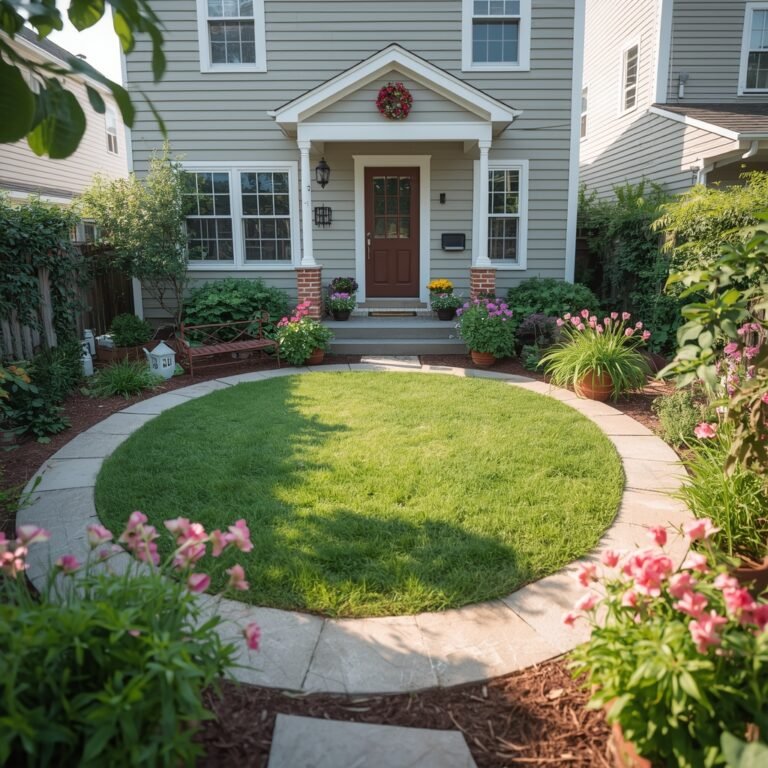
Focus on welcome features like a narrow path, an arch, or a small gate to create a cozy entrance. Plant fragrant, eye-catching species near the walkway and porch, such as roses, lavender, and sweet peas.
Keep sightlines to the house clear so the garden frames the home. Use low hedges or clipped shrubs near the foundation and let more free-form plantings spill into the lawn or path.
What are affordable strategies for building a cottage garden on a budget?
Start small and expand over time to spread costs across seasons. Propagate from cuttings, divide existing perennials, and swap plants with neighbors to save money.
Use recycled or repurposed containers, reclaimed wood for raised beds, and inexpensive mulch to improve soil. Pick hardy, long-lived plants to reduce replacement costs.
Which perennials are must-haves for an authentic cottage garden?
Include classic choices like roses, delphiniums, foxgloves, and lupines for height and drama. Add geraniums, primroses, and campanula for reliable mid-layer blooms.
Sow herbs and edible flowers such as lavender, rosemary, calendula, and chives for scent and practical use. These plants combine to create the layered, informal look of a true cottage garden.