7 Cottage Front Garden Ideas to Transform Small Yards with Timeless Charm
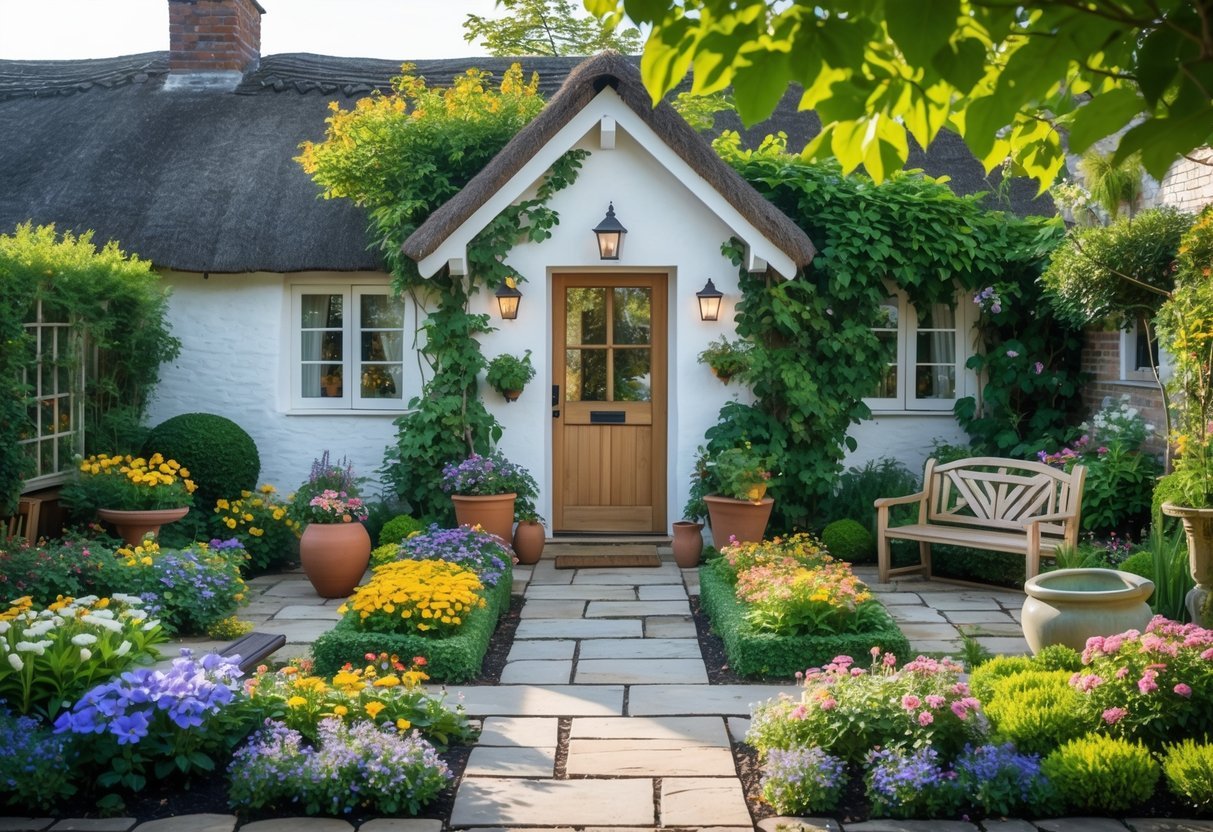
You can make your front yard feel warm and welcoming without a big budget or lots of time. This article shows simple cottage garden ideas that fit small or large spaces and help your home look charming all year.
You’ll find practical design tips and plant choices that help you create a cozy, classic cottage look—think roses, lavender borders, stone paths, curved beds, trellises, and natural wildflower patches.
Use these ideas to shape your style, plan seasonal care, and enjoy a garden that feels both relaxed and intentional.
1) Pastel roses trailing over rustic gates
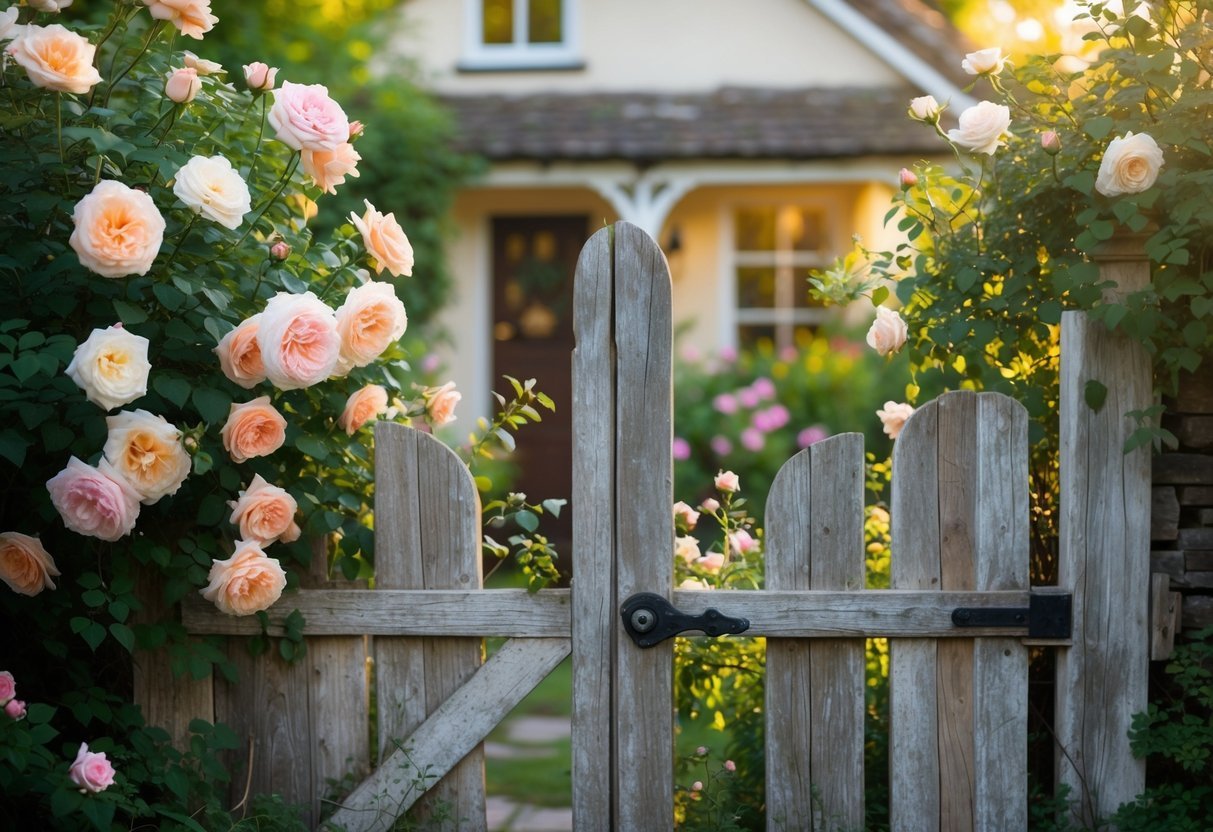
You can grow pastel roses to soften a wooden or metal gate and add instant charm. Train climbers on a simple trellis or wire so they follow the gate’s shape without overwhelming it.
Keep soil well drained and prune after flowering to maintain shape and encourage new blooms. A few matching lavender or geraniums at the base will hide stems and extend color through the season.
2) Neatly trimmed hedges with lavender borders
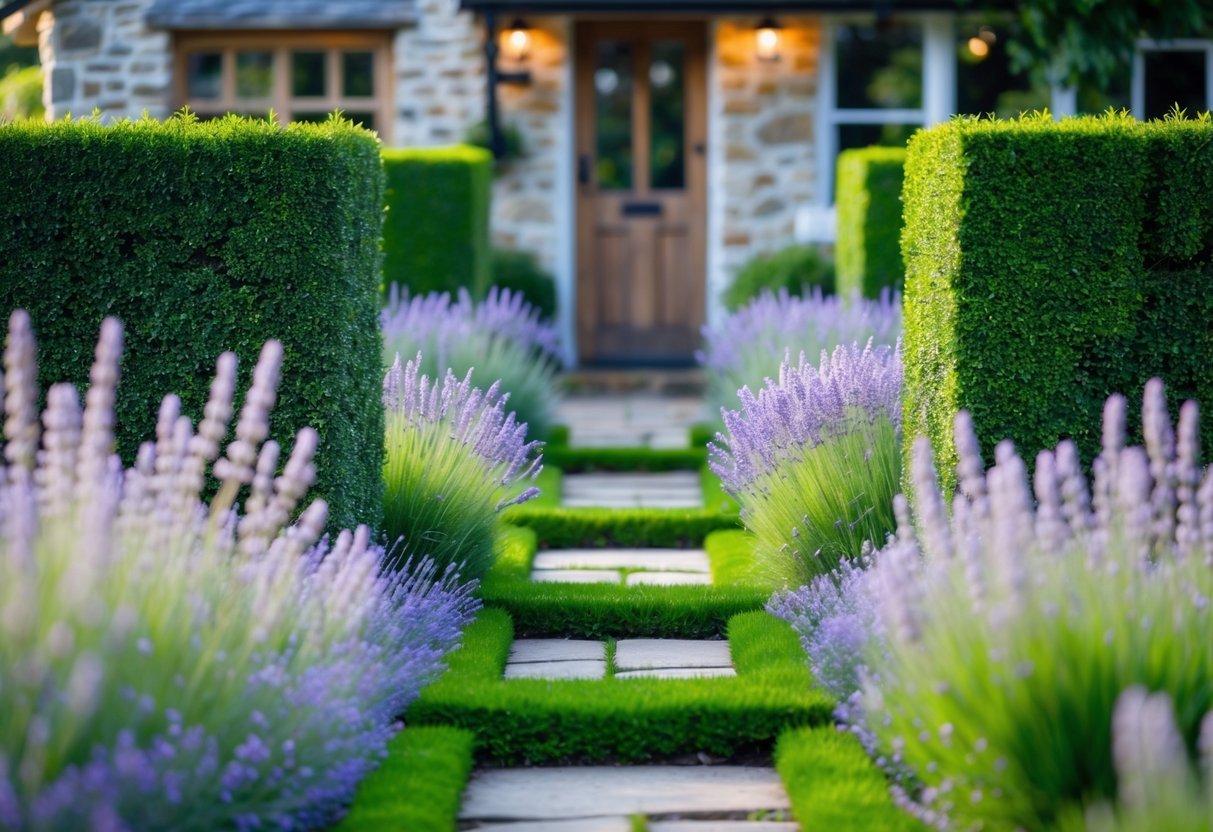
You can frame your front garden with low, neatly trimmed hedges to give it clear lines and a tidy look. Hedges add structure and guide the eye toward paths or the front door.
Plant lavender in front of the hedges for color, scent, and pollinator visits. The purple blooms contrast well with green hedging and need similar sun and well-drained soil.
3) Stone pathways lined with wildflowers
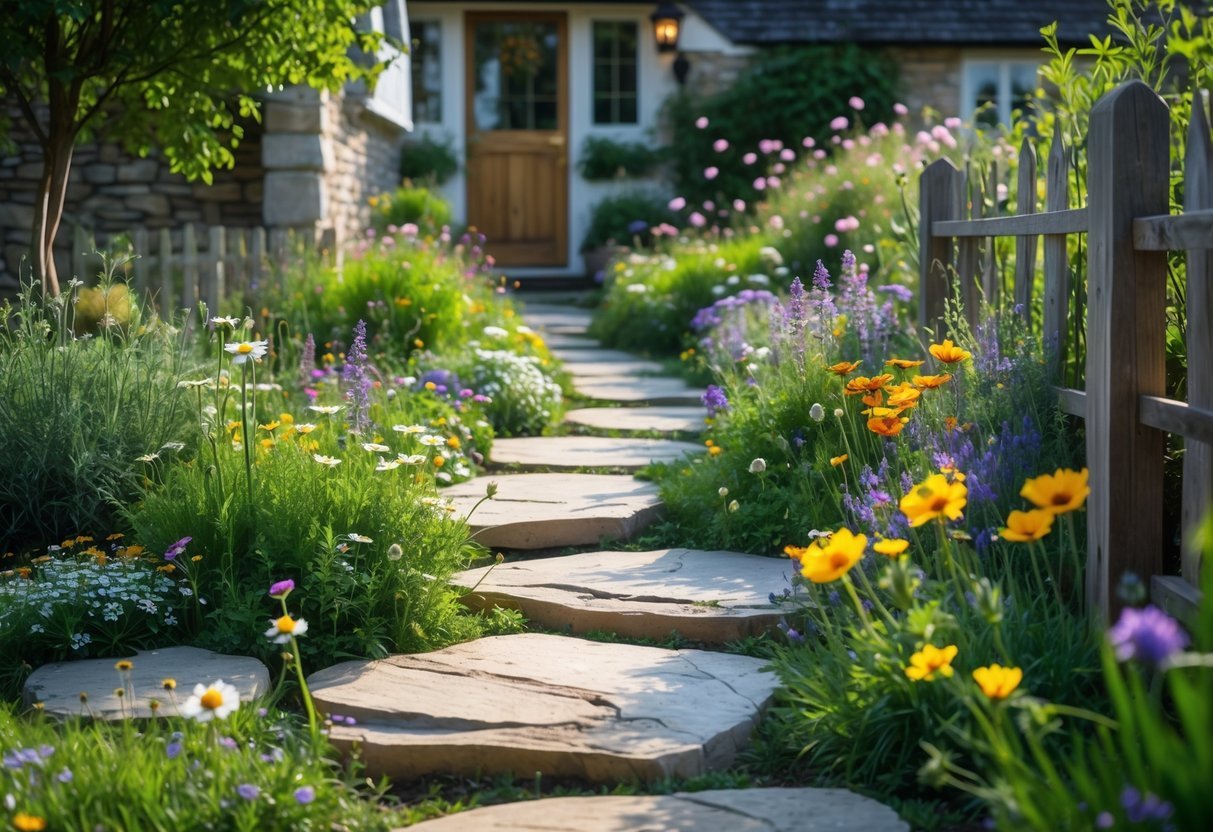
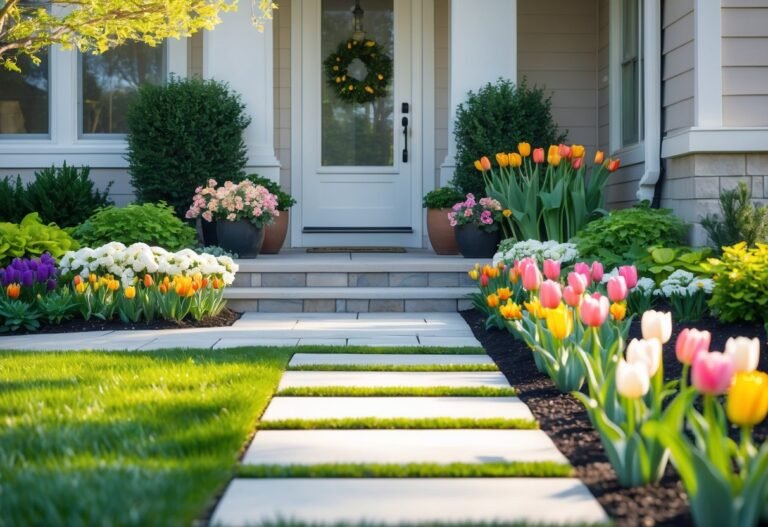
Choose a simple stone path to guide visitors to your door. The hard edge of stone pairs well with soft wildflowers for a natural look.
Plant low-growing wildflowers like daisies, clover, and alyssum close to the path. They soften the stones and need little care.
Keep the route slightly irregular to feel informal. A gravel center with stepping stones works well and improves drainage.
4) Curvy garden beds filled with perennials
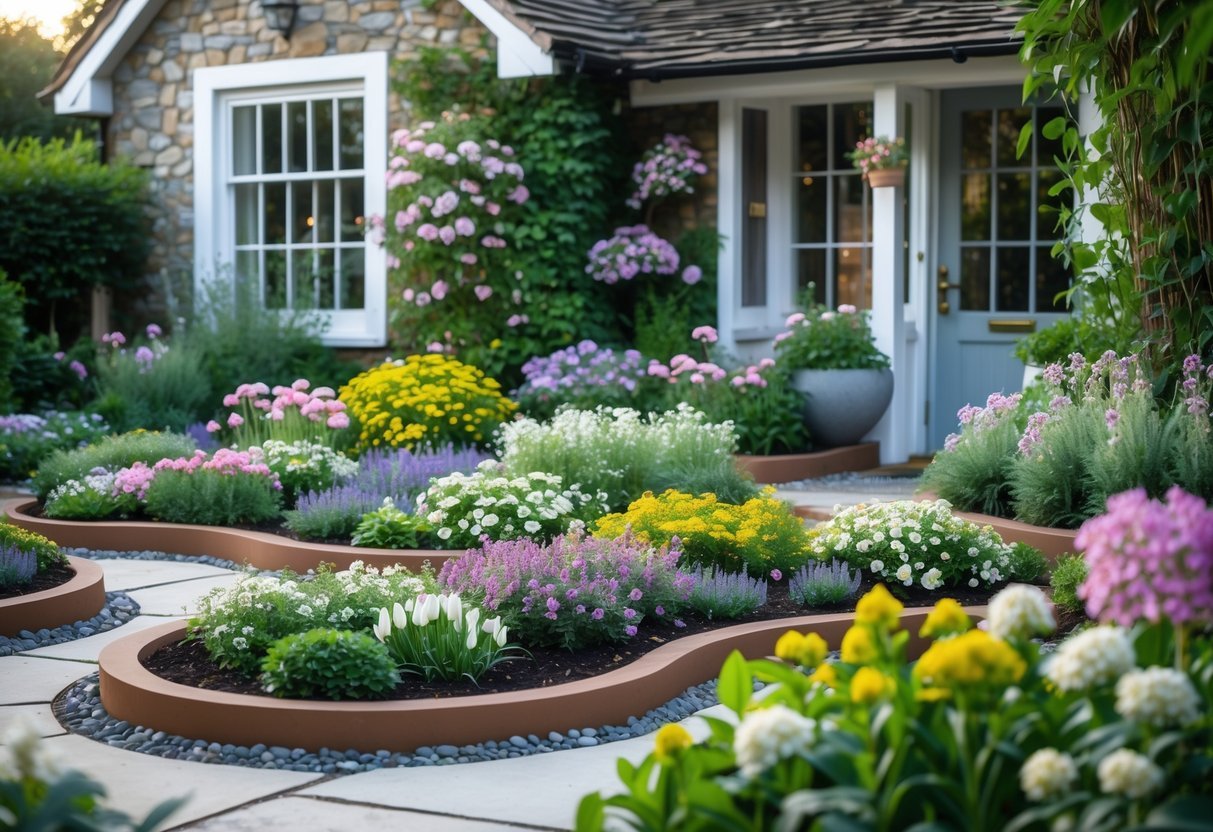
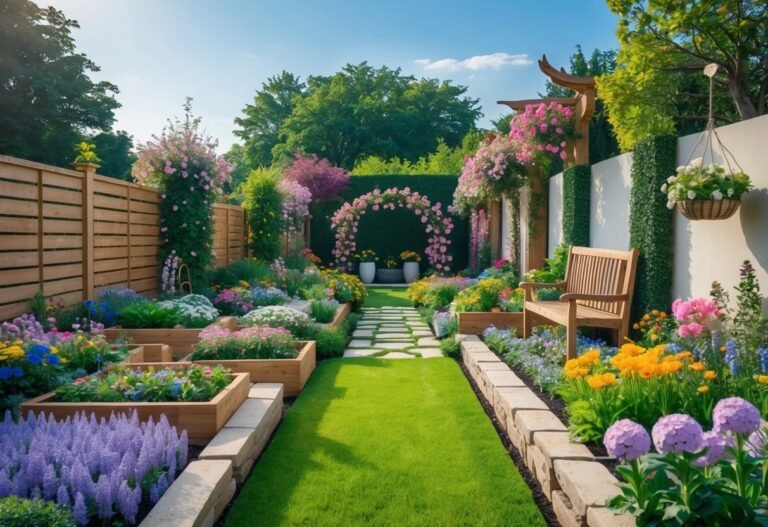
Lay out soft, flowing curves to give your front garden a relaxed, cottage feel. Curves add visual interest and make paths and planting areas feel more natural.
Choose hardy perennials like lavender, salvia, coneflower, and sedum for low maintenance and season-long color. Plant in groups and stagger heights so blooms and foliage blend as they grow.
Edge the beds with stone or low hedging to keep a tidy line without harsh angles. Mulch to retain moisture and reduce weeds, so your perennials thrive year after year.
5) Mix of colorful blooms and lush greenery
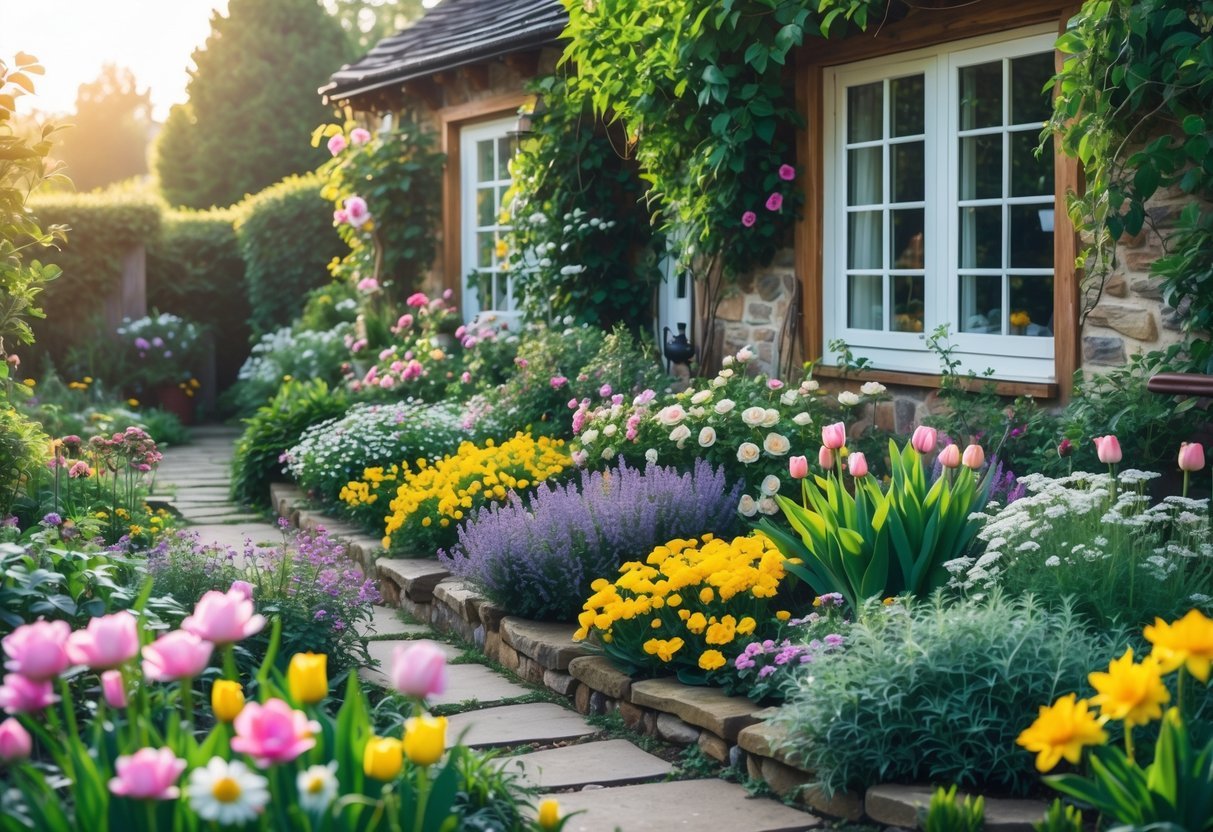
Choose a balance of bright flowers and rich green foliage to make your front garden feel full and alive. Plant low-growing perennials and taller spires like foxgloves or lupins for varied height and texture.
Use repeating colors to tie beds together and pockets of green to rest the eye. Add fragrant plants such as lavender near paths so you enjoy scent as you walk by.
6) Climbing roses on trellises or arbors
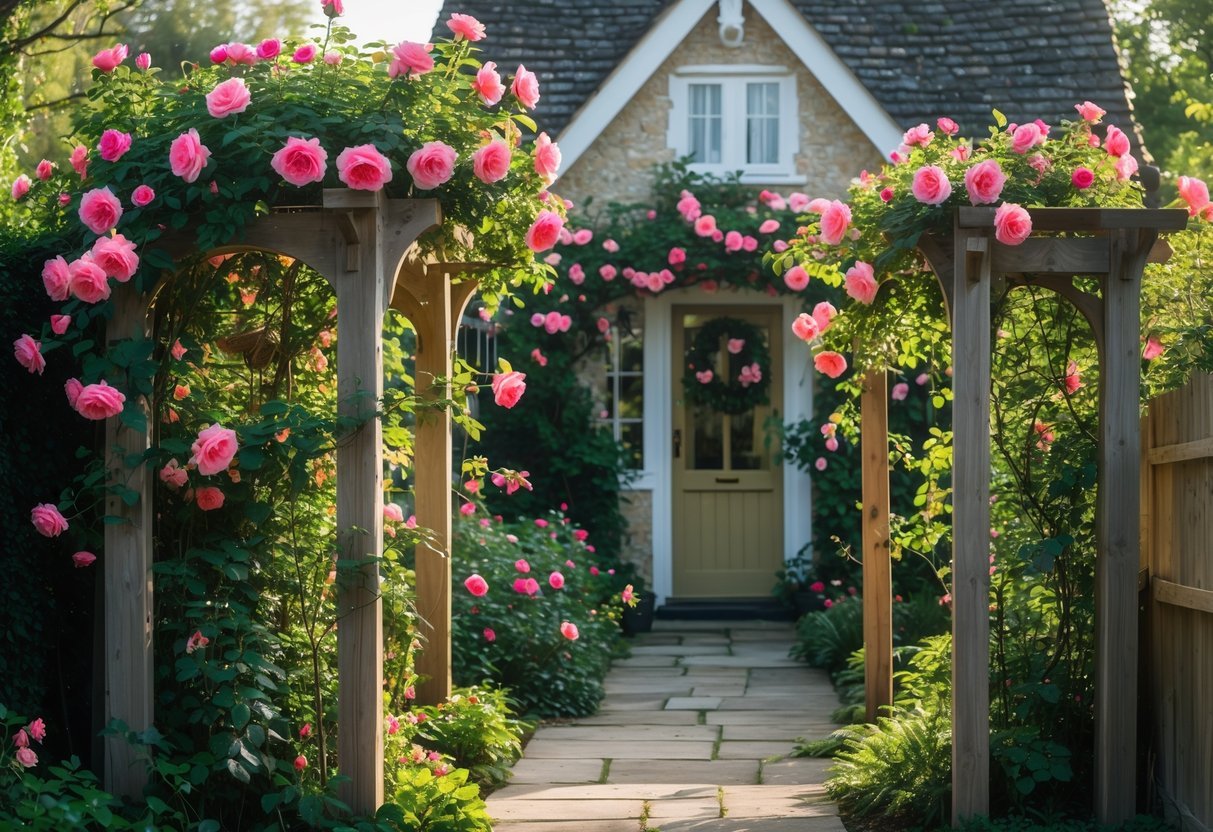
Train climbing roses up a trellis or arbor to add height and soft color to your cottage front. You can pick disease-resistant varieties and give stems good support for healthier growth.
Place the structure near a path or porch so blooms frame your entrance. Prune lightly each year to keep the shape tidy and encourage more flowers.
7) Wildflower patches for a natural look
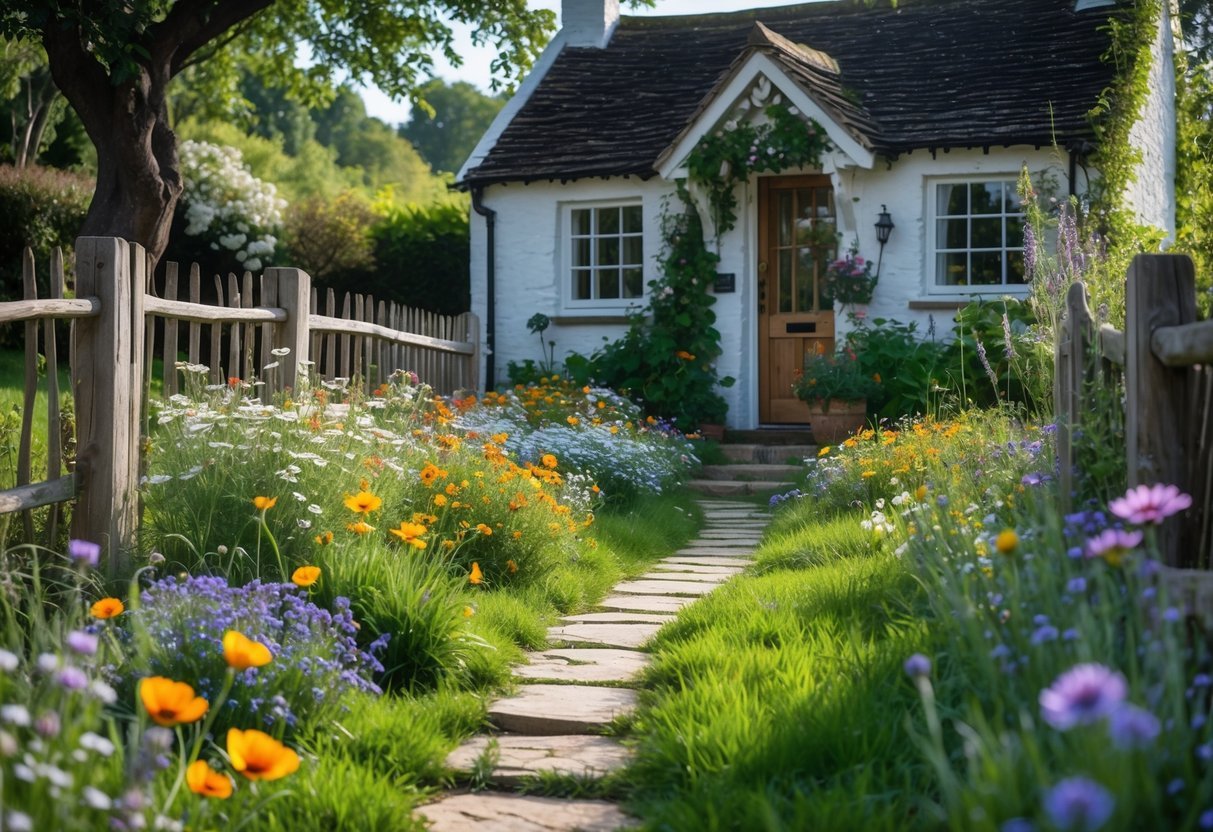
Plant a small wildflower patch to soften your front garden and welcome bees and butterflies. Choose native mixes for your climate so plants thrive with less care.
Let blooms drift into paths or edges for a relaxed, cottage feel. Mow once a year or deadhead selectively to keep it tidy without losing the wild look.
Design Principles for Cottage Front Gardens
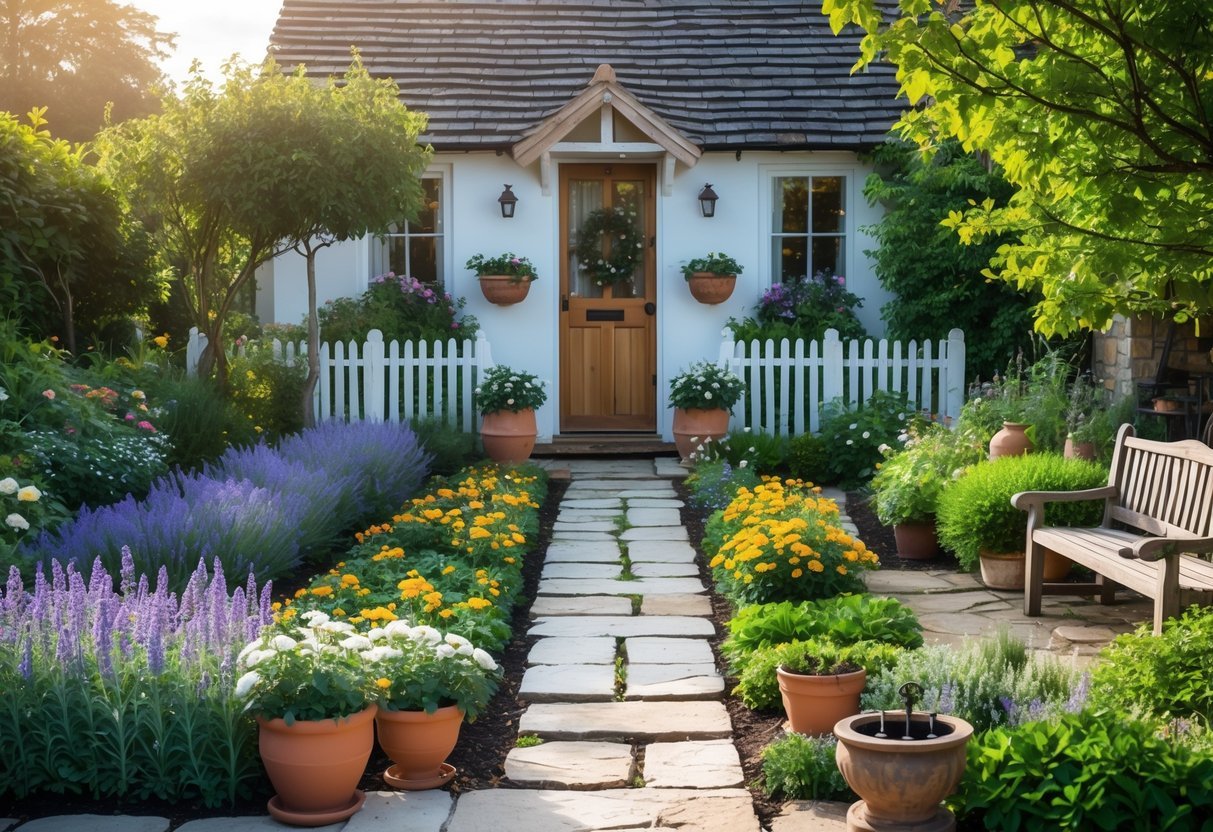
Focus on mixing plant colors, leaf shapes, and hardscape materials so paths, beds, and doorways feel welcoming and lived-in. Use repeat colors and varied textures to guide the eye and make small spaces feel full without clutter.
Balancing Color and Texture
Use a limited palette of 2–3 main flower colors plus one accent to keep the bed cohesive. For example, pair soft pink roses and lavender with a single deep purple accent like salvia. Repeat those colors around the front yard to create rhythm.
Layer plants by height: low groundcovers (thyme, alyssum), medium perennials (foxglove, geranium), and taller climbers or shrubs (clematis, old-fashioned roses). Mix leaf textures—fine (lavender), medium (rudbeckia leaves), and bold (hosta)—to give contrast even when not in bloom.
Allow some self-seeders such as poppies or calendula to fill gaps. Deadhead selectively so you keep color without losing the relaxed, slightly wild look. Keep paths clear of trailing plants to protect foot traffic.
Incorporating Natural Materials
Choose materials that age well and tie to the cottage look: weathered wood, soft-finish brick, and rough stone work best. Use reclaimed brick for a short border, cobble for a narrow path, or flagstone set in gravel to keep water draining.
Match material scale to your home: small paving stones suit a compact cottage; large slabs can overwhelm a narrow yard. Use natural fences like split-rail or a low picket painted muted white to frame beds without blocking views.
Combine materials deliberately: a stone path with timber edging and a gravel inset gives visual layers and slows the eye. Plant edges where materials meet—such as thyme in the cracks of flagstone—to soften joints and add fragrance.
Seasonal Maintenance Tips
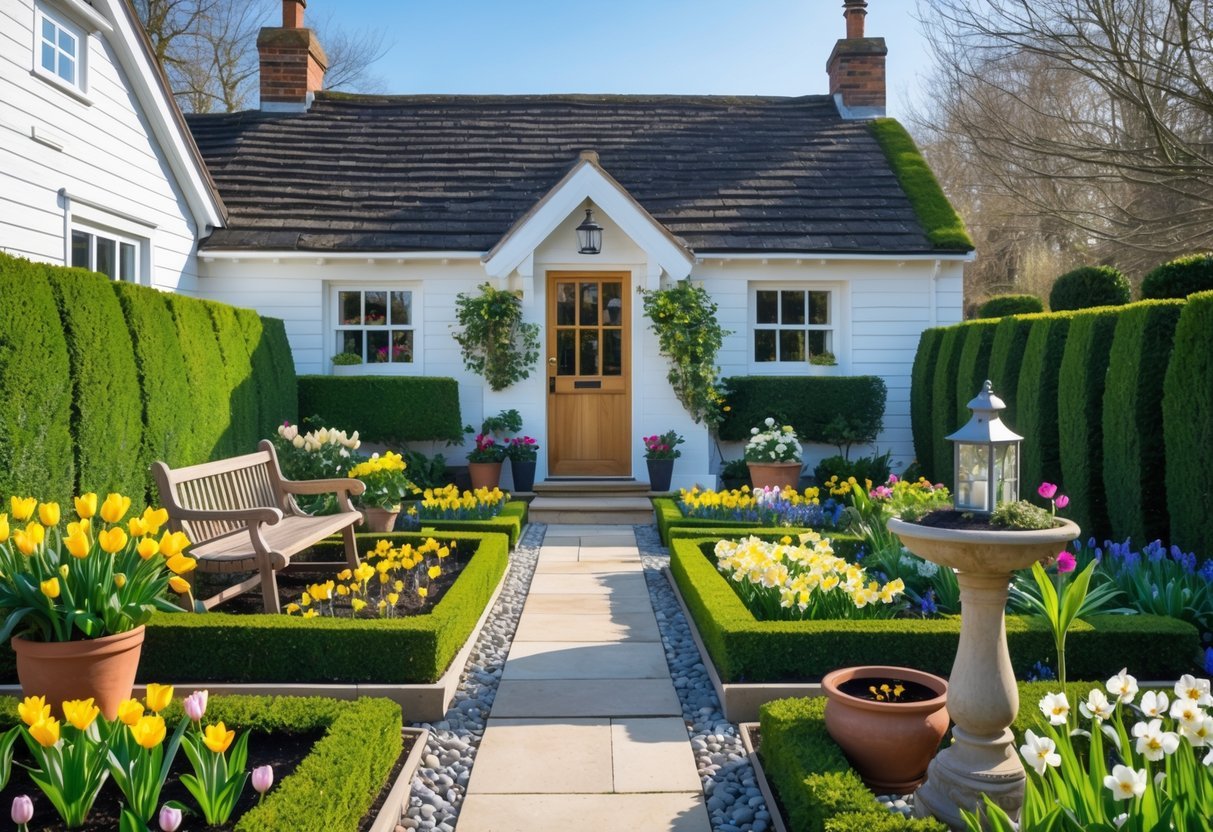
Plan for seasonal pruning, dividing, and mulching. Adjust watering to weather and protect tender plants in winter.
Managing Perennials Throughout the Year
In spring, remove winter mulch gently and cut back dead foliage. Apply a 2–3 inch layer of compost or well-rotted manure around crowns to feed growth.
Pinch or deadhead spent blooms through summer to encourage more flowers and keep plants tidy. For tall perennials, use stakes or canes before heavy blooms set to avoid flopping.
In late summer, divide overcrowded clumps of daylilies, irises, and phlox to restore vigor and create new plants. Move or replant divisions on a cool, cloudy day and water well.
Come autumn, cut back perennials that show disease, but leave healthy seedheads for birds and winter interest. Apply fresh mulch after the ground cools to protect roots from freeze-thaw cycles.
Sustainable Watering Practices
Water deeply and less often to encourage strong roots. Give established perennials about 1 inch of water per week, delivered in one or two soakings rather than light daily sprays.
Use a rain gauge or bucket to measure rainfall before turning on irrigation. Group plants with similar water needs together to avoid overwatering drought-tolerant species.
Install a drip system or soaker hose under mulch to reduce evaporation and deliver water to the root zone. Water early in the morning to cut disease risk and adjust frequency during heat waves or rainy spells.
Frequently Asked Questions
This section gives clear, practical answers about plants, paths, key features, seasonal color, small-space fixes, and choosing a color scheme. You will find specific plant and material choices, layout tips, and ways to use the five main garden elements from the article.
What are the best low maintenance plants for a cottage-style front garden?
Choose plants that repeat and fill space so they cut down on upkeep. Lavender, salvia, catmint, and geraniums provide long seasons of flowers and smell great near hedges and paths.
Use hardy perennials like daylilies and phlox for color without replanting. Plant rosemary or sedum in sunny spots; they handle drought and look tidy.
Add self-seeders such as poppies or nigella sparingly if you want natural, easy fill without too much chaos.
What kind of pathway materials complement a cottage front garden design?
Stone and gravel fit the cottage look and match the article’s stone pathways lined with wildflowers. Flagstone or irregular stepping stones give a rustic, natural feel.
Gravel keeps costs low and drains well; use a border of brick or dwarf lavender to hold it in place. For a softer look, lay compacted crushed stone and edge with low-growing plants.
Which features are essential for creating a traditional cottage garden atmosphere?
Include vertical and structural elements like a rustic gate or climbing clematis to echo the pastel roses trailing over gates. Low hedges, a mix of blooms, and curvy beds give form while keeping a relaxed feel.
Add a stone path or stepping stones and scatter seating or a small bench. These lets you enjoy the garden and encourages a lived-in, welcoming look.
How can I incorporate seasonal color into my cottage front garden?
Layer plants that bloom at different times so color appears from spring through fall. Plant spring bulbs near the path edges, early summer roses and clematis on supports, then late-summer asters and sedum in beds.
Use evergreen or semi-evergreen shrubs and neat hedges to keep structure in winter. Swap a few annuals in containers for bright, short-term bursts on the doorstep.
What are some space-saving solutions for small cottage front gardens?
Use vertical space: train climbing roses, clematis, or sweet peas on a gate or trellis. Replace wide beds with narrow curving borders and plant densely to reduce bare soil.
Choose dwarf or compact varieties of lavender, roses, and shrubs. Mix small containers along the path and use a single focal point like a small stone urn to keep the design tidy.
How do I choose a color scheme for my cottage front garden plantings?
Pick two or three main colors and a neutral background to avoid a chaotic look. For a soft, classic cottage feel use pastel pinks and blues with whites, echoing the pastel roses and mix of colorful blooms mentioned earlier.
Add touches of deeper purple or soft yellow as accents to give contrast. Repeat colors across beds, hedges, and containers so the garden feels connected.