Butterfly Garden Setup Ideas for Vibrant, Low-Maintenance Landscapes
Want a garden that fills with color and life without a lot of fuss? You can set up a butterfly garden by picking a sunny spot, planting a mix of nectar flowers and host plants, and adding simple features like a shallow water source and wind protection to support butterflies through their full life cycle.
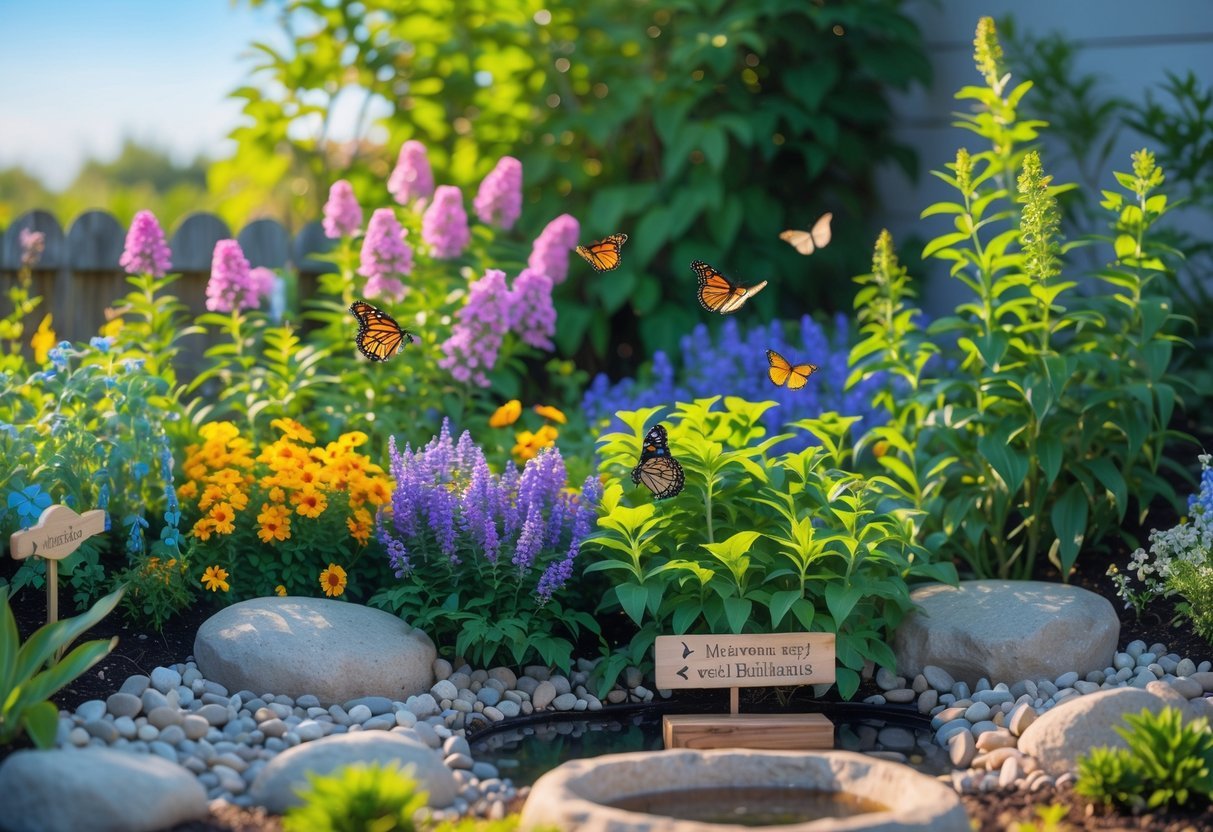
Use clusters of native, nectar-rich blooms and include plants that caterpillars eat so butterflies will lay eggs and keep coming back; place taller plants at the back and create sunny paths or clearings for easy flying and basking. A successful butterfly garden focuses on native nectar plants, host species for caterpillars, sunlight, shelter, and a small water source to attract and support butterflies year-round.
You’ll learn easy layout ideas, plant lists, and low-maintenance tips that fit small yards or large landscapes so you can start attracting butterflies quickly and confidently.
Key Takeaways
- Choose a sunny, sheltered spot and group plants for easier visiting.
- Plant both nectar flowers and host plants to support all life stages.
- Add water, shelter, and simple maintenance for steady butterfly visits.
Choosing the Ideal Location
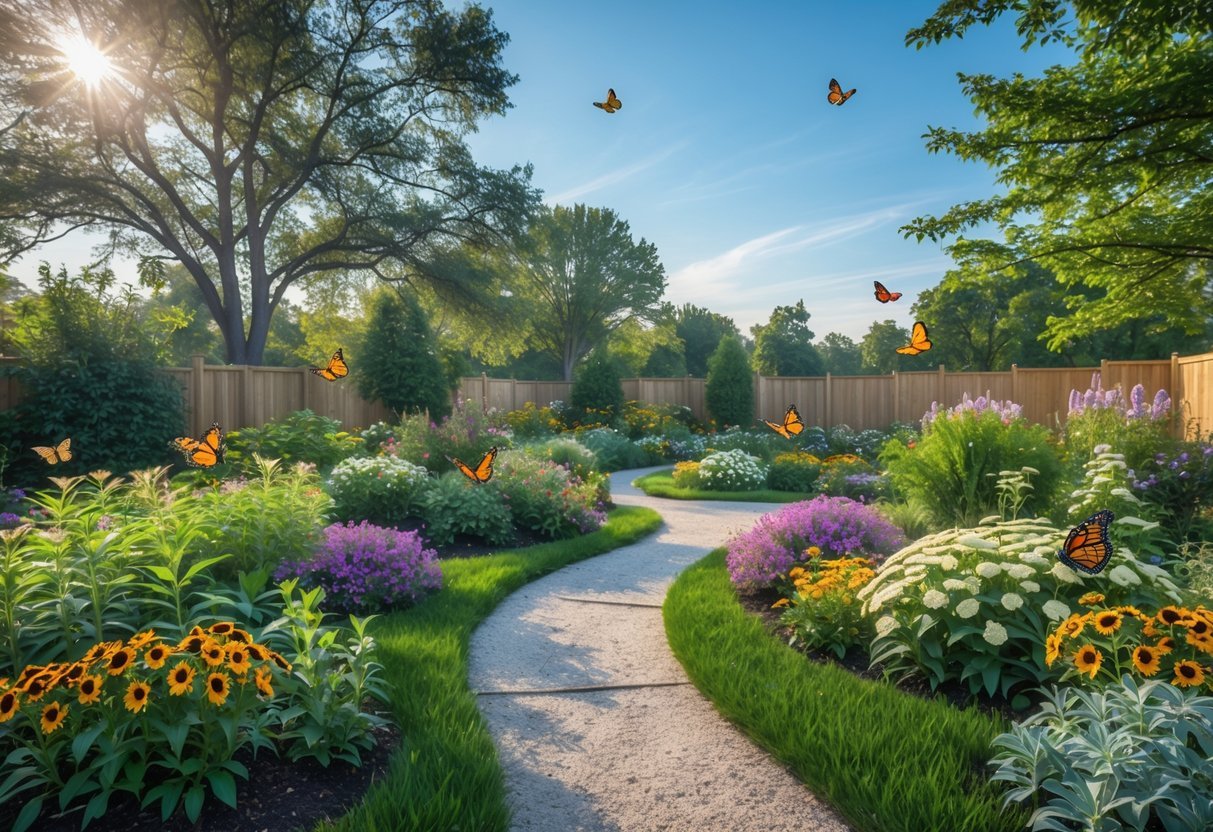
Pick a sunny, sheltered spot that gets at least 6 hours of sun and is protected from strong winds. Make sure you can reach the area easily for planting, watering, and watching butterflies.
Assessing Sunlight and Wind Conditions
Butterflies need warmth. Choose a spot with morning sun and full sun through midday when temperatures rise. Measure sunlight by visiting the area at different times or use a phone app to log sun hours for a few days.
Avoid open ridges or spots that face prevailing winds. Strong wind makes it hard for butterflies to feed and damages delicate plants. Plant a low windbreak like a row of shrubs or place the garden near a south-facing fence to reduce gusts.
Include a few flat stones or a shallow water dish in the sun. These provide warm perches and puddling sites where butterflies get minerals. Keep taller plants to the north or west so they don’t shade nectar plants in the morning.
Ensuring Accessibility and Visibility
Place your garden within easy walking distance of your house or a patio. You will visit often to water, deadhead, and monitor host plants for caterpillars. A path at least 24 inches wide helps you reach plants without stepping on them.
Make the garden visible from a window or seating area. You’ll enjoy watching butterflies and spot problems quickly. Use staggered planting heights and bright nectar flowers in the front to draw attention and guide views.
Avoid placing the garden next to pesticide-treated lawns or vegetable beds. Keep a 25–50 foot buffer or use physical barriers to limit drift. This protects larvae and adult butterflies from harmful chemicals.
Selecting Butterfly-Friendly Plants
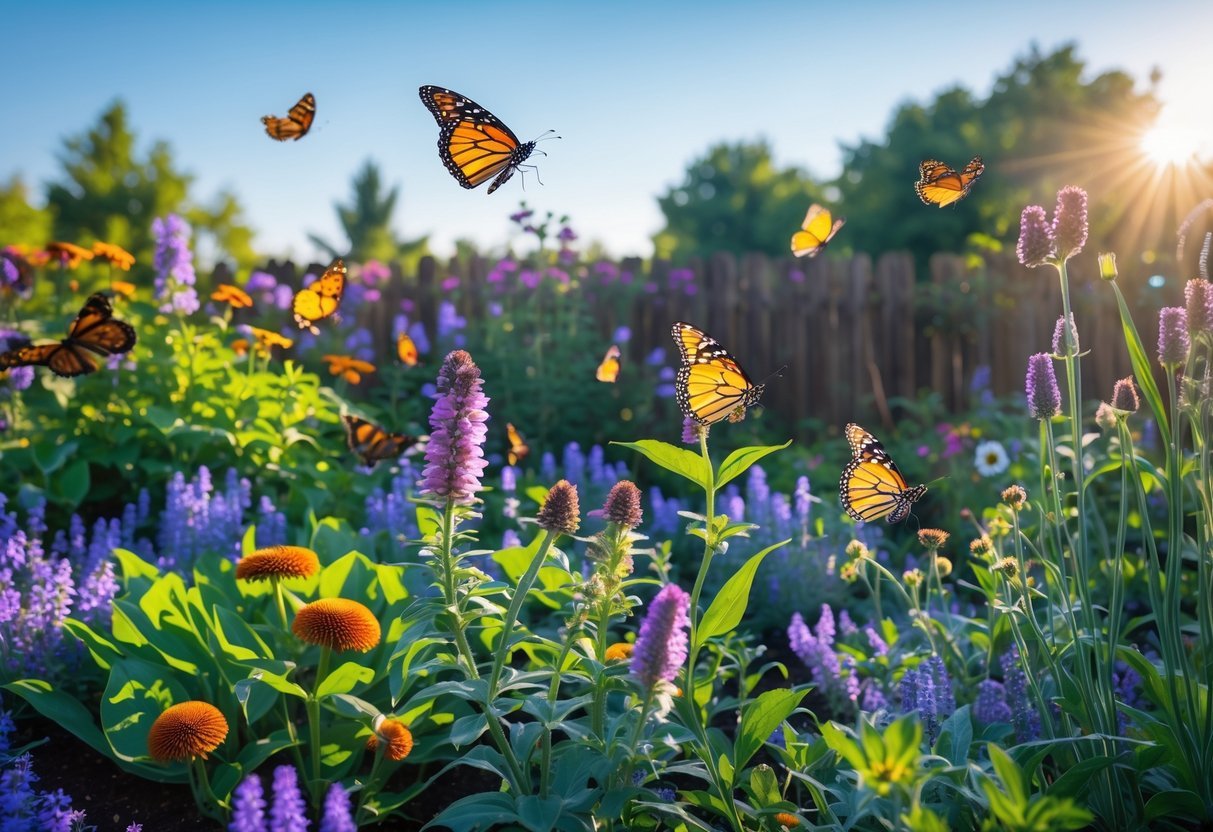
Choose plants that provide steady nectar, caterpillar food, and bloom across seasons. Pick native nectar flowers, specific host species for local butterflies, and a mix of early, mid, and late season bloomers to sustain butterflies from spring through fall.
Essential Nectar Sources
Plant clusters of nectar-rich flowers in sunny spots that get at least 6 hours of sun daily. Good choices include Echinacea (coneflower), Asclepias (butterfly weed), Lavandula (lavender), Monarda (bee balm), and Verbena bonariensis. Place tall plants at the back and low bloomers up front so butterflies can land easily.
Use continuous bloomers to supply nectar when butterflies are most active. Group 3–7 plants of the same species together to make them easier for butterflies to find. Avoid nectar-poor hybrids; pick species-form plants with open flower heads that let butterflies reach nectar.
Host Plants for Caterpillars
Add specific host plants so caterpillars can feed and grow. For monarchs, plant milkweed (Asclepias spp.). For black swallowtails, include parsley, dill, and fennel. For fritillaries, plant violets. Check local butterfly lists for additional native host species.
Put host plants near nectar sources but keep some sheltered spots for caterpillars to hide from predators. Avoid broad pesticide use; hand-remove pests instead. Allow some leaves to remain undisturbed so caterpillars have food and space to pupate.
Planting Seasonal Varieties
Plan for spring, summer, and fall blooms to offer continuous resources. Spring: Prunus blossoms, native violets, and early salvias. Summer: coneflowers, milkweed, bee balm, and lantana. Fall: asters, goldenrod, and late verbena.
Stagger planting times and choose species with different bloom lengths. Use containers for late-season pots you can move to sun or shelter. Mulch and water new plantings until established so they produce reliable blooms through the season.
Designing the Butterfly Garden Layout
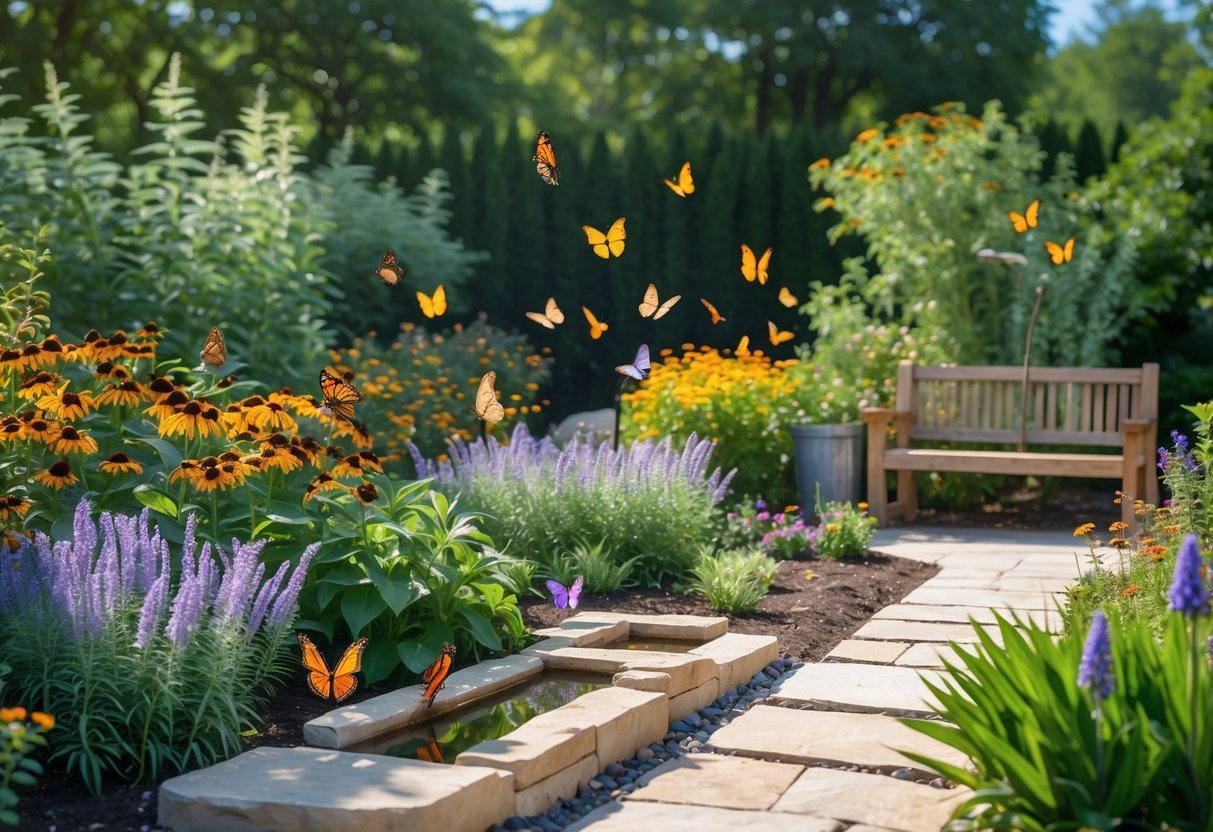
Plan paths that let you tend plants and watch butterflies. Choose plant groups, sun exposure, and a focal area so your garden feels organized and easy to maintain.
Incorporating Pathways and Borders
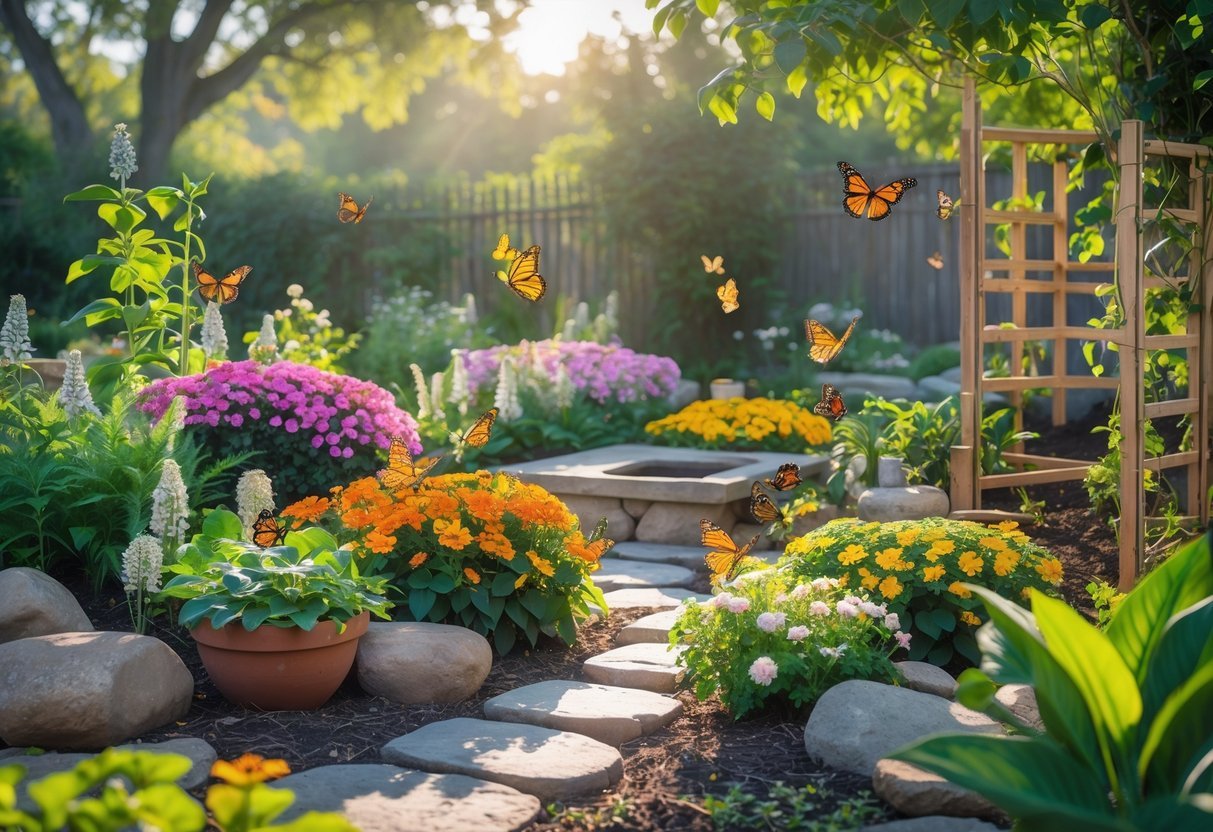
Place a main path at least 2–3 feet wide so you can walk with a watering can or wheelbarrow. Use gravel, mulch, or stepping stones for a stable surface that drains well. Keep paths curved rather than straight to create visual interest and more edge planting where butterflies feed.
Use low borders like rock edges, short hedges, or metal edging to separate paths from beds. Borders help keep mulch and soil off the path and protect host plants from foot traffic. Place flat stones or shallow pans near paths for butterfly puddling spots where they can drink and get minerals.
Creating Layered Plant Arrangements
Start with a 3-tier plan: tall plants (3–6 ft) at the back or center, mid-height (1–3 ft) in the middle, and low groundcovers or annuals at the front. Group at least three of the same species together to make flowers easier for butterflies to find and land on.
Alternate host plants and nectar plants within layers so caterpillars and adults both have what they need. Leave small clearings and sheltered spots using a shrub or rock pile so butterflies can rest out of wind. Keep plants with staggered bloom times to provide nectar from spring to fall.
Using Color Combinations Effectively
Choose a palette of 3–5 repeat colors to attract different species and make navigation easier for butterflies. Warm colors—red, orange, and yellow—stand out and draw many species, while purples and blues work well as background contrast.
Plant in blocks or drifts rather than single specimens; a block of purple coneflower or zinnia reads clearly to a butterfly flying over. Pair bright nectar plants next to host plants so adults stay close to egg-laying sites. Use signage or small labels to note bloom times and color groups for easier seasonal planning.
Enhancing Habitat and Maintenance
You will focus on water sources, shelter spots, pest control that keeps butterflies safe, and seasonal tasks that keep plants and host species healthy. Small, regular actions make the biggest difference.
Providing Water and Shelter
Offer shallow water stations and damp sand for puddling. Use a shallow dish with stones or a tray filled with sand and water so butterflies can sip without drowning. Change water weekly to prevent mosquitoes and algae.
Create shelter with flowering shrubs, native grasses, and a brush pile. Plant dense shrubs like serviceberry or viburnum near sunny spots so butterflies can rest out of wind. Leave a small corner of the yard undisturbed for caterpillars and pupae.
Add flat rocks or pieces of wood in sunny spots for basking. Position them where the morning sun hits so butterflies warm up quickly. Group plants by height to create layered refuge and easy landing sites.
Natural Pest Control Techniques
Use hand-picking and targeted water sprays to remove large pests like caterpillars or slugs. Inspect host plants daily during caterpillar season and move pests off plants rather than using broad pesticides.
Encourage beneficial insects: lacewings, ladybugs, and parasitic wasps reduce aphids and scale. Plant companion flowers like yarrow, dill, and fennel to attract them. Avoid insecticides that harm these helpers.
Set up physical barriers for delicate seedlings. Use row covers or collars around stems to prevent cutworms and snails. If you must treat pests, choose insecticidal soaps or Bacillus thuringiensis (Bt) for caterpillars, applied only to affected plants.
Seasonal Upkeep Strategies
Spring: Nurse milkweed and other host plants. Divide crowded perennials, remove winter mulch from crowns, and transplant young native plants into prepared beds. Start a diary of butterfly sightings and plant performance.
Summer: Deadhead spent flowers to keep nectar flowing and water deeply during dry spells. Monitor for disease or pest outbreaks and remove infected foliage promptly. Keep some late-blooming plants for migrating species.
Fall/Winter: Leave seed heads and hollow stems for overwintering insects. Cut back non-native invasive growth but leave native grasses standing until early spring. Clean and refill water stations before freeze and relocate potted host plants to a protected spot if needed.
Frequently Asked Questions
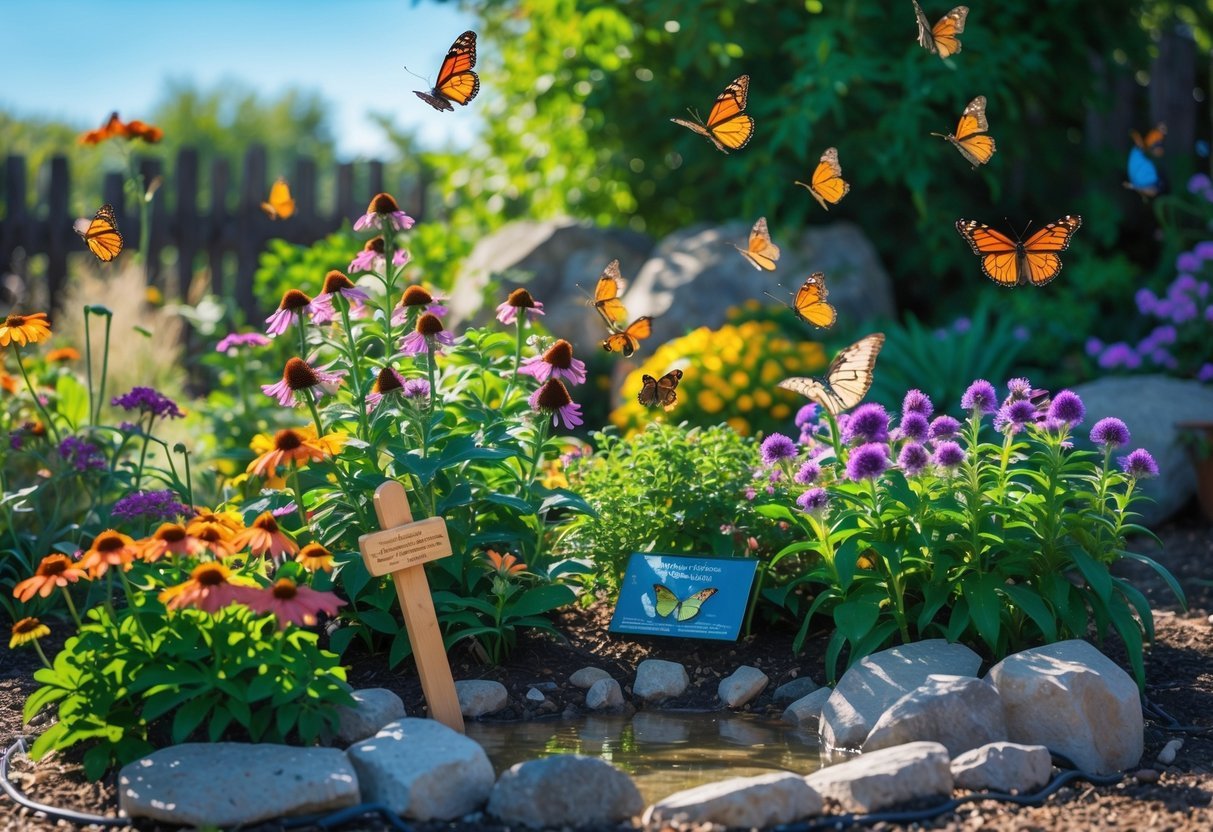
This section answers practical needs: space-saving plant choices, key habitat elements, indoor plant picks that actually bloom, simple school project steps, a small outdoor layout you can build, and when to plant for best bloom and caterpillar support.
How do you create a butterfly garden for a small space?
Pick a sunny spot with at least 4–6 hours of direct sun. Use containers, window boxes, or a narrow raised bed to fit limited areas.
Choose tall nectar plants at the back and low bloomers in front. Combine 3–5 different species to provide continuous flowers through the season.
Include a shallow water dish or damp sand for puddling. Add a small shelter like a brush pile or potted evergreen for wind protection.
What are the essential components for a DIY butterfly garden?
Nectar-rich flowering plants for adult feeding. Host plants that caterpillars can eat and pupate on.
Sunny exposure and a windbreak. Water source such as a shallow dish, damp sand, or a shallow bowl with stones.
Places for shelter and resting: native shrubs, rocks, and a small brush pile. Avoid pesticides and systemic insecticides.
Which plants are must-haves for attracting butterflies to an indoor garden?
Pick compact, flowering plants that get full sun or bright light. Butterfly bush (compact varieties), lantana, and zinnias work in large containers near a sunny window or grow light.
For caterpillars, use small pots of parsley, dill, or fennel if you expect specific species like swallowtails. Keep plants healthy and replace spent blooms to maintain nectar supply.
What steps are involved in setting up a butterfly garden at school?
Get approval from administrators and choose a sunny, visible site on campus. Involve students in planning, planting, and labeling plants to teach life cycles and stewardship.
Use raised beds or large planters for safety and easy maintenance. Plant a mix of nectar and host species, add a water feature, and schedule regular maintenance days with classes.
Can you recommend a layout for a small outdoor butterfly garden?
Place the garden where it gets 4–6 hours of sun and is sheltered from strong wind. Arrange taller plants at the back, medium plants in the middle, and low plants at the front.
Create a curved or oval bed about 4–6 feet wide to allow access from paths. Add a shallow water dish, a flat rock for sunbathing, and a small shelter like a potted shrub.
When is the ideal planting season for butterfly-attracting plants?
Plant in spring after the last frost for most temperate areas to give plants time to establish before peak butterfly activity. Early spring planting helps host plants grow before caterpillars arrive.
You can add potted annuals later in spring or early summer to extend nectar sources. In mild climates, fall planting of perennials also works if roots can establish before cold weather.