10 Balcony Garden Ideas to Maximize Small Spaces and Boost Your Urban Oasis
You can turn even the smallest balcony into a calm, green spot that boosts your mood and adds color to your home. This article gives you ten practical balcony garden ideas that help you use space well, grow tasty herbs or flowers, and keep plants healthy with simple care.
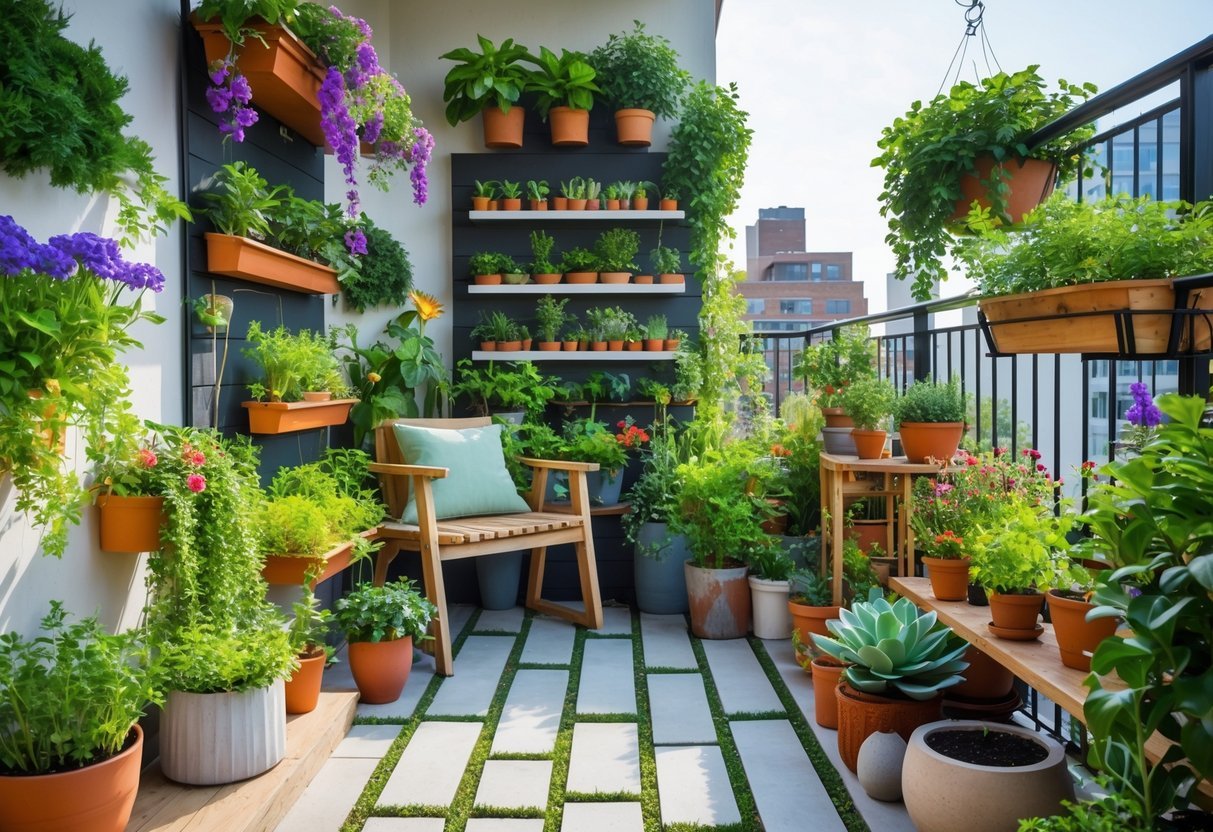
You’ll find options that fit tiny ledges and roomy terraces alike, from vertical planters and hanging pots to edible containers and low-maintenance succulents. Expect clear, doable ideas that make planning, planting, and maintaining your balcony garden easy and rewarding.
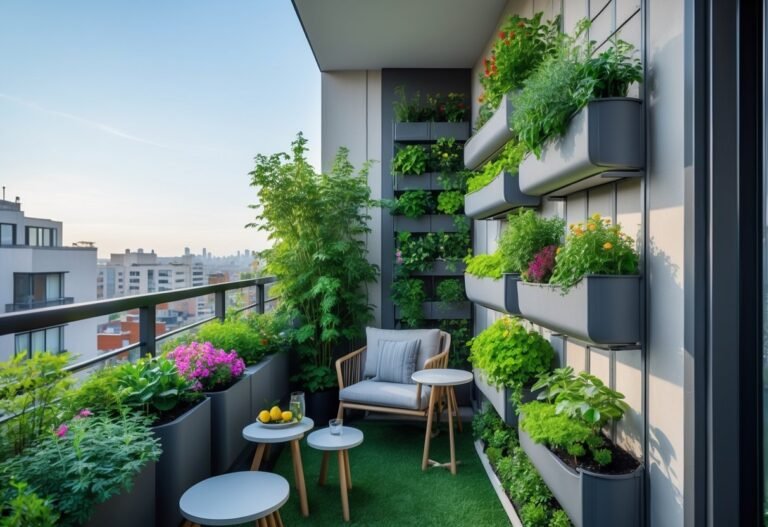
1) Vertical planter walls to maximize space
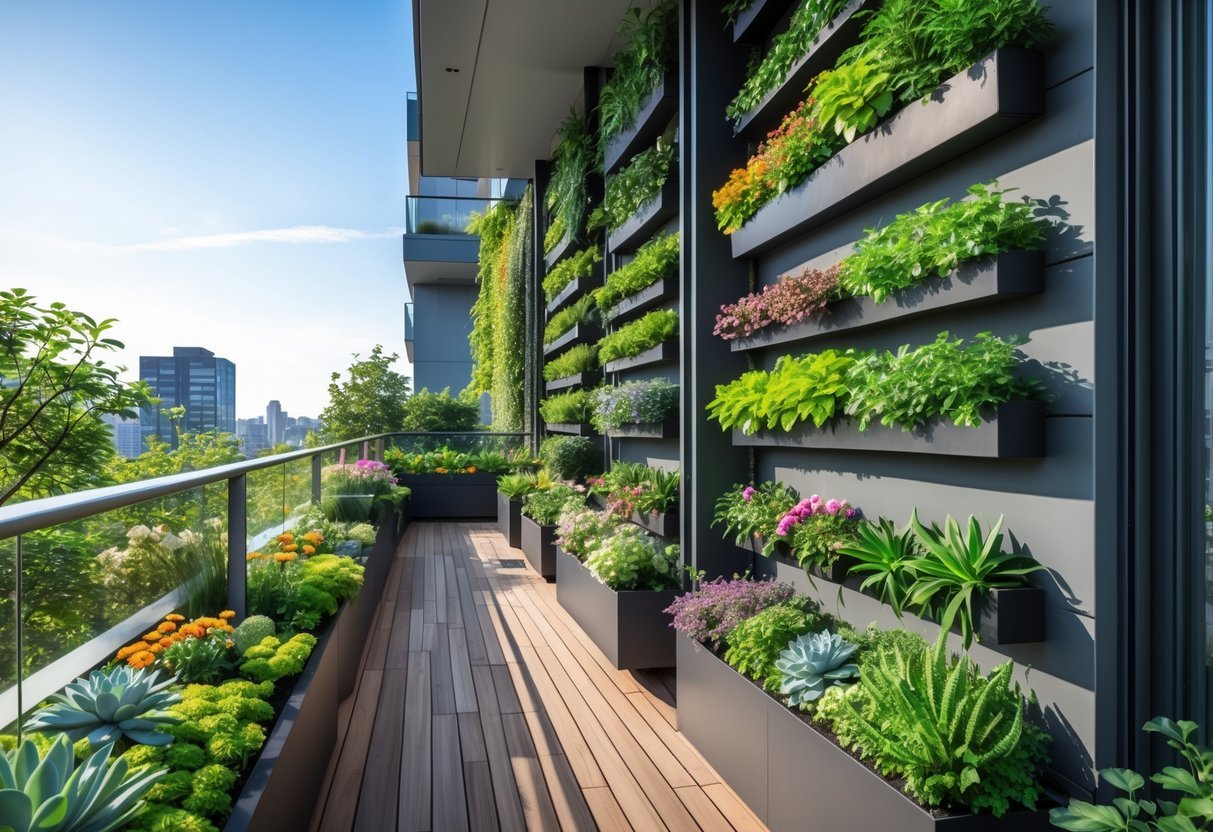
You can turn a blank wall into a layered garden that saves floor space. Use wall-mounted pockets, stacked planters, or a lightweight frame to hold pots securely.
Choose shallow-rooted herbs, succulents, and compact flowers for best results. Water from the top and use a drip tray or built-in reservoir to prevent drips and overwatering.
Install anchors rated for the planter weight and rotate plants for even light. Vertical walls give you more growing area without crowding your balcony.
2) Hanging railing pots for flowers and herbs
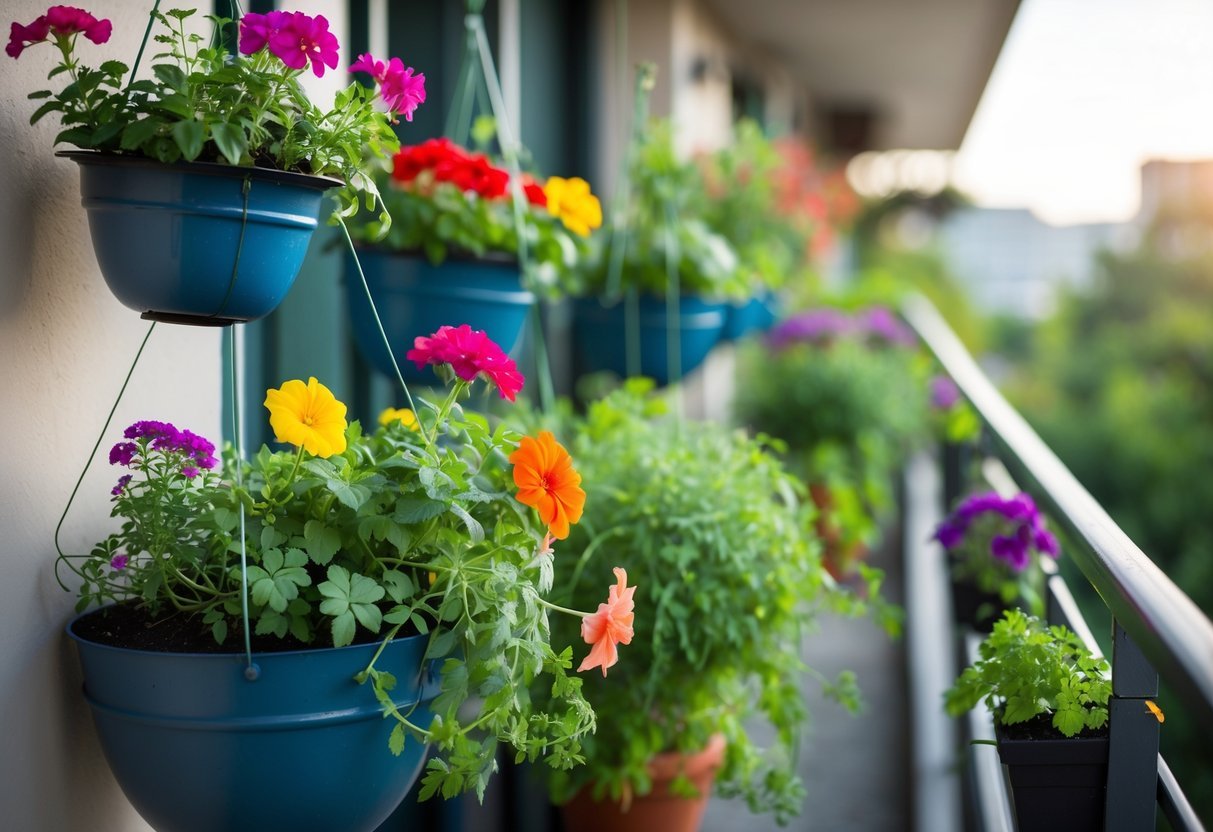
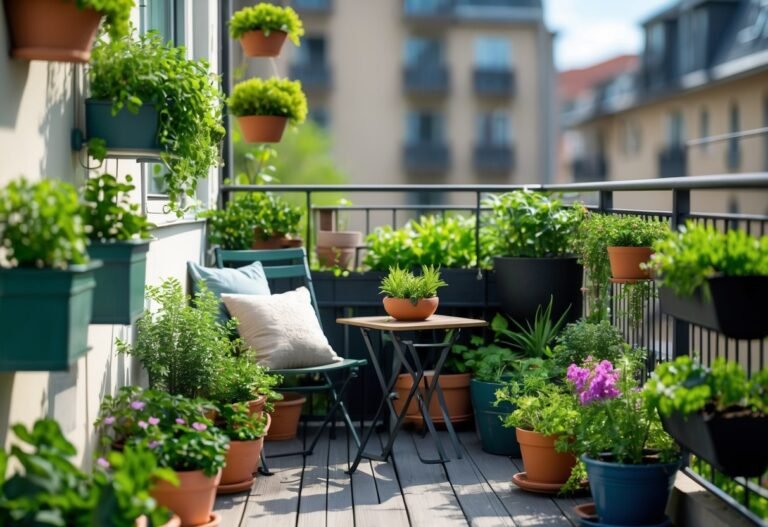
Hanging railing pots save floor space and bring plants up to eye level. You can grow petunias, geraniums, or compact herbs like basil and thyme.
Choose sturdy pots or brackets that lock onto the rail. Use well-draining soil and water regularly since railing pots dry faster.
Mix flowering plants with herbs for color and scent. Rotate pots occasionally so all plants get even sun.
3) Compact container herb garden
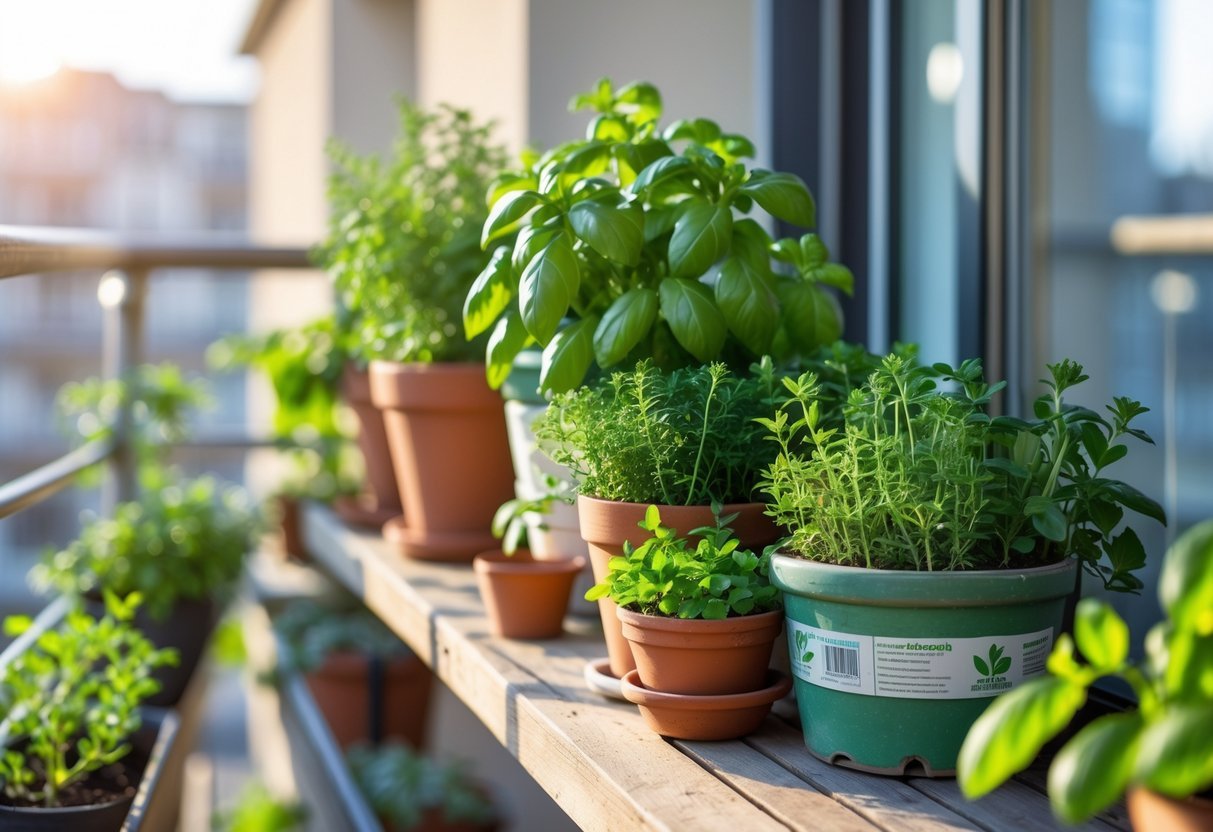
Choose a few versatile herbs like basil, thyme, and mint that suit your light conditions and cooking habits. Use 2–4 small pots or one divided container to keep plants tidy and easy to move.
Pick well-draining soil and pots with drainage holes to prevent root rot. Water when the top inch of soil feels dry and feed lightly every few weeks during the growing season.
Place containers where they get the right sun—most herbs need 4–6 hours of light. Harvest regularly to encourage bushy growth and better flavor.
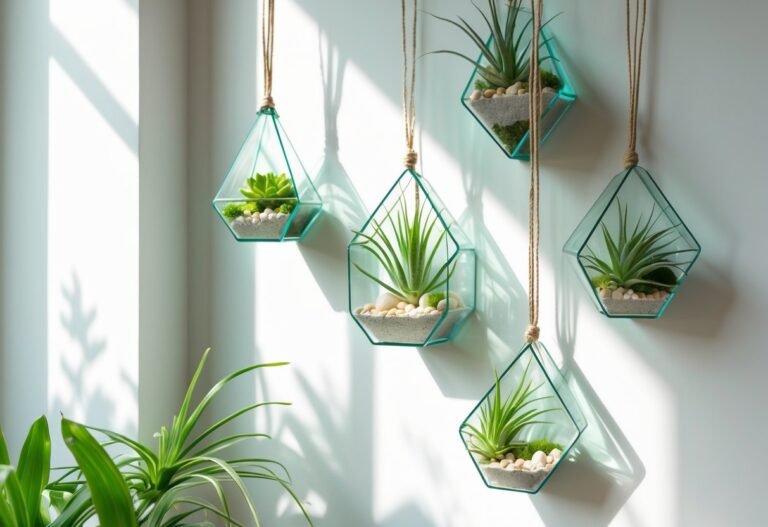
4) Succulent and cactus low-maintenance corner
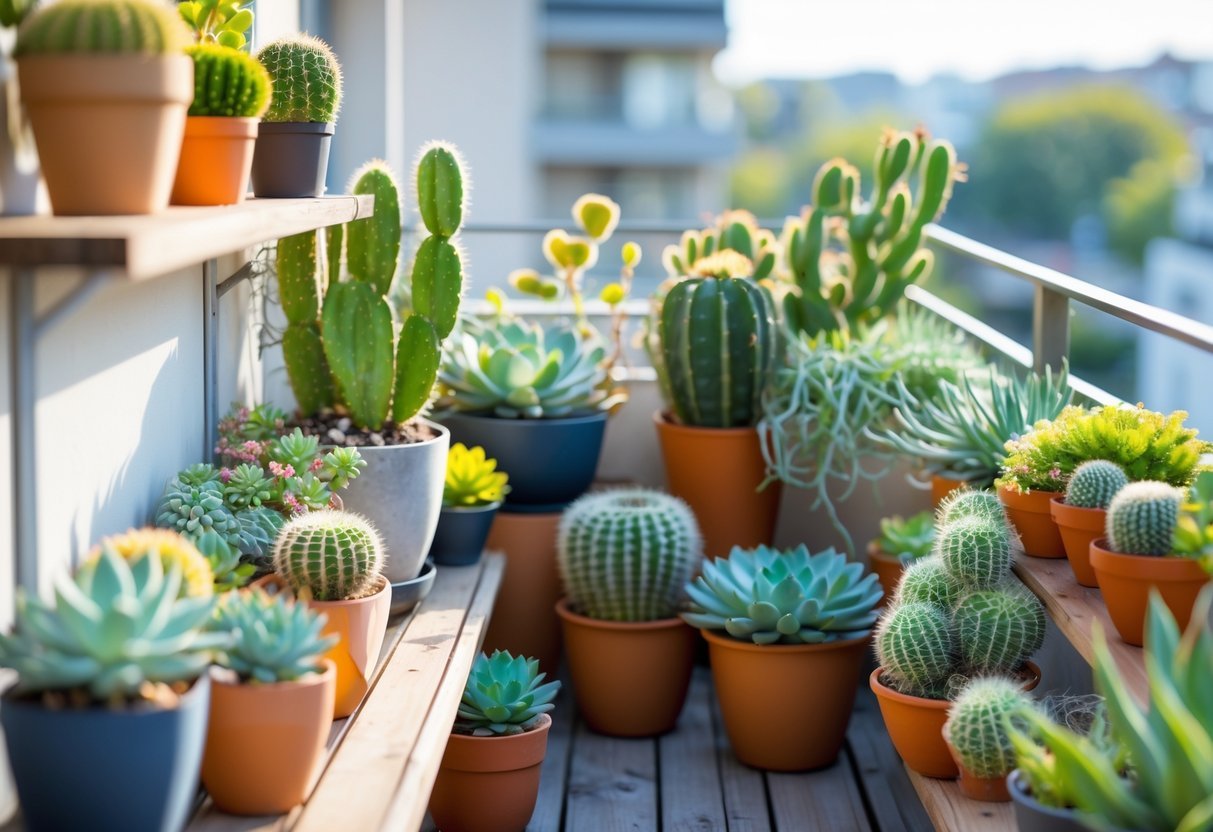
Create a small corner with pots of succulents and a few safe, soft-spined cacti to reduce prick risks. Place taller plants at the back and low rosettes in front for a neat layered look.
Use well-draining soil and pots with drainage holes to prevent root rot. Water sparingly—only when the soil is dry—and give the plants bright, indirect light.
Raise plants on a shelf or hang them to keep pets and kids safe. Grouping plants by water needs makes care simpler and saves time.
5) Edible container garden with tomatoes and peppers
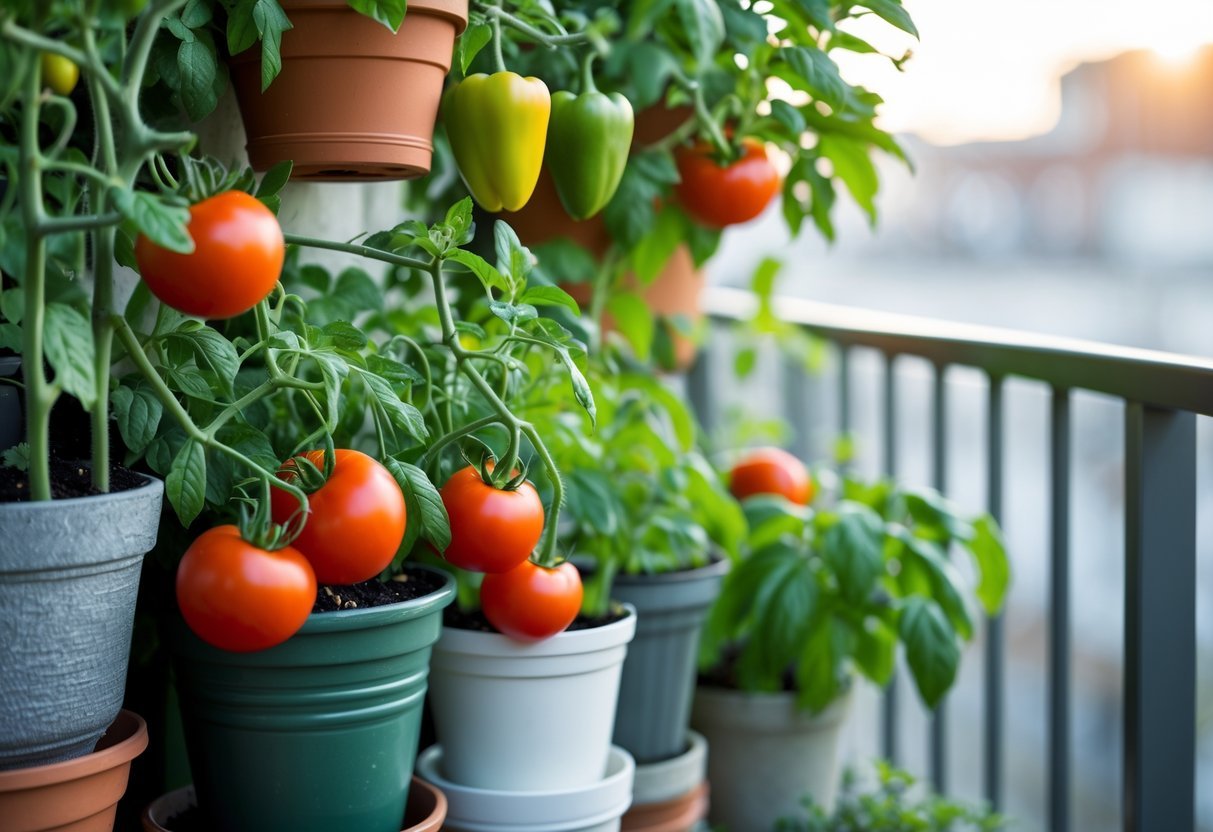
You can grow tomatoes and peppers on a sunny balcony using large pots or grow bags. Choose compact, bush varieties and rich potting mix for steady growth.
Place taller tomato plants near a wall or trellis for support. Feed plants with a balanced fertilizer every few weeks and water when the top inch of soil feels dry.
Harvest ripe fruits regularly to encourage more production. This setup gives you fresh salsa ingredients and a productive, low-maintenance container garden.
6) Trellises with climbing plants like ivy or jasmine
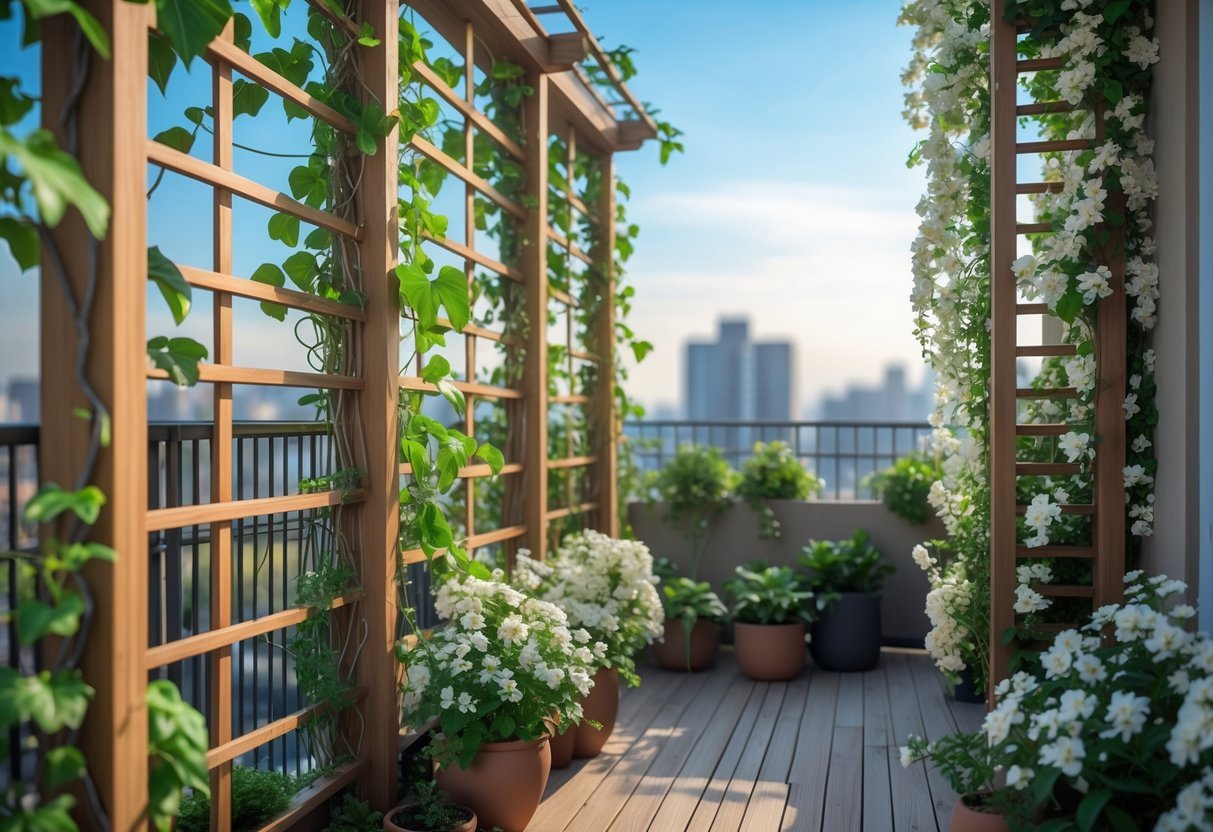
Add a trellis to your balcony to save space and create height. You can train ivy, jasmine, or morning glory to climb, giving you green privacy and scent.
Choose a rustproof metal or bamboo frame and secure it to a railing or wall. Plant at the base in a container and tie new shoots loosely as they grow.
Keep growth trimmed so vines don’t overwhelm the space. Water and feed regularly for healthy, steady climbing.
7) Multi-tiered plant stands for layering greenery
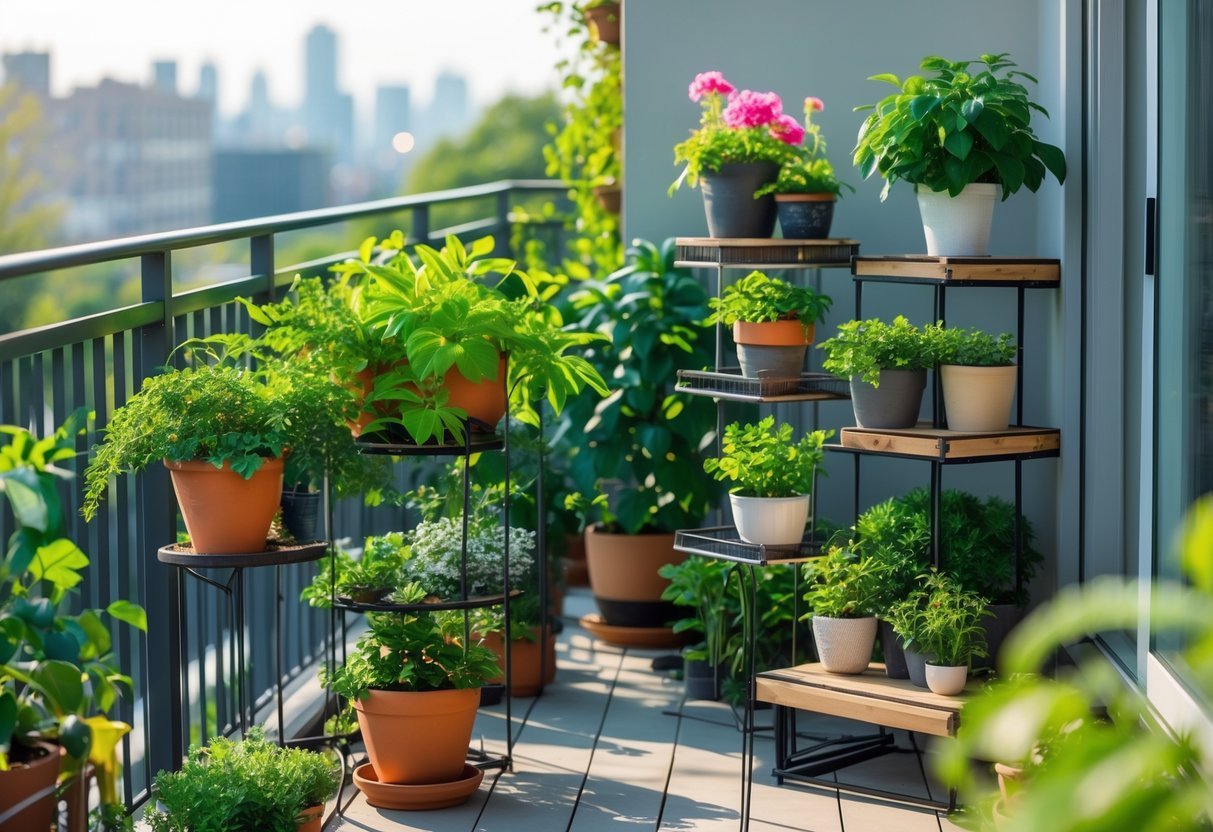
You can save floor space by using multi-tiered plant stands that stack pots vertically.
They let you group plants by light needs and create a lush, layered look on a narrow balcony.
Choose metal, wood, or bamboo stands with anti-tip features for safety.
Rolling or folding designs add mobility and easy storage when seasons change.
8) Window boxes with seasonal flowers
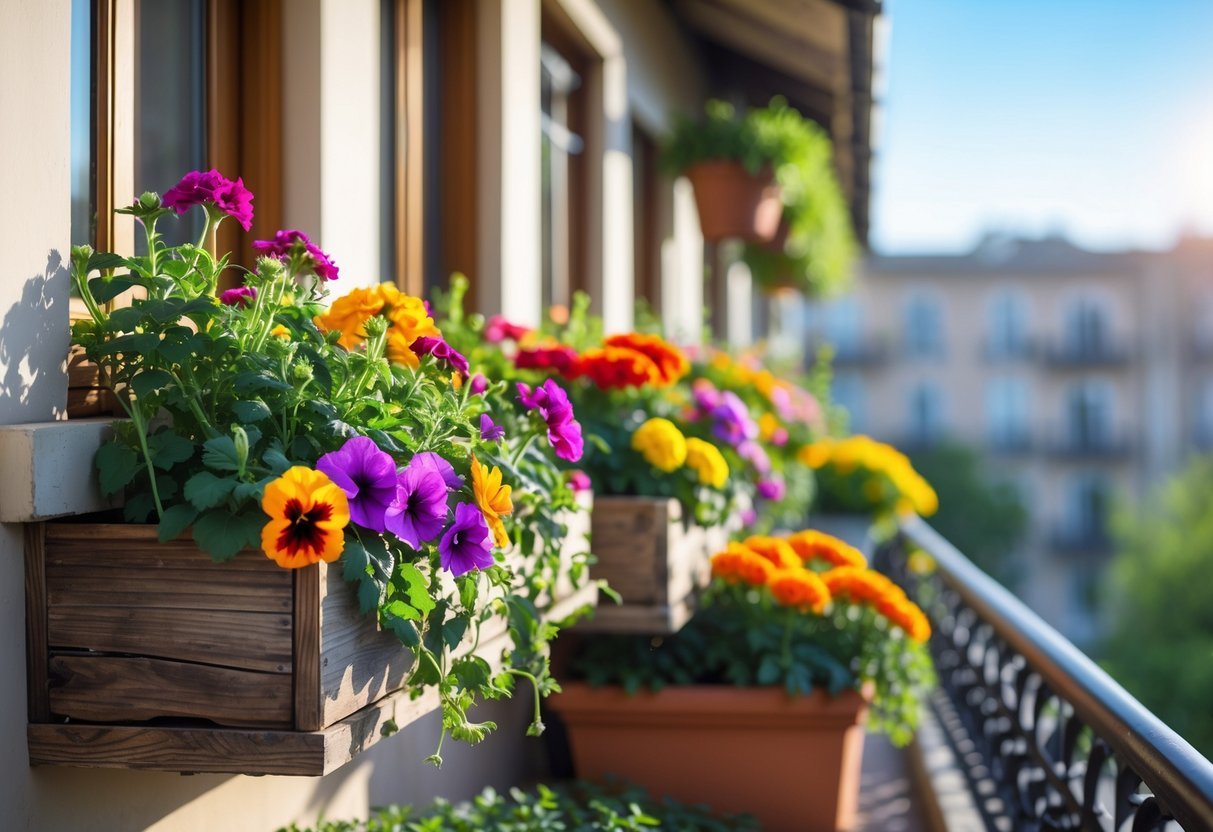
Place window boxes on your railing or ledge to add color and life to your balcony. Choose plants that match the season so they thrive and need less care.
Mix spillers, fillers, and thrillers for a full, balanced look. Change bulbs or annuals each season to keep blooms fresh and bright.
Use compact varieties if space is tight, and check sunlight before selecting plants. Water regularly and deadhead spent flowers to extend blooms.
9) Miniature fruit trees in large pots
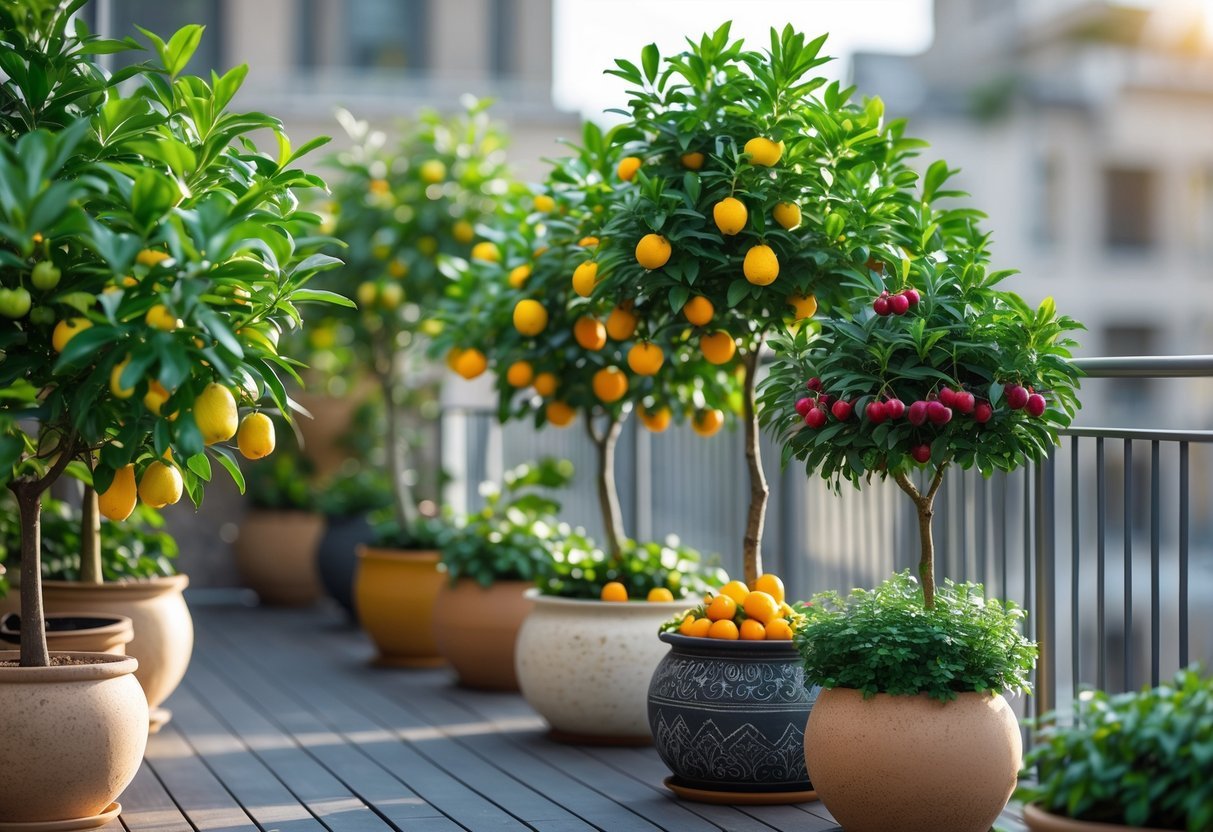
You can grow dwarf citrus, figs, or pomegranates in large containers on your balcony.
Pick a pot with good drainage and use a high-quality, well-draining potting mix.
Place the pot where your tree gets full sun for most of the day.
Water regularly but avoid waterlogged soil, and feed with a balanced fertilizer during the growing season.
Prune to keep the tree compact and to improve air flow.
You’ll get fruit plus year-round structure and blooms without needing a yard.
10) Fairy garden setups with small decorative plants
You can create a tiny fairy world on your balcony using small pots, moss, and low-growing plants like succulents or thyme. Place miniature paths, benches, and tiny houses to add charm without crowding your space.
Choose shallow containers or a wooden tray to keep the scale small and tidy. Use pebbles and bark for texture, and add a small solar light for soft evening glow.
Balcony Garden Essentials
This section gives practical choices for plants, containers, soil, and space-saving setups you can use right away. Focus on light, drainage, and growth habits to keep plants healthy in small outdoor areas.
Selecting the Right Plants
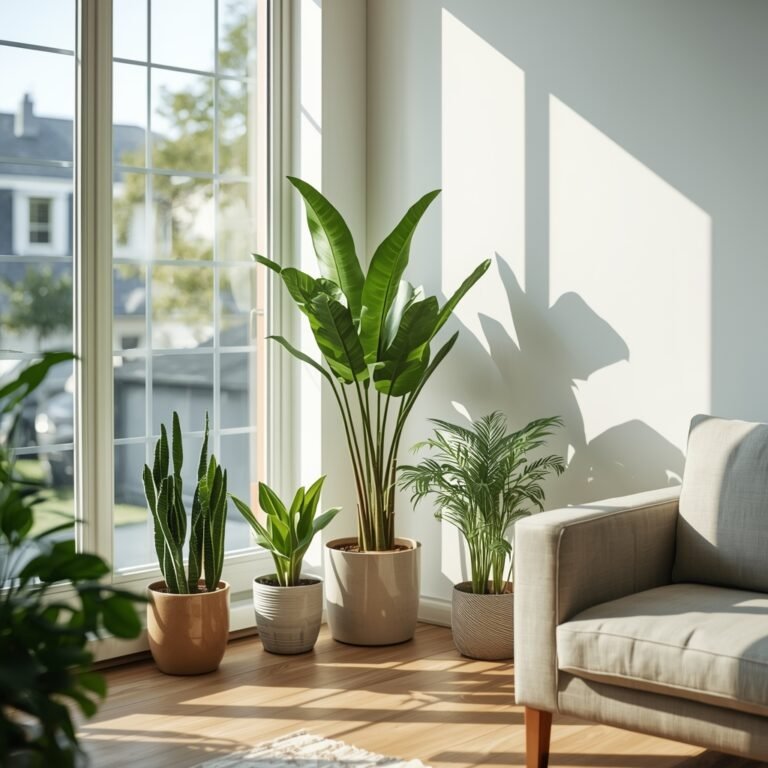
Pick plants that match your balcony’s light and wind conditions. For full sun (6+ hours), choose herbs like rosemary and thyme, vegetables like cherry tomatoes, and sun-loving flowers such as geraniums. For partial shade (3–6 hours), try lettuce, mint, impatiens, or begonias. For deep shade (less than 3 hours), pick ferns, snake plant, or peace lily.
Consider plant size and root depth. Use compact varieties and dwarf cultivars for small containers. Choose trailing plants (petunias, sweet potato vine) for railing boxes and upright types (dwarf peppers, compact basil) for floor pots. Factor in maintenance: annuals need more frequent watering and feeding than succulents or herbs.
Think about microclimates. Corners near walls stay warmer; edges get more wind. Group plants by water needs to make care easier. Place taller items to block wind and protect delicate leaves.
Choosing Containers and Soil
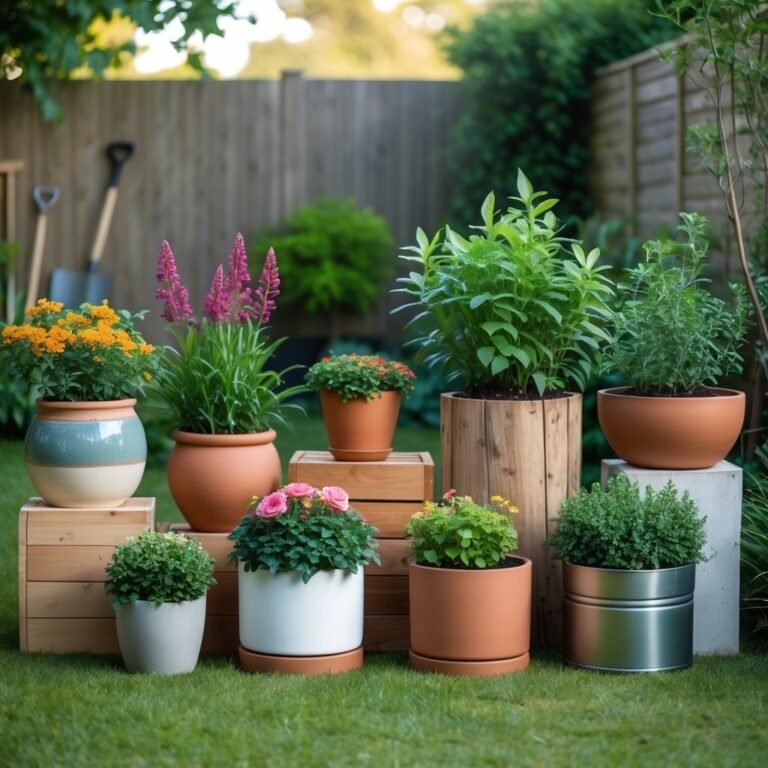
Choose containers with drainage holes and a stable base. Use lightweight materials like fiberglass or resin for large pots to avoid strain when moving them. For rail planters, select ones with secure brackets rated for the pot weight when filled.
Use a potting mix labeled for containers, not garden soil. Good mixes include perlite or vermiculite for drainage and hold moisture. For vegetables and herbs, use a mix with added compost or slow-release fertilizer.
Match pot size to root space. Small herbs do well in 6–8 inch pots; tomatoes need 10–20+ inch containers depending on variety. Add a layer of coarse grit or broken pottery at the bottom only if drainage gaps clog; otherwise focus on high-quality potting mix. Water thoroughly after planting and add mulch or bark on top to reduce evaporation.
Maximizing Limited Space
Use vertical space to multiply planting area. Install wall planters, hanging baskets, or a tiered shelving unit to stack pots without crowding the floor. Train vines on a trellis or railing-mounted supports to grow upward.
Use multi-purpose furniture with built-in planters or a narrow bench that holds pots underneath. Rotate seasonal crops—leafy greens in cool months, peppers and basil in warm months—to keep production high year-round. Try intercropping: pair fast-growing herbs like cilantro with slower crops like dwarf eggplants.
Optimize sun exposure by placing sun-loving plants on the brightest side and shade-tolerant ones near walls. Keep frequently used herbs within arm’s reach. Regularly prune and deadhead to control size and encourage new growth.
Balcony Garden Maintenance
Keep soil moist but not soggy, check containers often, and inspect foliage weekly for pests or disease. Use the right potting mix, drain excess water, and remove dead leaves to keep plants healthy.
Watering Techniques for Containers
Water deeply until water runs from the drainage hole. This ensures roots get moisture down to the root ball instead of only wetting the surface. For terracotta pots, expect faster drying; plastic and glazed pots retain water longer.
Use a moisture meter or stick your finger 2 inches into the soil. If it feels dry, water. Water in the morning to reduce evaporation and lower risk of fungal problems that thrive in damp nights.
Consider drip lines, self-watering pots, or a simple saucer setup. For balconies with limited drainage, empty saucers after 15–30 minutes to prevent root rot. Adjust frequency during heat waves and rainy stretches.
Dealing With Pests and Diseases
Inspect plants once a week. Look under leaves for aphids, whiteflies, and mites. Remove pests by hand when possible or spray with a steady stream of water to knock them off.
Use insecticidal soap or neem oil for soft-bodied insects. Apply in the evening and follow label rates. Avoid broad-spectrum pesticides that kill beneficial insects like ladybugs and lacewings.
Prevent disease by spacing containers so air can move between plants. Remove yellowing or spotted leaves immediately. For fungal issues, improve drainage and avoid wetting foliage when you water. If a plant has a severe, spreading disease, discard it and sterilize the pot before reuse.