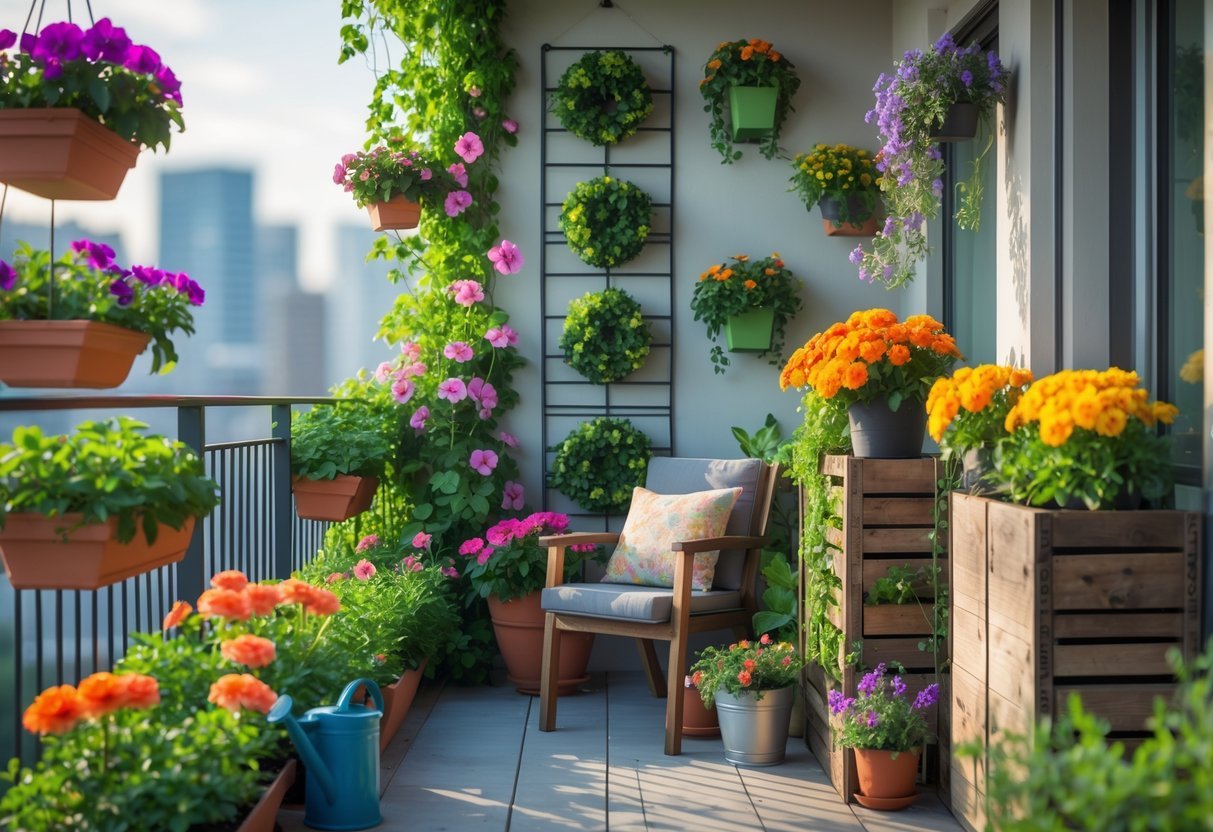
10 Balcony Flower Garden Ideas to Maximize Small Spaces and Seasonal Color
You can turn even a tiny balcony into a bright, fragrant flower garden that lifts your mood and adds color to your home. This article shows ten easy, space-smart flower garden ideas that work for small balconies, from hanging baskets and window boxes to vertical planters and compact bulb containers.
You’ll learn simple ways to mix blooms, scents, and structure so your balcony feels fuller and stays manageable. Expect practical tips on placement, plant pairings, and low-effort maintenance to help you create a lovely outdoor spot you’ll actually use.
1) Hanging flower baskets for space-saving color
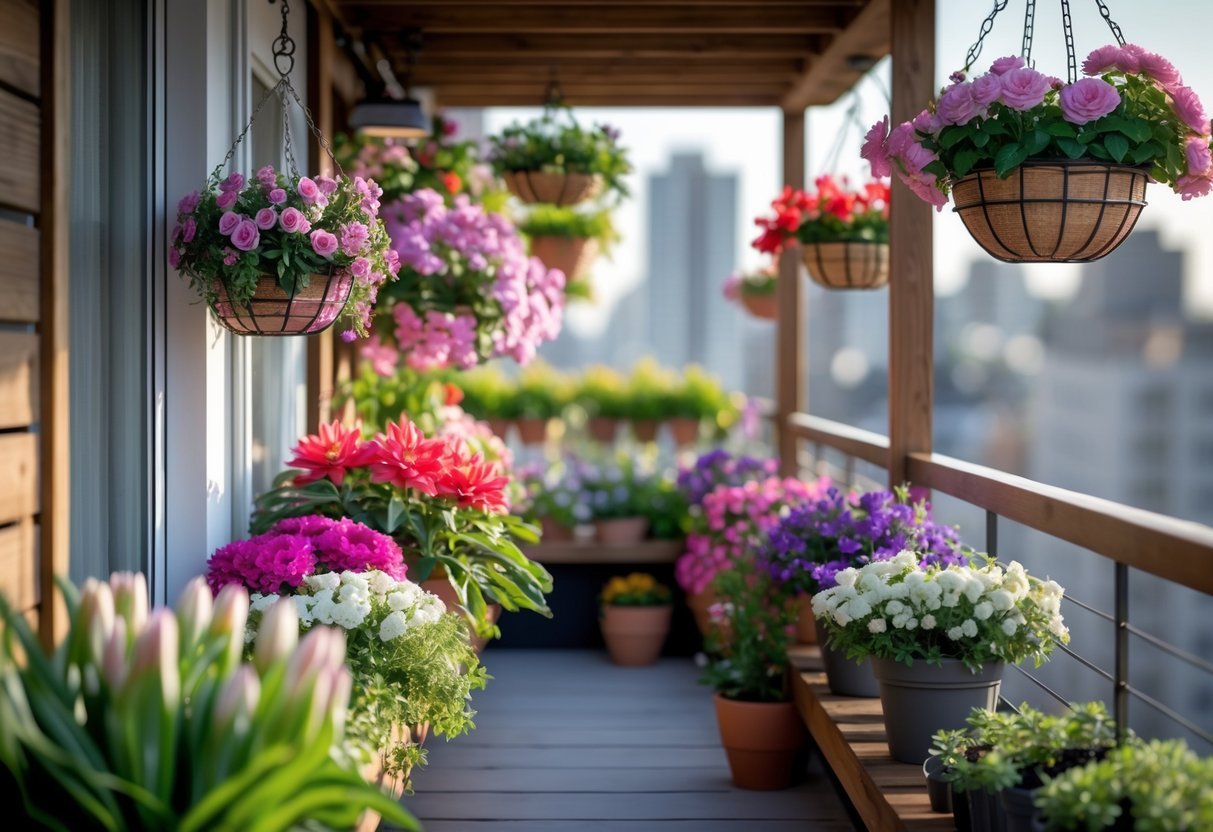
Hanging baskets free up floor space while adding color at eye level. You can hang them from ceilings, railings, or wall brackets to brighten a small balcony.
Choose trailing plants like petunias, lobelia, or ivy for a full look. Mix annuals and herbs for scent and seasonal variety.
Use lightweight coco or fabric liners and a good potting mix to keep baskets easy to handle. Water more often than ground pots since baskets dry faster.
2) Vertical planters with cascading petunias
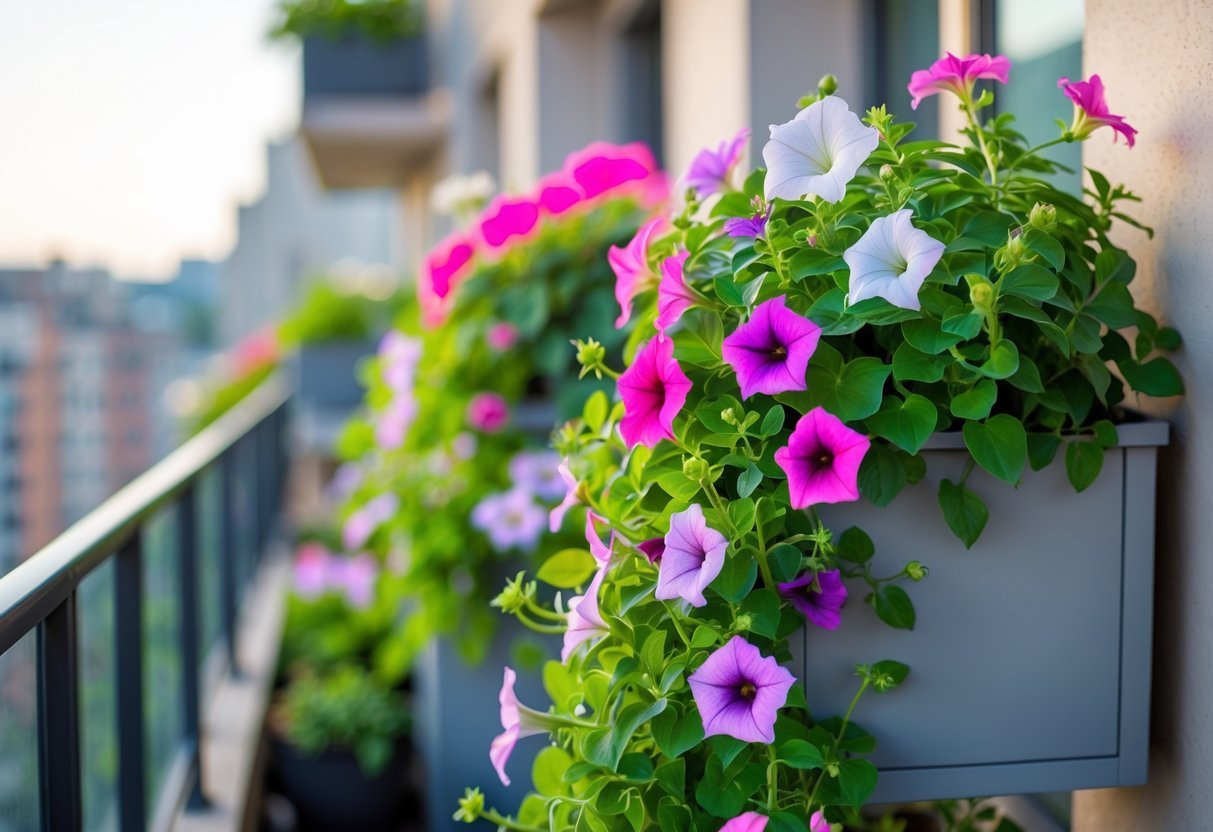
Choose a vertical planter that fits your balcony wall or railing to save floor space. Petunias trail nicely and fill layers with color as they grow down.
Plant in a mix with good drainage and feed lightly during bloom season to keep flowers abundant. Place where they get at least five hours of sun and protect from strong winds.
Water from the top so moisture trickles through each pocket. Trim spent blooms to encourage more flowering and maintain a neat cascade.
3) Window boxes filled with geraniums and marigolds
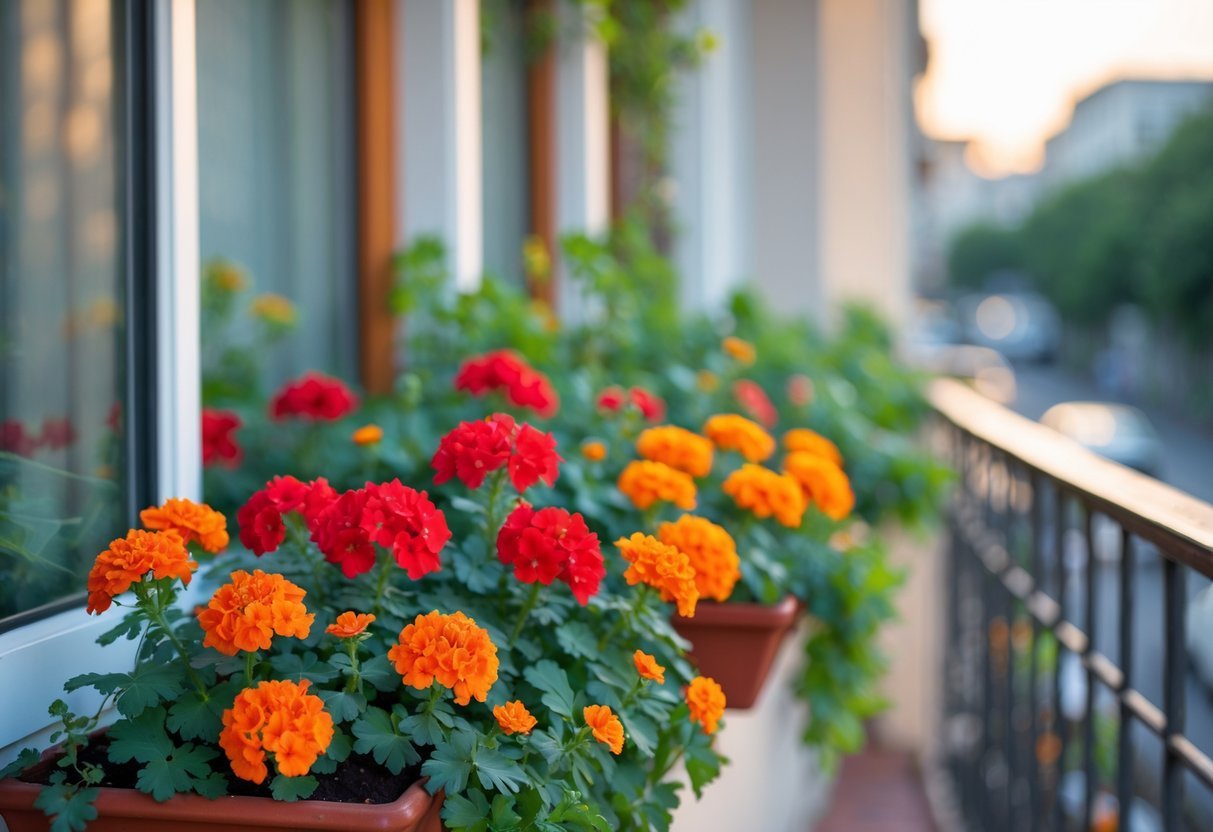
Plant geraniums for steady color and marigolds for bright contrast; both tolerate sunny balcony spots.
Choose well-draining soil and a box with drainage holes to keep roots healthy.
Space plants about 8–12 inches apart so they get air and room to grow.
Deadhead blooms weekly to encourage more flowers and a tidy look.
Water when the top inch of soil feels dry; avoid overwatering.
Fertilize lightly every 4–6 weeks during the growing season for best results.
4) Tiered plant stands showcasing begonias and impatiens
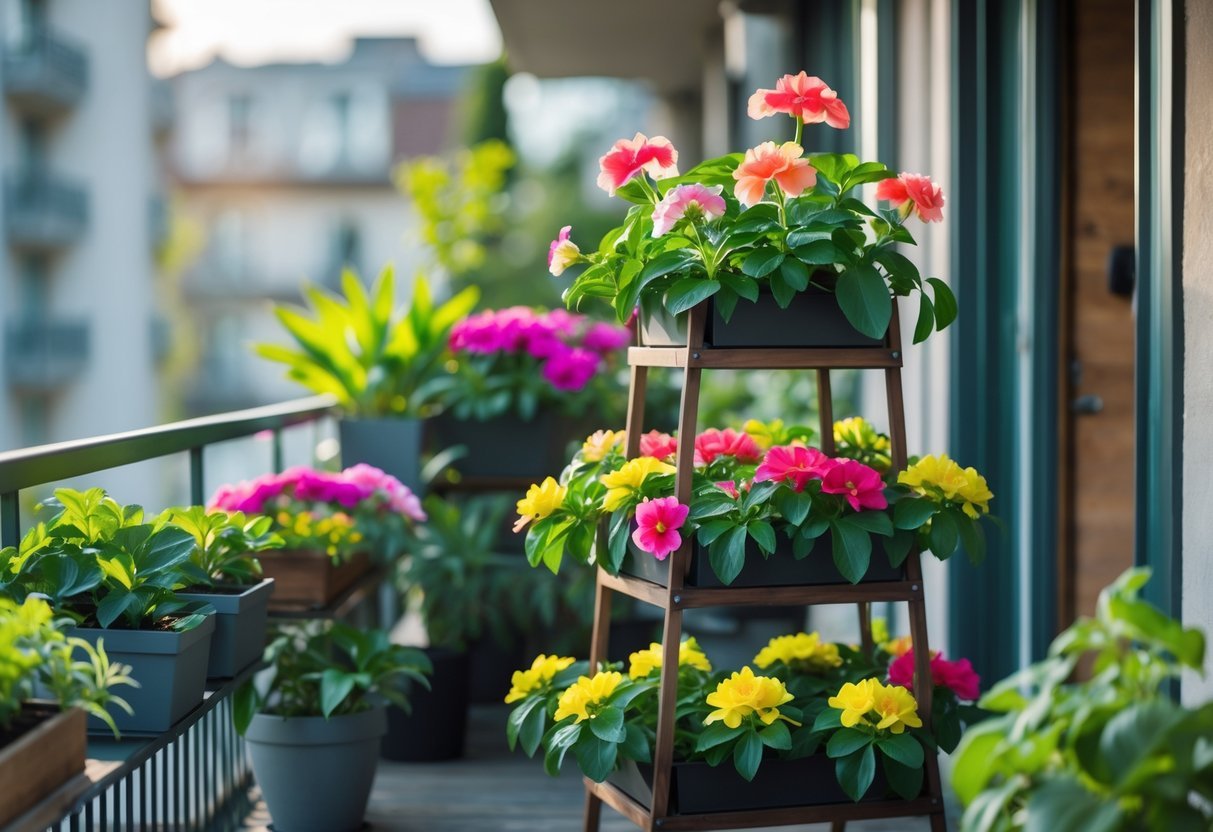
Place a tiered plant stand on your balcony to save space and show off color. Begonias give bold foliage and blooms, while impatiens add soft, continuous color.
Put taller begonias on the top tiers so they catch light, and place impatiens lower where they get dappled shade. Water more often in small pots and check drainage to prevent soggy roots.
5) Climbing roses trained on trellises
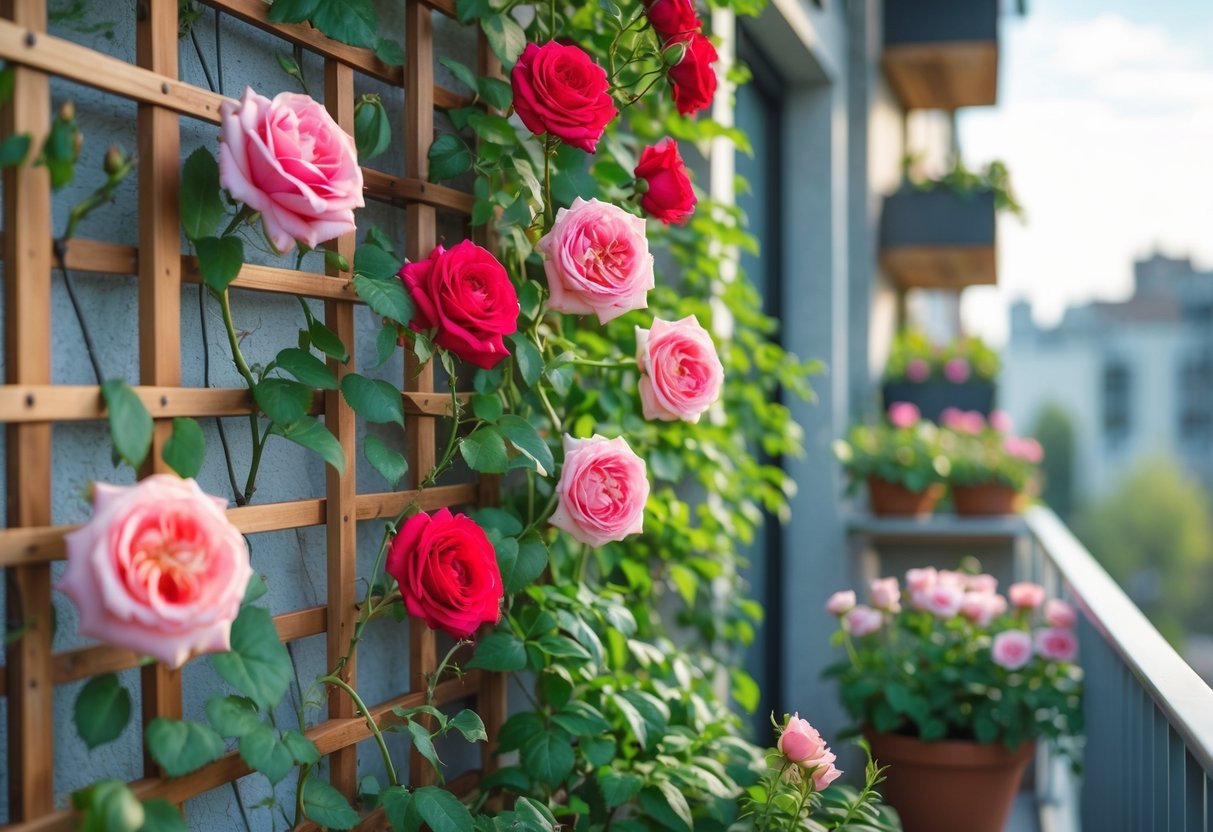
You can grow climbing roses on a small trellis to add height and scent to your balcony. Choose disease-resistant varieties and a slim trellis that fits your space.
Train canes horizontally and tie them gently to encourage more blooms. Prune each year to keep the plant healthy and the shape tidy.
Position the trellis near a sunny spot and use large pots with good drainage. Feed and water regularly for steady growth and repeated flowering.
6) Succulent arrangements with bright blooms
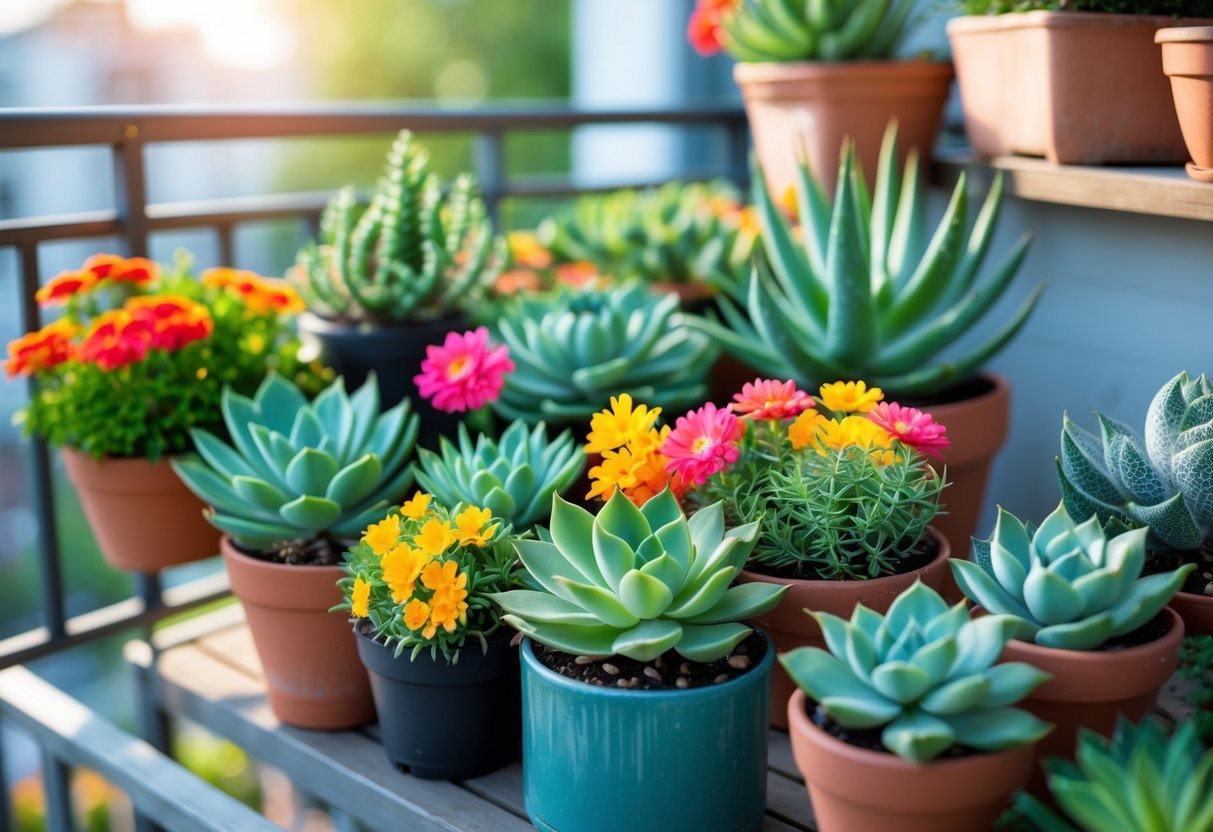
Pair succulents with flowering varieties like kalanchoe, portulaca, or ice plant to add color without extra work.
These bloomers tolerate sun and dry soil, so they fit well with hardy rosettes and sedums.
Use shallow, well-draining containers and fast-drain soil to keep roots healthy.
Place taller bloomers toward the back or center so flowers show without shading smaller succulents.
Mix textures and colors for contrast: glossy leaves, spiky forms, and vivid petals.
This creates a lively balcony display that stays low-maintenance and long-lasting.
7) Miniature rose bushes in decorative pots
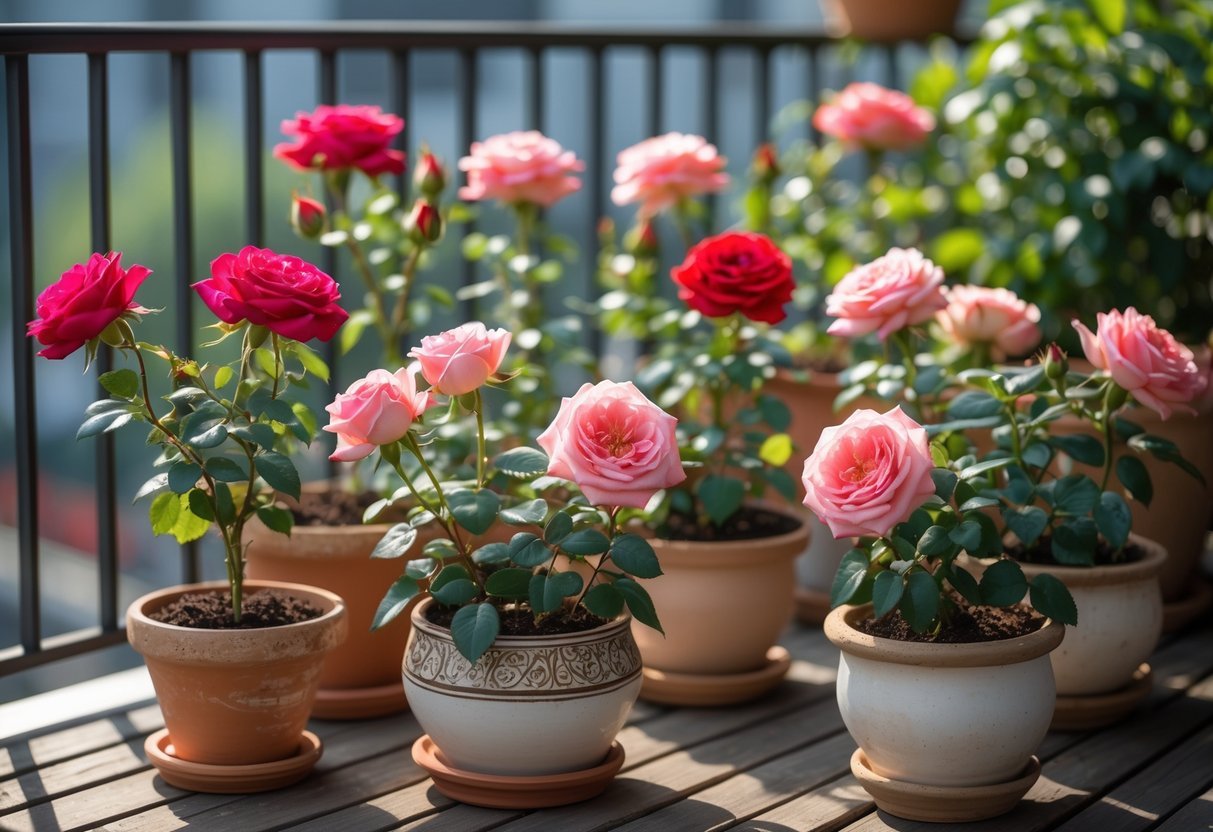
Miniature roses fit well on small balconies and bring steady color without taking much space. Choose pots with good drainage and use a high-quality potting mix to keep roots healthy.
Place pots where roses get at least five hours of sun each day, and water when the top inch of soil feels dry. Deadhead spent blooms to encourage more flowers and check for pests regularly.
8) Lavender pots for fragrance and flowers
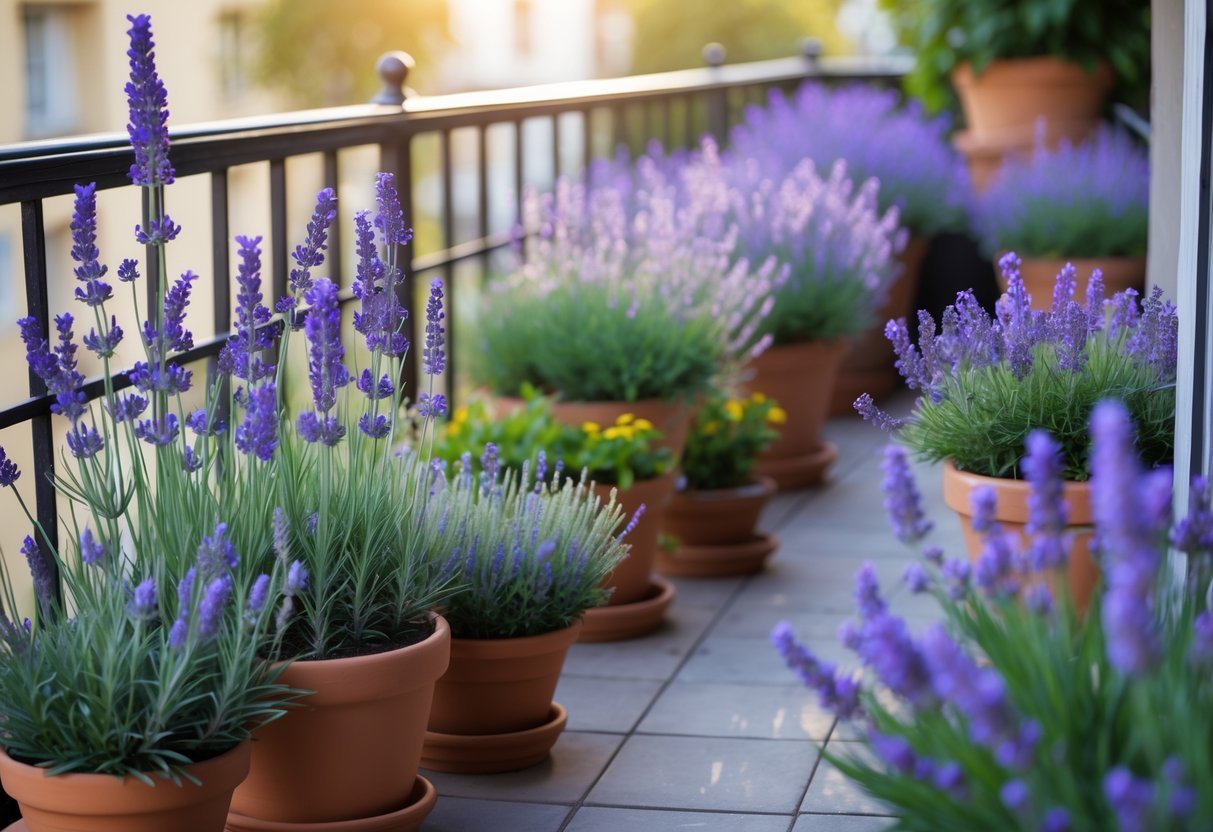
You can grow lavender in pots to add scent and color to your balcony. Choose a sunny spot and a pot with good drainage to keep roots healthy.
Use a well-draining mix and avoid overwatering; lavender prefers drier conditions. Trim spent blooms and shape plants after flowering to keep them compact.
Pick compact varieties suited for containers, like English or French lavenders, for best results. Move pots to shelter in heavy frost or bring them inside if winters get wet.
9) Herb and flower combo planters with nasturtiums
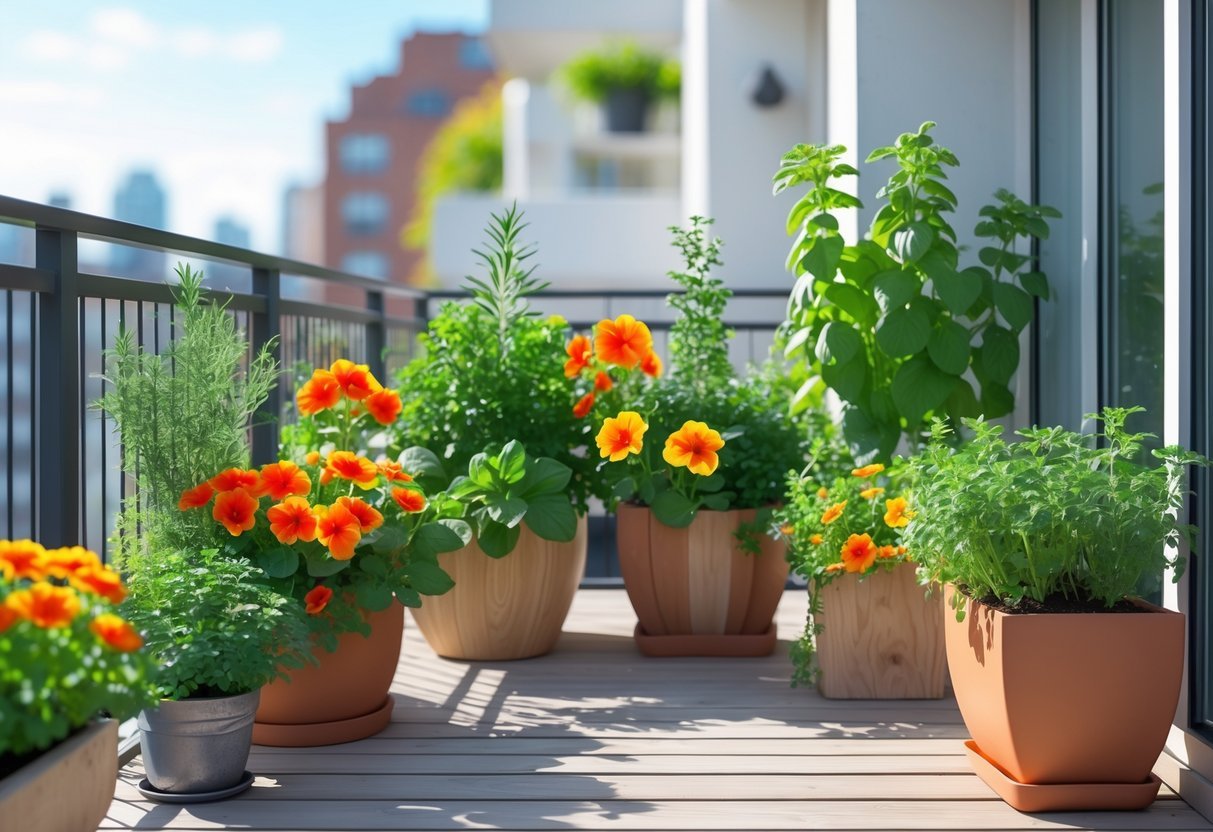
Pair nasturtiums with basil, chives, or thyme for a pretty and useful balcony pot. Nasturtiums trail and spill over the edge while herbs stay upright, giving you varied texture and color.
Nasturtiums attract pollinators and can deter some pests from your herbs. Plant in well-draining soil, give full sun to part shade, and water when the top inch of soil feels dry.
10) Compact tulip and daffodil bulb containers
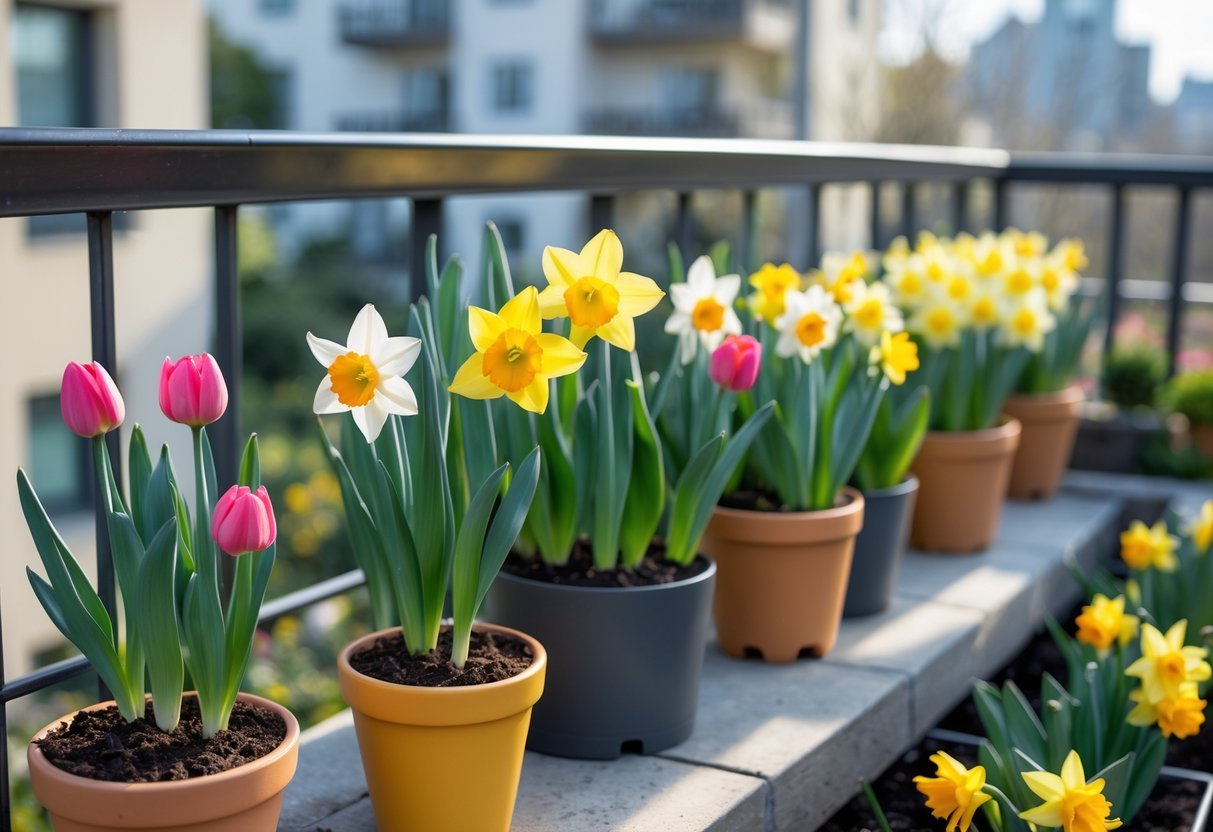
Choose small, sturdy pots and plant bulbs close together for a full spring display. Use good potting mix and plant tulips and daffodils at their recommended depths.
Place containers where they get morning sun and some afternoon shade. Water lightly after planting and keep soil slightly moist during growth.
Stagger planting times or use varieties with different bloom dates to extend color on a small balcony. Move pots as needed to protect shoots from late frost.
Balcony Flower Garden Maintenance
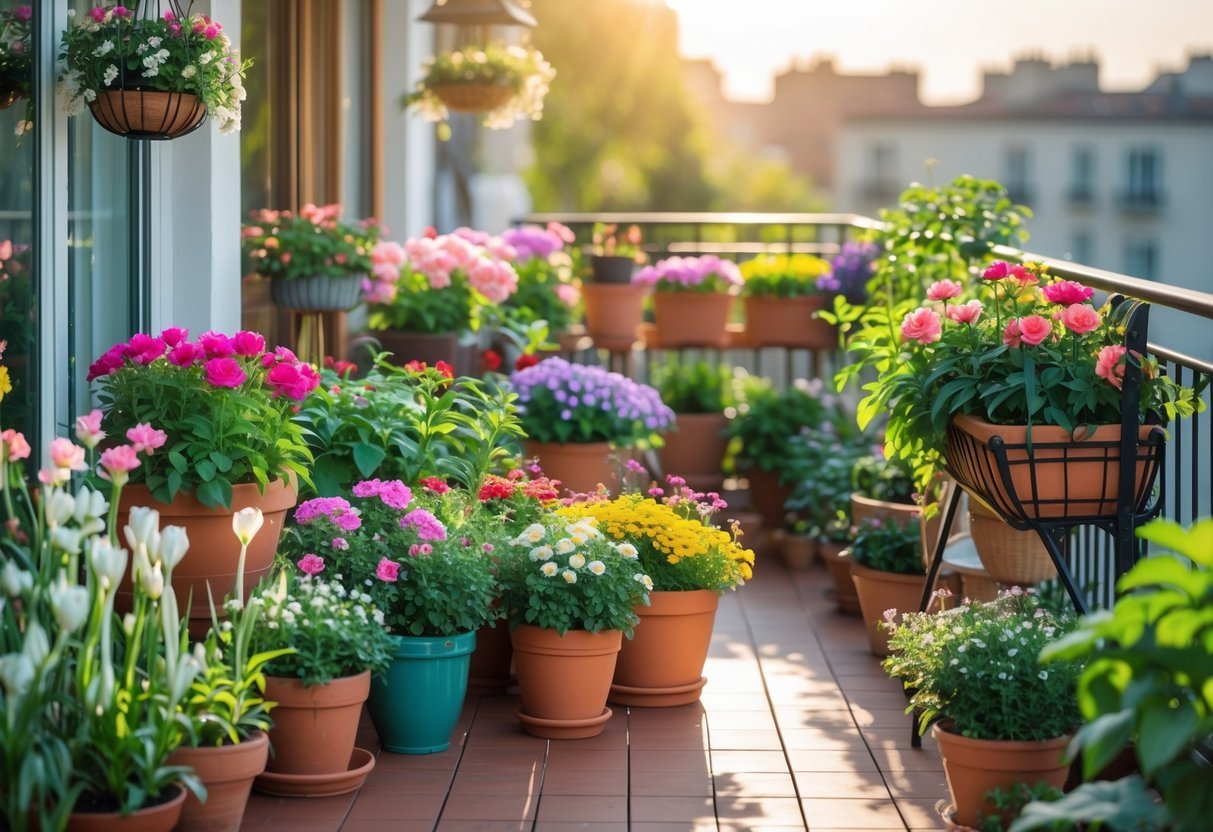
Keep watering regular but light, feed with slow-release or liquid fertilizer seasonally, and inspect plants weekly for pests or disease. Use containers with good drainage, adjust care for sun exposure, and remove dead growth promptly.
Watering Techniques for Balcony Spaces
Water in the morning to reduce evaporation and fungal risk. Check soil moisture by sticking your finger 1–2 inches into the pot; water when it feels dry at that depth. Use a watering can with a long spout or a wand to reach tight corners and avoid splashing leaves.
Group pots with similar water needs together so you can water efficiently. For very sunny balconies, water more often and consider self-watering containers or a reservoir system to keep roots moist without daily attention. Tilt saucers occasionally to let excess water drain and prevent root rot. Mulch topsoil with 1–2 inches of bark or coarse compost to slow evaporation and keep soil temperature steady.
Balcony-Friendly Fertilization Methods
Choose a balanced, water-soluble fertilizer (like 10-10-10 or 20-20-20) for flowering annuals and feed every two weeks during the growing season. For mixed containers, use a half-strength solution the first time after planting to avoid fertilizer burn, then increase to the recommended rate.
Slow-release granules are useful if you want lower maintenance; apply at planting and again mid-season. For herbs and edible flowers, switch to an organic fertilizer or liquid seaweed to keep flavors clean. Always water before and after applying fertilizer to prevent concentrated salts from damaging roots.
Pest and Disease Prevention
Inspect plants weekly for signs of pests: sticky residue, holes, yellowing, or tiny insects. Remove heavily infested leaves and isolate affected pots immediately to stop spread.
Use insecticidal soap or neem oil for aphids, whiteflies, and spider mites. Spray under leaves and repeat every 7–10 days until control. Keep good air flow by spacing pots and pruning crowded growth; this lowers humidity and reduces fungal issues. Clean tools and replace potting mix every 1–2 years to limit soil-borne diseases.
Maximizing Small Balcony Spaces
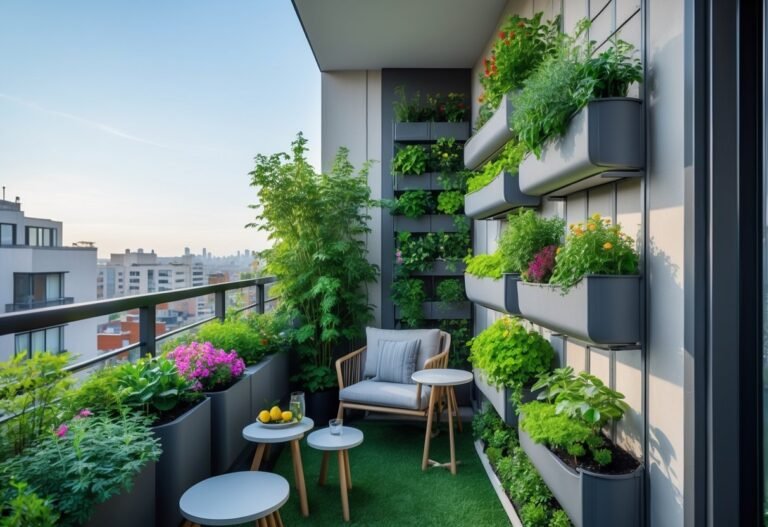
Make the most of narrow floors, limited rail width, and variable sun by stacking vertically, placing containers where they get the right light, and using slim rail planters that free floor space. Focus on plant height, pot size, and water access to keep maintenance simple.
Vertical Gardening for Flowers
Use vertical space with wall planters, hanging pockets, and tiered shelves to fit more blooms without crowding the floor. Mount a sturdy shelf unit against a wall for pots of petunias, lobelia, and dwarf salvias; keep heavier pots on lower shelves and lighter trailing plants above.
Choose pockets or planters with drainage holes and a water-retentive mix (peat-free compost plus perlite) so flowers don’t dry out between waterings. Install a drip line or use self-watering inserts for rows of small pots to reduce daily watering.
Pick plants by light level: morning sun suits begonias and impatiens on lower tiers; full sun on the top shelf works for geraniums and calibrachoa. Secure brackets and fasteners for wind resistance, and leave 2–4 inches between pots for airflow and root growth.
Strategic Container Placement
Place larger, deeper pots in corners to anchor the layout and create windbreaks for smaller blooms. Use a mix of one large container (10–15 inches wide) and several 6–8 inch pots; the large pot can host a focal plant like a dwarf rose or compact hydrangea.
Group containers by water needs. Put thirsty annuals like fuchsias together and keep drought-tolerant species like lavender in separate pots. This makes watering simpler and prevents over- or under-watering.
Rotate pots seasonally to match sun patterns and protect tender plants from strong afternoon sun. Raise some pots on plant caddies with wheels so you can move them for better light or to sweep the floor. Add saucers or drip trays under containers to protect balcony flooring.
Using Rail Planters Effectively
Choose rail planters that match your balcony rail width and weight limits; aluminum or plastic models are lighter than ceramic. Measure rail thickness and buy adjustable brackets or straps to avoid slipping.
Plant a mix of trailing and upright flowers: trailing lobelia and bacopa spill over the front while upright alyssum or small salvias fill the center. Use 6–8 inch deep rail boxes for annuals and 10–12 inch for small shrubs or edibles.
Ensure good drainage by using liners with holes and a coarse layer of grit or broken pot shards at the bottom. Secure planters with extra ties in windy spots, and water rail boxes more often because they dry faster than larger pots.
Frequently Asked Questions
These answers show specific plant picks, space-saving setups, container ideas, pest controls, watering methods, and seasonal color plans you can use right away. Expect concrete steps for hanging baskets, vertical planters, window boxes, tiered stands, and trellised roses.
What are the best flowers for a sunny balcony garden?
Choose sun-loving annuals and perennials that tolerate heat and direct light. Petunias, geraniums, marigolds, and zinnias thrive in full sun and bloom all summer.
Lavender and salvias add fragrance and attract pollinators while handling hot, dry conditions. For climbing color, train climbing roses or morning glories on a trellis.
How can I maximize space for planting on a small balcony?
Use vertical space first: install wall-mounted pockets, a vertical planter, or a trellis for climbing roses. Hang baskets from railings and place tiered plant stands to stack pots without crowding the floor.
Fit window boxes on the railing and choose compact varieties like dwarf geraniums and impatiens to fill narrow containers. Keep pathways clear so you can access plants for watering and pruning.
What are some creative container ideas for balcony flower gardens?
Hang classic baskets filled with cascading petunias for instant color without taking floor space. Use window boxes for geraniums and marigolds where they get sun and display.
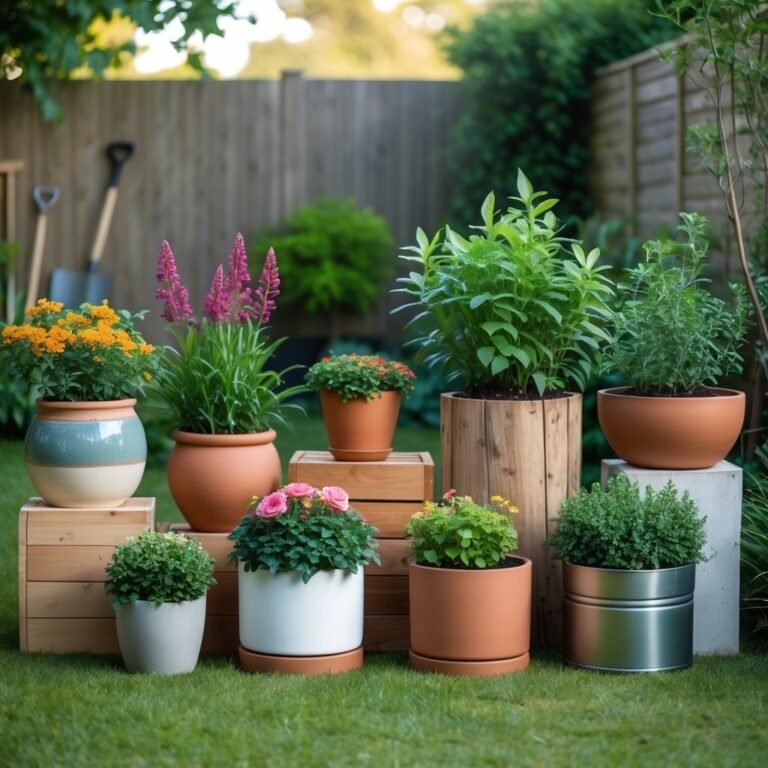
Try tiered plant stands to show begonias and impatiens at different heights. Repurpose crates, galvanized tubs, or self-watering pots to fit odd corners and add visual interest.
How do I protect balcony flower gardens from pests?
Inspect plants weekly and remove damaged leaves or insects by hand. Use insecticidal soap or neem oil sprays for soft-bodied pests like aphids; apply at dusk to avoid harming bees.
Set sticky traps for flying pests and keep pots clean of debris to reduce hiding spots. Encourage beneficial insects by planting a few lavender or salvias.
What watering techniques work best for balcony flower gardens?
Water deeply but less often to encourage strong roots; soak the soil until water runs from drainage holes. Check soil moisture with your finger—water when the top inch feels dry.
Use self-watering containers or add a drip line for consistent moisture in hanging baskets. Water in the morning to reduce evaporation and fungal disease.
How can I create a colorful balcony garden throughout the seasons?
Pick a mix of fast-blooming annuals for summer (petunias, marigolds) and long-blooming perennials (lavender, salvias) for multi-season interest. Plant early-blooming bulbs in pots for spring color, and swap in pansies or ornamental cabbages for cool-season months.
Rotate containers and deadhead spent flowers to extend bloom time. Keep a small stock of seasonal plants so you can replace tired pots quickly and maintain color year-round.