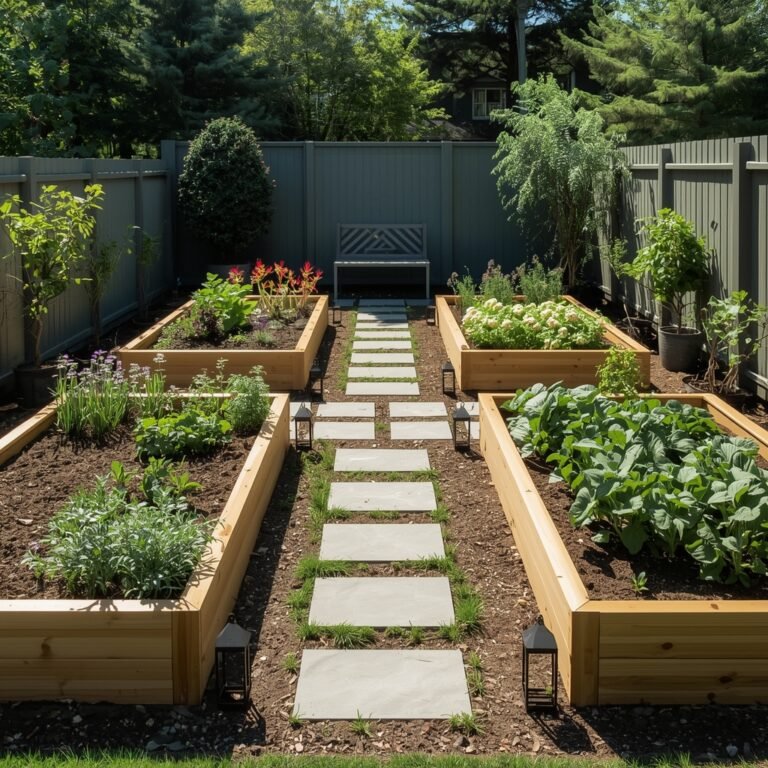
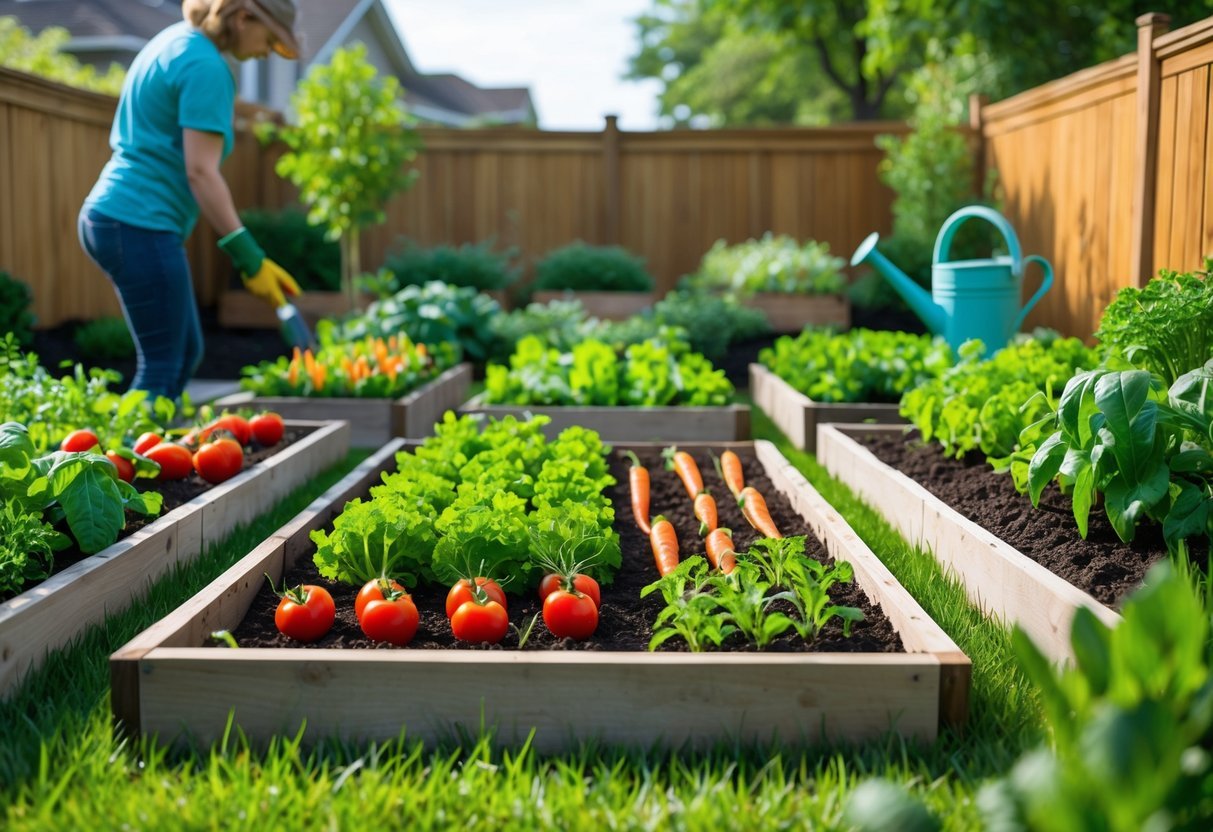
Backyard Vegetable Garden Design — Practical Layouts, Soil Tips, and Seasonal Planting
You can turn any small patch of yard into a productive and attractive vegetable garden with a few smart choices about layout, sun, and plant spacing. Start by matching your goals—easy salad greens, year-round staples, or showy raised beds—to a simple plan that fits your space and time.
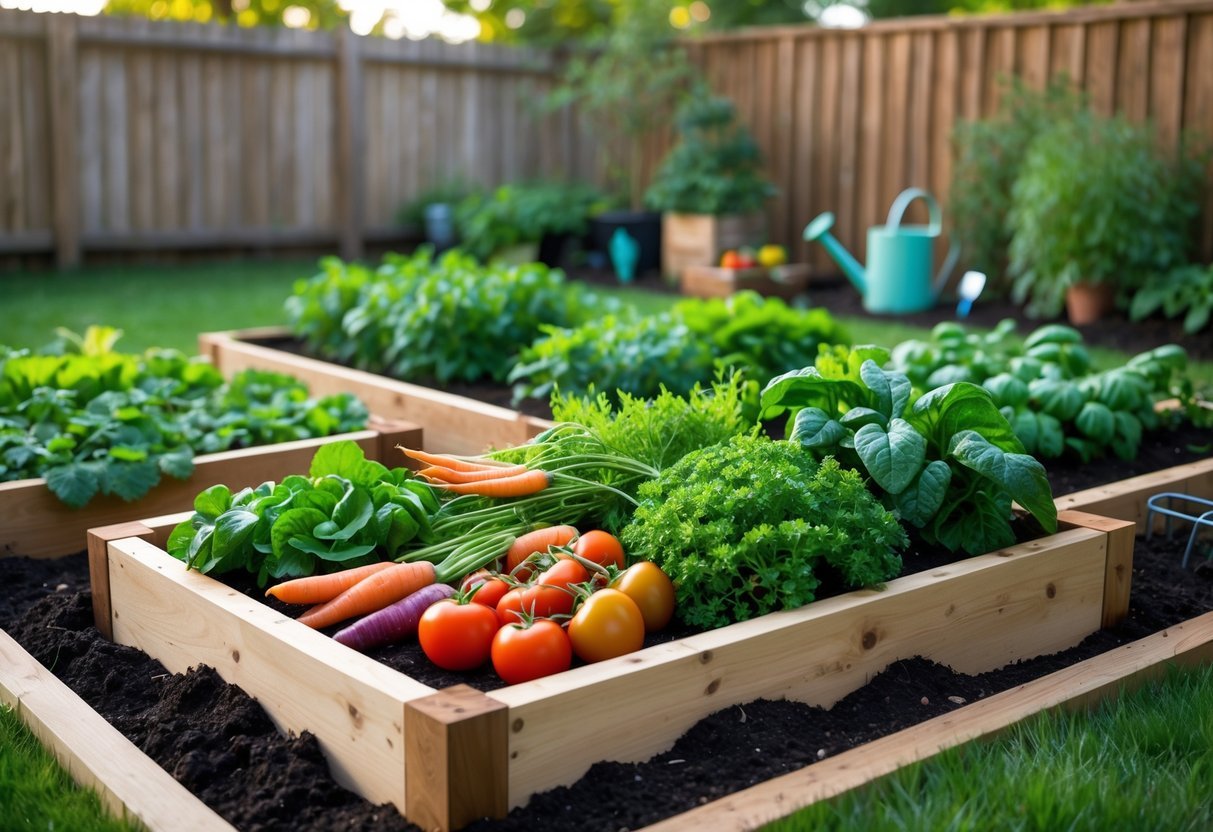
Choose a layout that maximizes sunlight, simplifies watering, and makes chores quick so you get better harvests with less work. Use raised beds, containers, or grouped rows to suit your yard and lifestyle, and plan paths and access to reduce strain when you plant, weed, and harvest.
Think about mixing beauty with function: add trellises, borders, and companion plants to keep the garden productive and inviting. Keep maintenance in mind so the design supports seasonal tasks and keeps your garden healthy long term.
Key Takeaways
- Pick a layout that fits your goals and the space you have.
- Design for easy access, watering, and routine care.
- Blend practical choices with simple aesthetic touches.
Planning Your Backyard Vegetable Garden
Focus on where you place the garden, how you fix the soil, and which layout matches your space and time. These choices determine sunlight, water needs, and how much you can grow.
Site Selection and Sunlight
Pick a spot that gets at least 6–8 hours of direct sun for most vegetables. Observe the yard across several days; note morning versus afternoon sun and any shifting shade from trees or buildings.
Check water access next to the site. Position beds within 25–50 feet of a faucet or rain barrel to reduce hauling hoses. Avoid low spots that collect cold air or standing water.
Consider wind and microclimates. Use a fence or hedge to block strong winds, and place heat-loving crops on south-facing slopes or near sun-warmed walls. Keep insect pressure in mind; avoid planting next to heavy shrubbery that shelters pests.
Soil Preparation
Start by testing your soil pH and basic nutrients with a kit or lab test. Most vegetables prefer pH 6.0–7.0; adjust with lime or sulfur based on results.
Loosen soil to 8–12 inches for root crops by double-digging or using a broadfork. Mix in 2–4 inches of compost to improve structure and fertility. For heavy clay, add coarse sand and more compost; for sandy soil, add organic matter and compost frequently.
Top-dress beds yearly with 1–2 inches of compost, and rotate crops to reduce disease buildup. Mulch with straw or shredded leaves to conserve moisture and suppress weeds. Keep a simple soil log: amendments, dates, and test results.
Garden Layout Options
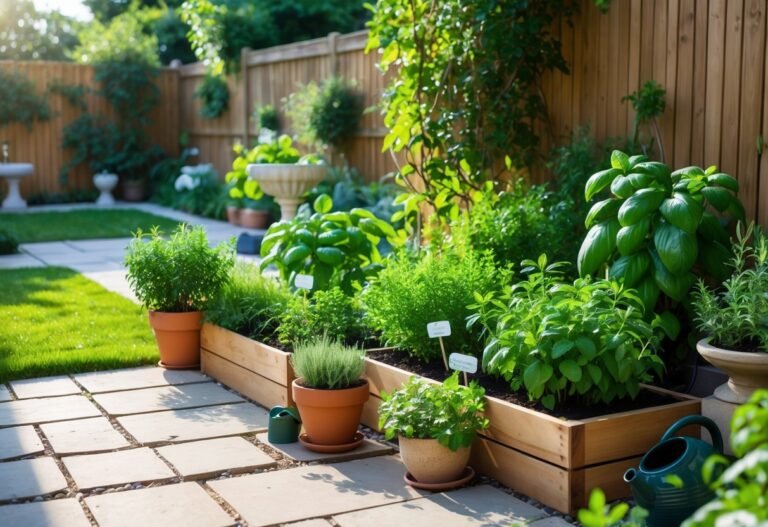
Choose from rows, raised beds, containers, or a combination based on space and mobility. Raised beds (4×8 feet) give good access and warm faster in spring; keep bed width ≤4 feet so you can reach the center from either side.
Use square-foot gardening to maximize yield in small spaces: divide a 4×4 bed into 16 one-foot squares and plant by plant spacing. For large yards, traditional rows with 18–36 inch spacing work for tractors and long-season crops.
If you have limited space, use vertical supports for beans and cucumbers and stacked containers for herbs. Mark paths at least 18–24 inches wide for wheelbarrows and maintenance. Draft a simple map showing plant families to plan rotations and companion planting.
Design Principles for Productive Vegetable Gardens
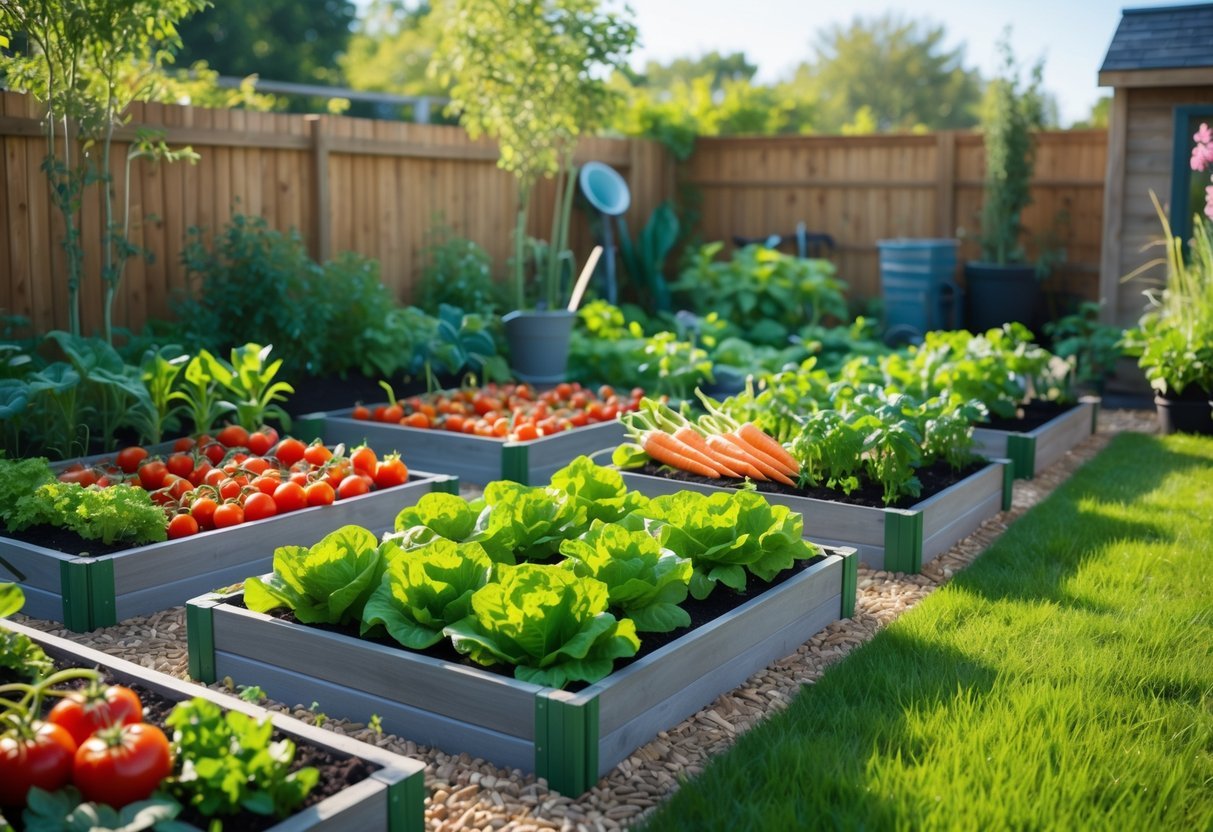
Focus on soil depth, sun exposure, and easy access. Choose beds, rotation, edges, and timing to reduce pests, save water, and boost yields.
Raised Beds and Container Choices
Raised beds give you control over soil mix and drainage. Use a 6–12 inch depth for leafy greens and herbs; choose 12–18 inches for tomatoes, peppers, and root crops. Build beds from rot-resistant wood, concrete block, or metal. Line the bottom with weed barrier only if drainage is poor.
Containers work well for small spaces and warm-season crops. Pick pots at least 5 gallons for tomatoes and 1–3 gallons for herbs. Use potting mix with compost and perlite for good drainage. Place larger containers where they get 6–8 hours of sun.
Group containers and beds by water needs. Install drip irrigation or soaker hoses to save time and water. Mulch beds with straw or wood chips to keep soil cool and cut weeds.
Crop Rotation Strategies
Rotate plant families to break pest and disease cycles. Avoid planting the same family in the same bed for at least three years. Example rotation: nightshades (tomato, pepper) → legumes (beans, peas) → brassicas (cabbage, broccoli) → roots (carrot, beet).
Divide your garden into four or more zones to make rotation practical. Keep a simple map or notebook with what you planted where each year. Include cover crops like clover or rye in a rotation to rebuild organic matter and add nitrogen.
Adjust rotation for small spaces by using containers or interplanting unrelated families in the same bed. If you must repeat a family sooner, solarize soil or add fresh compost to reduce pathogen load.
Edging and Pathways
Define beds with firm edges to keep soil contained and reduce root run-in. Use materials such as treated lumber, stone, or metal edging. Edging should be at least 3–4 inches high to stop soil movement from watering and foot traffic.
Design paths at least 18–24 inches wide for one person and 36 inches for two people or wheelbarrow access. Use permeable materials like wood chips, gravel, or recycled rubber for better drainage and lower compaction. Lay a weed barrier under loose materials if weeds are a problem.
Place paths to give 90% reach into beds from the edge. Avoid stepping on growing beds; use stepping stones or boardwalks where frequent access is needed. Keep edges and paths level to prevent tripping and to make watering and harvesting easier.
Succession Planting Techniques
Succession planting keeps yields steady through the season. Sow quick crops like lettuce, radishes, and spinach every 2–3 weeks in spring and fall. After harvesting early spring crops, replace them with warm-season plants like beans or squash.
Use staggering and interplanting to fill gaps: plant slow crops (tomatoes) alongside fast ones (radishes). For continuous tomato or pepper production, remove old plants and replace with late-season transplants in midsummer.
Plan timing with a calendar. Note frost dates and days-to-maturity on seed packets to schedule sowing and transplanting. Keep soil fertile with light side-dressings of compost or balanced fertilizer between successions.
Incorporating Aesthetics and Functionality
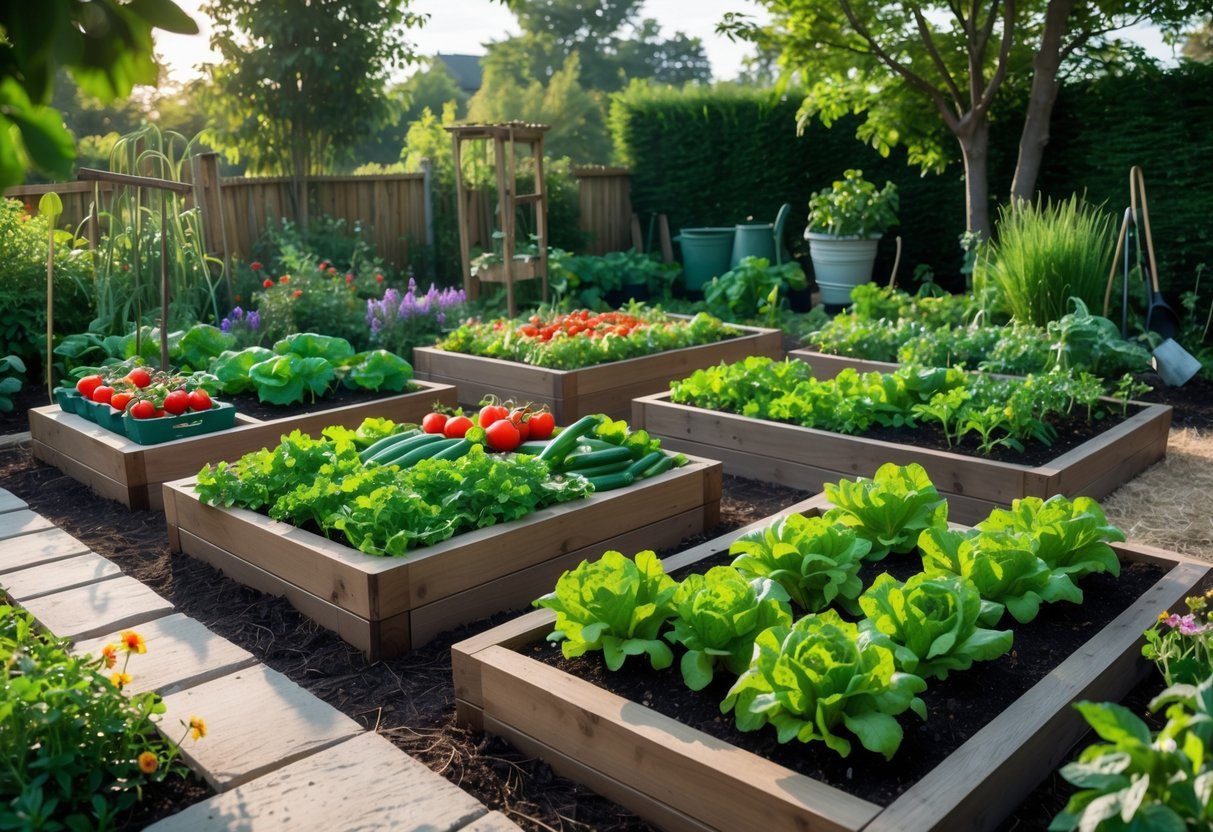
Design choices should make your garden productive and pleasant to look at. Focus on plant placement, clean paths, and features that save time and water while improving harvests.
Companion Planting
Use companion plants to reduce pests and boost yields. Plant basil next to tomatoes to improve flavor and deter flies. Marigolds around beds repel nematodes and attract beneficial insects.
Group plants by water and light needs. Put lettuce and spinach in partial shade near taller beans or sunflowers. Keep heavy feeders like corn and squash away from light feeders like carrots to avoid nutrient competition.
Rotate crops each season to prevent disease buildup. Mark bed history on a simple chart. Include nectar-rich flowers such as alyssum or borage to draw pollinators and predatory insects.
Vertical Gardening Ideas
Grow up instead of out to save space and add visual height. Use trellises for peas, pole beans, and cucumbers. Train indeterminate tomatoes on cages or stakes to keep fruit off the ground.
Try wall-mounted planters or pallet systems for herbs and lettuces. Use sturdy materials that resist moisture, and place heavier containers low to avoid tipping. Arrange plants so sun-loving ones get full light and shade-tolerant ones stay protected.
Combine vertical supports with drip irrigation lines to water efficiently. Add decorative elements like painted trellises or matching pots for a cohesive look.
Water Features and Irrigation
Install a drip irrigation system to deliver water at the root zone. Drip lines reduce evaporation and lower water use compared with overhead sprinklers. Use a timer to water in the early morning for best absorption.
Add a small rain barrel to capture roof runoff and connect it to your irrigation system. Include a simple pressure regulator or gravity-fed emitter to keep flow steady. Avoid standing water that could attract mosquitoes.
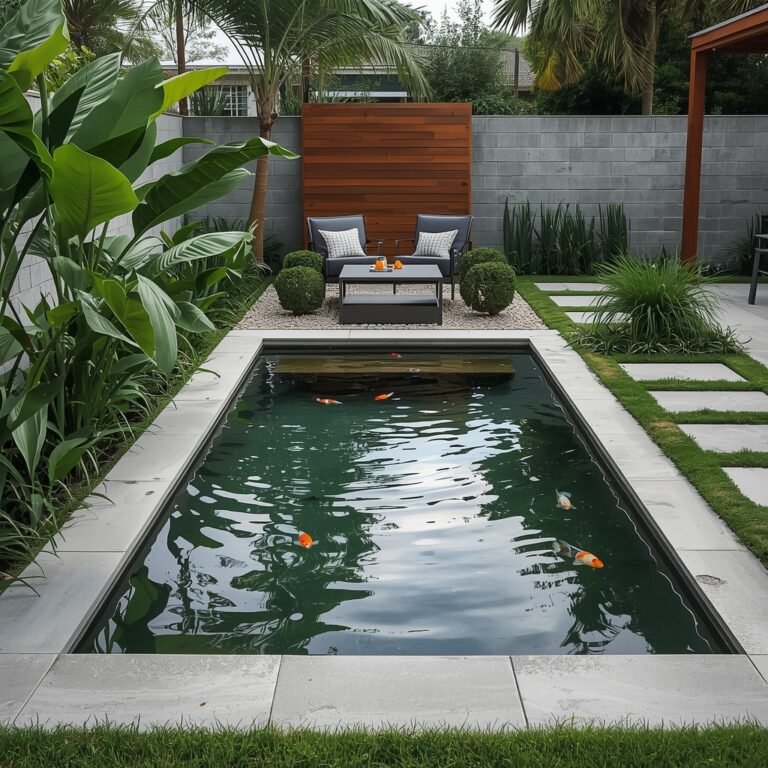
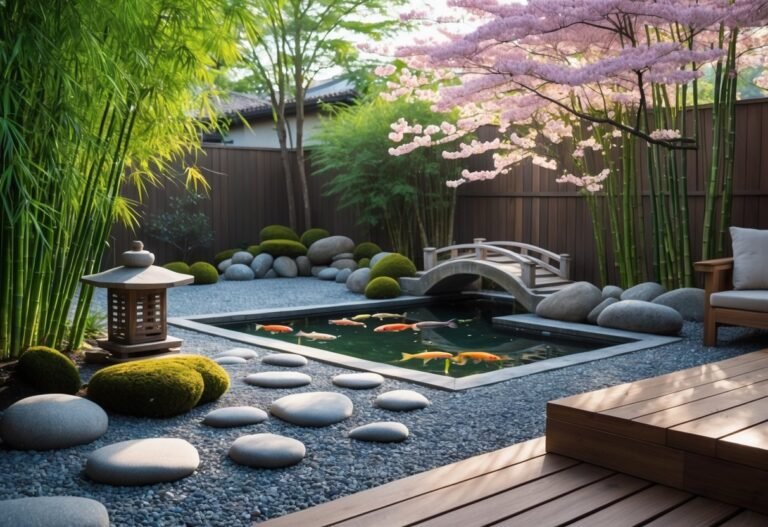
Place a shallow birdbath or bubbler near herb beds to attract pollinators and birds that eat pests. Keep water features tidy and clean to prevent algae and maintain a pleasant focal point.
Garden Structures and Fencing
Use raised beds with uniform edges for a neat, structured look and easier soil control. Build beds 12–18 inches high for good root depth, and leave 18–24 inch paths for comfortable access and wheelbarrow use.
Choose fencing to match function and style. Install 4–6 foot mesh fencing to keep out rabbits and deer. For a decorative boundary, use split-rail or picket fencing and add climbing plants like peas or clematis.
Add a small greenhouse or cold frame for season extension. Ensure structures face optimal sun angles and have ventilation. Label beds and attach simple hooks for tools to keep the space tidy and efficient.
Maintenance and Seasonal Considerations
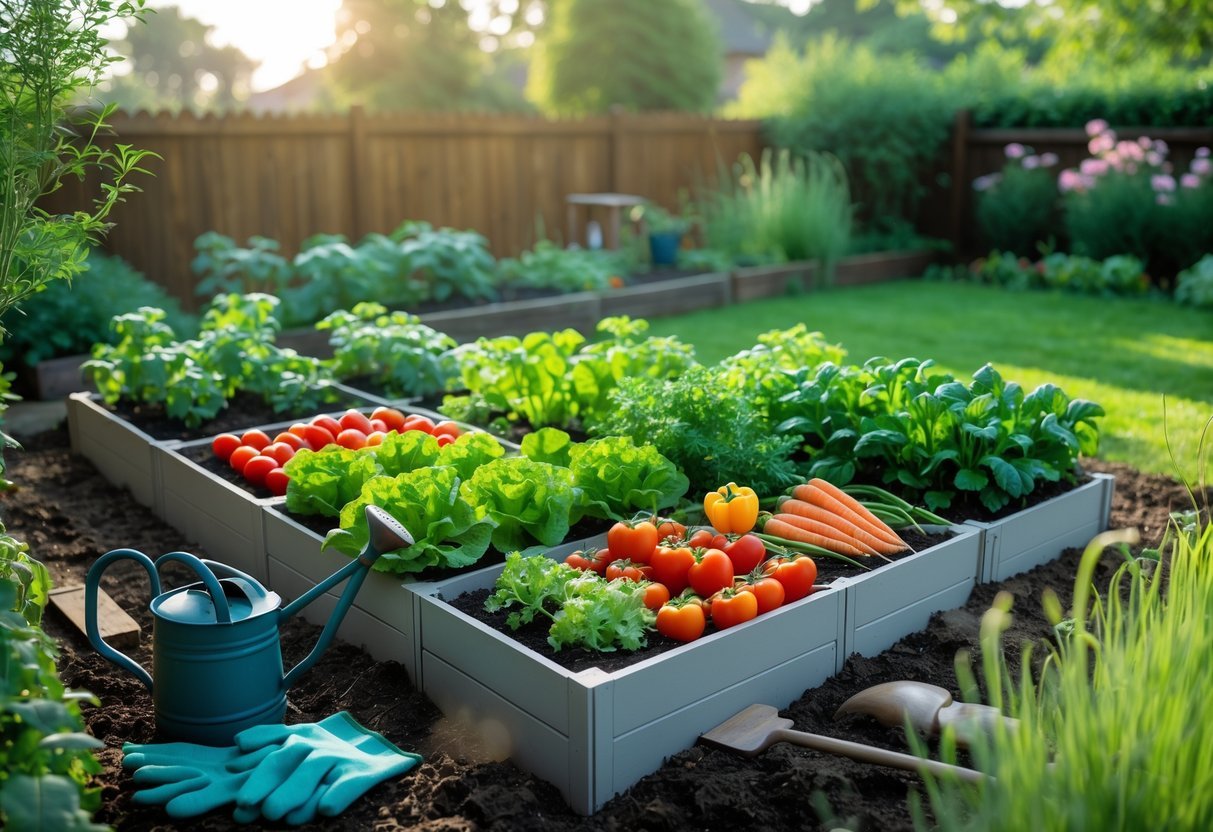
Keep your soil healthy, control pests early, and shift plant choices with the seasons. Regular checks, timely mulching and steady composting will cut work and boost yields.
Pest and Disease Management
Scout your beds at least twice a week. Look under leaves and at stem bases for holes, sticky residue, or wilting. Early detection helps you target problems before they spread.
Use physical controls first: handpick beetles, remove infected leaves, and install row covers for young seedlings. Introduce beneficial insects like ladybugs for aphids or parasitic wasps for caterpillars. Rotate crops yearly to reduce soil-borne diseases and avoid planting tomatoes or potatoes in the same spot two years running.
Choose resistant varieties when possible and space plants so air moves between rows. If you must use a spray, select a low-toxicity option like insecticidal soap or neem oil and apply in the cool morning. Follow label rates and repeat treatments only as recommended.
Mulching and Composting
Apply 2–4 inches of organic mulch around plants to conserve moisture and suppress weeds. Straw, shredded leaves, or grass clippings work well; keep mulch a few inches from stems to prevent rot.
Set up a simple compost pile or bin to recycle kitchen scraps and garden trimmings. Aim for a mix of “greens” (kitchen scraps, fresh clippings) and “browns” (dry leaves, cardboard) and turn the pile every 1–2 weeks for faster breakdown.
Use finished compost as a top-dress or mix it into beds each spring at a rate of about 1–2 inches. Compost improves soil structure and slowly releases nutrients, so you’ll reduce reliance on synthetic fertilizers over time.
Seasonal Planting Adjustments
Plan planting by hardiness and day-length. Start cool-season crops like lettuce and peas in early spring and again in late summer for a fall crop. Move warm-season crops—tomatoes, peppers, cucumbers—outside after the last frost date for your area.
Stagger planting dates for quick crops (radishes, baby greens) every 2–3 weeks to spread harvests. As fall approaches, switch to cold-tolerant varieties or use row covers to extend the season by several weeks.
Adjust watering: increase frequency in hot, dry spells and reduce in cool, wet periods. Prune summer-sown crops to focus energy on fruiting, and remove spent plants promptly to clear space for winter cover crops or spring planting.
Frequently Asked Questions
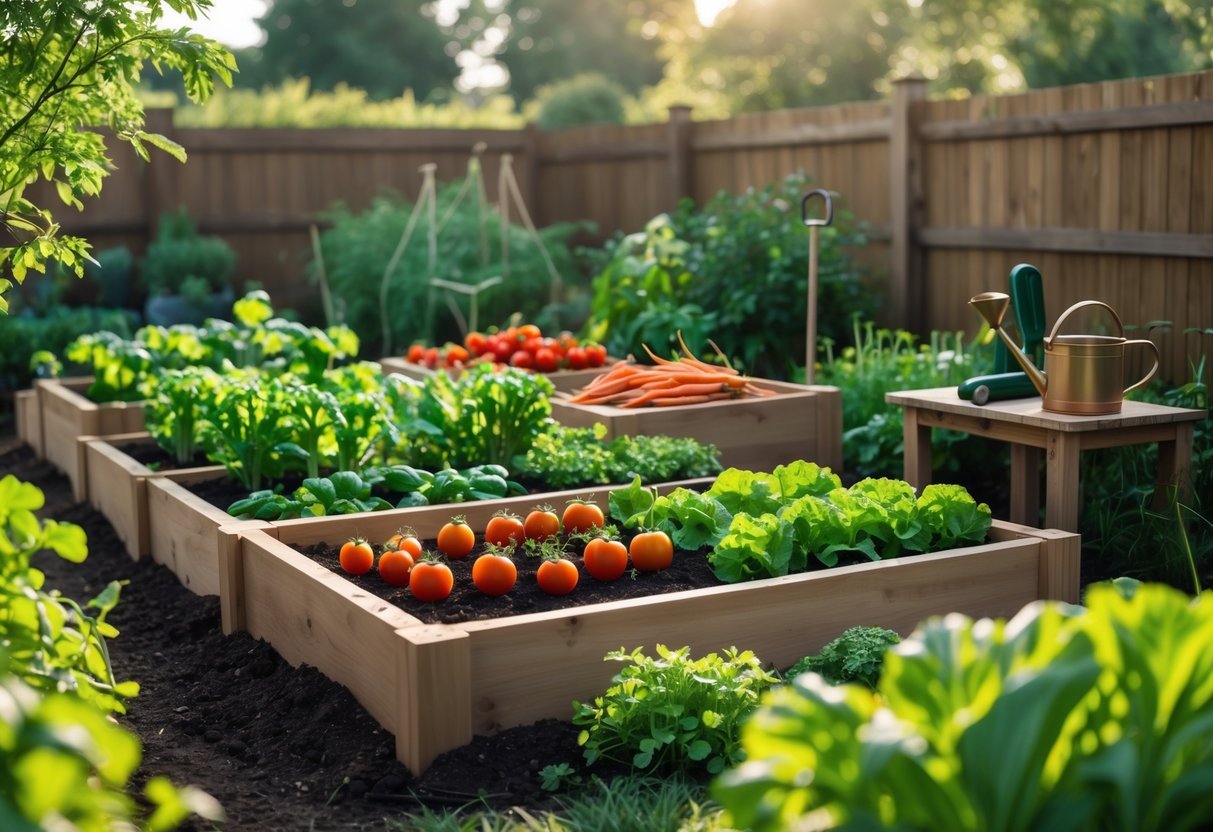
These answers cover saving money, simple layouts, small-space solutions, mixing beauty with function, where to get ideas, and practical planning points for sun, soil, and spacing.
How can I plan a vegetable garden layout on a budget?
Use raised beds made from reclaimed wood or low-cost kits to control soil quality without buying a lot of soil. Build one or two beds first, then add more as you have time and money.
Grow high-value crops like tomatoes, herbs, and salad greens to get the most food per square foot. Start seeds indoors or buy seedlings instead of mature plants to save cash.
Mulch with grass clippings or shredded leaves to cut watering and weeding costs. Collect rainwater with a barrel to lower your water bill.
What are some simple vegetable garden designs for beginners?
Try a single raised bed 4 by 8 feet; it fits most yards and keeps paths simple. Plant rows or blocks within that bed so you can reach everything from the edges.
Use square-foot gardening: divide the bed into 1-foot squares and plant by spacing needs. It’s easy to follow and reduces wasted space.
Keep tools and a small compost bin nearby to simplify maintenance. Choose three to five easy crops you like to eat, and repeat them through the season.
What are the best vegetable garden ideas for small spaces?
Use vertical supports for peas, beans, cucumbers, and tomatoes to free floor area. Stackable planters and hanging baskets work well on patios and balconies.
Try container gardening with 5–10 gallon pots for peppers, eggplants, and herbs. Group pots where they get full sun and are easy to water.
Use narrow raised beds along fences or walls to fit more plants in tight yards. Pair tall plants on the north side with low plants on the south side to avoid shading.
How do you create a beautiful vegetable garden that’s also functional?
Mix vegetables with flowering herbs and pollinator-friendly flowers to add color and attract beneficial insects. Plant marigolds, basil, and borage near veggies to look nice and help pest control.
Use tidy edges, mulch-covered paths, and uniform bed shapes for a clean look. Pick matching containers or stain raised beds the same color to make the space feel planned.
Place a small seating spot or a decorative trellis to make the garden inviting while keeping beds easy to reach.
Where can I find inspiration for backyard vegetable garden designs?
Look at garden books, farming magazines, and reputable gardening websites that show layout plans and spacing guides. Search for local gardening groups and community garden plots to see what grows well in your area.
Use social media boards and photo-sharing sites for visual ideas, but check growing details like frost dates and sunlight requirements before copying a design.
Visit local botanical gardens or nurseries to see plant pairings and hardscape ideas in person.
What considerations should I keep in mind when planning a vegetable garden layout?
Count how many hours of direct sun each spot gets; most vegetables need at least 6 hours. Put the garden where you can water easily and see it from the house.
Test your soil or consider raised beds if the soil is poor or compacted. Plan bed width so you can reach the center from a path—4 feet wide is common for raised beds.
Think about crop rotation, spacing, and how tall plants will shade others. Also plan for harvest access, tool storage, and pest management like fencing or netting.