Backyard Herb Garden Design Ideas: Practical Layouts, Plant Pairings, and Maintenance Tips
You can turn any patch of yard into a useful, fragrant herb garden by picking a layout that fits your space and choosing plants that match your sun, soil, and cooking habits. A simple raised bed, container grouping, or a vertical wall lets you grow fresh basil, rosemary, thyme, and mint with minimal effort and big flavor payoff.
Picture herbs arranged for easy snips while you cook, with paths, edges, or planters that make watering and harvesting quick. Use compact layouts for tight spaces, mix heights and scents for visual interest, and place sun-loving herbs where they get at least six hours of light.
Key Takeaways
- Choose a layout that matches your space and daily routines.
- Mix styles and plant heights to boost beauty and function.
- Place herbs by sun needs and ease of harvest.
Backyard Herb Garden Layout Strategies
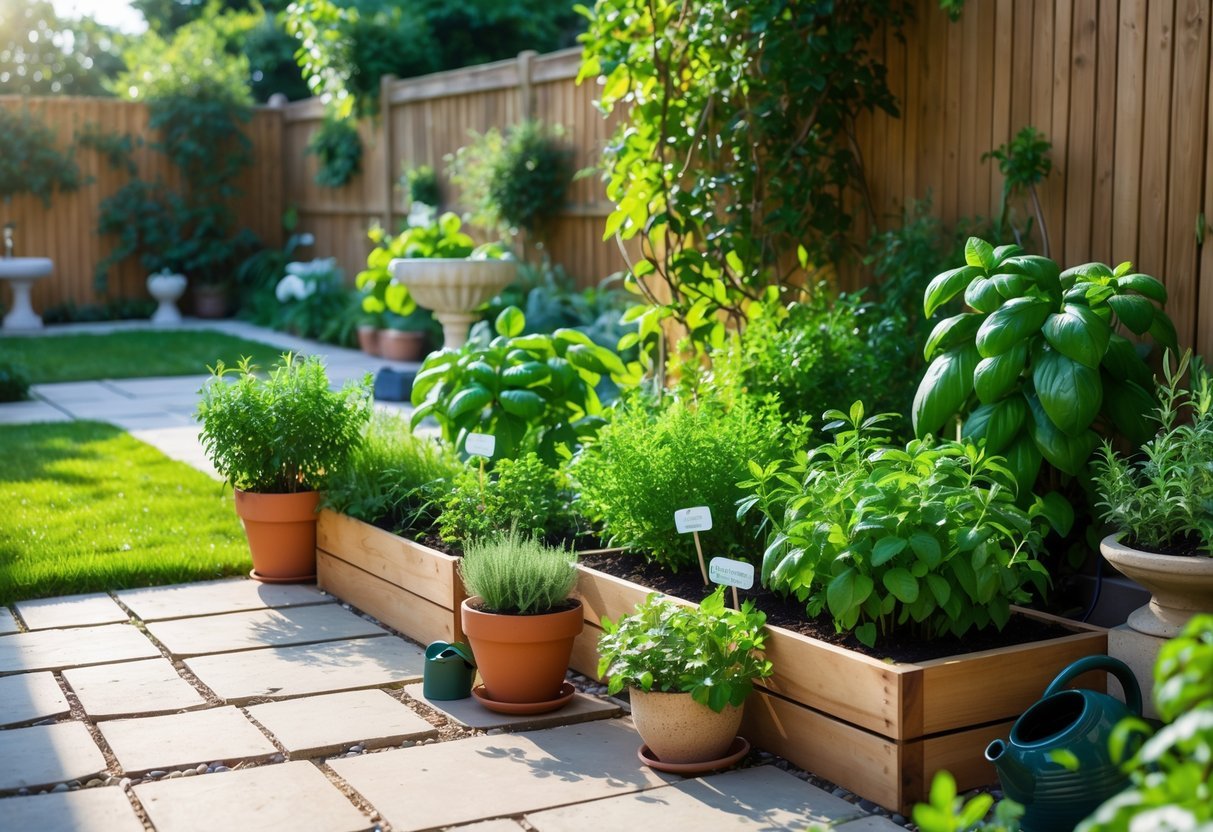
Plan where herbs will get consistent light, good drainage, and easy access for harvesting and watering. Group plants by water needs and height, and mark clear edges so paths and planting areas don’t mix.
Choosing the Best Location
Pick a spot within 10–20 feet of your kitchen if you want frequent snipping. That makes harvesting quick and keeps herbs fresh for cooking.
Check soil drainage by digging a small hole and filling it with water. If it drains within an hour, the spot is good; if not, raise beds or use containers.
Think about wind and foot traffic. Shelter from strong wind helps tender herbs like basil. Place taller plants (rosemary, sage) to the north or back so they don’t shade smaller ones.
Sunlight and Shade Considerations
Most culinary herbs need 6–8 hours of sun. Sit your garden in a south- or west-facing area if you have that exposure.
For partial-sun herbs (mint, parsley, chives), choose spots with 3–5 hours of direct sun or morning sun and afternoon shade. Use a simple sun chart: morning sun = east, strongest afternoon sun = west.
If your yard has variable light, map sun patterns for a full day. Note where shade falls at noon and late afternoon. Move containers accordingly or use shade cloth for hot afternoons.
Creating Defined Garden Borders
Use raised beds, edging stones, or wooden frames to create clear boundaries. Defined borders keep soil in place and make watering and weeding easier.
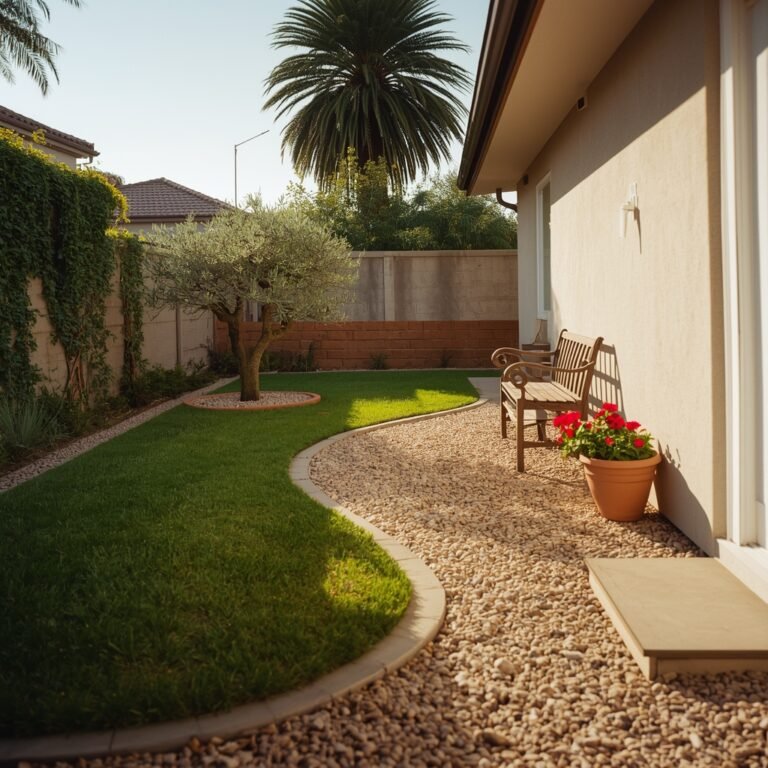
Design paths at least 18–24 inches wide so you can reach plants without stepping on soil. Gravel, mulch, or pavers work well for low-maintenance walkways.
If you grow invasive herbs (mint, lemon balm), plant them in pots sunk into the ground or inside a contained bed to stop spreading. Label each section so you know plant groups and care needs.
Popular Backyard Herb Garden Design Styles
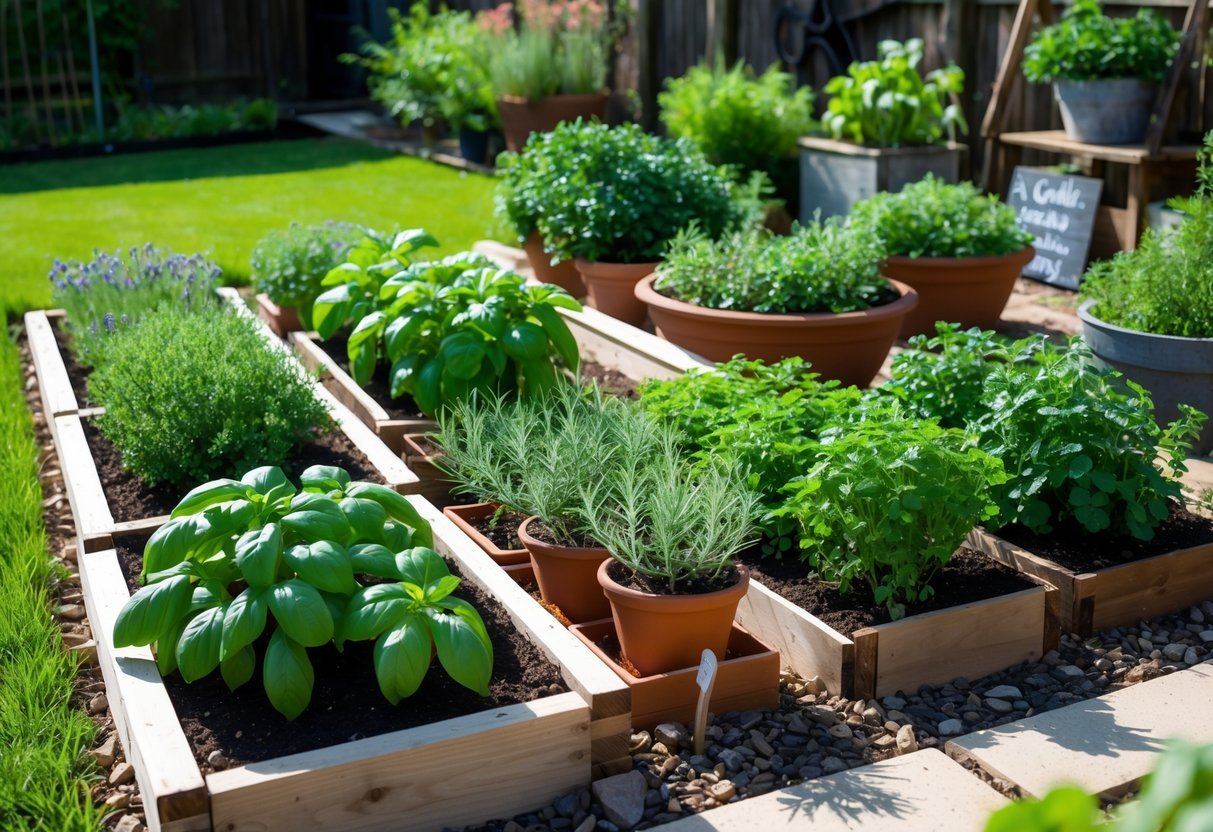
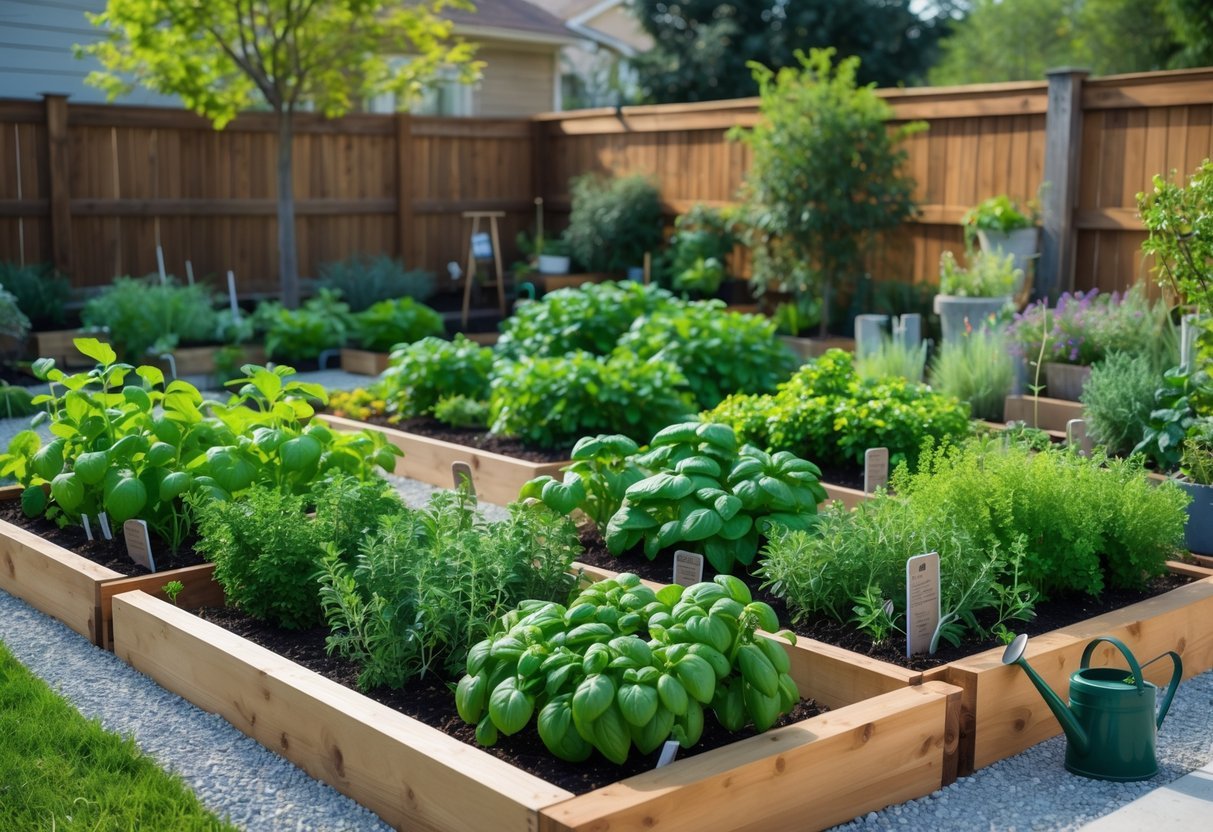
You can choose a style that fits your space, skill level, and how you plan to use herbs. Think about sunlight, soil depth, and how often you’ll harvest when picking a layout.
Raised Bed Herb Gardens
Raised beds give you better soil control and easier access for planting and harvesting. Build beds 6–12 inches high for shallow-rooted herbs like thyme and chives, or 12–18 inches for deeper roots such as rosemary and lovage. Use well-draining mix: equal parts compost, topsoil, and coarse sand or perlite.
Place taller herbs (rosemary, sage) at the back or center and low runners (thyme, oregano) at the edges. Space plants 8–18 inches apart depending on mature size. Add a simple drip irrigation line or soaker hose to save water and reduce disease.
Wood, stone, or concrete blocks work well for framing. Cedar resists rot; pressure-treated wood is long-lasting but avoid soil contact if you plan to grow edible herbs without a barrier.
Vertical Herb Garden Ideas
Vertical gardens maximize small spaces and create an easy-to-reach planting surface. Use wall planters, stacked pots, pocket organizers, or a pallet system. Ensure each pocket or container has drainage and access to at least 4–6 hours of sun for most culinary herbs.
Group herbs by water needs: drought-tolerant (rosemary, sage) higher up, water-lovers (mint, basil) lower where runoff collects. Mount the structure on a south- or west-facing fence for good light, or add a movable stand for patio flexibility.
Watering is the main challenge—use a drip emitter for each pocket or water from the top and let gravity help distribute moisture. Replace or refresh planting medium yearly to keep nutrients balanced.
Container Herb Gardens
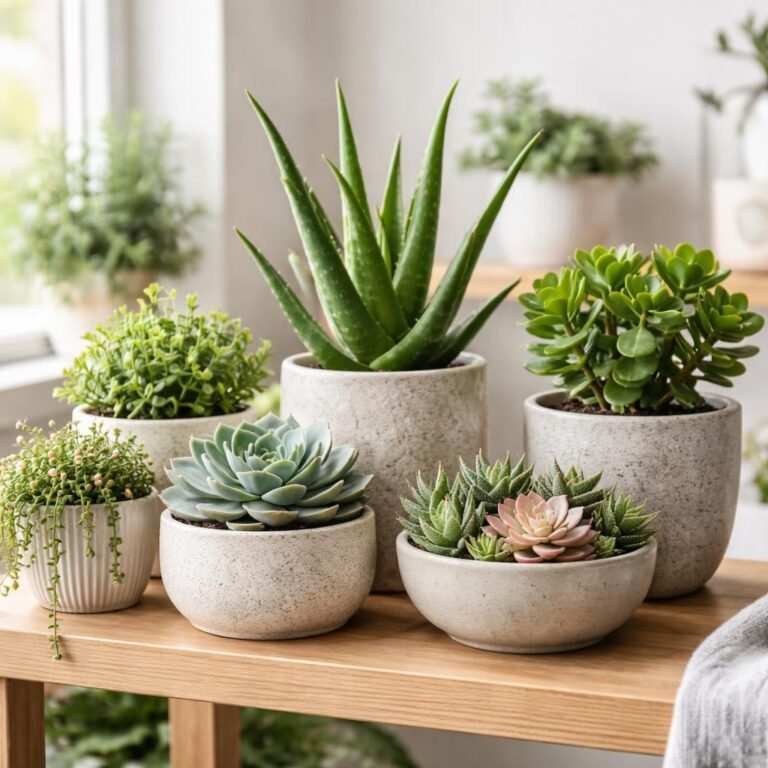
Containers let you grow herbs on patios, balconies, or near the kitchen for easy snipping. Pick pots with drainage holes and choose sizes that match the herb: small pots for chives and parsley, larger for basil and rosemary. Use a commercial potting mix with added compost.
Place containers where they get required sun—basil needs 6–8 hours, while parsley tolerates partial shade. Rotate pots occasionally for even growth. Water when the top inch of soil is dry; containers dry faster than garden beds.
You can group pots on a bench or use saucers to avoid mess. For mobility, put heavy pots on casters so you can move plants to sunnier or sheltered spots during weather changes.
Incorporating Herbs Into Landscape Design
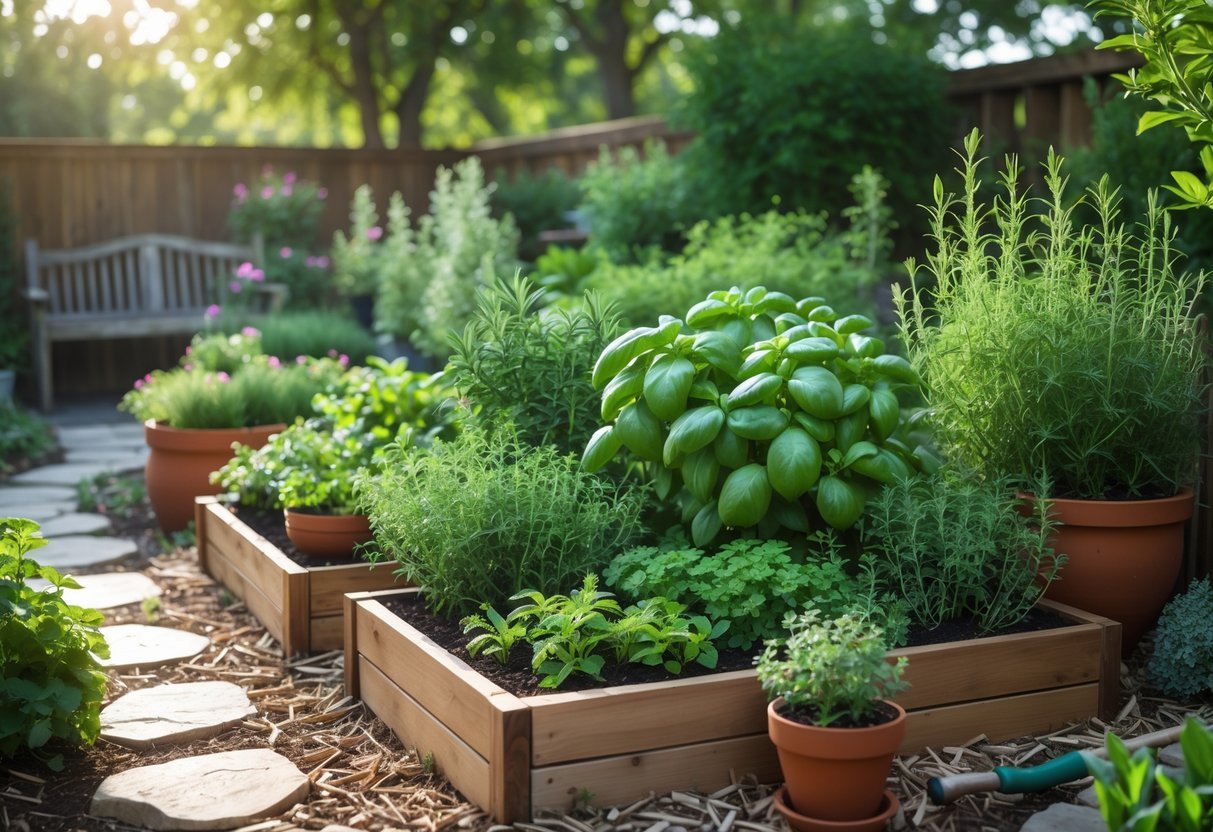
Place herbs where you will use them most and where growing conditions match each plant’s needs. Think about sun, soil, water, and how often you’ll harvest when picking locations.
Integrating Herbs with Flowers and Edibles
Mix herbs like basil, chives, and rosemary with vegetables and flowering plants to boost flavor and pest control. Plant basil near tomatoes to improve taste and repel thrips. Use chives around lettuce and carrots to deter aphids.
Choose companion flowers—marigolds, nasturtiums, and calendula—that attract pollinators and beneficial insects. Space taller herbs (rosemary, dill) behind lower vegetables to avoid shading. Grow mint in containers to stop it from overtaking beds.
Create small groupings by water needs: drought-tolerant thyme and oregano go in the driest spots, while parsley and cilantro stay in moister soil. Use edging plants like lavender to define beds and add fragrance along borders. Label each group so you know when to harvest and prune.
Designing Herb Pathways and Walkways
Use herbs to line paths for scent, texture, and easy access to plants you use often. Low-growing thyme and creeping savory make durable, fragrant step-over borders. Plant rosemary or sage as low hedges to mark walkways and add structure.
Keep pathway width at least 2.5–3 feet for comfortable movement and harvest. Place stepping stones with groundcover thyme between them to reduce soil compaction and allow access without muddy shoes.
Hardscape choices matter: use permeable materials like gravel or decomposed granite to support herbs that need good drainage. Add a few raised-edge beds or containers adjacent to the path for frequent-harvest herbs like basil and parsley so you can snip while you walk.
Frequently Asked Questions
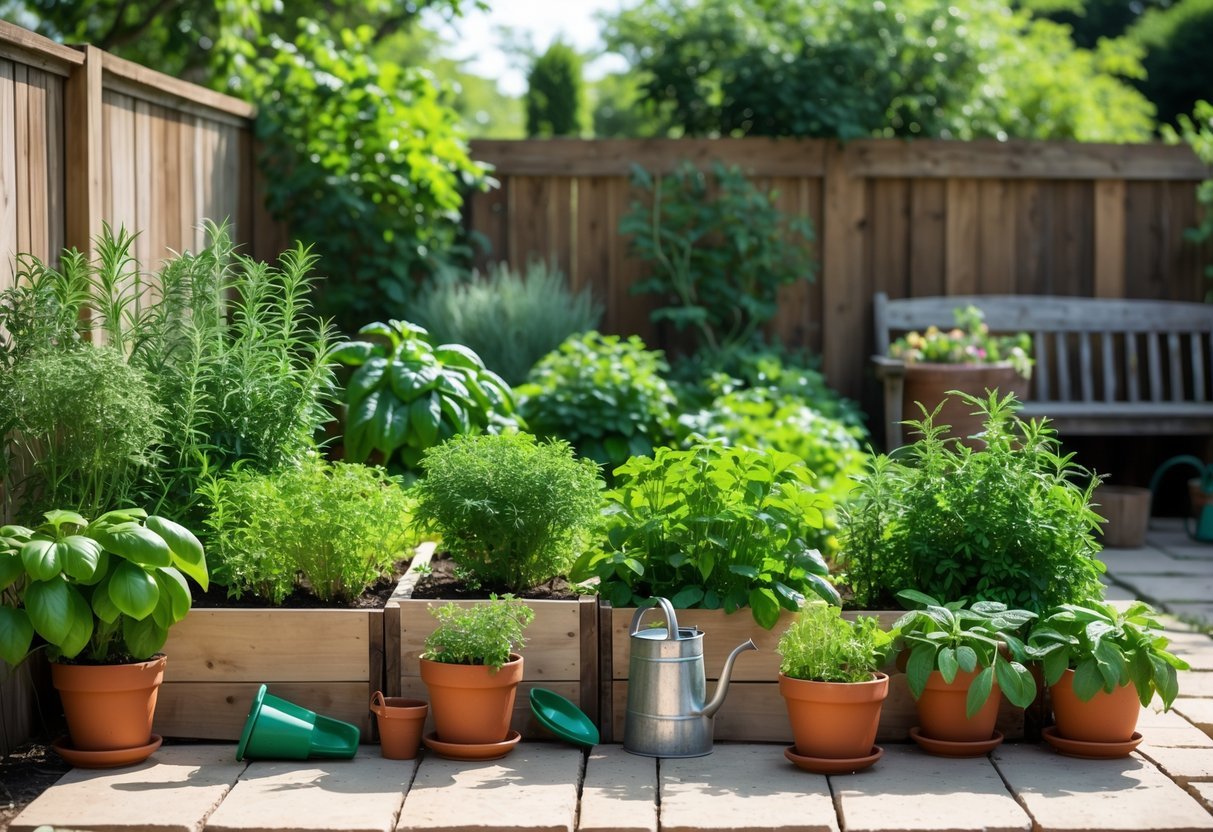
This section gives practical steps for setting up and caring for a backyard herb garden. Expect clear tips on layout, plant pairings, low-maintenance choices, school gardens, and where to find layout ideas.
How can I design a low-maintenance herb garden in my backyard?
Choose hardy, drought-tolerant herbs like rosemary, thyme, oregano, and sage to cut watering and care needs. Group plants with similar light and water needs so you can water and prune by zone, not by individual pots.
Use raised beds or large containers with well-draining soil and a layer of mulch to reduce weeds and retain moisture. Install a simple drip irrigation or soaker hose on a timer to save time and water.
What are some good herb garden designs for small spaces?
Use vertical planters, hanging baskets, or tiered shelving to maximize vertical space on a balcony or patio. Place small pots on a sunny windowsill or build a narrow raised bed along a fence for easy access.
Try a mixed container with one tall (rosemary), one trailing (thyme), and one bushy herb (basil) to get variety in a single pot. Keep pots lightweight and on casters so you can move them for sun or frost protection.
Which herbs are best to plant together for companion gardening?
Pair herbs with similar water and light needs: basil, parsley, and chives prefer regular moisture and full sun. Plant rosemary, lavender, thyme, and sage together; they like drier, well-drained soil and full sun.
Avoid pairing herbs that need very different conditions, like basil (moist) with rosemary (dry). Use companion planting to attract pollinators and deter pests—basil near tomatoes and marigolds can help reduce pests.
Can you suggest some accessible resources for finding herb garden layout inspiration?
Look at gardening sites with layout galleries and step-by-step plans for small and raised-bed gardens. Search for “herb garden layouts” and “small-space herb garden ideas” to find photos and simple plans you can copy.
Visit local community gardens, plant nurseries, or library gardening books to see real examples and get regional advice. Many sites offer free printable plans and plant lists for beginners.
What considerations should I take into account for creating an herbal garden at a school?
Prioritize safety: choose non-toxic, easy-to-identify herbs and avoid plants with strong allergens or invasive roots. Design low-maintenance beds and include wide paths and raised beds for wheelchair access.
Build lessons around planting, harvesting, and simple cooking or tea-making to tie the garden to curriculum. Plan for durable tools, clear signage, and seasonal care volunteers to keep the garden thriving.
How do I plan and structure my backyard herb garden for the best results?
Start by mapping sun exposure and choosing a sunny spot with at least 4–6 hours of sun for most culinary herbs. Sketch a simple layout showing raised beds, containers, and paths; place taller herbs at the back or center to avoid shading smaller ones.
Decide on plant spacing using seed packet or plant tag guidance, and plan watering zones based on plant needs. Keep a planting calendar for sowing, transplanting, and harvesting so you maintain steady growth and avoid overcrowding.