7 Backyard Flower Garden Ideas to Transform Small Yards Into Colorful Retreats
You can make your backyard bloom with designs that fit your time, space, and style. This article gives seven easy ideas to help you plan, plant, and maintain a beautiful flower garden that attracts pollinators and stays manageable.
Follow simple tips on layout, plant choices, fragrance, color themes, vertical accents, and native species so your garden looks great and stays healthy season after season.
1) Create a vibrant cottage-style flower garden with mixed blooms

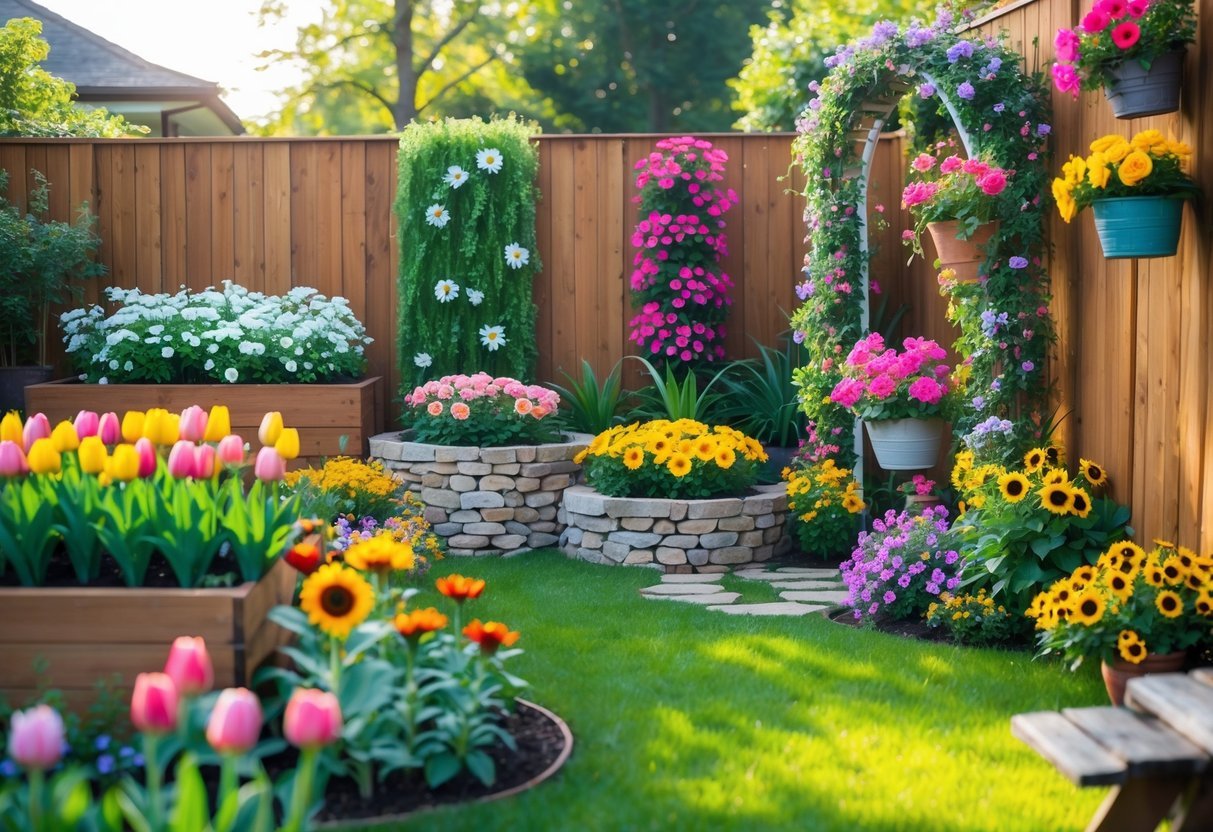
You can plant layers of perennials and annuals to keep color through the seasons. Mix heights and textures so taller plants sit behind lower ones for a full look.
Choose reliable flowers like rudbeckia, echinacea, snapdragons, and trailing nasturtiums. Add climbing roses or clematis on a trellis for vertical interest and scent.
Let paths curve and let beds feel informal rather than rigid. This makes the space feel welcoming and easy to enjoy.
2) Use curved flower beds for a natural, flowing layout
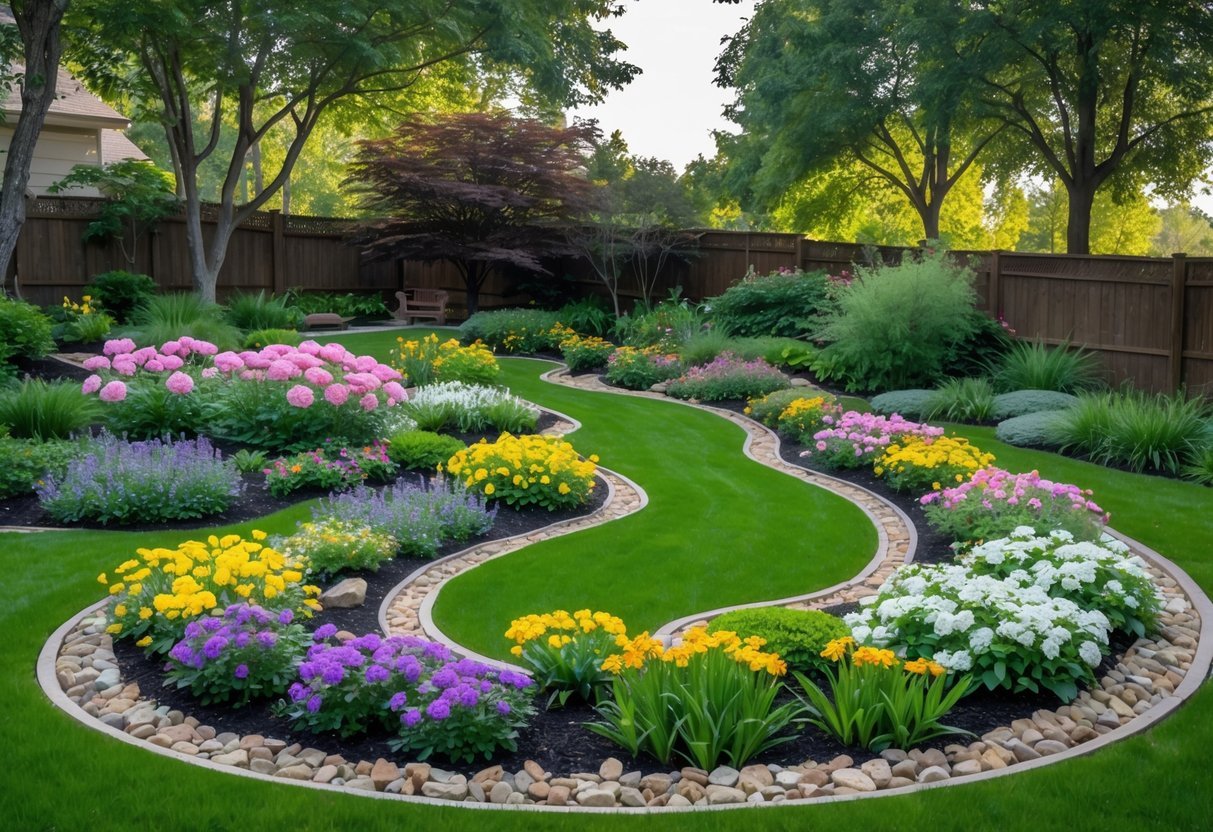
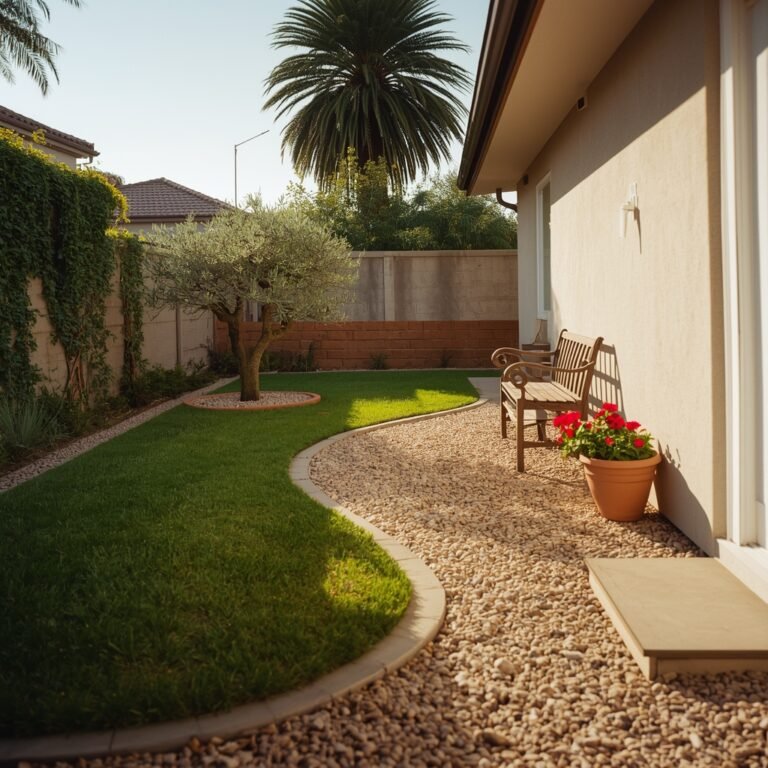
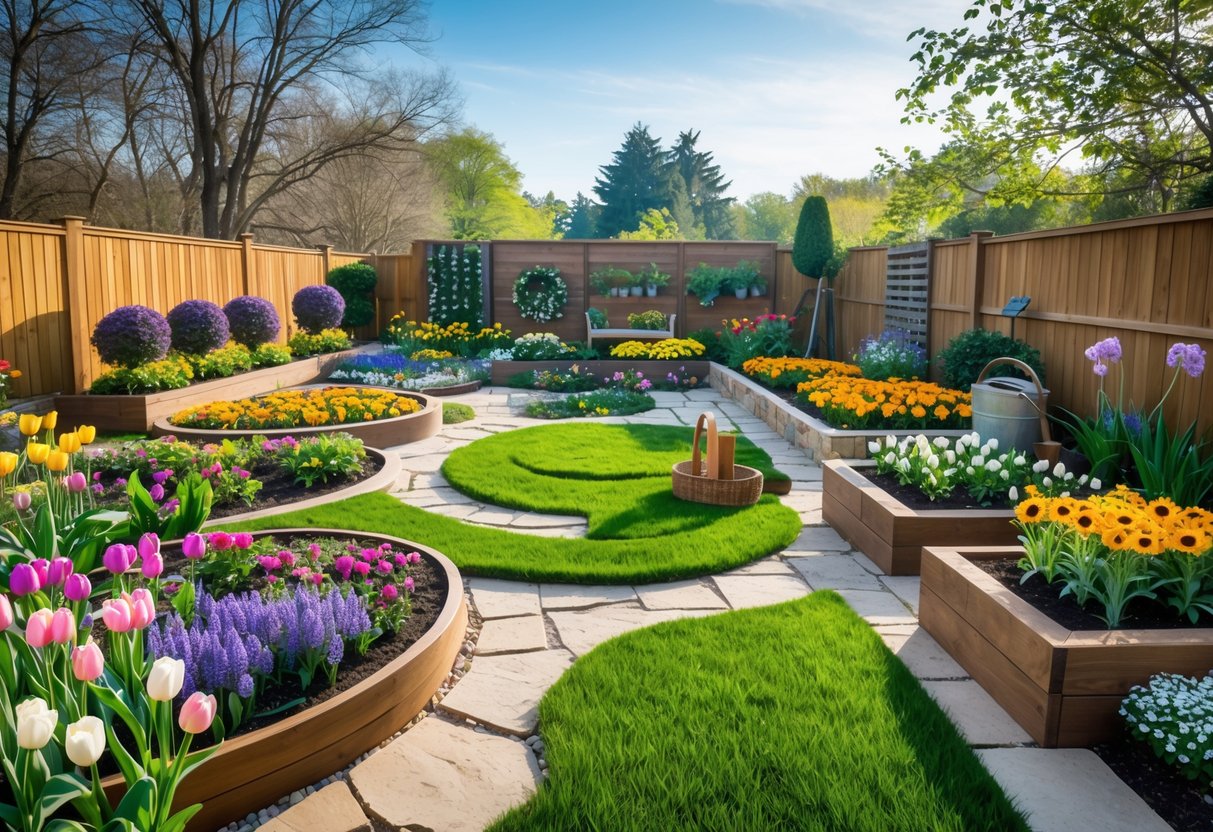
Curved beds soften hard angles and make your yard feel more relaxed. They guide the eye and create gentle movement without much work.
You can edge curves with stone, gravel, or low plants to keep soil in place and define the shape. Curves work well around trees, along fences, or to frame a path.
3) Incorporate fragrant plants like lavender and jasmine
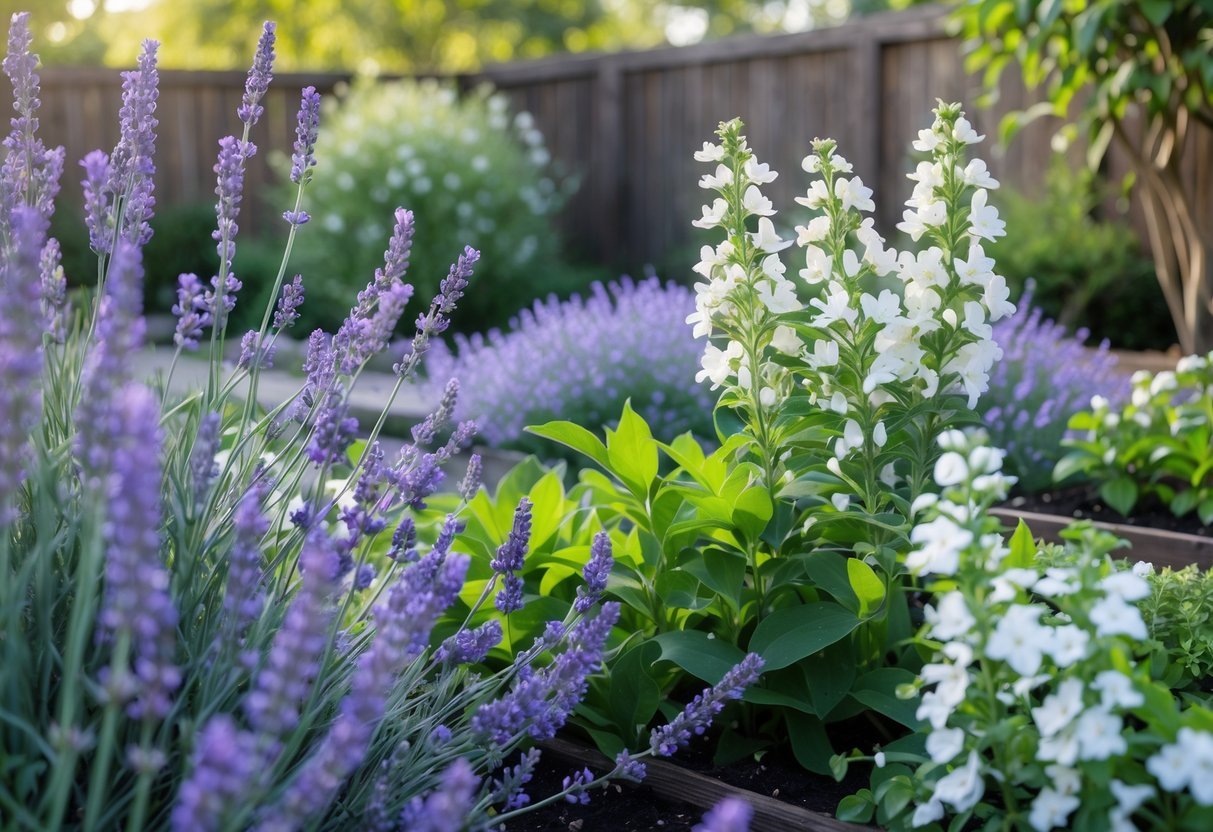
Plant lavender, jasmine, and other scented choices near paths and seating areas so their aroma reaches you as you move. These plants suit borders, containers, and small beds.
Choose varieties that match your climate and sun exposure. Lavender prefers full sun; jasmine likes some support to climb.
Prune for shape and repeat blooms. Mulch and water wisely to keep scents strong without overwatering.
4) Plant in color-themed sections, such as a blue and white garden
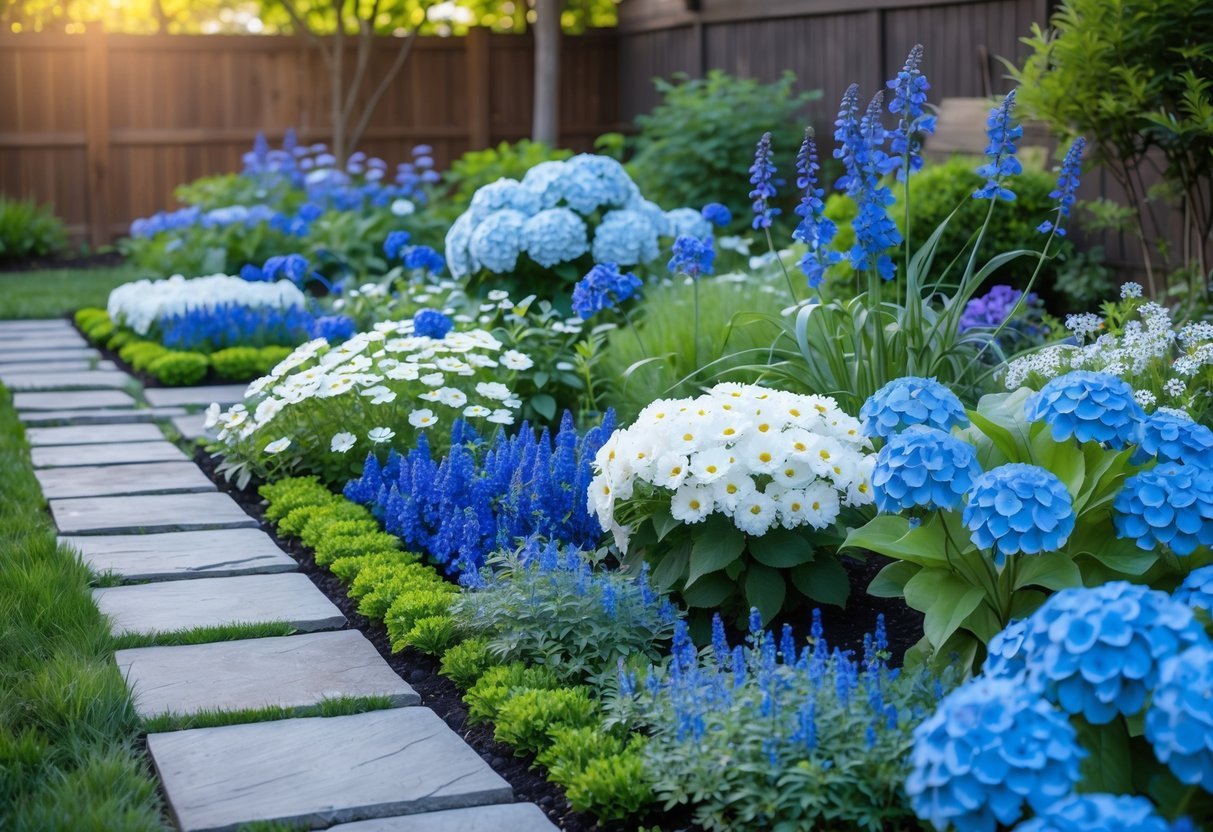
Choose a small area and plant only blue and white blooms to create a calm, cohesive look.
Mix shades of blue with bright white to keep the design lively and balanced.
Use a few repeat plants for structure and add seasonal varieties for changing color.
Think about foliage and hardscape—white pots or blue-painted benches boost the theme.
5) Add vertical interest with climbing roses or clematis
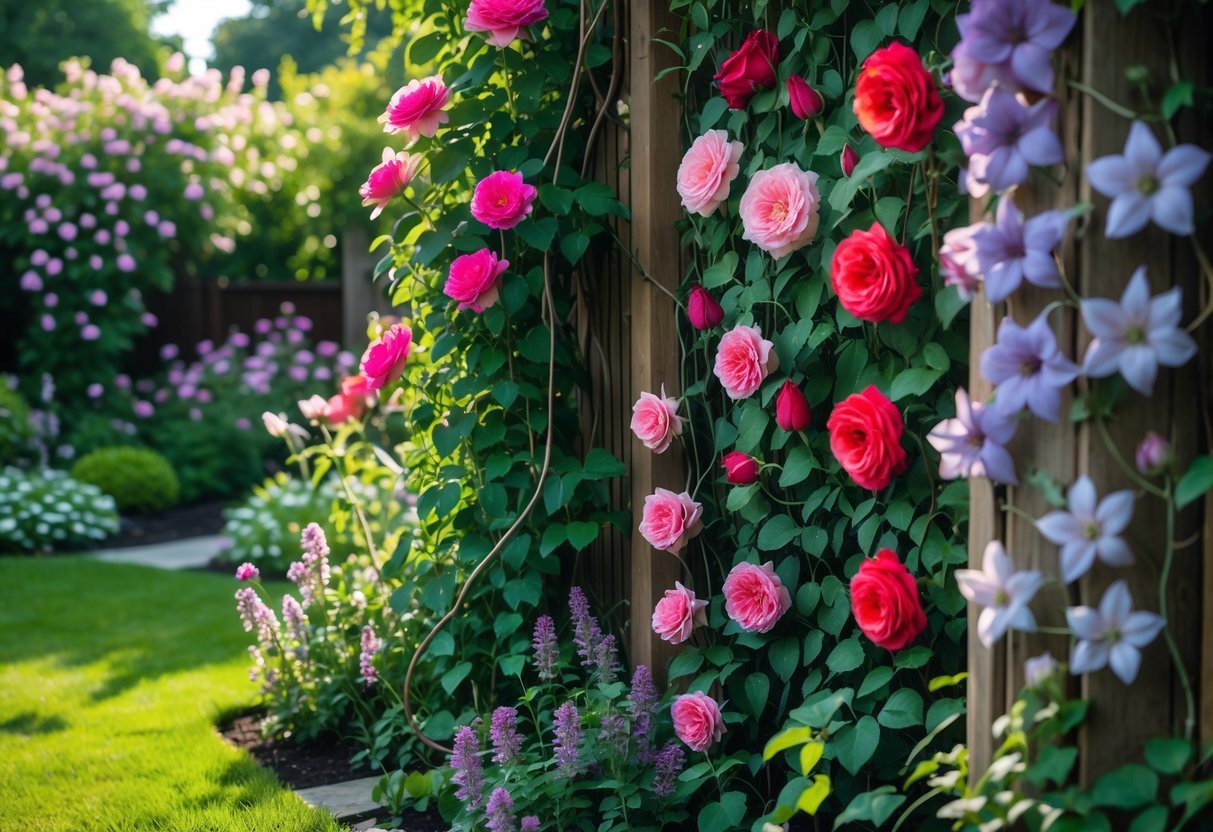
Plant climbing roses or clematis to lift blooms above beds and draw the eye upward.
Train them on a trellis, arbor, or fence to save space and make a focal point.
Choose clematis for late-season color and roses for fragrance and repeat blooms.
Mix both on one support for staggered flowering and a fuller display.
6) Design a butterfly-friendly garden with nectar-rich flowers
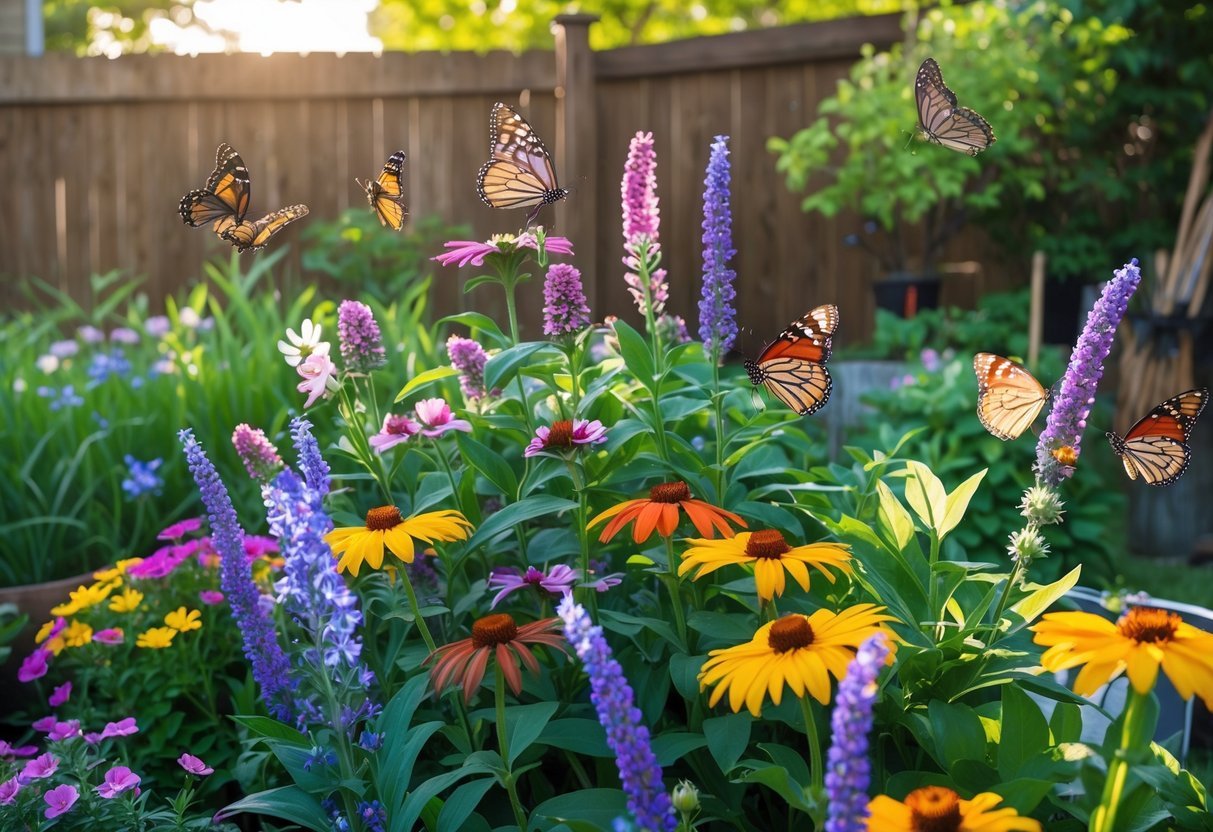
Plant a mix of nectar-rich flowers that bloom at different times so butterflies find food all season. Choose flat or clustered blooms like coneflowers, asters, and lantana for easy feeding.
Include native species and a few host plants for caterpillars, such as milkweed for monarchs. Keep a sunny, sheltered spot and avoid broad-spectrum pesticides to protect insects.
Provide shallow water sources and a few flat stones for basking. Small changes give butterflies what they need to visit and stay.
7) Use native plants to ensure easier maintenance and pollinator support
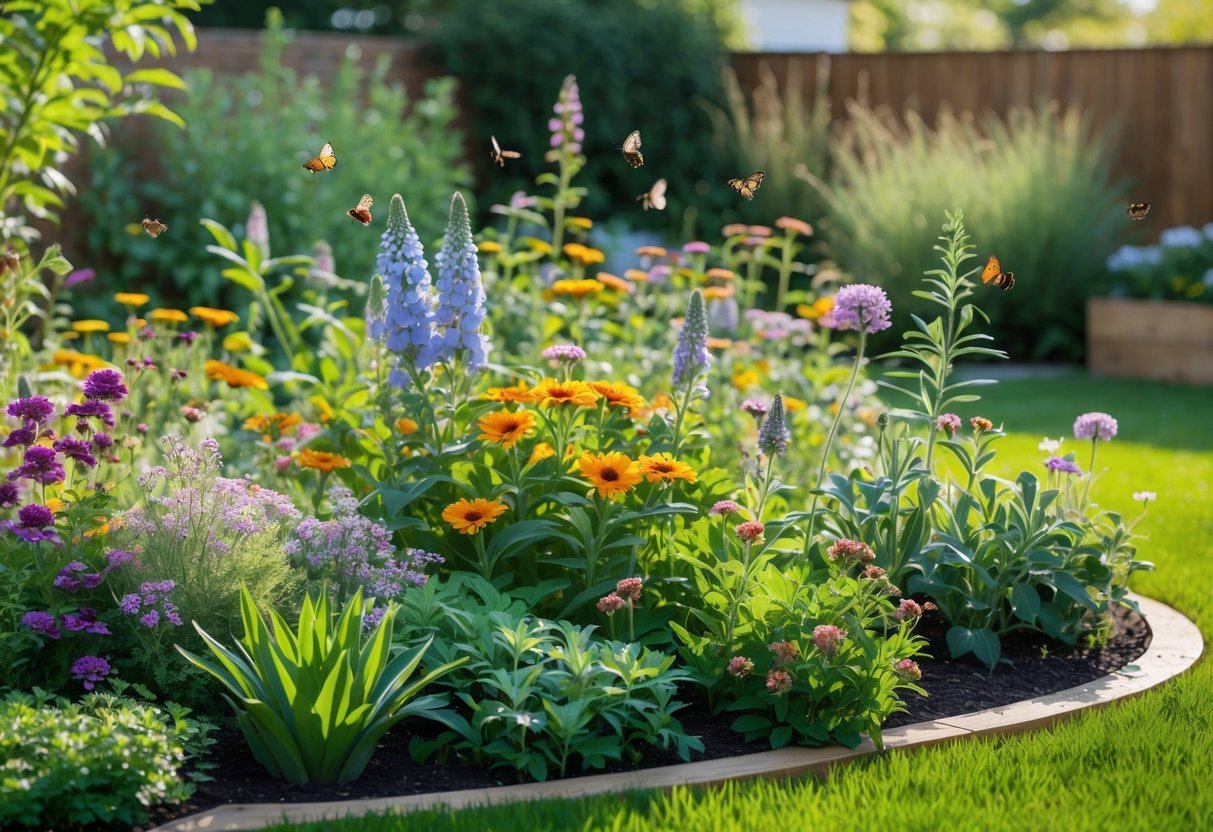
Choose native flowers and shrubs that fit your climate and soil. They need less water and care because they evolved for your local conditions.
Native plants feed local bees, butterflies, and birds with the right nectar and pollen. Plant a variety that blooms at different times to support pollinators all season.
Group plants by water needs and sun exposure to cut upkeep. This simple planning saves time and helps your garden thrive.
Planning Your Backyard Flower Garden
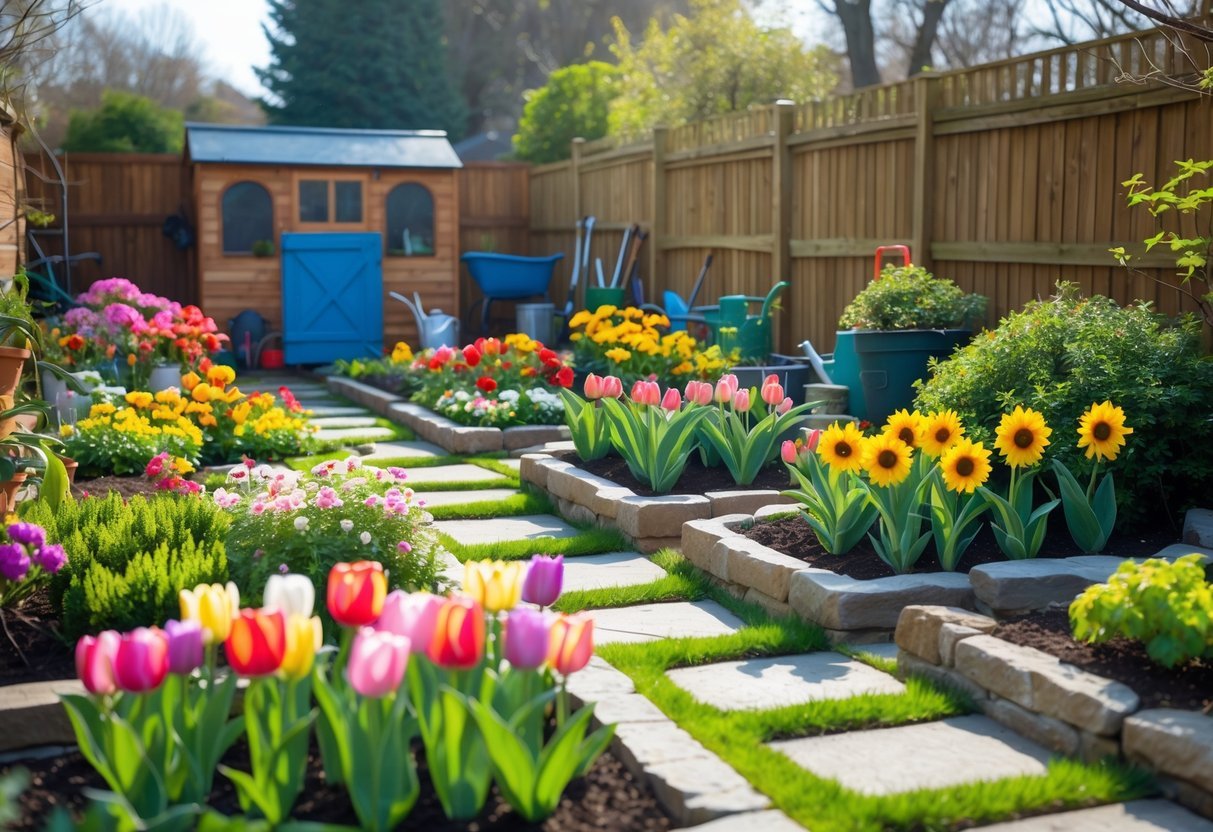
Start by checking how much sun each part of your yard gets and draw simple zones for planting. Pick plants that match each zone’s light and soil, and plan paths or beds so you can reach everything for watering and deadheading.
Assessing Sunlight and Soil Needs
Stand in each area of your yard at mid-morning and mid-afternoon for a few days. Note hours of direct sun, partial sun (3–6 hours), and shade (less than 3 hours). Record this on a simple sketch or phone photo with notes.
Test soil with a pocket tester or send a small sample to a local extension for pH and nutrient results. For quick checks, dig 6 inches and squeeze a handful: crumbly means good drainage, sticky means clay, and it runs together means sandy soil.
Match plants to conditions: full-sun perennials like coneflowers and daylilies for 6+ hours; hostas and ferns for shade; and asters or salvias for partial sun. Amend heavy clay with compost and gypsum; add compost to sandy soil to retain moisture.
Mapping Out Garden Zones
Draw a scaled plan of your yard showing house, trees, fences, and utilities. Mark sunlight and soil notes, then divide the space into functional zones: display beds near paths, low-maintenance borders, a cutting patch, and a pollinator area.
Use a simple table to plan each bed:
- Bed location: front border
- Size: 10 ft x 3 ft
- Light: 6+ hours
- Soil: well-drained loam
- Plants: salvia, lavender, black-eyed Susan
Place taller plants at the back of beds or center of island beds. Leave 18–24 inches between clumps for airflow and future growth. Plan narrow paths (2–3 ft) for easy access with a wheelbarrow and shears.
Maintaining a Healthy Flower Garden
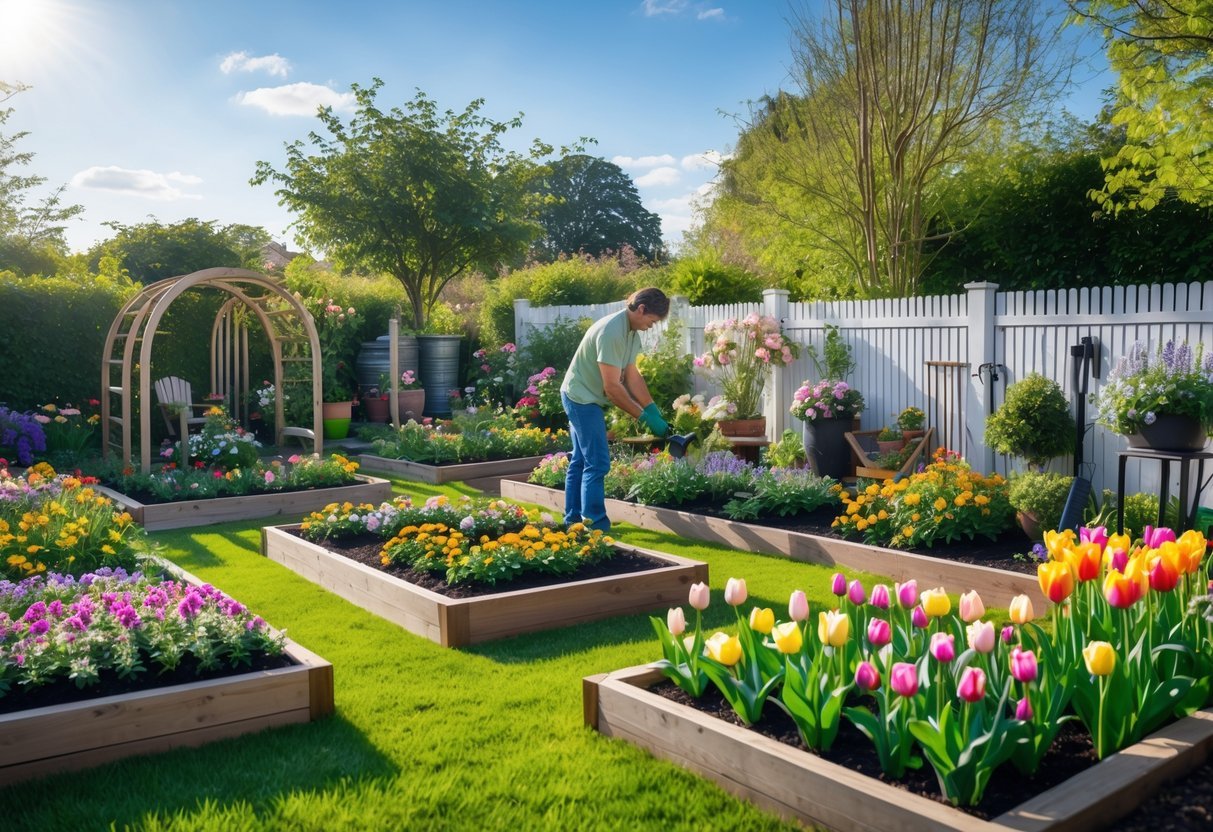
Keep soil moist but not soggy, feed plants on a schedule, and remove dead growth quickly. Watch for pests and adapt care as seasons change to keep blooms strong and tidy.
Watering and Fertilization Tips
Water deeply and less often to encourage strong roots. Aim for about 1 inch of water per week for most beds; measure with a rain gauge or a container. Water early morning so leaves dry during the day and fungal disease risk drops.
Use a slow-release granular fertilizer in spring for steady nutrients. For heavy bloomers, add a balanced liquid feed every 4–6 weeks during the growing season. Always follow package rates to avoid burning roots.
Mulch 2–3 inches around plants to conserve moisture and reduce weeds. Keep mulch a few inches away from stems to prevent rot. Check soil moisture 2–3 inches down before watering again.
Seasonal Care and Pruning
Prune spent flowers (deadhead) to extend blooming. Pinch back leggy growth in early summer to promote bushier plants and more flowers. Cut back perennials in late fall after foliage dies, unless you leave seedheads for birds.
In spring, divide overcrowded perennials to improve vigor. Remove winter mulch slowly as soil warms. For fall bulbs, trim foliage only after it yellows so bulbs store energy.
Adjust care by heat and cold: increase water during heatwaves and protect tender plants with frost cloth in late spring or early fall. Inspect plants monthly for pests or disease and treat small issues quickly to prevent spread.
Frequently Asked Questions
These answers focus on layouts, plant choices, costs, and simple rules you can use to build a cottage-style, color-themed, or modern flower garden. You’ll get clear tips for small spaces, cheap materials, low-maintenance plants, the 70/30 rule, modern bed layout, and front-yard curb appeal.
How can I design a flower garden that fits a small backyard space?
Use curved beds and layered planting to make the space feel larger. Put taller plants like climbing roses or clematis at the back or on a trellis, mid-height perennials in the middle, and low groundcovers or annuals at the front.
Create vertical interest with a narrow trellis, hanging pots, or a small obelisk. This keeps the footprint small while adding height and color without crowding the ground.
Focus on 2–3 color groups to avoid visual clutter. A blue-and-white or mixed-cottage palette works well in compact areas and keeps the design cohesive.
What are budget-friendly options for creating a backyard flower garden?
Use bareroot or plug plants, bulbs, and seeds instead of large container plants. These start cheaper and establish quickly when planted in the right season.
Reuse materials like salvaged bricks, pavers, or wood for edging and raised beds. Mulch with shredded leaves or wood chips to suppress weeds and retain moisture at low cost.
Choose perennials that return each year to cut long-term costs. Lavender, salvia, and hardy geraniums give reliable blooms with less replanting.
Which flowers are best suited for low maintenance garden beds?
Pick drought-tolerant perennials like lavender, salvia, catmint, and yarrow. These handle dry spells and need less frequent watering once established.
Add easy-care shrubs and bulbs for repeat interest. Daylilies, coneflowers, and tulips require little upkeep and offer strong seasonal color.
Group plants by water needs to make irrigation simple. That reduces waste and keeps maintenance time low.
What is the 70 30 rule in gardening and how does it apply to arranging a flower garden?
The 70/30 rule means 70% of your bed should be reliable, long-flowering or structural plants and 30% can be changeable or seasonal accents. Use the larger portion for perennials, shrubs, and evergreen structure.
Reserve the 30% for annuals, bulbs, or experimental color blocks. That gives you room to refresh color each season without remaking the whole bed.
This rule helps balance stability and variety, making the garden look planned and lively.
Could you provide tips for laying out a modern flower bed?
Keep lines clean and use simple plant groups for a modern look. Repeat one or two plant types in drifts rather than many small clumps.
Limit the color palette to two or three tones, such as white and a single bold color. Add architectural plants or grasses for texture instead of many small flowers.
Use neat hardscape edges and gravel or mulch paths to define shapes clearly. That sharp contrast supports the modern aesthetic.
How can I incorporate flower beds into the front yard to enhance curb appeal?
Plant structured anchors like low hedges or evergreen shrubs near the house to frame views. Place flanking beds along walkways or the porch with climbing roses or clematis on supports.
Use a consistent color theme—such as blue and white—or a cottage mix to match your home’s style. Repeat plant types at the door and along the walk to create a welcoming, unified look.
Add lighting and tidy edging so the beds look intentional at night and stay neat with minimal effort.