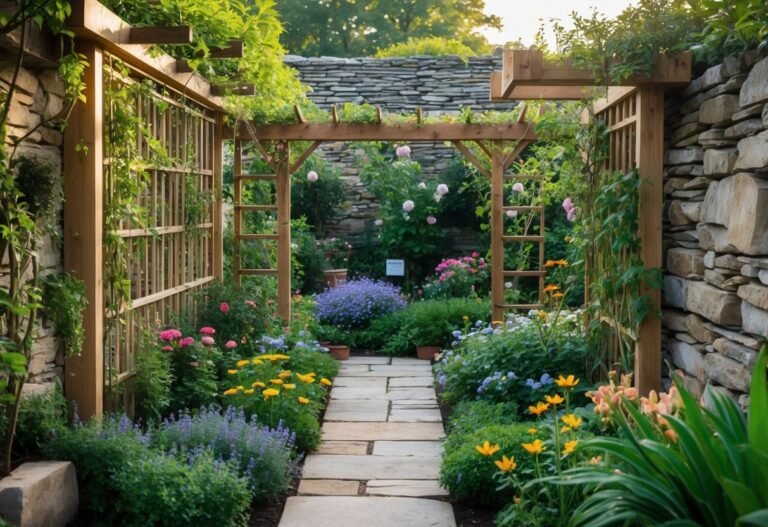
Cottage Garden Borders Design Ideas: Practical Planting and Layout Tips for Charming Edges
You can create a cozy, flowing cottage border that looks effortless by choosing layered plants, simple paths, and a few rustic accents. Mix tall spires with low mounds and repeat colors to give your bed steady rhythm and easy charm.
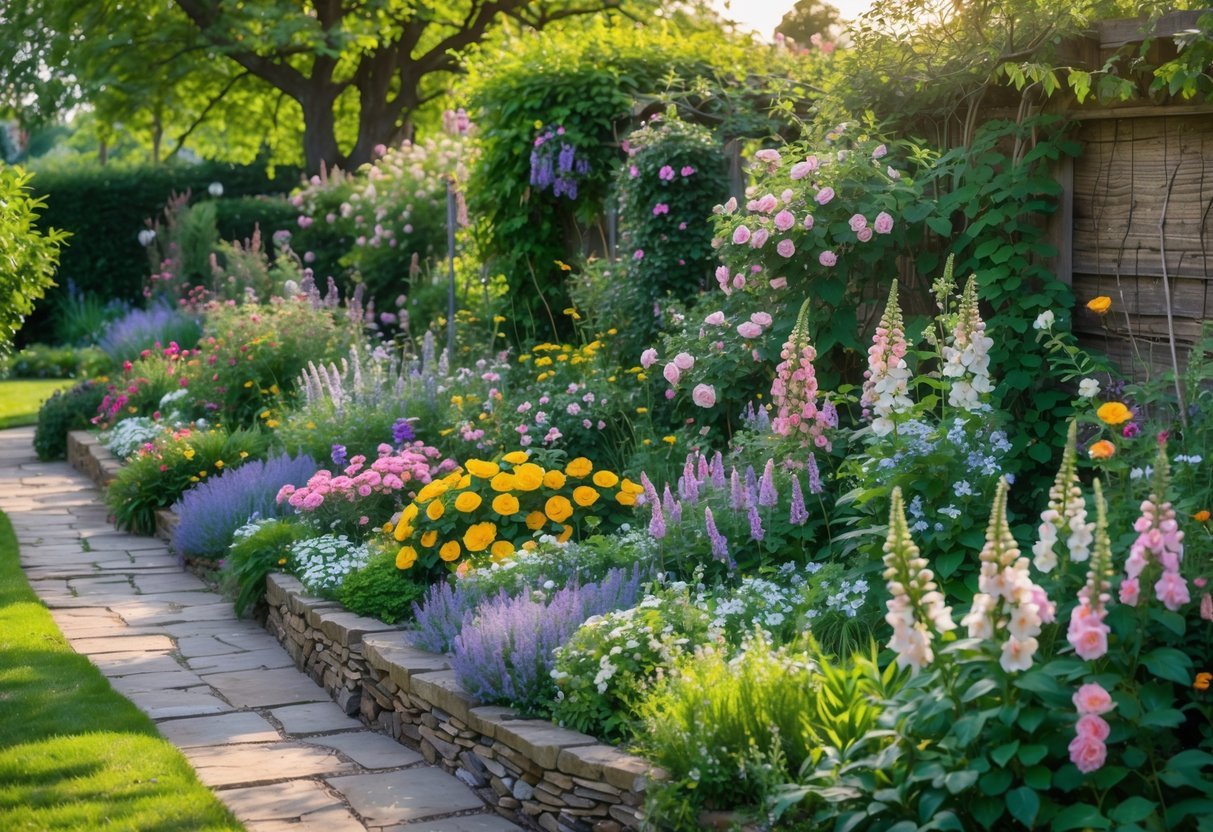
Bold focal plants, textured fillers, and a clear edge will make your border feel full without looking crowded. Pick a small palette, plant in waves, and add a simple edge material to get a classic cottage look that’s low-effort and high-impact.
Key Takeaways
- Use layered heights and repeated colors for a cohesive border.
- Combine focal blooms with textured fillers for continuous interest.
- Define edges and pick plants that match your maintenance time.
Key Principles for Cottage Garden Borders
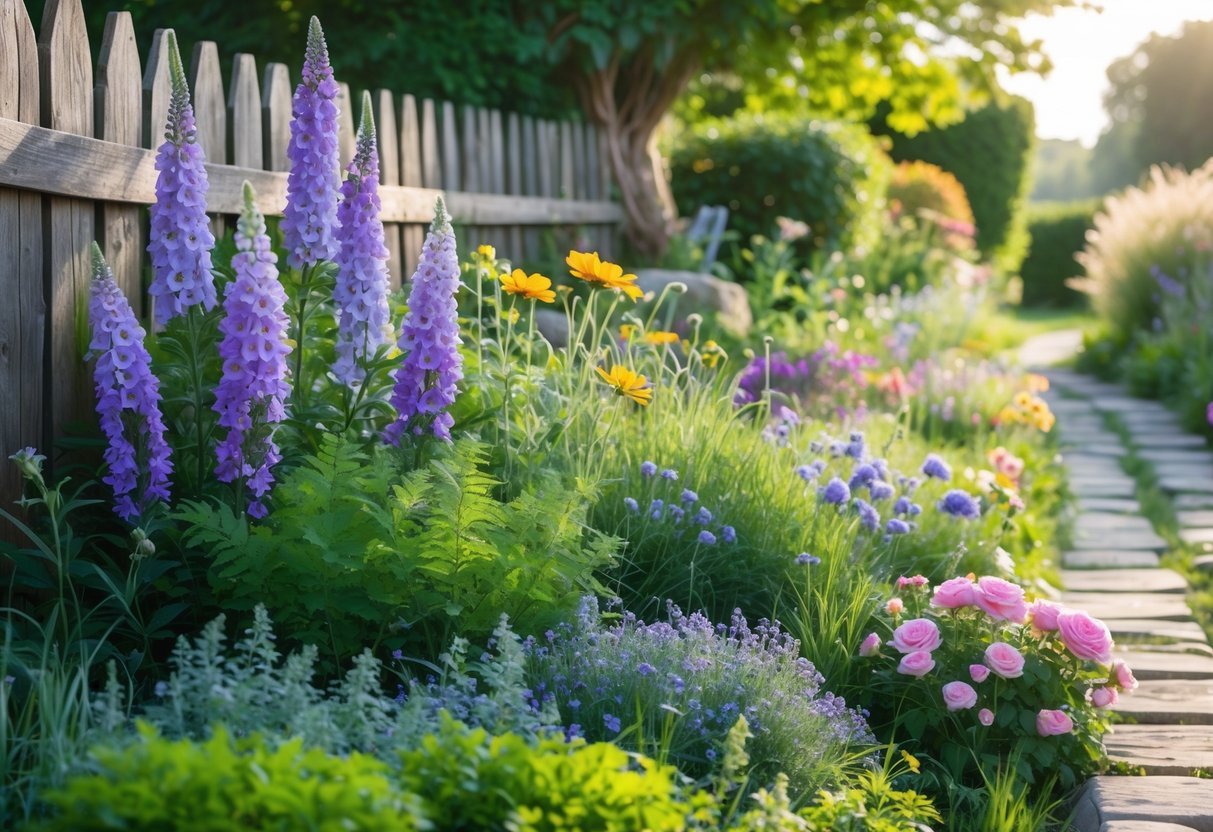
Focus on layered height, tight but healthy spacing, and plants that bloom at different times. Use structure plants for year-round form, group masses for impact, and plan succession so you always have color and texture.
Layering Techniques for Depth
Start with a backbone of structural plants 3–6 feet tall near the back or center of the border. Peony, lavender, and upright delphinium work well; use low hedging like boxwood or lavender at the very edge for definition.
In front of the backbone, plant medium-height perennials and tall annuals in drifts of three to seven. Use repeated colors to tie the bed together and mix textures—soft foliage next to spiky blooms creates contrast.
Place low groundcovers and edging plants along the path to soften edges. Keep taller plants slightly staggered, not in a straight line, to mimic natural growth and allow sightlines through the bed.
Plant Spacing and Grouping
Space plants close enough to create a full look but leave room for mature size. Check mature height and width on labels, then reduce spacing by about 20–30% compared with formal beds.
Group plants in odd-numbered clusters (3, 5, 7) for a natural, pleasing look. Repeat groups of the same species three or more times along the border to create rhythm and guide the eye.
Mix heights within groups—tuck lower plants in front of taller ones so each has room to bloom. Keep vigorous spreaders toward the back or in containers to prevent them from overtaking neighbors.
Seasonal Succession Planning
List plants by bloom time so you have continuous interest from spring through fall. Start with bulbs and early perennials, add peak-summer perennials and annuals, and include asters or sedum for late-season color.
Include evergreens and structural plants for winter shape and early-season shoots. Cut back spent blooms and deadhead to encourage rebloom where possible, and replace short-lived annuals with later-flowering varieties.
Plan for overlap: choose at least two species that bloom in each transition period. That overlap ensures there’s never a large gap in color or texture as one group fades and another begins.
Plant Selection and Combinations
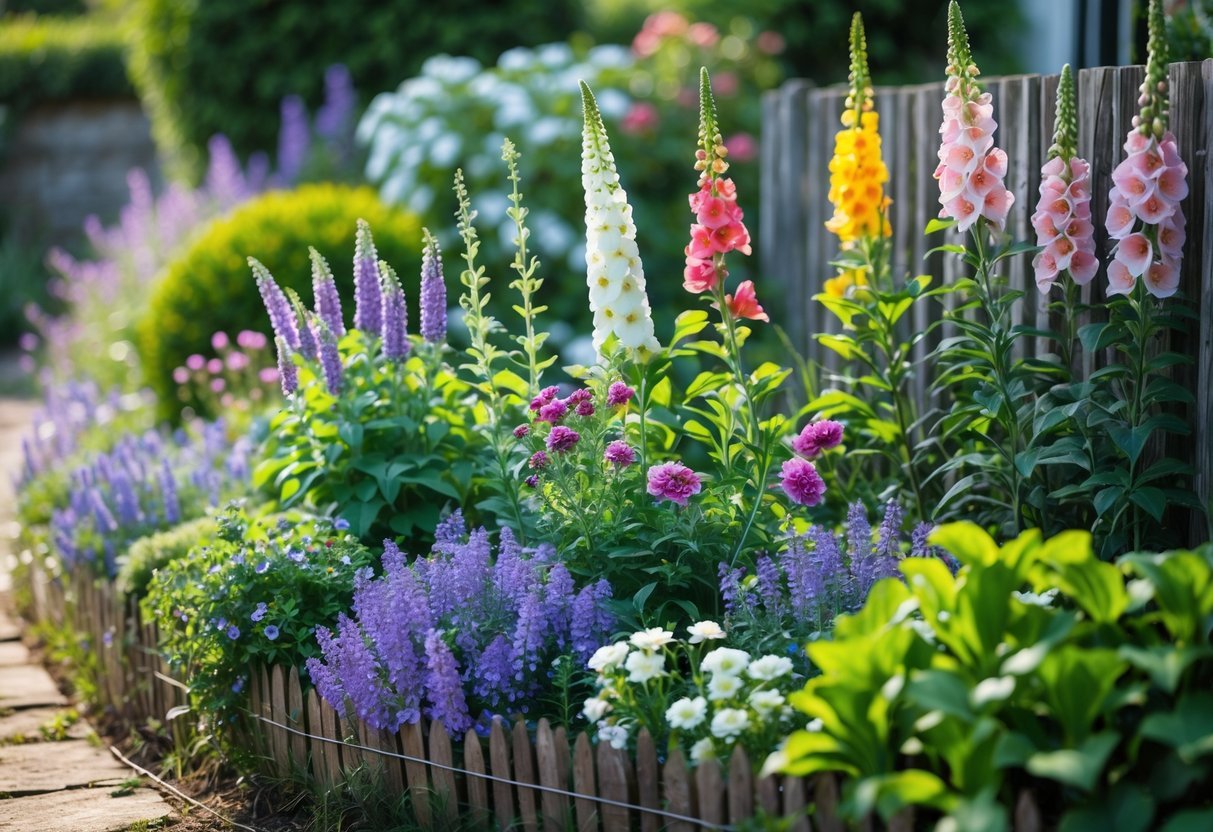
Choose plants that suit your soil, light, and the look you want. Focus on height layers, repeat a few key plants for rhythm, and mix blooms with foliage and scent for interest.
Classic Cottage Garden Plants
Pick a backbone of hardy perennials and shrubs. Try lavender, salvia, foxglove, hollyhock, and delphinium for vertical spikes. Use shasta daisy, daylilies, and geraniums for mid-height massing.
Add low edges like creeping thyme or sweet alyssum to define paths. Plant roses (rugosa or shrub types) and old-fashioned climbers such as climbing roses and clematis on fences or arbors.
Space plants so taller ones sit behind shorter ones; leave room for air flow to reduce disease. Choose varieties known for repeat bloom and pest tolerance in your zone.
Mixing Colors and Textures
Build your palette around a dominant color, a secondary color, and a bright accent. For example, pair soft blues and purples (lavender, salvia, delphinium) with cream or white (daisies, phlox) and add a pop of coral or deep pink (peonies, roses).
Vary leaf texture: fine foliage (lavender, ferns) contrasts with broad leaves (hosta, peony). Use glossy evergreens or boxwood for structure through winter.
Repeat colors and textures every 5–10 feet to create visual rhythm. Avoid too many competing colors; limit bold accents so the border feels cohesive.
Incorporating Edible Varieties
Mix herbs and vegetables into borders for beauty and use. Plant rosemary, thyme, and chives at the front where you can harvest easily. Use fruiting plants like raspberries or strawberries along a sunny edge.
Combine edible blooms—borage, calendula, chamomile—with ornamentals to attract pollinators and add color. Keep spacing and fertility needs in mind: many edibles prefer richer soil than some ornamentals.
Rotate annual vegetables and deadhead ornamentals when needed to keep the border productive and attractive.
Creative Layout and Border Shapes
Choose shapes and lines that match your space and walking routes. Think about flow, sightlines, and how plants will soften edges over time.
Curved Versus Straight Edges
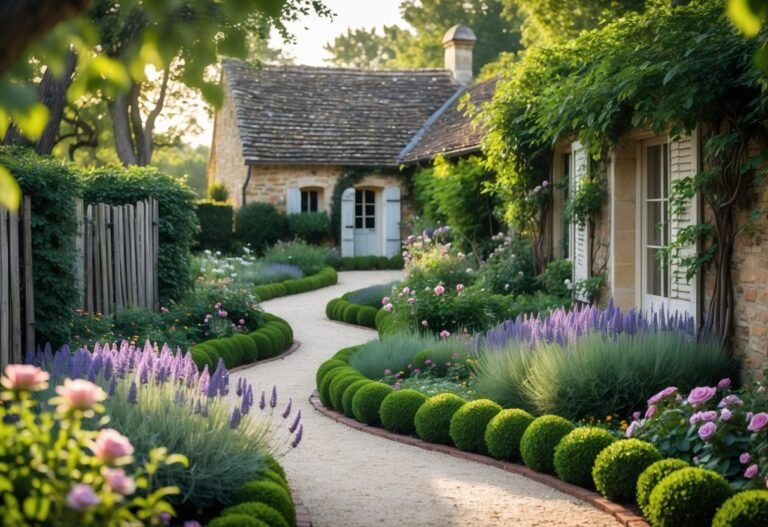
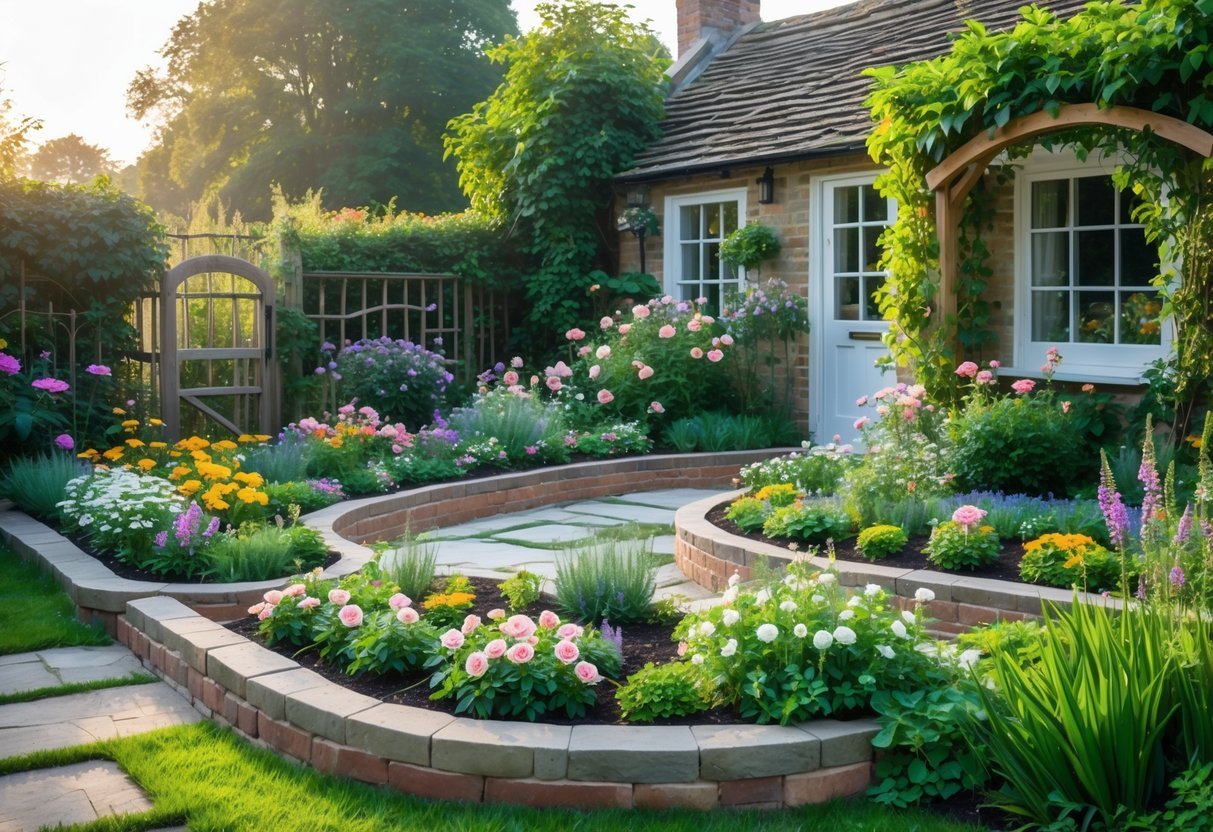
Curved edges create a relaxed, flowing look that suits informal cottage planting. Use gentle S-curves around beds to lead the eye and make small yards feel larger. Curves let you tuck taller plants toward the back and shorter, spilling plants at the front for layered depth.
Straight edges give a neat contrast to the cottage’s soft planting. Use them for vegetable plots, formal borders, or to frame patios. Combine straight runs with a single sweeping curve to add interest without losing structure.
Choose ditching, low stone, or metal edging to hold a crisp line. For curves, flexible brick, pavers, or a shallow berm work well. Mark your line with rope before installing so you can tweak the shape.
Integration with Paths and Focal Points
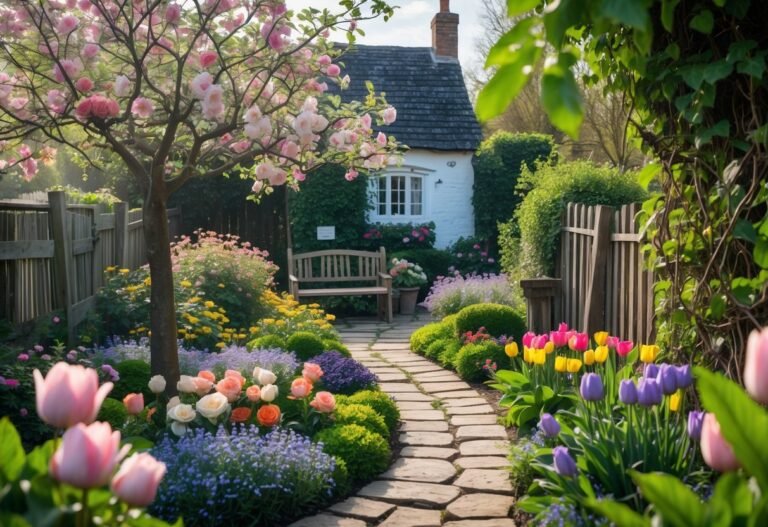
Place paths to invite movement and reveal key plants or features step by step. Use narrow gravel paths for intimate viewing and wider flagstone walks for seating areas. Let paths touch bed edges so planting spills over the stones.
Set focal points—like an arch, bench, or specimen rose—at path ends or at visual intersections. Arrange borders so taller plants frame the focal point and mid-height blooms form a lead-in. Avoid high plants that block sightlines from common views.
Use edging and low shrubs to define the path without a hard barrier. This keeps the cottage feel while keeping mulch and soil off the walk.
Maintenance Strategies for Lasting Beauty
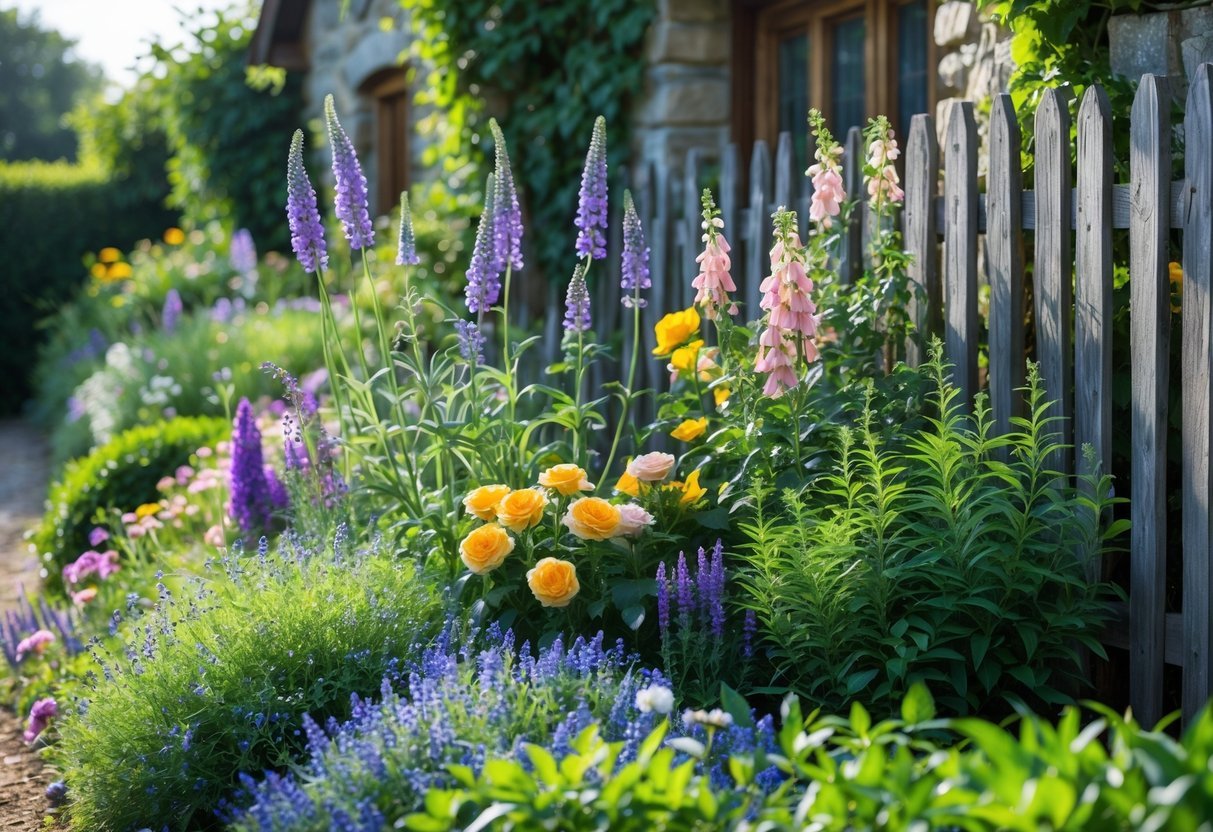
Keep soil rich and mulched, and prune regularly to control shape and encourage blooms. Small weekly checks prevent big problems like weeds, pests, and soggy roots.
Mulching and Soil Conditioning
Apply a 2–3 inch layer of organic mulch such as shredded bark, leaf compost, or well-rotted manure around plants. Leave a 1–2 inch gap at stem bases to prevent rot. Mulch keeps soil cooler in summer, warmer in winter, and reduces weeds that compete with cottage plants.
Top-dress borders each spring with 1/2 inch of compost to replenish nutrients. If soil is heavy clay, work in coarse sand and compost to improve drainage. For sandy soil, add more compost and a slow-release organic fertilizer in early spring.
Test your soil pH every 2–3 years. Most cottage plants prefer pH 6.0–7.0. Use lime to raise pH or sulfur to lower it, following product directions for amounts. Water deeply once a week during dry spells rather than frequent shallow watering to encourage strong roots.
Pruning and Deadheading Methods
Deadhead spent flowers within a few days to extend bloom time. Pinch or snip flower stems back to the nearest healthy leaf node or a side shoot to avoid leaving stubs that rot. Remove only the flower stalk on plants like roses and peonies; leave foliage until it yellows naturally.
Do light pruning after the main bloom for perennials like lavender, salvia, and catmint—cut back about one-third to shape and renew growth. For shrubs such as hydrangea and old-fashioned roses, prune in late winter or early spring when buds are visible. Sterilize tools with rubbing alcohol between cuts to limit disease spread.
Cut back tall annuals and tender perennials before winter if you want tidy beds; otherwise leave seedheads for birds and winter interest. Dispose of diseased material rather than composting it.
Frequently Asked Questions
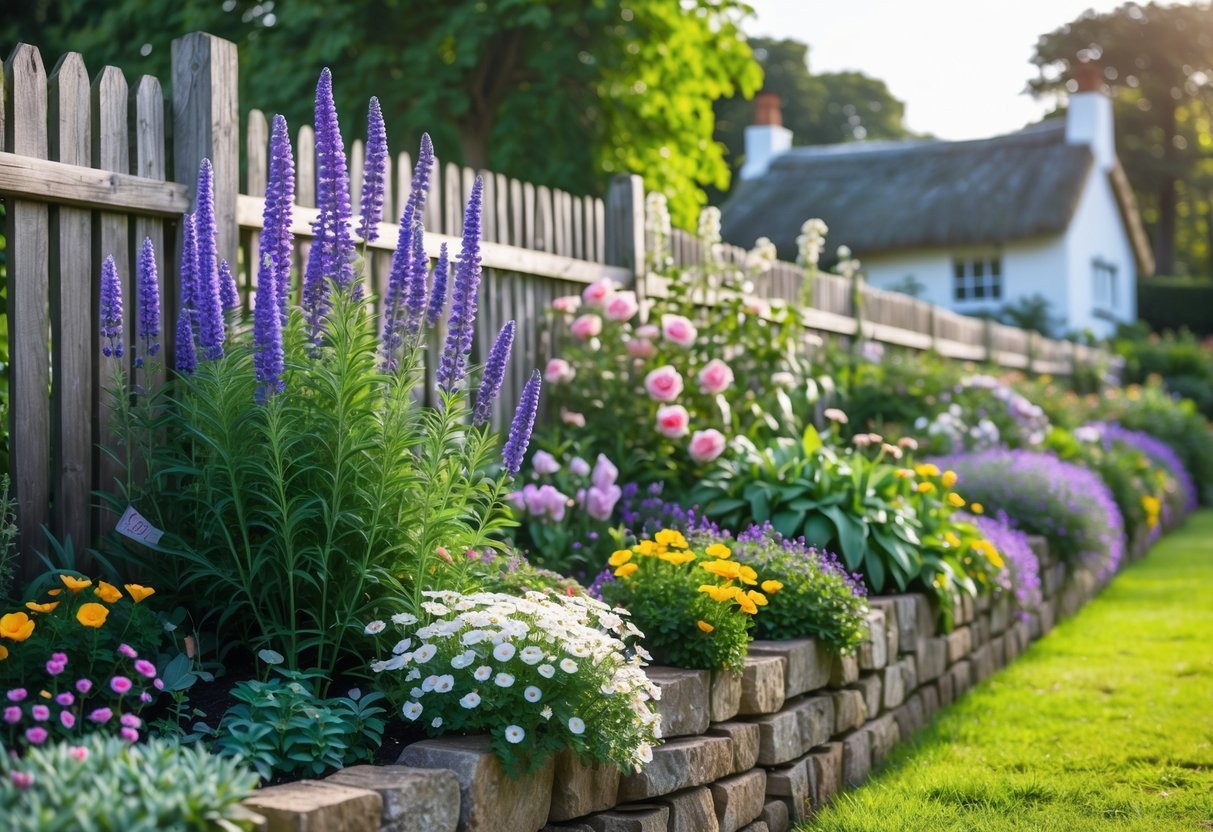
This section gives clear, practical answers you can use right away. Expect specific tips on plants, layout rules, edging ideas, budget tricks, and low‑maintenance choices.
How can I create a small cottage garden border on a limited budget?
Use seeds and young plants instead of mature specimens; they cost less and fill in quickly. Start with hardy, fast‑growing perennials like foxglove, calendula, and campanula.
Reuse materials for edging and paths: reclaimed bricks, scrap timber, or river rocks work well. Mulch with wood chips or leaf mold to suppress weeds and retain moisture without buying soil mixes.
Plant in drifts of three to five of the same species to look fuller with fewer varieties. Add inexpensive annuals like nasturtiums or cosmos for quick color.
What are some simple designs for cottage garden borders?
Try a curved border that gently follows your lawn or path to create a natural flow. Curves are forgiving and make planting patterns look relaxed and full.
Use layered heights: tallest plants at the back, mid‑height in the middle, and low plants or groundcovers up front. Repeat colors and textures every few feet to create rhythm.
Build a mixed border of perennials, herbs, and a few annuals for continuous bloom. Include a single focal plant, such as a rose or small ornamental shrub, every few meters.
What plants are most recommended for traditional cottage garden borders?
Choose classic cottage plants: English roses, lavenders, foxgloves, delphiniums, and hollyhocks. Pair them with herbs like rosemary, thyme, and sage for scent and structure.
Add groundcover and edging plants like alyssum, geraniums, and creeping thyme. Include pollinator‑friendly choices such as borage, calendula, and bee balm to support bees and butterflies.
How do I apply the 70/30 rule when designing a cottage garden border?
Allocate about 70% of the border to repeatable structure: perennials, shrubs, and massed plantings. Use 30% for accents and changeable elements like annuals, bulbs, or seasonal color.
Pick two or three dominant plants for the 70% backbone and plant them in groups. Reserve space for 30% of the area to rotate bright annuals or a showy specimen each season.
Can you suggest creative ideas for garden border edging that suit a cottage garden?
Use low, split‑rail fencing or simple picket sections for a vintage look that keeps the view open. Lay reclaimed bricks on their side for a neat, classic line.
Plant narrow rows of lavender, thyme, or dwarf boxwood as a living edge. Mix small stones or a mossy path for a rustic, informal feel.
What options are available for low maintenance plants that fit in a cottage garden border?
Choose drought‑tolerant perennials like sedum, lavender, and yarrow for low care and seasonal color. Evergreen choices such as dwarf boxwood and hebe provide year‑round structure.
Add clumping grasses and groundcovers like vinca or creeping thyme to reduce weeding. Use long‑lived bulbs—tulips and daffodils—so you get reliable spring bloom with little effort.