7 Balcony Vegetable Garden Ideas for Small Spaces and Year-Round Harvest
You can grow a surprising amount of fresh vegetables on a small balcony with smart containers, vertical layouts, and simple plant choices. Use sunny spots, slim pots, and stacked planters to fit more crops into tight spaces and cut down on watering and work.
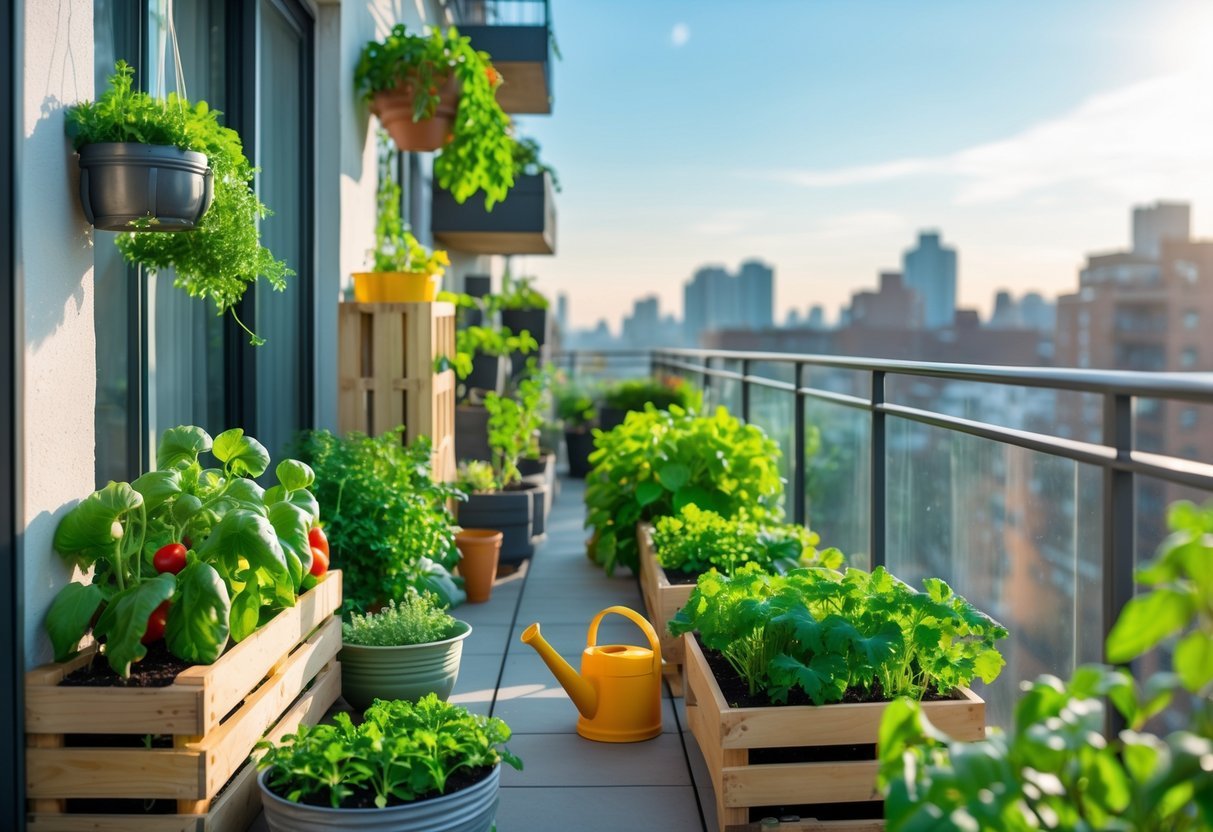
Bold the most important sentence: You can harvest fresh salad greens, herbs, and other easy vegetables from a small balcony by choosing compact varieties and designing vertical or multi-level containers. Try mixing tall climbers, low bush varieties, and herbs to keep space productive and interesting while matching your season and light.
Key Takeaways
- Use space-saving containers and vertical setups to grow more on a small balcony.
- Pick compact, fast-growing plants and mix heights for steady harvests.
- Match plant choices to your light and season for best results.
Maximizing Small Balcony Spaces
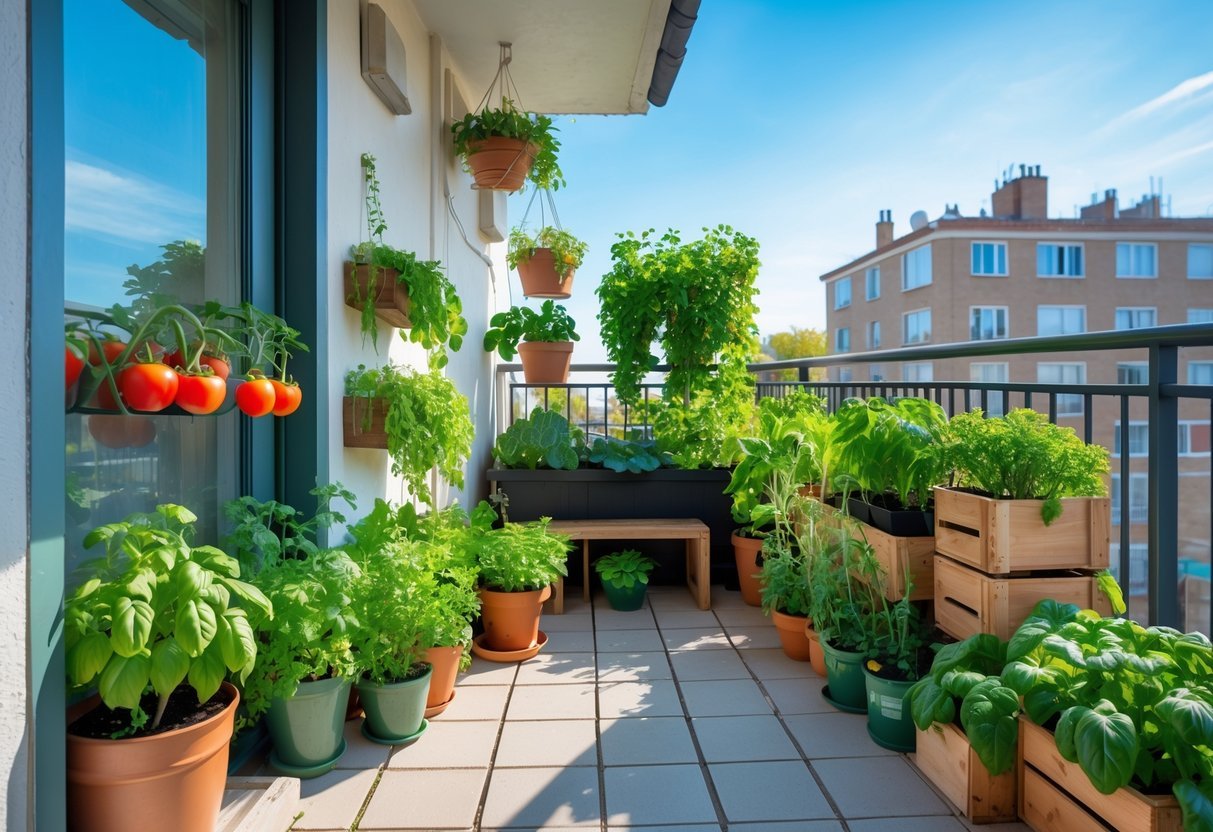
Make the most of light, wind, and floor area by choosing the right containers, stacking plants vertically, and using hanging options to free up walking space. Focus on root depth, sun hours, and securing lightweight pots to prevent tipping in wind.
Container Gardening Strategies
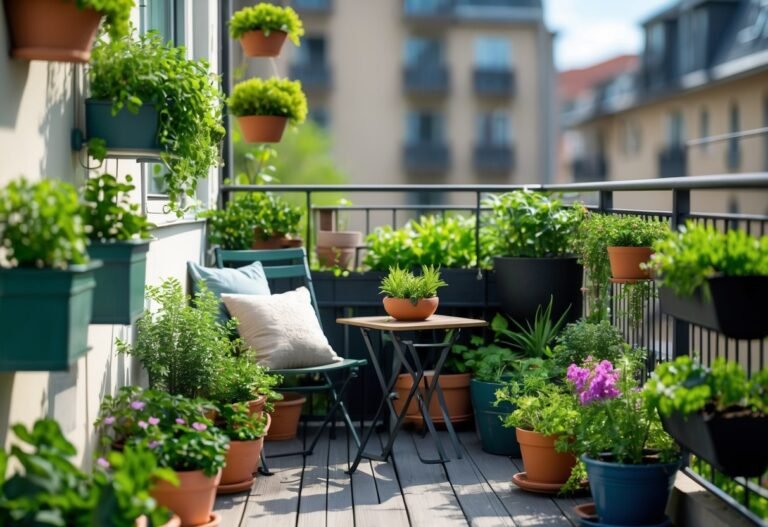
Pick containers that match plant root needs: 6–8 inch pots for herbs, 12–16 inch pots for salad greens, and 16–20 inch pots or dual pots for tomatoes and peppers. Use containers with drainage holes and put 1–2 inches of gravel or broken pottery under the soil to keep roots from sitting in water.
Use a quality potting mix labeled for containers; mix in slow-release fertilizer or feed liquid fertilizer every 2–3 weeks during the growing season. Group containers by watering needs to avoid over- or under-watering. Place heavier pots on the floor and lighter ones on stands to create levels and improve access to sun.
Secure pots against wind with non-slip mats or patio ties. For balconies with weight limits, use lightweight fabric grow bags or plastic planters and check your building’s load rules before adding many containers.
Vertical Vegetable Planters
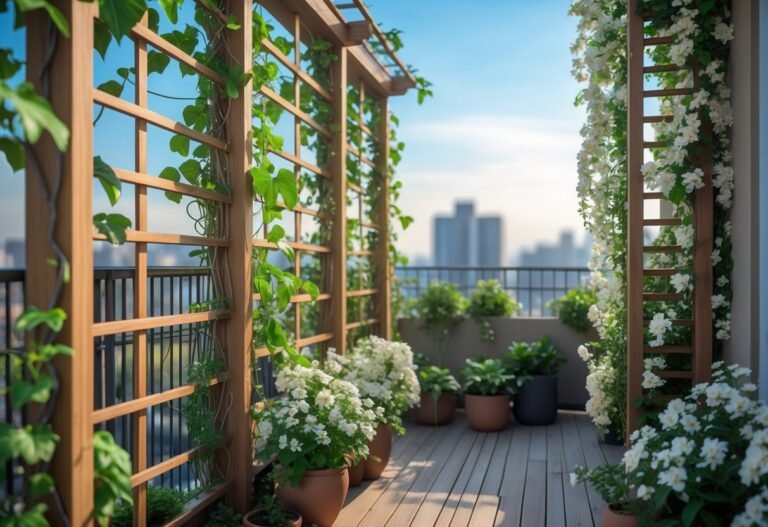
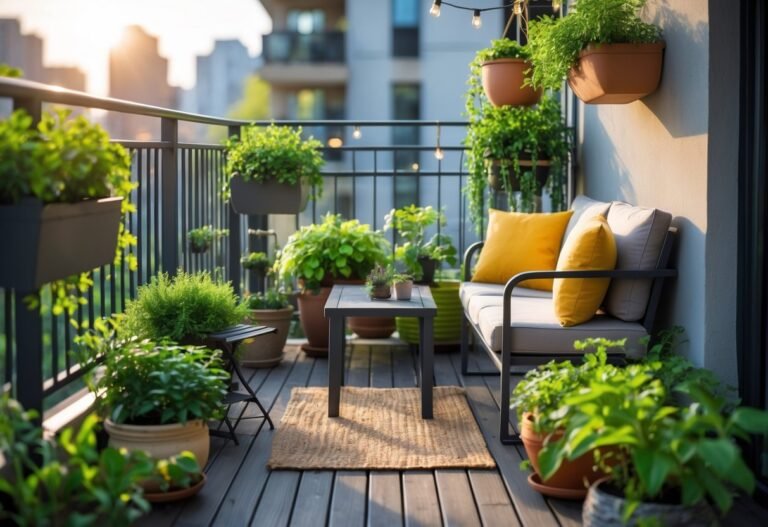
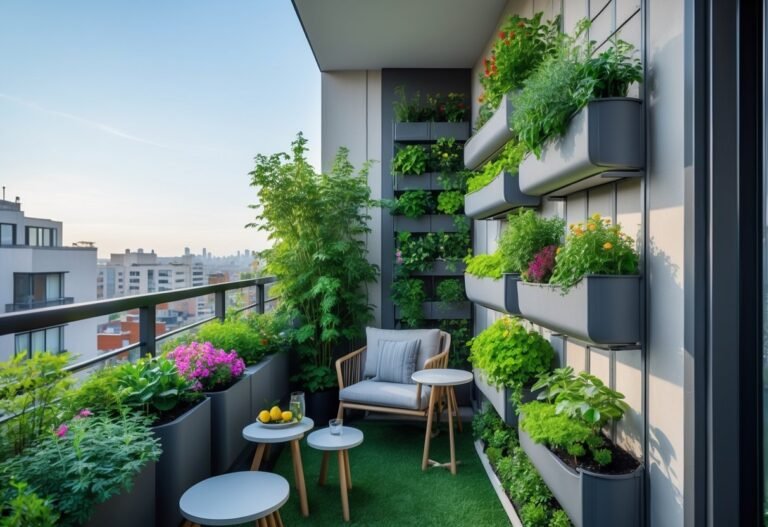
Use vertical planters when floor space is limited: tiered shelving, stacked pots, pallet gardens, or wall-mounted pocket planters work well. Choose sturdy frames that fasten to the railing or wall to prevent tipping and follow weight limits for soil and saturated pots.
Select compact or trailing varieties: dwarf tomatoes, bush beans, leaf lettuces, and cascading strawberries are good fits. Ensure each level gets enough light; rotate or stagger plants so lower tiers aren’t shaded out. Install a drip line or use self-watering tiers to keep water consistent across layers.
Monitor water flow—top tiers dry faster and may leach nutrients to lower levels. Add a water reservoir or use moisture-retentive mix in the top pots to reduce frequent watering. Regular pruning and harvesting keep plants from overcrowding vertical structures.
Hanging Baskets for Vegetables
Hanging baskets free floor space and place plants at eye level. Use baskets with coco liners or plastic inserts and choose lighter soil mixes to reduce weight. Plant cherry tomatoes, bush beans, peppermint, oregano, and small salad greens in hanging baskets.
Balance weight by using secure hooks that bolt into the balcony ceiling or use railing hangers rated for the load. Watering matters: baskets dry quickly, so install a drip emitter or water from the top until runoff appears. Add slow-release fertilizer at planting and feed liquid fertilizer every 10–14 days for steady growth.
Trim excess foliage to keep airflow and reduce disease risk. Check hanging baskets daily for pests and moisture, because problems escalate faster in small, exposed containers.
Creative Vegetable Garden Designs
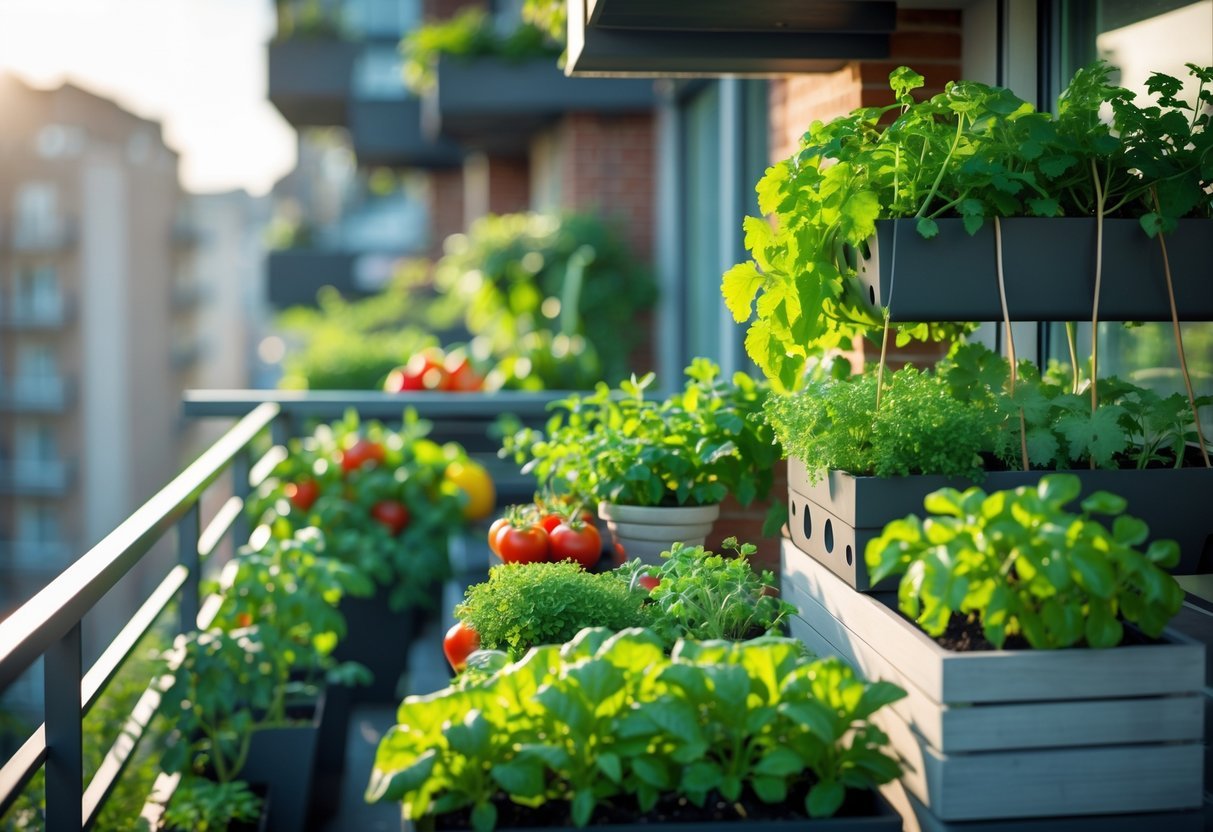
You can fit more edible plants by stacking pots and using railing space. Focus on sturdy containers, proper soil depth, and easy access for watering and harvesting.
Tiered Planting Solutions
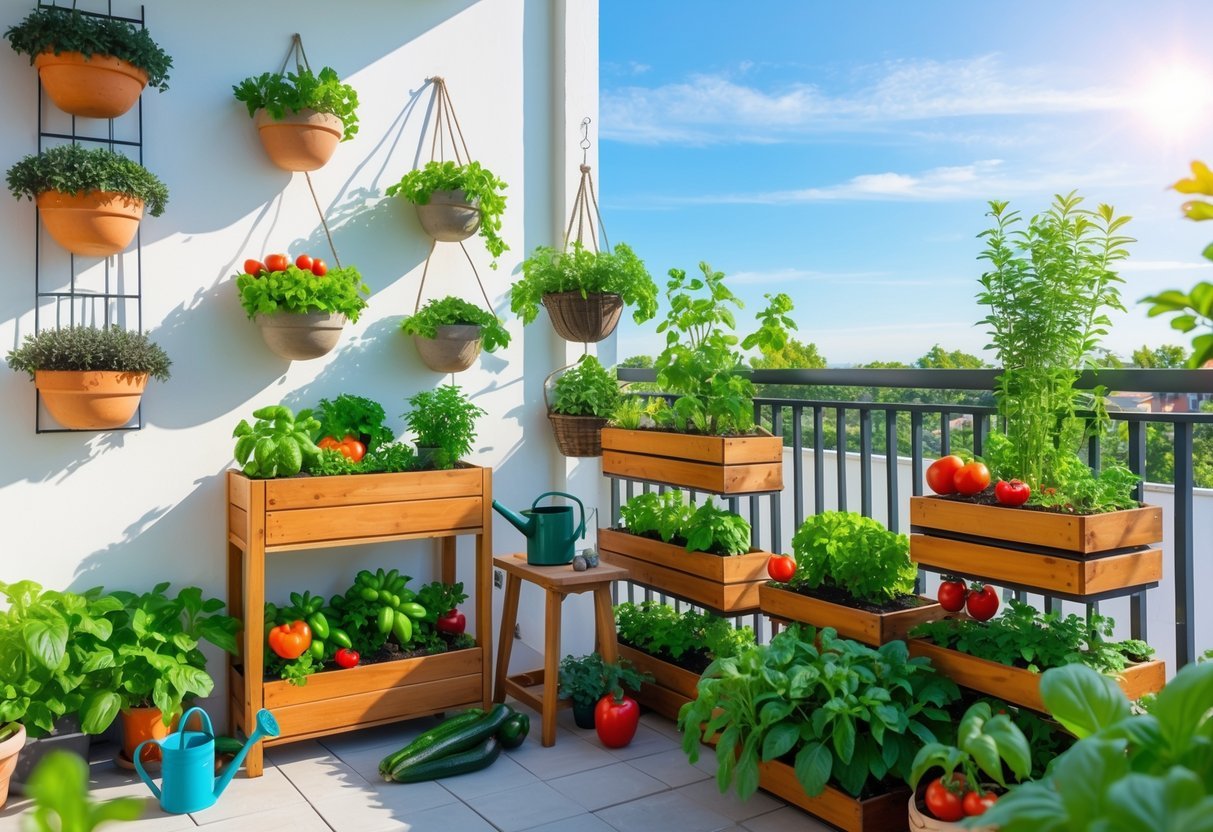
Use shelving, stepped planters, or stacked pots to make the most of vertical space. Place larger, deep-rooted plants like tomatoes or peppers on the bottom tier where soil depth is greatest. Put herbs, lettuces, and small greens on the middle tiers. Reserve the top tier for trailing plants such as strawberries or herbs that like more sun.
Choose containers that lock together or a metal shelf that resists rust. Ensure each level has good drainage; add saucers or a catch tray to protect the balcony floor. Water flows from top to bottom, so monitor lower pots to avoid overwatering. Arrange tiers so you can reach every plant without moving heavy pots.
Rail Planters for Edibles
Attach rail planters designed to hook over balcony railings to grow herbs, salad greens, and compact peppers. Pick planters with brackets that fit your rail width and a secure grip to prevent tipping in wind. Opt for trough-style boxes at least 6–8 inches deep for lettuces and 10–12 inches for small root crops like radishes.
Line rail planters with coconut coir or a lightweight potting mix to keep weight down. Use drip irrigation or a watering wand to reach the front and back of the planter evenly. Pair fast-growing crops (basil, arugula) with slower ones (thyme, dwarf chives) so you can harvest without disturbing root systems. Check brackets and fastenings monthly for safety.
Seasonal Vegetable Choices for Balconies
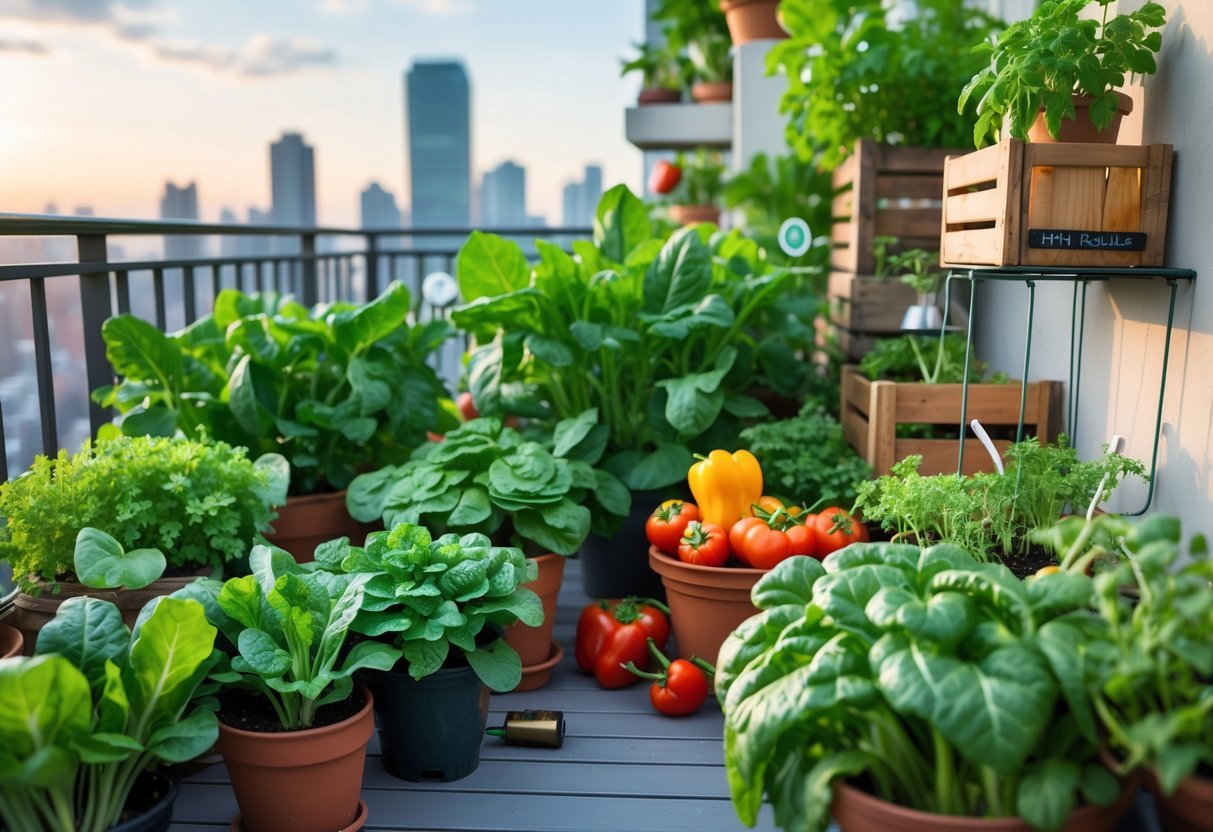
Pick vegetables that match the light your balcony gets, the season, and the container size. Choose compact, fast-growing, or cool-season crops for spring/fall, and heat-tolerant varieties for summer.
Best Vegetables for Limited Sunlight
If your balcony gets 3–5 hours of direct sun or mostly bright shade, choose leafy and root crops that tolerate lower light. Good picks include lettuce, spinach, Swiss chard, arugula, beet greens, and pak choi. These crops grow well in shallow containers (6–8 inches for greens, 8–10 for beets) and mature quickly, so you get harvests before light fades in fall.
Use thin, tall pots or window boxes to fit more plants along a railing. Rotate containers to even out light exposure. Avoid fruiting crops like tomatoes or peppers; they usually need 6+ hours of direct sun to set fruit reliably.
Herbs and Microgreens
Herbs and microgreens give fast rewards and fit tiny spaces. Basil, parsley, cilantro, chives, thyme, and mint do well in 4–8 inch pots. Choose compact varieties (e.g., bush basil, dwarf thyme) to save space and reduce pruning.
Microgreens sprout in trays in 7–21 days and need only bright, indirect light. They require minimal soil and can be grown on a sunny shelf or tabletop. Harvest by cutting above the soil line. For herbs, harvest leaves regularly to encourage bushy growth and prevent bolting in warm weather.
Succession Planting on Balconies
Succession planting keeps your balcony producing for months. Sow small batches of lettuce, radishes, or spinach every 2–3 weeks rather than all at once. This staggared schedule gives continuous harvests and avoids overcrowding.
Use deeper pots (10–12 inches) for follow-up plantings of carrots, beets, or dwarf bush beans. After one crop finishes, replace it quickly with a warm- or cool-season crop depending on the calendar: plant fast-maturing greens in spring/fall and heat-tolerant bush beans or peppers in summer. Keep a planting calendar and label pots to track sowing dates.
Frequently Asked Questions
You will find clear, practical answers about plant choices, layout, care, and tools. Each question gives action steps you can use this season.
What are the best vegetables to grow on a balcony?
Choose compact or fast-maturing crops that do well in containers. Cherry tomatoes, bush beans, leaf lettuce, radishes, baby carrots, and herbs like basil and parsley work reliably.
Pick dwarf or patio varieties for tomatoes and peppers. Look for “container” or “compact” on seed packets and plant tags.
How can I maximize my balcony crop yield?
Use deep, well-draining containers and high-quality potting mix with compost. Fertilize lightly every 2–4 weeks with a balanced liquid feed and keep a regular watering schedule.
Grow vertically with trellises and hanging baskets to free floor space. Stagger planting times (succession planting) so you harvest continuously.
Which plants are low maintenance for balconies?
Herbs such as rosemary, thyme, and oregano need little water and tolerate heat. Swiss chard, kale, and mint are also forgiving and productive.
Choose disease-resistant, slow-bolting varieties and mulch container surfaces to reduce watering. Group plants by water needs to simplify care.
How to arrange plants in a balcony?
Place taller plants (tomatoes, trellised beans) at the back or against a rail. Put medium and trailing plants in the middle and edge planters where they can spill over.
Keep herbs and quick-harvest greens in movable pots for easy access. Leave a clear path for watering and harvesting.
What are some creative ways to design a balcony vegetable garden?
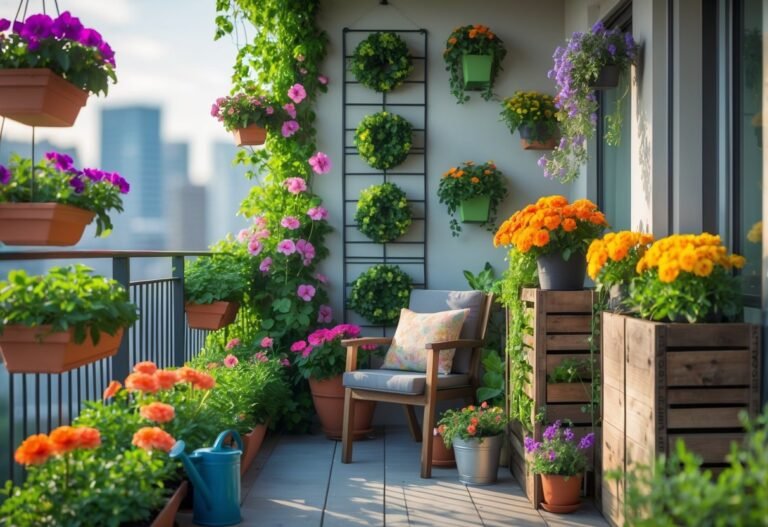
Use vertical planters, pocket organizers, and stacked pots to save floor space. Hang railing boxes and add a slim rolling cart for tools and seedlings.
Mix edible plants with flowering companion plants to attract pollinators and mask pests. Use matching containers or a color palette for a tidy look.
What are the essential tools needed for starting a balcony vegetable garden?
Get a watering can with a narrow spout, a hand trowel, and pruning shears. A soil scoop, small fork, and moisture meter make maintenance easier.
Buy lightweight pots with drainage holes and a basic bag of potting mix plus slow-release fertilizer to start.